🩺 Medical Editor’s Note (2026 Verified Data)
This technical guide has been verified against 2026 medical tourism standards in Turkey.
Verified Price Range: Gastric Sleeve: 3,500 – 5,500 USD | Gastric Bypass: 4,500 – 7,500 USD | Gastric Balloon: 2,000 – 3,000 USD
Facility Standards: JCI Accredited, Ministry of Health Regulated.
Currency: USD / EUR / GBP accepted at all clinics.
Hair Loss after Bariatric Surgery: Prevention and Management Strategies
Hair Loss After Bariatric Surgery: A Deep Dive into Etiology and Prevention – Pillar 1: Medical Foundation
Bariatric surgery, while demonstrably effective in achieving significant and sustained weight loss and ameliorating obesity-related comorbidities, is not without potential adverse effects. One of the most frequently reported and distressing complications for patients undergoing these procedures is telogen effluvium – commonly known as hair loss. This pillar will delineate the physiological mechanisms underlying post-bariatric hair loss, focusing on the ‘what’ and ‘why’ from a robust medical perspective, crucial for understanding effective preventative and management strategies. It’s vital to establish a strong medical foundation for this common complaint within the context of bariatric procedures offered, for example, in established hubs like Istanbul, Antalya, and Izmir.
The Pathophysiology of Post-Bariatric Telogen Effluvium
Telogen effluvium is a non-scarring alopecia characterized by excessive shedding of hair. It’s a reactive process, meaning it’s triggered by a systemic shock, stressor, or internal disturbance. Following bariatric surgery, several interconnected factors contribute to its development. The primary mechanism revolves around nutrient deficiencies, specifically those critical for hair follicle function. Hair follicles, while not essential for survival, are metabolically active tissues with high demands for protein, iron, zinc, vitamin D, biotin, and other micronutrients.
Bariatric procedures induce alterations in nutrient absorption. Gastric bypass, in particular, bypasses a significant portion of the small intestine, diminishing the absorptive surface area for vital nutrients. Even procedures like the gastric sleeve, while preserving the intestinal tract, can reduce absorption due to changes in gastric acid secretion and altered gut motility. The resulting nutritional deficits impact the hair growth cycle, shifting a higher proportion of follicles into the telogen (resting) phase, ultimately leading to increased shedding approximately 2-3 months post-surgery – the typical latency period for this effect.
Specific Nutrient Deficiencies & Their Roles
- Protein-Calorie Malnutrition: Rapid weight loss following bariatric surgery, while the intended outcome, can precipitate a state of catabolism if protein intake isn’t meticulously managed. Hair is predominantly composed of keratin, a fibrous structural protein. Insufficient protein intake directly limits keratin production, leading to weakened hair shafts and increased shedding.
- Iron Deficiency (Anemia): Iron is crucial for erythrocyte production, delivering oxygen to tissues including the hair follicles. Reduced iron stores, frequently exacerbated by menstrual cycles in women and potential blood loss during surgery, impair follicular function. Ferritin levels – a measure of iron stores – should be closely monitored.
- Zinc Deficiency: Zinc plays a vital role in cell growth and division, including the rapid proliferation of cells within the hair follicle matrix. Malabsorption post-surgery compromises zinc levels, affecting hair follicle activity.
- Vitamin D Deficiency: Vitamin D receptors are present in hair follicles, influencing the hair cycle. Insufficient Vitamin D can disrupt follicular function and contribute to hair loss.
- Biotin (Vitamin B7) & Other B Vitamins: Biotin is a coenzyme involved in keratin production. While severe biotin deficiency is rare, suboptimal levels can exacerbate hair loss. Other B vitamins, like folate and B12, are essential for cell division and overall metabolic health, supporting hair follicle activity.
Procedure-Specific Considerations & Hair Loss Risk
While all bariatric procedures can potentially trigger telogen effluvium, the risk profile varies. Gastric bypass (4,500 – 7,500 USD) poses the highest risk due to the greater degree of malabsorption. Gastric sleeve (3,500 – 5,500 USD) carries an intermediate risk, and gastric balloon (2,000 – 3,000 USD), being a less invasive and non-anatomical altering procedure, generally presents the lowest risk, although nutritional deficiencies are still possible with inadequate dietary compliance.
The severity of hair loss isn’t solely determined by the procedure type. Individual factors, such as pre-operative nutritional status, genetic predisposition to alopecia, and adherence to post-operative dietary and supplementation guidelines, significantly impact the outcome. Patients entering surgery with pre-existing nutrient deficiencies are demonstrably at higher risk.
Diagnostic Assessment and Monitoring
A comprehensive evaluation is crucial for identifying the underlying cause of hair loss and tailoring a personalized management plan. This includes:
- Detailed Medical History: Assessing pre-operative nutritional status, history of hair loss, and family history of alopecia.
- Physical Examination: Evaluating the pattern and severity of hair loss.
- Laboratory Investigations: Essential blood tests include:
- Complete Blood Count (CBC) to assess for anemia.
- Iron studies (serum iron, ferritin, transferrin saturation).
- Zinc levels.
- Vitamin D levels (25-hydroxyvitamin D).
- Biotin levels.
- Thyroid-Stimulating Hormone (TSH) to rule out thyroid dysfunction as a contributing factor.
- Comprehensive Metabolic Panel (CMP) to evaluate overall nutritional status.
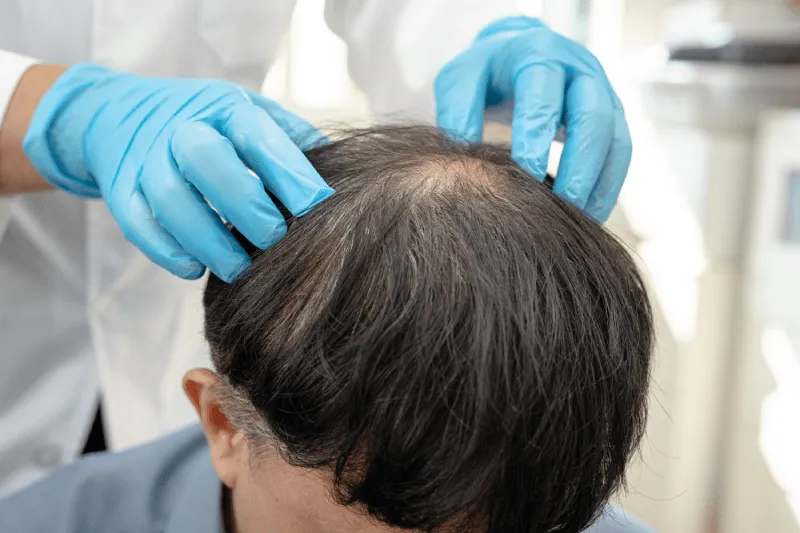
- Trichoscopic Examination: A non-invasive scalp assessment using a dermatoscope to visualize hair follicle health and identify potential abnormalities.
Regular monitoring of these parameters – typically at 1, 3, 6, and 12 months post-surgery – is paramount for identifying and addressing nutritional deficiencies proactively. This proactive approach is especially important considering the growing prevalence of bariatric tourism, where patients may seek procedures in locations like Turkey, where adherence to JCI (Joint Commission International) Accredited standards and Ministry of Health regulations is crucial for ensuring quality care and post-operative monitoring.
Global Standards and Cost Considerations
Understanding the financial implications alongside medical standards is essential. Patients considering bariatric surgery, regardless of location (Istanbul, Antalya, Izmir, or elsewhere) must be aware of the costs (3,500 – 7,500 USD) and ensure their aftercare plan includes comprehensive nutritional support. For international patients, factors such as currency focus (USD, EUR, GBP) and visa info (E-visa availability for many UK/US/EU citizens permitting a 90-day stay) are also important logistical considerations. A robust aftercare program, irrespective of the surgical hub chosen, should prioritize addressing potential nutritional deficiencies to mitigate the risk of telogen effluvium and optimize patient outcomes.
Hair Loss Post-Bariatric Surgery: A Deep Dive into Prevention & Management
Hair loss, or alopecia, is a common and distressing side effect experienced by a significant percentage of patients following bariatric surgery. While often temporary, the psychological impact can be substantial. This pillar details the underlying physiological mechanisms, proactive prevention strategies, and robust management protocols utilized within CureHoliday’s comprehensive bariatric program, specifically addressing the surgical/clinical journey (Pillar 2).
The Pathophysiology of Post-Bariatric Alopecia
The etiology of post-bariatric hair loss is multifactorial. It’s rarely a direct consequence of the surgical procedure itself, but rather a cascade of physiological changes. The most prominent driver is acute telogen effluvium. Normally, approximately 10% of hair follicles are in the telogen (resting) phase. Rapid weight loss, as achieved through procedures like gastric sleeve (3,500 – 5,500 USD), gastric bypass (4,500 – 7,500 USD), or even gastric balloon (2,000 – 3,000 USD), acts as a significant physiological stressor. This stress pushes a larger than normal percentage of follicles into telogen prematurely. Approximately 2-3 months post-surgery, these hairs begin to shed, resulting in diffuse hair thinning, often noticeable at the crown and frontal hairline.
Crucially, the degree of hair loss is not always directly correlated to the *amount* of weight lost, but also to the *rate* of weight loss and the individual’s pre-surgical nutritional status. Deficiencies in key micronutrients, exacerbated by altered nutrient absorption post-surgery, play a critical role. These include:
- Iron: Often depleted pre-surgery, especially in menstruating women. Reduced gastric acid production post-bariatric surgery hinders non-heme iron absorption. Ferritin levels below 30 ng/mL are considered indicative of deficiency and necessitate supplementation.
- Zinc: Essential for hair follicle proliferation and repair. Gastric bypass, in particular, significantly reduces zinc absorption due to the bypassed duodenum, the primary site of absorption.
- Vitamin D: Plays a role in hair follicle cycling. Deficiency is common in obese individuals and can worsen post-surgery due to reduced sun exposure and altered metabolism.
- B Vitamins (B12, Folate, Biotin): Critical for cell growth and metabolism. B12 absorption relies on intrinsic factor produced in the stomach, which is reduced after surgery. Folate absorption can also be impaired.
- Protein: Insufficient protein intake leads to catabolism, diverting amino acids away from non-essential tissues like hair.
Proactive Prevention: Pre- and Post-Operative Optimization
CureHoliday’s protocol emphasizes preemptive nutritional optimization. Prior to surgery, patients undergo a comprehensive micronutrient panel to identify and correct any pre-existing deficiencies. For patients meeting the standard criteria – a BMI > 35 or > 30 with co-morbidities – we initiate targeted supplementation at least 4-6 weeks pre-operatively. This includes high-dose Vitamin D (5,000 IU daily), iron (if deficient), and a multi-vitamin specifically formulated for bariatric patients.
Post-operatively, meticulous attention to dietary intake and supplementation is paramount. We employ a staged dietary progression, beginning with clear liquids and gradually advancing to pureed foods, then soft foods, and finally solid foods, all while maintaining adequate protein intake (80-120g daily). Our dedicated dietitians provide individualized meal plans and ongoing support to ensure patients meet their nutritional needs. We routinely monitor micronutrient levels (Ferritin, Vitamin D, B12, Folate, Zinc) at 3, 6, 9, and 12 months post-surgery, adjusting supplementation as needed.
Advanced Management Strategies: Addressing Established Alopecia
When alopecia develops, a tiered approach to management is implemented.
- Level 1: Nutritional Correction & Optimization: Reinforcement of the dietary and supplementation plan, with a focus on identified deficiencies. Blood tests are repeated to assess response.
- Level 2: Topical Minoxidil: A 5% topical minoxidil solution can stimulate hair growth by prolonging the anagen (growth) phase. While not a cure, it can help increase hair density and reduce shedding. Patient education regarding consistent application and potential side effects (scalp irritation) is critical.
- Level 3: Low-Level Laser Therapy (LLLT): Emerging evidence suggests LLLT can stimulate hair follicle activity and improve hair density. CureHoliday partners with clinics in Istanbul and Antalya, our primary recovery hubs, offering in-office LLLT treatments.
- Level 4: Platelet-Rich Plasma (PRP) Therapy: In select cases, PRP therapy – involving injection of concentrated platelets into the scalp – may be considered. PRP contains growth factors that can promote hair follicle regeneration. This is offered through specialized dermatological clinics affiliated with CureHoliday.
Persona Case Study: Ms. Eleanor Davies (UK) – A Successful Intervention
Ms. Davies, a 45-year-old from the UK, underwent a gastric bypass with CureHoliday in Istanbul (City/Boutique hub) in November 2023. Her pre-operative BMI was 42 kg/m² and she suffered from type 2 diabetes and hypertension. Pre-operative assessment revealed mild iron deficiency. We initiated iron supplementation prior to surgery. Post-operatively, she experienced noticeable hair shedding around 3 months. Micronutrient monitoring confirmed declining iron and vitamin D levels. We increased her iron and vitamin D supplementation and added a biotin supplement. After 6 months, her hair shedding stabilized, and new hair growth was observed. At her 12-month follow-up, Ms. Davies reported significant improvement in hair density and overall well-being. She remained compliant with her dietary plan and supplementation regime.
Risk Mitigation and International Patient Considerations
CureHoliday prioritizes patient safety and well-being throughout the entire surgical journey. We ensure all surgical facilities meet stringent standards – JCI (Joint Commission International) accreditation and Turkish Ministry of Health regulation. For UK/US/EU citizens, an e-visa is readily available, permitting a 90-day stay. Post-operative care and follow-up are facilitated through remote consultations with our team of surgeons, dietitians, and nurses. We provide comprehensive discharge instructions detailing the importance of nutrition, supplementation, and ongoing monitoring for alopecia. Currency options are flexible, accepting USD, EUR, and GBP. Our recovery hubs in Istanbul, Antalya and Izmir offer varying levels of support and amenities, allowing patients to choose an environment best suited to their recovery preferences.
Hair Loss After Bariatric Surgery: A Deep Dive into Prevention and Management
Bariatric surgery, while demonstrably effective in achieving significant and sustained weight loss, is a profound physiological event. Beyond the immediate post-operative concerns of anastomotic leaks, dumping syndrome, and nutritional deficiencies, a frequently reported, distressing side effect is telogen effluvium – diffuse hair loss. This pillar will focus specifically on the pathophysiology, prevention, and management of post-bariatric hair loss, crucial information for patients considering procedures with CureHoliday.com, and a significant consideration within our overarching Pillar 3 focus on Recovery Logistics.
The Pathophysiology of Post-Bariatric Telogen Effluvium
Hair growth occurs in cycles: anagen (growth), catagen (transition), and telogen (resting). Telogen effluvium isn’t a new growth failure, but rather a premature shift of a larger than normal proportion of hairs into the telogen phase. Several factors intertwined with bariatric surgery contribute to this. The most prominent is severe caloric restriction and rapid weight loss. This is perceived by the body as a physiological stressor, triggering a cortisol response and accelerating the shift into telogen.
Critically, the surgery itself is a surgical stressor. Anaesthesia, tissue trauma, and the inflammatory response all contribute. However, the primary driver is overwhelmingly nutritional deficiency. Bariatric procedures, particularly Roux-en-Y gastric bypass, significantly alter nutrient absorption. Iron, zinc, vitamin D, biotin (Vitamin B7), and essential amino acids – all vital for hair follicle health – are frequently deficient. Micronutrient malabsorption isn’t simply a matter of inadequate dietary intake; it’s a matter of compromised bioavailability, even with diligent supplementation. The altered anatomy affects the absorption process within the duodenum and jejunum, the primary sites for nutrient uptake.
Proactive Prevention Strategies: Minimizing the Risk
Prevention, naturally, is paramount. Our comprehensive pre-operative assessments at CureHoliday.com include detailed nutritional counseling. However, proactive management extends beyond basic supplementation.
- Pre-Operative Nutritional Optimization: Addressing existing deficiencies *before* surgery is vital. Iron stores (ferritin > 30 ng/mL) should be optimized, and Vitamin D levels corrected. A targeted amino acid profile can identify deficiencies that require pre-emptive supplementation.
- Protein-Sparing Approach: While caloric restriction is fundamental to bariatric success, ensuring adequate protein intake (80-120 grams daily post-operatively) is non-negotiable. Protein provides the building blocks for hair (keratin) and mitigates muscle catabolism, reducing the physiological stress that exacerbates telogen effluvium.
- Micronutrient Optimization: Standard multivitamins often fall short. Bariatric-specific formulations are essential, containing higher doses of iron, zinc, copper, selenium, Vitamin D, and B-vitamins. Liquid or chewable formulations are preferred for enhanced absorption.
- Consideration of PRP (Platelet-Rich Plasma) Therapy: Emerging research suggests prophylactic PRP injections into the scalp can stimulate hair follicles and potentially delay or lessen the severity of hair loss. This is an option we discuss with appropriate candidates.
Management Strategies for Established Telogen Effluvium
If hair loss occurs despite preventative measures, a multifaceted approach is required.
- Repeat and Refine Nutritional Assessment: A comprehensive blood panel is crucial to identify specific deficiencies. Simply “topping up” with a generic multivitamin is insufficient. We utilize advanced micronutrient testing to pinpoint deficiencies and tailor supplementation accordingly.
- Iron Status Management: Iron deficiency is particularly common after gastric bypass. Oral iron supplementation may be ineffective due to reduced absorption. Intravenous iron infusions (ferric gluconate or iron sucrose) may be necessary under strict medical supervision.
- Minoxidil Therapy: Topical minoxidil (2-5% solution) stimulates hair growth by prolonging the anagen phase. It doesn’t address the underlying cause but can promote regrowth. It’s essential to counsel patients that initial shedding may occur with minoxidil before regrowth is observed.
- Low-Level Laser Therapy (LLLT): LLLT devices (laser caps or combs) stimulate hair follicles with low-intensity light, promoting cellular metabolism and potentially improving hair density. While evidence is still evolving, LLLT is a non-invasive option with minimal side effects.
- Biotin Supplementation: While often touted as a hair growth miracle, biotin’s efficacy is limited in the absence of other micronutrient deficiencies. However, a daily dose of 5,000 mcg may be beneficial in conjunction with a comprehensive nutritional strategy.
Cost Considerations and Recovery Hubs – Aligning with Pillar 3
The total cost of bariatric surgery varies depending on the procedure chosen and the facility. At CureHoliday.com, current estimates (2026 pricing) are:
- Gastric Sleeve: 3,500 – 5,500 USD
- Gastric Bypass: 4,500 – 7,500 USD
- Gastric Balloon: 2,000 – 3,000 USD
These costs generally include the surgery, pre-operative assessments, hospital stay, and initial post-operative care. Supplementation and potential PRP/LLLT therapy are additional expenses.
Our recovery hubs offer distinct advantages. Istanbul provides access to world-class surgical facilities and experienced bariatric surgeons, often with a more ‘city’ experience. Antalya offers a resort-style recovery, ideal for those seeking a relaxing post-operative period with the benefit of coastal breezes. Izmir, with its Aegean climate and thermal springs, is a growing destination offering a unique blend of medical care and wellness. All hubs maintain JCI (Joint Commission International) accreditation and are strictly regulated by the Turkish Ministry of Health. We cater to patients from the USD, EUR, and GBP currency zones, with e-visas readily available for most UK/US/EU citizens, allowing for a 90-day stay. Dedicated recovery coordinators at each hub ensure seamless post-operative care, including nutritional counseling and support for managing side effects like hair loss.
It’s crucial to remember that hair loss, while common, is usually temporary. With proactive prevention and diligent management, the vast majority of patients experience significant hair regrowth within 6-12 months. At CureHoliday.com, we prioritize comprehensive care, addressing not only the surgical aspects of bariatric surgery but also the long-term well-being of our patients.
Ready to consult a specialist? Schedule a Free Consultation for Hair Loss after Bariatric Surgery in Turkey with cureholiday.com
Free Consultation
Fill out the form below to get your free medical travel plan and price quote.