
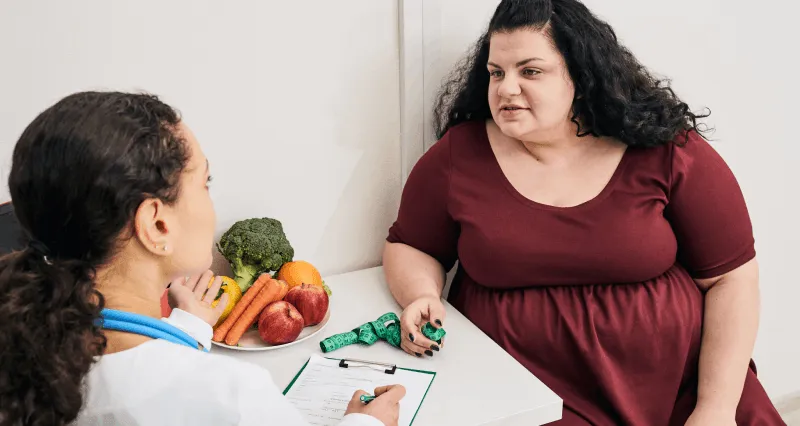
Obesity, accepted as one of the biggest health problems of our age, is not just an aesthetic concern but a chronic disease that shortens life expectancy and reduces the quality of life. According to World Health Organization (WHO) data, obesity is the root cause of more than 40 co-morbidities ranging from diabetes to heart diseases, hypertension to sleep apnea. It is easy to fall into despair when years of diets, heavy exercise programs, and lists started on “Mondays” remain inconclusive. However, modern medicine offers its most powerful weapons in the fight against obesity with revolutionary developments in the field of Bariatric and Metabolic Surgery.
Today, weight loss treatments are not just about “shrinking the stomach.” These procedures are life-saving interventions that “reset” the body’s metabolic settings, regulate hormonal balances, and give the person a second chance. Especially Turkey has become one of the most reliable centers in the world in this field with its experienced surgeons and fully equipped hospitals.
In this comprehensive guide; we will examine the most popular surgical methods (Gastric Sleeve, Gastric Bypass) and non-surgical options (Gastric Balloon, Gastric Botox) in depth, along with all technical details, advantages, disadvantages, and recovery processes.
Understanding Obesity and Candidacy Process
Can everyone have surgery? Or should everyone get a gastric balloon? The answer to these questions lies in the person’s Body Mass Index (BMI) and general health status.
What is Body Mass Index (BMI)?
It is the value obtained by dividing your weight by the square of your height (kg/m²).
- BMI 25-30: Overweight – Candidate for Diet, Exercise, Gastric Balloon/Botox.
- BMI 30-35: Obese (Stage 1) – Surgery may be considered if there is a co-morbidity.
- BMI 35-40: Obese (Stage 2) – Strong candidate for bariatric surgery.
- BMI 40+: Morbidly Obese (Stage 3) – Definitely requires surgical intervention.
Non-Surgical Weight Loss Methods
These are methods developed for those who are afraid of surgical intervention, afraid of anesthesia, or whose weight to be lost is not at the surgical limit (those with 10-20 kg excess).
Gastric Balloon
The gastric balloon is based on the principle of inflating a silicone or polyurethane balloon placed inside the stomach. By occupying a significant part of the stomach volume, it provides early satiety and creates a feeling of fullness.
- Endoscopic Gastric Balloon: Under light sedation (sleep state), it is lowered from the mouth to the stomach with an endoscopy device. It is inflated with blue-dyed saline. The procedure takes 15-20 minutes. There are models that stay in the stomach for 6 months or 12 months. Endoscopy is required again for removal.
- Swallowable Gastric Balloon (Allurion Elipse): Does not require anesthesia and endoscopy. The patient swallows the capsule-shaped balloon with a glass of water. After the location of the balloon is confirmed by X-ray, it is inflated via a thin catheter. Approximately 4 months later, the valve of the balloon opens spontaneously, the fluid inside empties, and the balloon is excreted from the body naturally.
- Who is it Suitable For? Ideal for those with a BMI between 27-35 or super obese patients who need to lose weight to reduce risk before surgery.
- Expected Weight Loss: 10-15% of total weight can be lost.
Gastric Botox
It is the application of “Botulinum Toxin,” used to remove wrinkles on the face, to the stomach muscles.
- Mechanism: With the endoscopic method, botox is injected into specific regions of the stomach (especially the fundus region where the appetite hormone Ghrelin is secreted and the exit gate of the stomach). This process temporarily paralyzes the movement of the stomach muscles.
- Effect: Since stomach muscles slow down, the passage of food from the stomach to the intestine is delayed (gastric emptying time is prolonged). A stomach that normally empties in 2-3 hours stays full for 4-6 hours. This ensures the patient gets hungry much later.
- Duration: The procedure takes 15 minutes, the patient can return home immediately. Its effect lasts 4-6 months.
- Who is it Suitable For? Suitable for people with regional excesses, who cannot manage hunger crises while dieting, and whose BMI is below 35. It does not provide radical weight loss like obesity surgery; it is a method that aids diet.
Bariatric Surgery Methods
Bariatric surgery not only shrinks the stomach but also creates a metabolic and hormonal change. All of these surgeries are performed with the Laparoscopic (closed) method, entering through millimetric holes without opening the abdomen.
Gastric Sleeve
It is the most frequently applied obesity surgery method in the world and in Turkey. Also known as “Stomach Reduction.”
- Procedure: Approximately 75-80% of the stomach is cut and removed with special stapling instruments. A thin, long stomach in the shape of a banana or tube, continuing with the esophagus, is left behind.
- Mechanism (How does it make you lose weight?):
- Volume Restriction (Restrictive): Since the stomach volume shrinks significantly (about 1 tea glass), the patient gets full with a very small amount of food.
- Hormonal Effect: The removed “Fundus” part of the stomach is the center where Ghrelin, the hunger hormone, is secreted. Since this region is taken, the patient’s appetite is cut off sharply. Since the patient does not feel physical hunger, they do not have difficulty complying with the diet.
- Advantages:
- The natural flow of the digestive system is not disrupted.
- Vitamin and mineral deficiencies are seen less compared to bypass methods.
- No foreign body is used.
- Hospital stay is short (2-3 days).
- Who is it Suitable For? Ideal for patients with a BMI of 35 and above, who do not have excessive sweet cravings, and do not have reflux problems.
Gastric Bypass
It is the method accepted as the “Gold Standard,” especially for Type 2 Diabetes patients and those with severe reflux. It is both a restrictive and absorption-disrupting (malabsorptive) surgery.
- Procedure: A small pouch of approximately 30-50 cc is created at the entrance of the stomach. The large part of the stomach remains inside but is passivated (food does not go there). Then, a certain distance is skipped from the beginning of the small intestine, and it is connected to this small stomach pouch.
- Mechanism:
- Restriction: Since the stomach is very small, less is eaten.
- Reducing Absorption: Foods “bypass” (skip) the large stomach and duodenum (the first part of the small intestine) and pass directly to the advanced parts of the small intestine. In this way, some of the calories, fats, and sugars taken are excreted from the body without being absorbed.
- Advantages:
- Type 2 Diabetes: The rate of controlling diabetes is around 85-90%. Patients usually stop insulin and medications upon discharge.
- Reflux: Since the large part producing stomach acid is disabled, it definitively treats reflux.
- Long-Term Weight Control: The risk of regaining weight is lower compared to the gastric sleeve.
Mini Gastric Bypass
It is a simplified and modern version of Roux-en-Y Gastric Bypass. It may be technically easier for the surgeon and have a lower risk of complications for the patient.
- What is the Difference? While two separate connections (anastomoses) are made in the intestines in classic bypass surgery, a single connection is made in Mini Gastric Bypass. The stomach is made into a long tube and connected to the small intestine.
- Advantages: Surgery time is shorter. Its effect on weight loss and diabetes is as strong as classic bypass, sometimes even more effective.
- Disadvantage (Bile Reflux): Since there is a single connection, bile fluid may leak into the stomach, albeit rarely. Therefore, it may not be the first choice in patients with severe reflux.
Which Method is Right for You?
While deciding on the right method, your doctor will look at the following criteria:
| Feature | Gastric Sleeve | Gastric Bypass (RNY) | Mini Gastric Bypass |
|---|---|---|---|
| Weight Loss Speed | High | Very High | Very High |
| Diabetes Effect | Medium/Good (60-70%) | Excellent (85-90%) | Excellent (85-90%) |
| Effect on Reflux | May Increase | Improves (Treats) | May Increase (Bile) |
| Vitamin Supplement | 6-12 Months (Usually) | Lifetime (Mandatory) | Lifetime (Mandatory) |
| Surgery Time | 45-60 Min | 90-120 Min | 60-90 Min |
| Complication Risk | Low | Medium | Low/Medium |
How Does the Process Work?
When you decide to come to Turkey for obesity surgery, the process works as follows:
- Preparation: A detailed “Check-up” is performed before surgery. Cardiology, Chest Diseases, Internal Medicine, Psychiatry, and Anesthesia specialists evaluate the patient. Blood tests, ECG, Chest X-ray, and whole abdominal ultrasound are taken. Endoscopy is performed before surgery to see the condition of the stomach.
- Surgery Day: The procedure is performed under general anesthesia. Since the laparoscopic (closed) method is used, there are no large incisions. The patient is walked with nurse support 4-6 hours after surgery. Early walking is vital to prevent the risk of embolism (clot).
- Hospital Stay: Usually, 3 nights are spent in the hospital. On the 2nd or 3rd day, a “Leak Test” is performed. The patient is made to drink a blue-dyed liquid to check if there is any leakage in the staple line. If everything is fine, liquid feeding begins.
- Discharge and Return Home: The patient is discharged with dietician training and a prescription. There is no harm in getting on a plane.
New Life After Surgery
Bariatric surgery is not a “magic wand,” but a powerful tool. It is in the patient’s hands to use this tool correctly.
Nutritional Stages (First 1 Month is Very Important)
A gradual transition is made for the stomach to heal:
- Days 1-15 (Clear Liquid Period): Only grain-free liquids. Water, apple juice, protein shake, chicken broth, lactose-free milk.
- Days 15-30 (Puree Period): Soft foods that can be mashed with a fork. Boiled eggs, vegetable purees, cottage cheese, fish.
- After Month 1 (Solid Period): Gradual transition to normal foods. Chewing, chewing, and chewing again is the rule!
Vitamin and Mineral Supports
Especially for bypass patients, B12, Iron, Calcium, and Vitamin D supplements are vital. Gastric sleeve patients should also have regular blood tests for the first 1 year and replace deficiencies.
Sagging and Skin Tightening
Skin sagging (abdomen, arms, inner legs) may occur after rapid weight loss. Sports (especially swimming and pilates) help the skin recover. However, for stubborn sagging, “Post-Bariatric Surgery” (Lift surgeries) can be planned after the weight loss process is completed (12-18 months later).
Dumping Syndrome (Only in Bypass)
When bypass patients consume sugary or very fatty foods quickly; they may experience nausea, dizziness, palpitations, and cold sweating. This is called “Dumping Syndrome.” In fact, this syndrome is like a “seat belt” that keeps the patient away from harmful foods.
Frequently Asked Questions (FAQ)
Is obesity surgery risky? Every surgical procedure has risks (bleeding, infection, leakage). However, in experienced hands and equipped hospitals, this risk is not higher than the risk of gallbladder or appendix surgery (between 0.1% – 0.5%). The fatal risks caused by obesity are much higher than the surgical risk.
Will the stomach grow again? The stomach is a flexible organ. If the patient does not pay attention to the solid-liquid distinction, drinks carbonated beverages, and eats constantly pushing the limits, the stomach volume may expand slightly (10-15%). However, it never returns to its old massive size. The reason for weight gain is usually the consumption of high-calorie liquids (milkshakes, alcohol, ice cream).
Will my hair fall out? Hair loss can be seen during the rapid weight loss process (between months 3 and 6) because the body enters stress. This is temporary. When vitamin values (especially Zinc, Biotin, Iron) get regulated and weight loss speed decreases, hair grows back thicker.
When can I get pregnant? Pregnancy is not recommended for at least 18 months (ideally 24 months) after surgery for the body’s nutrient stores to fill up and the weight to settle.
Give Yourself a Chance
Living with obesity is like running a marathon with a heavy bag on your back. Bariatric surgery takes that bag off your back and offers you the freedom of lightening up. Getting rid of diabetes, breathing comfortably, running and playing with your children, and making peace with your image in the mirror is not a dream.
This journey is not just about losing weight; it’s about regaining your health, self-confidence, and future.