
Part of: Dental treatment in Turkey — prices, what is included and country comparison.
What is All On Four and How Does it Solve the Problem of Complete Edentulism?
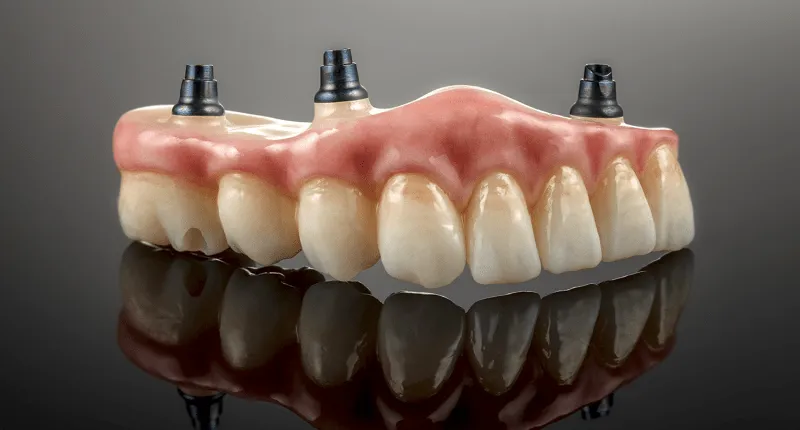
All On Four, as the name suggests, is an innovative technique applied to patients experiencing complete edentulism (total tooth loss), offering a fixed full-arch prosthesis solution by placing only four dental implants in a jaw (upper or lower). This revolutionary treatment protocol was developed to provide a definitive and aesthetic answer to the comfort and stability problems experienced by conventional denture users for years in dentistry. While traditional implant methods might require eight or more implants for a full arch restoration, the All On Four technique strategically reduces the number of implants to four, thus shortening the surgical procedure and optimizing costs.
Fundamentally, two implants in the anterior region are placed vertically into the bone, while the two implants in the posterior region are placed at an inclined angle of 30 to 45 degrees. This angled placement is the most critical feature of the All On Four technique. Thanks to this inclination, typically insufficient bone areas in the posterior jaw, which would otherwise require advanced surgical procedures (like sinus lifts or bone grafting), are avoided. The implants anchor into the densest available bone structure, ensuring the fixed stability of the prosthesis.
This acts as a bridge, allowing the patient to receive fixed teeth, albeit temporary, on the same day (thanks to the immediate loading protocol). All On Four is not only an aesthetic solution but also a functional rehabilitation method that helps preserve facial structure in the long term by halting the resorption of the jawbone. Problems such as difficulty chewing, speech impairments, and loss of social self-confidence caused by edentulism can be completely eliminated with the fixed and natural-looking teeth provided by this technique. This technique is one of the most concrete examples of modern dentistry prioritizing the patient’s quality of life.
Advantages of the All On Four Technique Compared to Traditional Dentures
Traditional removable dentures, especially in cases of complete edentulism, lead to many problems that negatively affect patients’ quality of life. The biggest disadvantage of these prostheses is their inability to provide sufficient retention and their tendency to move during chewing. Patients frequently encounter issues such as the denture slipping while eating, pain, reduced sense of taste, and insecurity in social settings. The All On Four technique eliminates all these problems. The first and most crucial advantage is the stability and comfort it offers.
Prostheses secured with All On Four have a strong grip on the jawbone, just like natural teeth; this means the patient can chew even the toughest foods confidently. This stability transmits chewing force directly to the bone, which, unlike traditional dentures, helps halt bone resorption instead of accelerating it. The second important advantage is the rapid treatment process. In suitable patients, the surgical procedure and the fitting of the temporary prosthesis can be completed in a single day. This “Teeth in a Day” concept eliminates waiting periods that could last for months. Thirdly, All On Four generally eliminates the need for advanced bone grafting procedures.
The angled placement of implants allows avoidance of areas with minimal bone, making the treatment less invasive and faster. Finally, it is aesthetically superior. The fixed prosthesis is prepared with pink acrylic or porcelain materials that mimic natural gums and perfectly harmonize with the natural dental arch. This offers the closest experience to natural teeth, both functionally and cosmetically, eliminating the artificial appearance of traditional dentures. For patients, this means not just regaining their teeth, but also regaining the confidence and comfort they had lost.
Who is a Suitable Candidate for All On Four Treatment?
While the All On Four treatment is an ideal solution for patients experiencing complete edentulism or those whose existing teeth are too severely damaged to be saved and require extraction, not every patient is automatically a suitable candidate for this technique. Candidacy evaluation is performed through a comprehensive intraoral examination, panoramic X-rays, and especially three-dimensional computed tomography (CBCT) of the jaw.
The most suitable candidates are generally individuals who have lost all their teeth in the upper or lower jaw and have been using removable dentures for many years. These patients complain about their dentures moving, causing mouth sores, and resulting in difficulty chewing. Another critical group of candidates for All On Four includes patients who are about to lose their teeth and whose remaining teeth cannot be salvaged. In this case, the remaining teeth can be extracted, and the implants placed in the same session.
Due to the key advantage of All On Four in reducing the need for bone grafting, patients with mild or moderate bone loss in the posterior jaw regions may also be suitable for this treatment; however, it is essential that the bone in the anterior jaw region, where the implants will be placed, has sufficient width and density. Conditions that may preclude treatment include uncontrolled diabetes, severe osteoporosis (bone loss), a history of radiation therapy, or heavy smoking. Especially smoking is strongly discouraged as it negatively affects the healing process and increases the risk of implant failure.
In conclusion, the most suitable candidate for All On Four is a highly motivated individual with good general health, appropriate underlying bone structure, and a definite need for a fixed, comfortable dental prosthesis. A detailed consultation will definitively determine whether a patient can benefit from this innovative technique.
How Does the All On Four Treatment Process Work Step-by-Step?
The All On Four treatment process consists of several critical stages from the planning phase to the delivery of the final prosthesis and can generally be examined in three basic phases: planning and preparation, surgical procedure and immediate loading, and finally, the construction of the permanent prosthesis. The first step of the process is a detailed examination and diagnosis. In this phase, the patient’s general health status is evaluated, and CBCT (cone-beam computed tomography) images are taken.
This three-dimensional imaging shows the clinician the precise structure, density, and location of nerve/sinus cavities in the jawbone. Based on this data, the clinician plans the exact location and angle of implant placement with millimeter precision. The second phase is the day of the surgical procedure. If the patient has teeth that need extraction, these teeth are removed in the same session. Then, four implants are placed: two vertically in the anterior region and two at an angle in the posterior region. This procedure is usually performed under local anesthesia, but sedation or general anesthesia may be preferred for patient comfort. As soon as the surgery is finished, the immediate loading protocol is initiated. This means that the prefabricated temporary fixed prosthesis is screwed onto the newly placed implants.
Patients leave the clinic with fixed teeth immediately after the operation, although they are restricted to a soft diet. The third and final phase is the healing and permanent prosthesis construction phase. A healing period of typically three to six months is awaited for the implants to fully integrate with the jawbone (osseointegration). During this time, the patient uses the temporary prosthesis. Once healing is complete, the clinician takes impressions and prepares the permanent prosthesis, which is much more durable and aesthetic, using materials like zirconia, porcelain, or metal-supported alternatives. The permanent prosthesis is designed to perfectly fit the patient’s oral structure and aesthetic expectations and is fixed onto the implants, completing the treatment.
Surgical Procedure Details: Implant Placement
The All On Four surgical procedure is a specialized technique that requires high precision and experience. The procedure is usually performed by an oral and maxillofacial surgeon or a dentist specialized in implantology.
Before the surgery, an appropriate method of anesthesia (local, sedation, or general) is administered to reduce patient anxiety and ensure comfort. During the procedure, the gum tissue is first opened with a small incision to access the area. If there are teeth that need extraction, they are gently removed at this stage. The uniqueness of All On Four lies in the positioning of the implants. The anterior region of the jaw, which typically has the highest bone density, is where two implants are placed at a straight (0-10 degrees) angle. The critical difference is seen in the posterior implants. Since there is often insufficient bone volume in the posterior region and implant placement is challenging due to the sinus cavities (in the upper jaw) or the nerve canal (in the lower jaw), the two implants to be placed in this area are positioned at an inclined angle of 30 to 45 degrees.
This inclination allows the use of longer implants, thereby anchoring into a wider bone surface, and avoiding weakness in the posterior bone regions and anatomical limitations. In this way, the implants achieve stable primary stability within the bone. After all implants are placed, special components called Multi-Unit Abutments are positioned on the implants. These components are designed to allow the prosthesis to sit straight, even though the underlying implants are angled. Following the completion of the surgical procedure, gum sutures are placed, and the immediate loading phase begins. This precise and strategic placement forms the foundation of the long-term success of the All On Four technique.
Fixed Teeth in One Session: What is the Immediate Loading Protocol?
The immediate loading protocol (Immediate Loading) is the most striking feature that distinguishes the All On Four technique from traditional implant treatments. This protocol means that a fixed temporary prosthesis is attached to the implants on the same day, or at the latest within 72 hours, of the implants being surgically placed. For patients, this means the comfort of transitioning from a state of “edentulism” to having “fixed teeth” when they leave the clinic.
In traditional implantology, it was usually necessary to wait 3 to 6 months for the implants to fuse with the bone (osseointegration), during which time the patient would use a removable denture or remain toothless. Immediate loading eliminates this waiting period. However, two basic conditions must be met for this protocol to be applied: first, the implants must be fixed into the bone with a very high initial torque value (primary stability) during the surgical procedure. This torque indicates that the implant is sufficiently tight and stable within the bone. All On Four’s angled placement strategy is advantageous in achieving this high stability because it targets the areas of highest bone density.
The second condition is that the patient must strictly adhere to a soft diet during the healing period to prevent excessive load on the prosthesis. The temporary prosthesis is designed to meet aesthetic and functional needs, but its main purpose is to provide minimal and controlled load, allowing the implants to fuse with the bone without problems. The temporary prosthesis fitted with immediate loading is usually made of acrylic and is lighter in structure. Once the healing process is complete, this temporary prosthesis is replaced by the permanent prosthesis, which is much more durable and aesthetic. Immediate loading not only instantly improves the patient’s aesthetic and social life but also supports the early recovery of chewing function.
Post-All On Four Healing Period and Things to Consider
The healing period after the All On Four surgical procedure is vitally important for the long-term success of the treatment. Since it is a surgical procedure, swelling, slight pain, and bruising are normal during the first few days. Painkillers and antibiotics prescribed by the clinician should be used regularly. Applying cold compresses intermittently for the first 24-48 hours is extremely important to reduce swelling. However, the most critical part of the healing period is the process of osseointegration, where the implants fuse with the jawbone. This process usually takes 3 to 6 months, and during this time, the patient must prevent excessive load on the implants.
Therefore, the patient must strictly adhere to their diet. Even with immediate loading, hard, crusty, sticky, or difficult-to-chew foods must be strictly avoided during the first 3-6 months. This diet minimizes the force exerted on the implants, allowing them to fuse with the bone. Oral hygiene is also crucial during the healing process. Although the surgical area needs gentle protection on the first day, special mouthwashes should be used as recommended by the clinician, and the temporary prosthesis and implant surroundings should be cleaned with soft brushes.
Inadequate hygiene can lead to infection around the implant (peri-implantitis) and cause treatment failure. Furthermore, smoking must be strictly prohibited during this period. Smoking slows wound healing and increases the risk of infection exponentially. Regular attendance at follow-up appointments determined by the clinician is mandatory for monitoring the healing process and early intervention in case of potential problems. Proper care and strict adherence to the clinician’s instructions are the keys to the long-lasting success of All On Four treatment.
What Factors Affect Treatment Success?
The long-term success of All On Four treatment is not solely dependent on the quality of the surgical technique but is determined by a combination of multiple factors. At the forefront of these factors are the patient’s general health status and oral hygiene habits. Uncontrolled diabetes, immune system diseases, or conditions affecting bone metabolism can negatively impact the osseointegration process. Therefore, chronic diseases must be stabilized before surgery.
The second important factor is the clinician’s experience and the surgical technique used. Since All On Four is a special protocol requiring angled implant placement, precise planning using 3D imaging and surgical guides by an experienced surgeon in this field forms the basis of success. The primary stability (torque value) achieved by the implants in the bone is a vital indicator for the success of the immediate loading protocol. Thirdly, the design and material of the prosthesis are very important. The temporary and permanent prostheses must be designed with correct occlusion (bite) to distribute the load evenly across the implants. Incorrect bite or excessive chewing force can put unnecessary stress on the implants, leading to failure.
The fourth critical factor is the patient’s strict adherence to post-healing instructions, especially the soft diet rule. Excessive load on the implants in the early period can prevent fusion with the bone. Finally, long-term maintenance and regular check-ups after the treatment are indispensable for maintaining the health of the gums around the prosthesis and implants. When all these factors are managed optimally, the potential for All On Four implants to serve trouble-free for decades is very high.
How Should Long-Term Care for All On Four Implants be Performed?
Although fixed teeth obtained with All On Four treatment offer comfort similar to natural teeth, special and meticulous care is required for the implants to last long. This care basically includes the maintenance of natural teeth plus special cleaning of the area under the prosthesis. Since the All On Four prosthesis is positioned just above the gum line, there is a risk of food debris and bacterial plaque accumulating under the prosthesis. This accumulation can lead to inflammation around the implant (peri-mucositis) and, in advanced stages, to bone loss around the implant (peri-implantitis).
The cleaning routine must consist of the following basic components: Firstly, the entire surfaces of the prosthesis should be brushed at least twice a day with a soft-bristled toothbrush and non-abrasive toothpaste. Secondly, and most importantly, special tools must be used to clean the space under the prosthesis. These include special implant floss (e.g., Superfloss), interdental brushes, and water jet (oral irrigator) devices that can easily pass under the prosthesis.
The water jet is an extremely effective tool, especially in cleaning food debris and plaque in hard-to-reach areas under the prosthesis with a strong stream of water, and is considered almost mandatory for All On Four care. Thirdly, regular professional maintenance is essential. Patients must visit a dentist or hygienist specialized in implant maintenance, usually every three to six months.
During these checks, the clinician cleans hardened plaque (calculus) accumulation under the prosthesis with special instruments, checks the prosthesis screws, and evaluates the gum health around the implants. The screwed structure of the prosthesis also allows the clinician to remove the prosthesis for detailed cleaning and maintenance when necessary. It should be remembered that All On Four care requires no less, but rather more attention than natural tooth care.
What are the Key Differences Between All On Four and All On Six?
Both All On Four and All On Six techniques are modern implant protocols used to restore completely edentulous jaws with fixed prostheses. The main difference between them, as implied by their names, is the number of implants placed in a jaw. All On Four uses four implants, while All On Six uses six implants. This difference in number directly affects the treatment indications, bone requirement, and the long-term mechanical durability of the prosthesis.
All On Four was developed to eliminate the need for bone grafting in situations with less bone volume, particularly where anatomical limitations such as sinus cavities and the nerve canal exist. Two of the four implants are placed at an angle to maximize the use of existing bone. This technique generally offers a lower cost and faster surgical procedure.
All On Six, on the other hand, increases the support points of the prosthesis by using six implants and spreads the load distribution over a wider area. This may be preferred, especially in patients with strong chewing forces or those requiring a longer prosthesis. All On Six requires relatively better bone volume than All On Four. If the jawbone is strong and voluminous enough to allow the placement of six implants at a vertical or slightly inclined angle, the clinician may recommend All On Six for greater stability and prosthesis strength.
In summary, All On Four is a great solution for maximizing benefit with less bone and simplifying surgery, while All On Six is a stronger option preferred for adding extra support and long-term mechanical security to the prosthesis when the bone condition is suitable. The goal of both techniques is the same: to provide the patient with a fixed and comfortable smile. The decision on which technique to apply is made based on the patient’s detailed bone structure and the clinician’s clinical assessment.
Impact on Patients’ Quality of Life in Terms of Aesthetics and Function
The impact of All On Four treatment on patients’ quality of life represents much more than just a dental restoration. The physical and psychological difficulties caused by complete edentulism or the use of removable dentures are completely eliminated with this fixed solution.
Functionally, All On Four provides the patient with chewing efficiency close to that of natural teeth. Chewing power, which ranges from 10 to 25 percent with removable dentures, can increase up to almost 90 percent with All On Four. This means the patient can once again eat foods they previously avoided and can eat a more balanced and healthy diet. Stability is critical not only when eating but also when speaking. Being able to speak clearly and naturally without the fear of the prosthesis slipping positively affects social interactions and work life.
Aesthetically, All On Four prostheses are custom-designed and colored to match facial features, lip line, and skin tone. The artificial gums (pink porcelain or acrylic) on the prosthesis compensate for gum recession following extractions, creating a full and youthful smile line. This also has a supportive effect on the patient’s facial profile, preventing the face from collapsing.
The combination of these physical and aesthetic improvements incredibly boosts the patient’s psychological state and self-confidence. The elimination of anxiety about the prosthesis falling out while eating, smiling, or speaking reduces social anxiety. Patients start feeling young, healthy, and socially comfortable again. All On Four is, in short, a “smile transformation” that enables the patient’s full re-engagement with life after years of struggling with tooth loss or dentures.
Factors Determining the Cost of All On Four Treatment
Since All On Four treatment requires a more comprehensive surgical and prosthetic application than a standard dental filling or extraction procedure, its cost is also higher. However, the cost is dependent on many variables that differ from patient to patient and clinic to clinic.
The main factors determining the cost are:
- Implant Brand and Quality Used: There are many different brands in the world of implantology. Premium brands generally increase the cost because they offer higher biocompatibility, better surface features, and long-term clinical success data.
- Permanent Prosthesis Material: The material used in the construction of permanent prostheses constitutes a significant part of the cost. Metal-supported acrylic prostheses are more economical than zirconia-supported porcelain prostheses. Zirconia is the most aesthetic and expensive option due to both its durability and natural light transmission (translucency).
- Clinician’s Experience and Clinic Location: The experience and specialization of the surgeon performing the treatment and the geographical location of the clinic (major cities vs. smaller settlements) create differences in pricing. A special technique like All On Four requires an experienced specialist.
- Additional Treatment Requirements: If the patient requires additional tooth extractions, gum treatment, or limited bone grafting (if necessary) before starting the treatment, these additional procedures will increase the total cost.
- Type of Anesthesia: Whether the treatment is performed under local anesthesia, sedation, or general anesthesia involves an anesthetist and additional costs. Especially sedation and general anesthesia, while increasing comfort, affect the cost.
- Nature of the Temporary Prosthesis: The quality and preparation process of the temporary prosthesis used in the immediate loading protocol are also reflected in the price.
It is a much more sensible approach for patients in the long term to prioritize investing in implant quality, prosthesis material, and clinician experience, which is associated with better long-term outcomes, rather than just focusing on the lowest price.
Choosing the Right Clinician and Center for a Successful All On Four
All On Four is a special protocol that requires a multidisciplinary approach and advanced surgical skills, rather than being a standard dental procedure. Therefore, the success of the treatment largely depends on choosing the right clinician and center.
Things to consider when choosing a good clinician:
- Area of Expertise and Experience: It is important that the clinician performing complex surgical procedures like All On Four has a degree of specialization in oral and maxillofacial surgery or implantology. The clinician’s duration of practicing this technique and the number of cases experienced should be questioned.
- Technological Equipment: Successful All On Four planning requires advanced imaging technologies such as CBCT (cone-beam computed tomography) and digital impression systems. The presence of these technologies in the center allows for planning with millimeter precision.
- Implant Brands: The implant brands the clinician works with should be internationally accepted, have clinical studies, and be on the market for a long time, which is critical for the reliability of the implants.
- Patient References and Transparency: The clinician providing the opportunity to see the results of previous All On Four cases (before/after photos) and informing the patient in a transparent and understandable language about the treatment process, potential risks, and maintenance requirements increases trustworthiness.
- Multidisciplinary Approach: The best results are achieved when the surgeon and the prosthodontist designing the prosthesis, along with the technician, work in harmony. Whether the center can provide this multidisciplinary coordination is important.
- Oral Hygiene Follow-up Program: A good center not only performs the treatment but also offers a lifelong maintenance program to the patient and monitors the health of the implants with regular check-ups.
Choosing the right clinician minimizes both surgical risks and ensures a lasting result that meets the patient’s aesthetic and functional expectations at the highest level.
What Are the Possible Risks and Complications?
Like any surgical procedure, All On Four treatment has potential risks and complications. It is essential that patients are thoroughly informed about these risks before the procedure so they can make an informed decision.
Possible risks include:
- Osseointegration Failure: The most significant risk is the implant not fully fusing with the jawbone (osseointegration failure). Causes include infection, poor bone quality, uncontrolled systemic diseases (diabetes), smoking, or excessive load on the implant during the healing period. Failure may require the removal of the implant and reimplantation after the area has healed.
- Peri-implantitis: This is the inflammation of the gum and bone around the implant. It occurs due to poor oral hygiene and lack of regular maintenance. If untreated, it can lead to bone and implant loss.
- Nerve Damage: Since work is done close to the mandibular nerve (the nerve providing sensation to the lower lip and chin tip), temporary or permanent nerve damage can rarely occur, especially when placing implants in the lower jaw. This can cause numbness in the lip, tongue, or chin tip. Correct planning (with CBCT) minimizes this risk.
- Sinus Complications (Upper Jaw): Angled implants in the upper jaw are placed close to the sinus cavity. A planning error can rarely lead to perforation of the sinus membrane or sinusitis.
- Temporary Prosthesis Problems: Mechanical issues such as breakage or loosening of the screws can occur in the temporary prosthesis fitted with immediate loading, especially if the rules are not followed during the healing period.
- Mechanical Complications (Permanent Prosthesis): Situations such as porcelain fractures, loosening or breaking of the screws holding the prosthesis can occur during the lifespan of the permanent prosthesis. These problems can usually be easily repaired.
Most of these risks can be largely prevented or managed with advanced surgical planning techniques, high-quality implants, and most importantly, the patient’s strict adherence to the clinician’s instructions and long-term care rules.
Can All On Four Be a Solution for Patients with Bone Loss?
Bone loss (atrophy) is the most common problem faced by completely edentulous patients, and in traditional implant treatment, it often necessitates long and costly bone grafting procedures. Since the All On Four technique was developed in response to this challenge, it is often seen as a savior for patients with bone loss.
The main reason All On Four offers a solution in cases of bone loss is the implant placement strategy:
- Angled Placement: While traditional implants are placed vertically, the posterior implants in All On Four are placed at an inclination of 30-45 degrees. This inclination allows clinicians to focus on the anterior regions, which typically have the least resorption and highest bone density. This strategy helps avoid posterior regions with advanced bone loss and anatomical limitations such as sinus cavities (in the upper jaw) or the mandibular nerve (in the lower jaw).
- Use of Longer Implants: Angled implants can be longer than implants that can be placed vertically. Longer implants increase the contact surface with the bone, providing better primary stability, and thus increasing the chance of implant retention even with minimal bone.
- Reduced Need for Advanced Grafting: All On Four eliminates the need for major surgical procedures such as sinus lifts or large block bone grafts in many patients. This shortens both the treatment time (bone graft healing takes approximately 6-12 months) and reduces surgical trauma and cost.
However, even for All On Four to be applicable, there must be sufficient quality and quantity of bone in the anterior region of the jaw (where the canine and incisor teeth are) to support the four implants. If bone loss is very advanced and even the anterior bone is insufficient, then limited bone grafting or different implant systems (such as zygomatic implants) may need to be considered. For the vast majority of patients with moderate to advanced bone loss, All On Four is considered the fastest, least invasive, and most effective way to fixed teeth.
Frequently Asked Questions by Patients and Their Answers
There are many questions that arise in the minds of patients considering All On Four treatment. These questions usually focus on pain, aesthetic results, and the lifespan of the implants.
Is Pain Experienced During or After the Procedure?
Since the surgical procedure is generally performed under local anesthesia, the patient does not feel any pain or discomfort during the procedure. If sedation or general anesthesia is preferred, the patient sleeps through the entire process. After the procedure, mild to moderate pain and swelling are expected as the effect of the anesthetic wears off. However, painkillers prescribed by the clinician effectively control this pain. The pain sensation usually decreases significantly within 3-5 days, and this process is similar to the pain experienced after traditional tooth extraction. Cold compresses are also recommended for swelling.
How Natural Do All On Four Prostheses Look?
One of the main goals of All On Four treatment is maximum aesthetics. Permanent prostheses are specially prepared in the laboratory, taking into account the patient’s facial features, smile line, and even personal preferences. The color, shape, and size of the teeth are completely customized. Furthermore, the gum parts of the prosthesis (pink acrylic or porcelain) are colored and designed to mimic natural gums. As a result, the fixed prosthesis offers an aesthetic appearance that is indistinguishable from natural teeth. Compared to natural teeth, the aesthetics of the prosthesis are at a high level thanks to modern prosthetic materials.
What is the Lifespan of All On Four Implants?
Dental implants have the potential to serve for life with correct placement, sufficient bone fusion, and most importantly, appropriate care. The literature shows that the 10-year success rates of implants placed with the All On Four technique are over 95%. However, this longevity is directly dependent on the patient’s regular and meticulous oral hygiene habits and periodic check-ups with the clinician. To minimize the risk of peri-implantitis (inflammation around the implant), the number one cause of implant loss, the patient must keep the areas under the prosthesis constantly clean using special brushes and a water jet. The prosthesis itself may require renewal after 10 to 15 years due to aesthetic or functional reasons, depending on the material used.
How Long Does it Take to Complete This Treatment Process?
The surgical and immediate loading phase of All On Four treatment is usually completed in a single day (with a procedure lasting a few hours). Patients return home with fixed teeth. However, the full completion of the treatment takes 3 to 6 months due to the healing process required for the implants to fuse with the bone. Once the healing period is complete (3-6 months), the construction of the permanent prosthesis begins. The laboratory process and try-in stages of the permanent prosthesis usually take 1 to 3 weeks. Therefore, the entire treatment process from start to finish, from the initial consultation to the placement of the permanent prosthesis, can range from an average of 4 to 7 months.
Characteristics of Materials Used in All On Four Treatment
All On Four treatment requires the use of high technology and quality materials in both the surgical and prosthetic stages. These materials, which directly affect the success and longevity of the treatment, are divided into two main categories: implants and prosthesis materials.
Implant Materials:
The implants themselves are made of Titanium or Titanium Alloys, which are perfectly biocompatible with the human body. Titanium is the gold standard of dental implantology due to its ability to fuse with bone (osseointegration). Implants used in All On Four systems are specially designed with surfaces to ensure rapid and strong bone fusion. These surfaces are typically micro-roughened and contain special coatings that facilitate the attachment of bone cells.
Prosthesis Materials:
Prostheses are of two types, temporary and permanent, and are made of different materials:
- Temporary Prosthesis (Immediate Loading Phase): It is generally made of Acrylic material. Acrylic is light and durable enough to provide aesthetic and functional support without overstressing the implants. Its purpose is to maintain aesthetics and limited chewing function during the healing period.
- Permanent Prosthesis: Permanent prostheses must provide long-lasting durability and superior aesthetics. The main materials used are:
- Metal-Supported Acrylic: The most economical permanent prosthesis option. Its internal structure is reinforced with a metal framework (usually chrome-cobalt), and its outer surface is covered with aesthetic acrylic teeth and gums. It is durable but not as aesthetic as zirconia.
- Metal-Supported Porcelain: Prepared by baking porcelain teeth onto a metal framework. Porcelain is harder and aesthetically superior to acrylic but is heavier and may have a slightly higher risk of chipping compared to acrylic.
- Zirconia-Supported Porcelain/Zirconia Full Prosthesis: The most preferred and most aesthetic option today. Zirconia is a biocompatible, extremely strong, and translucent material that transmits light similarly to a natural tooth. Since it contains no metal, it offers a more natural look and represents the most durable solution in the long term. However, it is the highest cost option.
These high-quality materials and precise laboratory procedures used in the construction of the prosthesis are the fundamental elements that ensure the success and longevity of All On Four treatment.
Psychological and Social Dimensions of All On Four Treatment
Tooth loss is more than just a physical problem; it profoundly affects an individual’s psychological and social life. All On Four treatment is a powerful psychosocial rehabilitation tool that reverses these effects.
Regaining Self-Confidence: Aesthetic concerns caused by complete edentulism or removable dentures can lead individuals to avoid smiling, speaking in social settings, or taking photos. The fixed, natural-looking teeth obtained with All On Four eliminate these anxieties. Patients can participate in social interactions more comfortably and confidently, without feeling the need to hide their smiles. This leads to an increase in the person’s self-esteem and overall life satisfaction.
Comfort in Social and Work Life: One of the biggest fears for removable denture users is the prosthesis suddenly slipping or falling out while eating or speaking. This anxiety causes stress, especially in professional and social settings such as business dinners, presentations, or social gatherings. The fixed and stable nature of All On Four prostheses reduces the risk of such embarrassing moments to zero. Patients can eat and communicate with complete ease and without worry, which reduces social isolation.
Regaining Taste and Healthy Eating: Since the palate area is left exposed with All On Four, the reduction in the sense of taste caused by the palate being covered by traditional upper dentures is eliminated. Patients can once again taste the true flavor of food. Furthermore, the full recovery of chewing function allows for the re-consumption of nutrient-rich foods such as vegetables, fruits, and meat, which were previously avoided. This improves the health of the digestive system and directly enhances the patient’s overall nutritional quality and thus body health.
Rapid Change and Motivation: The patient receiving fixed teeth in a single day thanks to the immediate loading protocol increases faith and motivation in the treatment. This rapid aesthetic and functional improvement helps the patient adapt to the process psychologically faster and adhere more strictly to healing instructions. All On Four is, in short, an investment that transforms not only the teeth but also the patient’s life and psychology.
The Role of Digital Dentistry in All On Four Treatment
Modern All On Four applications have become a more precise, predictable, and patient-comfort-enhancing process thanks to the integration of digital dentistry technologies. Digital tools play a critical role in every stage of the treatment.
1. Digital Diagnosis and Planning: At the beginning of the treatment, Cone-Beam Computed Tomography (CBCT) images are taken instead of traditional X-rays. These 3D images show the exact location of the jawbone density, nerve canals, and sinus cavities with millimeter precision. The clinician uses this data to digitally determine the most ideal angle and position for implant placement using specialized implant planning software. This planning minimizes surgical risks and maximizes treatment success.
2. Use of Surgical Guide: Once digital planning is complete, this data is converted into a surgical guide using 3D printers. The surgical guide is a custom-made template that enables the clinician to drill the implant holes at the exact planned angle and depth during the surgery. The use of this guide shortens the surgical time, reduces surgical trauma, and guarantees the implants are in the ideal position. This is vital for the precise angled placement requirement of All On Four.
3. Digital Impression and Prosthesis Design (CAD/CAM): After the implants are placed or the healing period is over, an impression is taken for the permanent prosthesis. Today, this is often done digitally with intraoral scanners instead of traditional paste impressions. Digital impressions are sent to the laboratory in seconds, and the prosthesis’s aesthetics and occlusion (bite) are precisely designed in computer-aided design (CAD) software. Then, computer-aided manufacturing (CAM) devices (milling machines) produce these designs from zirconia or other materials with a perfect fit. This digital workflow eliminates fit problems that may arise from human error in the prosthesis and offers the patient a faster, more comfortable experience.
The integration of digital dentistry into All On Four not only makes the treatment more effective but also allows patients to see their treatment outcome expectations in advance.
Is All On Four Treatment a Permanent Solution?
All On Four, when applied correctly and when the patient’s long-term care is not neglected, is considered one of the most permanent and lifelong solutions offered against complete edentulism. This permanence stems from both the implants themselves and the design and material of the prosthesis.
Longevity of Implants: Dental implants are made of biocompatible titanium, which is not rejected by the body, and they fuse firmly with the jawbone. If no infection (peri-implantitis) occurs around the implant and no excessive mechanical load is placed, the implants can remain part of the bone for life. The All On Four technique’s angled placement strategy targets the areas of highest bone density, increasing the implant’s initial stability and thus the long-term retention rate. Regular check-ups with the clinician and professional cleaning are the key to maximizing the lifespan of the implants.
Maintenance and Renewal Needs of the Prosthesis: The prosthesis on All On Four is not guaranteed for life like the implants, and this is due to two main reasons:
- Wear: The materials used in the prosthesis (acrylic, porcelain, zirconia) naturally wear down or change color over time due to chewing forces, biting, brushing, and other intraoral factors. Especially the wear rate of Acrylic prostheses is higher than that of porcelain or zirconia.
- Oral Changes: Although implants protect the bone, the gum and soft tissues of the mouth continue to change very slowly with age. These changes can impair the fit of the prosthesis to the implants and surrounding tissues.
For these reasons, the average lifespan of the permanent prosthesis can range from 10 to 15 years, depending on the material used and patient care. Even if the prosthesis needs to be renewed for aesthetic or functional reasons, as long as the implants carrying the prosthesis remain sound, a new prosthesis can easily be mounted onto the old implants. This shows that the All On Four is the truly permanent solution: the foundational infrastructure (implants) is preserved, and only the superstructure (prosthesis) is renewed. In this aspect, All On Four, unlike removable dentures, offers a highly sustainable fixed solution that preserves the jawbone in the long term.
Common Misconceptions to Avoid in All On Four Treatment
As All On Four has become a popular treatment, some misconceptions and incomplete information about it have also spread. Clarifying these misconceptions is critical for patients to have realistic expectations.
Misconception 1: “Everyone Leaves with Permanent Teeth in One Day.”
Reality: While the term “Teeth in a Day” is accurate, it usually refers to the temporary fixed prosthesis fitted immediately after the surgical procedure. Permanent, definitive prostheses are fitted after the 3 to 6-month healing period required for the implants to fully integrate with the bone. The patient spends this waiting period with fixed temporary teeth, but the durability and aesthetics of the permanent prosthesis are much higher.
Misconception 2: “I Can Eat Anything I Want with All On Four.”
Reality: This is only true after the permanent prosthesis is fitted, and even then, some hard, crunchy foods should be consumed with caution. Especially with the temporary prosthesis fitted after immediate loading, a soft diet must be strictly adhered to for 3-6 months. Failure to comply with this rule is the biggest mistake that can lead to implant failure. Strict adherence to this diet is essential for the implants to fuse with the bone without problems.
Misconception 3: “All On Four Care is Just Like Natural Teeth.”
Reality: Although All On Four prostheses look like natural teeth, their care must be more special and meticulous. Due to the prosthesis forming a bridge over the implants, there is a high risk of food debris and bacterial plaque accumulating in the spaces under the prosthesis. Cleaning this area requires not only standard brushing but also the use of additional cleaning tools such as special implant floss (Superfloss) and a water jet (oral irrigator). Regular professional cleaning appointments are also mandatory.
Misconception 4: “All On Four is the Only Treatment That Doesn’t Require Bone Grafting.”
Reality: While All On Four is a solution that greatly reduces the need for bone grafting, limited bone grafting may still be required in very advanced bone loss cases (especially if even the anterior bone to support the four implants is insufficient). The technique aims not to eliminate grafting entirely but to avoid this complex and time-consuming procedure. The clinician decides whether grafting is necessary by evaluating each patient’s condition with tomography.
Replacing these misconceptions with accurate information will enable patients to start the treatment more consciously and healthily.
Differentiating Features of All On Four Implants
Behind the global popularity of the All On Four concept, there are several unique and differentiating features that set it apart from other full restoration methods. These features directly affect the success, speed, and cost-effectiveness of the treatment.
1. The Power of Angulation: The most distinctive feature of All On Four is the placement of the two posterior implants at an inclined angle of 30 to 45 degrees. While traditional approaches require vertical implant placement, this angled placement: * Avoids Anatomical Structures: Easily avoids the sinus cavities in the upper jaw and the nerve canal in the lower jaw. * Benefits from Bone Density: Anchors the implants into the denser and higher-quality bone in the anterior and middle parts of the jawbone. This increases the implant’s primary stability.
2. Immediate Loading Capacity (Immediate Function): This protocol allows a fixed temporary prosthesis to be fitted on the same day the implants are placed. This is not only an aesthetic advantage but also a biomechanical advantage believed to accelerate the healing process by allowing the implants to heal under a controlled load within the bone. Patients can continue their social and functional lives without interruption.
3. Reduced Number of Implants: The use of only four implants for full arch rehabilitation reduces the implant cost and surgical complexity. While traditionally eight or more implants might be needed, this strategic placement allows the number of implants to be halved, making the treatment more accessible and providing a solution even in areas with advanced bone loss.
4. Flexibility in Prosthetic Design (Posterior Extension): Although All On Four prostheses are supported by only four implants, they can be designed with cantilever extensions in the posterior regions. This allows the prosthesis to extend to the very back tooth areas, ensuring the full recovery of chewing function. The angled implants serve as a strategic support point to counterbalance potential stresses that these extensions might cause.
The combination of these differentiating features has made All On Four one of the most attractive and scientifically proven alternatives for patients with bone loss, time constraints, and a search for a fixed dental solution. The success of the treatment depends on the meticulous application of these unique design principles by the clinician.
This page covers one procedure in detail. For prices, what is included and how the whole trip works, see our overview of dental treatment in Turkey.
Sources and how to verify this yourself
- Howe M-S, Keys W, Richards D. Long-term (10-year) dental implant survival: a systematic review and sensitivity meta-analysis. Journal of Dentistry, 2019 — pooled 10-year implant survival 96.4% (95% CI 95.2–97.5%); conservative sensitivity estimate 93.2%. source
- Ministry of Health, Regulation on International Health Tourism and Tourist Health, Official Gazette 26 April 2025, No. 32882 — authorisation requirement for facilities and intermediaries, TÜSKA accreditation, compulsory complication insurance (deadline 31 December 2025 for insurance, 31 December 2026 for accreditation). source
- Ministry of Health, Regulation on Promotion and Information Activities in Health Services, Official Gazette 12 November 2025, No. 33075 — treatment promises and guarantees are prohibited; price and campaign announcements are permitted only within international health tourism. source