
Part of: Hair transplant in Turkey — prices, what is included and country comparison.
The beard, throughout history, has been regarded as a symbol of masculinity, maturity, and power, and today it has become one of the most important complements to personal style. However, due to genetic factors, hormonal imbalances, injuries, or various skin conditions, some men may have sparse, irregular, or completely missing beard hair.
This situation can lead to a lack of self-confidence and discomfort in social life. Fortunately, thanks to advancements in medical aesthetics, the Beard Transplant procedure, which permanently and naturally restores missing or sparse beards, offers a definitive solution to these problems. In this comprehensive guide, we will cover the beard transplantation process in detail, answering all questions from techniques to the healing process, cost factors to long-term results. Beard transplantation is not just a cosmetic procedure; it is a journey to reclaim an important part of male identity.
What is a Beard Transplant and How Does It Work?
Beard transplantation fundamentally follows the same principles as hair transplantation. It is the process of transplanting healthy hair follicles (grafts) taken from one area of the body (typically the nape of the neck or behind the ears, which are genetically resistant to hair loss) to the facial area where the beard is sparse or non-existent. This procedure offers a permanent solution because the transplanted hair follicles retain the genetic characteristics of the area they were taken from. This means the hair follicles taken from the nape area will remain resistant to shedding, regardless of how long they remain on the face.
The scientific basis of the procedure relies on the rule called “Donor Dominance.” Grafts taken from the donor area continue to carry the characteristics belonging to their original location rather than the area they are implanted into. Thus, the transplanted beard is permanent for life and can be grown, trimmed, and styled just like natural beards.
During the transplant, special attention is paid to the direction, angle, and distribution of the follicles to achieve a natural and dense appearance. Since each hair follicle on the face is placed individually using micro-surgical methods, the results are extremely natural, and the fact that a transplant was performed is not noticeable externally. The procedure is performed under local anesthesia, ensuring the patient does not feel any pain or discomfort during the operation.
Why Should You Get a Beard Transplant?
Many men choose to undergo beard transplantation for personal, social, and psychological reasons. The most common motivations include:
- Improving Aesthetic Appearance: Beard transplantation provides a more masculine, attractive, and mature appearance by defining facial features. It is ideal for those who want to strengthen the jawline, balance the face, or gain symmetry.
- Eliminating Sparsity and Gaps: Gaps in the cheeks, mustache, or chin area caused by genetic factors or hair that did not develop sufficiently during adolescence are permanently filled. This ensures that irregularly growing beards achieve a homogeneous look.
- Scar Coverage: Scars in the beard area that prevent hair growth due to accidents, burns, surgical operations, or acne scars are covered, and the aesthetic appearance of the skin is restored.
- Boosting Self-Confidence: Having a full, lush, and stylable beard significantly increases self-confidence in many men and helps the person feel better about themselves. It helps project a stronger image in social and professional life.
- Permanent and Natural Solution: Unlike beard serums or other temporary methods, transplantation is a permanent solution. Since the transplanted follicles are the person’s own, the results look completely natural.
Who is a Suitable Candidate for a Beard Transplant?
It should be kept in mind that not everyone who wants a beard transplant may be a suitable candidate for the procedure. Suitability usually depends on the quality of the donor area and the patient’s general health condition.
Suitable Candidate Criteria:
- Sufficient Donor Area: The most fundamental requirement for the procedure is the presence of a sufficient number of healthy and dense hair/beard follicles in the nape area or other parts of the body (such as the chest). There must be enough healthy follicles to meet the number of grafts needed to cover the sparse areas of the beard.
- General Health Status: Patients should not have chronic health problems that pose a surgical risk, such as severe heart disease, uncontrolled diabetes, blood clotting disorders, or active autoimmune diseases.
- Age Limit: Since beard growth usually continues until the mid-20s, the ideal age for the transplantation procedure is generally accepted as 22 and over. This is important to wait for hormone levels to stabilize and the beard pattern to finalize.
- Realistic Expectations: The patient must have realistic expectations regarding the outcome of the transplantation. Although the results are natural, it should be understood that the desired extreme density may not be achieved in situations where the donor area is limited.
- Smoking and Alcohol Use: Since smoking negatively affects the healing process and reduces blood flow, candidates are expected to be willing to quit smoking for a certain period before and after the operation.
A specialist surgeon will determine the person’s definitive suitability for beard transplantation through a detailed preliminary examination and blood tests.
What Beard Transplant Techniques Are Available?
The basic techniques used in beard transplantation are largely the same as those used in hair transplantation, but they require more attention and expertise due to the sensitivity of the facial area and the angle of the hair follicles. The two most commonly used main techniques are FUE and DHI.
FUE (Follicular Unit Extraction) Technique
FUE is the most widely used hair and beard transplantation technique in the world. In this method, hair follicles (grafts) in the donor area are extracted one by one using a special micro-motor or manual punch.
Stages of the FUE Procedure:
- Graft Extraction: Follicles are harvested using punches with a diameter of 0.7-1.0 mm, minimizing tissue damage.
- Channel Opening: In the recipient beard area, micro-channels are opened where the hair follicles will be placed, in line with the natural angle and direction of the hairs held by tweezers. This is usually done using sapphire or metal slits.
- Graft Implantation: The extracted follicles are placed into these opened channels one by one, carefully.
The FUE technique is ideal for filling gaps and providing density over large areas. It leaves minimal scarring in the donor area (pinpoint scars) and is a relatively fast procedure.
DHI (Direct Hair Implantation) Technique
DHI is an advanced FUE variation performed using a specialized tool called the “Choi” implanter pen.
Features of the DHI Procedure:
- Simultaneous Channel Opening and Implantation: In DHI, the extraction of the graft and its implantation into the recipient area occur almost simultaneously, thanks to the special pen. The pen takes the follicle inside and, with a single motion, makes a micro-incision in the recipient area and places the follicle at the correct angle and depth.
- Less Trauma: Since the channel opening phase is not a separate step, the trauma inflicted on the skin is reduced, which can potentially shorten the healing time.
- No Damage to Existing Beards: Especially when concentrating among existing beards, the DHI technique has the advantage of causing less damage to existing hair follicles because the channel opening process is more controlled.
- Non-Shaven Advantage: Since it allows for graft harvesting without the need to completely shave the donor area (by opening a small “window”), it is aesthetically more advantageous for patients who do not use short hairstyles.
In beard transplantation, the DHI technique is frequently preferred, especially in small areas and situations requiring detailed work, due to the necessity of determining the delicate angle and direction on the face.
Donor Area Selection and Its Importance
The success of beard transplantation largely depends on the quality and sufficiency of the donor area.
The Most Common Donor Area: The Nape (Occipital Region)
Hair follicles in the nape area are genetically resistant to the DHT (dihydrotestosterone) hormone and therefore do not shed. These follicles are the gold standard for beard transplantation because they will maintain this resistance when transplanted.
Donor Area Selection Criteria:
- Hair Thickness: Beard hairs are generally thicker than scalp hairs. Attempts are made to select grafts in the nape area that are as thick-stranded as possible and preferably contain multiple hairs.
- Density: The density of the donor area must be good enough to allow for the harvesting of a sufficient number of grafts. Excessive use of the donor area can lead to sparsity in that area, so specialists carefully maintain this balance.
- Single-Hair Follicles: To achieve a more natural look on the face, grafts containing only a single hair follicle are generally preferred during transplantation. This is critical to mimic the way a beard naturally grows, hair by hair.
Secondary Donor Area: Body Hair
In rare cases where the nape area is insufficient or a very large area needs to be transplanted, body hair (e.g., chest hair) can be used as a secondary donor area. However, because the structure, growth cycle, and color of body hair may differ from those of scalp and beard hair, these follicles are generally used only to increase density and with careful planning.
Pre-Beard Transplant Preparation Process
A successful beard transplant requires a meticulous preparation process before the operation. This process directly affects both the safety of the procedure and the quality of the results.
Preparation Steps:
- Doctor Selection and Consultation: Choosing an experienced surgeon or clinic specializing in this field is the first step. In the consultation, the patient’s expectations, facial structure, donor area status, and the number of grafts to be implanted are discussed in detail.
- Health Checks: Blood tests (for infectious diseases such as HIV, Hepatitis B/C, blood clotting times, sugar levels, etc.) are mandatory. These tests are vital for the operation to be performed safely.
- Medication Use: Aspirin, blood thinners (e.g., warfarin), certain vitamins (especially Vitamin E), and herbal supplements should be discontinued at least 7-10 days before the operation, with doctor’s advice, as they can increase bleeding.
- Smoking and Alcohol Restriction: Since smoking and alcohol impair blood flow and slow down wound healing, they should be stopped at least one week before the operation and should not be consumed during the post-operative period.
- Nutrition: Heavy and fatty foods should be avoided the night before the operation, and the body should be kept hydrated by drinking plenty of water.
- Day of Operation: Comfortable, buttoned or zippered tops should be preferred on the day of the procedure, so the patient can dress and undress without rubbing the sensitive area. A light breakfast should be eaten.
What are the Stages of Beard Transplant Surgery?
Beard transplantation is a micro-surgical procedure that usually takes 4 to 8 hours and requires attention and patience.
Stage 1: Planning and Design
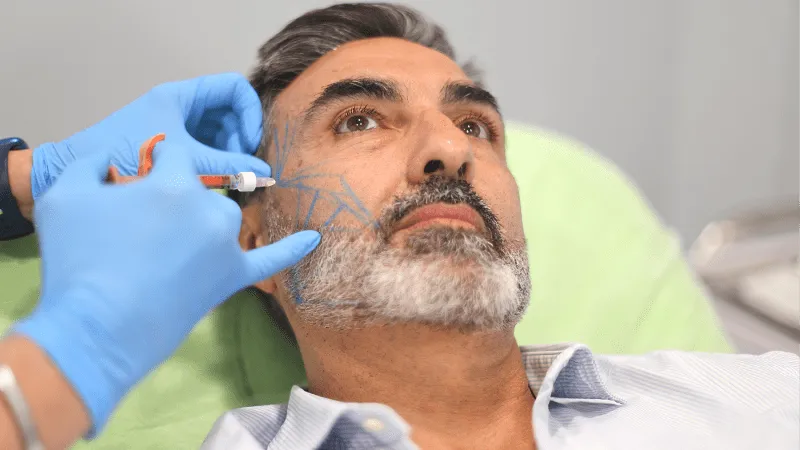
The surgeon marks the beard line and the areas where density will be increased with a pen, according to the patient’s face shape and expectations. This stage is one of the most critical steps for the naturalness of the result. The line should be diffused and have soft transitions, not sharp, to provide a natural appearance.
Stage 2: Local Anesthesia Application
Local anesthesia is applied to both the donor area (usually the nape of the neck) and the area to be transplanted. This ensures that the patient feels no pain during graft extraction and implantation.
Stage 3: Harvesting the Grafts
Hair follicles are collected one by one from the selected donor area using the FUE technique (micro-motor or manual punch). The harvested grafts are kept in a special solution to prevent damage. In this stage, for a natural look on the face, single follicles are usually separated and counted.
Stage 4: Channel Opening (for FUE) or Graft Loading (for DHI)
If FUE is used, micro-channels are opened in the recipient area, paying attention to the direction, depth, and angle of beard growth. If DHI is used, the grafts are loaded into implanter pens. The most important point in beard transplantation is that the hair follicles must be placed horizontally (at an angle between 10 and 30 degrees).
Stage 5: Implantation of Grafts
In the final stage, the harvested healthy grafts are placed into the opened channels (FUE) or directly into the recipient area with the help of an implanter pen (DHI). Each follicle is placed with great precision according to the design drawn by the surgeon and the natural hair direction. When the procedure is complete, the donor and recipient areas are dressed.
What You Need to Know About Pain and Anesthesia
Despite being a surgical procedure, beard transplantation offers a completely pain-free experience thanks to correct anesthesia application.
- Local Anesthesia: The procedure does not require general anesthesia; only the donor and recipient areas are locally numbed. This allows the patient to be awake and comfortable throughout the procedure.
- Needle-Free Anesthesia Option: In modern clinics, it is possible to deliver the local anesthetic agent under the skin with pressure using needle-free injection devices. This method provides a comfortable start for patients with needle phobia or those who want to minimize injection pain.
- Comfort During the Procedure: Once the anesthesia takes effect, the patient does not feel any pain during either graft harvesting or implantation. Patients can listen to music, read a book, or watch a movie during this process.
- Post-Procedure Pain: After the effect of the anesthesia wears off, a slight ache or discomfort may be felt. This is usually easily controlled with simple pain relievers prescribed by the doctor. The first few days are comfortable with regular use of pain relievers. The feeling of tightness in the donor area also decreases within a few days.
How Does the Recovery Process Work?
The recovery process after beard transplantation is a critical stage that requires patience and diligence.
First 72 Hours (3 Days)
- Sensitivity and Swelling: Mild swelling and redness may be seen on the face and especially around the eyes. This is normal and can be controlled with the application of cold compresses.
- Red Dots and Crusting: Small, red dots and tiny clots (the beginning of crusting) form around each transplanted hair follicle in the recipient area. This is a normal sign of healing.
- Sleeping Position: For the first 3 nights, the patient should sleep on their back with the head slightly elevated to prevent the transplanted follicles from shifting. A special neck pillow provided by the doctor can help during this process.
- No Contact: The transplanted area must not be touched, scratched, or rubbed under any circumstances.
First Week (Day 4 to Day 7)
- First Wash: The first wash is usually performed by the clinic on the 3rd or 4th day. This is important for softening the crusts and starting the shedding process.
- Shedding of Crusts: With regular washing, the crusts slowly begin to shed. The majority of the crusts should have fallen off between the 7th and 10th day.
- Return to Normal Life: Light daily activities and work life can be resumed, provided heavy physical activities are avoided.
Week 2 and Beyond
- Start of Shock Loss: Shock loss (shedding of the transplanted hairs) will begin between the end of the second week and the fourth week. This is a necessary and completely normal process for the growth of new, strong hair.
- Donor Area Healing: The donor area is completely healed, and redness and crusting have disappeared.
- Full Healing: The transplanted area returns to its completely normal appearance in approximately one month.
Post-Beard Transplant First Wash and Care Instructions
The first wash is critically important for the health of the transplanted grafts and the cleaning of the crusts.
- Timing: The first wash is usually performed by the surgical team 72 hours (3 days) after the operation.
- Washing Method: During the first wash, water is not applied directly to the recipient area. A special lotion and shampoo are used. The lotion is left on the recipient area for about 30-45 minutes to soften the crusts. Then, the shampoo foam is applied to the recipient area with the fingertips, only gently touching (absolutely no rubbing or friction). Rinsing is done gently with low-pressure water.
- 7-Day Rule: For the first 7 days, touching, rubbing, scratching, and shaving the transplanted area are strictly forbidden. After the 7th day, you can gently rub the crusts to help them shed, but this must also be done gently and with the doctor’s advice.
- Clothing: Narrow-collared garments should be avoided for the first week, as such clothes can rub against the recipient area and damage the grafts.
What is Shock Loss and When Does It Occur?
Shock loss (Telogen Effluvium) is a normal and expected part of the beard transplantation process, and it is important for patients to be informed about it.
- Definition: After the transplantation procedure, the transplanted hair follicles experience trauma as they adapt to their new location. This trauma causes the follicles to enter the resting (telogen) phase, and the transplanted hairs shed. This is not a failure but a signal for the follicle to enter the permanent growth phase and regenerate.
- Timing: Shock loss usually begins from the 2nd week after the operation and continues up to the 4th week. Most of the transplanted hairs shed during this process.
- Important Note: Only the hair shaft itself sheds; the hair follicles (grafts) remain firmly anchored beneath the skin.
- Do Not Worry: It is common for patients to think the results are unsuccessful at this stage, but this is a natural step in the process. Permanent, strong, and healthy beard hairs will start growing in place of the shed hairs within 3-4 months.
New Beard Growth Timeline
The emergence of beard transplant results is a gradual process that requires patience.
- 1st Month: Shock loss is completed. The transplanted area is fully healed, and the skin returns to its normal appearance.
- 2nd – 3rd Months: Hair follicles begin to emerge from the resting phase. The first thin, downy hairs start to appear. These hairs are still sparse and weak.
- 4th – 6th Months: The newly emerged beard hairs begin to thicken and grow longer. The increase in density becomes noticeable.
- 6th – 9th Months: Approximately 60-70% of the transplanted hairs have grown and reached a significant thickness.
- 9th – 12th Months: The majority of the beard has grown, thickened, and reached its final appearance. The difference between the natural beard and the transplanted beard almost completely disappears.
- 12th – 18th Months: This is the period when the final and full results are seen. The beard reaches its full density, thickness, and final shape. It can now be fully shaved, trimmed, and styled as desired.
When Are Beard Transplant Results Finalized?
It takes 12 to 18 months for beard transplant results to fully finalize and reach their final density, depending on individual healing speed and the cycle of the transplanted follicles. Most patients are satisfied with the results at the end of one year, but the process of thickening and maturation can continue up to 18 months. When this process is complete, the transplanted hairs behave like the person’s natural beard: they are permanent for life and will never shed when shaved or grown out. The naturalness of the results depends on the correct placement of the follicles at the natural angles on the face and accurate planning.
What Are the Possible Side Effects and Complications After a Beard Transplant?
As with any surgical procedure, some temporary side effects and, rarely, complications can occur with beard transplantation.
Temporary Side Effects:
- Redness and Edema (Swelling): Swelling and redness on the face and around the eyes lasting 3-5 days.
- Itching: A common condition that occurs as the skin repairs itself during the healing process. Special lotions recommended by the doctor should be used against itching; scratching can damage the grafts.
- Numbness: Temporary numbness or loss of sensation may occur in the donor and recipient areas. This is due to the temporary effect on nerve endings and usually returns to normal within a few weeks.
- Acne/Pimples: Temporary acne or folliculitis (hair follicle inflammation) may occur in some patients as the new beard hairs try to reach the skin surface. This usually resolves on its own or can be treated with simple antibiotic creams.
Rare Complications:
- Infection: Rarely, infection can develop as a result of procedures performed in non-sterile conditions. Therefore, it is important to have the procedure done in a hygienic and clinical setting.
- Scar (Scarring) Development: While FUE technique usually leaves no scars in the donor area, tiny dots may remain rarely if wide-diameter punches are used or in cases of poor healing. The risk of scarring is higher in patients prone to keloid formation.
- Unnatural Appearance: If the follicles are transplanted at incorrect angles or directions, the result may not look natural. This demonstrates how important the surgeon’s experience is.
Factors Affecting Beard Transplant Cost
The cost of beard transplantation can vary significantly depending on many variables. The price is usually determined based on a fixed number of grafts or the size of the area to be transplanted.
Key Cost Factors:
- Required Number of Grafts: The larger the area to be transplanted and the greater the desired density, the more grafts are needed, and the higher the cost.
- Technique Used (FUE vs. DHI): The DHI technique is generally more costly than the FUE technique because it requires greater precision, expertise, and special equipment (implanter pen).
- Clinic and Surgeon Experience: Surgeons and clinics that are experts in their field, well-known, and have high success rates demand higher fees. Experience is the most important factor directly affecting the success and naturalness of the procedure.
- Geographical Location: Beard transplant costs vary greatly depending on the economic conditions between countries and even cities.
- Clinic Services: Whether additional services such as post-operative care kits, medications, first wash service, accommodation, and transfer are included in the package also affects the cost.
Since a low cost may mean compromising on quality, it is vital for patients to focus on the doctor’s expertise and the clinic’s hygiene conditions rather than the price.
Which Doctor Should Be Chosen for a Successful Beard Transplant?
Beard transplantation requires not only technical knowledge but also artistic talent. Creating a design that suits the face’s natural contours, hair direction, and symmetry is a job that only an experienced surgeon can perform.
Points to Consider When Choosing a Doctor:
- Area of Specialization: It is important that the chosen person specializes not only in hair but specifically in beard and mustache transplantation. The facial area has a different skin structure and hair angle than the scalp.
- Certification and Training: The surgeon must have certified qualifications approved by relevant medical authorities and internationally valid training.
- Previous Results (Portfolio): Photographs of the surgeon’s previous beard transplant cases (especially those showing 6-12 month results) should be examined. A natural-looking result indicates that the correct angle and direction have been achieved.
- Quality of Consultation: The surgeon must listen to the patient’s expectations during the first consultation, present a realistic plan according to the facial features, and clearly state any limitations regarding the donor area.
- Clinic Conditions: The hygiene of the clinic where the procedure will be performed, and the sterility and modernity of the equipment used should be checked.
Long-Term Care and Styling Advice After a Beard Transplant
Although transplanted beards are permanent for life, long-term care is important to maintain their healthy and aesthetic appearance.
- Shaving and Trimming: With your surgeon’s permission (usually after the 1st month), you can trim the transplanted hairs with scissors, and after the 6th month, you can start using a razor, machine, or blade with confidence. Regularly trimming the beard can help it grow thicker and lusher.
- Moisturizing and Oiling: As the beard grows, it is recommended to use natural beard oils (such as argan, jojoba) to maintain the moisture balance of the beard hair and the underlying skin. This reduces itching and keeps the beard looking shiny.
- Healthy Lifestyle: Avoiding smoking and excessive alcohol consumption, eating a balanced diet, and drinking enough water support the health of all hair follicles and contribute to the longevity of the transplant results.
- Sun Protection: Especially for the first year, the transplanted area must be protected from direct sunlight. The sun can negatively affect the pigmentation (coloring) of the skin during the healing process.
What Are the Secrets to Achieving a Natural Look?
Success in beard transplantation is measured not only by quantity but also by the naturalness of the resulting appearance.
- Correct Angle and Direction: Beard hairs emerge at very shallow angles to the skin (usually 10-30 degrees) and with a downward orientation. The surgeon must mimic this natural exit angle with millimeter precision. An incorrect angle results in the hairs looking upright and artificial.
- Use of Single Grafts: Natural beard hairs on the face usually consist of single hair follicles. Therefore, multiple grafts (containing 2 or 3 hairs) taken from the donor area must be separated into single follicles before being implanted into the face. This prevents the “doll’s hair” look.
- Softness of the Front Line: The front line where the beard begins should be created with a soft transition using sparse and randomly placed single follicles, rather than a sharp line. This creates the most natural effect.
- Density Adjustment: Density should vary from region to region. The mustache and chin areas should be denser, and the density should decrease towards the cheeks. The surgeon’s artistic vision plays a key role in optimizing this density distribution.
What Are the Differences Between DHI and FUE Techniques?
Both techniques are FUE-based, using a method where hair follicles are extracted one by one, but they differ in the implantation stage.
| Feature | FUE (Follicular Unit Extraction) | DHI (Direct Hair Implantation) |
|---|---|---|
| Channel Opening | The surgeon opens the channels with metal/sapphire tips before implantation. | Channel opening and graft placement are done simultaneously with an implanter pen. |
| Graft Holding Time | Grafts may remain outside longer until the channels are opened. | Holding time is minimal as the follicles are placed immediately. |
| Shaving Requirement | Generally requires the complete shaving of the donor area. | For small areas, it can allow for non-shaven transplantation (shaving window) in the donor area. |
| Precision | Depends on the channel opening for density and angle. | Offers the possibility of more precise angle and direction setting thanks to the sensitive control of the implanter pen. |
| Implantation Among Existing Beard | Higher risk of damage to existing follicles. | Causes less damage to existing hairs thanks to controlled placement. |
| Cost | Generally more economical than DHI. | More costly as it requires higher precision and specialized tools. |
Since angles on the face are very critical in beard transplantation, the precision advantage offered by the DHI’s implanter pen is preferred by some surgeons.
Can I Travel After the Beard Transplant Procedure?
Travel planning after beard transplantation is important so as not to affect the success of the procedure.
- Immediate Travel: It is recommended to avoid long and tiring airplane or bus journeys immediately after the procedure (the same day). Rest and monitoring of the first 24 hours after local anesthesia are important.
- Ideal Timing: Travel is usually possible 1-2 days after the operation, but great care must be taken not to hit the transplanted area or cause friction during this time.
- Air Travel: Air travel is generally safe. However, care should be taken to ensure that the headrest you lean on in the plane does not rub against the recipient area. Using a neck pillow can be helpful.
- Personal Attention: During travel, hygiene and the regular use of medications prescribed by the doctor (antibiotics, pain relievers) must be maintained. Avoid carrying heavy luggage or activities requiring physical exertion.
Will Existing Beard Hairs Be Damaged?
With the correct technique and an experienced surgeon, the risk of damage to existing beard follicles around the recipient area during beard transplantation is minimal.
- Design and Planning: The surgeon works by taking into account the location and angle of the existing beard follicles during transplantation. Care is taken not to touch existing healthy follicles when opening channels or placing with the pen.
- DHI Advantage: Since the DHI technique performs channel opening and follicle placement in one step and more precisely, it further reduces this risk when concentrating among existing beards.
- Temporary Shock Loss: Very rarely, temporary shock loss may also occur in the existing beard hairs immediately next to the transplanted area due to the environmental trauma caused by the operation. However, these hairs usually grow back within a few months.
How Long Does the Beard Transplant Procedure Take?
Since beard transplantation consists of a series of delicate steps, the duration varies depending on the number of grafts required.
- Duration Range: A transplantation between 2000 and 3000 grafts can generally take 4 to 8 hours.
- Factors Affecting Duration:
- Number of Grafts: The more follicles are transplanted, the longer the procedure takes.
- Technique Used: DHI can sometimes take slightly longer than FUE because each follicle is placed individually with a pen.
- Precision: The precision shown by the surgeon during implantation, especially in adjusting the angle and direction, can increase the duration, but this time is critical for the naturalness of the results.
- Breaks and Rest: Since the procedure is long, breaks are definitely given during the procedure for the patient to rest, eat, and use the restroom.
When Do Red Dots and Crusting Disappear?
The red dots and crusting that appear after the procedure are the first and most visible signs of the healing process.
- Red Dots: These are small clots resulting from the micro-incisions where each transplanted graft is placed. They are most prominent in the first few days. As blood circulation returns to normal and the skin begins to heal itself, this redness starts to decrease. It usually fades within 10-14 days and may take 1-2 months to completely disappear.
- Crusting: These are dried clots that help the transplanted follicles anchor. They begin to soften with the first wash. With regular and gentle washing, the vast majority of the crusts shed on their own between 7 and 10 days. When the crusts shed, the transplanted area regains a cleaner and more normal appearance. They should never be picked off by hand, otherwise the grafts may shift out of place.
Sports and Physical Activity After Beard Transplant
When to return to physical activities after transplantation is an important issue for the grafts to anchor firmly.
- First 10 Days (Sensitive Period): Heavy sports and intense physical activity are strictly forbidden during this period. Sweating can increase the risk of infection and cause the grafts to shift. Light walking and desk work can be done.
- After the 10th Day: Assuming that crusting has largely passed and the grafts have anchored, light-paced cardio and non-strenuous exercises can be started. However, excessive exertion that causes facial sweating should be avoided.
- After 1 Month: Most intense activities such as weightlifting, running, swimming (to avoid chemicals and salt in pools or the sea), sauna, and Turkish bath can be resumed with the doctor’s approval.
- After 2 Months: Contact sports such as football and basketball can be resumed.
Other Frequently Asked Questions About Beard Transplant?
Can Transplanted Beards Be Shaved?
Yes, the transplanted beards are completely permanent, and after the final growth process is complete (usually after 6-12 months), they can be shaved with a razor, machine, or blade just like your natural beard. Shaving has no negative effect on the beard becoming thicker or shedding.
Do Scars Remain After a Beard Transplant?
Since FUE and DHI techniques extract follicles one by one from the scalp, they do not leave a large suture scar (like in the FUT technique) in the donor area. Micro-scars, like pinpricks and less than a millimeter, remain in the donor area, but these are definitely not visible when the hair grows long and almost completely disappear over time. There is no permanent scarring in the recipient area.
Do the Direction and Angle of the Transplanted Hairs Look Natural?
This is the most difficult and most important part of the transplantation. An experienced surgeon knows facial anatomy and places the follicles at the natural exit angle of the hair (usually 10-30 degrees flat against the skin). In a correctly performed transplant, the resulting beard hairs completely harmonize with the existing beard and look absolutely natural.
Beard transplantation is a highly effective and safe solution for men who want to permanently improve their aesthetic appearance and increase their self-confidence. It should be remembered that the most important investment in this process is the investment in an experienced specialist and a patient recovery period.
This page covers one procedure in detail. For prices, what is included and how the whole trip works, see our overview of hair transplant in Turkey.
Sources and how to verify this yourself
- Comparative study of graft survival by donor site (scalp, beard, chest) at 12 months — roughly 89% for scalp, 95% for beard and 76% for chest hair; survival also falls the longer grafts stay outside the body. source
- Ministry of Health, Regulation on International Health Tourism and Tourist Health, Official Gazette 26 April 2025, No. 32882 — authorisation requirement for facilities and intermediaries, TÜSKA accreditation, compulsory complication insurance (deadline 31 December 2025 for insurance, 31 December 2026 for accreditation). source
- Ministry of Health, Regulation on Promotion and Information Activities in Health Services, Official Gazette 12 November 2025, No. 33075 — treatment promises and guarantees are prohibited; price and campaign announcements are permitted only within international health tourism. source