
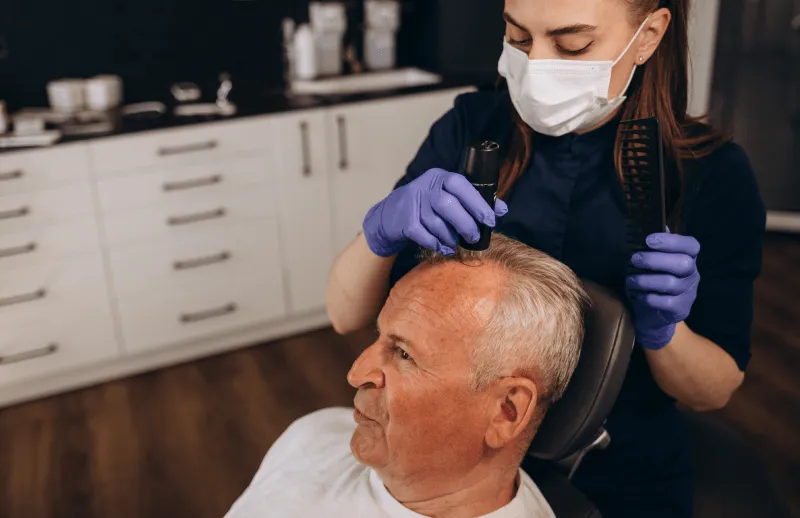
Part of: Hair transplant in Turkey — prices, what is included and country comparison.
What is the FUE Hair Transplantation Technique and Why is it Considered the Gold Standard?
FUE (Follicular Unit Extraction), or Follicular Unit Removal, is the most commonly used and least invasive surgical technique in the field of hair transplantation today. This technique involves extracting hair follicles (grafts) one by one from the back (occipital) and sides (temporal) of the scalp—areas that are permanently resistant to hair loss—using micro-motors or special hand tools (punch). The fundamental feature distinguishing FUE from other methods is that hair follicles are not harvested in a strip but are extracted individually via small, cylindrical incisions from the donor area. This completely eliminates the need for a surgical incision, stitches, or a scalpel. After the grafts are harvested, they are placed into micro-channels opened in the bald or thinning area, mimicking the natural hair growth angle and direction.
There are several important reasons why the FUE technique has become so widespread and is referred to as the “Gold Standard” in modern hair transplantation. Firstly, due to its minimally invasive nature, it leaves no linear scar in the donor area. Instead, tiny circular marks, less than a millimeter in size (typically between 0.6 mm and 1.0 mm), form, which become virtually invisible after healing. This offers a major aesthetic advantage, especially for patients who prefer to wear their hair short.
Secondly, the recovery time is much faster and more comfortable compared to traditional methods (e.g., FUT). Patients can usually return to their normal daily lives within a few days after the procedure. Thirdly, the principle of collecting roots individually provides the surgeon with high precision in selecting and extracting the best and healthiest follicular units from the donor area.
This graft quality directly influences the naturalness and density of the result achieved in the transplanted area. FUE has proven itself as a technique that transforms hair transplant surgery into an art and meets the patient’s functional and aesthetic expectations at the highest level. The success of this method depends on both the surgeon’s experience and the quality of the technological equipment used.
What is the Historical Development and Evolution of the FUE Technique?
Although the history of hair transplantation dates back to the early 19th century, the modern form of the FUE technique is a relatively recent development that emerged as a response to the limitations of traditional methods. For many years, the dominant method in hair transplantation was Follicular Unit Transplantation (FUT). FUT involved cutting out a strip of hair-bearing scalp from the donor area and then dissecting the grafts from this strip. FUT often caused aesthetic concerns among patients due due to the permanent and noticeable linear scar it left.
The conceptual foundations of FUE began to be laid in the late 1990s. Initially, in the mid-1990s in Japan, Dr. Masumi Inaba experimented with extracting individual hair follicles using small, round needles. However, the technique gained momentum and international recognition in the early 2000s through the publications and work of figures like Dr. William Rassman and Dr. Robert Bernstein. These pioneers clarified the concept of the “Follicular Unit” and demonstrated the clinical feasibility of individual extraction. Initially, FUE was performed entirely using manual punches, which made the procedure very slow and physically demanding for the surgeon. The manual method carried a high risk of graft damage, and thus its widespread adoption took time.
With the advancement of technology, the micro-motor assisted FUE method emerged in the mid-2000s. Micro-motors sped up the root extraction process and reduced surgeon fatigue by using fine-tipped, high-speed rotating tools (punches). This technological advancement was the turning point that brought FUE into the mainstream. The micro-motor increased FUE’s efficiency while also raising success rates. Today, the FUE technique has evolved into even more advanced versions; for example, variations like Sapphire FUE (which uses sapphire tips instead of metal during the incision/channel opening stage) and DHI (Direct Hair Implantation) (which uses direct implantation pens) further optimize the FUE principle to achieve minimal trauma and denser results. FUE continues to shape the future of hair transplant surgery with constantly renewed technological approaches.
Who is a Suitable Candidate for FUE Hair Transplantation?
While FUE hair transplantation offers an effective solution for many individuals suffering from hair loss, not every person is a suitable candidate for the procedure. Candidacy is determined as a result of a comprehensive evaluation based on various factors such as the person’s hair loss type, the sufficiency of the donor area, overall health status, and age.
The Most Ideal Candidates:
- Those with Androgenetic Alopecia (Male-Pattern Hair Loss): FUE is generally the most suitable solution for men experiencing permanent hair loss with noticeable recession of the hairline or thinning in the crown area.
- Those with a Sufficient Donor Area: The success of the FUE technique is directly dependent on the quality and density of the donor area at the back and sides of the head. The hair follicle density in the donor area must be sufficient and resistant to shedding.
- Those in Good General Health: Although hair transplantation is a minor surgical procedure, candidates should not be taking blood thinners (which can be stopped before the procedure), and they should not have severe chronic health issues such as uncontrolled diabetes or autoimmune disorders.
- Those with Realistic Expectations: Hair transplantation improves the existing situation but does not fully restore the volume of natural hair. It is important for candidates to have realistic expectations about the achievable results.
Unsuitable Candidates:
- Those with an Insufficient Donor Area: If there is not enough hair density or quantity in the donor area, the desired coverage and density cannot be achieved with the FUE technique.
- Those Experiencing Diffuse Alopecia (Widespread Hair Loss): If hair loss affects the donor region as well (some types of female-pattern hair loss), FUE is not suitable because the roots taken from this area will not be permanent.
- Those with Uncontrolled Diseases: Conditions such as uncontrolled hypertension, clotting disorders, or active skin infections increase surgical risks.
- Very Young Patients: Performing transplantation on patients whose hair loss process has not yet stabilized (generally under 20 years old) may carry the risk of future shedding. It is advisable to wait for the hair loss pattern to establish itself.
A detailed physical and digital analysis by an experienced hair transplant specialist is essential for a healthy and successful FUE procedure.
What Preparations Should Be Made and What Should Be Considered Before Hair Transplantation?
The success of the hair transplant surgery and patient comfort heavily depend on proper preparation before the operation. Patients must strictly adhere to specific rules in the days and weeks leading up to the procedure. This preparation process aims to reduce the risk of bleeding, increase the effectiveness of anesthesia, and accelerate the healing process.
Preparations to Start 10 Days Before the Procedure:
- Blood Thinning Medications: Blood-thinning medications such as Aspirin, ibuprofen (most painkillers), and herbal supplements like Vitamin E, Ginseng, and Ginkgo Biloba should be stopped at least 7 to 10 days in advance under the doctor’s supervision, as they increase the risk of bleeding. All chronic medications used must definitely be reported to the clinician.
- Alcohol: Alcohol can increase bleeding due to its blood-thinning effect and can interact with anesthesia. Therefore, it should be stopped completely at least 3 to 7 days before the procedure.
Preparations 1 Day Before and on the Day of the Procedure:
- Smoking and Caffeine: Smoking severely constricts capillaries, significantly reducing blood flow to the transplanted roots and slowing healing. Therefore, smoking should be stopped at least 24 hours before the procedure, and ideally for a longer period. Similarly, caffeinated beverages (coffee, tea) should not be consumed on the day of the procedure, as they can raise blood pressure.
- Washing: On the morning of the procedure, the hair should be thoroughly cleaned and washed, ensuring no chemical or gel residues remain. Cosmetic products such as gel, spray, or mousse must absolutely not be applied to the hair.
- Clothing: Comfortable clothes that button or zip up in the front (shirt, cardigan) should be preferred to avoid contact with the head area during the procedure. Garments pulled over the head can damage the transplanted roots.
- Eating: A light breakfast or lunch should be consumed before the procedure. Coming on an empty stomach can cause dizziness or nausea during anesthesia administration.
Proper execution of these preparations is a fundamental step for the FUE operation to proceed smoothly and safely.
How is the FUE Procedure Applied Step-by-Step?
The FUE hair transplantation procedure, which requires high concentration and precision, consists of four main stages, typically lasting 6 to 9 hours.
Stage 1: Preparation and Anesthesia (Approx. 1 Hour)
First, the clinician determines the patient’s hairline and plans the area to be transplanted. Aesthetic concerns and the patient’s facial structure are taken into consideration during this stage. Then, the hair in the donor area is generally trimmed to a length of 1 mm to facilitate graft extraction. Before proceeding to the surgical area, regional (local) anesthesia is applied to the donor and recipient areas. The anesthesia is injected with fine-tipped needles and ensures that the patient does not feel pain during the procedure.
Stage 2: Graft Harvesting (Extraction) (Approx. 2-3 Hours)
Once the local anesthesia has taken full effect, specialized tools called a micro-motor or manual punch are used. The tips of these tools are typically 0.6 mm to 1.0 mm in diameter. The surgical specialist separates each follicular unit (graft; usually containing 1 to 4 hair strands) from the skin, taking into account the angle and direction of the hair root’s emergence. The roots are extracted with minimal trauma and immediately placed into a special nutritive solution (to prevent hypothermia and dehydration) to preserve their vitality until the implantation stage. This stage is critical for the quality and survival rate of the roots. The specialist ensures the preservation of density in the donor area, distributing the extractions to prevent excessive thinning in a single region.
Stage 3: Channel Opening (Approx. 1-2 Hours)
In the recipient area where the harvested grafts will be placed, micro-channels are opened using special fine-tipped blades (steel or sapphire). This channel opening stage is the most determining factor for the natural appearance of the transplantation result. The clinician adjusts the angle, direction, and depth of each channel to exactly match the angle of the existing hair. Sharper angles are preferred for the hairline, while steeper angles are preferred for the crown area. The number of channels equals the number of grafts harvested. The opening of the channels prepares the beds for the roots to be placed and ensures natural density.
Stage 4: Graft Placement (Implantation) (Approx. 2-3 Hours)
In the final stage, the harvested grafts are carefully placed one by one into the opened channels using special forceps or Choi pens (in the DHI method). When placing the grafts, it must be planned which follicular unit (single, double, triple) will be placed where. For example, single hair roots are usually placed at the very front of the hairline, while thicker, multi-hair roots are placed behind it and in the mid-regions. This aims to provide a soft and natural transition at the front line while achieving maximum density and fullness in the middle and crown areas. This stage is where the surgeon’s artistic skill is most demonstrated and requires the most patience. At the end of the procedure, the transplanted area is disinfected and bandaged.
The Importance of the Donor Area and How is Graft Calculation Performed?
The donor area is the main source of the FUE hair transplantation operation and the most important determinant of its success. The donor area is generally the back and side parts of the head; the hair follicles in this region are genetically resistant to the testosterone hormone (the main cause of hair loss) and do not shed. These resistant roots retain this characteristic in the new area where they are transplanted and continue to grow permanently.
The Importance of the Donor Area:
- Permanence: The genetic durability that ensures the transplanted hair is permanent comes from the donor area.
- Capacity Limit: The capacity of the donor area is limited. Extracting too many roots from one area can cause permanent thinning in that region. An experienced surgeon aims to harvest approximately 20% to 30% of the density in the donor area, both to obtain a sufficient number of grafts and to preserve the aesthetic appearance of the donor region.
- Graft Quality: The thickness, color, and number of hair strands contained in the hair follicles in the donor area (follicular unit density) determine the quality of the transplantation result.
Graft Calculation:
Graft calculation is the process of determining the number of roots a patient needs and the maximum number of roots that can be safely harvested from the donor area. This calculation is based on the following factors:
- Width of the Recipient Area: The surface area of the bald or thinning region (in cm²) is determined. Larger areas require more grafts.
- Desired Density: Based on the patient’s expectations and the clinician’s recommendation, the number of grafts to be placed per square centimeter (e.g., 30-60 grafts/cm²) is determined.
- Donor Density (Graft/cm²): The number of existing follicular units in the donor area is measured. This measurement sets a limit on how many grafts can be safely extracted from the donor area.
- Number of Hair Strands Per Follicular Unit: The average number of hair strands contained in a graft is determined (e.g., an average of 2.2 hair strands/graft). This is important for understanding the total number of hair strands and thus the fullness in the transplantation result.
These calculations are typically performed using microscopic measurements, digital analysis tools, and the surgeon’s clinical experience. The key to a successful operation is harvesting enough quality grafts for the recipient area while leaving an aesthetically acceptable density in the donor area. Otherwise, an “over-harvested” donor area can leave permanent scars and an irregular appearance.
What Are the Advantages of the FUE Hair Transplantation Technique Over the Traditional FUT Method?
The FUE technique revolutionized the field of hair transplantation and has many significant advantages compared to the traditional Follicular Unit Transplantation (FUT) method it replaced. These advantages are the main reasons why FUE is the most preferred method today.
1. Scarring and Aesthetics: * FUE: Since hair follicles are harvested individually, no large, linear scar is formed. The small circular micro-incisions (typically less than 1 mm) in the donor area become virtually invisible after healing. This is a major cosmetic superiority, especially for patients who want to keep their hair short or are prone to keloid formation. * FUT: Since a strip of scalp is removed, a permanent and noticeable suture scar (linear scar) remains in this area. This scar is bothersome, especially with short haircuts.
2. Recovery Time and Comfort: * FUE: Recovery in the donor area is much faster because surgical trauma is minimal. Patients usually show signs of healing within 2-4 days after the procedure, and redness largely disappears within 7-10 days. There is less pain and discomfort. * FUT: More surgical trauma is experienced due to the strip excision. Stitches need to be removed (usually after 10-14 days), and the recovery period is longer, and there may be more severe pain and tightness in the initial days.
3. Flexibility and Donor Area Selection: * FUE: It is not limited to only the back of the head. It allows for graft harvesting from body hair (chest, back) or beard (BHT – Body Hair Transplant). This creates an additional source for patients with limited donor capacity. * FUT: Utilizes only the hair-bearing scalp at the back of the head.
4. Lower Risk of Nerve Damage: * FUE: Since work is done only at the level of individual roots, the risk of long-term numbness or nerve damage associated with the removal of a large skin strip, as seen in FUT, is much lower.
5. Repeatability: * FUE: Since it causes less damage to the donor area, the donor area remains more suitable for a second or third hair transplant session if deemed necessary.
These advantages are the fundamental features that make FUE superior to the FUT method, not only aesthetically but also in terms of patient comfort and surgical safety.
What Are the Differences Between Sapphire FUE and Classic FUE?
The FUE technique has evolved within itself through the use of different materials. Sapphire FUE is a variation that has gained popularity in recent years, enhancing the channel opening stage of the classic FUE technique. While classic FUE generally opens channels with steel blades or needles, Sapphire FUE uses instruments with special tips made of the precious stone sapphire instead of these blades. This difference in material directly affects the quality of the transplantation result and the healing process.
1. Channel Opening Material: * Classic FUE: Channels are opened using fine steel-tipped blades, either V-shaped or U-shaped. These blades can lose their sharpness over time, and the steel structure can cause micro-level tissue trauma. * Sapphire FUE: Channels are opened with special, sharp, and smooth-tipped instruments made of sapphire, a precious stone. Sapphire is harder, smoother, and more biologically compatible than steel.
2. Tissue Trauma and Healing: * Classic FUE: Steel tips can sometimes create more tissue trauma, leading to longer lasting edema (swelling) and scabbing. * Sapphire FUE: Since sapphire tips are sharper and finer than steel, they open much smaller, smoother, and more precise micro-channels. This minimizes tissue damage, disrupts blood circulation less, and speeds up the healing process. Furthermore, the anti-bacterial properties of sapphire tips also lower the risk of infection.
3. Density and Naturalness: * Classic FUE: Since steel blades are of standard sizes, it can be challenging to achieve sufficient proximity between adjacent follicular units when opening channels, which can limit natural density. * Sapphire FUE: Sapphire blades allow for finer and denser channels to be opened (micro-channel opening). This enables higher graft density to be achieved, particularly at the hairline and crown area. Denser channels result in a more natural and fuller appearance.
4. Allergy Risk: * Classic FUE: Rarely, some patients may show an allergic reaction to steel. * Sapphire FUE: Sapphire is a biologically inert substance; meaning it does not react with the body, and the risk of allergy is almost zero.
In summary, Sapphire FUE elevates the channel opening stage of the FUE technique to a level that allows for more precise, less traumatic, and denser transplantation. While the implantation stage remains the same, the healing and density advantages gained from the use of sapphire tips have made this variation a premium option.
What is the FUE Post-Operative Healing Process and Its Chronological Stages?
Observing the success of FUE hair transplantation requires a gradual healing process that begins immediately after the surgery and lasts about a year. It is important for patients to know these chronological stages to manage their expectations correctly.
First 1-3 Days (Bandaging and First Wash):
- Day 1: The operation is completed, and the donor area is bandaged. The patient is sent home. Oozing or slight pain is normal during this period. The head must be kept elevated and positioned on the back to avoid damaging the transplanted roots.
- Day 2: The bandage on the donor area is removed, and the first dressing is applied.
- Day 3: The first wash is performed at the clinic. This wash is done with special lotions and shampoos, and the patient is taught how to wash gently.
1st Week (Scabbing and Redness):
- Small, pinhead-sized scabs begin to form in the recipient and donor areas.
- Redness and slight swelling (edema) may occur in the transplanted area. Swelling can spread to the forehead and eye area but usually disappears within 5-7 days.
- The patient continues regular washing according to the clinician’s instructions.
Days 7-10 (Shedding of Scabs):
- As a result of regular and gentle washing, the scabs gradually begin to shed. At this stage, it is normal for the transplanted hair strands to shed along with the scabs, and this does not mean the roots have fallen out.
- The appearance of the transplanted area improves significantly once the scabs have completely shed.
Weeks 2-4 (Shock Loss Period):
- A large part (about 80-90%) of the transplanted hairs shed in a physiological process called “shock loss.” This is a reaction to trauma, and only the hair strand sheds; the roots remain under the skin.
- This period is temporary and should not cause panic.
3-6 Months (Onset of Growth):
- The transplanted roots emerge from the resting phase (telogen), and new hairs begin to grow.
- The first hairs that grow may be thin and curly but will thicken and gain their natural characteristics over time.
- By the 6th month, approximately 50-60% of the transplanted hairs will have grown, and a noticeable increase in fullness will be observed.
6-12 Months (Development and Maturation):
- The hair continues to grow rapidly and thicken. Density increases.
- By the end of this period (around 9-12 months), the vast majority (80-95%) of the transplanted hairs will have grown and matured.
12-18 Months (Final Result):
- The final result of the hair transplant is fully visible during this period. The hair has reached its most natural look and thickness. The donor area has completely healed and returned to normal.
Patiently following this process is key to the success of FUE.
What Are the Long-Term Care and Protection Strategies After Hair Transplantation?
The permanence and aesthetic satisfaction of the results obtained after the hair transplant procedure depend on the extent to which the patient adheres to long-term care and protection strategies. Hair transplantation is a starting point for preserving existing hair and ensuring the healthy growth of transplanted hair.
1. Routine Hair Care:
- Gentle Washing: Gentle washing rules should be followed during the first months, and subsequently, pH-appropriate, chemical-free shampoos should be preferred for daily washing.
- Avoidance of Heat: Excessive heat, such as the hot setting of a hairdryer, saunas, and Turkish baths, should be avoided for the first few months.
- Protection from Physical Trauma: Protecting the transplanted area from bumps, friction, and the sun’s harmful rays is vital. A hat should be used when going out in the sun (but it must not be too tight for the first 14 days).
2. Medical Supportive Treatments:
- Hair transplantation does not prevent the continuation of genetic shedding. Supportive treatments may be applied under the supervision of a clinician to protect existing hair and increase the thickness of the transplanted hair.
- Minoxidil: Can be used topically to slow the shedding of existing hair and strengthen it.
- Finasteride: Slows genetic shedding by suppressing the DHT hormone that causes hair loss. Should be used as recommended by a clinician.
- PRP and Mesotherapy: Can be applied periodically in the post-operative period to support the nutrition of the transplanted roots and ensure rapid healing.
3. Lifestyle Changes:
- Nutrition: A balanced diet rich in protein, B vitamins (especially Biotin), zinc, iron, and Vitamins A, C, and E, which are necessary for hair health, should be maintained.
- Stress Management: Chronic stress is a significant factor that triggers hair loss. Attention should be paid to stress management techniques.
- Smoking and Alcohol: Completely quitting or minimizing smoking and alcohol consumption after hair transplantation supports the health of the hair follicles by maintaining blood flow in the capillaries.
Long-term care is an ongoing commitment to preserve the hair transplant result and keep the existing hairline resistant to future shedding.
Possible Complications and Risks: Is FUE a Safe Procedure?
FUE hair transplantation is a minimally invasive surgical procedure and is generally considered extremely safe when performed under the right conditions (a sterile clinic environment and an experienced surgeon). However, like any surgical procedure, FUE also has some potential risks and complications. It is important for patients to have realistic information about these risks.
Most Common and Temporary Complications:
- Swelling and Edema: Swelling in the forehead and eye area is common during the first few days after the procedure. This is caused by the anesthetic fluid descending due to gravity and usually resolves on its own within 5-7 days.
- Redness: Mild to moderate redness in the transplanted area is a sign of increased blood flow and the healing process. This condition can last for a few weeks to a few months, depending on the skin type, but is not permanent.
- Mild Pain and Tenderness: Slight pain and tenderness may be felt in the donor and recipient areas for a few days after the procedure, which is easily managed with prescribed painkillers.
- Numbness (Temporary): Temporary numbness may occur in the donor and recipient areas due to the effect of local anesthesia. This condition rarely lasts up to a few months but usually resolves completely.
- Folliculitis (Hair Follicle Inflammation): Small pimple-like inflammations may form around the transplanted hair follicles. This condition usually resolves spontaneously or can be treated with simple antibiotics.
Less Common and Serious Complications:
- Infection: The risk of infection may arise in procedures performed in non-sterile conditions or with inadequate hygiene. Choosing the right clinic minimizes this risk.
- Graft Loss: Roots may dislodge and permanent loss may occur, especially in the first 48 hours, due to touching or rubbing the transplanted roots.
- Permanent Irregular Scars (Over-harvesting): If an excessive number of roots are harvested from the donor area by an inexperienced surgeon, permanent thinning or an irregular appearance (over-harvesting scar) may occur in the donor area.
- Poor Aesthetic Result: Incorrect hairline design, channel opening at wrong angles, or incorrect distribution of roots (e.g., using multi-hair roots in the front line) can result in an unnatural appearance (pluggy look).
The FUE technique is a safe procedure with minimal risks in the right and expert hands. However, patients must be very careful about the choice of surgeon and clinic and adhere to all post-operative care instructions, which is the most effective defense against complications.
Hairline Design and the Secrets of a Natural Look with FUE
The most critical artistic stage of the hair transplant operation is the design of the hairline. A successful FUE procedure is not only technically flawless but must also create a completely natural-looking hairline that suits the patient’s facial features, age, and ethnicity. The secret to a natural appearance lies in the combination of mathematical precision and aesthetic art.
Basic Principles of a Correct Hairline:
- Compliance with Facial Proportions: The hairline should be determined in accordance with the golden ratio (Phi) and symmetry between the upper, middle, and lower parts of the patient’s face. The hairline should be positioned approximately 7-9 cm above the highest point of the eyebrows.
- Age Adaptation: The hairline must be designed according to the patient’s age. For example, when designing the hairline for a young patient, future shedding and the aging process should be considered; a slightly receded hairline that will naturally thin with age should be preferred instead of a very low and sharp line. Otherwise, a youthful line will look artificial on an aged face.
- Asymmetry and Irregularity: A natural hairline is never perfectly straight and sharp, as if drawn with a ruler. It should contain micro-irregularities, slight zigzags, and indentations. These small asymmetrical touches prevent the transplanted hair from looking “artificial.”
- Softness of the Transition Zone (Feathering Zone): Single-hair grafts (containing only one hair strand) should be placed directly at the front line of the hairline. This provides a soft density transition between the front line and the inner regions, giving the impression that the hair starts naturally. Grafts containing two, three, or four hair strands should be placed 1-2 cm behind the hairline, in the middle regions where increased density is desired. This placement strategy (single-hair feathering) is the basis of a natural look.
Design Process:
Hairline design is usually done in collaboration between the surgeon and the patient. The patient’s wishes are listened to, but the surgeon’s medical knowledge and aesthetic judgment (especially considering donor area capacity and future shedding) shape the final decision. The hairline is drawn with a special pen, shown to the patient in front of a mirror, and the operation proceeds after approval is obtained. It should be remembered that the angle of the hairline (channel opening stage) must be adjusted to mimic the grafts exiting the skin at a natural angle (typically 30-45 degrees). A poorly designed hairline can lead to results that are difficult and costly to correct.
Advanced Applications in the FUE Technique: DHI and Percutaneous Methods
The FUE technique, while preserving the basic extraction principle, is divided into different variations according to the tools and techniques used in the implantation stage. DHI (Direct Hair Implantation) and Percutaneous methods are advanced applications of FUE developed to achieve more precise results.
DHI (Direct Hair Implantation – Choi Pen Technique):
DHI is a technique that involves placing the hair follicles directly into the recipient area using a special tool called the Choi (implanter) pen after they have been harvested. The fundamental difference of DHI is that the channel opening and graft placement stages are combined into a single stage.
- Advantages: The fine tip of the Choi pen simultaneously makes the micro-incision and places the root while determining the angle, direction, and depth where the graft will be placed. This reduces the time the roots spend outside the body, causes less trauma to the hair follicle, and allows for implantation between existing hairs without channel opening (especially in thinning areas). This enables denser and more frequent transplantation.
- Disadvantages: Requires high concentration and experience. Correct use of the Choi pen is difficult and often takes longer or requires more surgical staff than classic FUE.
Percutaneous Method:
The Percutaneous method differs from classic FUE by using three-dimensional (3D) cylindrical needles instead of blades in the channel opening stage.
- Advantages: These needles open precisely sized channels that are more compatible with the natural cylindrical root structure. The diameter of the opened channel is almost exactly equal to the diameter of the graft to be placed. This ensures the graft fits perfectly into the slot, minimizes the risk of graft movement, and further reduces vascular damage. This provides an excellent fit and a natural result, especially for high-density transplants.
- Disadvantages: It is technically demanding and time-consuming. Graft placement requires high precision due to the very narrow channels opened.
Comparison:
Basic FUE provides a framework for extraction and implantation. Sapphire FUE only improves the channel opening material. DHI, on the other hand, aims to reduce root trauma by combining both the channel opening and placement processes into a single step. All three methods are based on the FUE principle of “individual root harvesting”; however, DHI and Percutaneous methods offer additional advantages, particularly for patients seeking high density and minimal trauma, thanks to their precision in the implantation stage. The choice of method depends on the surgeon’s experience, the patient’s degree of hair loss, and their budget.
Predictability of FUE Results and Expectation Management
While FUE hair transplantation offers a solution that provides permanent and satisfactory results, the predictability of the outcome and the correct management of patient expectations are an integral part of the treatment process. Hair transplantation aims to improve the existing situation using available resources (roots in the donor area) but does not promise to fully restore the hair density of the patient’s youth.
Factors Affecting Predictability:
- Donor Area Capacity: This is the most important factor. The quality, density, and quantity of grafts in the donor region determine the maximum density and coverage that can be achieved in the recipient area. If the donor capacity is limited, it may not be possible to cover a large bald area with high density.
- Graft Survival Rate: In a successful FUE operation, 85% to 95% of the transplanted grafts are expected to survive. This rate depends on minimizing trauma during extraction and implantation, the duration the roots are kept outside the body, and the quality of the nutritive solution.
- Surgeon’s Experience and Artistic Skill: The mastery in hairline design, channel opening angle, and graft distribution ensures the result looks natural and aesthetic.
Expectation Management:
- Density Limitation: Hair transplantation provides a certain density per square centimeter (e.g., 40-60 grafts/cm²). This density eliminates thinning and provides a full appearance, but it is generally not possible to achieve the density of a natural, non-shedding scalp (average 100-120 grafts/cm²). Patients should avoid expecting 100% original density.
- Ongoing Shedding: Although the transplanted roots are permanent, the existing original hairs not transplanted may continue to shed genetically. Therefore, clinicians usually recommend treatments (Minoxidil, Finasteride, etc.) after transplantation to preserve the existing hair. It is essential for patients to continue these treatments after the transplant to prevent future shedding and maintain the transplant result.
- Time to Final Result: Patients must be clearly informed that the result will emerge gradually (12-18 months), not instantly. The appearance may temporarily worsen in the first few months, especially during the shock loss period. Managing this process psychologically requires patience from the patient.
In summary, FUE results are highly predictable and generally significantly improve patients’ quality of life. However, the best results are achieved through surgical excellence, quality donor resources, and the patient’s commitment to realistic expectations and long-term care.
What Are the Main Factors Affecting Hair Transplant Prices?
The cost of FUE hair transplantation operations can vary significantly from country to country, city to city, and even clinic to clinic. Multiple variables affect pricing, and it is important for patients to understand these factors transparently.
1. Applied Technique and Technology:
- Technical Difference: Classic micro-motor assisted FUE usually has the most basic pricing. More advanced and precision-demanding techniques such as Sapphire FUE (using sapphire tips) and DHI (using Choi pens) increase the cost due to the specialized equipment used and the longer operation time.
- Equipment Used: The use of disposable and high-quality surgical equipment is reflected in the cost.
2. Clinician’s Experience and Clinic Reputation:
- Surgeon’s Expertise: The experience, certifications, and reputation of the clinician (surgeon) performing the hair transplant are among the most important price determinants. Well-known specialists with high success rates generally charge higher fees.
- Clinic Standards: Whether the operation is performed in a hospital or a fully equipped surgical environment, sterilization standards, and the auxiliary equipment used affect the price.
3. Number of Grafts and Degree of Baldness:
- Graft Count: Hair transplant pricing is usually done “per graft” or as a “maximum graft” package. The higher the degree of baldness (requiring more grafts), the higher the total cost.
- Degree of Baldness: As the level of baldness increases according to the Norwood scale, the operation time extends, and more surgical resources are used.
4. Scope of the Operation and Additional Services:
- Scope of Operation: Whether a single session or a two-stage operation is required.
- Additional Services: The inclusion of package services such as accommodation, transfers (airport/hotel), interpreter services, special care kits, and post-operative supportive treatments (PRP, mesotherapy) increases the price.
5. Geographical Location:
- Hair transplant prices vary significantly between countries and even cities due to general healthcare costs and living standards. For example, “health tourism” hubs like Turkey can offer more affordable prices compared to some Western countries.
When making a decision, patients should not focus only on the lowest price but should prioritize factors that directly affect success, such as hygiene standards, the clinician’s experience, and the quality of the team, which will be a more cost-effective approach in the long run.
How is Beard and Eyebrow Transplantation Performed with the FUE Technique?
The FUE technique is a versatile method successfully used not only for hair restoration on the scalp but also for addressing thinning or loss in the beard and eyebrow areas. The basic principle is the same: Follicular units are individually harvested and transplanted to the desired area. However, beard and eyebrow transplantation require more artistic precision and attention than scalp transplantation.
Beard Transplant (Beard Transplant):
- Donor Area: The back of the head is generally used as the donor area for beard transplantation. However, the sub-mandibular area of the neck or body hair (BHT – Body Hair Transplant) can also be used to achieve thicker and more natural-looking results than scalp hair.
- Extraction: Micro-motors and punches used for the scalp can also be used for the beard. However, single-hair grafts (follicular units containing only one hair strand) are generally preferred for the beard area.
- Implantation and Angles: The most critical point in beard transplantation is the exit angle and direction of the hair in the recipient area. Angles very close to the skin surface (approximately 10-15 degrees) are used in the cheek area, while steeper angles are used under the chin. Care must be taken to match the natural flow direction of the hair during implantation. This ensures the beard looks natural and dense.
- Application Areas: It is applied for closing scars in the beard, filling in regional gaps, defining the beard line, or creating a beard for individuals who have none.
Eyebrow Transplant (Eyebrow Transplant):
- Donor Area: The most ideal donor area for eyebrow transplantation is the finer and softer hair roots just above the nape of the neck. Thin grafts containing single hair strands are usually preferred.
- Implantation and Angles: Eyebrow transplantation is one of the most delicate and challenging areas of hair transplantation. Hair in the eyebrow area must exit at a very narrow angle, almost parallel to the skin (0-5 degrees). Furthermore, the direction of hair growth in the eyebrow area changes: upward in the inner part of the eyebrow, sideways in the middle part, and downward in the tail part. Strict adherence to the natural flow direction of each hair root is required.
- Result: Although eyebrow transplantation provides aesthetically highly satisfactory results, the transplanted roots are scalp roots and therefore continue to grow, requiring regular trimming (once a week).
The FUE technique permanently solves hair loss in these areas, significantly increasing individuals’ facial aesthetics and self-confidence.
This page covers one procedure in detail. For prices, what is included and how the whole trip works, see our overview of hair transplant in Turkey.
Sources and how to verify this yourself
- Comparative study of graft survival by donor site (scalp, beard, chest) at 12 months — roughly 89% for scalp, 95% for beard and 76% for chest hair; survival also falls the longer grafts stay outside the body. source
- Ministry of Health, Regulation on International Health Tourism and Tourist Health, Official Gazette 26 April 2025, No. 32882 — authorisation requirement for facilities and intermediaries, TÜSKA accreditation, compulsory complication insurance (deadline 31 December 2025 for insurance, 31 December 2026 for accreditation). source
- Ministry of Health, Regulation on Promotion and Information Activities in Health Services, Official Gazette 12 November 2025, No. 33075 — treatment promises and guarantees are prohibited; price and campaign announcements are permitted only within international health tourism. source