
Part of: Cosmetic surgery in Turkey — prices, what is included and country comparison.
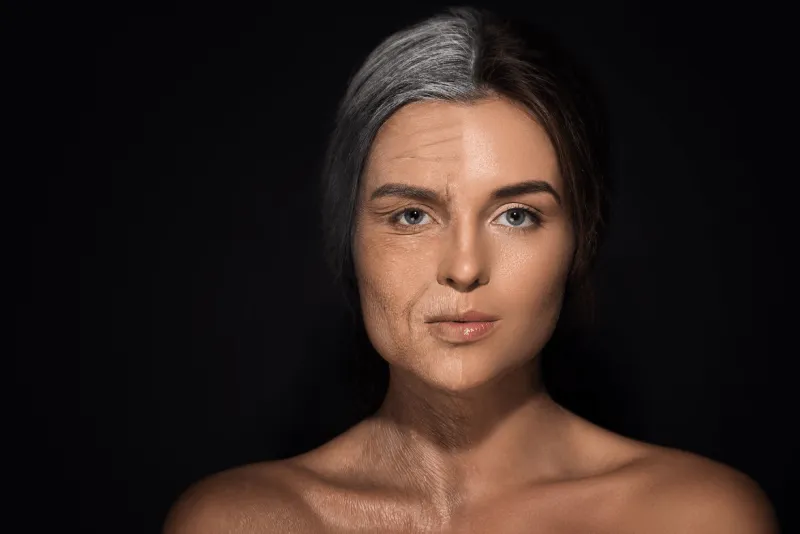
Do you notice the gap widening between the age you feel and the face you see in the mirror when you look at it? While your soul still carries the energy of your 20s or 30s, the tired expression on your face, sagging cheeks, and deepening lines might be telling you a completely different story. Gravity, the effects of the sun, genetic heritage, and life stress; steal the dynamism from our faces over time. However, today, aesthetic surgery not only gives back what has been stolen but also transforms into an art form that reveals the best version of the person.
Known in medical literature as Rhytidectomy, Facelift surgery is the most established and powerful weapon of aesthetic surgery. Contrary to popular belief, this surgery is not just about “stretching the skin and cutting off the excess.” Modern facelift surgery is a comprehensive engineering marvel that reconstructs the anatomical layers of the face (muscle, fat, skin) in three dimensions, eliminates volume losses, and returns the person to 10-15 years ago, that is, to their own youth.
In this giant guide; you will find everything from A to Z about Facelift surgery, from how artificial results looking like “entering a wind tunnel” have become history, to revolutionary techniques like Deep Plane, from how scars are hidden to the day-by-day analysis of the recovery process.
Why and How Does Our Face Age?
To solve the problem, one must first understand the mechanism. The aging process takes place on three main fronts in our face:
- Gravity and Sagging: The ligaments holding the tissues in our face in place loosen over time. Cheeks slide down, the jawline deteriorates, and sagging called “jowls” (bulldog cheeks) occurs.
- Volume Loss (Deflation): A young face is like a plump grape; an old face is like a dried raisin. Fat pads on the face melt and shift. Cheekbones flatten, temples collapse, and under-eyes hollow out. Also, there is resorption (melting) in facial bones, which causes the skin to lose the support underneath.
- Deterioration of Skin Quality: Collagen and elastin decrease, the skin thins, dries, and wrinkles (superficial tissue disorder) occur.
Here, Facelift surgery is the only method that radically corrects especially the first two items (sagging and displacement).
What is Facelift?
Facelift is a surgical procedure in which the sagging skin and muscle tissue (SMAS) in the face and neck area are lifted and suspended in their original place, excess skin is removed, and facial features are reshaped.
In “classic” facelift surgeries performed in the past, only the skin was stretched. This situation caused the face to look artificial, frozen, and “pulled”; moreover, since its resistance to gravity was weak, the results were short-lived. Modern Facelift, on the other hand, intervenes in the carrier columns under the skin, namely the SMAS (Superficial Musculo-Aponeurotic System) layer. Not the skin, but this strong muscle layer carries the load. The result is a natural, permanent, and dynamic rejuvenation.
Who is the Ideal Candidate for Facelift?
Questions like “Am I too old to get a facelift?” or “Am I too young?” are frequently asked. In fact, this surgery is more related to “anatomical age” than biological age.
Ideal Candidate Profile:
- Those with Signs of Sagging: Those whose cheeks have descended, nasolabial (nose-mouth) lines have deepened, jawline has lost its definition, and there is looseness in the jowl area.
- Those with Skin Elasticity: Patients whose skin still has some elasticity get better results.
- Those with Realistic Expectations: The surgery does not return you to your 20-year-old self, but to the best and freshest version of your current age (approximately 10-15 years ago).
- Those in Good General Health: Individuals who do not have a serious chronic illness preventing anesthesia, and who do not smoke (or can quit).
Generally, between the ages of 45 and 70 is the most preferred range. However, individuals in their 40s who age early genetically or individuals aged 75 in very good health can also have this surgery.
Facelift Techniques: Which One is Suitable for You?
Facelift is not a single surgery. Different techniques are applied according to the patient’s needs.
1. Deep Plane Facelift
It is accepted as the “Gold Standard” of facial aesthetics today. It is the method preferred by the world’s most famous surgeons (such as Dr. Jacono, Dr. Kao).
- Technique: The skin and the underlying SMAS layer are lifted as a block without separating them from each other. Deep retaining ligaments connecting the face to the bone are released.
- Advantage: Since ligaments are released, tissues are carried upwards naturally without being stretched. The “caught in the wind” look never occurs. It is the method that best gathers the mid-face (cheeks). The recovery time is surprisingly fast as less trauma is applied to the tissue. Bruising and edema are less.
2. SMAS Plication / SMASectomy (Classic Facelift)
The skin is lifted, the underlying SMAS layer is folded over itself and stitched (Plication) or a part of it is cut and removed to tighten (Ectomy).
- Usage: It is still a common and successful technique. It is very effective especially in the neck and jawline, but its effect on the mid-face (cheekbones) may not be as strong as Deep Plane.
3. Mini Facelift
Suitable for younger patients (40-50 years old) whose sagging is still at the initial stage.
- Technique: Incisions are shorter (usually only in front of the ear). Tightening is done in a more limited area (only jawline and under cheek).
- Advantage: Recovery is very fast, also known as “weekend facelift.”
- Disadvantage: It has no effect on the neck area.
4. Mid-Face Lift (Endoscopic)
Preferred in cases where only the cheeks are sagging, and the lower face and neck are good.
- Technique: It is usually done by entering through the scalp in the temple area with the help of an endoscope (camera). Cheek tissue is moved up, over the cheekbone.
- Result: Cheekbones become plump, under-eye hollows fill. Can be combined with lower facelift.
Importance of Combination with Neck Lift
Face and neck are a whole. A patient whose face is lifted but neck is left sagging looks aesthetically incompatible. In 90% of facelift surgeries, neck lift is also included in the procedure.
- Platysmaplasty: The “Platysma” muscle in the neck loosens with age and forms vertical bands (turkey neck). In surgery, these muscles are stitched together in the midline like a corset, and the neck is restored to its 90-degree youthful angle.
Volume Restoration: Fat Injection (Fat Transfer)
Fat Injection is indispensable for modern facelifts. It is not enough to just stretch the face, it is also necessary to replace the lost volume.
- Process: Fats taken from the patient’s abdomen or leg area are enriched with stem cells and injected into cheekbones, temples, nasolabial grooves, and lips.
- Effect: It both gives volume and improves skin quality thanks to the stem cells in the fat, making the skin shine. Facelift + Fat injection is the formula for real “rejuvenation.”
Surgery Process: The Big Day
Facelift surgery is performed in a fully equipped hospital and under General Anesthesia.
- Duration: It lasts between 4 and 6 hours depending on the scope of the procedure (whether eyelid, neck, fat injection is added).
- Incisions:
- The incision starts inside the hair in the temple area.
- It goes down from inside or just in front of the ear’s front curve (tragus).
- It turns under the earlobe, passes behind the ear, and ends in the scalp.
- Aim: To hide the scar in natural folds. When healed, these scars become almost invisible.
- Drain: Usually, small drains (tubes) are placed behind the ear to drain blood that may accumulate inside. These are removed 1 day later.
- Bandage: At the end of the surgery, a special bandage or corset gathering the face is worn.
Recovery Calendar: The Road to Beauty
The facelift recovery process is not as painful as thought, but there is a “social isolation” period that requires patience.
First 24 Hours: Spent in the hospital. There is a bandage on the face. A feeling of tightness rather than pain prevails. Ice application begins.
Days 2-3: Discharge. The most intense edema and bruising are seen on these days. Eyes may swell. This is a temporary situation. One should sleep with the head elevated.
1st Week: Some of the stitches (if any) and bandages are removed. Bruises start to turn yellow. The face is still swollen, but the patient feels better.
2nd Week: Remaining stitches are removed. Bruises become coverable with makeup. Most patients can return to work in this period (they can hide scars by leaving their hair down).
1st Month: 70% of the edema has subsided. Facial features become distinct. Loss of sensation (numbness) starts to decrease slowly. Walking and light sports are free.
Months 3-6: The result settles completely. Scars turn to skin color and fade. The face regains its natural and rested form.
About Scars: Will They Be Visible?
The biggest fear of patients is the question “Will there be a stitch scar on my face?”
- Hidden Incisions: In modern techniques, incisions are hidden inside the natural folds of the ear and in the scalp. It is done by passing behind the cartilage, not as a straight line in front of the tragus (ear cartilage).
- Tension-Free Closure: Since the deep tissues (SMAS) carry the load, the skin is not stitched tensely. When the skin is not tense, scars heal very thinly (like a hair).
- Result: A few months later, even your hairdresser will not notice your surgery scars unless they look carefully.
Facelift in Men: The Masculine Touch
Facelift surgery in men is different from women.
- Beard Line: Preserving the sideburn area and beard line is very important in men. Special techniques are used to prevent beards from entering the ear while the skin is pulled back.
- Expression: While a “V” shape is aimed in women, a strong and angular jawline is aimed in men. Attention is paid not to feminize the face.
What is the Difference from Non-Surgical Facelift (Thread Lift etc.)?
Thread lift (French lift) or device-assisted procedures (HIFU, Thermage) are popular but cannot be compared with surgery.
- Thread Lift: Its effect is temporary (1-2 years). It does not remove excess skin, only gathers it up by puckering. It remains insufficient in serious sagging.
- Surgery: Its effect is permanent (10-15 years). Excess skin and fat are removed, muscles are repaired. It truly rewinds the biological clock.
- Decision: If your sagging is mild, threads can be tried; however, if your neck has sagged and your jawline has deteriorated, surgery is the only solution instead of wasting time and money with threads.
Frequently Asked Questions (FAQ)
Will my mimics disappear, will I look frozen? In a correctly performed (especially Deep Plane) facelift, mimics never disappear. Because nerves are not touched and the skin is not stretched excessively. Only sagging tissues are moved to their old places. The reason for the frozen expression is usually excessive Botox or poorly done (where only the skin is pulled) old-type surgeries.
How many years younger will I look with a facelift? Although it changes according to the person’s skin quality, an average of 10-15 years younger appearance is obtained. But more importantly, the “tired” expression is replaced by a “vigorous and healthy” expression.
What are the risks? As in every surgery, there is a risk of bleeding (hematoma) and infection. Damage to facial nerves is possible, albeit very rare (temporary numbness is common, permanent damage is very rare). Therefore, choosing an experienced Plastic Surgeon who masters anatomy is vital.
Can I have surgery if I smoke? Smoking impairs blood circulation by narrowing capillaries. Nutrition of the skin is very critical in facelift surgery. In smokers, the risk of opening in suture lines and tissue loss (necrosis) is very high. Therefore, it is absolutely essential to quit smoking at least 3-4 weeks before surgery.
Make Peace with Mirrors Again
Facelift surgery is one of the greatest gifts you can give yourself. This is not just a physical change, but a spiritual refreshment. It is in your hands to reflect the energy inside you to your face, to stand more confidently in social life, and to erase the weight brought by years from your face.
Remember, aging is inevitable, but looking “old” is a choice.
This page covers one procedure in detail. For prices, what is included and how the whole trip works, see our overview of cosmetic surgery in Turkey.