
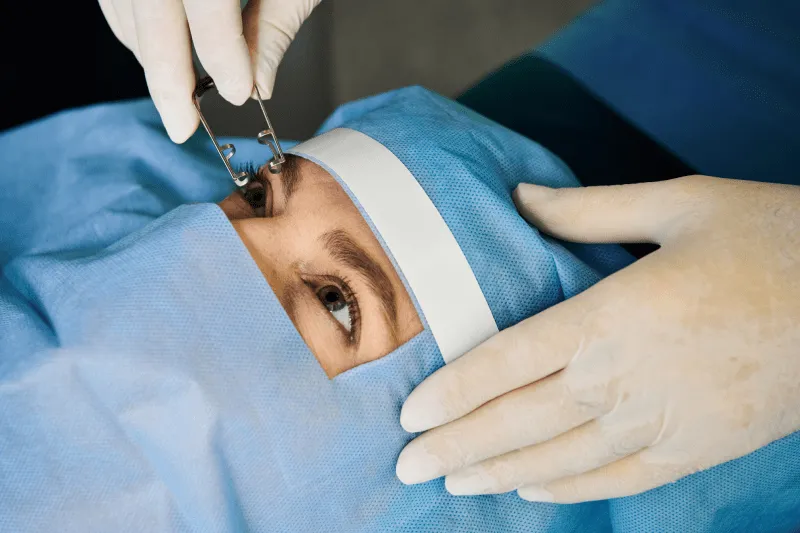
Part of: Eye treatment in Turkey — prices, what is included and country comparison.
What is Strabismus and Why is Treatment of Vital Importance?
Strabismus, also known as squint or crossed eyes, is a condition where both eyes cannot focus on the same point at the same time. This usually results from a lack of coordination or imbalance among the six muscles that move the eyes. While one eye looks in the correct direction, the other may turn inward (esotropia), outward (exotropia), upward (hypertropia), or downward (hypotropia).
It is important to understand that strabismus is a broad spectrum rather than a single condition; the deviation may be constant (comitant strabismus) or intermittent (intermittent strabismus); the angle of deviation may be large or small. Although it is commonly seen in childhood, it can also occur in adulthood due to trauma, neurological diseases, or inadequate previous treatments.
The misconception that strabismus is merely a cosmetic issue can overshadow the importance of treatment. However, untreated strabismus can lead to serious and permanent vision impairments. The primary reason for this is the brain’s mechanism to prevent double vision. The brain learns to ignore (suppress) the blurry or misaligned image coming from the deviating eye. Especially in early childhood, this condition leads to laziness in the misaligned eye, or amblyopia. Amblyopia is a critical condition risking permanent vision loss, which prevents the normal development of visual acuity. If left untreated, the visual ability of the lazy eye can be permanently reduced.
The second vital importance of treatment is the preservation or restoration of binocular vision—the ability of both eyes to work together to create depth perception (stereopsis). Three-dimensional vision is essential for daily quality of life and certain professions (e.g., pilots, surgeons). Early and correct treatment allows the brain to successfully merge signals from both eyes, maximizing this crucial function. The main goal in strabismus treatment is not just to align the eyes, but also to increase visual acuity and, if possible, restore binocular function. Therefore, strabismus treatment is a complex process that must be managed by an eye doctor, particularly a pediatric ophthalmologist or neuro-ophthalmologist.
How Does a Comprehensive Diagnostic Process Work?
Before beginning strabismus treatment, an accurate and detailed diagnosis is essential. The diagnosis aims to determine the type of strabismus (esotropia, exotropia, etc.), the angle of deviation, the cause of the deviation (refractive error, muscle paralysis, neurological condition), and the presence of associated amblyopia. This process is not just a physical examination; it involves a series of specialized tests.
The first step is taking a detailed medical and ocular history. The patient’s complaints, when the strabismus started, whether it is constant or intermittent, and the presence of associated symptoms such as double vision (diplopia) or headaches are important. A family history of strabismus or amblyopia is also considered as a risk factor.
The second critical step is the visual acuity test. This test can be challenging, especially in small children, but is vital for detecting the presence of amblyopia.
The third and one of the most important tests is the refraction (eyeglass prescription determination) examination. This must be performed using cycloplegic drops. These drops temporarily paralyze the eye’s ability to focus (accommodation), revealing the eye’s true optical power. Refractive errors such as high hyperopia (farsightedness) can be the main cause of accommodative strabismus, and the treatment for this condition primarily starts with glasses.
The fourth stage is a standard series of tests called the Prism Cover Test. These tests determine the amount of strabismus (in prism diopters) and whether the deviation is concomitant (i.e., whether the angle of deviation is independent of the gaze direction) at different gaze directions (primary, secondary, tertiary) and different distances (near and far). These measurements provide the fundamental data for surgical planning.
In addition, detailed analysis of eye movements reveals any muscle restrictions or paralysis. Neuro-ophthalmological evaluations and imaging (MRI/CT) may be requested when necessary to understand if there is a problem related to the brainstem, cranial nerves, or orbit (eye socket). A comprehensive diagnosis outlines the roadmap for the treatment strategy and can prevent unnecessary surgical interventions.
Is Treatment Possible with Glasses and Prisms?
One of the least invasive and often preferred initial routes for strabismus treatment is optical correction: glasses and prisms. These methods can yield miraculous results, especially in types of strabismus related to refractive errors.
The Role of Glasses Treatment (Full Correction)
A large percentage of strabismus, particularly the inward turning type (esotropia), is called accommodative esotropia. This condition is closely linked to the eye’s effort to focus (accommodation). A child with high hyperopia is forced to accommodate excessively to see clearly. Accommodation naturally sends a signal for convergence to the eye muscles. If the hyperopia is high, this excessive convergence causes the eyes to constantly turn inward.
The treatment involves the continuous use of glasses containing the full hyperopia prescription determined by cycloplegia. When the glasses are worn, the eye no longer needs to accommodate excessively, thus the excessive convergence signal is cut off, and the eyes align spontaneously. In this case, strabismus can completely disappear without surgery, only with optical correction. Glasses must be used in conjunction with amblyopia treatment, and eye prescriptions should be checked regularly as the child grows. In cases such as partial accommodative esotropia, glasses correct only part of the deviation, and the remainder may require surgery or other methods.
Bifocal and Prismatic Lenses
Some patients exhibit deviation only in near vision (near esotropia). This means the person has a high accommodation/convergence (AC/A) ratio. In these cases, bifocal or progressive lenses reduce accommodation by meeting the near reading need, thereby preventing deviation.
Prismatic glasses, on the other hand, bend light to move the image towards the fovea (the point of clearest vision) of the deviating eye. Even if the eye itself remains misaligned, the brain perceives the image as aligned, which can correct double vision (diplopia). Prisms are generally used to alleviate the diplomatic (double vision) symptom in adult patients with small-angle strabismus or those who cannot undergo surgery due for medical reasons. Prisms can be Fresnel (stick-on) or integrated into the lens. However, prism power is practically inapplicable for large-angle deviations.
Cornerstone of Strabismus Treatment: Eye Patching (Occlusion) and Penalization Therapies
Eye patching (occlusion) and penalization therapies are an integral part of strabismus treatment, but their primary goal is not to correct the deviation, but to treat amblyopia (lazy eye) that accompanies strabismus. Amblyopia is a permanent reduction in vision caused by insufficient stimulation of the visual system during the critical developmental period of childhood. Timing is critical in treatment.
Eye Patching (Occlusion) Method
Eye patching is the gold standard for amblyopia treatment. It is based on the principle of forcing the lazy eye to work by patching the better-seeing eye for a certain period.
- Mechanism: The patch, adhered to the eyeglass lens or directly to the eye, encourages the brain to use the weak signal coming from the lazy eye. This forcing accelerates the development of nerve pathways in the visual cortex of the brain.
- Duration and Regime: The duration of patching is determined by the doctor based on the severity of amblyopia and the child’s age. This can vary from a few hours a day to rarely all-day patching. The biggest challenge is the child accepting and regularly using the patch.
- Activity: Engaging in activities that require the child to focus on near objects during patching (coloring, reading, puzzle solving) maximizes the visual stimulation of the lazy eye.
- Follow-up: Patching treatment requires regular doctor visits to monitor the improvement in visual acuity. Since excessive patching can lead to amblyopia in the better-seeing eye, maintaining balance is crucial.
Penalization Therapies
Penalization is an alternative used for children who struggle to use a patch or for maintenance after patching therapy. This method is based on temporarily blurring the better-seeing eye.
- Atropine Penalization: Atropine eye drops are instilled in the better-seeing eye. Atropine dilates the pupil and paralyzes accommodation, which significantly impairs near vision ability. This automatically forces the child to use the lazy eye for focusing on near objects. Penalization can also be done by adding an excessive plus value (overcorrection) to the eye glass prescription for distant vision.
- Optical Penalization: The better-seeing eye is intentionally given an incorrect eyeglass prescription (e.g., too much minus power for near vision) to blur the vision of that eye.
These treatments are most effective during the early ages when brain plasticity is highest (generally before 7-8 years of age). Performing strabismus surgery before amblyopia is corrected usually results in only a cosmetic outcome and does not increase the potential for binocular vision. Therefore, amblyopia treatment is the first and most critical step to be taken before deciding on surgery.
In Which Cases are Orthoptic Exercises and Vision Therapy Used?
Orthoptic exercises and vision therapy are specialized treatment approaches that typically come into play when non-surgical methods and optical corrections are insufficient. These therapies aim to improve the coordination of eye muscles, the ability of both eyes to work together (fusion), and the ability to focus. While surgery physically changes the power or position of the eye muscles, orthoptics trains the brain in how to control these muscles.
Treatment for Convergence Insufficiency
One of the most common and successful areas of orthoptic treatment is convergence insufficiency. This is the lack of ability of the eyes to turn inward sufficiently (convergence) when focusing on near objects (e.g., reading). Symptoms include eye strain, headaches, blurred words, or double vision while reading.
- Prismatic Correction: Low-power prismatic glasses may be used in some cases.
- Pencil Push-ups: A pencil is slowly moved towards the patient’s nose while noting the point where double vision begins. The goal is to gradually bring this point closer to the nose over time.
- Computer-Based Therapy: Specially designed software and virtual reality systems are used to train the visual system in a controlled and engaging environment. This aims to increase the range of fusion and convergence ability.
Developing Fusion and Stereopsis
Strabismus can lead to situations where the brain struggles to merge the two images (lack of fusion), even if the eyes are aligned. Vision therapy focuses on developing this fusion ability:
- Stereograms and 3D Images: The patient is shown different images through special filters or 3D glasses. As the brain successfully learns to merge these images (fusion), depth perception (stereopsis) also improves.
- Synoptophore: This device shows a separate image to each eye, allowing the patient to mentally superimpose these images (fusion), thus measuring and training the coordination of the eyes.
Orthoptic treatments are usually conducted in sessions under the supervision of an orthoptist, and the patient contributes to the treatment by performing regular exercises at home. Even after surgery, supportive orthoptic exercises may be recommended to achieve permanent binocular vision following surgical alignment.
When Does Surgical Treatment Become Necessary?
Strabismus surgery becomes necessary when conservative methods such as optical corrections (glasses) and orthoptic exercises fail to adequately correct the deviation, or when a significant angle of deviation remains after amblyopia treatment. The decision for surgery is individualized based on the patient’s age, the type and angle of strabismus, and associated symptoms (diplopia, abnormal head posture).
Surgical Indications:
- Permanent Deviation Uncorrectable by Glasses: Especially cases of non-fully accommodative esotropia and exotropia that start in infancy or early childhood.
- Risk of Amblyopia: Cases carrying a risk of amblyopia due to the size of the deviation angle, or where cosmetic and functional deviation persists after amblyopia treatment.
- Diplopia (Double Vision): To eliminate or reduce double vision that severely degrades the quality of life in adults or in strabismus caused by neurological reasons.
- Abnormal Head Posture: In some paralytic strabismus cases, the patient constantly tilts or turns their head to prevent double vision or maintain binocular vision. Surgery is required to correct this abnormal head posture.
- Cosmetic Reasons: Surgery is also important for correcting the patient’s appearance and supporting their psychosocial development. However, the decision for surgery is not made solely for cosmetic concerns; functional goals are always prioritized.
Surgical Timing
The timing of strabismus surgery is a critical factor:
- Infantile Esotropia: This type of strabismus usually starts before 6 months of age. Surgical intervention is often recommended before 10-12 months of age to preserve the potential for permanent binocular vision. Early surgery increases the chance for the brain to learn to see with aligned eyes during the critical period of visual development.
- Other Strabismus Types: Surgery is planned after amblyopia treatment is complete and the eye prescription (refraction) is stable. It is typically performed during the preschool or early school age period. In adults, surgery can be performed at any time as long as the cause of the deviation is stable.
Fundamentals and Methods of Strabismus Surgery
Strabismus surgery focuses on adjusting the power of the six extraocular muscles that move the eyeball to change the eye’s position. The internal structure of the eye is not touched, so it is not a surgery that carries major risks.
Surgical Principle: Adjusting Muscle Power
Eye movements are coordinated by the contraction of one muscle and the relaxation of the opposing muscle. In strabismus, depending on the direction of the deviation, one or more muscles may be either too strong (over-contracted) or too weak (paralytic). Surgery aims to restore this balance.
Two basic techniques are used in strabismus surgeries:
- Recession: In this technique, the overly strong or tense muscle is cut from its original attachment point on the eyeball and reattached further back, posterior to the original insertion. This reduces the muscle’s power and creates an effect opposite to the direction of the deviation. For example, the medial rectus muscles are recessed to correct inward deviation. This is the most common type of strabismus surgery.
- Resection: In this technique, a portion of the weak or insufficient muscle is cut and shortened, and the muscle is reattached to its original insertion point. This increases the muscle’s tension and thus its power. For example, the lateral rectus muscles are resected to correct outward deviation.
Depending on the type and angle of the deviation, the surgeon may apply both recession and resection (Combined Recession/Resection) to a single eye or intervene on both eyes. In some complex cases, oblique muscles or multiple muscles may require intervention.
Type of Anesthesia
Strabismus surgeries in children are almost always performed under general anesthesia. In adults, local anesthesia may be preferred in certain cases where the angle of deviation needs to be adjusted more precisely, especially if the adjustable suture technique is to be used.
What is the Adjustable Suture Technique and What are Its Advantages?
The goal of the surgeon in strabismus surgery is to correct the deviation as accurately as possible. However, it is not always possible to fully predict how the muscles will react to surgical intervention. The adjustable suture technique is a method developed to minimize this uncertainty and maximize the surgical outcome, particularly in adults.
How the Adjustable Suture Works
The adjustable suture allows the surgeon to attach the muscle to the eyeball with a temporary stitch. Immediately after the surgery (usually within 24 hours), while the patient is awake and under local anesthesia, the surgeon checks the eye alignment. If the eye is slightly too inward, outward, upward, or downward from the desired position, the doctor adjusts the muscle’s position with millimetric precision by loosening or tightening the suture. Once the desired alignment is achieved, the temporary suture is removed, and the muscle is permanently secured with a fixed stitch.
Advantages
- Precision: The most important advantage is the ability to adjust the post-operative alignment in an environment where the patient is awake and can actively fixate. This reduces the need for a second surgery.
- High Success Rate: Especially in adult patients complaining of double vision, where the requirement for accurate alignment is very high, adjustable sutures provide more predictable and successful results.
- Complex Cases: It provides great convenience in complex cases such as paralytic strabismus, where the angle of deviation is difficult to predict, or in patients who have previously undergone strabismus surgery.
Because children usually cannot tolerate this procedure, adjustable sutures are rarely used in children, only in special circumstances under sedation. In standard pediatric surgery, the suture is not adjusted based on the technique; it relies solely on experience and measurements.
Specific Treatment Approaches in Infancy and Childhood Strabismus
Strabismus treatment in children requires special attention and speed because the brain’s visual system is still developing. The main goal of treatment is to prevent permanent vision loss (amblyopia) and restore binocular function early.
Infantile Esotropia
- Definition: A large-angle, constant inward deviation that usually appears before 6 months of age.
- Treatment: This condition usually does not correct with glasses. To preserve the potential for permanent binocular vision (even a small amount), surgical intervention is recommended as early as possible, ideally within the first year of life. Early surgery helps the brain establish normal visual pathways.
Accommodative Esotropia
- Definition: Inward deviation usually starting around 2-3 years of age, related to hyperopia.
- Treatment: The initial treatment is always glasses containing the full hyperopia prescription determined by cycloplegia. If the glasses completely correct the deviation, no other treatment is needed. If the glasses only correct the distance deviation and the near deviation persists, bifocals or surgical intervention may be considered.
Exotropia
- Definition: Outward deviation of the eyes. Most exotropia is intermittent, meaning the deviation appears when the patient is tired or inattentive.
- Treatment: Small-angle or intermittent exotropia can sometimes be managed with orthoptic exercises (to increase convergence ability). As the frequency or angle of deviation increases, especially if the patient constantly closes one eye due to deviation or experiences diplopia, surgery is necessary. Surgery usually involves the recession of the lateral rectus muscles and/or the resection of the medial rectus muscles.
Is Strabismus Treatment Possible in Adults?
Strabismus is not only a childhood disease; it can also occur in adults due to neurological diseases (diabetes, stroke), thyroid eye disease (Graves’), trauma, or failure of previous childhood surgery. The treatment goals in adults are slightly different from those in children.
Treatment Goals
While the primary goal in children is to prevent amblyopia and establish binocular vision, the main goals in adults are:
- Elimination of Diplopia (Double Vision): Since the adult brain loses the ability to suppress (ignore the image), even small deviations lead to severe double vision. This is the priority of treatment.
- Cosmetic and Functional Alignment: While the aesthetic appearance is improved by aligning the eyes, the peripheral visual field can also be optimized.
Adult Treatment Methods
- Prismatic Glasses: A very effective solution for instantly correcting double vision in small-angle deviations (usually up to 15 prism diopters).
- Botulinum Toxin (Botox) Injections: Used especially in new-onset, paralytic strabismus to support the diagnosis before surgery, prevent permanent muscle tightness (contracture), or postpone surgery. Its effect is temporary (3-4 months).
- Strabismus Surgery: The definitive solution for large and constant angle deviations. The adjustable suture technique is often used in adults to make surgical results more precise. The goal of surgery is to align the eyes precisely or leave a very small residual deviation that the brain can easily manage.
Botulinum Toxin Injections: Is It an Alternative to Surgery?
Botulinum toxin (Botox) is a valuable tool in strabismus treatment that can be an alternative to or support surgery. It acts as a muscle relaxant and causes temporary weakening of the muscle when injected into it.
Application and Mechanism
- Application: The toxin is injected directly into one of the extraocular muscles that control eye movement. The procedure is typically performed using a needle under local anesthesia (in adults) or light sedation (in children).
- Mechanism: The toxin blocks the release of acetylcholine, which transmits signals from nerve endings to muscles. This temporarily reduces the power of the injected muscle. When the muscle weakens, the power of the opposing (antagonist) muscle relatively increases, and the eye’s position improves.
In Which Cases Is It Used?
- Acute Paralytic Strabismus: For example, in cases where the eye cannot turn outward due to 6th nerve palsy. The opposing healthy muscle of the paralyzed muscle is injected with the toxin to prevent permanent shortening (contracture) of this muscle and help align the eye while the nerve is healing.
- Small-Angle Strabismus: It can be used to correct small deviations for cosmetic correction or double vision treatment, especially in adults.
- Previously Operated Cases: To correct small residual deviations remaining after surgery.
- Infantile Esotropia (Selected Cases): As a temporary solution in situations where the risk of early surgery is high or it needs to be postponed.
The effect of botulinum toxin usually lasts for 3-4 months. If the deviation does not permanently correct during this period, re-injection or surgical treatment may be necessary. The success rate varies between 50-80% and is generally a less definitive solution compared to surgery, but its minimal invasiveness is a major advantage.
What are the Challenges and Complications That May be Encountered During Treatment?
As with any medical intervention, strabismus treatment (especially surgery) involves potential challenges and complications. It is important for patients and families to have a realistic understanding of these risks to manage post-treatment expectations.
Surgical Complications
- Hypocorrection (Under-Correction) and Hypercorrection (Over-Correction): The most common difficulty. Hypocorrection is when the deviation is not fully corrected; hypercorrection is when the eye deviates in the exact opposite direction of the desired alignment after surgery (e.g., an inward deviation turning into an outward deviation after surgery). Both of these situations may require a second surgery (revision surgery).
- Diplopia (Double Vision): Temporary or permanent double vision can occur after surgery, especially in adult patients with long-standing strabismus. Temporary diplopia is common until the brain adapts to the signals from the newly aligned eyes. If it rarely becomes permanent, prisms or other surgical interventions may be needed.
- Infection and Bleeding: Although rare, there is a risk of infection in any surgical procedure. Minor bleeding or edema (swelling) in the surgical area is normal, but severe, uncontrolled bleeding is very rare.
- Scleral Perforation (Puncturing the Eyeball): An extremely rare but serious complication. The surgeon must be very careful when placing stitches. If it occurs, it must be treated immediately.
- Unwanted Muscle Effects: Sometimes surgery can cause restrictions in muscle movement or eyelid drooping (ptosis).
Conservative Treatment Challenges
- Compliance Issues: Eye patching treatment can be emotionally and socially challenging, especially for small children. The compliance of the family and child (regular patch use) is the key to success.
- Permanent Amblyopia: If amblyopia treatment is started late or not adhered to regularly, a permanent reduction in visual acuity may remain.
The doctor should clearly discuss potential risks and success rates at the beginning of treatment and detect challenges early through regular follow-up throughout the treatment process.
Why are Post-Treatment Recovery and Long-Term Follow-up Important?
Strabismus treatment is not a process that ends with a single surgery or a series of eyeglass prescriptions. Achieving and maintaining a successful outcome requires careful recovery and long-term, regular follow-up.
Post-Surgical Recovery
- First Few Days: Redness, mild pain, tearing, and a gritty sensation in the eyes are common in the first few days after surgery. These symptoms are usually controlled with prescribed painkillers and antibiotic/steroid eye drops.
- Redness: Redness and swelling in the eye usually subside within a few weeks, but complete recovery and the total disappearance of redness can take a few months.
- Activity Restriction: Children are generally allowed to return to normal activities a few days after surgery. However, swimming, contact sports, and activities that involve eye contact should be avoided for 1-2 weeks.
- First Examination: The first post-surgical check-up is usually done within 1-2 days. At this check-up, the eye’s position, signs of infection, and wound healing are evaluated.
Stabilization of Eye Position
It takes time for the eye’s final position to stabilize after surgery. In the first weeks after the operation, the eyes may appear slightly overcorrected (hypercorrected). This usually corrects itself as the muscle tension decreases and the swelling subsides. Surgeons factor this physiological regression into their surgical plan.
Long-Term Follow-up and Risk of Recurrence
The risk of strabismus recurrence (relapse) exists, especially in patients treated in childhood. Since the child’s visual system continues to develop and eye growth continues, the alignment that was initially successful may deteriorate over the years.
- Regular Check-ups: Regular ophthalmological check-ups are essential for the status of amblyopia, strabismus, refractive error, and binocular function, at least throughout the school years (and sometimes beyond).
- Glasses Management: If the patient uses glasses, changes in prescription and compliance should be checked regularly.
- Need for Second Surgery: A significant percentage of patients requiring surgical intervention (10-25%) may need a second surgery due to the recurrence of the deviation or the emergence of a new deviation in a different direction over the years. This is not a failure, but a consequence of the complex nature of strabismus.
Long-term follow-up is the only way to detect and intervene in potential relapses early, preserving the patient’s vision quality and aesthetic alignment.
Treatment Approaches in Specific Strabismus Syndromes
Strabismus is not always simply caused by over- or under-action of muscles. Some specific strabismus conditions result from anatomical abnormalities of the eye muscles or nerve palsies and require unique treatment strategies.
Duane Retraction Syndrome
- Definition: A developmental disorder of the nerves controlling eye movement (especially the 6th cranial nerve). When the eye moves in one direction (usually inward), the eyeball retracts and the eyelid narrows.
- Treatment: Most Duane patients do not require surgery unless there is an abnormal head posture or significant cosmetic deviation. Surgery is generally performed only if there is a noticeable deviation in the eye’s primary position (when looking straight ahead) or if the person constantly turns their head sideways to prevent double vision. Treatment may sometimes involve atypical techniques such as maximum muscle recession (super maximal recession).
Brown Syndrome
- Definition: A restriction or shortening in the sheath of the superior oblique muscle’s tendon, restricting the eye’s movement upward and inward.
- Treatment: Observation and follow-up are often sufficient. Surgery is considered if symptoms are severe or if there is a persistent abnormal head posture. Surgery may involve lengthening the tendon or freeing the sheath to reduce the restriction.
Neurological and Paralytic Strabismus
- Definition: Palsies of the 3rd, 4th, or 6th cranial nerves resulting in paralysis of the relevant muscles (e.g., the lateral rectus muscle in 6th nerve palsy).
- Treatment: In the acute phase, the first 6 months are spent waiting for the nerve palsy to recover. During this time, eye patching or prismatic glasses may be used for double vision. If recovery does not occur, Botulinum toxin injections may be considered. If the palsy becomes permanent after 6 months, surgery is required. Surgery aims to improve eye movement by sometimes transposing healthy muscles (muscle transposition) instead of strengthening the weak muscle.
These specific syndromes require more complex planning and more specialized surgical techniques than standard strabismus surgery, so consulting an experienced specialist for their treatment is vital.
Conclusion and the Importance of Personalized Treatment
Strabismus treatment is far from a simple problem solved with a single prescription or a single surgery. The treatment process must be personalized based on many factors such as the eye’s anatomy, the cause of strabismus (refractive, neurological, paralytic), the patient’s age, and the state of the brain’s visual system.
Successful strabismus treatment begins with managing amblyopia through optical corrections, is supported by orthoptic exercises when necessary, and proceeds with surgery only when conservative methods fail. Surgery aims not only for aesthetic concerns but also, and primarily, to restore the potential for binocular vision.
Remember, early diagnosis and prompt intervention in childhood strabismus are critical in preventing permanent vision loss and ensuring three-dimensional vision. Even in adults, double vision and cosmetic deviations can be corrected with high success rates thanks to contemporary surgical techniques and non-invasive options like Botulinum toxin.
If you observe signs of strabismus in yourself or your child, the first step is to undergo a detailed evaluation by a pediatric ophthalmologist or a strabismus specialist. Determining the most appropriate personalized strategy for your treatment journey and ensuring long-term follow-up will be the greatest investment for healthy and coordinated vision.
This page covers one procedure in detail. For prices, what is included and how the whole trip works, see our overview of eye treatment in Turkey.
Sources and how to verify this yourself
- Ministry of Health, Regulation on International Health Tourism and Tourist Health, Official Gazette 26 April 2025, No. 32882 — authorisation requirement for facilities and intermediaries, TÜSKA accreditation, compulsory complication insurance (deadline 31 December 2025 for insurance, 31 December 2026 for accreditation). source
- Ministry of Health, Regulation on Promotion and Information Activities in Health Services, Official Gazette 12 November 2025, No. 33075 — treatment promises and guarantees are prohibited; price and campaign announcements are permitted only within international health tourism. source