
Part of: Eye treatment in Turkey — prices, what is included and country comparison.
What is Astigmatism and How Does It Affect Vision Quality?
Astigmatism is a condition where the front surface of the eye, the cornea, or the lens does not have a spherical shape, but instead takes on an oval shape, like a rugby ball rather than a football. This shape irregularity causes light rays entering the eye to focus at multiple points instead of a single focal point. As a result, objects both near and far appear blurry, wavy, or stretched. Astigmatism can occur together with myopia (nearsightedness) or hyperopia (farsightedness), and these three conditions are referred to as “refractive errors.”
The prevalence of astigmatism is quite high. While mild astigmatism can be found in many people, higher degrees severely complicate daily life, especially focus-demanding tasks like reading and driving. This difference in refractive power between the eye’s meridians makes a person’s visual experience striated and shadowed. Seeing halos or starburst-like scattering around light sources, particularly at night or in low-light conditions, are typical symptoms of astigmatism. This condition can trigger not only visual clarity issues but also eye strain, headaches, and chronic fatigue, as the eye constantly tries to form a clear image.
What are the Symptoms of Astigmatism and When Should a Specialist Be Consulted?
The symptoms of astigmatism can vary greatly depending on the degree of the error and the person’s age. The most common symptom, as mentioned above, is blurred or distorted vision at all distances. The edges of letters or objects are not clear and may be perceived as shadowy or double. Children, in particular, may struggle to express symptoms because they might perceive this form of vision as normal, which makes early diagnosis difficult.
Common symptoms in adults include: the constant need to squint or tilt the head, chronic headaches, eye strain that becomes prominent after spending time reading or in front of a computer, and seeing excessive glare or scattering around lights while driving at night (difficulty with night vision). When any of these symptoms are noticed, and the drop in visual quality begins to affect daily comfort, it is the right time to consult an eye care professional. In children, behaviors like a drop in school performance, a tendency to examine books or objects too closely, or constantly rubbing the eyes can be signs of astigmatism, making routine eye exams vitally important. Early diagnosis is critical in preventing the risk of amblyopia (lazy eye), a permanent vision loss, especially in children.
Traditional Solution: How is Astigmatism Treated with Glasses?
Glasses are the simplest, safest, and most common method used in the treatment of astigmatism. The spectacle lenses used for astigmatism are called “cylindrical” lenses. These special lenses are designed to neutralize the shape irregularity in the cornea or lens and direct the light correctly to a single focal point on the retina. The power and axis (angle) of the cylindrical lens are determined by a personalized prescription for each eye.
The main advantage of glasses is that they are non-invasive and can be used by almost anyone. Glasses can correct both low and high degrees of astigmatism. However, they also have disadvantages: the thickness of the spectacle lenses can increase as the astigmatism degree increases, which may lead to aesthetic concerns. They can also create distortion or prismatic effects in the peripheral (side) vision fields. They can be restrictive for daily use for people with an active lifestyle or who play sports. In recent years, technological advancements such as thinner and lighter materials (high-index lenses), anti-reflective coatings, and photochromic features (light-sensitive lenses) have significantly increased the comfort and visual performance of glasses. Glasses remain the first step and often a permanent solution in correcting refractive errors.
Correcting Astigmatism with Contact Lenses: The Anatomy of Toric Lenses
Contact lenses are a popular alternative to glasses for astigmatism treatment, offering sharper vision and a wider field of view. Lenses specially designed for astigmatism are called toric contact lenses. Toric lenses differ from standard spherical contact lenses because they have different refractive powers in two different meridians. This, just like spectacle lenses, serves to compensate for the irregular shape of the eye.
The main challenge with toric lenses is ensuring the lens remains stable on the eye at the correct axis (angle). If the lens rotates, the corrective power will be at the wrong angle, and vision will become blurry. To solve this problem, toric lenses have stabilization mechanisms that ensure the lens stays constantly in the correct position. These mechanisms may include:
- Prism Ballast: Making the lower part of the lens slightly thicker and heavier.
- Truncated Edges: Flattening the lower part of the lens to stabilize it.
- Thin Zones: Making the upper and lower parts of the lens thinner, which interacts with the eyelid to rotate the lens back into position.
Toric lenses can be found as soft (daily, bi-weekly, monthly use) or rigid gas permeable (RGP) lenses. Soft toric lenses are the most common and offer high comfort, but RGP or even scleral lenses can provide superior optical correction for very high or complex astigmatism. Scleral lenses rest on the sclera (the white part of the eye) instead of the cornea and create a smooth optical surface even for irregular corneal surfaces (e.g., keratoconus), providing excellent visual clarity. Contact lens use requires strict adherence to hygiene and care; failure to comply with these rules increases the risk of infection. Therefore, it is mandatory for contact lens users to follow regular check-ups and lens replacement schedules precisely.
The Role of Refractive Surgery in Astigmatism Treatment: Laser Technology
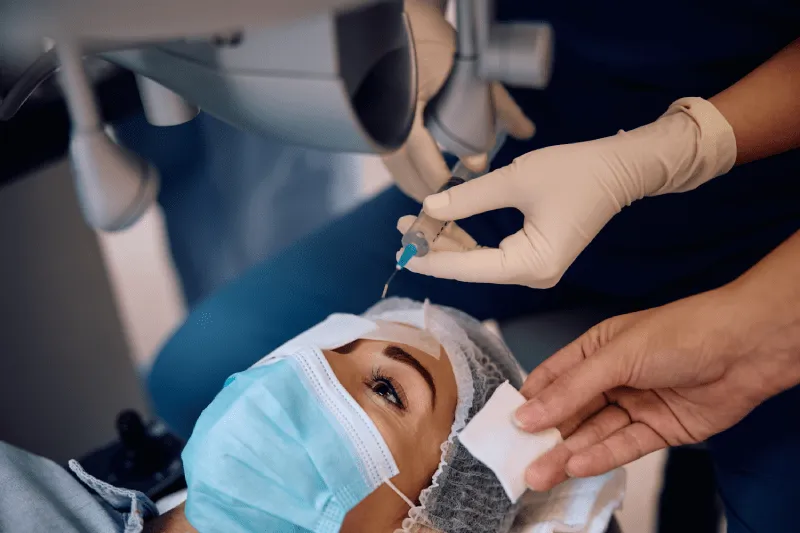
For those who prefer not to wear glasses or contact lenses, refractive surgery is the most effective way to permanently correct astigmatism. Refractive surgery uses lasers or surgical instruments to permanently change the refractive power of the eye. The main goal of these treatments is to reshape the cornea to allow light to focus correctly on the retina. The most common laser surgery methods used in astigmatism treatment are:
- LASIK (Laser-Assisted In Situ Keratomileusis): The most popular method.
- PRK (Photorefractive Keratectomy): An alternative surface ablation method to LASIK.
- LASEK (Laser Epithelial Keratomileusis): A variation similar to PRK, where an attempt is made to preserve the epithelium.
- SMILE (Small Incision Lenticule Extraction): A newer and minimally invasive method.
All these laser treatments use highly precise excimer or femtosecond lasers, programmed to thin the steeper or flatter areas of the cornea to correct astigmatism. The treatment is entirely personalized based on computerized topography data. Determining suitability for laser treatment depends on many factors, including corneal thickness, degree of astigmatism, presence of dry eyes, and other eye diseases. All these assessments are the key to surgical success.
The LASIK Method: How is it Applied, What are its Advantages and Disadvantages?
LASIK is the most commonly performed laser surgery for correcting refractive errors, including astigmatism, and is known for its rapid recovery process.
Application Process: LASIK consists of two main steps. In the first step, a thin, hinged flap is created on the surface of the cornea. This flap is traditionally made with a mechanical instrument called a microkeratome, or in modern practice, using a femtosecond laser (Femto-LASIK). In the second step, the flap is gently lifted, and the excimer laser is applied to the underlying corneal tissue (stroma) to correct the astigmatism. The laser evaporates tissue with millisecond precision. Finally, the corneal flap is repositioned to its original location. The flap acts like a natural bandage and does not require stitches.
Advantages:
- Rapid Vision Recovery: Most patients achieve significant visual clarity by the next day.
- Minimal Pain: Pain during and after the procedure is usually minimal or nonexistent.
- High Success Rate: High correction rate of astigmatism in suitable candidates.
Disadvantages and Risks:
- Flap Complications: Rare risks related to the flap creation process (irregular flap, displacement).
- Dry Eye: One of the most common temporary side effects after LASIK, and can sometimes be permanent.
- Night Vision Problems: Temporarily increased halos, glare, or starbursts may be seen, especially in patients with large pupil diameters.
- Corneal Thickness Limitation: Because a flap is created, sufficient residual corneal tissue must remain after correction, which may disqualify patients with high-degree errors and thin corneas.
When performed on the right candidate and adhering to surgical standards, LASIK is a highly reliable method that revolutionized astigmatism treatment. However, as with any surgical procedure, detailed information about potential risks is mandatory.
PRK and LASEK Methods: Surface Ablation Treatment and Recovery Process
PRK (Photorefractive Keratectomy) and LASEK (Laser Epithelial Keratomileusis) methods are surface ablation techniques where the cornea’s outermost layer, the epithelium, is either not preserved or temporarily moved aside. These methods are ideal alternatives, especially for patients whose corneas are too thin for LASIK or those involved in high-impact sports who want to avoid the risk of a flap.
Application Process: In PRK, the corneal epithelium is entirely removed mechanically or with the aid of an alcohol solution. Then, the excimer laser is applied to the underlying corneal stroma to correct the astigmatism. In LASEK, the epithelium is softened with alcohol and an attempt is made to move it aside like a flap; it is then placed back after the laser application. However, because this epithelial flap is not as robust as the LASIK flap, a protective bandage contact lens is usually placed to accelerate the healing process.
Recovery Process (PRK/LASEK): The biggest disadvantage of these methods is that the recovery process is longer and more uncomfortable than LASIK. The regrowth of the epithelium takes 3 to 7 days. During this period, patients may experience severe stinging, watering, light sensitivity, and pain. Full visual clarity takes weeks, or sometimes months, to settle, unlike the next-day clarity often seen with LASIK.
Advantages:
- Corneal Integrity: Because no permanent flap is left in the cornea, the biomechanical stability of the cornea is potentially better.
- Suitable for Thin Corneas: Since no flap needs to be created, it can be safely used in thinner corneas where LASIK cannot be performed.
- No Risk of Flap Complications: The risk of complications associated with flap creation is completely eliminated.
Although PRK and LASEK require a longer recovery time, they can offer excellent long-term visual outcomes and are indispensable treatment options, especially for specific patient groups.
SMILE Method: A New Era in Minimally Invasive Astigmatism Correction
SMILE (Small Incision Lenticule Extraction) is a relatively new and minimally invasive technique in refractive surgery. This method introduces a new dimension to traditional laser surgery (LASIK and PRK) and is primarily used for treating myopia and astigmatism associated with myopia.
Application Process: In the SMILE technique, a femtosecond laser creates a thin, lens-shaped piece of tissue (lenticule) inside the cornea, calculated beforehand to correct astigmatism. This procedure does not require creating a flap on the corneal surface or removing the epithelium. After the lenticule is created by the laser, the surgeon makes a very small incision, only 2 to 4 mm long, on the surface of the cornea. The created lenticule is extracted through this small incision. The removal of the lenticule changes the shape of the cornea and corrects the astigmatism.
Advantages:
- Minimally Invasive: Because no flap is cut and the incision is very small, less damage to corneal nerves is expected.
- Lower Risk of Dry Eye: Due to no flap creation and less corneal nerve severance, it has the potential to cause less postoperative dry eye than LASIK.
- Respect for Corneal Biomechanics: Since the integrity of the anterior corneal surface is largely preserved, the structural stability (biomechanics) of the cornea is better maintained.
Disadvantages:
- Limitations for High Astigmatism: Traditionally, it can correct astigmatism within a narrower treatment range compared to LASIK, although these limits are extending as technology evolves.
- Possibility of Retreatment: If an additional correction (enhancement) is needed later, a switch to a different method like LASIK or PRK may be necessary.
SMILE is an attractive option for patients seeking fast post-surgical recovery and a high safety profile, aligning with the general trend towards minimally invasive surgery.
How Can I Know If I Am a Candidate for Refractive Surgery? What Are the Eligibility Criteria?
The success of laser surgery or other refractive surgery methods largely depends on correct patient selection. Not everyone is a suitable candidate for refractive surgery. A comprehensive eye examination and advanced diagnostic tests are critical steps in determining a person’s eligibility.
Main Eligibility Criteria:
- Age Limit: The patient must be at least 18 years old (ideally 21 years and older).
- Stable Prescription: The glasses or contact lens prescription should not have significantly changed in the last year.
- Healthy Eyes:
- Corneal Thickness: It is essential to have a cornea thick enough for the error to be corrected. The residual stromal bed remaining after LASIK or SMILE must be above the minimum safe limits.
- Absence of Corneal Diseases: Patients with progressive corneal diseases such as Keratoconus (corneal thinning and bulging) are not suitable for laser surgery. This is meticulously investigated with corneal topography and tomography.
- Other Eye Diseases: There should be no active eye diseases such as severe dry eye, uncontrolled glaucoma (eye pressure), cataracts, or diabetic retinopathy.
- General Health Status: There should be no systemic health problems that could adversely affect healing, such as uncontrolled diabetes, autoimmune diseases (e.g., rheumatoid arthritis, lupus), or the use of immunosuppressive drugs.
- Pregnancy/Breastfeeding: Since hormonal changes in pregnant or breastfeeding women can temporarily alter refractive errors, surgery is not performed during this period.
A comprehensive preliminary examination includes tests such as corneal topography, pachymetry (corneal thickness measurement), pupil diameter measurement, and biometry. The surgeon evaluates all this data to determine the most appropriate and safest path for the patient’s astigmatism treatment.
What Are the Recovery and Care Processes After Laser Surgery?
The key to preserving success after laser surgery and minimizing possible complications is meticulously following the doctor’s instructions. Although the recovery process varies by method, some basic care principles apply to all refractive surgeries.
Immediately After (First 24-48 Hours):
- Rest: Patients are strongly advised to rest their eyes and sleep for the first few hours.
- Protective Glasses/Shields: Protective shields or dark sunglasses should be worn, especially during sleep, to protect the eyes from rubbing, impact, and bright light.
- Medication Use: Prescribed antibiotic, anti-inflammatory, and moisturizing eye drops (artificial tears) should be used regularly to prevent infection and accelerate healing.
First Week:
- Water Contact: Eyes must strictly avoid contact with water (showering, swimming, steam), as this can increase the risk of infection.
- Makeup and Creams: Eye makeup, face creams, and lotions should not be used during this time.
- Heavy Lifting/Exercise: Avoid heavy lifting or intense exercise that could increase intraocular pressure.
Long-Term Care (First Months):
- Dry Eye Management: Dry eye is a common side effect. Moisturizing drops (preservative-free is preferred), as recommended by the surgeon, may need to be used for an extended period.
- Sun Protection: Wearing high-quality sunglasses that provide 100% UV protection when outdoors is crucial for protecting corneal healing and maintaining long-term visual quality.
- Regular Check-ups: Attending regular doctor’s appointments according to the set schedule allows for early detection of the healing process and potential problems (e.g., flap displacement, infection).
While recovery is longer for PRK and LASEK patients, LASIK and SMILE patients can generally return to their normal activities within a few days. The patient’s patience and adherence to instructions are decisive for the long-term success of the treatment.
Astigmatism Treatment with Toric Intraocular Lenses (T-IOL): The Opportunity in Cataract Surgery
Astigmatism does not only originate from the cornea; it also poses a significant problem when occurring with age-related cataracts (clouding of the eye’s natural lens). Traditional cataract surgery removes the clouded natural lens and replaces it with a spherical artificial lens (Intraocular Lens, IOL). However, this spherical lens does not correct astigmatism, so the patient may still need glasses for astigmatism after the operation.
This is where Toric Intraocular Lenses (T-IOL) come into play. Toric IOLs, unlike standard IOLs, are specially designed lenses with a cylindrical power built-in to correct astigmatism. During cataract surgery, this Toric IOL is placed inside the eye and precisely aligned by the surgeon to the axis of the astigmatism.
How It Works: The surgeon performs detailed measurements (biometry and corneal topography) before the operation to determine the degree and axis of the patient’s astigmatism. The Toric IOL is selected based on this data. During the surgery, the lens is positioned to correspond to the steepest meridian of the astigmatism on the cornea.
Advantages:
- Dual Solution: Both cataract and astigmatism are corrected simultaneously with a single surgical procedure (cataract surgery).
- Reduced Dependency on Glasses: The patient achieves clear vision after the operation, and dependency on astigmatism glasses is significantly reduced or completely eliminated.
- Optical Quality: Since it is placed inside the eye, the vision quality is extremely clear and stable, without distortions that might be caused by contact lenses or glasses.
Toric IOLs are a premium option that significantly improves refractive outcomes for patients with astigmatism who develop cataracts. Their high cost and the risk of the lens rotating inside the eye (rotation) are the main disadvantages, but modern surgical techniques and lens designs minimize these risks.
When Should High Astigmatism and Phakic Intraocular Lenses (ICL) Be Considered?
The degrees of astigmatism in some patients are beyond the limits that can be safely corrected by laser ablation methods like LASIK, PRK, or SMILE. Phakic Intraocular Lenses (ICL) offer an attractive alternative, especially for patients with insufficient corneal thickness, very high myopia, or high astigmatism.
What is a Phakic ICL? A Phakic ICL (Implantable Collamer Lens) is like a permanent contact lens placed inside the eye, leaving the natural lens in place (phakic). This lens is positioned between the iris (the colored part of the eye) and the natural lens, correcting very high refractive errors while preserving the eye’s natural structure. ICLs designed to correct astigmatism are called Toric ICLs.
Application Process: ICL surgery is performed through a small incision, similar to cataract surgery. The lens is folded, injected into the eye, and placed in position. The surgery is fast, and visual improvement is usually seen in less than a day.
ICL’s Role in Astigmatism Treatment:
- Wide Correction Range: Can safely correct degrees of high astigmatism well beyond the limits of laser surgery.
- Reversibility: A major advantage of ICL is that the lens can be removed or replaced if necessary, making the treatment reversible.
- Corneal Protection: Since it does not affect the corneal tissue or create a flap, corneal biomechanics are fully preserved.
- Optical Quality: Due to the position and quality of the lens, patients often report sharper, higher-resolution night vision and less halo/glare compared to laser surgery.
ICL surgery is considered an excellent, high-performance solution for patients with a high degree of astigmatism, unsuitable corneal structure for laser, or those who want to avoid the risk of dry eye. However, as this is an intraocular procedure, there are rare risks such as infection or glaucoma.
Why is Astigmatism Treatment in Children So Important? The Risk of Amblyopia
The detection and treatment of astigmatism in childhood are far more critical than in adult treatment. The main reason for this is the risk of Amblyopia (Lazy Eye). Amblyopia is a condition where the vision ability in one eye is permanently reduced due to a lack of normal visual stimulation during childhood. The brain learns to ignore the eye that constantly sends a blurry image, and this situation becomes irreversible after the critical visual development window closes (usually after 8-10 years of age).
Treatment Approaches in Children:
- Full-Time Glasses Use: The primary and most common treatment for childhood astigmatism is glasses. Using the prescription fully ensures that both eyes receive clear images, promoting the normal development of the visual system.
- Contact Lenses: Contact lenses (toric lenses) may be an option for older children or those involved in sports, but strict adherence to hygiene rules under parental supervision is mandatory.
- Lazy Eye Treatment: If astigmatism is significant in only one eye (anisometropia) and amblyopia has developed, patching the good eye (occlusion therapy) or using vision-blurring drops (atropine) may be necessary in addition to wearing glasses. This is done to force the lazy eye to work.
- Surgery is Rare: Refractive surgery (laser) is generally postponed until eye development is complete, except in very special and rare cases where the refractive error is so high it cannot be corrected with glasses or lenses.
Astigmatism in children often presents no symptoms, or the child assumes blurry vision is normal. Therefore, regular eye examinations starting in the pre-school period are the most effective defense mechanism in preventing amblyopia. Early diagnosis and consistent treatment represent a critical investment in the child’s lifelong healthy vision ability.
What Are the Potential Risks and Complications in Astigmatism Treatment?
As with any medical procedure, astigmatism treatments carry risks. These risks vary depending on the method used (glasses, lenses, laser, or intraocular lens). It is vital that patients fully understand these risks before deciding on treatment.
Risks Associated with Contact Lenses:
- Keratitis (Corneal Infection): The most serious risk. Failure to adhere to hygiene rules, using lenses in water, or wearing them for excessively long periods can lead to bacterial, fungal, or Acanthamoeba infections. This condition can cause permanent vision loss.
- Corneal Neovascularization: If the lens does not provide enough oxygen to the cornea, new blood vessels may grow into the cornea to carry oxygen, which can affect the field of vision.
- Corneal Abrasion: Scratches on the corneal surface due to incorrect insertion or removal of the lens.
Risks of Laser Refractive Surgery (LASIK, PRK, SMILE):
- Dry Eye: The most common complaint. A reduction in the eye’s tearing reflex occurs due to the cutting of corneal nerves during surgery. It is mostly temporary but can last long in some patients.
- Under- or Over-Correction (Regression): The astigmatism is not corrected to the expected level, or a part of the error returns over time. This may require an enhancement (a second laser procedure).
- Night Vision Problems: Halos (circles of light), glare, and starburst effects around lights, especially in patients with large pupil diameters.
- Corneal Flap Complications (LASIK): Irregular flap formation, flap wrinkles (striae), or displacement.
- Ectasia: The cornea weakens over time and bulges forward (a condition similar to keratoconus). This is one of the most serious complications and is usually seen in patients with thin corneas or latent keratoconus.
Risks of Intraocular Lens Surgery (T-IOL, ICL):
- Infection (Endophthalmitis): A rare but very serious risk that requires immediate treatment.
- Lens Rotation: Especially with Toric IOLs, the lens rotates inside the eye, losing its astigmatism-correcting effect.
- Glaucoma (Increased Eye Pressure): Can occur due to the ICL affecting intraocular fluid circulation.
- Cataract Formation (ICL): The ICL, by potentially affecting the nutrition of the natural lens where it is placed, may accelerate cataract development.
All these risks can be minimized; however, the patient’s general health status, corneal structure, and the surgeon’s experience are factors that directly influence the outcomes.
What Are the Long-Term Consequences of Untreated Astigmatism?
The effects of astigmatism on vision are often immediately noticeable, but if left untreated, it can lead to long-term, irreversible consequences. These consequences manifest differently in adults and children.
Long-Term Effects in Adults:
- Chronic Eye Strain (Astenopia): The continuous overwork of the eye muscles to form a clear image leads to chronic eye fatigue, pain around the eyes, and headaches. This severely reduces the quality of life, especially in people who spend long hours in front of screens.
- Reduced Productivity: Work and daily life productivity decrease due to the lack of visual clarity, particularly in fine-detail tasks like driving (including night driving), reading, sewing, or computer use.
- Postural Issues: The person may constantly tend to tilt or turn their head to one side to see clearly. This can lead to neck and shoulder pain or posture disorders over time.
Long-Term and Permanent Effects in Children (The Most Serious Risk):
- Amblyopia (Lazy Eye): As stated above, this is the most serious consequence. Untreated or improperly treated astigmatism leads to the brain neglecting the blurry image from the astigmatic eye. It can cause permanent vision loss that cannot be fully corrected even with glasses later.
- Visual-Motor Coordination Disorders: The inability to see clearly can negatively affect the development of skills requiring depth perception and hand-eye coordination. This reduces performance in sports and games.
- Learning Difficulties: Seeing letters blurred or shadowed while reading can make it difficult for children to learn to read and succeed in school. There is also a risk of misdiagnosis as a reading difficulty (dyslexia).
In summary, untreated astigmatism is not only a vision defect but also a condition that leads to chronic physical discomfort and permanent visual developmental problems in children. Therefore, regular examination and correction when necessary are vital.
The Future of Astigmatism Treatment: New Technologies and Research
Ophthalmology is a constantly evolving field, and astigmatism treatment benefits from these developments. Future treatments are focused on increasing the precision of existing methods and offering less invasive options.
1. Topography-Guided and Personalized Laser Treatments (Wavefront Optimized / Topography Guided):
These technologies, which are already used at an advanced level today, will become even more widespread in the future. Devices that map not only the eye’s refractive error but also the smallest irregularities on the corneal surface (Topography-Guided) and measure high-order aberrations in the entire optical system of the eye (Wavefront) create a unique, personalized laser ablation profile for each eye. This maximizes visual clarity and minimizes night vision problems.
2. Treatments Combined with Corneal Collagen Cross-Linking (Cross-Linking):
In patients at risk of corneal ectasia, such as keratoconus, the Cross-Linking (CCL) procedure is applied after laser surgery (especially PRK) to strengthen the structure of the cornea. This combined approach (PRK with CXL) both corrects astigmatism and reduces the risk of future corneal deformation. CXL is expected to be included more routinely in laser surgery in the future to increase safety.
3. Improved Intraocular Lenses (IOL) and Smart Lenses:
Toric IOL technology is constantly improving. More advanced designs that reduce the risk of lens rotation and IOLs with neuro-adaptive optical systems that optimize vision correction according to the person’s lifestyle are being developed. Furthermore, technologies where small residual errors after surgery can be precisely corrected with laser application on the lens (light adjustable lens) are also increasing the perfection of astigmatism correction.
4. Nanotechnology and Biotechnology-Based Treatments:
In the long term, entirely new approaches are being researched, such as bio-engineered drops that can correct astigmatism or nanobot/biomaterial injections that can minimally invasively change the shape of the cornea, instead of surgical procedures. Such treatments have the potential to reduce risk and recovery time to almost zero.
The future of astigmatism treatment is shaped around personalized, ultra-precise, and minimally invasive solutions, promising better, safer, and more predictable results for patients.
Which Astigmatism Treatment Method is Best for Me?
There is no single “best” treatment method for astigmatism. The most suitable treatment must be determined by considering each individual’s unique eye health status, lifestyle, profession, degree of astigmatism, corneal structure, and personal preferences.
Factors Influencing Personalized Treatment Decisions:
- Degree and Type of Astigmatism: Mild astigmatism can usually be easily corrected with glasses or soft toric lenses. More advanced solutions like RGP, scleral lenses, or ICL/T-IOL may be required for high and irregular astigmatism (such as that caused by keratoconus).
- Corneal Thickness and Structure: Patients with thin corneas or suspected keratoconus are better candidates for PRK, LASEK, or ICL instead of LASIK. LASIK or SMILE are excellent options for those with thick and healthy corneas.
- Lifestyle and Profession: Those who play active sports or whose profession carries an impact risk (e.g., soldiers, combat athletes) should prefer non-flap methods (PRK/SMILE) or ICL. Those who do not want to bother with glasses or lenses should consider surgery.
- Age and Eye Health History: For older patients with cataracts, Toric IOL is the most logical solution as it combines cataract treatment with astigmatism correction. Laser surgery or ICL is suitable for young, healthy patients with stable prescriptions. SMILE or ICL may be more appropriate than LASIK for those with dry eyes.
- Cost and Recovery Time Preference: Glasses and standard lenses are the most cost-effective solutions. Laser surgery or ICL has a higher initial cost but eliminates the expense of lenses and solutions in the long run. Those who want a fast recovery should consider LASIK or SMILE, while those who can tolerate a few days of discomfort might choose PRK.
The final decision should be made as a result of a comprehensive preliminary examination and an honest discussion with your surgeon. The surgeon will recommend a personalized treatment plan using all diagnostic tests (topography, pachymetry, etc.) that will offer you the best visual outcome and lowest risk. Astigmatism treatment has the potential to permanently improve not only visual clarity but also the quality of life, and choosing the right method is key to this improvement.
How is the Relationship Between Dry Eye and Astigmatism Treatment Managed?
Dry eye is a complex condition that can both stem from astigmatism itself and appear as a common side effect after refractive surgery. Especially in surgeries where a flap is created, like LASIK, tear production and distribution can be temporarily impaired due to the cutting of corneal nerves. This can negatively affect the healing process and visual comfort.
Pre-Treatment Management: If a patient has significant dry eye, it must be controlled before surgery. This process may include:
- Artificial Tears: Regular use of preservative-free artificial tears.
- Anti-inflammatory Treatment: Use of prescription drops to reduce inflammation on the eye surface.
- Punctal Plugs: Placement of small plugs into the tear ducts to slow down tear drainage and keep tears on the eye surface longer.
- Nutritional Supplements: Supplementation with Omega-3 fatty acids.
Surgical Method Selection: In patients with a high risk of dry eye, surgeons may prefer methods that do not create a flap or affect fewer corneal nerves (SMILE or PRK). ICL surgery, as it does not interfere with the corneal surface, is often a recommended option for dry eye patients.
Post-Treatment Management: Dry eye almost always occurs after laser surgery. To manage this, intensive use of moisturizing drops is critical in the first few months post-surgery. Patients must use the drops regularly and protect themselves from dry environments (air conditioning, wind). In most patients, dry eye resolves within a few months, but in chronic cases, treatment may need to continue. Successful astigmatism treatment requires ensuring not only visual clarity but also eye surface health and comfort.
What is Irregular Astigmatism and How Does Its Treatment Differ?
Astigmatism is generally classified as “regular” or “irregular.” In regular astigmatism, the steepest and flattest meridians of the cornea are at right angles to each other (90 degrees apart). This type of astigmatism can be very well corrected with glasses, standard toric lenses, or standard laser methods.
What is Irregular Astigmatism? In irregular astigmatism, the meridians of refractive power are not perpendicular to each other, and the corneal surface has an irregular shape. This condition usually results from disease or trauma:
- Keratoconus: A progressive disease where the cornea slowly thins and bulges forward in a cone shape.
- Corneal Injuries: Scarring remaining on the cornea after an accident or infection.
- Previous Surgical Interventions: Corneal transplants or incisions from old cataract surgeries.
Treatment of Irregular Astigmatism: Irregular astigmatism cannot be adequately corrected with conventional glasses and soft lenses because the lenses cannot conform to the irregular surface, and blurriness persists. The treatment approach, therefore, differs:
- Rigid Gas Permeable (RGP) or Scleral Contact Lenses: These lenses neutralize the irregular corneal surface by filling the space between the cornea and the lens with tears, creating a smooth optical surface. This is the most effective non-surgical correction method for irregular astigmatism.
- Topography-Guided Ablation: Advanced laser systems that map specific irregularities on the corneal surface (e.g., Topography-Guided PRK/LASIK) can reshape the cornea to improve vision quality. However, this procedure often aims to bring vision to a level where better results can be obtained with RGP lenses, rather than fully normalizing vision.
- Corneal Collagen Cross-Linking (CXL): In progressive conditions like keratoconus, the CXL procedure is performed to halt the progression of the disease. Correction is typically provided by RGP lenses, while CXL stabilizes the cornea.
- Corneal Transplant: In very severe irregular astigmatism that is advanced and inadequately treated by other methods, a corneal transplant (keratoplasty) may be considered as a last resort.
Irregular astigmatism is a complex challenge, and its treatment requires a multidisciplinary approach and long-term follow-up. The goal of treatment is to maximize the patient’s visual acuity and improve their quality of life.
How Do Age-Related Changes (Presbyopia) Affect Astigmatism Treatment?
When planning astigmatism treatment, the patient’s age and Presbyopia (age-related farsightedness), a near-vision defect that develops with age, must be taken into account. Presbyopia occurs after the age of 40 when the natural lens loses its flexibility and the ability to focus on close objects diminishes.
Astigmatism Treatment in the Presbyopic Age Group:
- Monovision: In laser surgery, one eye can be fully corrected for distance, while the other is left slightly myopic to focus on near objects. Astigmatism is corrected with a laser in both eyes, but one eye is deliberately targeted for near vision. This allows the patient to see both far and near without glasses, but it is not suitable for everyone and requires a trial period.
- Multifocal Toric IOLs: Revolutionary for astigmatic patients undergoing cataract surgery. These lenses have both the cylindrical power to correct astigmatism and multifocal optical zones (trifocal) that allow for distance, near, and intermediate vision. These lenses aim for the patient’s spectacle independence at all distances after surgery.
- Corneal Inlays (Rarely): Rarely, small implants or inlays placed in the cornea can be used to correct presbyopia. Astigmatism in this case is either corrected with a laser before the implant or incorporated into the optical structure of the implant.
Different Approach for Young Patients: In young patients (pre-presbyopia), the goal is to fully correct astigmatism to achieve excellent distance and near vision in both eyes. However, these patients should be informed that they will develop presbyopia after age 40 and will need reading glasses after the surgery.
Presbyopia transforms astigmatism treatment from a “distance vision” correction to an “all-distance vision” correction. Therefore, surgical planning must be extremely detailed, based on the patient’s personal vision expectations and daily needs. It is an essential component of treatment success that patients’ expectations are realistic.
What is the Possibility of Enhancement (Retouch) Requirement in Astigmatism Treatment?
In some patients after refractive surgery, a portion of the astigmatism may remain or return over time. This is called residual refractive error. Although these errors are usually mild, they may not provide the clarity the patient expects. In such cases, the secondary procedure performed to correct the remaining error is called an enhancement (retouch).
Conditions Requiring Enhancement:
- Under-Correction: Especially in high degrees of astigmatism, a single laser application may be insufficient to correct the entire error.
- Over-Correction: Rarely, astigmatism is over-corrected in the opposite direction.
- Regression: A portion of the error returns due to the cornea partially reverting to its original shape during the healing process after laser ablation (especially due to healing in PRK).
Enhancement Procedure:
- Timing: Enhancements are usually performed 3 to 6 months after the initial surgery, as the eye is expected to be fully stabilized.
- Method: The enhancement procedure varies depending on the initial surgery and the degree of the residual error:
- LASIK: The original flap is re-lifted, and a second laser application is performed.
- PRK/SMILE: The residual error is usually corrected using the PRK method (surface ablation).
Probability and Safety: Thanks to modern laser devices and personalized treatment plans, the need for enhancement is quite low (typically less than 5%). However, the risk may increase with high initial errors. Enhancement is not less risky than the initial surgery and requires the surgeon to carefully evaluate the residual corneal thickness and biomechanics. Enhancement cannot be performed if insufficient corneal tissue remains. Therefore, it is essential to perform the most accurate and safe correction possible during the initial surgery. It is important for the patient to be aware of the possibility of an enhancement from the start and be prepared for it.
Is Natural Healing Possible for Astigmatism?
Since astigmatism is a structural refractive error, it generally does not correct itself unless there is an age-related or disease-related change. Wearing glasses or contact lenses only manages the symptoms and clarifies vision; it does not permanently change the structure of the eye.
Natural Changes:
- Childhood: Mild astigmatism present at birth in some babies may correct itself as the eye grows and develops. However, high-degree astigmatism must be treated.
- Adulthood: Astigmatism is usually stable in adults. However, changes in the natural lens (cataract development) with advancing age can slowly change the degree or axis of astigmatism.
- Diseases: Progressive corneal diseases such as keratoconus increase the degree of astigmatism, worsening the condition, not correcting it.
Alternative Methods:
Although there are alternative treatments on the market, such as “eye exercises” or “eye yoga,” claiming to permanently correct astigmatism, these claims are not supported by scientific evidence. Such exercises can relax the eye muscles and reduce eye strain, but they do not permanently correct astigmatism by changing the structural shape of the cornea or lens.
Astigmatism is a physical defect that requires active intervention through surgery or lenses. Applying the treatment method determined by a specialist is the most reliable and effective way. Solving a structural problem with exercise is similar to trying to heal a broken leg with a bandage; it does not address the root cause. Therefore, patients are strongly advised to seek proven treatment methods.
In Conclusion, Astigmatism Treatment is a Personalized Journey
Although astigmatism is a common refractive error that directly affects an individual’s quality of life, thanks to modern medicine, we now have a wide range of safe and effective tools to successfully manage and correct this condition. Glasses and toric contact lenses remain the first-line treatments, offering low risk, reversibility, and immediate results.
However, for patients seeking a permanent solution, having an active lifestyle, or with high-degree errors, refractive surgery methods—the speed of LASIK, the corneal integrity preservation of PRK/LASEK, the minimally invasive nature of SMILE, and the high correction capacity of ICL/T-IOLs—offer unique advantages. The fact that each treatment method has its own risks and recovery processes must not be ignored.
Therefore, a detailed eye examination, corneal topography, and general health assessment are mandatory before deciding on treatment. It should be remembered that the choice of treatment must be a well-informed decision made in partnership with your surgeon, completely tailored to you and the unique structure of your eye. The success of your treatment depends not only on surgical skill but also on your diligent care during the recovery process.
This page covers one procedure in detail. For prices, what is included and how the whole trip works, see our overview of eye treatment in Turkey.
Sources and how to verify this yourself
- Ministry of Health, Regulation on International Health Tourism and Tourist Health, Official Gazette 26 April 2025, No. 32882 — authorisation requirement for facilities and intermediaries, TÜSKA accreditation, compulsory complication insurance (deadline 31 December 2025 for insurance, 31 December 2026 for accreditation). source
- Ministry of Health, Regulation on Promotion and Information Activities in Health Services, Official Gazette 12 November 2025, No. 33075 — treatment promises and guarantees are prohibited; price and campaign announcements are permitted only within international health tourism. source