
Part of: Non-surgical treatments in Turkey — prices, what is included and country comparison.
What is Dermapen?
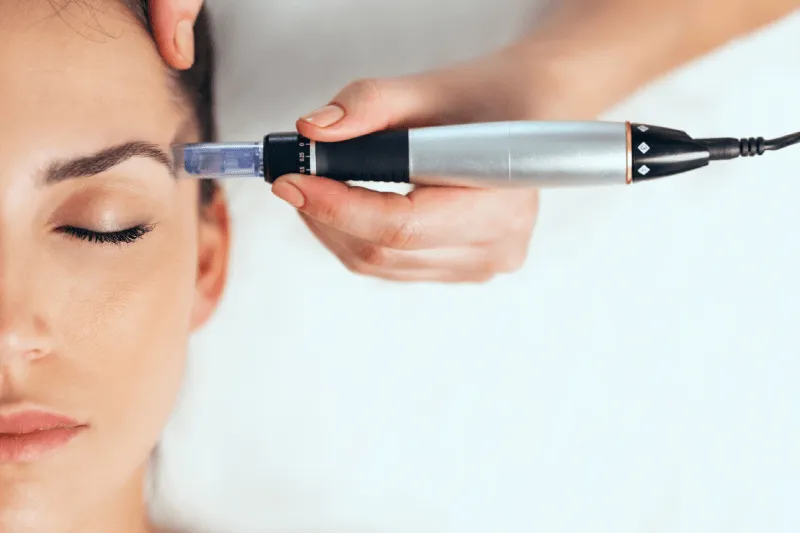
Dermapen is essentially the popular, branded name for a type of automated microneedling device used to trigger skin renewal and repair processes. The procedure performed by this device is generally called microneedling or Collagen Induction Therapy (CIT). Dermapen features a cartridge of very fine and sterile needles that penetrate the skin vertically. Its purpose is to create thousands of controlled, microscopic channels in the upper layers of the skin (epidermis and dermis), thereby activating the skin’s natural wound healing mechanism.
This innovative technique was first introduced in the 1990s, initially for the treatment of surgical scars and wrinkle reduction. However, the devices used at that time were more primitive, typically in the form of a Dermaroller (a cylindrical wheel with needles). The launch of Dermapen technology drastically increased the precision and efficacy of microneedling.
Dermapen has the ability to insert and withdraw needles into the skin automatically and vertically, thousands of times per second. This vertical stamping mechanism creates less trauma compared to Dermarollers, which can cause horizontal tears in the skin, provides faster healing, and most importantly, allows the depth of the needles (generally ranging from 0.25 mm to 3.0 mm) to be adjusted during the application according to the targeted area.
Microneedling combines two fundamental ways to maximize the skin’s regeneration potential:
- Physical Stimulation (Collagen Induction): The channels opened by the micro-needles in the skin create a controlled micro-trauma, triggering the body’s natural healing cascade (a sequential chain of biological events).
- Transdermal Delivery: The micro-channels allow active substances such as hyaluronic acid, vitamins, peptides, or Platelet-Rich Plasma (PRP) to penetrate the skin’s lower layers (dermis) at a much higher concentration than through normal topical application.
This dual effect makes Dermapen not just a surface renewal tool, but a comprehensive anti-aging treatment that fundamentally strengthens and repairs the dermal structure.
The Scientific Foundations and Mechanism of Action of Microneedling
The scientific power of Dermapen treatment lies in the skin’s natural and evolutionary response to injury. This reaction occurs in three main phases, ultimately improving the skin’s quality, firmness, and structure.
Phase 1: Inflammation Phase (Immediately Post-Procedure): As the Dermapen needles penetrate the skin, micro-bleeding begins in the area, and blood platelets migrate to the damaged site. Upon activation, platelets start releasing hundreds of different growth factors (PDGF, TGF-beta, EGF, VEGF, etc.). These growth factors send chemical signals to the damaged area, initiating a cascade of cellular events:
- Local Inflammation: Blood vessels dilate, and immune system cells (neutrophils and macrophages) flock to the area. These cells clear debris resulting from the micro-trauma and initiate the healing process.
- Fibroblast Recruitment: Growth factors rapidly summon cells called fibroblasts (the main cells that produce collagen and elastin), located in the dermis layer of the skin, to the application area.
Phase 2: Proliferation Phase (First Week): After the cleaning and cellular recruitment phase is complete, the proliferation phase begins. In this phase, fibroblasts and keratinocytes (skin surface cells) rapidly multiply, and new tissue construction begins:
- Collagen Synthesis (Neocollagenesis): Fibroblasts begin producing new collagen (especially Type III) and elastin fibers, responsible for the skin’s firmness and elasticity. This process strengthens the skin’s internal structure.
- Angiogenesis (New Blood Vessel Formation): Growth factors like VEGF trigger the formation of new capillaries. New vessels transport the necessary oxygen and nutrients for repair more effectively to the area.
- Epidermal Renewal: Skin surface cells multiply rapidly, closing the opened micro-channels and restoring the skin’s barrier function.
Phase 3: Maturation Phase (1-12 Months): This is the phase where the long-term effect of the treatment emerges and continues. The newly formed Type III collagen gradually transforms into the stronger and more resilient Type I collagen. This remodeling process can continue for up to 1 year. Consequently, a lasting tightening, reduction in wrinkles, and improvement in scar tissue are achieved. Microneedling is a regenerative treatment mechanism that allows the skin to utilize its own biological renewal potential to the highest extent without surgical intervention.
How is the Dermapen Application Performed?
The Dermapen application, despite being a minimally invasive procedure, must be performed by a trained and authorized physician or specialist in a sterile and controlled clinical environment. Performing the procedure under correct and hygienic conditions enhances both efficacy and safety.
Step 1: Consultation and Planning: Before starting the treatment, the patient’s skin type, the issue to be treated (acne scars, wrinkles, spots, etc.), and skin sensitivity are evaluated in detail. Based on this assessment, the depth of the Dermapen needles (e.g., 0.5 mm for the eye area, 2.5 mm for deep scars) is determined. This personalized depth setting is Dermapen’s greatest advantage.
Step 2: Skin Preparation and Anesthesia: Before the application, the skin is thoroughly cleansed of makeup residue and oil. To minimize discomfort during the procedure, a strong topical anesthetic cream is applied to the area, and it is left to take effect for 20 to 45 minutes. After the anesthetic cream is removed, the application area is sterilized with an antiseptic solution.
Step 3: Active Serum Application (Transdermal Delivery): This is a crucial step that multiplies the efficacy of microneedling. During the treatment, targeted active substances are applied to the skin surface. These substances can typically be pure hyaluronic acid, Vitamins C and E, collagen-supporting peptides, specialized mesotherapy cocktails, or Platelet-Rich Plasma (PRP). Thanks to the micro-channels opened by the Dermapen, these active ingredients rapidly penetrate the skin’s lower layers (dermis) at a high concentration.
Step 4: Microneedling (Dermapen Application): A single-use, sterile needle cartridge is attached to the Dermapen device. The physician or specialist moves the device over the entire skin surface, especially over problematic areas (scar marks, wrinkle lines), with vertical and gentle movements, according to the set needle depth. The Dermapen’s vibrating motor can open up to 1300 micro-channels per second. During the application, mild redness and slight bleeding (pinpoint bleeding) are expected, depending on the needling depth. The entire procedure for the face, neck, or targeted area usually takes 20 to 30 minutes.
Step 5: Post-Procedure Soothing: After the procedure is completed, hyaluronic acid or soothing, repairing masks are applied to calm the redness and sensitivity on the skin. The physician provides the patient with detailed post-procedure care instructions.
What Are the Aesthetic Application Areas of Dermapen?
Dermapen is a versatile treatment tool capable of targeting many different aesthetic problems of the skin. Thanks to its capabilities for collagen induction and transdermal delivery, it has a wide range of uses.
Skin Rejuvenation and Anti-Aging: Anti-aging treatments are the most common area where Dermapen is used. The method offers excellent results in cases where the skin begins to lose its elasticity and firmness, and fine lines and superficial wrinkles become noticeable. As a result of the application, collagen production is stimulated, the skin thickens, its moisture capacity increases, and a firmer, smoother texture is achieved. It is used to address signs of aging in regions like the face, neck, décolletage, and the back of the hands.
Treatment of Acne and Wound Scars (Scars): Dermapen is one of the most effective non-invasive methods for treating atrophic (depressed) acne scars (ice pick, rolling, boxcar scars) and surgical scars. Micro-needles break down the fibrotic bands under the scar tissue and enable the skin to plump up towards the surface with new collagen. This remodeling process reduces the depth of the scars and makes the skin look more homogenous.
Enlarged Pores and Texture Irregularity: Enlarged pores are generally caused by the weakening of the skin’s supporting structure due to collagen loss and reduced elasticity. Dermapen, through collagen stimulation, strengthens the dermal structure around the pores and helps the pores tighten. This provides a noticeable improvement in the general texture and smoothness of the skin surface.
Spot and Pigmentation Problems: Dermapen can also be used carefully in spot problems such as melasma, sun spots, and post-inflammatory hyperpigmentation (PIH). In spot treatment, the needle depth is usually kept very superficial (0.25 mm – 0.5 mm), and the goal is to ensure that spot-lightening serums (Vitamin C, Tranexamic acid, Arbutin) reach the deeper layers of the skin. Additionally, the renewal triggered after micro-needling helps shed superficial pigment.
Stretch Mark (Striae) Treatment: Stretch marks are formed by the tearing of collagen and elastin fibers in the dermis layer of the skin. Dermapen is used in the treatment of both red (new) and white (old) stretch marks all over the body (abdomen, hips, thighs). Micro-needles trigger blood flow and collagen production in the torn tissue, contributing to the narrowing of the stretch marks, lightening of their color, and reduction of their depth.
Combination with PRP: Why is it Known as “Vampire Facelift?”
The efficacy of Dermapen treatment increases exponentially when combined with Platelet-Rich Plasma (PRP) obtained from the patient’s own blood. This combined treatment is popularly known as the “Vampire Facelift” in the aesthetic world and merges the principles of regenerative medicine with aesthetics.
Synergistic Mechanism of Action:
- Physical Pathway (Dermapen): Dermapen creates controlled micro-wounds in the skin, triggering collagen production and temporarily breaching the skin barrier.
- Biological Pathway (PRP): PRP rapidly penetrates the skin’s dermis layer through thousands of micro-channels. This plasma contains 4-7 times more growth factors than normal blood. When the wound healing signal triggered by Dermapen meets the power of growth factors in PRP, collagen and elastin production, new blood vessel formation (angiogenesis), and cellular proliferation occur much faster and more intensely.
This synergistic combination provides much more than the results of Dermapen application alone or PRP injection alone. The PRP-Dermapen combination is considered the “gold standard” for treating resistant problems such as deep acne scars, pronounced wrinkles, and advanced hair loss.
Combination in Hair Treatment: Dermapen applied to the scalp opens micro-channels at the depth where hair roots are located, allowing PRP to reach the area directly around the follicle. At the same time, the needling action itself increases blood circulation in the area. The growth factors in PRP help reduce shedding and thicken hair strands by rapidly pushing weakened or resting (Telogen) phase hair roots into the growth (Anagen) phase. This is one of the most natural and potent regenerative approaches in hair loss treatment.
Does the Dermapen Application Hurt and How Long Does It Take?
Since Dermapen is a procedure that involves thousands of needle insertions into the skin, pain and patient comfort are the most frequently asked questions. The procedure can be completed quite comfortably when performed with proper preparation and technique.
Pain Management and Comfort: The Dermapen procedure is performed using a local anesthetic cream. Strong anesthetic creams applied before the procedure completely numb the skin’s surface layer. As a result, the patient typically only feels a slight vibration, pressure, or tingling sensation during the procedure. Sensitivity may increase as the needle depth increases (e.g., in deep scar treatment at 2.0 mm and above), but the anesthesia keeps this discomfort at a tolerable level. Applications in sensitive areas close to the bone, such as the eye area and forehead, can generally cause slightly more sensitivity than other parts of the face.
Procedure Duration: The Dermapen procedure is quite short in terms of active needling time, excluding blood collection, centrifugation, and anesthesia waiting times:
- Preparation Time (Anesthesia): 20 – 45 minutes (For the cream to take effect).
- Active Needling Time (Full Face and Neck): 20 – 30 minutes.
- PRP Preparation (If required): 15 – 20 minutes (Including blood collection and centrifugation).
In total, a combined Dermapen session with PRP can take about 1.5 hours, including preparation. However, the short active needling time enhances patient comfort.
Recovery Time (Downtime): One of the biggest advantages of the microneedling procedure is its minimal recovery time:
- Immediately Post-Procedure: Significant redness and slight swelling occur on the skin. This looks similar to a severe sunburn.
- 24 Hours Post-Procedure: Redness significantly subsides, leaving a light pink appearance.
- 48 Hours Post-Procedure: Most redness disappears, and the patient can return to their daily life by applying makeup or sunscreen.
The healing rate can vary depending on the needle depth used (deeper needling means longer recovery) and the patient’s skin type.
Treatment Protocol and Permanence: How Many Sessions Are Required?
Although Dermapen is a treatment that initiates an improvement in skin quality even with a single session, it must be applied in a course (series of sessions) to achieve permanent and noticeable results.
Required Number of Sessions and Frequency: The number of sessions depends on the type and severity of the problem being treated:
| Treatment Purpose | Recommended Number of Sessions | Session Interval |
|---|---|---|
| Skin Rejuvenation/Anti-Aging | 3 – 4 sessions | 4 weeks |
| Mild Wrinkles and Loss of Elasticity | 4 – 6 sessions | 4 – 6 weeks |
| Acne and Surgical Scars (Deep) | 6 – 8 sessions | 4 – 6 weeks |
| Stretch Mark (Striae) Treatment | 6 – 10 sessions | 4 – 6 weeks |
| Pigmentation/Spot Treatment | 4 – 6 sessions | 3 – 4 weeks |
The main reason for setting session intervals at 4 to 6 weeks is to allow sufficient time for the skin’s collagen induction and remodeling process. New collagen production does not start immediately; this biological process takes time and is strengthened by repeated stimuli.
Timeframe for Seeing Results:
- Initial Effects (Immediately Post-Procedure): Radiance and a plumper look on the skin (due to edema and hydration) are noticed immediately.
- Significant Improvement (After 2-3 Sessions): A visible improvement in fine lines and skin texture begins. The depth of scar marks starts to decrease.
- Maximum Effect (After 6 Months): Even after the treatment course is completed, the skin’s self-repair process continues. The best results typically emerge during the 6-month maturation phase following the last session.
Permanence of Results and Maintenance: The collagen achieved with Dermapen is a healthy structure produced by the skin itself, so the results are permanent. However, the skin’s aging process and environmental factors (UV, smoking, stress) continuously persist. Therefore, to maintain permanence and slow down aging:
- 1 or 2 maintenance sessions per year are recommended.
- Regular use of sunscreen and topical application of antioxidant serums extend the life of the results.
What Are the Advantages and Disadvantages of Dermapen Treatment?
Dermapen offers many advantages compared to other aesthetic applications, while also having some limitations and disadvantages that should be considered.
Advantages:
- Natural and Regenerative Effect: It uses the body’s own self-healing mechanism without injecting foreign fillers, Botox, or chemical substances into the skin. The results are natural and gradual.
- Minimal Recovery Time (Downtime): The recovery time is very short compared to surgical procedures or deep chemical peels (most patients can return to normal life within 48 hours).
- Wide Application Area: It can be applied to almost every area of the body, including the face, neck, décolletage, back of hands, abdomen, and legs.
- Suitability for All Skin Types: While laser treatments or deep peels can carry a risk of hyperpigmentation (PIH) in darker skin types, Dermapen can be safely applied to all skin types when used with the correct technique and superficial depth.
- Maximum Penetration: It allows topical serums and vitamins to penetrate the deep layers of the skin up to 80%, multiplying the efficacy of the products.
- Combination Possibility: Its ability to be synergistically combined with other aesthetic treatments like PRP, mesotherapy, and chemical peels enhances the quality of the results.
Disadvantages and Limitations:
- Requirement for Multiple Sessions: A single session is usually not enough to achieve the desired permanent results; a course (average of 4-6 sessions) must be applied.
- Temporary Redness and Swelling: Redness, swelling, mild burning, and needle marks may be seen in the first 24-48 hours post-procedure.
- Requirement for Physician Expertise: The correct adjustment of needle depth, ensuring sterilization to prevent infection, and the application technique must absolutely be performed by an experienced specialist. Incorrect depth application can lead to scarring or spot formation on the skin.
- Inability to Treat Active Scars: It cannot be applied to areas with active, inflamed acne or herpes lesions; this can cause the infection to spread.
Dermapen vs. Other Skin Renewal Methods Comparison
Dermapen has a unique balance and efficacy profile when compared to other popular skin renewal methods.
Dermapen vs. Dermaroller: Dermapen is the more advanced, automated, and precise version of the Dermaroller (manual cylinder).
- Needling Angle: The Dermaroller enters the skin at an angle and can tear the tissue upon exiting. Dermapen enters the skin with a vertical stamp, reducing tissue damage and the risk of side effects.
- Depth Control: The needle depth is fixed on the Dermaroller. With Dermapen, the physician can adjust different depths with millimeter precision in a single session, such as 0.5 mm for the eye area, 1.0 mm for the forehead, and 2.5 mm for scars.
- Comfort: The vibrating vertical movements of the Dermapen are generally less painful than the Dermaroller.
Dermapen vs. Fractional Laser: Both methods cause controlled micro-damage to the skin to trigger collagen production.
- Mechanism: Fractional lasers (e.g., CO2 or Erbium) use thermal energy (heat) to open micro-damage columns. Dermapen uses mechanical needling.
- Thermal Damage: Lasers create thermal damage in the skin because they use heat. Dermapen does not create thermal damage, so the risk of hyperpigmentation (spots) in darker skin types is lower compared to laser.
- Recovery Time: The recovery time for deep fractional lasers can be 1-2 weeks, while Dermapen recovery is generally 2-3 days.
Dermapen vs. Chemical Peeling (Medium and Deep):
- Control: In peeling, how deep the chemical (TCA, Phenol) will penetrate the skin is less predictable, and there is a risk of burning on the skin surface. With Dermapen, the needle depth is controlled with millimeter precision.
- Application Area: Dermapen is more effective in targeting dermal layer damage such as atrophic scars and stretch marks, as it delivers active substances directly to the scar base. Deep peels are very powerful in treating deep wrinkles on the surface.
Dermapen holds a special position among modern aesthetic applications due to features such as no thermal risk, quick healing, and maximizing the penetration of active substances into the skin.
Post-Dermapen Care and Ways to Increase Treatment Success
The long-term success of the Dermapen procedure depends not only on the quality of the application but also on meticulous adherence to post-procedure care instructions. Aftercare is vital to prevent skin infection and support collagen production.
Mandatory Rules for the First 24 Hours:
- Cleansing: The skin must not be washed or touched with water for at least 4 to 6 hours after the procedure. The micro-channels opened in the skin close spontaneously during this period.
- Makeup and Sun Protection: Makeup, perfume, aftershave lotions, or other irritating cosmetic products should not be used for the first 24 hours. The skin is extremely sensitive to the sun after the procedure; direct sun exposure must be strictly avoided, and a high-factor (SPF 50) broad-spectrum sunscreen must be used starting from the next day.
- Sweating and Heat: Strenuous exercises that cause heavy sweating, sauna, Turkish bath, and overly hot showers should be avoided for the first 48 hours. Sweating can increase the risk of infection and inflammation.
Long-Term Care (After 1 Week):
- Moisturization and Repair: Repairing and soothing moisturizers recommended by the physician, typically containing hyaluronic acid, Vitamin B5, or ceramides, should be used regularly. These products help the skin repair its barrier.
- Active Ingredients to Avoid: Products containing acidic or irritating active ingredients like Retinoids (Retinol, Tretinoin), AHA (Glycolic Acid), and BHA (Salicylic Acid) should not be used for the first 5-7 days after the procedure. These products can irritate the healing skin.
- Drink Plenty of Water: The body needs to be sufficiently hydrated for collagen production. Drinking plenty of water accelerates the skin’s renewal process.
- Medication Use: To reduce post-procedure redness and swelling, NSAID-group painkillers (Ibuprofen, etc.), which can inhibit collagen production, should be avoided, and only Paracetamol-based medications recommended by the physician should be used.
Adherence to these care rules ensures the skin repairs healthily and allows the regenerative effect of the treatment to fully manifest.
This page covers one procedure in detail. For prices, what is included and how the whole trip works, see our overview of non-surgical treatments in Turkey.
Sources and how to verify this yourself
- Ministry of Health, Regulation on International Health Tourism and Tourist Health, Official Gazette 26 April 2025, No. 32882 — authorisation requirement for facilities and intermediaries, TÜSKA accreditation, compulsory complication insurance (deadline 31 December 2025 for insurance, 31 December 2026 for accreditation). source
- Ministry of Health, Regulation on Promotion and Information Activities in Health Services, Official Gazette 12 November 2025, No. 33075 — treatment promises and guarantees are prohibited; price and campaign announcements are permitted only within international health tourism. source