
Part of: Cosmetic surgery in Turkey — prices, what is included and country comparison.
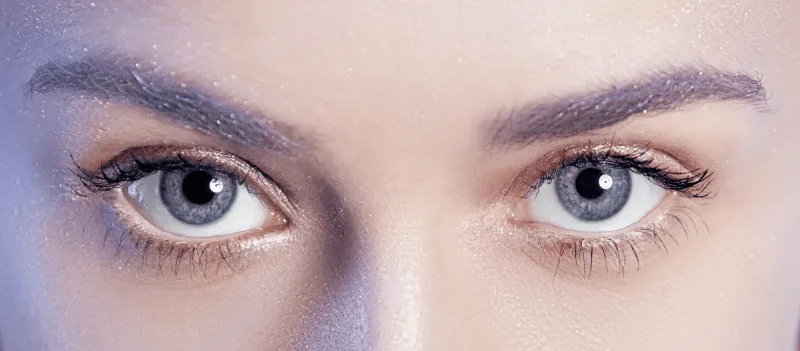
Eyes are the mirror of the soul as well as the first stop for signs of aging on our face. When communicating with a person, the first place we focus on is their eyes. We express our energy, emotions, fatigue, or excitement through our gaze. However, the ruthless effects of time, genetic factors, insomnia, and stress can draw a curtain in front of this lively mirror. Droopy eyelids, under-eye bags, and deepened lines give a “tired, sad, and old” message to the outside world, no matter how energetic the person feels.
Eyelid Aesthetics, medically termed Blepharoplasty, is not just a rejuvenation surgery; it is also a powerful surgical intervention that literally changes a person’s point of view, expands the visual field, and illuminates the expression on the face. According to aesthetic surgery statistics, it is no coincidence that it is one of the top 3 most frequently performed aesthetic operations in the world. Because it is one of the surgeries that creates the most dramatic change with a small touch.
In this comprehensive guide; you will find everything about the world of Blepharoplasty, from the subtleties of upper and lower eyelid surgeries to popular trends like “Almond Eye,” from non-surgical alternatives to the day-by-day analysis of the recovery process.
Why Does the Eye Area Age? An Anatomical Look
To solve the problem, one must first understand the source. The skin around the eyes is the thinnest skin in our body (approximately 0.5 mm). This thinness makes it vulnerable to external factors and mimic movements.
- Loss of Elasticity: Collagen production decreases with age. Our eyelids, which we blink on average 15,000 times a day, succumb to gravity, loosen, and sag.
- Herniation of Fat Pads: Fat pads that protect the eyeball against impacts stand behind a strong membrane called the “orbital septum” when young. As we age, this membrane weakens, and fats herniate forward. What we call “under-eye bags” is actually this displaced fat tissue.
- Bone Resorption: Facial bones also age. The eye socket (orbit) expands over time, causing the under-eyes to look more hollow and unsupported.
What is Blepharoplasty?
Blepharoplasty is the process of removing or rearranging excess skin, muscle, and herniated fat tissue in the lower and upper eyelids. The aim is not just to stretch the skin, but to give the eye area a young, vigorous, and healthy form. While this surgery can be performed alone, it gives much more impressive results when combined with Facelift or Brow Lift surgeries.
Who is Suitable for This Surgery?
The question “Is my age too early for eyelid aesthetics?” is frequently asked. This surgery has no age, it has a “need.” An individual in their 20s with genetically droopy eyelids can be a candidate, just like a 60-year-old individual experiencing age-related problems.
Ideal Candidates:
- Those with Upper Eyelid Hooding: Those whose eyelid skin falls over the eyelashes, who have difficulty applying makeup (eyeshadow smudging), or who suffer from headaches in the evenings due to eyelid weight.
- Those with Narrowed Visual Field: Advanced sagging can create a “shutter effect,” blocking the person’s upper and peripheral vision. In this case, surgery becomes a medical necessity.
- Those with Under-Eye Bags: Those who are constantly exposed to the question “Didn’t you get enough sleep?” and have swelling and bagging under the eyes.
- Those with Wrinkled Under-Eye Skin: Those with thin wrinkles like “crepe paper” and excess skin on the lower eyelid.
Upper Eyelid Aesthetics: Illuminating the Gaze
Upper eyelid surgery is an extremely comfortable procedure that takes about 45-60 minutes and can usually be performed under local anesthesia.
How Does the Procedure Work?
- Drawing and Planning: The surgeon marks the excess skin to be removed millimetrically while the patient is in a sitting position. This stage is very critical; if too much skin is removed, the eye does not close (Lagophthalmos), if too little is removed, the result is insufficient.
- Incision: The incision is hidden in the natural fold line of the upper eyelid (globe line). In this way, the scar is not visible when the eye is open, and when closed, it becomes a thin line that fades over time.
- Process: Excess skin and (if any) a thin strip of muscle tissue underneath are removed. If there is fat herniation in the inner corner, these fats are removed or reduced.
- Closure: Incisions are closed with aesthetic stitches as thin as hair strands.
Lower Eyelid Aesthetics: Erasing Fatigue
Lower eyelid aesthetics is a more complex procedure requiring technical mastery compared to the upper lid. Sedation or general anesthesia is generally preferred.
Two Different Approaches:
1. Transconjunctival (Scarless) Method:
- Suitable for young patients who only have under-eye bags but no excess skin.
- The incision is made from inside the eyelid (the pink mucosa part).
- There are no incisions, stitches, or scars on the outside.
- Herniated fats are removed from here or spread into the tear trough.
2. Subciliary (Below Lash Line) Method:
- Applied in patients with excess skin and sagging.
- The incision is made 1-2 mm just below the lower lashes.
- Both bags are corrected, and sagging excess skin is cut and removed.
- Since the scar is hidden at the lash line, it becomes almost invisible when healed.
Important Note (Fat Preserving Surgery): In the past, fats in under-eye bags were completely removed and discarded. This situation caused the under-eye to collapse over time and led to a “skeletal” appearance. In modern surgery, the “Fat Transposition” technique is now applied. The fats forming the bag are not removed but shifted to the hollow called the “tear trough” just below it. Thus, both the bag goes away, and a smooth transition is ensured as if a light filler was done.
Combined Procedures and Trends
Just correcting the eyelid may sometimes not be enough on its own. Additional procedures may be required for a holistic aesthetic.
1. Combination with Brow Lift
The only reason for hooding in the upper eyelid may not be excess skin. Often the brow itself has dropped down. If only eyelid skin is taken without lifting the brow, the brow descends further, giving the person an angry expression. In these patients, combination with temple lift or brow lift is essential.
2. Almond Eye Aesthetics (Canthopexy / Canthoplasty)
It is the most popular trend of recent years. It is the process of pulling the outer corner of the eye (canthus) upwards and outwards and fixing it.
- It adds a more attractive and exotic air to people with a downward (melancholic) eye structure.
- It can also be done as a medical necessity to support the lid in patients with loose lower eyelids.
3. Combination with Midface Lift
While performing lower eyelid surgery, sagging cheek tissue can also be suspended upwards by entering through the same incision. This includes advanced techniques frequently used by famous surgeons like “Dr. Jacono.” It completely erases signs of aging at the cheek-eyelid junction.
Are Non-Surgical Alternatives Possible?
There are some medical aesthetic solutions for those not ready for surgery, but their effect is not as dramatic and permanent as surgery.
- Plexr (Plasma Energy): Marketed as “non-surgical eyelid aesthetics,” this device evaporates the skin point by point with plasma energy and provides tightening. It is effective only in very slight skin excesses. Crusting formed during the healing process can sometimes leave stubborn spots.
- Under-Eye Light Filler: Used for camouflage only in those with under-eye hollows (those without bags).
- Botox: Can temporarily (4-6 months) alleviate hooding on the upper eyelid by slightly lifting the eyebrows (Botox Brow Lift).
Surgery Day and Process
- Preparation: Blood thinners, herbal teas, and vitamins (like Vitamin E) should be stopped 10 days before surgery.
- Anesthesia: Local anesthesia is sufficient for the upper lid. The patient is awake, can chat but does not feel pain. Sedation (light sleep) is more comfortable for the lower lid.
- Duration: Upper lid takes 45 mins, Lower lid takes 60-90 mins.
- Discharge: Usually, the patient can return home a few hours after the procedure on the same day. Eyes are not closed, there are only thin tapes over the stitches. There is no situation preventing your vision.
Recovery Process: Step by Step
The blepharoplasty recovery process is quite fast and painless compared to other aesthetic surgeries.
First 48 Hours:
- The most intense edema and bruising occur in this period.
- Golden Rule: Applying cold application (ice) for 15 minutes every hour for the first 2 days. This reduces bruising and swelling by 50%.
- One should sleep with the head elevated (with double pillows).
1st Week:
- Stitches are usually removed on the 5th or 7th day.
- After stitches are removed, bruises start to turn yellow and become hideable with concealer (makeup).
- The patient can return to work and social life (by wearing sunglasses).
1st Month:
- Scars may turn slightly pink (this is a sign of healing).
- 90% of the edema has subsided.
- The eye shape starts to emerge.
6th Month:
- Scars turn to skin color and become invisible in the eyelid crease.
- The result has settled.
Risks and Complications
As with any surgical procedure, there are risks in Blepharoplasty, but these are very rare in experienced hands.
- Dry Eye: There may be a temporary feeling of dryness after surgery. Treated with artificial tear drops.
- Lagophthalmos (Inability to Close the Eye): Occurs as a result of removing too much skin from the upper lid. It is a serious error. Therefore, the principle of “conservative surgery” is important.
- Ectropion (Eyelid Turning Outward): It is the pulling down of the lid and the appearance of the pink part inside as a result of excessive skin removal in lower lid surgery. It may improve with massage or require surgical correction.
- Asymmetry: There may be millimetric differences between the two eyes, usually correcting as edema subsides.
Blepharoplasty in Men: Preserving Masculine Gaze
Eyelid aesthetics in men is different from women. While a lifted brow and open lid are desired in women; in men, this situation can lead to a “surprised” or “feminine” expression.
- Principle: In men, the brow-eye distance should be preserved, the eyelid crease should not be deepened too much, and eyebrows should not be lifted upwards. The aim should only be to “take away the fatigue,” not to change the expression.
Frequently Asked Questions
Are scars permanent? There is a scar wherever there is surgery. However, eyelid skin is the skin that heals best and leaves the least scars in the body. Since the upper lid scar is hidden in the eyelid crease (fold place), it is not visible at all when the eye is open. The lower lid scar is at the lash line and is very difficult to notice.
Do results last a lifetime? Blepharoplasty turns back the clock but does not stop it. You continue to age after surgery. However, the removed skin and fat bags do not come back. Generally, upper eyelid aesthetics maintain their permanence for 10-15 years, while lower eyelid aesthetics often remain permanent for a lifetime.
Does it affect my eye defect (Myopia/Astigmatism)? No, this surgery is related to tissues outside the eye. The eyeball, retina, or cornea are not touched. It does not affect your eyesight. In fact, it relaxes your vision as it opens the visual field.
Can it be done at the same time as laser eye surgery (LASIK)? Generally, it is recommended to have at least 3-6 months between the two procedures. Because both procedures can cause temporary dry eyes.
Look at the World Through a New Window
Eyelid aesthetics is the most effective touch that removes the mask of fatigue on the face and gives the person an energetic and youthful expression. If the energy you feel does not match the expression you see when you look in the mirror, perhaps it is time to get rid of those small excesses.
Remember, your eyes don’t just allow you to see; they determine how you are seen.
This page covers one procedure in detail. For prices, what is included and how the whole trip works, see our overview of cosmetic surgery in Turkey.