
Part of: Cosmetic surgery in Turkey — prices, what is included and country comparison.
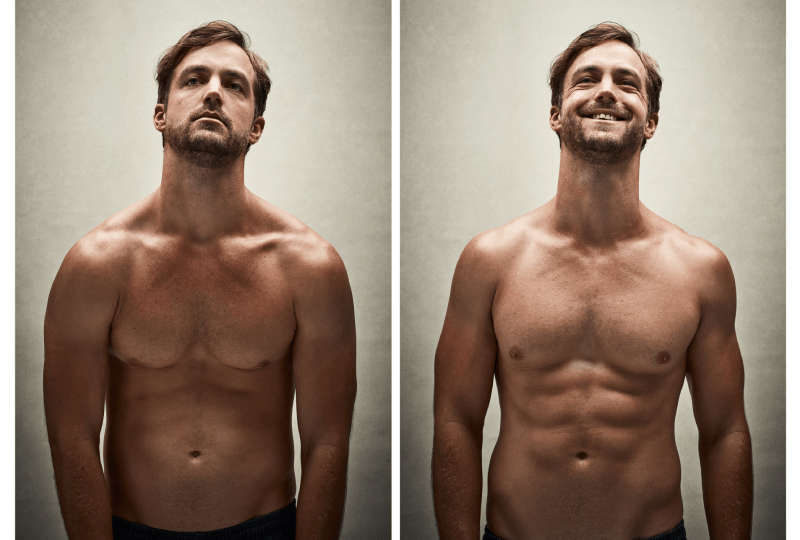
The Six Pack (Abdominal Muscles) is a central element in modern aesthetic perception, symbolizing not only physical strength but also discipline, dedication, and perfectionism. As the most visible indicator of a fit body, these muscles, along with the V-shape lines in the abdominal area, are often seen as a challenging goal for most people. However, by correctly applying the principles of science, nutrition, and training, it is possible to achieve this goal, within the limits of genetic factors.
In this comprehensive guide, we will delve into all dimensions of Six Pack aesthetics, from the anatomical secrets of the abdominal muscles and the most critical factor for their visibility—body fat percentage—to effective nutrition strategies, the most challenging training techniques, and the solutions offered by modern aesthetic surgery.
Anatomy of the Six Pack and Its Aesthetic Importance
The abdominal muscle region is not only visually impressive but is also vital for the body’s central stability (core strength). The aesthetic look referred to as the “Six Pack” stems from the structure of a single large muscle, the Rectus Abdominis.
The Rectus Abdominis is a long, flat muscle that extends from the bottom of the rib cage (sternum and the fifth to seventh ribs) down to the pubic bone (pubis). However, what gives it a six-, eight-, or four-pack appearance is not the muscle itself, but the fibrous bands of connective tissue that traverse it. These bands are called Tendinous Inscriptions.
These tendinous inscriptions divide the Rectus Abdominis muscle into horizontal segments. The number of distinct abdominal muscle ‘squares’ an individual will have is entirely genetically determined. The number and placement of these tendinous inscriptions vary from person to person:
- Eight-Pack: Having four tendinous inscriptions, resulting in four squares on top and four on the bottom, is rare.
- Six-Pack: The most common structure, usually featuring three tendinous inscriptions.
- Four-Pack: Occurs in cases with fewer horizontal bands.
Symmetry Factor: The most discussed aspect of the aesthetic of tendinous inscriptions is their symmetry. These bands may not be placed symmetrically relative to the body’s midline; this can cause the squares on one side to appear higher or lower than the other. This condition is purely genetic and structural and cannot be corrected with training. It is important for those pursuing Six Pack aesthetics to accept that the visible number and symmetry of the muscles are a genetic lottery.
The aesthetic of the abdominal muscles is not just about the Rectus Abdominis. The Obliques on the sides and the deep Transversus Abdominis muscles determine the narrowness of the waist and the sharp “V-cut” line in the groin area. Strong obliques and deep abdominal muscles increase the overall tightness of the core, helping the Six Pack appear sharper and more framed.
The Key Secret to Revealing Abdominal Muscles: Body Fat Percentage
The biggest secret to Six Pack aesthetics lies not in the training halls but in the thickness of the subcutaneous fat layer. Regardless of how strong or voluminous the muscles are, if the fat layer above them is not thin enough, it is impossible to talk about aesthetic definition. Therefore, the most critical step to achieving a Six Pack is to lower the Body Fat Percentage.
The critical body fat percentage thresholds required for the abdominal muscles to visually “pop” are as follows:
| Gender | Target Body Fat Percentage for Six Pack Definition |
|---|---|
| Males | Between 10% – 12% |
| Females | Between 16% – 18% |
Why is Body Fat Percentage So Important?
The body stores energy as fat, and the regions where this storage is concentrated are genetically determined. Generally, the abdominal area (visceral and subcutaneous fat) is the last place the body loses fat for men and some women. This confirms the common fitness saying that the Six Pack is “the last to come and the first to go.”
- Subcutaneous Fat: This is the fat located directly above the abdominal muscles that prevents the muscles from being visible. This fat is gradually burned through diet and cardio.
- Visceral Fat: This is the fat surrounding the organs, which is the most harmful type of fat to health. As visceral fat decreases, abdominal bloating is reduced, and the stomach appears flatter.
Reaching these critical fat percentages does not just mean “dieting”; it requires a consistent, sustainable, and precise nutritional regimen. Most people must create a caloric deficit, maintain hormonal balance, and manage stress levels to achieve these levels.
Nutrition Strategies: Abs Are Made in the Kitchen
While training builds the muscles for the Six Pack look, the job of burning the fat surrounding the muscles is about 70% related to nutrition. It is essential to implement science-based strategies to manage this process.
Caloric Deficit Management
The only way to lose fat is for the body to consume fewer calories than it expends (Caloric Deficit). However, the size of this deficit is critically important. Too large a deficit can lead to muscle loss, while too small a deficit slows down progress.
- Ideal Deficit: Generally, staying 300 to 500 calories below your daily TDEE (Total Daily Energy Expenditure) allows for efficient fat loss while preserving muscle mass.
- Macronutrient Tracking: The calories consumed must have the correct macronutrient distribution.
The Balance and Importance of Macronutrients
- Protein (The Most Critical Component): Preserving and even building muscle mass is vital during the process of revealing the abdominal muscles. High protein intake (typically 1.8 – 2.2 grams per kilogram of body weight) prevents muscle loss, increases satiety, and leads to more calories being burned due to the thermic effect (energy spent digesting food).
- Carbohydrates (Energy Source): Carbohydrates should not be completely eliminated. They are necessary for exercise performance. Complex carbohydrates (oats, whole grains, sweet potatoes) should be preferred, and simple sugars and processed flours should be minimized. Carbohydrate intake should generally be concentrated around times when energy is most needed, such as before and after training.
- Fats (Hormonal Support): The consumption of healthy fats should not be neglected when aiming for a low body fat percentage. Healthy fats (olive oil, avocado, nuts) support hormonal functions (especially testosterone and other fat-burning hormones) and are necessary for general health. Approximately 20-30% of the total daily calories should come from fats.
Water Consumption and Bloating Management
Adequate water consumption (2.5 – 4 liters per day) supports metabolism, helps flush waste products from the body, and reduces bloating caused by temporary water retention. High sodium (salt) and low potassium intake can lead to subcutaneous water retention, blurring the visibility of the abdominal muscles. A balanced intake of potassium and sodium helps the abdominal area look “flatter.”
Effective Training Methods: More Than Just Abdominal Exercises
Revealing the abdominal muscles requires thickening and strengthening them. However, this does not mean doing hours of crunches. The effective training strategy should focus on functional and compound movements that force the abdominal muscles to provide stability during the body’s natural movements.
The Role of Compound Movements
The most effective workouts for Six Pack aesthetics are often those that do not directly work the abdominal muscles:
- Squat and Deadlift: These movements require the entire body to stabilize under a heavy load. The abdominal muscles work under maximum tension to support the spine and prevent torso flexion. This can be more effective than direct ab exercises in increasing the volume of the Rectus Abdominis and Transversus Abdominis muscles.
- Overhead Press: The abdominal muscles must contract intensely to prevent the torso from hyperextending (bending backward) when lifting the weight overhead.
Direct Abdominal Exercises and the Functional Approach
The abdominal muscles should be worked in four main functional roles:
- Anti-Extension (Resisting Extension): Prevents excessive backward bending of the spine. Example: Plank variations, Ab Wheel Rollouts.
- Anti-Flexion (Resisting Flexion): Prevents forward bending of the spine. Example: Cable Crunches (weighted crunches), Reverse Crunch.
- Anti-Rotation (Resisting Rotation): Enables the torso to resist twisting. Example: Pallof Press.
- Lateral Flexion (Side Bending): Causes the torso to bend sideways. Example: Farmer’s Carry (carrying heavy weight with one hand).
Exercise Selection: Instead of traditional crunches and leg raises, movements that provide higher tension and challenge the muscles through a wider range of motion should be preferred (e.g., Cable Crunch, Hanging Leg Raise). Progressively overloading the abdominal muscles like other muscle groups (adding weight or increasing reps) will cause them to gain volume, making them look more pronounced.
The Role of Cardio in Fat Burning
Cardio is an important tool for increasing the caloric deficit and lowering the body fat percentage.
- HIIT (High-Intensity Interval Training): Burns more calories in a shorter time and increases post-workout fat burning (EPOC). Ideal for busy schedules.
- LISS (Low-Intensity Steady State Training): Long walks or light jogs increase calorie expenditure without hindering recovery, especially during low-calorie periods.
Genetics and Abdominal Muscle Symmetry: Structural Factors
In the journey of Six Pack aesthetics, genetics are as much a determinant as effort. The main genetic factors affecting the appearance of the abdominal muscles are:
Number and Placement of Tendinous Inscriptions
As mentioned before, the number of segments (4, 6, or 8) the abdominal muscles will consist of and how symmetrical these segments will be is entirely determined by your genetic inheritance. Most people find they have a slight asymmetry when they reveal their muscles. Aesthetically, this asymmetry is completely normal and cannot be corrected with training. If the squares on one side of the muscle are higher and the ones on the other side are lower, this is a genetic variation of the point where the tendon intersects the muscle.
Fat Distribution (Regional Storage)
Genetics also determine where your body stores and burns fat.
- Male-Type (Android) Fat Distribution: Fat is mainly stored around the abdomen and waist (apple shape). It is harder to see the Six Pack in these individuals because the abdomen is the last area to slim down.
- Female-Type (Gynoid) Fat Distribution: Fat is mainly stored in the hips, thighs, and buttocks (pear shape). The abdominal muscles of individuals with this type may become defined earlier, even at a higher body fat percentage (e.g., around 20%).
These genetic factors determine how much effort you need, not impossibility. If you are genetically predisposed to storing fat in the abdominal area, you may need to reach a lower body fat percentage to achieve your goal.
Lifestyle Factors: Stress, Sleep, and Hormones
Even if the diet and training are perfect, disruptions in lifestyle can prevent reaching the Six Pack goal. The visibility of the abdominal muscles is closely related to hormone levels.
Cortisol and Abdominal Fat Storage
Cortisol is known as the stress hormone. Chronically high stress levels lead to chronically high cortisol levels in the body. High cortisol directly triggers the body to store fat in the abdominal region (especially as visceral fat). This causes a thick layer of fat to form over the abdominal muscles.
- Solution: Stress management through meditation, breathing exercises, yoga, and hobbies is a fundamental step to improve body composition.
Sleep Quality and Metabolic Rate
Insufficient sleep (less than 7 hours a day) disrupts the levels of Ghrelin and Leptin, the two main hormones that regulate appetite.
- Ghrelin (Hunger Hormone): Rises with lack of sleep, increasing appetite.
- Leptin (Satiety Hormone): Falls with lack of sleep, reducing the feeling of fullness.
- As a result, a tired body struggles to maintain a caloric deficit and usually gravitates toward high-calorie foods. Quality sleep optimizes fat-burning processes.
Medical Aesthetic Approaches: Body Contouring and Abdominal Muscle Definition
Some individuals cannot achieve the desired Six Pack look despite a strict diet and training regimen due to genetic fat storage tendencies or stubborn fat layers over the tendinous inscriptions. Modern aesthetic surgery offers solutions that target this stubborn fat to accentuate muscle lines. This procedure is generally referred to as Abdominal Etching or Hi-Def Liposculpture.
Hi-Def Liposculpture with VASER Liposuction (Six Pack Aesthetics)
This technique differs from traditional liposuction in that it aims not only to reduce fat mass but also to carefully sculpt the natural anatomical lines of the abdominal muscles (the tendinous inscriptions of the Rectus Abdominis).
The Procedure:
- Use of VASER: The surgeon uses the VASER device, which emits ultrasonic energy, to liquefy the fat cells with minimal damage to the surrounding tissue.
- Sculpting the Lines (Etching): The liquefied fat is carefully removed from the deep channels surrounding the muscle lines and the more superficial areas over the muscles. The surgeon follows the vertical line in the middle of the muscles (Linea Alba) and the horizontal tendinous inscriptions to thin the fat tissue and define these lines three-dimensionally.
- V-Cut and Oblique Framing: The same technique is used to remove stubborn fat in the flank area (waist) and lower abdomen, narrowing the waist and revealing the aesthetic V-cut line in the groin area.
Who is it Suitable For?
Hi-Def Liposculpture is not a weight loss surgery. The most ideal candidates are:
- Individuals who are already fit and have a low body fat percentage (below 15% for men, below 20% for women) but have stubborn abdominal fat.
- People whose muscles are developed through training but are not anatomically defined.
- Those with good skin elasticity (If there is skin laxity, it may need to be combined with a tummy tuck).
This aesthetic procedure can accelerate the results of months of diet and training efforts and permanently resolve the stubborn fat issue caused by genetics. However, it should be remembered that maintaining the achieved aesthetic look still requires a sustainable post-operative diet and exercise regimen.
Non-Surgical Alternatives
In recent years, technologies for building muscle and reducing fat have also developed.
- High-Intensity Focused Electromagnetic Fields (HIFEM/Emsculpt): These devices aim to increase muscle volume and accelerate the metabolism of surrounding fat cells by inducing forced contractions in the abdominal muscles. Although less effective than surgery, it is an option that requires no recovery time.
A Holistic Perspective for Success in Six Pack Aesthetics
Achieving the perfect Six Pack look is neither solely the result of training nor solely of diet. Success is possible through a holistic approach that requires careful management of every component.
Sustainability and Patience
Maintaining a body fat percentage in the 10-12% range is difficult to sustain for most people. This usually means a constant caloric deficit and a high level of dedication. Most fitness models or bodybuilders only stay at this ultra-low body fat percentage for a short period of the year (e.g., for photo shoots or competitions).
- Realistic Goal: Aiming for a sustainable body fat percentage (13-16% for men, 19-22% for women) and reserving the “Six Pack” look for summer months or special periods is a healthier and more mentally sustainable approach.
Psychological Motivation and Avoiding Body Dysmorphia
Six Pack aesthetics can sometimes trigger psychological issues such as body dysmorphia (excessive focus on body flaws). Accepting that you cannot control genetic factors like perfect symmetry or the number of tendinous inscriptions is important for developing a healthy perspective. The definition of success should be reaching the “best version of your genetic potential.” Avoiding tying your self-worth to the visibility of a muscle group is as important for your long-term mental health as the Six Pack itself.
Holistic Effort
The Six Pack journey is a test of how well you understand and respect your body. Surgery can be a tool to overcome genetic obstacles, but the final result will always be the combination of healthy nutrition, effective training, and a sustainable lifestyle.
This page covers one procedure in detail. For prices, what is included and how the whole trip works, see our overview of cosmetic surgery in Turkey.
Sources and how to verify this yourself
- Ministry of Health, Regulation on International Health Tourism and Tourist Health, Official Gazette 26 April 2025, No. 32882 — authorisation requirement for facilities and intermediaries, TÜSKA accreditation, compulsory complication insurance (deadline 31 December 2025 for insurance, 31 December 2026 for accreditation). source
- Ministry of Health, Regulation on Promotion and Information Activities in Health Services, Official Gazette 12 November 2025, No. 33075 — treatment promises and guarantees are prohibited; price and campaign announcements are permitted only within international health tourism. source