
Part of: Cosmetic surgery in Turkey — prices, what is included and country comparison.
What is French Hanger (French Hanger) and Its History
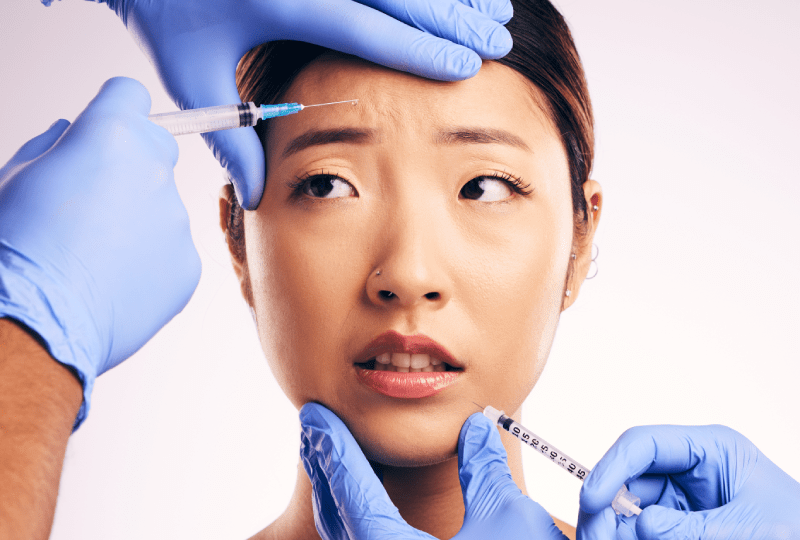
French Hanger is a popular name given to a type of “Thread Lift” technique that has emerged as an attractive option for those seeking non-surgical facelift and rejuvenation solutions in the aesthetic world in recent years. Essentially, this method aims to lift the skin and subcutaneous tissues without a surgical incision and pull the sagging areas back to their former, more youthful positions. As the name suggests, specially designed biocompatible threads are used during the application. These threads are placed under the skin layers to serve as a kind of internal scaffold.
The history of thread lift techniques dates back to the late 20th century. However, the thread materials used and the application methods have evolved significantly over time. First-generation threads, which were permanent and smooth, achieved limited success because they lacked sufficient grip and carried the risk of displacement over time. The real turning point occurred in the early 2000s with the development of retaining structures such as cones, barbs, or cogs on the threads. These new-generation threads adhered more tightly to the subcutaneous tissues, providing both an immediate lifting effect and prolonging the thread’s in-place duration.
The term “French Hanger” (Fransız Askısı) gained popularity as the marketing name for flexible and biocompatible threads (typically polyester and silicone-based) that adapt to facial movements. The key difference of these threads is that they operate on the principle of dynamic suspension. They maintain the threads’ tension during natural facial movements such as speaking and smiling, without restricting natural facial expressions. This technique has garnered great interest due to its minimally invasive nature, lack of need for general anesthesia, and short recovery time. The French Hanger not only lifts the skin but also aims to enhance the skin’s quality and firmness in the long term by stimulating new collagen production (neocollagenesis) in the area where it is placed. This dual effect offers a significant alternative for individuals who fear surgery but show noticeable signs of sagging.
How Does the Scientific Mechanism of the Thread Lift Technique Work?
A thread lift is not just a mechanical lifting procedure; it is based on a complex mechanism that also triggers the skin’s biological rejuvenation processes. The success of this treatment is explained by the combination of the immediate physical support it provides and the long-term cellular renewal that emerges.
Mechanical Lifting Effect (Lifting): The fastest and most noticeable effect of thread lift treatment is the immediate upward pull and fixation of the skin and subcutaneous tissues that have sagged due to gravity. This lifting effect is achieved through specially designed hooks, cones, or barbs (cog/barb) on the surface of the threads. These structures grip the tissue after the thread is placed under the skin, and when the thread is tightened, they move the tissue in the desired direction (usually upwards and backward). One end of the thread is typically anchored (fixed) to an immobile point in the scalp. This anchoring point carries the entire lifting load, ensuring the pulled tissue remains in its new position. In dynamic threads like the French Hanger, this fixation adapts to facial movements thanks to the thread’s flexibility, minimizing the “mask” feeling and providing a natural look.
Biological Renewal Effect (Collagenesis): The second and long-term mechanism of action of the thread lift is based on the body’s natural response to the thread being perceived as a foreign material. The threads placed under the skin trigger a controlled inflammation and wound healing response in the surrounding tissues. This response increases the activation of cells called fibroblasts, which produce collagen and elastin. Fibroblasts begin to create a new collagen network (neocollagenesis) and supportive tissue around the thread.
This newly formed collagen matrix gradually replaces the initial mechanical support provided by the thread, even if the thread is of the dissolvable type, thereby strengthening the skin’s internal structure. Consequently, the skin becomes thicker, more elastic, and firmer. Depending on the thread material (e.g., Polydioxanone/PDO, Poly-L-Lactic Acid/PLLA), this biological effect can continue from a few months up to a year. Since the materials used in the French Hanger are typically non-absorbable, the mechanical lifting effect lasts longer, while the surrounding collagen stimulation continues to improve skin quality. These two mechanisms transform the Thread Lift from merely a cosmetic lifting procedure into an anti-aging treatment that utilizes the skin’s potential for self-renewal.
Who is the Ideal Candidate for the French Hanger?
Thread lift or French Hanger treatment is ideal for individuals seeking an alternative to a surgical operation, but whose signs of aging have not progressed enough to require surgical intervention. The success and satisfaction of the treatment are largely dependent on the candidate meeting the correct criteria.
Age Group and Degree of Sagging: Ideal candidates are generally individuals between the ages of 35 and 60. In this age range, mild to moderate skin sagging in the face and neck area (e.g., slight drooping of the cheeks, undefined jawline, deepening of nasolabial folds) begins to appear. For this degree of sagging, a thread lift can provide a noticeable improvement. Individuals with excessive skin laxity and deep sagging that would require a surgical facelift may not achieve the desired effect from a thread lift; in such cases, surgical options might be more appropriate.
Skin Quality and Thickness: The candidate’s skin quality is crucial. Individuals with very thin or excessively loose skin (having completely lost elasticity) may carry the risk of the threads not gripping sufficiently or the thread becoming visible under the skin. Ideally, the skin structure is expected to be of moderate thickness, having retained some of its elasticity. This type of skin allows the threads to be securely placed and the stimulated collagen production to yield maximum benefit.
Health Status and Realistic Expectations: Ideal candidates should be in good general health and should not have contraindications such as blood-thinning medications, uncontrolled diabetes, or autoimmune diseases. Most importantly, the candidate’s expectations must be realistic. The thread lift is a non-surgical method and does not offer the radical and long-lasting results provided by traditional facelift surgery. A successful thread lift gives the patient a more rested appearance, a more defined jawline, and slightly lifted cheeks; however, it does not promise to return the entire face to its state 10-15 years ago. Proper expectation management between the physician and the patient is the key to treatment satisfaction.
What Are the Types of Threads Used and Their Differences?
Thread lift techniques are primarily divided into two main categories based on the thread material used and whether this material is absorbed by the body. The French Hanger is a specialized technique usually classified in the category of permanent (non-absorbable) dynamic threads.
Non-Absorbable (Permanent) Threads: These threads are made from biocompatible, surgical-grade materials such as Polypropylene, Polyester, or Silicone. French Hanger dynamic threads typically fall into this category and consist of a flexible, special polyester sheath with silicone barbs.
- Advantages:
- Permanence: Since the thread material remains in the body, the mechanical lifting effect it provides lasts much longer (generally 5-7 years and beyond).
- Flexibility: Especially French Hanger threads are designed to perfectly adapt to natural facial movements, which prevents the distortion of expressions.
- Disadvantages:
- Revision Risk: In rare cases of displacement or inflammation, the thread may need to be surgically removed.
- Cost: The initial cost is generally higher than absorbable threads due to its long-term permanence.
Absorbable (Temporary) Threads: These threads are made from materials that are naturally broken down and absorbed by the body over time (via hydrolysis). They remain in the body for approximately 6 to 18 months and leave a biological effect by producing collagen in their place as they dissolve.
- PDO (Polydioxanone): The most commonly used material. It is also used in surgical sutures. The dissolution time is about 6-9 months. It acts mainly through collagen stimulation (neocollagenesis).
- PLLA (Poly-L-Lactic Acid): Has a longer dissolution time (about 12-18 months). It is known to provide stronger collagen stimulation than PDO.
- PCL (Polycaprolactone): The longest-lasting absorbable material (about 18-24 months).
Key Difference: Non-absorbable threads (like the French Hanger) primarily provide strong and dynamic lifting and anchoring, while absorbable threads primarily provide bio-stimulation and moderate lifting. The French Hanger holds a special place in this field by combining permanent anchoring with natural mobility.
French Hanger Application Areas: Which Regions of the Face are Targeted?
The French Hanger and thread lift techniques in general can be effectively used in many areas of the face and neck that show signs of sagging and laxity. The success of the treatment depends on the anatomical structure of the targeted area and the degree of sagging.
Mid-Face and Cheeks: As we age, the fat pads in the cheeks slide downwards, causing volume loss and sagging in the mid-face. When applied to this area, the thread lift pulls the sagging cheek tissue upwards and outwards, making the cheekbones more pronounced. This lift gives the face a V-shaped, younger, and lifted contour and softens the depth of the nasolabial (lines running from the side of the nose to the mouth) folds.
Jawline and Jowl Area: Sagging of the jawline (jowl formation) is one of the most prominent signs of aging. This leads to the loss of the oval shape of the face and its merging with the neck area. The thread lift sharpens the jawline by gathering the sagging tissues at the edge of the jaw and pulling them upwards. This procedure creates both a younger and a leaner profile appearance. The French Hanger minimizes the feeling of tension by adapting to the dynamic movements in this area.
Brows and Forehead Area: Drooping of the eyebrows can make the eye area look tired and aged. The thread lift slightly raises the outer parts of the eyebrows (brow lift), reducing the excess skin on the eyelids and making the gaze more vibrant and open. This is a good option, especially for patients who cannot achieve the desired effect with Botox applications or who seek a longer-lasting lift.
Neck Area: Laxity in the neck skin and the appearance of a “turkey neck” increase the need for a facelift. The thread lift can help improve the neck angle by pulling the loose skin in the neck area from under the chin towards the fixation points behind the ear. However, if there is too much excess skin in the neck area, surgical neck lift might be a more effective solution than a thread lift.
Décolletage Area: Rarely, bio-stimulatory (collagen-stimulating) threads can also be used to soften wrinkles and laxity in the décolletage area. The goal in this area is to improve skin quality rather than lifting.
How is the Application Procedure Performed Step by Step?
The French Hanger or other thread lift applications are minimally invasive procedures performed in a clinical setting under sterile conditions, rather than a surgical operating room. The procedure is carefully planned with patient comfort and safety prioritized.
Step 1: Consultation and Planning: This is the most critical step of the treatment. The physician evaluates the patient’s facial anatomy, degree of sagging, skin thickness, and bone structure. The lifting vectors, entry/exit points of the threads, and fixation points are determined on the face. The symmetry of the face and the number of threads are decided at this stage. Marking with a pen is done to clarify the path where the threads will be placed under the skin.
Step 2: Anesthesia Application: The thread lift procedure does not require general anesthesia. The application is performed under local anesthesia to minimize the patient’s sensation of pain. The anesthetic substance is injected under the skin at the entry and exit points of the threads and along the path where they will be placed. This ensures the patient only feels a slight pressure or pulling sensation during the procedure.
Step 3: Thread Placement: The physician uses a special cannula (a blunt-tipped tube without a needle at the end) to place the thread under the skin. The cannula is advanced from a predetermined small entry point (usually in the hairline or a hidden area behind the ear) into the fat and connective tissue layer beneath the skin. The threads are carefully pushed along the planned contour line, at the correct depth to achieve the lifting effect. Dynamic threads like the French Hanger are placed in a way that respects their flexibility and adapts to facial movements.
Step 4: Anchoring and Tension Adjustment: Once the threads are fully placed, one end of the thread is anchored (sutured) to the firmer and less mobile fascia tissue, usually in the temporal (temple) region. This fixation provides the main support for the lifting force. Then, the physician gently pulls the free end of the thread to lift the sagging tissue to the desired level and adjusts the tension. This pulling action allows the cones/barbs on the thread to grip the tissue. The physician meticulously adjusts the tension to ensure symmetry and a natural look.
Step 5: Completion of the Procedure: After the tension is adjusted, the excess parts of the threads are cut and left under the skin. The entry points usually close on their own or are closed with a small suture. Antiseptic creams may be applied, and light-pressure dressing may be placed on the area after the procedure to prevent infection.
What are the Advantages of the Thread Lift Procedure?
The thread lift has a number of significant advantages compared to traditional surgical facelift methods, which makes it a popular choice in modern aesthetic medicine.
Minimally Invasive Method and Quick Recovery: The most notable advantage is that the procedure is minimally invasive. A thread lift does not require large incisions, general anesthesia, or a long hospital stay. The procedure is completed under local anesthesia, lasting approximately 30 minutes to 1 hour. Patients can usually return home the same day. The recovery time (downtime) is much shorter than surgery; most patients can return to their daily activities within a few days (usually 2-5 days). This is a great convenience for individuals with a busy lifestyle who cannot take a long time off work.
Natural Appearance and Preservation of Facial Expressions: Dynamic threads like the French Hanger have the ability to adapt to facial movements. While traditional lifting methods sometimes carry the risk of an overly tight or “wind-swept” appearance, the results achieved with a thread lift are more natural, soft, and provide a rejuvenation that preserves the patient’s facial expressions. This leads to compliments of looking “rested” and “good,” rather than comments about the face being “stretched.”
Dual-Effect Mechanism: The thread lift provides not only a mechanical lift but also has a biological effect. The threads placed under the skin stimulate the production of collagen and elastin in the surrounding tissues. This, in addition to the immediate lifting effect provided by the thread itself, contributes over time to the skin’s own natural structure becoming improved, thicker, and firmer. This biological stimulation enhances the quality of the results and helps slow down skin aging in the long term.
Reversible Option (For Permanent Threads): Rarely, in case the patient is dissatisfied with the result or a complication occurs, it is technically possible to remove permanent threads like the French Hanger. This offers greater flexibility and a safety margin compared to surgical methods.
Combination with Other Treatments: A thread lift can be easily combined with other aesthetic applications such as fillers, Botox, laser treatments, or mesotherapy. These combinations make it possible to achieve versatile and personalized results in facial rejuvenation.
Post-Procedure Recovery Process and Things to Consider
Although the quick recovery time is one of the biggest advantages of the thread lift procedure, strict adherence to post-procedure care instructions is crucial for successful results and minimizing the risk of complications.
Recovery Time and Initial Effects: Immediately after the procedure, mild swelling (edema), redness, and bruising may be observed. These effects generally peak within the first 24 to 48 hours and then gradually begin to subside. Most patients can return to their social life and work within 2 to 7 days, once the majority of these symptoms have decreased. A slight feeling of tightness or tenderness in the face after the procedure is normal and may last for a few weeks.
Restrictions for the First 1-2 Weeks:
- Sleeping Position: It is mandatory to sleep on your back with your head slightly elevated for the first 5-7 days. Sleeping face down or on your side can cause the threads to shift and lead to asymmetry.
- Facial Movements: Excessive facial movements (smiling wide, crying, shouting) should be avoided for the first 1-2 weeks. This prevents the threads from fully settling into the tissue.
- Facial Care: Facial scrubbing, massage, washing with overly hot water, and strong skincare applications (peeling, aggressive toners) should be prohibited for at least 3-4 weeks. Face cleansing should be done gently with upward movements.
- Strenuous Exercise and Sport: Intense physical activities that cause the face to shake, such as heavy lifting or running, should be avoided for the first 2-3 weeks. Light walking is generally permitted.
- Dental Treatments and Facial Aesthetics: One should wait at least 4-6 weeks for dental visits (as the mouth needs to open wide), facial massages, or other aesthetic applications (such as laser or RF heat treatments).
Pain and Swelling Management: Painkillers and anti-swelling medications prescribed by the physician should be used regularly. Applying cold compresses can be helpful in controlling swelling and bruising within the first 24 hours. Patience during the healing process and strict adherence to the physician’s instructions are essential to reduce the risk of complications.
Should I Be Concerned About Possible Side Effects and Risks?
As with any aesthetic procedure, the thread lift (French Hanger) procedure carries certain potential side effects and risks. Most of these risks are temporary and arise from the procedure being minimally invasive, but serious complications can rarely occur.
Common and Temporary Side Effects: These effects usually resolve on their own within the first few days or weeks.
- Bruising and Swelling (Edema): The most common side effects, resulting from the injection and the cannula entering the subcutaneous tissue. They decrease within a few days.
- Pain and Tenderness: A slight feeling of tension or pain is normal, especially at the thread anchoring points and along the thread’s path.
- Dimpling, Irregularity, or Pitting of the Skin: Slight dimpling or a pitted appearance may occur on the skin, especially when smiling or talking, at the points where the thread grips the tissue, particularly in the first few weeks. This condition usually corrects itself as the thread settles into the tissue and collagen formation begins.
Rare and Potentially Serious Risks:
- Asymmetry: A noticeable asymmetry on both sides of the face may occur as a result of the threads being pulled with different tensions or one thread shifting. Meticulous planning and application by an experienced physician reduce this risk.
- Thread Displacement (Migration): The thread detaches from the tissue it was anchored to and shifts to a different area. This can lead to the loss of the immediate lifting effect and a visible irregularity on the skin. It is usually triggered by excessive facial movement or trauma such as massage in the first few weeks after the procedure. Surgical removal may be necessary in case of displacement of permanent threads like the French Hanger.
- Thread Extrusion (Thread End Coming Out of the Skin): The end of the thread protrudes from the skin surface or becomes visibly noticeable under the skin due to being placed too superficially. This situation carries a risk of infection and must be immediately corrected by the physician (usually by cutting the excess part of the thread).
- Infection: Infection may develop along the thread line due to application under non-sterile conditions or inadequate post-procedure care. Treatment usually involves antibiotics, but in severe cases, the thread may need to be removed.
The most important condition to minimize these risks is that the procedure is performed by an authorized, experienced, and certified plastic surgeon or dermatologist in a fully sterile and clinical environment.
How Long Do Thread Lift Results Last and How is the Process Managed?
One of the most important questions about thread lift treatment is how long the achieved rejuvenation effect lasts. The answer varies depending on the type of thread used and the patient’s individual biological response.
Duration of Results Achieved with Permanent Threads (French Hanger): Non-absorbable threads like the French Hanger are the type that retains the mechanical lifting effect for the longest period because their material remains in the body. The longevity of the lifting and rejuvenation effect achieved with these threads is generally stated to be between 5 and 7 years or longer.
- Long-Lasting Mechanical Support: The thread provides continuous support against sagging.
- Biological Effect: The collagen matrix that forms around the thread continues to strengthen the skin structure for years.
- However, it should be remembered: Even if the thread remains in the body, the aging process, gravity, and collagen loss do not stop. The threads slow down the pace of facial aging but do not stop it completely. Therefore, even after 5-7 years, the face will be in a better condition than if no procedure had been performed.
Duration of Results Achieved with Absorbable Threads: The lifting effect provided by absorbable threads such as PDO, PLLA, or PCL generally lasts 1.5 to 2.5 years. This period encompasses the thread’s dissolution time (6-24 months) and the period during which the collagen production triggered by its dissolution maintains its effectiveness.
Factors Affecting the Duration of Results:
- Patient’s Age and Lifestyle: Smoking, excessive sun exposure, rapid weight gain and loss, and poor nutrition accelerate collagen breakdown, shortening the duration of the results.
- Skin Quality: Results can be preserved longer in skin with high elasticity and thickness.
- Application Technique: The thread’s placement at the correct depth and along the correct path with sufficient tension directly affects its longevity.
- Repeated Procedures: Thread lift procedures, which are less expensive and have faster recovery times than surgery, can be repeated at certain intervals (e.g., every 2-3 years with absorbable threads). These maintenance sessions help to maintain the rejuvenating effect continuously.
In conclusion, the thread lift with the French Hanger (Permanent Threads) provides a long-lasting, but not perpetual, rejuvenation and should be supported by the patient’s lifestyle and regular maintenance sessions.
What are the Differences Compared to Surgical Facelift and Filler Applications?
The thread lift serves as a bridge between surgical and non-invasive applications (like fillers/Botox) in the spectrum of aesthetic treatments. Understanding these three main rejuvenation methods allows the patient to make the most appropriate decision for themselves.
Mesotherapy (Thread Lift) vs. Surgical Facelift:
| Feature | Thread Lift (French Hanger) | Surgical Facelift (Full Facelift) |
|---|---|---|
| Invasiveness | Minimally invasive (Small entry points) | Invasive (Large incisions, tissue dissection) |
| Anesthesia | Local anesthesia | General anesthesia or deep sedation |
| Recovery Time | Very short (2-7 days) | Long (2-4 weeks) |
| Longevity | Long (5-7+ years) but not ultimate | Very long (10-15 years), permanent results |
| Effect Level | Ideal for mild to moderate sagging | Ideal for advanced sagging and excess skin |
| Risk | Low (Swelling, bruising, thread migration) | High (Infection, nerve damage, scarring) |
Key Difference: The thread lift does not cut and remove excess skin; it only lifts and repositions the sagging tissue. Surgery, on the other hand, cuts excess skin, tightens the underlying SMAS layer, and repositions it. Therefore, surgery is still the “gold standard” for patients with advanced sagging. The thread lift is a more natural and transitional solution for those who fear surgery or have early signs of aging.
Mesotherapy (Thread Lift) vs. Dermal Fillers:
| Feature | Thread Lift | Dermal Fillers (Hyaluronic Acid) |
|---|---|---|
| Primary Effect | Lifting and Anchoring | Volumizing and Filling Gaps |
| Targeted Problem | Sagging due to gravity | Volume loss (sunken cheeks, deep lines) |
| Application Area | Jawline, cheek, and brow lifting | Plumping cheeks, lips, nasolabial folds, temples |
| Longevity | Long (1.5-7+ years) | Short (6-18 months) |
Key Difference: The thread lift is a “pulling” procedure, moving the tissue upwards. Fillers are a “pushing” procedure, adding volume to the depleted area. Both are often used together to address two different dimensions of aging (sagging and volume loss). For example, while the thread lift clarifies the jawline, fillers can restore lost volume to the cheeks and temples.
Can the Thread Lift Treatment Be Combined with Other Aesthetic Applications?
The thread lift provides an excellent foundational treatment for facial rejuvenation and has a very high potential for achieving synergistic and comprehensive results when combined with other non-invasive aesthetic methods. The modern aesthetic approach advocates for combined treatments that target all signs of facial aging (sagging, volume loss, wrinkles, and skin quality) simultaneously, rather than focusing on a single problem.
Combination with Dermal Fillers: This is one of the most common and effective combinations. The thread lift addresses the sagging issue by lifting the jawline, while fillers are added to critical volume points lost with aging (upper cheeks, temples, under-eye hollows). This “Lift and Fill” approach provides the face with both a vertical lift and volumetric rejuvenation, resulting in a much more balanced and natural look.
Combination with Botox Applications: Botox targets dynamic wrinkles (caused by overactive mimic muscles) such as those on the forehead, glabella, and crow’s feet. The thread lift addresses static sagging and laxity issues. When the two procedures are applied together, wrinkles soften while sagging is corrected, thus achieving complete harmony between the upper and lower parts of the face. For instance, a brow lift thread and Botox applied to the forehead can both support the brow shape and reduce horizontal lines.
Combination with Skin Quality Enhancing Treatments: The thread lift strengthens the underlying structure of the skin, and should be supported by treatments that target imperfections on the skin surface:
- Laser and Radiofrequency (RF) Devices: These treatments renew the skin surface, soften fine wrinkles, and help the skin look firmer. The deep lifting effect provided by the thread lift, combined with surface renewal, ensures excellent integrity. It is generally recommended to apply them a few weeks after the thread lift procedure.
- Mesotherapy and PRP: The thread lift stimulates collagen production in the area where it is placed. To support this biological renewal, mesotherapy consisting of vitamin, mineral, and hyaluronic acid cocktails that improve skin quality, moisture, and radiance, or PRP (Platelet-Rich Plasma) treatment containing growth factors obtained from the patient’s own blood, can be applied. This accelerates the skin’s self-repair capacity and strengthens the biological effect of the thread lift.
The timing of combined treatments should be determined by the physician’s experience, and the patient’s overall treatment plan should be structured to maximize this synergistic effect.
Restrictions and Medical Preparations to Know Before the Procedure
Although the thread lift procedure is a quick and easy procedure, some important preparations and restrictions must be known beforehand to maximize the safety and effectiveness of the treatment.
Use of Blood-Thinning Medications and Supplements: The most important restriction before the procedure is to avoid substances that increase the risk of bleeding and bruising.
- Medications: The use of Aspirin, Ibuprofen (NSAIDs like Advil, Nurofen), and other prescription blood-thinning medications (Warfarin, Plavix, etc.) must be stopped at least 7 to 10 days before the procedure, with the physician’s approval and monitoring. This significantly reduces the risk of bruising and swelling.
- Supplements: Herbal supplements such as high doses of Vitamin E, Vitamin C, fish oil, flaxseed oil, garlic, ginger, and ginkgo biloba can also have a blood-thinning effect and should be discontinued one week before the procedure.
Smoking and Alcohol Consumption: Smoking constricts blood vessels, slowing down wound healing and increasing the risk of infection. Alcohol, on the other hand, thins the blood and causes bruising. Therefore, it is highly recommended to completely stop or significantly reduce smoking and alcohol consumption at least 1 week before the procedure.
Skin Preparation: There should be no active infection, acne, cold sores (herpes), or skin lesions in the application area. If such a condition exists, the treatment must be postponed until these issues are completely healed. In some cases, the physician may recommend antiviral medications (for those at risk of cold sores) or antibiotics before the procedure.
Appointment Day Preparation: On the day of the procedure, come with clean skin and without makeup. Jewelry (earrings, necklaces) and metal objects should not be worn during the procedure. Comfortable, front-buttoned or zippered clothes should be preferred, as clothes pulled over the head after the procedure can cause facial movement and displace the threads.
Fasting: Since the thread lift procedure is performed under local anesthesia, it does not require prolonged fasting as in surgical operations. However, a light breakfast and avoiding being overly full are still recommended for comfort. All these preparations are factors that directly affect both patient comfort and the technical success of the treatment.
What is the French Hanger Technology and Its Place in Aesthetic Medicine?
The French Hanger is a technological innovation that has developed in line with the “minimal invasive, maximal effect” philosophy of aesthetic medicine. Its position in the aesthetic medicine spectrum creates a unique niche that classifies it as neither purely surgical nor merely a filler.
Dynamic Suspension Principle: The fundamental feature that distinguishes the French Hanger from other thread lifts is its ability to provide “dynamic suspension.” This technology, which combines surgical anchoring with flexibility, supports the sagging tissue without impeding natural facial expressions such as smiling, talking, or being surprised. This is due to the thread itself being made of an elastic material (typically silicone within a polyester sheath). In traditional threads, tension can increase as the face moves, creating a “mask” or uncomfortable feeling for the patient, whereas dynamic threads absorb this tension, allowing the natural flow of facial movement.
Biological Signature: Since the material used in the French Hanger is biocompatible and permanent, it triggers a strong encapsulation response and collagen synthesis in the area where it is placed. Over the years, this robust supporting tissue formed around the thread increases the skin’s resistance to aging. The threads act as an “internal scaffold” for the skin, creating constant resistance against the force of gravity. This biological signature makes the treatment an anti-aging investment rather than just a temporary lifting procedure.
Niche Position in Aesthetic Medicine: The French Hanger is positioned in the aesthetic pyramid as the perfect solution for patients who are “Not Candidates for Surgery, But Want More Than Fillers.”
- Fillers and Botox: (The base of the pyramid) For early aging, fine lines, and volume loss.
- French Hanger/Thread Lift: (The middle layer of the pyramid) For moderate sagging and laxity. For patients who cannot accept the recovery time and risks of surgery.
- Surgical Facelift: (The apex of the pyramid) For patients with advanced skin excess and sagging.
The development of dynamic threads like the French Hanger highlights the importance of personalized treatments in aesthetic medicine. Finding the most suitable solution for every patient no longer means choosing solely between surgery or fillers, but also evaluating these innovative techniques that bridge the gap. This technology, with the right patient selection and correct physician application, meets the expectations of those seeking long-lasting and natural rejuvenation with minimal intervention.
This page covers one procedure in detail. For prices, what is included and how the whole trip works, see our overview of cosmetic surgery in Turkey.
Sources and how to verify this yourself
- Ministry of Health, Regulation on International Health Tourism and Tourist Health, Official Gazette 26 April 2025, No. 32882 — authorisation requirement for facilities and intermediaries, TÜSKA accreditation, compulsory complication insurance (deadline 31 December 2025 for insurance, 31 December 2026 for accreditation). source
- Ministry of Health, Regulation on Promotion and Information Activities in Health Services, Official Gazette 12 November 2025, No. 33075 — treatment promises and guarantees are prohibited; price and campaign announcements are permitted only within international health tourism. source