
Part of: Hair transplant in Turkey — prices, what is included and country comparison.
What is the DHI Technique and Why Does It Make a Difference in Hair Transplantation?
Hair loss is a common problem for both men and women, going beyond mere aesthetic concerns and deeply affecting self-confidence and overall quality of social life. Over the years, hair transplantation techniques have undergone a major evolution, and the minimally invasive revolution that began with FUE (Follicular Unit Extraction) has reached a new peak with the DHI (Direct Hair Implantation) technique. DHI, as the name suggests, is a special method that allows harvested hair follicles to be placed directly into the recipient area, without the need for a separate channel-opening stage.
This unique approach simplifies the hair transplant process while offering the potential to maximize both patient comfort and the final aesthetic outcomes of the operation. The traditional FUE method involves three main stages: harvesting the grafts, opening channels in the recipient area, and then placing the grafts into these channels. The DHI technique, however, combines the channel-opening and graft placement stages, reducing the process to a single step. This integrated approach forms the fundamental philosophy of DHI, giving it critical advantages such as speed, precision, and reduced tissue trauma.
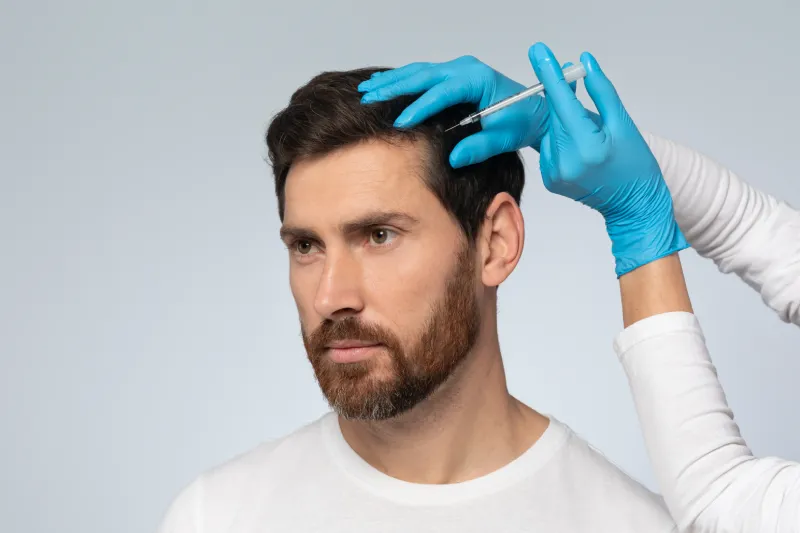
The technological tool central to DHI is a specialized device known as the “Choi Implanter Pen.” This pen is a microsurgical instrument with a fine, cylindrical, needle-like tip. The hair follicle (graft) is placed inside this pen, and with a single pushing motion, the surgeon or technician can simultaneously create the necessary incision (micro-channel) for implantation and instantly place the graft at the predetermined angle, depth, and direction.
This “direct” implantation mechanism dramatically shortens the time the hair follicles spend outside the body. The reduction in out-of-body time is vital for preserving the viability of the root and increasing the survival rate after transplantation. Thanks to this biological advantage, the DHI technique has established itself as a premium solution, particularly favored in areas requiring high-density transplantation or meticulous hairline reconstruction.
The Core Philosophy of DHI and the Choi Implanter Pen Mechanism
The core philosophy of the DHI technique relies on collecting the hair follicle (graft) and, after a very short waiting period, implanting it directly into the recipient area using a specialized instrument, rather than placing it into a manually created channel. The main goal of this philosophy is to minimize the “out-of-body time” of the grafts, reduce tissue trauma, and thus maximize the graft survival rate.
Working Principle of the Choi Implanter Pen: The Choi Implanter Pen is a complex microsurgical instrument that forms the heart of the DHI technique. The pen contains a spring mechanism and a fine, hollow needle at the tip, ranging in diameter from 0.5 mm to 1.5 mm, capable of holding a hair follicle. The working mechanism of the pen can be summarized in these steps:
- Graft Loading: Specialists carefully load single, double, or triple follicular units (grafts) collected from the donor area into the needle tip of the Choi Pen using specialized tweezers. Great precision is required at this stage to prevent damage to the graft.
- Graft Protection: Once the graft is positioned in the pen’s tip, it is protected from environmental factors and dehydration until implantation occurs.
- Direct Implantation: The surgeon positions the pen close to the skin in the recipient area. Without a pre-opened incision in the skin, the pen penetrates the skin at the appropriate natural hair exit angle and direction, and simultaneously, with the aid of the spring mechanism, implants the graft to the determined depth. This single, swift action combines the two separate traditional steps of channel opening and graft placement.
Minimal Tissue Trauma: In traditional FUE, hundreds of micro-channels are opened using blades or sapphire tips before the grafts are placed. This causes the skin to remain open for a certain period. In DHI, because the implantation occurs instantly, the micro-incision created is immediately filled by the graft. This minimizes bleeding, swelling (edema), and tissue damage in the recipient area. The reduction in tissue trauma both speeds up the patient’s recovery process and lowers the risk of damaging existing hair follicles, which is a significant advantage when transplanting into areas with thinning hair.
What Are the Critical Differences Between DHI and Traditional FUE/FUT Methods?
The DHI technique offers unique advantages and differences compared to both the older FUT (Follicular Unit Transplantation) method and today’s standard FUE (Follicular Unit Extraction) method. Understanding these differences explains why DHI is referred to by many experts as “advanced FUE.”
1. Channel Opening Stage:
- FUE/Sapphire FUE: In these techniques, after the grafts are harvested, thousands of micro-channels (incisions) must be opened in the recipient area using a scalpel or sapphire blade before the grafts are placed. These channels determine the angle, direction, and depth at which the grafts will be inserted. Channel opening is a completed stage before implantation, during which the risk of bleeding may increase.
- DHI (Direct Implantation): DHI does not have a separate channel opening stage. The Choi Implanter Pen simultaneously opens the micro-incision with its needle and places the graft while performing the implantation. This synchronization of “channel opening and placement” ensures the skin is exposed to less trauma throughout the operation.
2. Out-of-Body Time of the Graft:
- FUE: After the grafts are harvested, they are kept in a special solution for a period until all channels are opened (or all grafts are harvested). This waiting period can sometimes take hours. This long waiting time can expose hair follicles to oxygen deprivation and temperature changes, potentially leading to a reduction in graft viability.
- DHI: In the DHI technique, grafts are loaded into the pen immediately after harvesting and implanted directly into the recipient area as quickly as possible (usually within minutes). This significant reduction in the graft’s out-of-body time is the most critical biological advantage for preserving the hair root’s viability and, consequently, increasing transplant success.
3. Density and Working with Existing Hair:
- FUE: Transplanting among existing hair carries the risk of damaging existing hair follicles (transection) during the channel opening stage. Therefore, FUE is generally more suitable for dense transplantation in completely bald areas.
- DHI: Thanks to the fine tip of the Choi Pen and its direct placement ability, it can be maneuvered much more controllably and precisely among existing hair follicles. This is ideal for patients requiring hair densification (areas where hair is thinning but not completely bald), as the risk of damaging existing healthy hair is minimal.
4. Control over Direction, Angle, and Depth:
- FUE: The channel opening stage determines the angle at which the graft will be placed. However, maintaining this angle with millimeter precision during placement can be challenging.
- DHI: The Choi Pen gives the surgeon or technician the ability to control the exact angle (especially the crucial 40-45 degree natural angle at the hairline) and depth of the graft with a single, instantaneous motion. This high level of control is indispensable for the natural appearance of the hairline and crown area.
Who Are the Ideal Candidates for the DHI Hair Transplant Technique?
The advantages offered by the DHI technique make it the most ideal option for specific patient groups with unique needs and high expectations.
1. Patients Needing Hair Densification: One of DHI’s greatest superiorities is its ability to transplant between existing hairs. Patients whose hair is not entirely lost but are experiencing density loss in certain areas (especially the crown or sides) can undergo high-density transplantation with DHI without damaging their existing hair. The precise tip of the Choi Pen minimizes the risk of injury to existing follicles.
2. Those Who Place High Value on Hairline Aesthetics: The hairline is the most visible and aesthetically critical area of a hair transplant. The millimeter-level control over the angle, direction, and depth of the grafts in DHI allows the surgeon or technician to create an extremely natural, combable hairline with varying angles from front to back.
3. Patients Undergoing Small Area Transplants or Beard/Eyebrow Transplants: DHI is often preferred for areas requiring high precision, such as eyebrow, beard, and mustache transplantation. In these regions, the natural angle and direction are vital for the success of the outcome. The direct placement feature of the DHI pen ensures high density and natural orientation even in these small areas.
4. Those Expecting Fast Recovery: Because DHI is a minimally invasive technique, there is less trauma, less bleeding, and less crusting in the recipient area. This allows patients to return to their social life and work much sooner (usually within a few days). This speed is a significant advantage for athletes or those with busy work schedules.
5. Those with Limited Donor Area: Although the graft harvesting process is similar to FUE, DHI’s potential to increase the graft survival rate means it maximizes the value of every single root for patients with a limited number of quality grafts.
6. Those Who Do Not Want to Shave Their Hair Completely: Most traditional FUE applications require the complete shaving of both the donor and recipient areas. DHI is one of the most suitable techniques for performing partially shaved or unshaved transplantation, especially in cases requiring a low number of grafts or transplantation only to the crown area, offering significant aesthetic comfort.
However, it should be noted that the DHI technique requires high technical skill, and for patients needing a very high number of grafts (over 5000 grafts), the operation time may be longer than FUE or may need to be spread over two days.
How is the DHI Hair Transplant Procedure Performed Step-by-Step?
The DHI technique has a unique operational flow, distinct from other methods. The procedure is usually carried out in three main stages with great meticulousness.
Stage 1: Preparation and Anesthesia Application
- Analysis and Planning: The surgeon performs hair analysis and planning. At this stage, patient expectations, donor area capacity, and the number of grafts to be transplanted are determined. The hairline is drawn, and the direction, angle, and density of the transplant are planned.
- Shaving (If Necessary): Although DHI generally requires less shaving, the donor area (usually the nape) must be shaved to harvest the grafts.
- Local Anesthesia: Local anesthesia is applied to the donor and recipient areas to ensure the operation is completely painless. Today, even the initial sensation of anesthesia can be minimized using needle-free injection devices (comfort-in).
Stage 2: Graft Harvesting (Extraction)
- Use of Micro Motor: Hair follicles are harvested individually using a micro motor with a fine tip, typically 0.6 mm to 0.9 mm in diameter, similar to FUE. This ensures the tissue around the follicular unit is cut, gently loosening the root.
- Harvesting Precision: The roots are removed individually and carefully from the donor area without being damaged. By ensuring an even distribution of harvesting across the donor area (nape), a thinned appearance of the area is prevented.
- Graft Sorting and Storage: The harvested grafts are placed in petri dishes containing cold, nutritive solutions (e.g., HypoThermosol), specially prepared to maintain their viability. The advantage of DHI is that this waiting period is much shorter compared to other techniques.
Stage 3: Direct Implantation (Planting with the DHI Pen)
This stage is the fundamental point where DHI differs from FUE:
- Loading into the Pen: The harvested grafts are individually loaded into the Choi Pen needles, selected according to the graft size, by experienced assistants with great care. This ensures the graft enters the pen in the correct orientation and without damage.
- Angle and Direction Control: The surgeon begins working on the pre-planned hairline. Each pen is positioned on the skin according to the hair’s natural exit angle (usually 40-45 degrees at the front, close to 90 degrees on the sides) and direction.
- Simultaneous Channel Opening and Placement: The surgeon gently but firmly presses the pen, simultaneously creating the micro-incision for the graft in the recipient area and implanting the graft to the determined depth. This dual-action process ensures the environment into which the graft is placed is instantaneous and protected.
- Dense Work: DHI allows for transplantation at a higher graft density. Thanks to the technique’s precision, more grafts can be placed per square centimeter. The operation continues with this precise loading and placement cycle until all areas to be transplanted are complete.
What Are the Unique Advantages Offered by the DHI Technique?
The DHI technique offers a range of unique advantages that improve hair transplant results both aesthetically and biologically. These advantages make DHI a premium method preferred by many patients and specialists.
1. Maximizing Graft Viability: DHI’s greatest biological superiority is minimizing the time grafts spend outside the body. Grafts are loaded into the pen immediately after harvesting and implanted into the recipient area almost instantly. This rapid transfer shortens the follicle’s exposure to oxygen deprivation, temperature changes, and dehydration, which significantly increases the graft survival rate (take success). A high survival rate means a more successful and denser result.
2. Millimeter-Level Precision for Natural Appearance: The Choi Implanter Pen provides the surgeon or technician with complete control over the placement angle, direction, and depth of every single graft. This precision is vital for reconstructing areas like the hairline, crown, and areas intermingled with existing hair. When the natural exit angle of the hair is replicated, the results are extremely natural and undetectable. This is DHI’s most important aesthetic contribution.
3. Minimal Tissue Trauma and Reduced Bleeding: In DHI, channel opening and graft placement occur simultaneously, preventing pre-opened empty channels (incisions) from causing prolonged trauma to the skin. This minimal invasiveness:
- Reduces the amount of bleeding in the recipient area.
- Lowers the likelihood of swelling (edema) and bruising.
- Speeds up the healing process and reduces crusting.
- Minimizes the risk of damage to existing hair follicles (transection). This makes DHI ideal for dense transplantation in areas with thinning hair.
4. High-Density Implantation Capability: The DHI technique allows grafts to be placed at very close distances to each other, resulting in high-density transplantation. This facilitates achieving the desired full and thick look, especially in the frontal hairline or small but noticeable balding areas. Increasing the number of grafts per square centimeter demonstrates DHI’s ability to deliver aesthetically fuller results.
5. Shaved or Partially Shaved Option: Thanks to the DHI pen’s precise implantation capability, it allows for the operation to be performed without shaving the patient’s entire head (unshaved) or by only partially shaving the donor area (partially shaved). This aesthetic flexibility provides great social and psychological comfort, especially for long-haired female patients or patients who do not want to lose their hair completely, even for a short period.
Are There Potential Risks and Limitations of the DHI Application?
While the DHI technique offers many advantages, like any surgical procedure, it has potential risks and specific limitations. It is crucial for patients and practitioners to be aware of these points to set realistic expectations and maximize success.
1. Longer Operation Time and Graft Limit:
- Limitation: DHI is a manual and delicate process that requires loading and placing grafts into the pen one by one. This can extend the operation time compared to traditional FUE. Especially large transplants of 4000 grafts and above may be challenging to complete in a single session with DHI and may need to be spread over two days.
- Risk: Long operation times can increase fatigue for both the surgical team and the patient, potentially leading to a drop in graft quality or placement precision towards the end of the operation.
2. Dependence on the Practitioner’s High Experience:
- Limitation: The correct use of the Choi Pen and the manner in which grafts are loaded into the pen require a great deal of skill and experience. If the graft is placed into the pen at the wrong angle or with too much force, the risk of damaging the follicular root (trauma) is high.
- Risk: DHI applications performed by inexperienced individuals can lead to high graft loss and completely negate the technique’s core advantage (high viability rate). Therefore, DHI must strictly be performed by surgical teams specialized in this field and with a high volume of DHI operations under their belt.
3. Higher Cost: DHI requires more specialized and expensive equipment than FUE (Choi Pens, special solutions) and necessitates employing more expert personnel (assistants loading the pens) because the operation time is longer. These factors typically elevate the cost of DHI treatment compared to traditional FUE methods.
4. Graft Damage (Potential Risk): During the pushing of the graft into the pen and its subsequent implantation into the skin, there is a possibility of direct contact between the pen tip and the graft. If the graft is not loaded gently and at the correct depth into the pen, it can cause damage to the root, leading to transplant failure. This risk only manifests in inexperienced hands.
5. Limited Graft Selection: The sizes of the Choi Pen needles are fixed. Follicular units that are very curly or have unusual shapes (especially in certain ethnic groups or with thicker hair strands) may risk being damaged when placed into the pen or may not fit. In such cases, switching to the traditional channel-opening method for these grafts may be necessary.
The First Weeks Post-Operation: Recovery Process and Management of Shock Loss
The minimally invasive nature of the DHI technique speeds up the post-operative recovery process, but the patient still needs to go through certain biological stages and apply meticulous care to achieve the final results.
The First 7 Days of Healing (Accelerated Period):
- Minimal Trauma Advantage: DHI causes minimal bleeding, resulting in much less crusting and redness in the recipient area compared to FUE. Slight swelling (edema) may occur in the first 24-48 hours, but this is usually quickly controlled with a specialized bandage applied to the forehead and recommended medication.
- First Wash: The first wash is typically performed 2 or 3 days after the operation in a clinical setting, using special solutions and very gentle movements. This initial wash is vital for teaching the patient the correct washing technique.
- Crust Shedding: Within seven to ten days, all small scabs in the recipient and donor areas should be shed with gentle washing. By the end of this period, the transplanted hairs are visible as small, dark dots, and the wounds are largely healed.
Month 1: The Shock Loss Phase
- Definition: Between the 3rd and 8th weeks after hair transplantation, the vast majority of the transplanted hair strands shed in reaction to the trauma they experienced. This condition is called “shock loss.”
- Management: This phase is completely normal, and it is the hair strands on the transplanted hair roots that shed, not the roots themselves. The roots are beneath the skin and have entered a resting phase (telogen phase). It is important for patients not to worry and to be psychologically prepared for this stage. In fact, shock loss is often considered a sign that the roots have successfully taken hold and are preparing for a new hair cycle.
- Donor Area Recovery: Small redness and sensitivity in the donor area completely subside by the end of this month.
Months 2 and 3: Rest and First Growth
- The transplanted area appears largely empty.
- Starting from the 3rd month, the first new hairs slowly and sparsely begin to emerge from the shed hair roots. These hairs may be thin and curly initially.
Months 4 to 6: Acceleration Phase
- New hair growth accelerates. During this period, patients begin to see approximately 40% to 60% of the transplanted hair growing.
- Hair strands start to thicken and lengthen. The improvement in aesthetic appearance becomes evident.
Long-Term Results and Maintenance Guide for Permanence After DHI
The final and permanent results of DHI hair transplantation fully emerge approximately 12 to 18 months after the operation. The key to this long-term success is strict adherence to post-operative care protocols and the adoption of lifelong healthy habits.
Final Results (12-18 Months):
- Density and Naturalness: By the 12th month, almost all transplanted hair has grown out and thickened. Thanks to DHI’s advantage of controlling the angle and direction, the hair can be combed, styled, and offers a look indistinguishable from your natural hair. The density in the crown area and the aesthetic of the hairline become clear.
- Permanence: Since the transplanted hairs are taken from the nape (donor) area, which is genetically resistant to shedding, they are permanent for life. These hairs retain their genetic characteristics in the recipient area and do not shed.
Long-Term Care and Protection:
- Diet and Supplements: A balanced diet rich in sufficient protein, B vitamins (Biotin), zinc, and iron is crucial for strengthening hair roots and rapid growth. Hair vitamins and supplements recommended by the doctor play a supportive role, especially during the first year.
- Special Hair Products: Shampoos containing harsh chemicals, sulfates, and parabens should be avoided. Shampoos and lotions specially developed for sensitive skin after hair transplantation should be used.
- Hair Loss Prevention Treatments (For Existing Hair): Transplanted hair is permanent, but existing natural hair not transplanted remains susceptible to genetic shedding. Medical treatments like Minoxidil or Finasteride may be used upon the doctor’s advice to slow the shedding and strengthen this hair. These treatments can also indirectly improve the quality of the transplanted hair.
- Sun Protection: Direct exposure of the recipient area to sunlight should be prevented, especially during the first 6 months. Sun can damage the healing skin and cause discoloration. Wearing a hat or using sunscreen is recommended.
- Regular Check-ups: Post-operative check-ups at 6 and 12 months are important for the surgical team to evaluate the results and intervene early if any issues arise.
Revolution in Hair Transplantation: Why is the DHI Technique Considered the Solution of the Future?
The DHI (Direct Hair Implantation) technique represents a new standard of quality and precision in the field of hair transplantation, going beyond being merely a procedure. Unlike traditional methods, DHI perfectly blends biological efficiency with aesthetic control.
The fundamental reason DHI is positioned as the solution of the future is the biological guarantee and aesthetic excellence it offers. Biologically, minimizing the grafts’ out-of-body time maximizes follicular health and, thus, the survival rate. A high survival rate means less graft loss and a fuller final result. For patients where the value of each hair root is high, either economically or aesthetically, this is an invaluable advantage.
Aesthetically, the millimeter-level precision provided by the Choi Implanter Pen gives the surgeon the ability to fully replicate the patient’s natural hair exit angle and direction. This is the key to an “undetectable hair transplant” appearance, especially in areas directly affecting the outcome, such as the hairline and crown densification. A natural hairline is the most important factor defining the success of a hair transplant, and DHI offers the highest control in this domain.
Furthermore, the minimal invasive nature of DHI shortens the patient’s recovery process and accelerates the return to social life. Less bleeding, less swelling, and less crusting in the recipient area are all features that improve the patient’s post-operative experience and enhance the technique’s comfort. The offering of unshaved or partially shaved options fully meets the expectations of the modern patient profile who has high aesthetic concerns and wishes to maintain the secrecy of the operation.
In conclusion, the DHI technique has revolutionized the hair transplant sector by combining speed, precision, high survival rates, and superior aesthetic results. The only limitation of the method is its high dependence on the practitioner’s experience. Therefore, it is a critical necessity for patients choosing DHI to select surgical teams specialized and with a proven track record in this field to fully benefit from all the advantages offered by this modern technique. DHI is undoubtedly the most reliable and advanced solution for anyone seeking a personalized, natural, and permanent hair restoration.
Sources and how to verify this yourself
- Comparative study of graft survival by donor site (scalp, beard, chest) at 12 months — roughly 89% for scalp, 95% for beard and 76% for chest hair; survival also falls the longer grafts stay outside the body. source
- Ministry of Health, Regulation on International Health Tourism and Tourist Health, Official Gazette 26 April 2025, No. 32882 — authorisation requirement for facilities and intermediaries, TÜSKA accreditation, compulsory complication insurance (deadline 31 December 2025 for insurance, 31 December 2026 for accreditation). source
- Ministry of Health, Regulation on Promotion and Information Activities in Health Services, Official Gazette 12 November 2025, No. 33075 — treatment promises and guarantees are prohibited; price and campaign announcements are permitted only within international health tourism. source