
Part of: Dental treatment in Turkey — prices, what is included and country comparison.
What is a Porcelain Veneer and What is its Importance in Aesthetic Dentistry?
Porcelain veneer is one of the most popular applications in modern aesthetic dentistry, also known as “laminate veneer” or “porcelain leaf” among the public. Fundamentally, they are ultra-thin ceramic layers produced in a laboratory, customized for the patient, and adhered to only the front surface of the teeth with special adhesives (adhesive cements) to aesthetically improve the teeth’s color, shape, size, and position. The thickness of these layers is often compared to that of a contact lens, ranging between 0.3 mm and 0.7 mm. This minimal thickness is the most distinctive feature that sets porcelain veneers apart from other restoration methods.
The importance of porcelain veneers in aesthetic dentistry stems from the two fundamental advantages they offer: maximum aesthetics and maximum preservation of tooth structure. Unlike other restoration methods, porcelain veneers can be applied with minimal preparation of the natural tooth structure, or in some cases, with no preparation at all. This minimal invasive approach largely preserves the tooth’s enamel and allows the tooth to maintain its vitality.
Porcelain has high light-transmitting and reflective properties. Since natural tooth enamel also has a translucent structure, when porcelain veneers are applied, a deep and vibrant appearance is achieved that is almost indistinguishable from a natural tooth. Due to the absence of a metal substructure, the gray and dull appearance that forms at the gum line completely disappears. Thus, porcelain veneers become not just a cosmetic correction tool but a permanent artistic solution that combines biological harmony and natural aesthetics in smile design. The increase in patients’ self-confidence in their social lives and the psychological benefits of a healthy smile further enhance the value of porcelain veneers. This treatment, due to its potential to transform a smile, is currently one of the most demanded aesthetic procedures.
The Unique Material Properties and Chemical Structure of Porcelain Veneers
The superior aesthetic and functional success of porcelain veneers relies on the chemical and physical properties of the ceramic material used. While “porcelain” covers a wide spectrum, advanced technology glass-ceramic-based products are generally used in aesthetic veneer applications. These include traditional Feldspathic porcelains and Lithium Disilicate (E-max) porcelains, which are more commonly preferred today.
Lithium Disilicate (E-max) Ceramics: This is currently the most preferred material when it comes to aesthetic veneers. The structure of this material contains lithium disilicate crystals embedded within a ceramic matrix. This crystalline structure imparts two fundamental properties to the veneer:
- High Mechanical Strength: Even in a very thin layer (0.3 mm), it shows significant resistance to chewing forces. This durability minimizes the risk of fracture and chipping of the veneers.
- Superior Optical Properties: Lithium disilicate has a light refraction and reflection index very close to natural tooth enamel. This provides the properties of translucency and opalescence, which make the veneer indistinguishable from the natural tooth. Opalescence, a feature seen particularly at the edges of young and healthy teeth, is the ability to scatter and reflect light, giving the tooth a deep and vibrant sparkle.
Feldspathic Porcelains: Traditionally used, these porcelains are produced using a layering technique and can yield the highest aesthetic results. However, their mechanical durability is lower than Lithium Disilicate, and thus they require highly delicate clinical and laboratory work. Today, Feldspathic porcelains are mostly preferred in cases that are considered works of art, produced using the ‘refractory’ technique where preparation is minimal or non-existent.
Chemical Bonding (Adhesive Cementation): Another secret to the success of porcelain veneers is the cementation system used. Porcelain veneers bond to the tooth enamel not only mechanically but also chemically. This chemical interlocking (bonding) ensures the porcelain is practically welded to the tooth, increasing the bond strength above 50 MPa. This strong bond between the veneer and the tooth eliminates the risk of detachment and ensures the underlying tooth structure is protected by sealing. Veneers are etched with Hydrofluoric Acid (HF) and prepared with chemical couplers called Silane in the laboratory before cementation. This preparation activates the porcelain chemically, allowing it to adhere strongly to the enamel layer via resin-based cements.
Which Aesthetic Problems Does Porcelain Veneer Application Solve?
Porcelain veneers offer an ideal solution for correcting a wide range of aesthetic dental imperfections. The treatment focuses particularly on appearance problems in the anterior teeth, which form the smile line.
Permanent and Stubborn Stains: Porcelain veneers provide excellent results for teeth whose color cannot be whitened or that have stubborn stains despite dental bleaching methods. Examples of these conditions include tetracycline stains (band-shaped discolorations due to antibiotics used in childhood) and fluorosis (enamel stains caused by excessive fluoride intake). Thanks to the color stability of porcelain, these veneers retain their original whiteness and brightness for years.
Spaces Between Teeth (Diastema): Spaces between teeth, especially the two front teeth, can cause aesthetic concern. Porcelain veneers are a fast and effective solution for closing mild to moderate gaps between teeth that do not require orthodontic treatment, either by preserving or slightly increasing the natural width of the teeth.
Shape and Size Abnormalities: Veneers are used in cases where teeth are not of ideal size or shape (e.g., congenitally small teeth – microdontia), or are chipped or cracked due to trauma or wear. The veneers redesign the length, width, and contours of the teeth according to ideal aesthetic ratios, creating a symmetrical smile line.
Mild Crowding and Misalignments: Minimal misalignments and crowding problems that do not necessitate orthodontic treatment can be corrected with the “Instant Orthodontics” effect provided by porcelain veneers. This allows the patient to achieve aesthetic alignment without undergoing a lengthy brace treatment process.
Worn and Abraded Teeth: Teeth that have shortened and lost enamel due to acid erosion or teeth grinding over time are restored with veneers, protecting them both aesthetically and functionally. This prevents further wear of the tooth and creates a newer, younger smile line.
Replacement of Old and Suboptimal Restorations: Porcelain veneers, which are more biologically compatible and aesthetically superior, can be applied to replace old composite fillings or metal-free porcelains on anterior teeth that have discolored or have compromised marginal fit over time.
How Does the Porcelain Veneer Application Process Work Step-by-Step?
Porcelain veneer treatment is a process that is typically completed in 2 to 3 clinical visits, but every stage must be meticulously planned. Success is directly dependent on the precision of the planning and application.
Stage One: Comprehensive Examination and Detailed Planning The first step of the treatment is a detailed examination of the patient’s general oral and dental health. If existing problems such as decay, gum disease, or joint issues are present, they must be resolved before proceeding with veneer application. Next, the dentist analyzes the patient’s smile and facial features (Smile Analysis / Digital Smile Design). The patient’s expectations are listened to, and photographs, videos, and impressions are taken. The patient’s new tooth shape is digitally designed using this data (DSD).
Stage Two: Mock-Up (Preview) and Approval The digitally designed new smile is applied to the patient’s mouth using a special temporary material without any irreversible preparation (Mock-Up). This preview allows the patient to see exactly how their new teeth will look and feel before their teeth are prepared. The patient evaluates themselves with this model in the mirror, in social settings, and during speech. All adjustments (length, shape, contour) on the Mock-Up are made by the joint decision of the patient and the dentist, and the final shape of the permanent veneers is determined. This stage is critically important to ensure the aesthetic result completely meets the patient’s expectations.
Stage Three: Tooth Preparation, Final Impression Taking, and Placement of Temporaries After the Mock-Up approval, the dentist performs a minimal invasive preparation, removing a thin layer of tooth structure (0.3 – 0.7 mm) equal to the veneer’s thickness from the tooth surface. This procedure is generally performed under local anesthesia and is mostly painless. Once the preparation is complete, the most accurate impression (with traditional paste or digital scanner) is taken for the laboratory’s precise work. This impression is sent to the laboratory for the production of customized porcelain veneers. Immediately after the impression is taken, the teeth are covered with temporary veneers, obtained from the Mock-Up, to prevent sensitivity and maintain aesthetic appearance.
Stage Four: Try-In and Cementation (Permanent Bonding) After the production process, which takes 4 to 7 days in the laboratory, the porcelain veneers are tried in the mouth. The color, shape, marginal fit, and bite (occlusion) are checked one last time. Once the dentist and patient are satisfied with all aspects, the tooth surfaces are prepared with special chemical agents, and the veneers are chemically bonded to the tooth enamel using strong, light-cured, resin-based adhesives (adhesive cements). This cementation protocol is the most important step to prevent the veneer from falling off and to ensure a seal. Excess cement is meticulously cleaned, and the procedure is completed with polishing.
The Key to Irreversible Aesthetics: Minimal Invasive Tooth Preparation
The fundamental reason porcelain veneers revolutionized aesthetic dentistry is the minimal invasive philosophy applied in tooth preparation. This approach aims to preserve the maximum amount of the tooth’s natural structure, especially the enamel layer.
Priority of Enamel Preservation: While traditional full crown restorations require the removal of 1.5-2.0 mm of tissue from all sides of the tooth, with porcelain veneers, this amount is limited to only 0.3 mm to 0.7 mm on the front surface of the tooth. Preserving a large portion of the tooth’s enamel is critically important for the tooth’s biological integrity, vitality, and long-term health. Enamel is the hardest tissue in the body and also the surface to which the veneer can bond most strongly chemically. As enamel is preserved, the risk of post-operative sensitivity also decreases.
The Concept of “No-Prep” Veneers: In some cases, particularly when the teeth are congenitally small, positioned too far back, or have wide gaps (diastema), no preparation (grinding) of the tooth surface may be necessary. These “No-Prep” veneers are applied with zero intervention to the tooth structure, offering a 100% reversible treatment option. This represents the most advanced point of the minimal invasive approach.
Importance of Preparation Depth and Margin: During tooth preparation, the clinician uses special diamond burs to create space only equal to the thickness of the porcelain. This preparation depth is generally around 0.3 mm in the cervical (gum line) region and 0.5-0.7 mm in the incisal (cutting edge) region. It is highly important that the preparation margin ends slightly above the gum line (supragingival) or at the gum line level. Margins extending below the gum line (subgingival) can compromise gum health, lead to plaque accumulation, and increase the risk of gum recession over time. Therefore, porcelain veneers must be designed to be in perfect biological harmony with the gum tissue.
Strength of the Adhesive Bond: Preserving the tooth’s enamel maximizes the chemical bonding strength of the porcelain to the tooth. Enamel offers a much stronger and more stable bonding surface than dentin. Successful adhesive cementation to the enamel layer allows the porcelain veneer to integrate chemically, not just mechanically, with the tooth, which is the key to longevity. Minimal invasive preparation is the core philosophy that enables the establishment of this strong chemical bond.
What Are the Aesthetic and Functional Advantages of Porcelain Veneers?
The popularity of porcelain veneers is based on the versatile aesthetic and functional advantages they offer. These advantages make veneers aesthetically unrivaled against other dental solutions.
Perfection in Natural Tooth Appearance: Porcelain, especially Lithium Disilicate-based ceramics, flawlessly mimic the optical properties of natural tooth enamel, such as translucency, opalescence, and brightness. The way they reflect and transmit light ensures the veneer has a three-dimensional depth, avoiding a dull, lifeless appearance. Thanks to this biomimetic feature, even for an expert eye, it is difficult to distinguish porcelain veneers from natural teeth.
Color Stability and Stain Resistance: The surface of porcelain veneers is smooth and non-porous, like glass. This dense and hard structure physically prevents staining agents like tea, coffee, red wine, cola, or tobacco smoke pigments from penetrating the porcelain surface and causing stains. Porcelain veneers have much higher color stability even compared to natural teeth; meaning they retain their original whiteness and brightness for years.
High Durability and Longevity: Despite their ultra-thin structure, porcelain veneers are surprisingly durable, especially when bonded to the enamel with strong adhesive cements. The fracture strength of laminate veneers can comfortably withstand daily chewing forces when correctly applied. Clinical studies show that porcelain veneers can be used without problems for 10 to 20 years with a success rate of over 90%.
Gum-Friendly and Biocompatible Material: Porcelain veneers are made entirely of metal-free ceramic. As such, they do not cause allergic reactions or irritation to the gum tissues. The excellent marginal fit and the biocompatible surface of the porcelain minimize plaque accumulation and preserve gum health. Finishing the veneer margin at or slightly above the gum line supports the maintenance of healthy, pink gum aesthetics.
Fast Results with Minimal Intervention: Compared to orthodontic treatments, which can take months or even years, porcelain veneer treatment is generally completed in a short period of 1-2 weeks. This rapid aesthetic transformation is a significant advantage, especially for patients with time constraints or those who want immediate results.
Why Are Digital Planning and the Mock-Up Stage Crucial Before Treatment?
The success of porcelain veneer treatment is almost entirely dependent on the quality of the planning performed before application. Digital Smile Design (DSD) and the Mock-Up (Preview) stages are vital steps that finalize both the clinician’s vision and the patient’s expectations.
Guaranteeing the Aesthetic Outcome: DSD is performed using the patient’s intraoral and facial photos, videos, and scans. These digital tools allow the clinician to design the ideal shape and size of the teeth with millimetric precision, based on the face’s symmetry axes, lip movements, and speech lines. This guarantees that the results are not random but based on scientific and artistic ratios.
Mock-Up (Preview): Experiencing the Change: The Mock-Up is the application of the newly designed teeth to the patient’s existing teeth using a temporary, easily removable material, before any tooth preparation. This stage allows the patient to see exactly what their final appearance will be before their teeth are ground down. The patient can smile, talk, and evaluate themselves with this model in a mirror and get feedback from their social circle. This is the only way to ensure that the aesthetic outcome meets the patient’s expectations. If the patient requests a change in length or shape on the Mock-Up, these revisions are easily made before the permanent porcelain is produced.
Clinical Guidance and Preparation Control: Transferring the Mock-Up to the tooth surface (a process called using a silicone key or index) also serves as a guide for the dentist. The clinician uses the Mock-Up guide to perform a precise preparation equal to the thickness of the porcelain veneer. This guide ensures that the preparation is at the correct depth (not too little or too much) and remains within the enamel boundaries. This way, the minimal invasive philosophy is strictly adhered to, and unnecessary tooth loss is prevented.
Production of Temporary Veneers: The Mock-Up model is also used in the preparation of the temporary porcelain veneers that will be worn after the teeth are prepared. These temporaries provide both aesthetic comfort and sensitivity protection for the patient while they wait for their permanent porcelains. This integrated process ensures that every step of the treatment is pre-planned and controlled.
What Factors Affect the Longevity of Porcelain Veneers?
Porcelain veneers exhibit a durability of approximately 10 to 20 years with correct application and maintenance. This lifespan is achieved through the combination of high-tech ceramic materials and strong adhesive systems. However, the life of the veneers can be extended or shortened depending on multiple factors.
Quality of Adhesive Cementation: The longevity of veneers depends most heavily on how strongly and tightly they are bonded to the tooth enamel. Performing the cementation in an environment completely isolated from moisture and saliva, with strict adherence to special bonding protocols (etching, silane application, resin cement), reduces the risk of detachment to zero. The clinician’s meticulousness during this stage is the guarantee of longevity.
Bruxism (Teeth Clenching and Grinding) Management: Bruxism is one of the biggest threats to porcelain veneers. Teeth clenching applies excessive vertical and horizontal stress to the veneers, which can lead to micro-cracks and fractures over time. Patients diagnosed with bruxism must regularly use a custom-made hard clear night guard, as advised by the clinician, after the treatment. This guard absorbs chewing forces and protects the veneers.
Usage and Dietary Habits: Although porcelain veneers are durable, it is important to avoid extremely hard or sticky foods. Parafunctional habits like cracking nuts with the front teeth, chewing ice, nail-biting, or biting on pens can damage the veneers. Hard foods should be sliced and eaten instead of being bitten off. Excessive consumption of acidic drinks and foods can, albeit rarely, weaken the adhesive cement in the long term, so rinsing the mouth after consuming such products is advisable.
Oral Hygiene and Regular Check-ups: Maintaining gum health is essential for the veneer’s long life. Decay formation at the veneer margin or gum recession due to poor hygiene requires the renewal of the veneer. Patients must continue their routine of brushing twice a day and strictly using dental floss. Furthermore, regular dental check-ups every six months should not be neglected, as they are crucial for evaluating the marginal fit, occlusion, and surrounding gum health of the veneers.
Are There Any Potential Disadvantages and Limiting Conditions of Porcelain Veneer Application?
While porcelain veneers offer numerous advantages, as with any medical procedure, there are situations where the treatment may not be suitable or could be limiting. These disadvantages and limitations should be clearly explained to patients to ensure they have realistic expectations.
High Cost: Since porcelain veneers, especially those made with advanced ceramics like Lithium Disilicate, are produced using CAD/CAM systems, they have a higher initial cost compared to other aesthetic solutions (e.g., composite bonding). This cost reflects the quality of the material, the expertise of the clinician, and the precision of the laboratory work. However, this cost can be offset in the long run by the veneer’s longevity and superior aesthetics.
Irreversible Procedure: Because minimal tooth structure must be removed (except in No-Prep cases), porcelain veneer treatment is irreversible. When the veneer is removed, the tooth’s natural enamel layer cannot be fully restored, and the tooth will require continuous protection with a restoration. Therefore, it is important for the patient to make this decision consciously.
Limitation in Completely Masking Severe Stains: The high translucency that is the key to the natural appearance of porcelain veneers can become a disadvantage when the underlying tooth is very dark. In cases of severe tetracycline stains or intense metallic discoloration, thin veneers may not fully mask the dark underlying color, and the veneer may appear grey or dull. In such cases, the clinician may consider using more opaque porcelains (higher opacity E-max blocks) or opting for a full crown restoration.
Uncontrolled Habits and Health Issues: Severe and uncontrolled teeth grinding (bruxism) can be a contraindication for porcelain veneer application. Similarly, conditions such as advanced gum disease (periodontitis), large decay lesions, extensive fillings, or significant loss of tooth structure may necessitate a full crown restoration instead of a veneer. The dentist must ensure that the oral and dental health are suitable for a veneer. Furthermore, parafunctional habits like nail-biting also jeopardize the success of the treatment.
What is the Importance of Temporary Sensitivity and Gum Harmony After Treatment?
Some patients may experience short-term, temporary sensitivity after porcelain veneer application. This is generally normal and does not require concern. The harmony of the gums with the veneer is, however, vital for the long-term success and aesthetics of the treatment.
Temporary Thermal Sensitivity: The minimal removal of tooth enamel can temporarily expose the underlying dentin layer, which is sensitive to hot and cold. This creates short-term sensitivity, especially to cold air, water, or drinks. This sensitivity rapidly diminishes after the permanent cementation (bonding) procedure, as the adhesive cements effectively seal the dentinal tubules, providing insulation. Sensitivity usually disappears within a few days and lasts a maximum of two weeks.
Effect of Cementation: The chemical agents (acid, bonding) and cements used during the veneer bonding process can cause a temporary reaction in the tooth nerve. This reaction may also lead to short-term sensitivity. The clinician can apply desensitizing agents and recommend fluoride toothpaste or gels after treatment to alleviate sensitivity.
Importance of Gum Harmony: The flawless harmony of porcelain veneers with the gum tissue is one of the most critical indicators of treatment success. When perfect marginal adaptation is achieved:
- Gum Health is Protected: No plaque accumulation occurs at the veneer margin, which minimizes the risk of gingivitis (gum inflammation).
- Aesthetic Integrity is Maintained: Since the veneer margin rests in biological harmony with the gum, there is no risk of gum recession or discoloration (a grayish appearance). Healthy, pink gum tissue frames the white veneer like a natural border.
If the veneer margins are ill-fitting, the gum will become inflamed, swell, and potentially recede over time, exposing the underlying natural tooth surface, which leads to both aesthetic and biological problems. The biocompatible nature of porcelain and the millimetric precision provided by CAD/CAM systems ensure this harmony is guaranteed.
How Should Porcelain Veneer Care and Oral Hygiene Be Performed?
To maintain the longevity of porcelain veneers (10-20 years and beyond), the same diligent oral hygiene routine applied to natural teeth must be continued. While porcelain surfaces are stain-resistant, the health of the underlying tooth and surrounding gum tissue is entirely the patient’s responsibility.
Basic Hygiene Rules:
- Correct Toothbrush and Toothpaste: A soft or medium-bristled toothbrush should be used. Abrasive toothpastes (high RDA value) should be strictly avoided. Such kinds of toothpaste (especially those labeled “for smokers” or intense whitening) can gradually dull the porcelain’s polish and matte the surface. Fluoridated, non-abrasive standard toothpaste is ideal.
- Regular and Correct Brushing: Brush at least twice a day, morning and evening, with gentle sweeping motions starting from the gum line. Special attention should be paid to the junction where the veneer meets the gum.
- Dental Floss Use is Vital: Because porcelain veneers are applied individually, flossing is easy. Daily use of dental floss or interdental brushes prevents plaque accumulation at the veneer margin and between the teeth, eliminating the risk of decay and gum disease.
Protective Habits:
- Avoid Hard Objects and Trauma: Although porcelain is durable, it is vulnerable to hard and unexpected lateral forces. Parafunctional habits such as cracking nuts with the front teeth, chewing ice, biting on nails, pens, needles, or clips must be discontinued. Such actions can cause micro-cracks or fractures at the veneer margin.
- Mandatory Night Guard Use: Patients with bruxism (teeth grinding/clenching) must wear a custom-made hard clear night guard every night, as prescribed by the clinician, to secure the lifespan of the veneers. The guard absorbs chewing forces and protects the veneers.
- Consumption of Acidic Drinks: The frequent and continuous consumption of overly acidic drinks like cola or energy drinks can, in the long term, weaken the cementation bond. The mouth should be rinsed thoroughly with water immediately after consumption of such products to support the longevity of the natural teeth and the adhesive cement.
Professional Care: Regular dental check-ups every six months should not be neglected. During these visits, the clinician checks the integrity of the veneer, the marginal seal, and the gum health. Professional cleaning and polishing procedures should be performed using special, non-abrasive pastes and plastic/silicone tips to renew the veneer’s luster.
What is the Difference Between Porcelain Veneers Compared to Traditional Crowns and Composite Bonding?
Porcelain veneers, full crowns, and composite bonding are three main treatment methods in aesthetic and restorative dentistry that serve different purposes. Understanding their differences helps in making the most appropriate decision for the patient’s condition.
| Feature | Porcelain Veneer (Laminate) | Full Crown (Restoration – Zirconium/E-max) | Composite Bonding (Laminate) |
|---|---|---|---|
| Intervention Amount | Minimal invasive (0.3 – 0.7 mm from the front surface). Enamel is largely preserved. | Highly invasive (1.0 – 2.0 mm circumferential grinding from all tooth surfaces). | No grinding may be necessary, or very minimal roughening. Least invasive option. |
| Material | High-strength ceramic produced in a laboratory (Lithium Disilicate, Feldspathic). | Ceramic produced in a laboratory (Zirconium, E-max) or metal-supported ceramic. | Resin (plastic) filling material applied by the dentist in the clinic. |
| Aesthetics/Optics | Excellent. Closest translucency and depth to natural enamel. | Very good (especially if Zirconium or E-max). However, capturing natural translucency is harder as it covers the entire surface. | Good. May lose luster and appear duller over time. |
| Color Stability | Excellent. Stain-resistant and color-stable. | Excellent. | Poor. Stains and yellows over time, requires polishing. |
| Durability and Lifespan | 10-20 years. Very durable; difficult to repair if fractured. | 10-20 years. Very high durability. | 4-8 years. Lower durability; can fracture and is easily repaired. |
| Application Time | 1-2 weeks (Involves laboratory process). | 1-2 weeks (Involves laboratory process). | Single session (Completed in the clinic). |
| Cost | High. | Medium – High (Varies by material). | Low – Medium. |
Porcelain Veneer vs. Full Crown: Full crowns are preferred in posterior regions where the tooth has lost significant structure, has had root canal treatment, or needs to withstand high chewing forces (bridges). Veneers are used in anterior regions where the tooth is largely healthy and only aesthetic correction is needed. A full crown requires the entire circumference of the tooth to be cut, while a veneer only involves the front surface, which is the veneer’s greatest biological advantage.
Porcelain Veneer vs. Composite Bonding: Composite bonding is a more affordable alternative that can be completed in a single session. However, composite resins are not as hard or stain-resistant as porcelain; they experience discoloration, wear, and loss of luster over time. Therefore, they require periodic polishing and renewal. Porcelain veneers offer superior color stability and longevity, providing a more permanent and aesthetically superior solution in the long run.
In summary, when applied with the correct indication, the porcelain veneer is the gold standard aesthetic restoration that preserves the natural structure of the tooth as much as possible, offering the most natural and aesthetic result in the long term. If the structural integrity of the tooth is compromised (major loss or decay), full crowns are more appropriate; if only temporary or minor corrections are aimed for, composite bonding may be suitable. However, for permanent and superior aesthetics in the anterior region, porcelain veneers should be the first choice.
Why Does the Cost of Porcelain Veneer Restorations Tend to Be High?
The relatively high cost of porcelain veneer treatment is a significant question for many patients. This cost is more than just the price of a material; it is the total sum of the advanced technology, expertise, and precise craftsmanship required for the treatment.
Use of High-Quality Material: Porcelain veneers differ from the materials used in standard restorations. They are typically produced from special ceramic blocks, such as Lithium Disilicate (E-max), which are biocompatible, highly durable, and possess superior optical properties. This raw material and its specialized manufacturing processes (patented technologies) contribute to the increased cost.
Investment in CAD/CAM Technology: The production of veneers with millimetric precision requires digital impression devices (intraoral scanners) and Computer-Aided Design/Manufacturing (CAD/CAM) milling systems. The investment in this advanced technological equipment and its operating costs are reflected in the total cost of the treatment. The perfect marginal adaptation, which is difficult to achieve with traditional methods, is the core value provided by this technology.
Laboratory Expertise and Craftsmanship: Although porcelain veneers are designed by the dentist, they are colored, characterized, and polished by dental technicians in the laboratory through a highly precise and artistic process. This is not only technical but also an art form requiring high aesthetic skill and experience. The layering, staining, and firing processes applied to ensure the veneer’s natural appearance are time-consuming and expensive.
Precision of the Clinical Procedure: Porcelain veneer application is a time-consuming and high-concentration process for the dentist because of the minimal preparation (very small margin for error) and the need for the adhesive cementation protocol to be carried out under absolute meticulousness and isolation. The clinician’s expertise in these stages and the efficiency of the clinical time carry a high value.
Longevity and Guarantee: The high initial cost is offset by the longevity (10-20 years) and color stability guarantee provided by porcelain veneers. While cheaper alternatives like composite require periodic renewal and maintenance, porcelain veneers eliminate these extra costs and time loss in the long run.
Considering all these factors, the cost of porcelain veneers is, in fact, the price of aesthetic perfection, long-term biological harmony, and clinical success.
Can Smoking and Staining Foods Be Consumed After Porcelain Veneer Application?
One of the most frequently asked questions by patients after porcelain veneer application is the effect of smoking and staining foods/drinks on the veneers. In this regard, porcelain veneers are much more advantageous compared to natural teeth.
Porcelain’s Stain Resistance: As mentioned earlier, the surface of porcelain is smooth and non-porous, like glass. This structure physically prevents pigments from agents like tea, coffee, red wine, cola, or even tobacco smoke from penetrating the porcelain. Consequently, porcelain veneers do not yellow or stain over time.
Smoking Consumption and Necessary Precautions: While smoking does not change the color of the porcelain veneers themselves, it negatively affects the natural teeth surrounding the veneers and especially the gum line. Tobacco smoke and its tar content can accumulate on the natural tooth surface at the veneer margin, creating stains. More importantly, smoking is one of the leading causes of gum disease and recession by impairing gum blood flow. When the gum recedes, the underlying natural tooth surface may become visible, creating a color discrepancy. Therefore, quitting smoking is strongly recommended for the general oral health and the longevity of the veneer.
Staining Foods and the Temporary Period: After the permanent cementation procedure, the first 24-48 hours are critical for the adhesive to fully set and maximize its bond strength. Avoiding highly staining foods (e.g., red wine, turmeric-containing dishes) and smoking during this short period is important to maintain the integrity of the bonding area. However, after this short temporary period, porcelain veneers will be much more resistant to staining compared to natural teeth.
Recommendation: Rinsing the mouth thoroughly with water after consuming staining beverages (coffee, tea, acidic drinks) is always a good habit to support the longevity of both the natural teeth and the adhesive cement.
Is There a Risk of Gum Recession After Porcelain Veneer Treatment?
The effect of porcelain veneers on gum health is directly dependent on the quality of the application and the biological properties of the material. When properly applied, porcelain veneers do not cause gum recession; rather, they support gum health.
Biocompatibility: Porcelain veneers, being made of metal-free ceramic, have excellent biocompatibility with gum tissue. The ceramic is easily tolerated by the gums and does not cause irritation. This helps maintain a healthy and stable gum line.
Mandatory Perfect Marginal Fit: The biggest cause of gum recession risk is poor adaptation of the veneer margin to the tooth. If there is a gap or overhang (ledge) at the veneer margin, plaque and bacteria accumulation increases in this area. This leads to gingivitis (gum inflammation) and, if untreated, to periodontitis (gum recession). In porcelain veneers, this risk is minimized thanks to the millimetric precision provided by CAD/CAM technology and the clinician’s meticulousness. Adherence to the rule that the veneer margin should end at or slightly above the gum line (supragingival) is crucial for preserving gum health.
Consequences of Improper Application: The causes of gum recession in dentistry are typically:
- Poorly fitted and rough veneer margins (leading to plaque retention).
- The dentist unnecessarily extending the preparation below the gum line.
- Poor patient oral hygiene (plaque and calculus accumulation).
- Teeth clenching/grinding (applying excessive force to the gum tissue).
Properly planned and applied porcelain veneers by an expert clinician do not cause gum recession. On the contrary, due to their smooth surfaces that do not irritate the gums, they can even contribute to the recovery of mild gingivitis.
Common Post-Treatment Situations and Solutions After Porcelain Veneer Treatment
Although porcelain veneer treatment generally results in high patient satisfaction, there are some common situations patients may encounter, and solutions for them. These situations are usually temporary or easily rectifiable.
Temporary Sensation of a Different Bite: New porcelain veneers, especially if the shape or length of the teeth was changed, may initially feel “bulky” or “different” to the tongue and cheeks. There may be temporary differences in speech sounds (phonation). This situation usually disappears completely within a few days as the oral tissues and tongue adapt to the new shape. Bite (occlusion) control is extremely important, and the clinician must immediately adjust any high spots.
Sensitivity (Detailed Above): Sensitivity to cold/hot is a temporary situation. If the sensitivity lasts longer than two weeks or intensifies, it may mean that the dentin tissue under the veneer was not sufficiently isolated or, rarely, that there is nerve irritation. The clinician can resolve this by applying desensitizing agents or, rarely, by removing and re-cementing the veneer.
Temporary Veneer Detachment: Temporary veneers placed while the permanent ones are being fabricated in the lab are not bonded as strongly as the permanent cements. Therefore, they may detach while eating hard food or using dental floss. In such a case, there is no need to panic; the temporary veneer should be kept in a container, and the patient should immediately contact the dentist for re-cementation. This is important for preserving the tooth preparation required for the permanent veneer try-in.
Bleeding Around the Gums: Slight irritation may occur to the gums during the cleaning of excess cement after the veneer bonding. It is normal to observe slight bleeding when brushing in the first few days due to this irritation. However, if the bleeding persists for more than 2-3 days, it may indicate poor marginal fit of the veneer or plaque accumulation and should be checked by the clinician.
Fracture or Chipping: Although porcelain veneers are very durable, they can chip or fracture due to severe trauma or uncontrolled bruxism. In such cases, depending on the type of veneer and the extent of the damage, the clinician may completely replace the fractured veneer or, in some cases, repair it using composite resins. Repair may not yield results as aesthetically successful as replacement, so renewal is often recommended.
What is the Difference Between Porcelain Veneers Compared to Traditional Crowns and Composite Bonding?
Porcelain veneers, full crowns, and composite bonding are three main treatment methods in aesthetic and restorative dentistry that serve different purposes. Understanding the differences between them allows for the most appropriate decision for the patient’s condition.
| Feature | Porcelain Veneer (Laminate) | Full Crown (Restoration – Zirconium/E-max) | Composite Bonding (Laminate) |
|---|---|---|---|
| Intervention Amount | Minimal invasive (0.3 – 0.7 mm from the front surface). Enamel is largely preserved. | Highly invasive (1.0 – 2.0 mm circumferential grinding from all tooth surfaces). | No grinding may be necessary, or very minimal roughening. Least invasive option. |
| Material | High-strength ceramic produced in a laboratory (Lithium Disilicate, Feldspathic). | Ceramic produced in a laboratory (Zirconium, E-max) or metal-supported ceramic. | Resin (plastic) filling material applied by the dentist in the clinic. |
| Aesthetics/Optics | Excellent. Closest translucency and depth to natural enamel. | Very good (especially if Zirconium or E-max). However, capturing natural translucency is harder as it covers the entire surface. | Good. May lose luster and appear duller over time. |
| Color Stability | Excellent. Stain-resistant and color-stable. | Excellent. | Poor. Stains and yellows over time, requires polishing. |
| Durability and Lifespan | 10-20 years. Very durable; difficult to repair if fractured. | 10-20 years. Very high durability. | 4-8 years. Lower durability; can fracture and is easily repaired. |
| Application Time | 1-2 weeks (Involves laboratory process). | 1-2 weeks (Involves laboratory process). | Single session (Completed in the clinic). |
| Cost | High. | Medium – High (Varies by material). | Low – Medium. |
Porcelain Veneer vs. Full Crown: Full crowns are preferred in cases where the tooth has lost significant structure, has had root canal treatment, or needs to withstand high chewing forces (posterior regions, bridges). Veneers, on the other hand, are used in anterior regions where the tooth is largely healthy and only aesthetic correction is needed. A full crown requires the entire circumference of the tooth to be cut, while a veneer only involves the front surface, which is the veneer’s greatest biological advantage.
Porcelain Veneer vs. Composite Bonding: Composite bonding is a more affordable alternative that can be completed in a single session. However, composite resins are not as hard or stain-resistant as porcelain; they experience discoloration, wear, and loss of luster over time. Therefore, they require periodic polishing and renewal. Porcelain veneers offer superior color stability and longevity, providing a more permanent and aesthetically superior solution in the long run.
In summary, when applied with the correct indication, the porcelain veneer is the gold standard aesthetic restoration that preserves the natural structure of the tooth as much as possible, offering the most natural and aesthetic result in the long term. If the structural integrity of the tooth is compromised (major loss or decay), full crowns are more appropriate; if only temporary or minor corrections are aimed for, composite bonding may be suitable. However, for permanent and superior aesthetics in the anterior region, porcelain veneers should be the first choice.
How Are Porcelain Veneer Color Selection and Customization Performed?
Color selection in porcelain veneer treatment is the most important aesthetic decision determining the success of the treatment. The goal is not just to choose the whitest shade, but to ensure that the selected color is in complete natural harmony with the patient’s facial features, skin tone, and eyes.
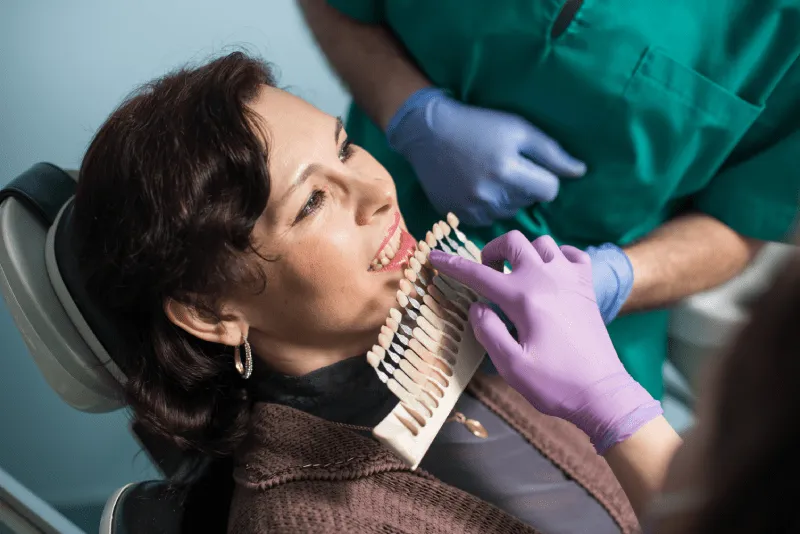
Naturalness and Customization: The dentist does not rely solely on a color scale (e.g., Vita Shade Guide) for color selection. They also determine the color transitions, translucency levels, and characterizations within the veneers. For example, the incisal edges of young teeth have a more transparent (translucent) and slightly blue-grey hue, while the tooth body has a more opaque and yellowish-white hue. Porcelain veneers are produced in the laboratory with mastery to mimic this natural gradient.
Skin Tone and Sclera Criterion: In aesthetic dentistry, it is generally recommended that the tooth color does not exceed the whiteness of the eye’s sclera (white part) to ensure a natural appearance. Excessive artificial whiteness can create the perception that the teeth are “false.” In patients with darker skin tones, white teeth look brighter and more contrasting, while in patients with lighter skin tones, softer white shades should be preferred. This balance ensures that the patient’s smile integrates with the face.
Patient Participation: Color selection is done collaboratively with the patient thanks to the DSD and Mock-Up stages. The patient’s desired whiteness level is listened to, and the clinician provides guidance to keep this level within natural boundaries. During the try-in stage, before permanent cementation, how the porcelain veneers will look on the tooth is simulated using special cement shades (try-in paste). This provides full control over the final bonding color.
Opacity Control: If there is a discolored tooth underneath, the clinician can use a more opaque ceramic layer or cement on the back surface of the veneer to mask the color. If the underlying tooth is healthy, porcelain blocks that provide maximum transparency (more translucent) are preferred. This optical management guarantees that the aesthetic results of the porcelain veneers are personalized and unique.
This page covers one procedure in detail. For prices, what is included and how the whole trip works, see our overview of dental treatment in Turkey.
Sources and how to verify this yourself
- Howe M-S, Keys W, Richards D. Long-term (10-year) dental implant survival: a systematic review and sensitivity meta-analysis. Journal of Dentistry, 2019 — pooled 10-year implant survival 96.4% (95% CI 95.2–97.5%); conservative sensitivity estimate 93.2%. source
- Ministry of Health, Regulation on International Health Tourism and Tourist Health, Official Gazette 26 April 2025, No. 32882 — authorisation requirement for facilities and intermediaries, TÜSKA accreditation, compulsory complication insurance (deadline 31 December 2025 for insurance, 31 December 2026 for accreditation). source
- Ministry of Health, Regulation on Promotion and Information Activities in Health Services, Official Gazette 12 November 2025, No. 33075 — treatment promises and guarantees are prohibited; price and campaign announcements are permitted only within international health tourism. source