
Part of: Cosmetic surgery in Turkey — prices, what is included and country comparison.
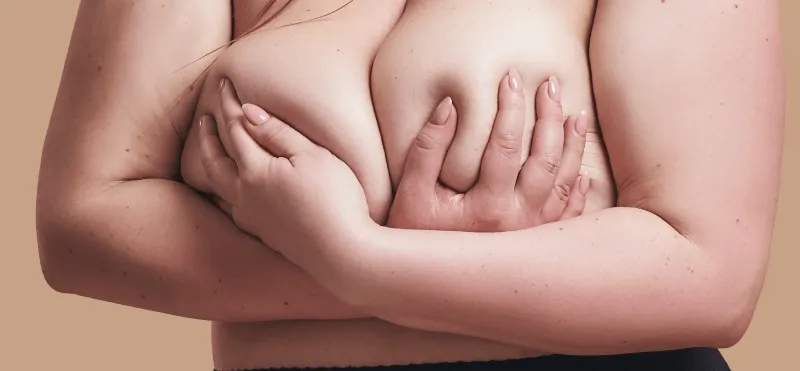
Having large and heavy breasts, while a symbol of beauty and fertility for some women, can often mean a real-life struggle filled with chronic pain, postural issues, and psychological distress. Breast reduction surgery, medically known as Reduction Mammaplasty, is a surgical solution aimed at reducing breast size and weight, while also correcting sagging to give the breast a more proportionate, lifted, and youthful shape.
Breast reduction is not just an act of size reduction; it is also a process of freeing oneself from years of chronic physical discomfort, postural deviations, and social anxieties. The continuous burden created by large breasts can cause difficult-to-reverse damage to the spine, while limitations in clothing and sports activities significantly diminish the patients’ quality of life.
This operation, while providing an aesthetic improvement, stands out as a functional treatment by restoring patients’ freedom of movement and comfort in their daily lives. Thanks to advancements in surgical techniques, this procedure can be performed today with safer and more predictable results.
This comprehensive guide will examine in detail who is suitable for breast reduction surgery, the specifics of the surgical techniques applied, the pre- and post-operative process, potential risks, and the profound long-term effects of this procedure on the patient’s health and psychology.
Who is an Ideal Candidate for Breast Reduction?
Breast reduction surgery is an ideal solution for women who have completed breast development and are experiencing physical and emotional discomfort due to large breasts. Since the functional benefits are aimed for as much as the aesthetic results, medical necessities are prioritized in candidate selection.
The fundamental criteria an ideal candidate should meet are as follows:
- Physical Symptoms: The most common complaints are chronic neck, shoulder, and back pain. These pains usually increase later in the day and resist simple painkillers. Deep grooves (sulcus) left by bra straps on the shoulders are a direct indicator of breast weight and can lead to nerve compression (brachial plexus neuropathy) in that area, causing numbness and tingling in the arms. Furthermore, chronic skin infections and chafing (intertrigo) constantly occurring in the warm and moist folds under the breasts are also medical indications that severely affect hygiene and living comfort, necessitating surgery. Patients experiencing such constant discomfort and not benefiting from conservative treatments are ideal candidates.
- Completed Breast Development: The candidate’s breast development must be complete. Generally, individuals aged 18 and older are considered suitable for this surgery.
- Stable Weight: The patient must not have experienced significant weight fluctuations within the last year and should be near their ideal weight or able to maintain their weight after the surgery. Significant weight loss or gain can alter the surgical results.
- Realistic Expectations: The candidate needs to understand that the surgery will not make the breast perfect and flawless, but rather smaller, lighter, and more proportionate. They must be informed about and accept that surgical scars will be permanent.
- General Health Status: Individuals without severe chronic diseases (such as uncontrolled diabetes, heart diseases) and no condition preventing them from receiving anesthesia are suitable candidates.
- Smoking Use: Since smoking seriously negatively affects wound healing, it is mandatory to completely quit smoking at least 4-6 weeks before the surgery.
Breast reduction surgery, in addition to providing aesthetic improvement, can also be viewed as a treatment method that a doctor may prescribe, so the likelihood of insurance companies covering a portion of the surgical cost is generally higher compared to other aesthetic operations (varies by country and insurance policy).
Aesthetic and Functional Goals of Breast Reduction Surgery
Breast reduction is a versatile procedure. A successful operation aims to achieve the following aesthetic and functional goals:
- Weight Reduction and Pain Relief: The most important functional goal is to alleviate chronic pain by reducing the load on the neck and shoulders. This corrects the patients’ posture and reduces the indentations (grooves) created by bra straps.
- Posture Improvement: Heavy breasts often cause the shoulders to slump forward (hunchback posture), and this condition contributes to an increase in thoracic kyphosis (abnormal rounding of the upper back) over time. With the reduction in breast weight, the body’s center of gravity is readjusted, and the shoulders naturally pull back. This not only provides a more upright and elegant posture aesthetically but also reduces chronic muscle tension, protecting long-term spinal health and helping to reduce the risk of future degenerative disc diseases. This improvement makes patients feel more energetic and fit.
- Breast Lift (Mastopexy): During the surgery, not only tissue is removed, but the mammary gland is also reshaped and lifted. This addresses breast ptosis (sagging) and moves the nipple (areola complex) to a younger, higher position.
- Asymmetry Correction: Size differences that existed between the breasts from birth or developmental differences can be largely corrected by removing different amounts of tissue from both breasts during the surgery.
- Proportion and Harmony: Making the breasts more proportionate to the body’s general contours (hips, waist, shoulders) and allowing the patient freedom in clothing choices.
- Hygiene and Comfort: Eliminating chronic moisture and friction problems (intertrigo) under the breast, thereby increasing hygiene and physical comfort.
Comprehensive Pre-operative Assessment and Preparation
Breast reduction requires a detailed preparation process. Consultation forms the basis not only for surgical planning but also for the patient’s psychological preparation.
Consultation Phase
The surgeon listens to the patient’s complaints, medical history, and expectations. During the physical examination:
- Breast Measurement: The current size of the breast, the degree of sagging, skin elasticity, and the diameter of the nipple (areola) are measured. These measurements allow the surgeon to calculate the amount of tissue to be removed and the new nipple position.
- Amount of Tissue to be Removed: The surgeon determines the final size desired by the patient and the estimated weight of the tissue to be removed. To ensure functional benefit, the goal is generally to remove more than 500 grams of tissue from each breast. This is a critical threshold for significantly reducing tension and weight in the breast.
- Incision Planning: The most suitable surgical technique (incision type) is determined based on the patient’s breast structure and the degree of reduction.
Medical Tests and Imaging
- Mammography/Ultrasound: A baseline mammogram (or ultrasound) is requested from all patients aged 40 and over, as well as younger patients with a risk of breast cancer, before the surgery. This is important for detecting any pre-existing abnormalities in the breast tissue before surgery and serves as a reference for future follow-ups. Additionally, determining the density of the breast tissue helps in surgical planning.
- Blood Tests and ECG: Standard tests are performed to evaluate suitability for general anesthesia.
Lifestyle Changes and Medication Adjustment
- Smoking Prohibition: Nicotine restricts blood flow, seriously jeopardizing wound healing and increasing the risk of complications (infection, wound separation, tissue necrosis). It is mandatory for patients to completely quit smoking at least 4-6 weeks before the surgery. This period is vital for tissue nutrition to return to normal.
- Blood Thinners: Blood-thinning medications such as aspirin and ibuprofen, as well as some herbal supplements (Ginseng, St. John’s Wort, etc.), must be stopped 10-14 days before the surgery, as directed by the surgeon. This is an important measure to minimize the risk of bleeding and hematoma during and after the surgery.
Surgical Techniques: Which Incision is Right for You?
Various surgical techniques are used in breast reduction surgery. The choice is made based on the initial size of the breast, the degree of sagging, and the amount of tissue that needs to be removed. Each technique leaves a different scar pattern.
Vertical (Lollipop) Technique (Lejour Technique)
- Incision Pattern: A circular incision around the areola and a single vertical incision extending from this incision down to the inframammary fold (resembling a lollipop).
- Advantages: Leaves a shorter scar and involves less horizontal scarring compared to the Inverted T technique. It is ideal for the aesthetic lifting and reshaping of the breast. It is particularly successful in narrowing the width of the lower part of the breast.
- Suitability: Used in patients with moderate breast size and sagging.
Inverted T (Anchor / Wise Pattern) Technique
- Incision Pattern: An incision around the areola, a vertical incision descending from the areola to the inframammary fold, and a horizontal incision along the inframammary fold. Its shape resembles an anchor or an inverted T.
- Advantages: Offers the greatest amount of tissue removal and lifting capability, even in the largest volume breasts. It is the gold standard for excessively large and sagging breasts. This technique allows for maximum skin and tissue excision from the lower pole of the breast, providing the most effective reduction and lifting results. Although the scars are permanent, the horizontal line in the inframammary fold tends to be concealed in the body’s natural shadow over time, which somewhat facilitates scar management.
- Suitability: Yields the most effective results in patients with very large breasts and advanced sagging, but leaves the longest scars.
Liposuction-Assisted Reduction
- Incision Pattern: Small incisions are used only around the nipple or in the inframammary fold.
- Advantages: Leaves no scars in small reductions where fat tissue is dominant. Minimizes the tension and potential scarring caused by traditional incisions. The recovery time is shorter compared to other techniques.
- Suitability: Generally preferred if a large part of the breast volume consists of fat tissue and there is very little sagging. However, its ability to reduce a large amount of glandular tissue is limited, and it is not sufficient on its own to correct significant sagging.
Day of Surgery and Surgical Steps
Breast reduction surgery is performed in a hospital or a fully equipped surgical center, usually under General Anesthesia, and its duration can vary between 2 and 4 hours.
- Pre-operative Marking: Before the surgery begins, while the patient is standing, the surgeon details the new nipple position, incision lines, and the amount of tissue to be removed. This marking is critical for surgical symmetry and is done considering the breast’s dynamic position (posture under the influence of gravity).
- Anesthesia: General anesthesia is administered for the patient’s comfort and safety.
- Incision: The surgeon applies the pre-determined incision pattern.
- Tissue Removal: Excess fat, glandular (secretory gland) tissue, and skin are carefully removed within the planned lines. The amount of tissue removed is usually measured by weight and sent for pathology.
- Nipple Repositioning: The nipple (Nipple-Areola Complex – NAC) is moved to the breast’s new, higher position. This is usually done on a tissue stalk (pedicle) nourished by the breast tissue, which helps preserve sensation and breastfeeding potential.
- Breast Shaping: The remaining breast tissue is reshaped, lifted, and supported with sutures to form a new, smaller breast cone.
- Closure: The incision lines are meticulously closed using absorbable aesthetic sutures. Drains may be temporarily placed to prevent excessive fluid accumulation.
Nipple Repositioning (Nipple-Areola Complex)
The most delicate and complex part of breast reduction surgery is the safe transfer of the nipple to the breast’s new position. Two main methods are used:
Pedicle Techniques
This is the most frequently used and preferred method. The nipple and surrounding areola are left on a part of the underlying breast tissue (pedicle or stalk). This pedicle maintains blood and nerve supply to the nipple. To ensure the vascularization and sensory nerve transmission of the nipple, the surgeon selects the type of pedicle used based on the size and sagging of the breast.
For example, the Superior Pedicle technique offers high reliability in terms of preserving vascularization and sensation, while the Central Pedicle is effective in maintaining breast shape even in larger reductions. The correct selection of these techniques plays a key role in minimizing the risk of permanent sensation loss or nutritional problems in the nipple after surgery.
- Advantages: The chance of largely preserving nipple sensation and maintaining future breastfeeding ability is high.
- Application: Generally applied safely in situations where the nipple needs to be moved up to 20 cm (moderate to large reductions). The most commonly used are the superior or central pedicle techniques.
Free Nipple Graft (FNG)
- Application: Used in cases where the breast is excessively large and the nipple needs to be moved more than 20 cm (massive reductions), or when a pedicle to nourish the nipple cannot be safely created.
- Procedure: The nipple and areola are completely separated from the main breast tissue, the breast is reduced and reshaped, and then the nipple is transplanted as a skin graft (patch) to its new position.
- Disadvantages: The risk of permanent loss of nipple sensation and breastfeeding ability is almost certain. However, it may be necessary in massive reductions to reduce the risk of life-threatening complications.
Post-operative Recovery Process and Care
The post-operative recovery process after breast reduction surgery is generally longer and requires more attention than breast augmentation surgery.
Hospital Stay and First Week
- Pain and Discomfort: Moderate pain and tightness in the chest are normal during the first 2-3 days. This pain originates not only from the incision sites but also from the reshaping of the breast tissue and the tension created by the sutures. Regular painkillers and muscle relaxants prescribed by your surgeon are critical for managing the intense discomfort in the initial days. Patients are advised to spend this period resting as much as possible and avoiding sudden movements. Lifting the arms above shoulder level and heavy lifting (more than 5 kg) are strictly prohibited during the first week, as these actions apply excessive tension to the suture lines and increase the risk of wound separation.
- Drains: If placed, the drains are usually removed by the surgeon within 1 to 5 days when the amount of fluid decreases.
- Surgical Bra: A special surgical bra is immediately worn to support healing, reduce swelling, and maintain the breast’s new shape. This bra must be worn continuously for 4 to 6 weeks.
- Activity Restriction: Heavy lifting and raising the arms above shoulder level should be strictly avoided during the first week.
First Month and Return to Routine Life
- Swelling and Bruising: Most swelling and bruising subside within the first two weeks, but it may take 3 to 6 months for the breasts to fully settle and soften. During this time, the shape and size of the breast begin to take their final form.
- Return to Work: Patients in desk jobs can usually return to work within 1-2 weeks. It is recommended to wait 4-6 weeks for physically demanding jobs.
- Exercise: Light exercises such as walking can be started, but strenuous exercises involving running, weight lifting, and chest muscles (push-ups, dumbbell press) should be postponed for at least 6-8 weeks. Excessive strain on the chest muscles can stress the internal sutures.
- Showering: Incision sites must be kept dry and clean. Showering is usually permitted after the drains are removed, with the surgeon’s permission.
Potential Risks and Complications
Although breast reduction has a high satisfaction rate, patients must be fully informed about potential risks.
Common Complications
- Wound Healing Problems and Infection: Due to the length of the incision lines, delayed wound healing or small separations (dehiscence) may be seen more frequently. The risk of infection is always present. Adhering to the antibiotic and wound care protocol recommended by the surgeon minimizes this risk.
- Hematoma and Seroma: Collection of blood (hematoma) or fluid (seroma). Small collections resolve spontaneously, while large collections may require drainage. These complications usually occur within the first 24-48 hours after surgery.
- Scar Prominence: Scars resulting from the Inverted T technique are permanent. The color and thickness of the scars vary from person to person (risk of keloid or hypertrophic scar formation). This risk is increased, especially in patients with dark skin and a history of wound healing issues.
- Asymmetry: Complete correction of pre-existing asymmetry is difficult, and slight size or shape differences (asymmetry) may remain between the breasts after surgery. Although surgical excellence is the goal, minor differences are considered acceptable due to the natural body structure.
Nipple Sensation and Breastfeeding
- Sensation Changes: Temporary or permanent loss of sensation, numbness, or hypersensitivity may develop in or around the nipple. Pedicle techniques offer the best chance of preserving sensation but do not guarantee it. Since nerve healing is a long process, the full return of sensation can take months.
- Breastfeeding Potential: Although pedicle techniques attempt to preserve most of the milk ducts and nipple nerves, there is a risk of reduced breastfeeding potential due to the amount of glandular tissue removed and possible damage to the ducts. Breastfeeding ability is lost with a free nipple graft.
Tissue Loss (Necrosis)
Tissue Loss (Necrosis): Especially in patients who smoke or undergo massive reduction, the risk of partial or complete loss of the nipple (necrosis) due to insufficient blood flow to the tissue stalk (pedicle) is very low but is one of the most serious complications. Nicotine dramatically reduces the amount of oxygen supplied to the nipple tissue by constricting capillaries. Therefore, in patients who smoke, surgeons either perform a more limited reduction to reduce the risk of necrosis or strictly require the patient to quit smoking before the surgery. This vital precaution is a non-negotiable rule for safe and healthy recovery.
Scar Management and Long-Term Appearance
The scars from breast reduction surgery are a trade-off that must be accepted in exchange for the achieved functional benefits. However, the visibility of the scars can be significantly reduced with proper management.
Scar Maturation Process
Scars are red and prominent immediately after surgery. They darken and thicken within the first 3-6 months (hypertrophic phase). They then enter a maturation process lasting 12 to 18 months, during which the scars slowly fade, lighten in color, and flatten. The complete maturation of scars can take up to 2 years, depending on the individual’s skin type and genetic predisposition.
Scar Care Strategies
- Silicone Products: After healing begins (after sutures are removed or dissolved), silicone gel or silicone sheets should be used as advised by the surgeon. Silicone maintains the moisture of the scars and regulates collagen production, helping the scars to become flatter and paler. Regular use of these products significantly improves scar quality.
- Massage: With the surgeon’s permission, circular massage applied to the scar area helps to soften internal tissue hardness and tension. These massages increase the flexibility of the scar tissue.
- Sun Protection: Sun exposure to scars can cause them to permanently darken (hyperpigmentation). Therefore, scars must always be protected with high-factor sunscreen.
Psychological and Quality of Life Impact of Breast Reduction
The transformative power of breast reduction surgery extends beyond physical healing. It fundamentally changes how patients perceive themselves and their daily lives.
Relief from Chronic Discomfort
- Exercise Freedom: The freedom to return to physical activities (running, jumping, sports) restricted by pain and discomfort is a major step for general health and weight management. Regaining the ability to exercise allows patients to lead a healthier life.
- Clothing Selection: Patients can now wear a wider variety of clothes that fit their bodies better, including the styles they desire, instead of clothes they tried to hide with a bra or were forced to choose in larger sizes. This provides a significant boost to self-confidence, especially in social environments.
- Posture and Stance: A more upright posture is achieved as pain decreases, which contributes to the patient looking more self-assured.
Self-Confidence and Body Perception
Self-Confidence and Body Perception: The shyness, social phobia, or feeling of drawing unwanted attention caused by large breasts decreases after the surgery. Patients often state that their clothes fit their bodies better and that they feel more comfortable and confident as a result. The breasts becoming more proportionate to the body positively reinforces the patients’ body image, increases their self-confidence, and encourages them to participate in a more active social life. Breast reduction is not only freedom from a physical limitation but also an act of emotional liberation from uncomfortable past perceptions, enabling the individual to feel more “normal” and “comfortable.”
Pregnancy, Breastfeeding, and the Permanence of Results
Women undergoing breast reduction surgery must be fully informed about their future pregnancy and breastfeeding potential.
Pregnancy and Breastfeeding Potential
As mentioned earlier, the surgical technique used affects breastfeeding potential. Excluding the free nipple graft (FNG), while other pedicle techniques attempt to preserve breastfeeding potential, success is not guaranteed.
- Recommendation: For women planning to have children, surgeons generally recommend postponing the surgery until after the periods of pregnancy and breastfeeding. This increases the chances of preserving breastfeeding potential and prevents new growth and sagging caused by pregnancy and breastfeeding from compromising the surgical results. Postponing the surgery also helps preserve the final aesthetic outcome.
Permanence of Results
The results of breast reduction surgery are generally permanent because the removed breast tissue does not return. However, like all breast tissue, the operated breasts may experience some natural sagging or shape change over time due to gravity, aging, and hormonal changes.
- Weight Management: The most crucial factor is the patient’s weight. Significant weight gain after surgery can cause the remaining fat and glandular tissue in the breasts to enlarge, jeopardizing the reduction results. Maintaining a stable weight ensures the longevity of the results.
- Aging: The natural aging process leads to the loss of collagen and elastin in the skin, so some laxity in the breasts is inevitable.
Breast reduction surgery is a safe and highly effective solution for women seeking relief from the burden of large breasts. Beyond physical relief, this procedure offers patients a new comfort in life and self-confidence, permanently improving their overall quality of life. This journey is a personal transformation that requires careful preparation, the selection of the correct surgical technique, and cooperation with the surgeon.
This page covers one procedure in detail. For prices, what is included and how the whole trip works, see our overview of cosmetic surgery in Turkey.
Sources and how to verify this yourself
- Ministry of Health, Regulation on International Health Tourism and Tourist Health, Official Gazette 26 April 2025, No. 32882 — authorisation requirement for facilities and intermediaries, TÜSKA accreditation, compulsory complication insurance (deadline 31 December 2025 for insurance, 31 December 2026 for accreditation). source
- Ministry of Health, Regulation on Promotion and Information Activities in Health Services, Official Gazette 12 November 2025, No. 33075 — treatment promises and guarantees are prohibited; price and campaign announcements are permitted only within international health tourism. source