
Part of: Cosmetic surgery in Turkey — prices, what is included and country comparison.
Breasts are one of the most prominent and aesthetically important features of the female body. For many women who are dissatisfied with the size, shape, or fullness of their breasts, Breast Augmentation (or Augmentation Mammaplasty) offers a transformative solution that rebuilds self-confidence and body image. This surgical procedure typically uses breast implants to increase the volume of the breasts, improve their shape, and create a silhouette that is more proportionate to the body contours.
Women seek this operation for reasons such as having naturally small breasts, experiencing volume loss and sagging after pregnancy and breastfeeding, breast depletion due to significant weight loss, or noticeable asymmetry between the two breasts. Breast augmentation not only provides aesthetic improvement but can also significantly enhance the quality of life by profoundly impacting the person’s clothing style, posture, and psychological self-perception.
This comprehensive guide examines all dimensions of breast augmentation surgery in fine detail, from surgical techniques to implant types, pre-operative preparation to long-term results, and potential risks. Our goal is to provide individuals considering this major surgical intervention with all the necessary information to make an informed and healthy decision.
Who is Suitable for the Surgery and Its Objectives?
Ideal candidates for breast augmentation surgery are individuals who are ready for the process, not only physically but also emotionally and mentally. The fundamental conditions for being a suitable candidate are vital for ensuring the procedure’s safety and the satisfaction derived from the results.
The following criteria are generally sought for a candidate to be considered suitable for breast augmentation surgery:
- Physical Health: The candidate must be in good general health and free from any serious chronic illness that would put the surgery or anesthesia at risk.
- Completed Breast Development: Breast development must be fully complete, which is usually at or over the age of 18.
- Realistic Expectations: It is important for the candidate to have realistic expectations about the outcomes of the operation, understanding that the surgeon will deliver an “improved” rather than a “perfect” result.
- Emotional Maturity: The patient must request the surgery out of their own free will to address an aesthetic concern, not under pressure from others (spouse, partner, friend).
- Stable Weight: The patient is expected to maintain a stable weight both before and after the surgery. Significant weight fluctuations can negatively affect the surgical results.
The main objectives of the surgery are shaped by the patient’s personal needs but generally include:
- Volume Enhancement: Achieving the desired size and fullness of the breasts.
- Shape Improvement: Giving the breasts a rounder, more projected, and youthful appearance.
- Asymmetry Correction: Addressing differences in size or shape between the two breasts resulting from congenital or developmental variations.
- Improved Clothing Fit: Ensuring that the patient’s clothes fit better and create a more balanced silhouette.
The success of this operation depends on the patient’s motivation and the open communication established with the surgeon. The surgeon listens to the patient’s expectations, takes physical measurements, and honestly outlines how much of these expectations can be met surgically.
Implant Types and Materials
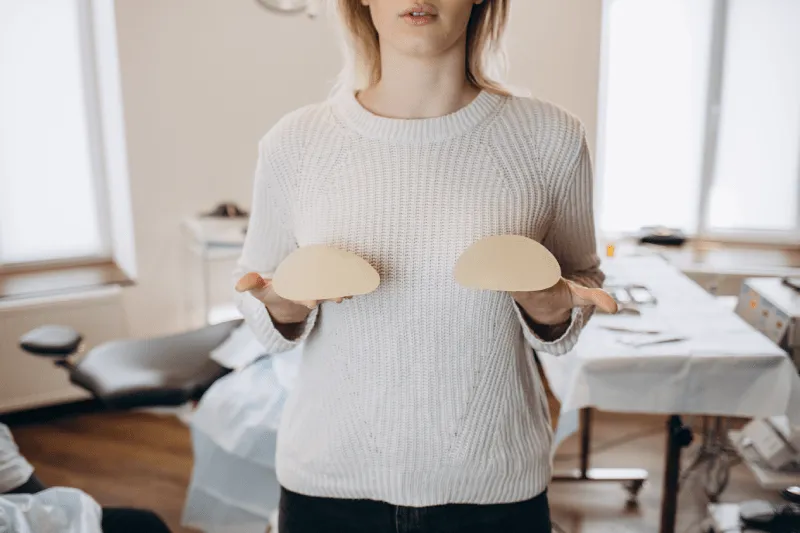
One of the most critical decisions in breast augmentation surgery is selecting the type and material of the prosthesis (implant) to be used. The breast implants used today are high-tech products and are continuously being developed in terms of both safety and natural appearance. Implants are classified according to their filler material and the texture of their outer shell.
Implants by Filler Material
- Silicone Gel-Filled Implants:
- The most commonly used type of implant.
- They are filled with cohesive (dense and sticky) silicone gel, which provides a consistency and feel similar to body tissue.
- Even in case of rupture, the gel, thanks to its dense consistency, does not spread and remains within the capsule. This feature makes it considered safer by patients.
- Silicone implants offer the closest sensation to natural breast tissue.
- Saline (Salt Water) Filled Implants:
- They are filled with sterile physiological saline (salt water).
- These implants are typically placed empty and filled with saline to the desired volume by the surgeon before the incision is closed. This can allow for a smaller incision.
- In case of rupture, the saline is absorbed by the body and harmlessly eliminated, a situation that is immediately noticeable (loss of volume in the breast).
- However, saline implants may feel less natural than silicone implants and sometimes carry a higher risk of rippling.
Implants by Surface Texture
- Smooth Surface Implants:
- Their outer surface is smooth and soft.
- They have a higher ability to move within the breast tissue, providing a more natural motion.
- However, the risk of rotation or capsular contracture (hardening around the implant) may differ from textured implants, according to some studies.
- Textured Surface Implants:
- Their outer surface is rough. This rough structure aims to prevent the implant from slipping or rotating by allowing it to adhere to the surrounding tissue.
- They are preferred especially in anatomical (teardrop) implants to reduce the risk of rotation.
- However, some types of textured implants have been rarely associated with the risk of BIA-ALCL, a type of lymphoma, which is why many surgeons today prefer smooth or micro-textured implants.
Implants by Shape
- Round Implants:
- The entire volume is distributed evenly across the center of the implant.
- Ideal for patients who want more fullness in the upper part of the breast and a prominent cleavage.
- If round implants rotate, the appearance does not change noticeably.
- Anatomical (Teardrop) Implants:
- They mimic the natural teardrop shape of the breast by providing more volume in the lower part and a softer slope in the upper part.
- They are mostly used in patients who want to maintain the breast’s natural contour and achieve a more gradual projection.
- They are typically manufactured with a textured surface due to the risk of rotation, but their use has decreased due to current safety concerns.
The surgeon determines the most suitable implant type and size, considering the patient’s existing breast tissue, skin elasticity, body structure, and expectations. This decision is the most critical step for the aesthetic success of the surgery.
Prosthesis Placement Techniques and Incision Sites
The region where the implant will be placed and the location of the surgical incision are important factors affecting both the technical aspect of the surgery and the post-operative recovery process and the final scar appearance. The surgeon makes these decisions based on the patient’s anatomy, the thickness of the breast tissue, and the implant type.
Implant Placement Planes (Pocket Placement)
The breast prosthesis can be placed in different planes depending on where it will be positioned relative to the pectoral (chest) muscle located between the breast tissue and the rib cage:
- Subglandular/Submammary (Under the Glandular Tissue):
- The implant is placed directly under the mammary gland tissue, on top of the pectoral muscle.
- The surgery time is usually shorter, and post-recovery pain may be less.
- However, in patients with thin breast tissue, the edges of the implant may be more visible (risk of visibility and rippling).
- Submuscular (Under the Muscle):
- The implant is placed under the pectoral muscle.
- Since a portion of the muscle covers the implant, its edges are less noticeable, especially in the upper pole of the breast, providing a more natural transition.
- The risk of capsular contracture is theoretically considered lower.
- However, the recovery process can be more painful, and there is a risk of the implant shifting (dynamic deformity) when the muscle contracts (e.g., during exercise).
- Dual-Plane:
- A modern technique frequently preferred today.
- The upper part of the implant is placed under the pectoral muscle, while the lower part is placed under the mammary gland tissue.
- This aims for the most natural results by combining the muscle’s protection (concealing the implant in the upper pole) and the freedom of the mammary gland (more natural droop in the lower pole).
Incision Sites
To ensure the scars are as inconspicuous as possible, surgeons usually hide the incision site in natural skin folds or on the breast boundaries:
- Inframammary Fold (Under the Breast Crease):
- The incision is made in the natural fold line under the breast.
- It is the most common and preferred incision site because it offers the surgeon the widest field of view and the easiest placement during surgery.
- The scar is hidden in the shadow beneath the breast when standing and usually becomes one of the least noticeable scars.
- Periareolar (Around the Areola):
- The incision is made along the border between the areola (the colored part around the nipple) and the normal breast skin.
- Since it is hidden in the color transition line, the scar is generally very subtle.
- However, because this incision passes through the milk ducts or mammary gland, the risk of nipple sensation loss or potential impairment of breastfeeding ability is slightly higher compared to other incisions.
- Transaxillary (Armpit):
- The incision is made in the armpit crease.
- It leaves no scar on the breast, which is a major aesthetic advantage.
- However, endoscopic surgical techniques may be required to advance the implant into the breast pocket, which can increase surgical complexity. Furthermore, since implant placement may be performed with less precision, positioning the implant can sometimes be more challenging.
Pre-operative Preparation and Consultation Process
The success of breast augmentation surgery depends on a comprehensive preparation and consultation process that begins long before the surgical procedure. Consultation plays a central role in understanding the patient’s wishes, selecting the correct implant, and minimizing risks.
Comprehensive Consultation
During the initial consultation, the surgeon thoroughly inquires about the patient’s medical history, medication use (especially blood thinners), and family history of breast cancer. The patient’s expectations, desired breast size, and shape are clarified.
- Sizing: The surgeon measures the patient’s chest width, breast base diameter, existing volume of breast tissue, and skin elasticity. Sizers (trial implants) or 3D simulations may be used for a natural-looking result proportionate to the patient’s body structure.
- Planning: The patient is guided in their decision regarding the incision site, implant plane, and implant type, and the advantages and disadvantages of all options are explained.
Medical Preparations
Before the surgery, various tests are performed to confirm the patient’s health:
- Blood Tests and ECG: To assess suitability for anesthesia.
- Mammography or Ultrasound: Requested from all patients over 40 or younger patients with a risk of breast cancer. This helps identify any existing breast tissue abnormalities before the surgery.
Lifestyle Adjustments
- Smoking and Alcohol: Smoking severely impairs wound healing by constricting blood vessels and increases the risk of complications (infection, wound separation, capsular contracture). Patients are required to quit smoking completely at least 4-6 weeks before the surgery. Alcohol consumption should also be limited.
- Medications: All medications that have a blood-thinning effect (aspirin, ibuprofen, certain herbal supplements) must be stopped 10-14 days before the surgery, as directed by the surgeon.
This careful preparation process is a vital necessity to maximize surgical success and minimize potential risks.
Day of Surgery and Anesthesia
Breast augmentation surgery is performed in a hospital setting, in a sterile environment, and usually lasts 1 to 2 hours. Anesthesia management is crucial to ensure the procedure’s safety and maximize the patient’s comfort.
Type of Anesthesia
Breast augmentation surgeries are typically performed under General Anesthesia. General anesthesia ensures the patient is completely asleep and feels no pain throughout the surgery. An experienced anesthesiologist is always part of the surgical team. Local anesthesia and sedation may be preferred for shorter or minimal surgical procedures, but general anesthesia is standard for a more comprehensive procedure like breast augmentation.
Surgical Steps
- Incision: The surgeon makes the incision at the pre-determined site (inframammary, periareolar, or transaxillary).
- Pocket Creation: The breast pocket where the implant will be placed is carefully prepared. This pocket is surgically shaped according to the implant’s size and plane (submuscular, subglandular, dual-plane). The pocket must align with the breast’s natural position and symmetry.
- Implant Insertion: The selected prosthesis is placed into the breast pocket using a special technique (often using a dedicated insertion tube—Keller Funnel—to protect the implant from microorganisms and facilitate placement). The surgeon positions the implant correctly and checks its final shape.
- Closure: The incision line is meticulously closed using absorbable aesthetic sutures and sometimes skin adhesives. Drains (thin tubes to evacuate excess blood and fluid) may be temporarily placed rarely, but in cases of large implants or patients with a higher risk of bleeding.
- Dressing: The breast area is covered with sterile dressings, and a surgical bra or bandage is applied to support the implants’ position and reduce swelling.
After the surgery, patients are taken to the recovery room to wake up from the effects of anesthesia and for initial observation. Most patients are usually discharged the same day or after spending one night in the hospital.
Post-operative Recovery and Care
The post-operative period is just as important as the surgery itself for the quality and longevity of the achieved result. It is critical for the patient to strictly adhere to the surgeon’s instructions.
First Days (Week After Hospital Discharge)
- Pain Management: Moderate pain and tightness, especially with submuscular placement, are normal during the first few days. Prescribed painkillers are used to manage this pain.
- Swelling and Bruising: Swelling (edema) and bruising in and around the breasts are common. This condition begins to subside rapidly after the first week.
- Activity Restriction: Absolute rest is recommended for the first few days. Lifting the arms above shoulder level and heavy lifting must be strictly avoided. This is vital for the implants to remain in the correct position and to prevent tension on the incision lines.
- Surgical Bra: The surgical bra must be worn continuously for the period specified by the surgeon (usually 4-6 weeks) to keep the implants in the correct position, reduce edema, and support tissue healing.
First Month and Full Recovery
- Return to Work: Patients in sedentary jobs can usually return to work within 3-7 days.
- Exercise: Light walking can be started, but heavy cardio, weight lifting, and exercises that strain the chest muscles (push-ups, dumbbell press) must be postponed for at least 4 to 6 weeks. Sports with a direct risk of impact to the chest area should be completely avoided.
- Scar Care: After the incision lines begin to heal (usually after 2-3 weeks), silicone-based creams or tapes may be used, with the surgeon’s recommendation, to make the scars less noticeable. The final maturation of the scars will take 1-2 years.
The final shape and softness of the implants will become apparent after the tissues are fully healed and the edema has resolved, which is within 3 to 6 months.
Potential Risks and Complications
Although breast augmentation surgery is generally considered a safe procedure, like any surgical intervention, it carries potential risks and complications. It is important for patients to fully understand these risks and discuss them openly with their surgeon.
Implant-Specific Complications
- Capsular Contracture (Capsular Hardening):
- The body’s reaction to the implant as a foreign object, forming an excessively thick and rigid fibrous tissue (capsule) around it.
- It can cause hardness, pain, shape distortion, and palpable prominence in the breast.
- While mild cases can be managed with massage or medication, advanced cases require surgical intervention (capsulectomy – removal of the capsule).
- Rupture (Implant Tearing/Bursting):
- The loss of integrity of the implant’s outer shell.
- In Silicone Implants: Due to the highly cohesive gel, the leakage may remain contained within the capsule (silent rupture). It is usually detected by routine imaging (MRI).
- In Saline Implants: Since the saline is absorbed by the body, the breast suddenly loses volume, which is easily noticed.
- Rippling:
- The edges or folds of the implant become visible through the skin surface, especially in patients who are very thin, have little breast tissue, and thin subcutaneous fat.
- It can usually be minimized with submuscular placement and more voluminous breast tissue.
Surgery-Specific Complications
- Infection: There is a risk of infection developing at the incision site or around the implant after the surgery. This may require antibiotic treatment or, rarely, temporary removal of the implant.
- Hematoma and Seroma: Collection of blood (hematoma) or fluid (seroma). Small collections resolve on their own, while large collections may require surgical drainage.
- Sensory Changes: Temporary or permanent numbness, hypersensitivity, or loss of sensation in the nipple and breast skin may occur. This condition is usually temporary, but permanent loss is rare.
- Asymmetry and Malposition: Revision surgery may be required in cases of undesirable shape or size differences between the two breasts (asymmetry) or if the implants are not in the correct position (malposition).
Longevity and Replacement of Breast Implants
Breast implants are not “lifetime” guaranteed devices. Although the durability of implants increases as technology advances, every implant has a lifespan and carries the risk of wear, tear, and rupture over time.
Implant Lifespan
Implant manufacturers generally offer a 10-year warranty, but this does not mean the implant must be replaced after 10 years. Today’s high-quality silicone implants can remain problem-free for 15 to 25 years or longer. However, the reality that every woman who undergoes breast augmentation surgery may need more than one revision surgery throughout her life must be accepted.
Indications for Replacement or Removal
Replacement (revision) or removal (explantation) of an implant may be necessary due to the following reasons:
- Rupture: Especially when silent rupture is detected in silicone implants.
- Capsular Contracture: Severe and painful hardening.
- Aesthetic Reasons: Changes in the patient’s desired size or shape (e.g., wanting a larger/smaller implant).
- Malposition or Rippling: Slippage of the implant or pronounced rippling on the skin surface.
- BIA-ALCL Concerns: The decision to remove/replace textured implants due to the risk of BIA-ALCL, a rare implant-associated lymphoma.
Psychological and Quality of Life Impacts
The most valuable outcomes of breast augmentation surgery often go beyond the visible physical changes, focusing on the positive effects on the individual’s psychology and quality of life.
Self-Confidence and Body Image
- Increased Self-Confidence: Women who are dissatisfied with the size or shape of their breasts may often experience a lack of self-confidence in social settings, particularly at the beach, pool, or during intimate moments. Successful breast augmentation surgery addresses this lack of self-confidence along with the improvement of body contours.
- Clothing Selection: Patients can comfortably choose clothes that fit them better and in a wider variety. This allows them to be more relaxed and active in social life.
- Moving Away from Body Dysmorphia: For individuals who are overly focused on the appearance of their breasts and have developed an obsession (mild dysmorphic tendencies), the aesthetic correction can help reduce these obsessive thoughts.
However, it is important to have realistic expectations that the surgery will not solve all life problems or address underlying self-confidence issues. The surgery only offers a solution to a physical concern.
Relationship with Pregnancy, Breastfeeding, and Mammography
Breast augmentation surgery is generally considered a procedure that does not affect future pregnancy, breastfeeding, and routine breast health follow-up, but there are some nuances and precautions.
Pregnancy and Breastfeeding
- Effect on Pregnancy: Implants have no known adverse effect on pregnancy or the fetus.
- Effect on Breastfeeding: The implant placement plane and incision site have the potential to affect breastfeeding ability.
- Inframammary Incision and Submuscular Placement: This combination involves the least intervention to the mammary gland and milk ducts and is considered the safest approach for preserving breastfeeding ability.
- Periareolar Incision: This incision carries the risk of cutting the milk ducts, making it more likely to reduce breastfeeding ability than other incisions.
- Overall, the vast majority of women who undergo breast augmentation surgery can breastfeed successfully without any difficulty.
Breast Health Follow-up and Mammography
- Mammography: Breast implants can make mammography difficult by shadowing a portion of the breast tissue. However, technicians use special techniques (Eklund Maneuver) to image breasts with implants. This technique pushes the implant back, allowing more breast tissue to be visualized.
- Informing the Radiologist: It is mandatory for patients with implants to state that they have implants before mammography.
- MRI Screening: For the follow-up of silicone implant rupture, the FDA (U.S. Food and Drug Administration) previously recommended MRI screening 5-6 years after the initial surgery and every 2 years thereafter; however, in current guidelines, this requirement is left to the patient’s and surgeon’s discretion.
New Trends and Combined Approaches in Breast Augmentation
Innovations in aesthetic medicine and surgery have added new and advanced options to breast augmentation procedures.
Breast Augmentation with Fat Transfer (Lipofilling)
In this technique, fat is harvested by liposuction from other areas of the patient’s own body (usually the abdomen, waist, or thighs), processed, and injected into the breasts.
- Advantages: No foreign body (implant) is used, provides a natural look and feel, and offers contouring to both the breast and the area where the fat was harvested.
- Limitations: Provides only moderate volume increase (usually about one cup size). A portion of the injected fat (usually 30-50%) may be reabsorbed over time. Very thin patients may not have sufficient fat reserves.
Hybrid (Combined) Breast Augmentation
The hybrid technique combines the implant with fat transfer. The implant provides the main volume, while the patient’s own fat is used to hide the implant edges, create a more natural transition between the breast tissue and the implant, and correct asymmetries.
- Purpose: To achieve a smoother and more natural result, even in very thin patients, by combining the fullness of the implant with the softness and naturalness of the fat. This is a modern approach that optimizes aesthetic results and reduces the risk of rippling.
This page covers one procedure in detail. For prices, what is included and how the whole trip works, see our overview of cosmetic surgery in Turkey.
Sources and how to verify this yourself
- Ministry of Health, Regulation on International Health Tourism and Tourist Health, Official Gazette 26 April 2025, No. 32882 — authorisation requirement for facilities and intermediaries, TÜSKA accreditation, compulsory complication insurance (deadline 31 December 2025 for insurance, 31 December 2026 for accreditation). source
- Ministry of Health, Regulation on Promotion and Information Activities in Health Services, Official Gazette 12 November 2025, No. 33075 — treatment promises and guarantees are prohibited; price and campaign announcements are permitted only within international health tourism. source