
Part of: Non-surgical treatments in Turkey — prices, what is included and country comparison.
PRP stands for “Platelet Rich Plasma,” which translates to “Trombositten Zengin Plazma” in Turkish. It is a biological treatment method based on the principle of extracting a patient’s own blood, processing it specifically to concentrate platelet (thrombocyte) cells significantly above their normal levels, and reinjecting this enriched plasma into the tissue needing rejuvenation for aesthetic or medical purposes. The “autologous” nature of the treatment (derived from the patient’s own body) is its biggest advantage, as it theoretically eliminates the risks of allergic reactions and disease transmission.
Platelets are known as the cells responsible for blood clotting. However, their true miraculous role is to initiate the wound healing process by activating at the site of injury. When activated, platelets release hundreds of different proteins and molecules. A large majority of these molecules are called “growth factors.” Growth factors send chemical signals to the damaged tissue, triggering the migration, proliferation, and differentiation of stem cells in that area; thus accelerating vital healing processes such as tissue repair, new blood vessel formation, and collagen production.
PRP treatment was initially developed in the 1970s for blood transfusion purposes, and since the 1980s, it has been used in areas such as open-heart surgery and maxillofacial surgery to accelerate wound healing. Its application in aesthetic medicine and dermatology became widespread in the early 2000s, particularly in areas like facial rejuvenation, hair loss treatment, and the elimination of acne scars. PRP aims to provide an “internal” solution against the problem of slowing cell renewal rate, which is the primary cause of aging, by utilizing the body’s most natural and powerful regeneration mechanism. For this reason, PRP application is often informally referred to as the “Youth Vaccine” among the public.
The Scientific Basis of PRP: The Power of Growth Factors
The scientific power behind PRP’s effect in the aesthetic field lies in the high concentration of bioactive molecules contained and released by platelets. While one milliliter of normal human blood contains approximately 150,000 to 450,000 platelets, an ideally prepared PRP solution aims for this concentration to be around 1,000,000 platelets/milliliter, reaching at least 4 to 5 times the normal blood level. This density initiates a powerful cellular reaction in the application area.
The most important growth factors released by platelets and their roles in aesthetic tissue are:
- PDGF (Platelet-Derived Growth Factor):
- Role: Triggers the proliferation and migration (chemotaxis) of fibroblast, smooth muscle, and endothelial cells. Directly stimulates new collagen and elastin production. Plays a key role in dermal thickening and tightening in aesthetic applications.
- TGF-β (Transforming Growth Factor Beta):
- Role: Supports tissue renewal by increasing the synthesis of collagen and other extracellular matrix proteins. Crucial for wound healing and the remodeling of scar tissue.
- VEGF (Vascular Endothelial Growth Factor):
- Role: Accelerates the formation of new blood vessels (angiogenesis). Thanks to this factor, blood circulation in the treated skin area increases, and more oxygen and nutrients reach the cells. This effect is vital for strengthening hair follicles and eliminating the dull appearance of the skin.
- EGF (Epidermal Growth Factor):
- Role: Promotes the growth and differentiation of the epidermis, the outermost layer of the skin. Ensures the renewal of the skin surface and the restoration of radiance and vitality.
Upon injection of the PRP solution into the target tissue, platelets quickly activate and continue to release these growth factors throughout their lifespan of about 7-10 days. This release stimulates fibroblasts in the treated area, increases collagen production, promotes the formation of new capillaries, and ultimately improves the skin’s elasticity, moisture-retention capacity, and overall quality in the long term. The effect of PRP is not a chemical effect originating from an external drug but a biological stimulation process that activates the body’s self-healing capacity.
PRP Preparation Process: Step-by-Step Laboratory
The efficacy of PRP treatment is directly dependent on the quality of the kit used and the standardization of the preparation procedure. The process of obtaining Platelet-Rich Plasma is carried out in three main stages by a specialist physician or trained healthcare personnel under sterile laboratory conditions.
Stage 1: Autologous Blood Collection: The procedure begins with a simple blood draw. Venous blood, typically between 10 ml and 60 ml (varying depending on the kit used and the size of the area to be treated), is taken from a vein in the patient’s arm. The collected blood is transferred into sterile PRP tubes containing an anticoagulant (such as citrate) specifically to prevent clotting. This stage is no different from any routine blood test procedure and usually takes a few minutes.
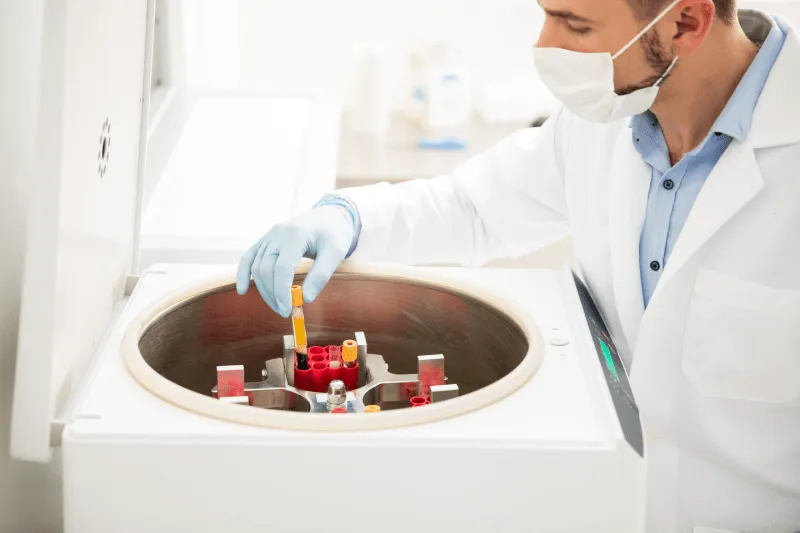
Stage 2: Centrifugation and Separation: The anticoagulant-added blood tubes are placed into a specialized centrifuge machine. The centrifuge spins the blood at high speeds (typically between 1,000 g and 3,200 g), separating the blood components according to their density into layers. This spinning process can take approximately 5 to 20 minutes, and two different centrifugation techniques are available:
- Single Spin: The blood is spun in a single stage. This separates the red blood cells (at the bottom), the “buffy coat” layer where white blood cells and platelets are concentrated (in the middle), and platelet-poor plasma (at the top). The PRP is drawn from the plasma layer just above the buffy coat.
- Double Spin: To obtain a higher concentration of platelets, the blood is spun twice. The first spin separates the plasma enriched with platelets and white blood cells. A second spin further concentrates this plasma, resulting in PRP with a much higher platelet density.
Ideal PRP should contain an average of 4 to 7 times the platelet concentration found in normal blood. After this concentration process is complete, the platelet-rich plasma fraction is carefully separated from the red blood cells and platelet-poor plasma layers and drawn into a sterile syringe.
Stage 3: Activation and Injection: The obtained PRP solution is immediately ready for injection into the area to be treated. Some physicians may add an activator substance like calcium chloride to the PRP just before injection to accelerate the release of growth factors from the platelets. However, it is also known that platelets activate naturally upon contact with tissue during injection. The prepared PRP is applied to the target tissue using sterile, fine-tipped needles. The entire preparation and application process is completed within an average of 30 to 45 minutes.
Aesthetic Applications: Skin Rejuvenation (Face, Neck, and Décolleté)
PRP’s most popular and effective application in aesthetics is enhancing skin quality to slow down and alleviate signs of aging. This application is often highlighted as a superficial rejuvenation technique, referred to as “Mesolifting” or “PRP Lifting.”
Cellular Renewal and Dermal Thickening: With aging, fibroblast activity in the skin’s dermis layer slows down, and collagen and elastin production decreases. PRP aims to reverse this process. The intense growth factors injected into the skin stimulate fibroblasts to accelerate the production of new, healthy collagen (Type I and Type III) and elastin fibers. Thanks to this neocollagenesis process:
- Skin Elasticity and Firmness Increase: The new collagen matrix strengthens the skin’s support structure and increases resistance to sagging.
- Fine Lines and Wrinkles Soften: The thickening and plumping of the dermal layer reduce the appearance of superficial wrinkles, especially around the eyes and mouth.
- Skin Radiance and Vitality are Restored: The angiogenesis (new vessel formation) triggered by PRP improves microcirculation in the application area. Increased blood flow carries more oxygen and nutrients to the cells, eliminating the skin’s dull, pale appearance and imparting a healthy, radiant vitality.
- Hydration Capacity Improves: PRP can also indirectly stimulate the production of hyaluronic acid, which enhances the skin’s moisture-retention capacity.
Application Areas: PRP for skin rejuvenation is not limited to the face. It is also applied to the following areas where signs of aging are frequently observed and neglected:
- Face: Forehead, glabella (between eyebrows), eye area (crow’s feet and dark circles), cheeks, and jawline.
- Neck and Décolleté: Fine wrinkles and skin laxity in these areas.
- Hands: Age spots and thinning skin.
PRP can be applied to the skin via direct injection (in small papules using the mesotherapy technique) or micro-needling (dermapen/dermaroller) methods. Especially when combined with micro-needling, the efficacy of PRP penetration under the skin is enhanced through the micro-channels opened by the needles, and collagen stimulation is simultaneously doubled by micro-trauma. This dual-action effect optimizes rejuvenation results.
Special Skin Problems and PRP: Treatment of Spots, Acne Scars, and Stretch Marks
PRP’s regenerative properties not only contribute to general skin rejuvenation but also offer promising results in the treatment of certain specific skin problems that cause aesthetic distress. These issues typically arise from damage to the dermal structure, and this is where PRP’s tissue repair capacity comes into play.
Acne and Wound Scars (Scar Treatment): Acne scars (atrophic scars) are usually formed as a result of dermal layer damage, creating depressions and irregularities on the skin. PRP plays a role in the treatment of these scars through two main mechanisms:
- Tissue Remodeling: Growth factors encourage the breakdown of abnormal collagen and elastin structures in scar tissue, promoting the formation of a more regular and healthy collagen matrix (Type III collagen) instead.
- Volumetric Plumping: The dermal thickening triggered by PRP helps lift the depressed scars towards the surface. It is often combined with micro-needling methods like fractional laser, gold standard radiofrequency (RF microneedling), or dermapen to maximize efficacy in scar treatment.
Stretch Mark Treatment (Striae): Stretch marks (striae) are caused by the tearing of collagen and elastin fibers in the dermis layer due to rapid stretching of the skin (pregnancy, rapid weight gain/loss, adolescence). Stretch marks, initially red (striae rubra) and turning white over time (striae alba), can be resistant to treatment. PRP, particularly in new red stretch marks, helps repair the torn tissue and soften the appearance of stretch marks by increasing blood supply and collagen-elastin synthesis in the area. For white stretch marks, it is again aimed to stimulate the tissue by combining it with micro-needling.
Under-Eye Dark Circles and Bags: One of the causes of under-eye dark circles and hollowing is the visibility of the vascular structure beneath the thin skin in this area and the reduction of subcutaneous volume. PRP specially prepared for the under-eye area acts in two ways:
- Dermal Thickening: The subcutaneous tissue thickens, reducing the visibility of the vascular structure.
- Circulation Improvement: Growth factors like VEGF regulate microcirculation, helping to reduce pigment accumulation and edema that cause dark circles.
Spot Treatment (Hyperpigmentation): PRP can also play a supportive role in the treatment of hyperpigmentation issues such as sun spots (lentigo) and melasma when combined with spot-lightening agents like Vitamin C or Tranexamic acid. Scientific studies suggest that growth factors may be able to suppress certain cellular signals that trigger melanin production. However, in spot treatment, PRP is not a standalone solution but is used as a complement to accelerate the efficacy of main treatments like laser or peeling and to speed up the skin healing process.
PRP in Hair Loss Treatment: A Ray of Life for Follicles
Hair loss is a common concern at the forefront of aesthetic worries, affecting both men and women. PRP treatment is frequently applied to revitalize hair roots and slow down hair loss, especially in common types of hair loss such as Androgenetic Alopecia (male pattern baldness) and Telogen Effluvium (diffuse shedding).
Mechanism of Action and Follicle Stimulation: The hair growth cycle consists of three phases: Anagen (growth), Catagen (transition), and Telogen (resting). In hair loss problems, the Anagen phase shortens, and the number of roots in the Telogen phase increases, leading to hair thinning and shedding. When injected into the scalp, PRP acts in two main ways:
- Increased Blood Circulation (Angiogenesis): Sufficient blood supply is vital for healthy hair roots. Growth factors like VEGF in PRP widen the capillary network surrounding the hair root and promote the formation of new blood vessels. Improved circulation carries more oxygen, nutrients, and hormones necessary for hair growth (especially those not sensitive to Dihydrotestosterone) to the hair follicle.
- Stem Cell and Follicle Activation: Growth factors released from platelets stimulate the dermal papilla cells in and around the hair follicle. This stimulation triggers roots in the resting (Telogen) phase to rapidly enter the growth (Anagen) phase. Simultaneously, it increases the diameter (thickness) and density of existing hair strands.
Who is it Suitable For? Hair PRP generally yields the best results in patients where the hair roots are not completely dead but are weakened, thinned, and continuing to shed. It does not grow new hair in areas with full baldness and dead follicles. When applied after hair transplant operations, it is crucial as a supportive treatment to increase the engraftment rate of transplanted roots, shorten the healing time, and strengthen the quality of the transplanted hair. PRP is one of the most powerful autologous methods to accelerate healing and control shedding, especially after hair transplantation.
PRP Application Techniques: Injection Methods and Combinations
The application of PRP solution to the skin and scalp for aesthetic purposes can be carried out using various techniques, depending on the target area and treatment goal. The choice of application method directly influences the depth and efficacy of the treatment.
Direct Injection (Mesotherapy Technique): This is the most common form of PRP application. Using very fine and short needles (up to 4 mm), the platelet-rich plasma is injected into the skin’s dermis layer (mesoderm) or the scalp, in small, closely spaced doses.
- Papule Technique: Used primarily in skin rejuvenation applications like the face and neck, where small bubbles (papules) are created under the skin for the plasma to spread slowly and act for a longer duration.
- Point-by-Point Technique: In hair loss treatment, PRP is applied to deeper points, directly into the area where hair follicles are located.
Combination with Micro-Needling (Dermapen / Dermaroller): This approach is frequently preferred to increase the efficacy of PRP in skin rejuvenation. Micro-needling devices (e.g., Dermapen or Dermaroller) create thousands of controlled micro-channels on the skin surface. These micro-channels:
- Increase Penetration: Facilitate the topical penetration of the PRP solution into the deeper layers of the skin.
- Physical Stimulation: The needling action itself triggers the skin’s natural wound healing mechanism (collagen production). PRP accelerates and enhances this healing process with biological growth factors, providing excellent synergy in the treatment of scar marks, fine wrinkles, and uneven skin tone.
Combined Treatments: Since PRP provides regeneration, it is an ideal complement to support the healing processes and optimize the results of other aesthetic treatments:
- Laser and Radiofrequency (RF) Applications: PRP application, especially in combination with procedures that cause controlled damage to the skin, such as gold standard radiofrequency (RF Microneedling) and fractional laser, both increases the treatment’s effect and significantly shortens the redness, swelling, and healing time of the skin.
- Dermal Fillers: PRP does not address volume loss, but it can enhance the skin quality in the areas where dermal fillers (hyaluronic acid) are applied, contributing to more natural and long-lasting results.
- Mesotherapy Cocktails: PRP is a pure biological stimulant. In some cases, physicians may prefer to combine traditional mesotherapy cocktails with PRP (e.g., hyaluronic acid for hydration or Vitamin C for spots) according to the skin’s needs, to achieve more targeted results.
The choice of method is determined entirely by the patient’s skin or hair condition, expectations, and the physician’s expertise.
Treatment Protocol and Permanence of Results: How Often Should It Be Done?
PRP treatment is not an instantaneous treatment because it triggers the body’s biological renewal processes. Its emergence and permanence depend on regular and repeated sessions. The treatment is usually planned as a “course.”
Course Treatment (Initial Protocol): To achieve optimal results, PRP treatment is typically applied as a course.
- Number of Sessions: The initial course for most aesthetic applications (skin rejuvenation, spots, hair loss) varies between 3 to 6 sessions. The severity of the skin or hair loss, age, and lifestyle determine this number.
- Session Interval: Sessions are usually scheduled at intervals of 2 to 4 weeks to keep the healing mechanism continuously active and allow time for cell proliferation.
Timeframe for Seeing Results: Since PRP triggers biological processes like new collagen and capillary formation, results emerge gradually.
- Early Effect (First 1-2 Weeks): Effects such as a slight radiance, vitality, and improvement in tissue feel may be seen due to increased blood flow in the application area.
- Mid Effect (1-3 Months): The actual cellular renewal begins during this period. As collagen and elastin production accelerate, an increase in skin elasticity, softening of fine wrinkles, and a reduction in hair loss become noticeable.
- Maximum Effect (3-6 Months): The full effect of the treatment is generally observed within 3 to 6 months following the completion of the last session.
Permanence and Maintenance Treatment: The results obtained with PRP are long-lasting because they rely on the support tissue produced by the body’s own cells. However, since the aging process and environmental factors (sun, smoking) continue, the duration of the effect varies from patient to patient.
- Duration of Permanence: The permanence of the achieved rejuvenation usually lasts from 6 months up to 1.5 years.
- Maintenance Protocol: For long-term preservation and slowing down the aging process, it is generally recommended to have 1 or 2 maintenance sessions per year after the initial course is completed.
In patients who smoke, are exposed to the sun, or have inadequate nutrition, maintenance sessions may need to be performed more frequently due to rapid collagen breakdown.
How is Comfort and Pain Management Provided During the PRP Procedure?
Since the PRP application is an injection procedure, one of the most common concerns for patients is the pain experienced during the process and how comfort is ensured. PRP is generally a procedure that is easily tolerated and much less painful compared to surgery.
Local Anesthetic Creams: Approximately 20 to 30 minutes before starting the PRP application, a strong topical anesthetic cream is applied to the treatment area (face, neck, scalp). These creams numb the outermost layer of the skin, significantly reducing the stinging and pain felt during the injection. Physicians take care to ensure that the anesthetic effect is fully established, especially in sensitive areas (around the eyes, forehead).
Fine Needles and Techniques: The needles used in the application are very fine (e.g., 30-32 gauge) and short, similar to those in mesotherapy procedures. The small size of the needles lowers the pain threshold. Furthermore, the use of rapid and gentle injection techniques by an experienced physician maximizes patient comfort. In applications done with micro-needling (Dermapen), the speed and precision of the device allow the needles to enter and exit quickly without stimulating nerve endings, minimizing the sensation of pain.
Post-Procedure Comfort Management: After the application is completed, there may be a slight burning, tingling, or pressure sensation caused by the injected plasma. This is a natural sign that the platelets have started activating and the healing process has been triggered.
- Cold Application: Applying a light cold compress to the injection areas for the first few hours after the procedure is very effective in controlling swelling and potential pain. Cold constricts blood vessels, also reducing the risk of bruising.
- Avoidance of NSAIDs: To avoid disrupting the inflammatory healing process, which is the main mechanism of action of PRP, it is essential to refrain from using painkillers containing Ibuprofen (from the NSAID group) after the procedure. Physicians usually recommend paracetamol-based (acetaminophen) painkillers. Studies suggest that NSAIDs can reduce the efficacy of PRP by inhibiting the release of growth factors.
Thanks to all these measures, PRP treatment offers a comfortable and minimally painful experience for most patients.
What is the Reliability and What are the Possible Side Effects of PRP Treatment?
PRP treatment is a method considered highly reliable in aesthetic and medical fields. However, as with any injection procedure, the application has its own specific temporary side effects and very rare risks.
Basis of Reliability: Autologous Structure: PRP’s biggest safety advantage is that it is obtained entirely from the patient’s own blood and contains no external chemical or foreign substances. Thanks to this autologous (personalized) structure:
- No Allergy Risk: The probability of the body developing an allergic reaction (such as anaphylaxis) against its own tissue is virtually zero.
- No Risk of Contagious Diseases: Since the patient’s own blood is used, there is no risk of transmitting blood-borne diseases such as Hepatitis B/C or HIV.
Common and Temporary Side Effects: These effects usually stem from the procedure itself and resolve on their own within 1-3 days.
- Bruising (Ecchymosis): Bruises may occur due to damage to small capillaries at the needle entry points. This risk can be reduced by avoiding blood-thinning supplements and medications.
- Swelling (Edema): Slight swelling is observed due to the volume of the injected plasma and the local inflammation triggered by the platelets. It may be more prominent around the eyes and rapidly decreases within the first 24 hours.
- Tenderness and Redness: There may be slight redness, tingling, or tenderness to touch in the injection area. This is a natural sign that the healing process has begun.
Rare and Serious Risks: These risks typically arise if hygiene rules are not followed or the injection is performed incorrectly.
- Infection: Non-sterile kits or application environments can lead to bacterial infection in the injection area. Therefore, PRP must always be performed under fully sterile clinical conditions, with single-use, licensed kits.
- Nerve Damage: Very rarely, temporary tenderness or numbness in superficial nerve branches may develop as a result of injections made at the wrong depth and angle. This risk is minimized by choosing an experienced physician who is well-versed in the anatomy of the region.
- Non-Sterile PRP Product: The use of unlicensed or low-quality PRP kits available on the market not only fails to separate platelets to the correct concentration but can also increase the risk of infection or reaction. For safe PRP, only centers using licensed and known kits should be preferred.
Under appropriate conditions, PRP treatment is considered one of the safest biological approaches for skin and hair loss treatments.
Who is Not Suitable for PRP Treatment? Contraindications
Although PRP treatment is a safe procedure, certain medical conditions and health statuses absolutely or relatively contraindicate the application. The physician must carefully evaluate these conditions by taking a detailed medical history before starting treatment.
Absolute Contraindications (Conditions Where Application Must Be Strictly Avoided):
- Platelet Disorders (Thrombocytopenia): If the patient’s platelet count is significantly below normal (critical thrombocytopenia), it may be impossible to obtain PRP or the obtained plasma may not provide sufficient growth factor concentration. The application also loses its efficacy in patients with platelet function disorders (e.g., Bernard-Soulier syndrome).
- Active Cancer and Chemotherapy: In patients with active cancer or a history of cancer within the last 5 years, PRP is generally not applied due to concerns that growth factors could theoretically stimulate cancer cells as well. In patients undergoing chemotherapy, platelet counts and functions may be impaired.
- Active Systemic Infections: In patients with severe systemic infections such as high fever, active flu, or sepsis, or with local infections in the application area such as active herpes, bacterial infection, or fungal infection, the treatment must be postponed due to the risk of infection spread.
- Pregnancy and Breastfeeding: Aesthetic PRP treatment is strictly not performed during pregnancy and breastfeeding, as the effects of PRP on the developing fetus or infant are not sufficiently researched.
- Severe Chronic Diseases: In the acute stages of severe chronic diseases such as uncontrolled diabetes, severe uncontrolled hypertension, or heart failure, the application is postponed.
Relative Contraindications (Conditions Requiring a Cautious Approach):
- Use of Blood Thinning Medications (Anticoagulants): Patients taking strong blood thinners like Aspirin or Warfarin are at high risk of bruising and bleeding. If these medications need to be discontinued (usually 7-10 days before), this decision must be made by the patient’s cardiologist or relevant physician. The use of NSAID-type painkillers should also be stopped one week before the procedure.
- Autoimmune Diseases: Caution must be exercised in diseases affecting the immune system, such as Lupus or rheumatoid arthritis, as the effect of PRP on inflammation cannot be fully predicted, and approval from the relevant physician is required.
- Chronic Liver Disease: Caution is needed in patients with chronic liver disease, as blood clotting factors and consequently platelet functions may be affected.
The safety of PRP treatment depends on the patient’s honest health declaration and the applying physician making the correct decision by considering all contraindications.
PRP vs. Other Treatments: Comparison with Mesotherapy, Fillers, and Micro-Needling
PRP treatment is frequently compared with other established methods in the spectrum of aesthetic applications and is often used in combination with them. PRP’s difference lies in its use of the body’s own biological renewal signals instead of external chemical or synthetic substances.
PRP vs. Traditional Mesotherapy:
- Content: Mesotherapy injects external ready-made cocktails of vitamins, minerals, amino acids, and hyaluronic acid into the skin. PRP, on the other hand, injects the patient’s own platelets, which can stimulate growth factors and stem cells.
- Mechanism of Action: Mesotherapy is based on “nourishment” and chemical stimulation. PRP is based on “biological repair” and cellular regeneration.
- Reliability: Although the risk of allergy in mesotherapy is low, a reaction to the cocktail’s contents can rarely occur. In PRP, the risk of allergy is virtually zero.
- Combination: PRP can be mixed with mesotherapy cocktails (e.g., hyaluronic acid or Vitamin C for hydration or spots) and applied sequentially in the same session to increase efficacy.
PRP vs. Dermal Fillers:
- Purpose: Dermal fillers (usually cross-linked hyaluronic acid) are used to restore lost volume, fill deep lines, and contour the face. While PRP promotes dermal thickening, its main goal is not to add volume but to improve the skin’s quality and biological structure.
- Result: Fillers provide instant volumetric results, while PRP’s results emerge gradually (over weeks).
- Combination: PRP is an excellent support to enhance dermal repair after filler application or to strengthen the skin structure before fillers.
PRP vs. Micro-Needling (Alone):
- Mechanism of Action: Micro-needling alone triggers collagen production by creating physical trauma through micro-channels opened in the skin. PRP enters under the skin through these channels opened during the physical trauma, accelerating the healing process exponentially with biological growth factors.
- Efficacy: In the treatment of scars, stretch marks, or deep wrinkles, PRP alone is considered less effective than micro-needling alone, but the combination of these two methods (PRP-Microneedling) is accepted to provide the strongest synergy.
PRP stands out among these treatments as the only method that utilizes the body’s own natural resources and is an excellent alternative for patients who want structural improvement without resorting to surgery.
The Future of PRP: Stem Cells and Next-Generation Technologies
PRP treatment is continuously evolving with research in the field of regenerative medicine. Future studies are focused on standardizing PRP preparation protocols, increasing its efficacy, and expanding its application areas.
Standardization Issue and Search for Solutions: The biggest challenge facing PRP is the variability in platelet concentrations and growth factor content obtained due to different kits, centrifugation speeds (rpm), and durations (g-force) in the market. The scientific community is trying to establish a common standard (i.e., the ideal “PRP recipe”) for the platelet density and white blood cell (leukocyte) content that will show the highest efficacy to ensure consistency in treatment results.
- Leukocyte-Rich (L-PRP) vs. Leukocyte-Poor (P-PRP): Some studies suggest that leukocyte-containing PRP releases more growth factors but also causes more inflammation (swelling, pain). For aesthetic applications (skin rejuvenation), leukocyte-poor (Pure PRP) versions that cause less inflammation are usually preferred. The future is focused on developing kits where leukocyte content is also personalized according to the target tissue.
Combination with Stem Cells: The next step in regenerative medicine is combining PRP with stem cell therapies. Stem cells, especially those derived from adipose tissue (Adipose-Derived Stem Cells – ADSCs), are combined with PRP’s growth factors to maximize both cellular repair power and tissue regeneration potential. This combination promises groundbreaking results, particularly in the treatment of volume loss and advanced scars.
Targeted Activation and Release: Researchers are working on new activation methods that will allow platelets to release growth factors for a longer period and in a more controlled manner. For example, formulations prepared in gel form (Platelet-Rich Fibrin – PRF) provide slow and continuous release of growth factors, increasing the permanence of the treatment.
PRP, as a treatment that uses the body’s biological intelligence and offers natural rejuvenation with minimal risk, has solidified its place in aesthetic medicine and is expected to be at the center of personalized regenerative medicine in the future. The efficacy of the application must always be guaranteed by the correct indication, high-quality kits, and expert physician supervision.
This page covers one procedure in detail. For prices, what is included and how the whole trip works, see our overview of hair transplant in Turkey.
Sources and how to verify this yourself
- Ministry of Health, Regulation on International Health Tourism and Tourist Health, Official Gazette 26 April 2025, No. 32882 — authorisation requirement for facilities and intermediaries, TÜSKA accreditation, compulsory complication insurance (deadline 31 December 2025 for insurance, 31 December 2026 for accreditation). source
- Ministry of Health, Regulation on Promotion and Information Activities in Health Services, Official Gazette 12 November 2025, No. 33075 — treatment promises and guarantees are prohibited; price and campaign announcements are permitted only within international health tourism. source