Symbol of Paris
The Eiffel Tower is recognized as the universal symbol of France, and particularly of Paris. This iron lacework is not merely an architectural structure, but also a token of 19th-century engineering genius and a celebration of the centenary of the French Revolution. Initially given a lifespan of only twenty years, this monumental structure still stands today, gracing the Paris skyline with unparalleled beauty and hosting millions of visitors each year, showcasing the magnificent link between technology, art, and history. The Tower is a living heritage that reflects the spirit, audacity, and future-forward belief of the era in which it was constructed.
Who built the Eiffel Tower?
The brilliant mind behind the Tower’s construction is Alexandre Gustave Eiffel. He was an engineer who quickly recognized the potential of iron and steel structures and successfully utilized these materials in the most complex projects of his time. Even before designing the Tower, Eiffel had completed groundbreaking works such as the Maria Pia Bridge in Portugal and the internal framework of the Statue of Liberty in New York. His philosophy was based on the premise that the structure’s strength must come from its ability to withstand external forces like the wind. This visionary approach is the foundational element that ensured the Eiffel Tower’s unique aesthetics and durability. His engineering legacy is the finest example of the artistic use of iron.
History of the Eiffel Tower
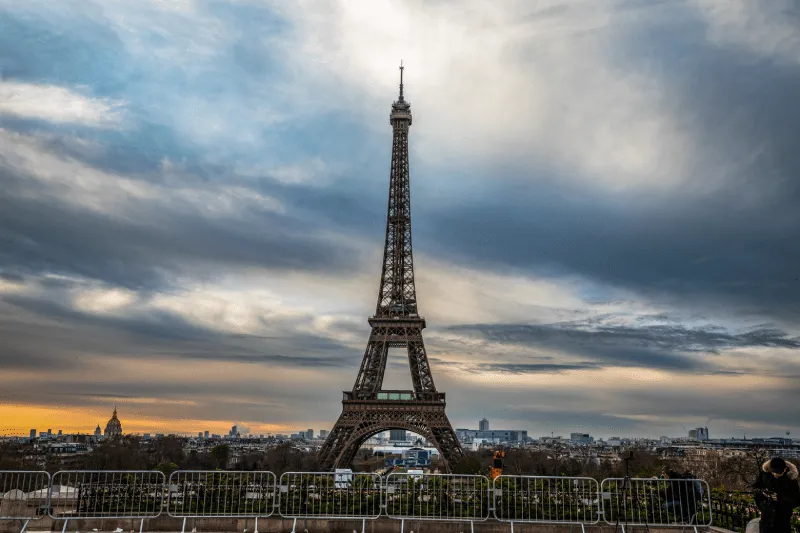
The Eiffel Tower was specifically designed for the Paris Universal Exposition (Exposition Universelle) held in 1889. This fair was intended to celebrate the centenary of the French Revolution and aimed to showcase France’s industrial might, scientific progress, and cultural richness to the entire world. The Tower was conceived as the gateway to the fair and became its most controversial and conspicuous centerpiece in the middle of the Champs de Mars. Its purpose was to draw all attention as the fair’s ultimate technological marvel and the tallest structure the world had ever seen up to that point.
Records broken by the Eiffel Tower: What is the height of the Eiffel Tower?
Standing at 300 meters upon its opening, the Eiffel Tower held the title of the world’s tallest structure for 41 years (until 1930). This record was not just an engineering achievement for the time, but also a source of national pride. The Tower surpassed existing tall structures like the Washington Monument and the Cologne Cathedral, proving the limitless possibilities of iron. With the subsequent addition of antennas, the Tower’s height has reached 330 meters. This elevation demonstrates that the structure is not only an aesthetic wonder but also a technology tower, showcasing the capabilities of French engineering prowess.
Have you heard about the Eiffel Tower protest?
When construction of the Eiffel Tower began, a massive wave of skepticism and protest arose from the public and intellectual circles. Many Parisians found this “iron heap” incompatible with the city’s elegant architecture and aesthetic spirit. Critics claimed that the Tower would not suit the gothic and classical structures symbolizing Paris, even describing it as resembling a giant factory chimney. These controversies caused the Tower to become a symbol of the clash between modernism and tradition. These early criticisms form one of the most dramatic parts of the Tower’s history.
The “Artists’ Protest” Manifesto
One of the most famous objections was the “Artists’ Protest” manifesto, published in 1887 and signed by the era’s leading artists, writers, and architects. The text described the Tower as a “stain on Paris” and claimed it was a “useless and monstrous” structure. This group, including figures like Émile Zola, Guy de Maupassant, and Charles Gounod, continued to criticize the structure for some time even after its completion. Interestingly, Maupassant would later dine at the Tower’s restaurant, reportedly because it was the only place in Paris where he could not see the Tower itself.
Challenges in the construction of the tower
One of the first and most critical phases of the Tower’s construction was the solid foundation-laying process. The ground at the Champs de Mars was soft, and the nearby Seine River posed a risk to the foundations. For two of the Tower’s legs closest to the river, Eiffel and his team implemented an innovative method using sealed metal caissons, applying air pressure to prevent water from entering the ground beneath. This meticulous foundational work ensured that the Tower’s 7,300-ton weight has been carried securely for centuries, forming the basis of its engineering success.
The Eiffel Tower: A Miracle of Ironwork
The Eiffel Tower consists of approximately 18,000 separate iron pieces and more than 2.5 million rivets. Nearly all of these iron parts were pre-cut, drilled, and made ready for assembly in Gustave Eiffel’s factories in Levallois-Perret, just outside Paris. This prefabrication technique significantly reduced the assembly time at the construction site and increased precision. The placement of each piece with millimetric accuracy made this structure the zenith of industrial engineering art of its time.
Are you aware of the struggle that went into ensuring the structural integrity of the tower?
The millions of rivets in the Tower are small but vital heroes that hold the iron pieces together. These rivets were placed while red-hot, and as they cooled, they contracted, tightly clamping the two metal pieces together. During construction, four-person riveting teams worked: one heated the rivet, the second threw it into position, the third held it in place, and the fourth hammered it fast. This intense, rhythmic work resembled a symphony of riveting that built the Tower’s skeleton. This manual and demanding process guaranteed the Tower’s durability.
How many people died during the construction of the Eiffel Tower?
The assembly of the Tower was one of the most challenging and dangerous construction projects of the era. Workers operated hundreds of meters above the ground in conditions where protective equipment was minimal. However, Eiffel took meticulous precautions to ensure worker safety, including movable scaffolding, railings, and even safety nets. Thanks to these careful approaches, despite the project’s sheer size, only one worker died (outside of working hours) from a fall. This was a striking achievement for the high construction standards of that period.
How did people climb the Eiffel Tower in the first few days after it reopened?
The Eiffel Tower officially opened on March 31, 1889, and Gustave Eiffel undertook the first climb accompanied by several government officials and journalists. At that time, the elevators were not yet fully operational, so those wishing to ascend the Tower had to climb the 1,710 steps to reach the summit. These initial climbs were not only a physical challenge but also a symbolic triumph of reaching the pinnacle of engineering. Upon reaching the top, they were rewarded with a magnificent panoramic view of Paris.
How long did it take to complete the Eiffel Tower?
The Tower was completed in a surprisingly short period of just two years, two months, and five days. This speed demonstrated both the efficiency of Eiffel’s prefabrication system and the incredible dedication of the worker teams. The hoisting of the French flag to the summit on the official opening day was celebrated as a victory for the project’s completion and the engineering capability of the French nation. Despite all the initial criticisms, the Tower instantly became a major attraction and the most visited spot at the World’s Fair.
Feel like you’re on top of the world with the Eiffel Tower
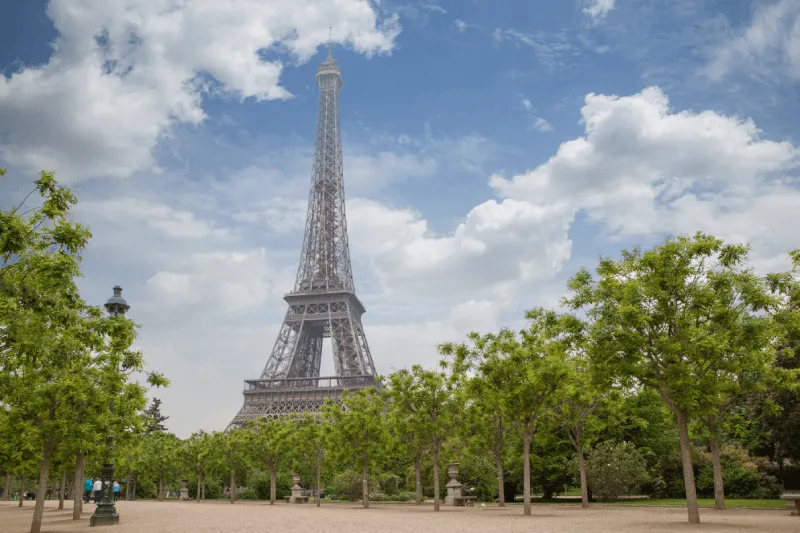
The Eiffel Tower is built on three main platforms. The first platform was 57 meters above the ground, offering a wide area for visitors to observe the fair and the immediate surroundings of Paris. The second platform, located at 115 meters, provided an even broader view. The third platform at the very summit gave a literal feeling of being “on top of the world” at the time. These platforms were designed not only as viewing decks but also as social interaction and relaxation areas.
Restaurants and Observation Decks at the Eiffel Tower
The Tower was designed not just as an observation point but also as a social hub. The first platform featured four different restaurants and cafeterias. These eateries became favorites among fair visitors for their elegant decor and luxurious dining options, complete with city views. This luxury experience proved that the Tower could be a venue for elegance and entertainment, not just an industrial structure. These restaurants were a crucial part of the Tower’s commercial success.
How did the Eiffel Tower escape destruction?
Eiffel did not want the Tower to be just a temporary fair structure; he aimed for it to be used as a permanent scientific laboratory. The Tower offered an ideal height and location for conducting scientific experiments on subjects like wind resistance, air pressure, and temperature changes. By establishing a meteorological laboratory at the Tower’s top, Eiffel ensured the collection of vital data for the time, thus providing a significant justification to prevent the decision for its demolition.
Did you know that the Eiffel Tower was used as a meteorological station?
One of the scientific uses of the Tower was its function as a meteorological station. Thanks to the equipment installed at the summit, regular data on Paris’s weather and atmospheric conditions were collected. This data was used in developing weather forecasts and scientific research. The Tower served as a unique vertical laboratory for studying atmospheric phenomena like wind speeds and temperature gradients at high altitudes, making its scientific utility undeniable.
The Eiffel Tower was also used as a national defense and communications infrastructure!
The most crucial factor ensuring the Eiffel Tower’s permanence was its strategic role in radio communication. In the early 20th century, the Tower served as an excellent antenna for broadcasting radio waves. In 1903, Gustave Eiffel installed a wireless telegraph transmitter at the summit, turning it into a critical center for military communication. This technological use allowed the Tower to transcend being merely a tourist monument and become an indispensable part of national defense and communication infrastructure.
Strategic Role in World War I
During the First World War, the Eiffel Tower was a vital communication center for the French army. The powerful wireless station on the Tower was used to intercept enemy communications and transmit instructions to its own troops. One of the most famous incidents involves the Tower station intercepting a message that located the movement of enemy units during the German advance towards Paris. This enabled the French to launch a critical counterattack in the Battle of the Marne, solidifying the Tower’s role in its rescue from demolition.
The Eiffel Tower’s Salvation: Escape from Destruction
The Eiffel Tower was originally scheduled to be dismantled in 1909, as stipulated in its construction contract. It was initially given a lifespan of only 20 years. However, Gustave Eiffel’s persistent efforts to install antennas and laboratories for scientific and military applications at the Tower’s top proved its non-commercial vital importance. Thanks to the strategic significance of the wireless telegraph station, the Paris Municipality postponed the Tower’s demolition and eventually decided to make it permanent. This decision gifted a modern world symbol to history.
It was accepted as a symbol of Paris
Over time, the initial hostility and criticism transformed into affection and admiration. The Eiffel Tower became an inseparable part of the Paris skyline. Rising among the city’s historic buildings and elegant avenues, this iron tower symbolizes the city’s spirit, which unites tradition and modernity. Visible from every corner of Paris, this monument presents a different beauty at all hours of the day, solidifying its place as a romantic attraction for both locals and tourists.
Have you ever seen the Eiffel Tower at night?
The nighttime view of the Eiffel Tower is perhaps one of its most mesmerizing aspects. First illuminated by gas lamps at the fair’s opening, the Tower later transitioned to electric lighting. Today, the Tower features a complex lighting system that begins shining after sunset every evening, adding sparkle to the Paris night. Especially the thousands of flashbulbs (scintillement) that sparkle every hour, creating a unique light show that lasts only a few minutes, giving visitors unforgettable moments. This sparkle reinforces the Tower’s modern fairy-tale ambiance.
The Secret Apartment: Eiffel’s Private Room
At the summit of the Eiffel Tower, there is a small apartment that Gustave Eiffel built for himself. This apartment, located 300 meters high, was a source of curiosity for Parisian high society at the time. Eiffel used this room for scientific work and to host important guests, notably Thomas Edison. This modestly furnished small space is a private retreat, hidden from the public, demonstrating Eiffel’s personal attachment to the summit and his scientific passion. Today, it is presented in its restored form to visitors.
What color was the Eiffel Tower in the past?
The Tower has changed color several times since its construction. Its initial color was reddish-brown. It later took on yellowish-brown and sandy-brown shades and finally settled on the special color we know today, aptly named ‘Eiffel Tower brown’. To protect the Tower against rust, it must be completely repainted every seven years using approximately 60 tons of paint. This meticulous and dangerous process is vital for maintaining the Tower’s longevity and visual appeal.
The Renovation of the Second Platform
Over the years, renovations have been carried out on the Tower’s platforms to accommodate the influx of visitors and meet modern safety standards. One of the most notable innovations was the addition of glass panels to the floor of the second platform. This glass floor allows visitors to experience the thrill of looking directly down from a height of approximately 57 meters. This architectural touch has added a modern layer of excitement while preserving the Tower’s historic texture, making the visitor experience more interactive and memorable.
Architectural Style and Sources of Inspiration
The Eiffel Tower’s architectural style is generally referred to as “Structural Rationalism.” However, the Tower also drew inspiration from nature, particularly from bone structures and plant anatomy. Eiffel’s arched supports and curved lines in the structure were designed to best distribute the structure’s own weight and wind load. This engineering genius ensured that the Tower is both extremely solid and possesses an elegant, seemingly floating aesthetic.
A Global Cultural Icon
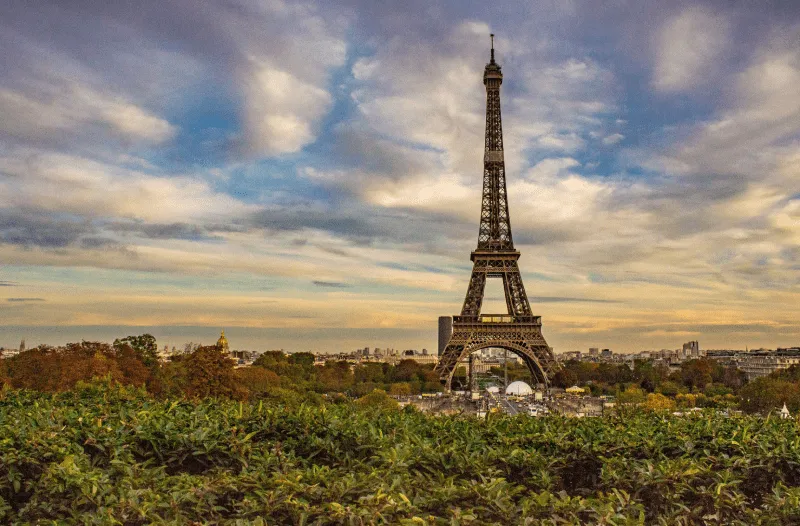
The Eiffel Tower is recognized as a symbol of romance, art, and Paris not just in France but across the globe. It is one of the most photographed monuments in the world and has become a global cultural icon. Countless paintings, photographs, sculptures, and films have been created to feature it. Cities around the world have attempted to build similar towers to this iconic structure, but none have captured the spirit and history of the original.
The Place of the Eiffel Tower in Cinema and Literature
The Tower also holds a central role in the world of cinema and literature. Even after Guy de Maupassant’s criticism, the Tower has inspired countless novels and served as the setting for films. In novels, it often symbolizes the mood of Paris or love stories, while in films, it sometimes appears as the backdrop for a dramatic chase or the location for a romantic date. In one of the most famous films, “A View to a Kill,” the Tower hosted action sequences.
Technological Advancements at the Eiffel Tower
Throughout its history, the Tower has undergone a continuous process of technological adaptation and renewal. The transition from early hydraulic elevators to modern electric systems, advancements in lighting technology, and the addition of digital communication antennas have ensured that the Tower does not fall behind the times. These continuous technological innovations allow the Tower to remain not just a monument but a living laboratory of progress.
The Evolution of the Elevator System
The Tower’s elevators are an engineering marvel in themselves. The initially installed hydraulic elevators were a challenging design due to the inclined structure of the Tower’s legs. Today’s electric elevators transport thousands of visitors to different platforms safely and quickly per second. The ability of the elevators in the Tower’s legs to travel on curved rails is a detail that shows how visionary Gustave Eiffel’s team was for that period.
The Economic Impact of the Eiffel Tower
The Eiffel Tower is a massive source of tourist revenue for the economy of Paris and France. By attracting millions of people to Paris each year, it generates economic vitality in many sectors, including hospitality, restaurants, souvenirs, and transportation. The Tower’s operation generates significant income not only from ticket sales but also from commercial spaces, restaurants, and telecommunication services on the platforms. This economic engine ensures that the Tower’s maintenance and repair costs are comfortably met.
Tourist Influx and Management
The Tower is the most visited paid monument in the world. This massive tourist influx requires specialized management and logistical expertise. Continuous effort is exerted to ensure visitor safety, manage waiting times, and protect the Tower’s historical integrity. Various ticket options, online reservation systems, and activities on different platforms are designed to maximize the visitor experience.
Future-Oriented Projects
The Tower’s operators are constantly working on new projects to ensure the structure is ready for future challenges. These projects include increasing energy efficiency, using environmentally friendly technologies, and managing visitor flow more intelligently. The Tower aims to remain not only a heritage of the past but also a symbol of sustainability and technological progress.
The Venue for Love and Marriage Proposals
The Eiffel Tower has gained worldwide fame as one of the most romantic places. Thousands of couples visit Paris to propose marriage at the Tower or against its view. The sparkling Tower has become a symbol of love and romance. This shows that the cultural significance of the Tower is not only about engineering but also a reflection of human emotions.
The Tower’s Names and Nicknames
The Eiffel Tower is sometimes affectionately referred to by the French as “La Dame de Fer” (The Iron Lady) or simply “La Tour Eiffel.” These nicknames emphasize both the Tower’s durability and its elegant posture. Initial negative nicknames like “factory chimney” have, over time, been replaced by expressions of respect and admiration. These names reflect the public’s emotional connection to the Tower.
Artistic Influence and Cubist Painters
In the early 20th century, the Eiffel Tower became an important source of inspiration for Cubist painters. Artists like Robert Delaunay produced works that created movement and dynamism in painting by fragmenting the Tower’s complex iron lattice and perspective. The Tower was a perfect model for modern art’s desire to examine objects from different angles, proving that it was not only an architectural but also an artistic revolution.
The Tower and Literature: Apollinaire’s Poems
The French poet Guillaume Apollinaire frequently used the Eiffel Tower in his poems, creating a modern mythology around it. For Apollinaire, the Tower symbolized the modernity, power, and future hope of Paris. His poems titled “The Tower” lyrically described the Tower’s iron skeleton and its form ascending into the air, solidifying its place in the world of artistic imagery.
The Struggle Against the Wind
The design of the Eiffel Tower was calculated to withstand wind loads. When designing the Tower, Eiffel conducted wind resistance calculations with a meticulousness far beyond the norm for that period. The Tower’s slightly curved and lattice-like structure allows the wind to pass through it, minimizing vibration and pressure. Even in the fiercest storms, the Tower’s summit moves only a few centimeters.
The Tower’s Iron Structure: Puddle Iron
The Tower is made not of cast iron, but of high-quality wrought iron called ‘puddle iron’ (fer puddlé). This material possesses high tensile and compressive strength, making it one of the most durable construction materials of the era. The choice of this iron was a technical decision that enabled both the Tower’s longevity and the complex, fine-workmanship required by its structure.
Temperature Variations Affecting Height
Since the Eiffel Tower is an iron structure, it is highly sensitive to temperature changes. Due to the expansion of iron in high summer temperatures, the Tower can increase in height by several centimeters, and it shrinks and lowers in the winter cold. This expansion and contraction is a completely normal physical response of the structure and was accounted for in the engineering design.
Telescopic Observation Rooms at the Summit
In the early days, the third platform featured telescopic observation rooms. Visitors could use these telescopes to examine Paris in much greater detail. This shows that the Tower not only offered a view with the naked eye but also provided visitors with the opportunity to experience the optical technologies that were emerging at the time.
Tourism and Cultural Interactions
The Eiffel Tower is a meeting point for people from different nations. The millions of tourists who visit the Tower experience a universal encounter where diverse cultures come together. In this respect, the Tower has become a tangible symbol of international understanding and cultural exchange.
The Architecture of the Tower’s Restaurants
The restaurants on the Tower’s first platform were initially designed by Gustave Eiffel’s son-in-law, Émile Nouguier. The purpose of these restaurants was to soften the Tower’s industrial appearance and offer visitors a luxurious environment. They were elegantly positioned within the structure’s iron skeleton and equipped with glass façades so as not to obstruct the view.
Challenges of Periodic Maintenance and Repair
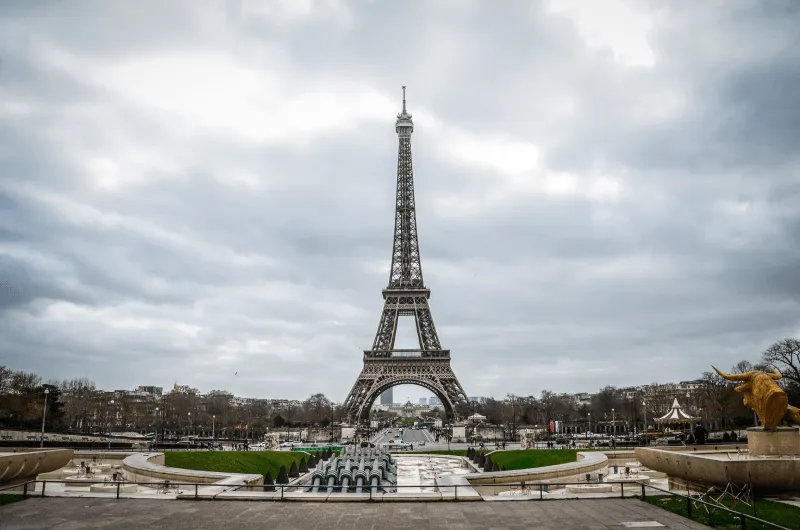
The periodic maintenance of the Tower, particularly the painting process, is a monumental logistical challenge. While the Tower continues to serve visitors, it is repaired by erecting scaffolding and having hundreds of workers paint it by hand. This process is carried out with great care to preserve the Tower’s historical structure and meet modern safety requirements.
The Tower’s Digital Legacy
Today, the Eiffel Tower is not just a physical monument but also a digital phenomenon. It is one of the most shared locations on social media and is featured in virtual and augmented reality applications. The Tower continues to be introduced to new generations through new technologies.
The Eiffel Tower Design Competition
The Tower was the result of a design competition held for the 1889 World’s Fair. Hundreds of projects participated in the competition, but Gustave Eiffel’s proposal impressed the jury with both its engineering boldness and its colossal height. The project was based on the initial sketches of Eiffel’s chief engineers, Maurice Koechlin and Émile Nouguier.
Monuments and Plaques on the Tower
Inside and around the Tower, there are various monuments and plaques dedicated to the engineers, workers, and scientific research that contributed to the structure’s construction. These plaques serve as a reminder that the Tower is not solely the work of one individual but the result of the collective effort and knowledge of hundreds of people.
The Tower and Other World Skyscrapers
Even when the Eiffel Tower lost its title as the world’s tallest structure, its cultural significance did not change. Although taller structures like the Chrysler Building and the Empire State Building were built in New York, the Eiffel Tower still maintains its uniqueness in terms of engineering aesthetics and historical context.
An Eternal Legacy
The Eiffel Tower has transformed from being the most magnificent work of the 19th-century industrial revolution to one of the global icons of the 21st century. This iron lady, which silenced its initial critics, survived two world wars, and is the work of an engineering vision ahead of its time, is an eternal legacy that brings together history, science, art, and romance. Every year, millions flock to Paris to create a memory in the shadow of this magnificent structure.
Free Consultation
Fill out the form below to get your free medical travel plan and price quote.