What exactly is a gastric balloon application?
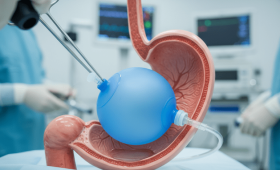
A gastric balloon is a non-surgical and temporary weight loss method designed for individuals struggling with obesity and excess weight. The fundamental principle is to create a feeling of satiety by placing a device inside the stomach that occupies a significant portion of its volume. This method allows patients to feel full with smaller portions and control their appetite much more easily. Both the swallowable and traditional methods aim to reduce calorie intake by mechanically restricting stomach capacity. Because it does not involve surgical intervention, is fully reversible, and has a very short recovery period, it is considered one of the most preferred medical weight loss procedures globally.
How does the swallowable gastric balloon work?
The swallowable gastric balloon is designed in the form of a high-tech capsule, and the process is based on the patient swallowing this capsule with a glass of water. Once the capsule reaches the stomach, its outer shell dissolves, releasing the balloon inside. The balloon is then inflated with a special liquid by the doctor through a thin catheter attached to the capsule, occupying a large part of the stomach volume. This entire process takes approximately 15 to 20 minutes and requires no anesthesia or endoscopy. By occupying space in the stomach, it affects ghrelin (the hunger hormone) levels, ensuring the person feels constantly full. After about 4 months, it deflates on its own and is naturally excreted from the body.

How is the traditional gastric balloon applied?
The traditional gastric balloon method is a medical procedure performed endoscopically in a hospital or clinical setting. While the patient is under light sedation (a sleep-like state), a camera (endoscope) is inserted through the mouth into the stomach to examine the area where the balloon will be placed. If there are no contraindications, the balloon is lowered into the stomach in a deflated state and then inflated to the desired volume with saline solution or air. The procedure usually lasts between 20 and 30 minutes. The biggest difference of this method is the mandatory requirement for professional endoscopic intervention and sedation accompanied by an anesthesiologist for both the insertion and removal processes.
Which method requires anesthesia?
The use of anesthesia is one of the most distinct differentiating features between the two methods. In the Elipse, also known as the swallowable gastric balloon, no general or local anesthesia is required; the patient swallows the capsule while fully awake. This provides a significant comfort and safety advantage for patients who have a fear of anesthesia or for whom anesthesia might be risky. On the other hand, in the traditional gastric balloon method, sedation is strictly applied to suppress the patient’s gag reflex and prevent discomfort during the procedure. Although it is not deep general anesthesia, a medical sedation procedure is a standard requirement in the traditional method.
Why is an endoscopy procedure necessary?
Endoscopy is an integral part of the traditional gastric balloon application because it is necessary to ensure the balloon is placed in the correct position and that the internal structure of the stomach is healthy. Before the procedure, conditions that might prevent balloon use, such as hiatal hernia, ulcers, or gastritis, are diagnosed using the endoscopic camera. In the swallowable gastric balloon method, an X-ray (fluoroscopy) device is used instead of an endoscopy. After the capsule is swallowed, an X-ray is taken to verify the balloon’s position in the stomach. If the patient has a history of serious stomach problems, the doctor may sometimes request a control endoscopy before the Elipse, but this is not part of the routine procedure.
Is it difficult to swallow the Elipse balloon?
For many patients, the idea of swallowing the Elipse balloon capsule can be worrying at first, but clinical experience shows that it is quite easy. The capsule is the size of a large vitamin pill, and its smooth structure allows it to slide down easily with water. While 99% of patients can swallow the capsule unaided, for the very few who experience difficulty, the doctor can facilitate the passage using a thin guidewire. The fact that the patient is awake during the procedure and can communicate with the doctor helps manage the process psychologically. Once swallowing is complete, the capsule reaches the stomach within seconds, and the inflation stage begins.
How long do the balloons stay in the stomach?
Another fundamental difference between the two methods is the timeline. The swallowable gastric balloon (Elipse/Allurion) is designed to stay in the stomach for approximately 16 weeks, or 4 months. This duration is considered a sufficient period for metabolic habits to change and for weight loss to be initiated. Traditional gastric balloons, however, usually remain in the stomach for periods of 6 months or 12 months (in adjustable models). The 6-month balloons are used in standard weight loss protocols, while the 12-month balloons are preferred for patients targeting higher weight loss or those who wish to benefit from the adjustable volume feature. The duration difference is chosen based on how long the patient requires support.
Which method provides faster results?
The concept of speed in gastric balloons can be evaluated from two perspectives: application speed and weight loss speed. In terms of application, the Elipse balloon is much faster; it does not require hospitalization and is completed in 20 minutes. Looking at the speed of weight loss, both balloons provide the most intensive weight loss in the first 3 months. While the Elipse balloon offers a fast and effective start over 4 months, traditional balloons can spread the weight loss process over a longer period because they stay in the stomach longer. However, in both methods, the key to success is not just the presence of the balloon but the new dietary habits and lifestyle changes the patient acquires during this process.
How many kilograms can be lost with a gastric balloon?
The amount of weight to be lost with a gastric balloon varies from person to person depending on initial weight, metabolic rate, and the patient’s adherence to the diet. Generally, patients can expect to lose between 10% and 15% of their total body weight within 4 to 6 months. For example, for an individual weighing 100 kg, an average loss of 10-15 kg is a very realistic and successful result. In clinical studies conducted with the Elipse balloon, an average weight loss of 10-15 kg was observed in 4 months, while in traditional 6-12 month balloons, this amount can go up to 20-25 kg. The important thing is that the weight lost must be permanent, which requires maintaining healthy nutrition after the balloon is removed.
Is non-surgical weight loss possible?
Yes, gastric balloon methods are the most popular and proven ways of non-surgical weight loss. Unlike surgeries such as gastric sleeve, gastric balloon does not involve intervention in the anatomical structure of the stomach, no incisions are made, and no organ loss occurs. This is an excellent alternative for people who fear surgical risks or who do not have a body mass index high enough for surgery. Being “non-surgical” means there is no recovery time, and patients can return to daily life immediately after the procedure. Both the Elipse and traditional balloons are the last and most effective stop before the path to surgery in the treatment of obesity.
What are the side effects?
In both gastric balloon methods, a process of the body adapting to a foreign substance begins during the first 3-5 days after application. During this period, nausea, vomiting, stomach cramps, and bloating are the most common side effects. These symptoms are actually a sign that the balloon is occupying space in the stomach and performing its function. Because the volume can sometimes be larger in traditional balloons, the first days can be slightly more challenging. In the Elipse balloon, high tissue compatibility is achieved due to the special material used, but nausea can still occur. Doctors usually prescribe stomach protectors, anti-nausea medication, and anti-spasmodics to help you through this period comfortably.
How long does the nausea last?
Nausea after application is generally called the “adaptation period” and decreases and disappears within 48 to 72 hours in most patients. Nausea is at its most intense level on the first day, begins to decrease on the second day, and by the end of the third day, the vast majority of patients have adapted to a normal liquid diet. In rare cases, this process can extend up to a week. The speed at which the body accepts the balloon varies according to personal sensitivities. Since no anesthesia is taken with the Elipse balloon, there is no post-anesthesia dizziness; there is only nausea caused by the mechanical effect of the balloon. In traditional balloons, a similar nausea period awaits the patient once the effects of sedation wear off.
How does the diet change?
Dietary patterns after a gastric balloon show a radical but gradual change. For the first few days, only clear liquids (water, broth, herbal teas) are consumed; this allows the stomach to adapt to the balloon. Then, the puree period begins, and after about a week, solid foods are started. As long as the balloon is in the stomach, portions naturally become smaller. Patients are asked to adopt the principle of “eating small amounts frequently,” stay away from carbohydrates and sugar, and implement a protein-oriented nutrition plan. The balloon is not a miracle, but an aid that provides portion control. Healthy eating habits gained during this process are vital for maintaining weight after the balloon is removed.
When can you start exercising?
An active lifestyle after a gastric balloon is placed plays a critical role in maximizing weight loss. During the first week after application, only light-paced walks are recommended as the body is in the adaptation process. From the second week onwards, as long as you feel well, you can start brisk walking and light exercises. For heavy fitness, weightlifting, or combat sports with a risk of impact to the abdominal area, it is generally recommended to wait one month. It is important to stay hydrated during exercise because fluid intake occurs more slowly when the balloon is present. Regular exercise supports weight loss from fat tissue and preserves muscle mass.

Is there a risk of the balloon bursting?
In modern gastric balloons, terms like “deflation” or “leakage” are more accurate than “bursting.” Balloons are manufactured from extremely durable silicone or polyurethane materials and are resistant to stomach acid. In traditional balloons, a harmless dye called “methylene blue” is added inside the balloon to detect a potential leak; if your urine turns blue-green, it is understood that the balloon has deflated. In the Elipse balloon, there is no such dye because the deflation process already happens in a planned manner at the end of 4 months. Deflation of the balloon before expected is a very rare condition and generally does not pose any life-threatening danger, but the doctor must be informed.
How is the Elipse balloon excreted from the body?
The most unique and technological feature of the Elipse (Allurion) balloon is that it eliminates the necessity of going to a doctor for the removal process. There is a time-activated release valve on the balloon. At the end of the approximately 16-week period, this valve opens spontaneously, the liquid inside the balloon empties into the stomach (this liquid is a completely harmless saline solution), and the thin outer shell of the balloon shrivels up and enters the digestive system. The patient usually does not feel this process; the balloon is naturally excreted from the body through the stool. This provides patients with both significant time savings and the comfort of not undergoing another medical procedure (endoscopy/sedation).
How is the traditional balloon removed?
The removal of traditional gastric balloons (6 or 12-month models) requires another endoscopic procedure. While the patient is again under light sedation, the balloon in the stomach is punctured using endoscopic tools inserted through the mouth, and the liquid inside is emptied with a catheter. The completely deflated balloon is caught with special grabbing devices, pulled up through the esophagus, and taken out through the mouth. This procedure, like the insertion process, takes about 15-20 minutes. After the removal process, the patient is kept under observation for a few hours and can return to normal life on the same day. This process, unlike the swallowable balloon, requires active medical intervention.
Who can have a gastric balloon?
A gastric balloon is ideal for individuals with a body mass index (BMI) generally between 27 and 35-40, falling into the “overweight” or “grade 1 obesity” category. It is also suitable for those who have tried to lose weight through diet and exercise but have been unsuccessful, those experiencing joint problems due to high weight, or those at risk of type 2 diabetes. In some cases, it can be used as a “bridge therapy” in very high-weight (super-obese) patients to reduce risk and prepare the patient for gastric sleeve surgery. The candidate’s psychological readiness for the process and determination to change eating habits are fundamental requirements for success.
Who is not recommended for a gastric balloon?
Gastric balloon application may not be suitable for everyone. Specifically, those with a serious hiatal hernia, those with active ulcers or bleeding points in the stomach, or individuals who have previously undergone serious stomach or esophageal surgery are not candidates for this method. It is also not recommended for those with uncontrolled blood clotting disorders, pregnant women or those planning pregnancy in the short term, and those with serious psychiatric disorders. It is not deemed appropriate for individuals with alcohol or drug addiction as monitoring the balloon would be difficult. Therefore, a detailed doctor’s examination and a review of past medical history before every application are of vital importance.
What should the body mass index be?
Body mass index (BMI) is a fundamental criterion for gastric balloon candidacy. Generally, people with a BMI value of 27 and above are considered medically suitable for this procedure. Those with a BMI between 27-30 are in the “overweight” group and can have a balloon to prevent health risks rather than for aesthetic concerns. Those with a BMI between 30-40 are on the obesity borderline, and the balloon gives the most effective results in this group. For BMI values over 40 (morbid obesity), although a gastric balloon can lead to weight loss, surgical methods (like gastric sleeve) are usually prioritized because they offer more permanent and powerful solutions. The Elipse balloon is very popular worldwide, especially in the “mild obesity” group with a BMI of 27-35.
Does medication use affect the balloon?
The absorption and effects of some medications may change while a gastric balloon is present. Specifically, non-steroidal anti-inflammatory drugs (painkillers) such as aspirin and ibuprofen should be used carefully or avoided if possible because they can irritate the stomach wall and increase the risk of ulcers while the balloon is present. Instead of these types of drugs, paracetamol-derived painkillers, which are more stomach-friendly, are preferred. Additionally, “proton pump inhibitors” (stomach protectors), which regulate stomach acid, are usually used routinely every day for the duration the balloon remains in the stomach. If you use medication continuously due to a chronic disease, your doctor may rearrange the dose or form (liquid/tablet) of these drugs according to the balloon process.
Is a gastric balloon possible during pregnancy?
The pregnancy process is an absolute contraindication for gastric balloon application, meaning a gastric balloon is not placed in pregnant women. The main reason for this is that during pregnancy, the mother and the baby need adequate and balanced nutrition; the gastric balloon, however, creates calorie restriction and potential nutrient absorption changes, making it incompatible with this process. Furthermore, the nausea and vomiting complaints caused by the balloon can combine with the natural morning sickness of pregnancy, making the mother extremely exhausted and increasing the risk of dehydration. If pregnancy is noticed while a balloon is in the stomach, it may be necessary to remove the balloon early under a doctor’s supervision. It is healthiest to wait a few months after the balloon is removed for the body to recover before planning a pregnancy.
Is weight regained after the balloon?
The risk of regaining weight after the gastric balloon is removed is always present. It should not be forgotten that the balloon is an “educational” tool; it does not shrink the stomach, it only occupies volume while inside. The moment the balloon is out, the stomach quickly returns to its former flexibility and capacity. If the person has not learned portion control, has not changed emotional eating habits, and has returned to a sedentary lifestyle during the time they had the balloon, they can quickly regain the weight they lost. Research shows that the rate of weight maintenance is much higher in people who receive dietitian support after the balloon and include exercise in their lives. Success is measured by the permanence of the new lifestyle, not by the removal of the balloon.
Why are gastric balloon prices different?
Differences observed in gastric balloon prices depend on several fundamental factors. The first is the technology of the balloon used; the swallowable Elipse (Allurion) balloon is generally more expensive than traditional balloons because it is a high-tech product with a patented valve system. The second factor is the equipment of the center where the procedure is performed and the experience of the doctor. The third is the content of the package; some centers only price the balloon insertion procedure, while others include additional services such as 6-12 months of dietitian follow-up, psychological support, smart scales, and tracking applications in the package. In traditional balloons, anesthesia and hospital costs are also factors affecting the cost.
Which balloon is more comfortable?
“Comfort” is a concept that varies from person to person. For some patients, “comfort” means not taking anesthesia in any way and not staying in the hospital; in this case, the swallowable Elipse balloon is significantly more comfortable. Some patients, however, want to feel the pressure created by the balloon in the stomach less. Because the Elipse balloon is made of a thinner and softer material, some clinical studies have stated that it puts less pressure on the stomach wall and the sensation of a “foreign body” is less. However, in adjustable traditional balloons, the ability to increase or decrease the volume according to the patient’s tolerance is a major comfort advantage. Generally, Elipse appeals more to the pace of modern life and the desire for “non-invasive” treatment.
How does stomach capacity change?
A gastric balloon does not physically shrink stomach capacity, but it reduces the usable empty volume of the stomach by approximately 50% to 70%. While an adult stomach can normally have a volume of about 1.5 – 2 liters, when a 500-600 ml balloon is placed inside, the stomach starts to send fullness signals with much less food. The balloon settles in the “fundus” region of the stomach, stimulating the stretch receptors here and sending a “stomach full” signal to the brain. During this process, the stretching ability of the stomach is temporarily restricted. After the balloon is removed, the stomach muscles return to their former state, so it is critical not to overstrain the stomach during the balloon period and to get used to small volumes for future capacity management.
How long is the liquid diet period?
The liquid diet period is the most critical stage of adaptation to the gastric balloon and usually lasts from 3 to 7 days. The first 24-48 hours are spent as the “clear liquid” (water, light tea, strained meat/chicken broth) period. From the 3rd day onwards, “thick liquids” such as lactose-free milk, ayran, strained vegetable soups, and protein shakes are added to the diet. The purpose of this period is to prevent the stomach from perceiving the balloon as a foreign body and contracting excessively, and to prevent the patient from becoming dehydrated. After the liquid period ends, a 3-4 day “puree” phase begins, and transition to normal solid food is usually completed by the 10th day. Following the doctor’s and dietitian’s guidance at every stage is essential for stomach health.

What is the volume of the balloon?
The volume of gastric balloons usually varies between 400 ml and 700 ml. The swallowable Elipse (Allurion) balloon is standardly inflated with 550 ml of liquid; this volume is the ideal balance to create a feeling of fullness for most adults and simultaneously be tolerated by the stomach. In traditional balloons, the volume is slightly more flexible; the doctor can adjust the volume between 500 and 700 ml by looking at the patient’s stomach size, height, and weight. In adjustable traditional balloons (such as Spatz3), the volume can be increased or decreased endoscopically even months after the procedure. As the volume increases, the feeling of fullness increases, but the risk of nausea can rise in parallel.
What are the advantages of the Elipse balloon?
The biggest advantage of the Elipse balloon is the combination of “convenience and safety.” Requiring no anesthesia reduces anesthesia risks to zero and allows the patient to walk out of the clinic and return to work immediately after the procedure. Not requiring an endoscopy minimizes the risk of esophagus and stomach trauma. Not needing to go back to the doctor for the removal process (it is excreted spontaneously) provides the patient with both freedom and a cost advantage. Furthermore, the Allurion program is usually offered with technological tracking tools like smart scales and watches, which keeps motivation high. It is the most advanced technology for people who are short on time in the modern world and avoid surgical procedures.
What are the advantages of the traditional balloon?
The biggest advantages of traditional gastric balloons are “flexibility and duration.” Their ability to stay in the stomach for longer periods, such as 6 months or 12 months, is suitable for those who want to spread the weight loss process over a longer time. Especially in “adjustable” models, if the patient reaches a plateau in weight loss, the volume of the balloon can be increased, or if the patient experiences too much nausea, the volume can be decreased; this personalization opportunity is not available in the Elipse balloon. Additionally, since an endoscopy is performed during the procedure, all pathologies inside the stomach (ulcers, polyps, etc.) are directly seen and diagnosed. In terms of price (when compared to the swallowable balloon), they can generally offer more economical options.
How is complication management performed?
Gastric balloon complications are rare but manageable situations. In the event of severe and uncontrollable vomiting, the most common complication, the patient is given fluid and medication support (IV drip) intravenously. If the body absolutely does not accept the balloon (intolerance), early removal of the balloon may be necessary. While the removal process can be done at any time with endoscopy in traditional balloons, endoscopic intervention may also be required in rare cases with the Elipse balloon. Rare risks such as the balloon migrating to the intestines or causing a blockage have been minimized thanks to the design of the balloon and regular doctor checks. The most important rule in complication management is for the patient to stay in communication with their team without neglecting symptoms.
Can those with reflux complaints have it?
The decision for a gastric balloon for those with reflux (GERD) complaints should be made carefully. The balloon, which occupies space in the stomach, can increase intra-gastric pressure and trigger the escape of stomach acid into the esophagus (reflux) or exacerbate existing complaints. In those with mild reflux, the process can be managed with strong stomach protector drugs; however, the balloon is generally not recommended for those with serious esophageal damage (esophagitis) or a large hiatal hernia. The endoscopy performed before the traditional balloon is a good opportunity to understand the severity of the reflux. In the Elipse balloon, the patient’s medical history is questioned. If you have serious burning and bitter water coming to your mouth, your doctor may suggest a different treatment method instead of the balloon.
Is psychological support necessary?
The weight loss process is not only physical but also a psychological journey. Many people tend to eat in moments of stress, sadness, or boredom (emotional eating). Although the gastric balloon shrinks portions, it does not completely eliminate these psychological urges. Therefore, working with a psychologist or behavior therapist during the balloon process can increase the permanence of success. Understanding the underlying reasons for eating disorders, accepting the feeling of fullness mentally, and redefining the relationship with food ensures that weight is maintained after the balloon is removed. Most comprehensive weight loss programs, therefore, include psychological support in addition to the dietitian in their packages.
Are vitamin supplements required?
A gastric balloon application is not a “malabsorptive” procedure like a gastric sleeve or gastric bypass; meaning the body’s ability to absorb vitamins and minerals theoretically does not change. However, because portions become very small and restrictions are placed on some food groups (especially in the first weeks), adequate vitamins and minerals may not be provided from the food consumed. Therefore, doctors may generally recommend a daily multivitamin and sometimes biotin or zinc supplements to prevent hair loss. Additionally, using protein powders (shakes) when protein intake is insufficient is important to prevent muscle loss. Deficiencies should be monitored with regular blood tests, and only supplements recommended by the doctor should be used.
Which is the best gastric balloon?
There is no such thing as the “best” gastric balloon; there is only the “most suitable” gastric balloon for you. If you have a fear of anesthesia, are too busy to take time off from work, and are looking for a quick solution, the “Swallowable Elipse Balloon” is the best for you. However, if you are targeting very high weight loss (like 20-30 kg), your budget is more limited, or you want the volume of the balloon to be adjustable, the “Traditional 12-Month Adjustable Balloon” might be a more correct option for you. You should make the most accurate decision by sharing your expectations, lifestyle, and medical history in detail with an expert obesity surgeon or gastroenterologist.
Why is doctor selection important?
Although the gastric balloon application seems like a simple procedure, both the technical skill during insertion and the subsequent follow-up process are of vital importance. An experienced doctor makes a difference in determining the ideal position of the balloon in the stomach, noticing possible complications early, and correctly directing the patient psychologically and metabolically. Additionally, having a team (dietitian, coordinator, doctor) that can provide you with 24/7 support after the balloon is placed makes it much easier to get through the adaptation process. Success comes not just with the placement of the balloon, but with the professional guidance offered to you throughout the months that balloon remains in the stomach. Be sure to inquire about the references and the follow-up program offered by the team you will entrust with your health.
Free Consultation
Fill out the form below to get your free medical travel plan and price quote.