What Are the Psychological Effects of Hair Loss?
Hair loss is a biological process that causes significant changes in individuals’ social lives and self-confidence. As the importance of physical appearance increases in modern society, people experiencing hair thinning may start to isolate themselves from social environments. This situation can lead to serious psychological problems such as lack of self-confidence, anxiety, and sometimes depression. Feeling good when looking in the mirror is considered one of the most fundamental factors directly affecting productivity and happiness in all areas of life. An individual experiencing hair loss struggles not only with a physical change but also with a transformation in their sense of identity. Therefore, hair solutions are not just an aesthetic concern but also a critical step for mental health. Professional support and choosing the right method are the most effective ways to alleviate this psychological pressure.
What Exactly Is a Hair Prosthesis?
A hair prosthesis is a synthetic yet natural-looking hair system designed specifically for the person’s hair structure, color, and character for completely bald or thinned areas. This system is fixed to the scalp using special adhesives and medical tapes. Since it does not require surgical intervention, it is a painless and ache-free method. Hair prostheses are produced by processing real human hair one by one onto a special base that has air and water permeability features. In this way, it both offers a natural look and allows the person to continue their life without restricting daily activities. Thanks to modern technologies, hair prostheses are so thin that even the user might forget there is an additional layer on their scalp. These systems, produced by taking custom molds, offer an aesthetic solution to all kinds of baldness problems regardless of the shedding type.
What Is a Hair Transplant Operation?
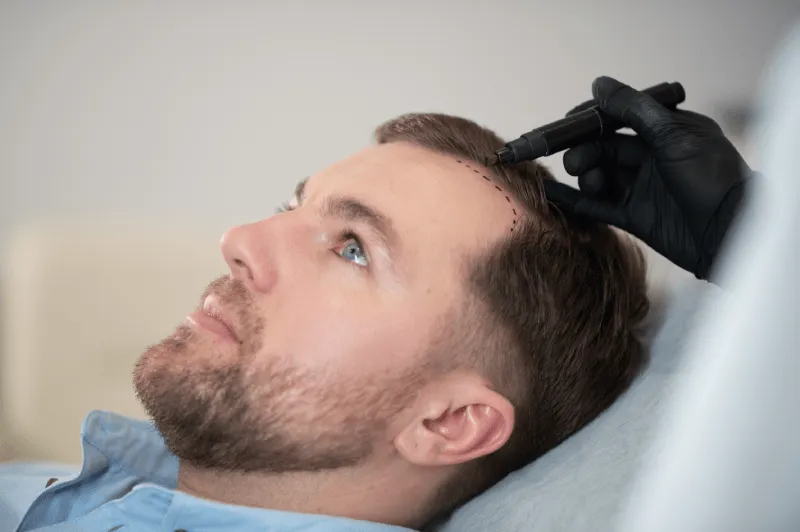
Hair transplantation is a surgical procedure where healthy hair follicles, usually genetically coded not to fall out from the nape area, are taken and transplanted to bald or thinned areas. This method offers a permanent and natural solution because the person’s own living tissue is used. Today, these operations, performed with modern techniques such as FUE and DHI, are carried out under local anesthesia. Hair transplantation is a medical treatment method that allows hair to grow again in shedding areas, and its success directly depends on the experience of the expert team performing the operation and the hair quality in the person’s donor area. The operation process is not just a transplantation procedure but also an engineering study where the exit angle and density of the hair are planned. The transplanted hair grows over time, and the person regains their natural hair for a lifetime.
How Is a Hair Prosthesis Applied?
The hair prosthesis application process starts with taking a detailed measurement of the person’s bald area. The direction, color, thickness, and density of the hair are analyzed to create a personalized design. The prepared prosthesis unit is placed on the scalp using special solutions and skin-friendly adhesives. The application is completed within a few hours, and the person can leave the center with their new hair from that moment on. This fast result-taking feature makes hair prosthesis very attractive, especially for individuals waiting for an urgent solution. Furthermore, no incision or stitching is performed during the application, which makes the process quite comfortable. After the application, expert hairdressers cut the prosthetic hair to fit the person’s facial features, giving it the final look. When the process is complete, the prosthetic hair becomes fully integrated with the existing hair.
How Is the Hair Transplant Operation Process?
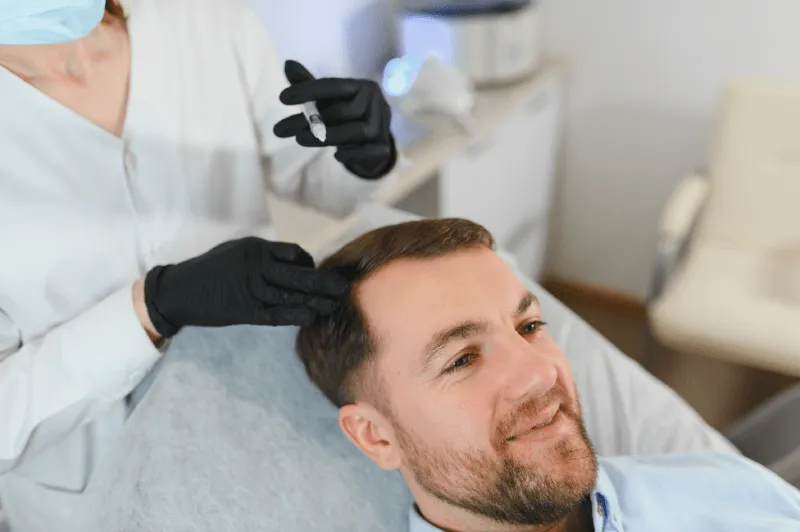
A hair transplant operation is a multi-stage surgical procedure that requires meticulous planning. First, the donor area is determined, and the follicles are collected one by one with the help of micromotors or manual punches. Then, channels are opened in the area to be transplanted, and the collected grafts are carefully placed into these channels. The operation time can vary between 6 and 8 hours depending on the number of grafts to be transplanted. Pain is not felt thanks to local anesthesia. The first few days after the operation are critical, and following the doctor’s recommendations strictly is the key to success. This process is a journey that requires patience but ultimately offers permanent results. On the day of the operation, the patient is hosted at the clinic, and all stages are carried out in a sterile environment. As technology develops, recovery times are shortening, and operation comfort is increasing every day.
What Are the Advantages of a Hair Prosthesis?
The biggest advantage of a hair prosthesis is that it carries no surgical risk and the result is seen immediately. This is the only valid solution for people who do not have enough hair in their donor area for a transplant. Additionally, it allows you to have hair in the density and length you want; meaning you can achieve very lush hair in a single day. It is a reversible method; if you are not satisfied, you can have the prosthesis removed and return to your old self. Hair prosthesis also provides an excellent source of morale and an aesthetic solution for those experiencing temporary hair loss due to chemotherapy or different diseases. Moreover, you can change the color of the prosthetic hair whenever you want or try different styles. Since it requires no recovery process, a solution to the hair problem is produced without breaking away from social life.
What Are the Disadvantages of a Hair Prosthesis?
The most prominent disadvantage of a hair prosthesis is that it requires maintenance at certain intervals. For the cleaning of the scalp under the prosthesis and the renewal of the adhesives, professional maintenance should generally be performed every 3-4 weeks. Additionally, the prosthesis has a lifespan; it needs to be renewed within 1-2 years depending on its quality and usage style. This means a continuous cost in the long run. In some cases, it can cause sweating or itching in very hot weather. It may not give the feeling of “completely your own hair” because there is a base that comes to your hand when you touch it. Furthermore, the rate of wear on the hair may increase after pool and sea use, which creates a need for more frequent maintenance. The fear of the prosthesis coming off your head can sometimes become a psychologically limiting factor for the user.
What Are the Advantages of a Hair Transplant?
The most fundamental advantage of a hair transplant is that the results are permanent for a lifetime. Since the transplanted hair is your own living follicles, it grows and can be cut and dyed. It does not require any periodic maintenance or special adhesive costs. Once the recovery process is complete, it is no different from your own hair and offers a completely natural appearance. You don’t have the worry of “will my hair come off” during activities such as swimming in the sea, doing sports, or walking in stormy weather. This solution obtained with your own tissue is the method that provides the highest psychological satisfaction. Seeing it as a lifetime investment after it is done once provides great relief both financially and spiritually. In addition, taking the transplanted hair from areas coded not to fall out provides long-term confidence.
What Are the Disadvantages of a Hair Transplant?
The disadvantages of a hair transplant include being a surgical procedure and requiring a long time (average 6-12 months) for the results to be seen. There is a temporary but non-aesthetic recovery phase after the operation involving swelling, crusting, and redness. Also, because the hair in the donor area is limited, it may not be applicable to everyone; if there are not enough follicles, the expected thickness cannot be provided. If the operation fails or is performed by the wrong technicians, irreversible aesthetic errors such as a “grass man” appearance may occur. These risks are the most concerning parts of the method. Additionally, the obligation to protect from the sun and impacts during the recovery process may cause the person to change their daily routine for a while.
Who Should Get a Hair Prosthesis?
A hair prosthesis is the most ideal option for people who do not have enough or high-quality hair follicles in their donor area for transplantation. Also, individuals with heart disease, severe diabetes, or chronic illnesses that may prevent surgical intervention should prefer the prosthesis. It is also suitable for those who do not want to wait, want to achieve lush hair immediately, and can afford regular maintenance costs. Men and women of all ages who suffer from complete baldness or have intense thinning in a certain area and do not want surgery can have a hair prosthesis. Additionally, it is a perfect solution for those undergoing temporary hair loss treatment to get through this period without experiencing aesthetic anxiety.
Who Is Suitable for a Hair Transplant?
The most suitable candidates for a hair transplant are individuals whose shedding has stopped or slowed down, and who have healthy and lush hair follicles especially in the nape area (donor site). People whose general health status does not prevent surgery and who wait for a patient and natural result get the highest efficiency from hair transplantation. It is also a permanent solution for those with regional shedding or who find their hairline too far back. Experts generally find it more logical to perform hair transplantation starting from the late 20s, during periods when the shedding character becomes clear. In young candidates, the shedding may continue, so the analysis of an expert doctor is critical. Those with rich donor sites are the group that gets the most successful results from this operation.
What Do Hair Prosthesis Prices Depend On?
Hair prosthesis prices vary according to the quality of the base used, the type of hair (real human hair or synthetic), and the size of the application area. Although the initial application cost seems lower than hair transplantation, the total cost increases in the long run when monthly maintenance expenses and the need for annual renewal of the prosthesis are taken into account. Choosing a high-quality prosthesis system is critical for both a natural look and comfort. Instead of focusing only on price, material quality and application experience must definitely be evaluated. Details such as the breathability of the base and the skin-friendliness of the adhesive used are also among the fundamental factors that determine the price.
How Are Hair Transplant Costs Determined?
Hair transplant costs are determined by the technique to be applied (FUE, DHI, Sapphire FUE), the number of grafts to be transplanted, and the prestige of the clinic where the operation will be performed. Although it usually seems like a high one-time cost, it is more economical than hair prosthesis in the long run due to its lifetime permanence and lack of additional maintenance costs. Since Turkey is one of the leading countries offering high-quality hair transplant services at affordable prices worldwide, the cost advantage is quite high. However, avoiding very cheap and “under-the-table” places is vital for both health and aesthetic results. The fee spent is actually a one-time treatment expense and turns into a very profitable investment when divided over the years.
How Is Hair Prosthesis Maintenance Performed?
Hair prosthesis maintenance must be performed regularly to both extend the life of the system and ensure it remains hygienic. In these maintenances, which generally need to be done every 3 or 4 weeks, the prosthesis is removed from its place, the scalp underneath is cleaned with special solutions, and the old adhesives on the prosthesis unit are cleared. Maintenance is performed with special shampoos and creams for prosthetic hair, and it is fixed again. During this process, the person’s own hair (if any) is shaved. Neglecting maintenance can lead to problems such as bad odor, itching, and early wear of the prosthesis; therefore, a disciplined maintenance routine is essential. The fact that the maintenance products used at home are suitable for professional advice also preserves the shine of the hair.
How Long Does Recovery Take After a Hair Transplant?
The recovery process after a hair transplant consists of several stages. The first 10 days is a sensitive period where crusting occurs and these fall off. The first wash is usually done under the control of the clinic. A process called “shock shedding” is experienced between the 1st and 3rd months after the operation; during this period, the strands of the transplanted hair fall out but the follicles remain inside. From the 4th month onwards, new hair starts to grow permanently. Full recovery and seeing the final result usually take 12 months. During this process, it is necessary to avoid heavy sports, direct sunlight, and traumas. Patience is the most important part of this process because the healing of tissues and the maturation of hair require a biological time.
How Is Naturalness Achieved in a Hair Prosthesis?
Naturalness in a hair prosthesis depends on the thinness of the base lace used in the construction of the unit and the technique of processing the hair onto this lace. Ultra-thin bases called “Skin” or “Lace” provide perfect harmony with the scalp, giving the image that the hair is coming out of your own follicle. Additionally, designing the front hairline to suit the person’s age and facial features is the most important element determining naturalness. In high-quality prostheses, the hair density is distributed balanced; thus, it is almost impossible for someone looking from the outside to understand that it is a prosthesis. Ensuring a one-to-one match with the person’s hair color also supports this integrity. Another element that increases naturalness is that the prosthetic hair has the same texture (hardness, softness) as the person’s own hair.
How Is Naturalness Captured in a Hair Transplant?
Naturalness in a hair transplant depends entirely on the artistic perspective and technical skill of the surgeon. The most important criterion is the planning of the front hairline to be indented and asymmetrical (like natural hair). A straight line will look artificial. Also, the exit angle and direction of the hair must be suitable for the natural flow of the existing hair while being transplanted. The channel opening technique (for example, using Sapphire tips) increases naturalness by ensuring that no scars are left on the scalp. In a successful hair transplant, the transition between the transplanted hair and the original hair is not noticed, and no one understands that you have undergone an operation. Naturalness is measured not only by the thickness of the hair but by its full harmony with the head structure and the face.
Is It Possible to Do Sports with a Hair Prosthesis?
People who use a hair prosthesis can perform all kinds of sports activities with high-quality adhesives and correct application. In cases requiring intense effort and sweating such as swimming, running, and weight training, strong fixing methods are used to prevent the prosthesis from moving. However, intense sweating may slightly shorten the life of the prosthesis adhesives, which may cause maintenance intervals to be more frequent. It is recommended to use protective creams to prevent chlorine or salt in the sea and pool water from damaging the hair strands. In short, prosthetic hair is not an obstacle to leading an active life. Thanks to ultra-grip tapes often preferred by athletes, full security can be provided even in extreme sports.
When Can One Do Sports After a Hair Transplant?
Those who have a hair transplant need to be patient for a certain period to return to sports life. In the first 15 days of the operation, heavy effort and sweating should be completely avoided because sweating can lead to the displacement of grafts or infection. After 1 month, light walks are allowed. For sports with a risk of head trauma such as football and basketball, and intense bodybuilding training, it is generally recommended to wait 2-3 months. After recovery is complete, a person who has a hair transplant can do all kinds of sports freely as if they have never undergone an operation. Over time, the hair follicles will fully fuse with the skin, so no external factor can affect the permanence of the hair.
How Long Is the Lifespan of a Hair Prosthesis?
The lifespan of a hair prosthesis varies depending on the quality of the material used, the base structure of the unit, and the care shown by the user. Systems based on very thin and natural-looking “lace” have a lifespan usually between 6 months and 1 year as they are more sensitive. Thicker and more durable polyurethane-based systems can be used for up to 1.5 – 2 years. Performing regular maintenance during the usage period of the prosthesis, being gentle with the hair, and brushing with special brushes directly affect the lifespan. It is normal for hair strands to fall out or wear out over time, and in this case, the unit needs to be renewed. For an economical use, it is essential to avoid high-heat processes that lead to the wear of the prosthesis.
Is the Permanence of a Hair Transplant Guaranteed?
A hair transplant is medically defined as a “permanent procedure.” The reason for this is that the hair on the nape and behind the ears, chosen as the donor area, is genetically resistant to shedding. Follicles taken from these areas maintain this resistance feature in the new area where they are transplanted. Therefore, the transplanted hair does not fall out for a lifetime. However, your existing original hair that has not been transplanted may continue to fall out due to aging; this can lead to the formation of new thinnings over time. In such cases, a second session of transplantation can be planned, but the transplanted follicles themselves are biologically permanent. Choosing a good clinic guarantees success by increasing the retention rate of the transplanted follicles above 95%.
Is There an Allergy Risk with a Hair Prosthesis?
Although the adhesives and tapes used in hair prosthesis applications are medical grade, allergic reactions can rarely develop in individuals with very sensitive skin. Redness, itching, or small blisters may be symptoms of this sensitivity. To minimize this risk, a small skin test is recommended before application. Modern centers have largely eliminated this problem by using water-based and hypoallergenic solutions. To protect skin health, it is always the safest way to question the content of the products used and prefer expert centers working with high-quality materials. Additionally, adhering to maintenance periods minimizes the risk of reaction by allowing the skin to breathe.
What Are the Side Effects of a Hair Transplant?
As with every surgical procedure, some temporary side effects can be seen in hair transplantation. The most common side effect is the formation of swelling (edema) around the forehead and eyes for the first few days after the operation. Also, itching on the scalp, a feeling of numbness, redness, and small inflammations in the style of acne may be experienced. These situations usually resolve spontaneously within a few weeks. The risk of infection is quite low in operations performed under sterile conditions, but it can become a serious problem if hygiene rules are not followed. Rarely, permanent thinning can occur in the donor area due to over-extraction. All these effects are processes that can be easily managed with drugs and lotions used under the control of an expert doctor.
How Does a Hair Prosthesis Affect Self-Confidence?
A hair prosthesis is revolutionary, especially for people experiencing heavy loss of self-confidence due to hair loss and looking for a fast solution. The lush and healthy image seen when looking in the mirror as soon as the application is finished makes the person feel much younger and more energetic all of a sudden. They start to express themselves more comfortably in social life and gain the freedom to try a new image. This sudden change can create a positive domino effect in many areas from the person’s career to bilateral relationships. Psychologically, the presence of hair is a strong aesthetic that helps the individual look at life more positively. Instead of hiding because they lost their hair, the person holds on to life more strongly with their new hair.
How Does a Hair Transplant Restore Self-Confidence?
Although the hair transplant process requires patience, the increase in self-confidence experienced when the results start to appear is much deeper. Because this change occurs not with a temporary accessory but with the person’s own living tissue. Each new hair strand that comes out after a patient wait makes the person experience the joy of regaining the natural appearance they lost. Seeing the hair grow, going to the hairdresser, and giving it the model they want reinforces the person’s sense of control. The peace of achieving a permanent success provides a more permanent and satisfying spiritual healing than the instantaneous effect provided by a hair prosthesis. Knowing that the reflection seen in the mirror belongs entirely to themselves, the person acts much more confidently in social life.
Is Donor Area Insufficiency an Obstacle?
The most critical limiting factor when making a hair transplant decision is the donor area capacity. If the person does not have hair follicles of sufficient density and quality on their nape, it will not be possible to close wide openings. In this case, a transplantation procedure to be performed will not be aesthetically satisfying because it will be of insufficient frequency, and it will even ruin the aesthetics of the nape area. For people with insufficient donor area, hair prosthesis emerges as the only logical and successful alternative. Although follicles can sometimes be taken from the beard or chest hair with the development of technology, these never give results as natural as head hair. Therefore, donor capacity is the most important technical barrier in determining the method.
How Should Color Matching Be in a Hair Prosthesis?
The success of a hair prosthesis depends on its color matching with the person’s own hair. With the color analysis performed by professionals before the application, the main tone of the hair, the reflections in it, and the graying rate (if any) are accurately determined. If the color does not match exactly, an artificial image like a “wig” appears. Especially the point where the prosthesis merges with your own hair on the temples and nape should be flawless. High-quality prosthesis centers bring this harmony to a perfect level by using multi-tone hairs that contain natural fades and color transitions that will not stand out even in sunlight. Color integrity ensures that the prosthesis is perceived as a part of the body, not as an independent piece on the head.
What Is the FUE Hair Transplant Technique?
FUE (Follicular Unit Extraction) is the most widely used technique that revolutionized hair transplantation. In this method, hair follicles are collected one by one from the donor area with the help of special micro-tipped motors without any stitching or incision. The collected grafts are placed into micro-channels opened in the area to be transplanted. The recovery process is quite fast and does not leave a visible scar in the donor area. The FUE technique is considered one of the most efficient surgical solutions for patients with wide baldness areas because it allows the transplantation of a large number of grafts in a single session. The fact that the operation is seamless makes it easier for patients to return to their normal lives within a few days.

What Is the DHI Hair Transplant Technique?
The DHI (Direct Hair Implantation) technique is a method where the channel opening and follicle placement process are performed at the same time. It is performed using a special medical pen called “Choi.” The biggest advantage of this method is to minimize the time hair follicles stay in the external environment, thereby increasing the survival rate. Besides being seamless and without incisions, it offers a more suitable structure for unshaven hair transplantation. It is a technique with high recovery speed, frequently preferred especially for women and in hair tightening procedures, as it allows for more frequent transplantation between existing hairs. Although the process time is slightly longer in this method, it gives excellent results in terms of density.
Can You Take a Shower with a Hair Prosthesis?
Taking a shower with a hair prosthesis is quite practical when the right products are used. The adhesives of the prosthesis are water-resistant, so taking a bath does not cause the prosthesis to come off. However, it is necessary to avoid very hot water and wash the hair with gentle movements without scrubbing. Sulfate-free shampoos and moisturizing creams produced specially for prosthetic hair prevent the hair strands from drying out and getting tangled. The drying process after a shower should also be performed by dabbing with a soft towel, and high-heat blow dryers should not be held very close as they can damage the structure of the hair. When a correct washing habit is acquired, taking a shower becomes a daily routine that does not pose any difficulty for the prosthesis user.
How Should the First Wash Be After a Hair Transplant?
The first wash after a hair transplant is of vital importance so as not to damage the transplanted follicles and is usually done by experts in a clinic environment 2 or 3 days after the operation. During this wash, a special softening lotion is left on the scalp to ensure the softening of the crusts. Then, the hair is rinsed with a medical shampoo, with light touches without rubbing with fingertips. In the washes you will do at home on your own, you should take care that the water pressure is low and use lukewarm water. The correct washing technique in this process speeds up recovery and ensures the healthy shedding of crusts. Every wash performed during the first 15 days is a medical process that helps the follicles to settle in their place properly.
Does a Hair Prosthesis Provide Air Permeability?
One of the most important features of modern hair prosthesis systems is air and water permeability. Unlike the thick “wig-like” bases used in the past, micro-porous structures used in today’s prostheses allow the scalp to breathe. In this way, problems such as sweating, odor, or bacteria formation on the scalp are minimized. A prosthesis with high air permeability gives the user a feeling of freshness throughout the day and supports the scalp to remain healthy. Especially for those living in hot climates, the breathability of the base is one of the most important technical criteria to be considered when choosing a prosthesis. This feature is the most critical innovation that ensures the prosthesis remains comfortable even in long-term use.
Is There an Age Limit for a Hair Transplant?
Although there is no fixed upper age limit determined for a hair transplant operation, the lower limit is usually the late 20s. The main reason for this is that the shedding pattern has not yet settled at early ages. If original hair continues to fall out after a transplant at a young age, strange thinnings may occur on the back or sides of the head, which leads to an un-aesthetic image. Experts recommend the operation in periods when the shedding has reached a certain level and stalled. In advanced ages, the general health status of the person and the hair quality in the donor area are the main criteria determining the operation. What matters is the stabilization of shedding and the status of the donor site rather than chronological age.
What Are the Replacement Intervals for a Hair Prosthesis?
A hair prosthesis is not a living organ but a product, and enters a natural wear process over time. Breakages or thinnings may be experienced in the hair strands due to exposure to sunlight, wrong washing, combing, or environmental factors. Therefore, if you want your prosthesis to always look fresh and natural, you need to plan a replacement process between 12 and 24 months according to the quality of the model you choose. While some users act much more meticulously and extend this period, some prefer to refresh their image by getting a new unit every year. Regular maintenance is the most critical factor determining these replacement periods. Fading of the hair color or the loss of flexibility of the base structure are the clearest indicators that the time for replacement has come.
How Should the Right Decision Be Made?
When deciding between a hair prosthesis and a hair transplant, the most important question you should ask yourself is “What is my expectation?”. If you are afraid of surgery, want the result to be instantaneous, and can integrate regular maintenance into your life, hair prosthesis is more suitable for you. However, if you are looking for a lifetime permanent, completely natural, and effortless solution, and have the patience for the recovery process and the time required for the results to appear after the operation, hair transplantation is definitely the right choice. Both methods have their own advantages, and the most accurate decision can be made after a detailed interview with a hair specialist. Your personal priorities, budget, and lifestyle are the most important guides that will shape this choice.
Free Consultation
Fill out the form below to get your free medical travel plan and price quote.
Sources and how to verify this yourself
- Comparative study of graft survival by donor site (scalp, beard, chest) at 12 months — roughly 89% for scalp, 95% for beard and 76% for chest hair; survival also falls the longer grafts stay outside the body. source
- Ministry of Health, Regulation on International Health Tourism and Tourist Health, Official Gazette 26 April 2025, No. 32882 — authorisation requirement for facilities and intermediaries, TÜSKA accreditation, compulsory complication insurance (deadline 31 December 2025 for insurance, 31 December 2026 for accreditation). source
- Ministry of Health, Regulation on Promotion and Information Activities in Health Services, Official Gazette 12 November 2025, No. 33075 — treatment promises and guarantees are prohibited; price and campaign announcements are permitted only within international health tourism. source