What Is Sapphire Hair Transplant?
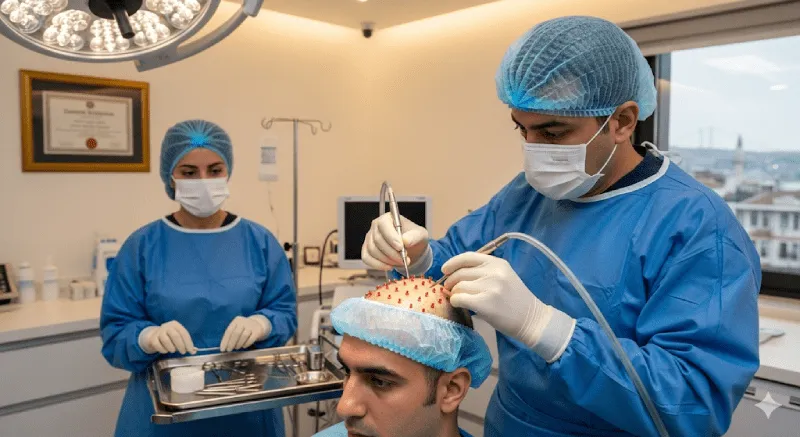
Sapphire hair transplant is a hair restoration technique where tips produced from real sapphire ore are used instead of steel blades during the canal opening phase of the classic FUE method. Sapphire tips are naturally smooth and extremely sharp. This feature allows the canals opened in the scalp during the operation to be much smaller and at a micro level. These special pens produced from sapphire mineral allow the areas where hair follicles will be transplanted to be prepared in the most precise way by minimizing tissue trauma. This technological advancement increases the precision of the procedure while minimizing the risk of complications.
Why Are Sapphire Blades Superior To Classic Metal Blades?
Metal (steel) slits used in classic hair transplantation can lose their sharpness over time and cause more damage to the tissue while opening the canal. These blades, which also carry risks for individuals with metal allergies, can delay tissue healing due to their rough surfaces. On the other hand, sapphire tips separate the tissue sharply without crushing it, thanks to their surface smoothness and hardness. This ensures that the tissue circulation is not disrupted and the slots where the grafts (hair follicles) will be placed are much smoother. The anti-bacterial surface of sapphire tips also significantly reduces the risk of infection, increasing operational safety.
What Is The Purpose Of Producing Sapphire Tips From Real Sapphire Ore?
Sapphire tips are obtained from crystals produced synthetically in a laboratory environment but carrying all the physical properties of real sapphire ore. The most important feature of sapphire is that it is one of the hardest minerals after diamond. This hardness ensures that the blade never loses its sharpness during the period of use. Additionally, sapphire is extremely biologically compatible with body tissue. Since it does not contain a metallic structure, it does not cause a chemical reaction in the tissue and does not conduct heat. This prevents thermal damage to surrounding tissues during the operation, directly affecting the success of the hair transplant.
How Does The Sapphire Tip Technique Facilitate The Canal Opening Phase?
The most critical stage of hair transplantation is the opening of the canals where the grafts will be placed. The sapphire tip technique provides the surgeon with extraordinary control power while opening the canals. Thanks to the micro-size of the blades, it becomes possible to enter even between existing hair follicles. This makes it easier to perform frequent transplantation without damaging the existing hair, especially in patients who have thinning but not completely shed hair. The smoothness of the sapphire blades reduces friction while opening the canal, carrying the surgeon’s manual dexterity to the highest level and guaranteeing that the canals are opened at the desired depth and width.
Why Does Sapphire Hair Transplant Give More Natural Results?
The secret of naturalness lies in the exit angle and density of the hair. Sapphire tips allow for much smaller and frequent canals to be opened during the canal opening phase. In this way, hair follicles can be placed closer to each other, which ensures that the transplanted hair looks much bushier. Additionally, since the tip of the sapphire tips is very thin, the surgeon can determine the canals much more precisely in accordance with the natural growth direction of the hair (usually with angles of 40-45 degrees). The resulting image is no different from the person’s own hair structure, and an artificial appearance does not occur in the hairline.
What Effect Do Sapphire Tips Have On The Tissue?
Sapphire blades work on the principle of “separating” the tissue instead of “cutting” it. In the canal opening process performed with steel blades, tissue tears and micro-level crushing may occur. Sapphire tips, on the other hand, gently push the tissue fibers to the side thanks to their sharpness. This ensures the preservation of vascularization (blood supply) in the scalp. Since tissue damage is kept to a minimum, when the healing process starts, the body focuses directly on feeding the grafts instead of repairing large wounds. This tissue-friendly approach also significantly reduces the amount of bruising and edema that may occur after hair transplantation.
What Is The Contribution Of Sapphire Hair Transplant To The Recovery Period?
One of the biggest advantages of the sapphire tip technique is that it shortens the patient’s return to social life. In classic methods, the crusting process can be longer and more intense because the canals are opened wider. In the sapphire tip technique, the holes opened are as small as a needle tip. These small canals start to close rapidly within 24-48 hours after the operation. The low tissue trauma ensures that the scabs formed after the operation are thinner and easier to shed. Generally, 10 days after the operation, the scalp has a completely cleaned and healed appearance.
Who Are Suitable Candidates For Sapphire Hair Transplant?
Regardless of the type of hair loss, almost any individual with a sufficient donor area can have a sapphire hair transplant. However, this method is the primary choice especially for people who have not completely lost their hair, who experience thinning, and who aim for a tight hair appearance. Since the delicate structure of sapphire tips allows working in narrow areas, the results are more satisfying. It is also ideal for professionals with sensitive skin, prone to allergic reactions, or who expect fast recovery. With the preliminary examination to be performed by an expert physician, the scalp quality and graft status are checked and a definitive candidacy decision is made.
Is Pain Felt During The Operation?
In modern hair transplant operations, patient comfort is at the forefront. Local anesthesia is applied to the area before the sapphire hair transplant procedure. Even the feeling of needle stinging during the anesthesia phase can be eliminated by using pressure spray methods known as “needle-free anesthesia.” After the area is numb, no pain or ache is felt throughout the operation. The fact that sapphire blades show less resistance to the tissue also prevents a mechanical pressure from being felt during the procedure. In the post-operative period, thanks to the minimal damage principle of sapphire tips, the need for painkillers is quite low.
How Do Sapphire Tips Reduce The Risk Of Infection?
Sapphire mineral is inorganic by nature and because its surface is crystalline, it is extremely difficult for bacteria to hold on. This anti-bacterial feature prevents microorganisms from entering the canals during the operation. Classic metal blades can carry micro-roughness, so the risk of carrying infection is theoretically higher. Additionally, the rapid closing of canals opened with sapphire tips minimizes the time and space required for pathogens in the external environment to leak under the skin. Sapphire tip technology combined with a hygienic clinic environment ensures that the operation is completed safely.
What Is The Survival Rate Of Grafts In Hair Transplantation?
The most important factor increasing the success rate (graft retention rate) of the sapphire tip technique is the perfect harmony of the canals with the grafts. Since the canal diameter is adjusted according to the hair follicle (graft) to be placed, the root is fixed so that there is no gap in the canal. This tight contact ensures that the graft starts to be fed rapidly (revascularization) from the surrounding tissues. Thanks to the low tissue damage, the grafts do not remain without oxygen and hold in place without shedding. In sapphire tip transplants performed with the correct technique, it is expected that the transplanted hair will grow successfully at a rate of 95% and above.
How Is Hair Density Increased In The Sapphire Tip Technique?
Metal blades used in classic methods force a certain distance to be left between the canals; otherwise, the risk of tissue necrosis (tissue death) arises. Sapphire tips, on the other hand, do not disrupt tissue blood supply, so canals can be opened at much closer distances to each other. This allows increasing the number of grafts per square centimeter (density). High-density transplantation provides a much fuller and more aesthetic appearance, especially in front areas such as the forehead line. Thanks to sapphire technology, it is now much easier to achieve natural fullness in sparse areas.
How Is The Recovery Process In The Donor Area?
In sapphire hair transplantation, grafts are collected one by one from the donor area (usually the nape area) with the help of a micromotor using the FUE method. Although sapphire blades are actually used in the canal opening (transplantation) phase, the management of the entire operation with the sapphire philosophy (minimal invasive) accelerates general healing. Micro wounds in the donor area close rapidly simultaneously with the area where sapphire transplantation is performed. In the post-operative period, complaints such as excessive itching, burning, or numbness in the donor area are much less common thanks to the gentle approach of the sapphire tip technique. Within a few days, the donor area regains its normal appearance.
What Should Be Considered Before Sapphire Hair Transplant?
The preparation process is critical for the success of the operation. Patients are recommended to stop blood thinning medications, alcohol consumption, and smoking at least one week before the procedure. Smoking can reduce the oxygen level in the blood and decrease the chance of graft retention. Additionally, limiting caffeine-containing beverages on the day of the operation is important for anesthesia effectiveness and blood pressure control. The patient’s general health history, allergies, and chronic medications used must be shared with the expert team. Having a light breakfast on the morning of the operation and choosing comfortable clothes (such as button-down shirts) will increase comfort.
What Awaits The Patient On The Day Of The Operation?
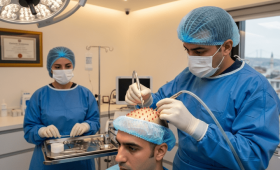
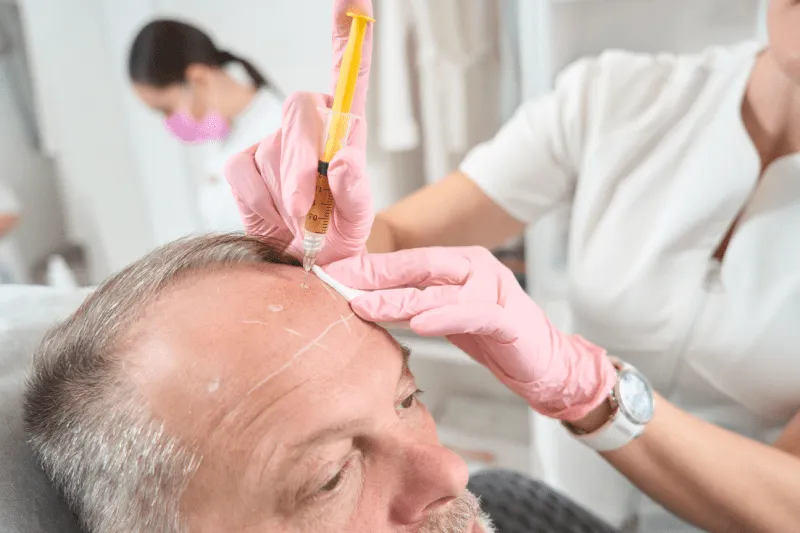
The sapphire hair transplant operation is generally a procedure that lasts a full day. The process starts with the design of the hair and determination of the number of grafts. Then, the donor area is numbed and the graft collection process is performed. After a lunch break, the most crucial part of the operation, the canal opening with sapphire tips and the graft placement phase, is started. This phase is like an art carried out meticulously by the surgeon. When the operation is over, a dressing is applied to the hairy area and the patient is given detailed information about the medications and care sets to be used at home.
Do Sapphire Blades Have Anti-Bacterial Properties?
Yes, the crystalline structure of sapphire tips is inorganic and does not provide a ground suitable for micro-organism growth. This non-metallic structure is also chemically inert; that is, it does not interact with body fluids. This makes it easy to maintain sterility at every moment of the operation. Sapphire tips designed as single-use are taken out of their packaging specifically for each patient. In this way, the risk of cross-contamination is completely eliminated. The low risk of infection or inflammation that may occur in the patient’s scalp is due to these unique physical properties of sapphire mineral.
How Is The Angle Of Hair Follicles Determined?
The angle of the hair follicles should follow the natural growth pattern of the hair. Sapphire tips, by their nature, offer the surgeon a wider range of motion and maneuverability. Thanks to these very thin tips, the surgeon can position each canal perfectly from a 3D perspective; that is, both angularly (perpendicularity to the ground) and directionally (to the right, left, or front). It is much easier to catch the right angle with sapphire tips, especially in areas where hair grows in swirls such as the crown area (vertex). This meticulous work ensures ease of combing and an aesthetic integrity when the hair grows.
Does The Risk Of Edema And Swelling Decrease With Sapphire Tips?
Edema and swelling after the operation is a natural reaction of the body to the surgical procedure. However, in the sapphire tip technique, sub-tissue fluid (anesthesia fluid) accumulation and tissue trauma are much more limited. While large injuries created by metal blades can cause more fluid collection, the micro canals of sapphire tips minimize this process. When combined with measures such as bandage use and keeping the head elevated recommended after the operation, significant swelling on the face does not occur in most patients who have a sapphire hair transplant. This is an element that increases the comfort of the healing process.
How Is The First Wash After Sapphire Hair Transplant?
The first wash is generally performed in the clinic by an expert team 24 to 48 hours after the operation. In this process, it is very important that the transplanted grafts do not move. Using special foam shampoos and lotions, the scabs are softened and the scalp is purified with gentle touches. The advantage of sapphire tips comes into play here as well; because the canals are small, the scabs are formed very thin and they soften easily during washing. Patients are taught the correct technique for the subsequent washes they will perform at home and a special washing protocol that will last for about 10 days is started.
When Do New Hair Begin To Grow?
The growth process after sapphire hair transplantation is a journey that requires patience but is rewarding. Within the first 3 months following the operation, the process called “shock loss” occurs. After this period, starting from the 4th month, hair follicles start to come alive and produce new strands. Around the 6th month, approximately 50% of the hair has grown and a visible change is noticed. Thanks to the high graft retention rate provided by the sapphire tip technique, the final result is obtained at the end of the 12th month. The hair reaches its full density, the strands thicken, and the new hair that will be permanent for a lifetime takes its form.
What Happens During The Shock Loss Phase?
Shock loss is the shedding of transplanted hair strands as a reaction to trauma, but the follicles remaining under the skin and passing into the resting phase. This situation is completely normal and an expected process. In the sapphire tip method, since tissue damage is low, the roots survive this process more healthily. Shock loss usually starts in the 2nd week after the operation and can last up to the 2nd month. Patients should not panic at this stage; because what is shed is not hair follicles, only the strands. The roots are attached to the skin and will produce much stronger hair strands shortly.
Does The Sapphire FUE Technique Leave Scars?
One of the biggest promises of the modern sapphire FUE technique is being “scarless.” While a strip-shaped scar remained on the back of the head in old methods (such as FUT), only micro dots occur in the FUE system. Sapphire tips do not tear the tissue while opening the canal, so these dots are so small that it is impossible to see them with the naked eye when healing is complete. Even if the hair is cut very short, a scar regarding the operation is not noticed on the scalp. This minimal “scar formation” is a direct result of the sharpness and tissue-friendly structure of sapphire tips.
Is Sapphire Hair Transplant Suitable For Women?
Absolutely yes. Hair loss in women is usually seen in the form of a general thinning, different from male pattern hair loss. Sapphire tip technology provides a great advantage for women because it is compatible with unshaven hair transplant options. In thickening procedures performed by entering between long hair, the precision of sapphire tips is vital for protecting existing hair strands. Also, aesthetic results and fast social return are very critical for women; minimal crusting and natural appearance offered by sapphire tips fully meet these expectations.
Can Diabetes Patients Have Sapphire Hair Transplant?
The biggest concern in diabetes patients is slow tissue healing and infection risk. Sapphire hair transplant is the safest option for controlled diabetes patients as it minimizes tissue trauma. The fact that the canals are very small and the anti-bacterial feature of sapphire mineral minimize the risks in the healing process. However, it is essential that the patient’s HbA1c levels are within normal limits before the operation and that they receive doctor approval. By monitoring blood sugar meticulously during and after the procedure, the advantages of sapphire technology can be utilized.
How Does The Sharpness Of Sapphire Blades Affect The Results?
The sharper a blade is, the smoother the destruction it leaves in the tissue. Sapphire blades have a molecular-level smooth sharpness. This sharpness ensures that the tissues in the scalp “stick” to each other and heal rapidly while opening the canal. While dull blades create trauma by crushing the tissue, the sapphire blade is as fluid as a hot knife cutting butter. This fluidity can also shorten the duration of the operation. Opening more canals without error in less time directly increases the possibility of grafts staying alive by reducing their waiting time in the external environment.
Why Is Depth Important In The Canal Opening Phase?
Each hair follicle must be placed at the correct depth in the scalp for nutrition. If canals are opened too deep, the vascular structure can be damaged; if opened too shallow, grafts cannot be fed enough and fall out. Sapphire tip pens offer the surgeon a fixed depth control. The surgeon makes millimetric adjustments according to the patient’s scalp thickness, ensuring that all canals are at a homogeneous depth. This standard depth guarantees that the hair grows in a synchronized way and a bumpy or sunken image (orange peel appearance) does not occur on the scalp.
What Are Sapphire Hair Transplant Costs?
Sapphire hair transplant may be slightly more costly than the classic FUE method due to the technology used and the quality of consumables. However, considering the naturalness of the results obtained, the high healing speed, and the comfort of the operation, this price difference should be seen as an “investment” rather than a “cost.” Cheap and poor-quality methods can lead to artificial images or tissue losses that are difficult to correct later. Sapphire tip technology is the most economical solution that guarantees the patient’s satisfaction in the long run and reduces the need for a second operation.
What Are The Factors Affecting The Success Rate?
No matter how advanced technology is, the biggest factor affecting success is the experience of the surgeon and the team. The sapphire tip is just a tool; using this tool with the right angle, the right depth, and the right frequency requires expertise. In addition, sterilization standards, collection of grafts from the donor area without damage, and the patient’s compliance with post-operative care instructions directly affect success. A healthy lifestyle, staying away from smoking, and the sensitive washing process for the first 10 days are the keys that reveal the miraculous results of sapphire hair transplant.
What Is Done If A Second Hair Transplant Session Is Needed?
In some cases, if the shedding area is very wide or the patient wants maximum density, a second session can be planned. The gentle structure of the sapphire tip technique is a great advantage at this point. Since tissue trauma is minimal, the scalp maintains its flexibility and blood supply. This ensures that the ground remains healthy for a second session to be performed approximately 8-12 months later. Since sapphire tips were used in the first transplant, the success of the second session is much higher than classic methods as it reduces the formation of scar tissue (fibrosis) under the skin.
What Are The Sports And Activity Restrictions After Hair Transplant?
Physical activities should be avoided in the first days after the operation. Full rest for the first 3 days and light walks for the first 15 days are recommended. Although canals opened with sapphire tips close rapidly, heavy sports (such as bodybuilding, running) that will cause an increase in blood pressure in the scalp may lead to grafts popping out or bleeding. Also, one should stay away from humid and infection-carrying environments such as pool, sea, sauna, and Turkish bath for the first month. Protecting the scalp from sunlight is also critical to prevent pigmentation disorders.
Why Is Sapphire Hair Transplant Seen As An Investment?
Hair transplant is not only a physical change but also an investment in a person’s self-confidence and social life. The sapphire tip technique provides the safest and most aesthetic return on this investment. A future where hair will not shed, a life at peace with mirrors, and a younger appearance are the permanent values offered by this technology. Thanks to the natural results provided by sapphire tip transplantation, no one understands that you had a hair transplant; they only notice that you look better. This psychological comfort is an element that increases quality of life in every field.
How Does Cure Holiday Support The Hair Transplant Process?
Cure Holiday constructs the hair transplant process not just as a medical operation but as an end-to-end perfect experience. From the first moment we contact our patients, we manage hair analysis and pre-evaluation processes through our expert advisors. We perform our operations with world-class hygiene and technology in Turkey’s most modern and fully equipped clinics. As Cure Holiday, our goal is not just to get your hair back; it is to offer a treatment journey where you feel special, are informed at every stage, and feel trust.
How Is Personalized Planning Done With Cure Holiday?
Each person’s hair structure, shedding type, and aesthetic expectation are unique. At Cure Holiday, instead of applying a “standard” package, we develop a strategy specific to each patient. Every detail from determining the forehead line to the capacity of the donor area, from the number of canals to be opened with sapphire tips to the transplant frequency is planned according to your facial features and hair character. Our expert physicians use modern digital tools and an artistic perspective to extract your personal map to obtain the most natural result. With the assurance of Cure Holiday, we bring to life the design that will suit you best together.
Why Should Health Tourism Through Cure Holiday Be Preferred?
Cure Holiday combines Turkey’s leading position in health tourism with superior service quality. For our patients coming from abroad or out of town, we undertake not only the treatment but also all logistical processes such as luxury accommodation, VIP transfers, and language support. All you need to do is focus on your appointment; we professionally manage all the remaining organization. With our follow-up process that continues for 1 year after the treatment, we closely monitor the growth stages of your hair and stand by you for every question. Cure Holiday offers a permanent change in the comfort of a peaceful holiday.
How To Achieve Your Dream Hair With Cure Holiday?
Your change journey starts with sending a message or making a phone call to Cure Holiday. In the free consultation phase, we listen to your dreams and offer you the most suitable sapphire hair transplant plan. With our transparent pricing, honest medical approach, and patient satisfaction-oriented vision, we have touched the lives of thousands of patients to date. We are ready to change your reflection in the mirror by combining sapphire FUE, the most advanced technique of modern medicine, with the expertise and hospitality of Cure Holiday. Take the first step today with Cure Holiday to have healthy, bushy, and natural hair.
The hair transplant process creates miraculous results when the right technology and the right team come together. Sapphire tip technology represents the technical excellence of this process; Cure Holiday turns this excellence into a journey of comfort and trust for you. Remember, you are in the right place for the best result.
Free Consultation
Fill out the form below to get your free medical travel plan and price quote.
Sources and how to verify this yourself
- Comparative study of graft survival by donor site (scalp, beard, chest) at 12 months — roughly 89% for scalp, 95% for beard and 76% for chest hair; survival also falls the longer grafts stay outside the body. source
- Ministry of Health, Regulation on International Health Tourism and Tourist Health, Official Gazette 26 April 2025, No. 32882 — authorisation requirement for facilities and intermediaries, TÜSKA accreditation, compulsory complication insurance (deadline 31 December 2025 for insurance, 31 December 2026 for accreditation). source
- Ministry of Health, Regulation on Promotion and Information Activities in Health Services, Official Gazette 12 November 2025, No. 33075 — treatment promises and guarantees are prohibited; price and campaign announcements are permitted only within international health tourism. source