About the prices on this page. The figures below are indicative market prices and country comparisons, not a quote. Our own current, all-inclusive prices are published on our medical travel in Turkey page, and we confirm your figure in writing before you commit to anything.
🩺 Medical Editor’s Note (2026 Verified Data)
This technical guide has been verified against 2026 medical tourism standards in Turkey.
Verified Price Range:
Facility Standards: JCI Accredited, Ministry of Health Regulated.
Currency: USD / EUR / GBP accepted at all clinics.
Hair Transplant for Gray Hair: Matching Texture and Color for a Seamless Look
Hair Transplant for Gray Hair: A Deep Dive into Technical Considerations
The increasing demand for hair restoration extends beyond addressing hair loss; a significant and often nuanced concern for patients is the aesthetic integration of transplanted hair with existing graying hair. Successfully achieving a natural, seamless result when transplanting hair in individuals with significant graying requires a detailed understanding of both follicular unit extraction (FUE) and follicular unit transplantation (FUT) techniques, as well as the inherent characteristics of melanocyte activity within hair follicles. This pillar focuses on the ‘What’ and ‘Why’ of hair transplantation in graying patients, delving into the medical foundations and technical standards necessary for optimal outcomes.
Understanding the Biology of Graying Hair
Hair color is determined by melanin, a pigment produced by melanocytes within the hair follicle. As individuals age, melanocyte activity progressively diminishes, leading to a reduction in melanin production and the appearance of gray hair. This isn’t a uniform process; graying typically begins at the temples and crown, and the rate of graying is genetically predisposed and can be influenced by factors like stress and nutritional deficiencies. Critically, melanocyte stem cells reside in the hair follicle bulge, and their gradual dysfunction dictates the onset and progression of graying.
When considering hair transplantation, it’s important to understand that transplanted hair retains the characteristics of its *donor* follicle, including its potential to gray. This means that hair transplanted from a donor area with fully pigmented hair will likely remain pigmented for a longer period, while hair sourced from areas with active graying will likely follow a similar trajectory. This necessitates careful donor area selection.
Donor Area Selection & The ‘Gray Area’ Challenge
The selection of the donor area is paramount in gray hair transplantation. The occipital scalp (back and sides of the head) is the preferred donor site due to the relative longevity of melanocyte activity in this region. However, even within the occipital scalp, there’s variation. Surgeons must meticulously assess the donor area to identify follicles with robust melanocyte populations. Techniques like trichoscopy (a magnified skin surface examination) can aid in visualizing follicular density and pigment distribution.
A strategic approach involves:
- Mapping Gray vs. Pigmented Hair: Precisely mapping the distribution of gray and pigmented hairs in the donor area is crucial. Software-assisted density analysis can quantify follicular units and their pigmentation levels.
- Balancing the Blend: A common technique is to strategically blend transplanted hair from both pigmented and gray donor areas to create a more natural appearance. A strict “all pigmented” approach can appear unnatural, especially in patients with significant graying.
- Considering Future Graying: Predicting the future rate of graying is inherently difficult, but surgeons should account for the possibility of continued melanocyte loss when determining the number of pigmented follicles to transplant.
FUE vs. FUT: Technical Considerations for Gray Hair
Both FUE and FUT techniques are viable options for gray hair transplantation, but they present unique considerations.
- FUT (Follicular Unit Transplantation – “Strip Harvesting”): FUT allows for the extraction of a larger number of follicular units in a single session. This can be advantageous for patients with extensive hair loss and a need for significant density. However, the linear scar associated with FUT can be more visible if the donor area is already showing signs of thinning or graying.
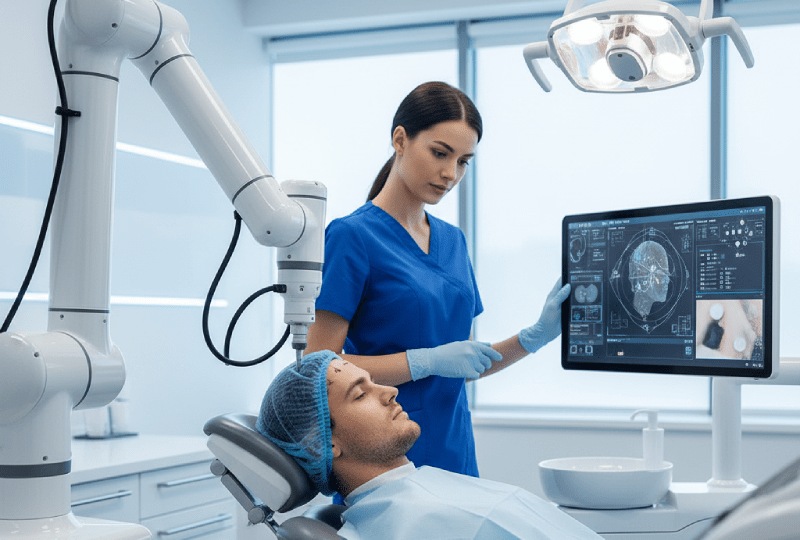
- FUE (Follicular Unit Extraction): FUE offers the advantage of minimal scarring, making it a preferred choice for patients who wear their hair short or have concerns about a visible linear scar. With FUE, the surgeon extracts individual follicular units, allowing for precise selection of follicles based on pigmentation. Advanced FUE techniques, such as robotic assistance, can further enhance precision and minimize damage to surrounding follicles. The cost for FUE generally ranges from $3,000 – $8,000 USD depending on the number of grafts.
Regardless of the chosen technique, meticulous dissection and handling of follicular units are crucial. Damage to the follicle during extraction or implantation can compromise melanocyte viability, potentially accelerating graying or reducing the lifespan of the transplanted hair.
Color Matching and Camouflage Techniques
Achieving a seamless look often requires more than just careful donor selection. Camouflage techniques can further blend transplanted hair with existing gray hair:
- Strategic Placement: Placing pigmented hairs strategically around the hairline and frontal zones can create the illusion of density and minimize the contrast with graying hair further back on the scalp.
- Micro-Pigmentation (Scalp Micropigmentation – SMP): SMP involves the application of tiny, cosmetic tattoos to the scalp, creating the appearance of fuller hair. SMP can be used to camouflage sparse areas or to blend transplanted hair with existing gray hair, effectively creating the illusion of density and color consistency. The cost for SMP typically falls between $800 – $2,000 USD per session.
- Hair Coloring Considerations: While coloring transplanted hair is possible, it’s important to avoid harsh chemicals that could damage the follicles. Patients should consult with both their hair transplant surgeon and a qualified colorist to determine the best approach.
International Standards and Recovery Hubs
For patients seeking hair transplantation abroad, particularly in Turkey – a popular destination for medical tourism – adhering to internationally recognized standards is critical. Our clinic network prioritizes facilities that are JCI (Joint Commission International) Accredited and regulated by the Turkish Ministry of Health. This ensures adherence to rigorous safety protocols, quality control, and ethical practices.
We offer comprehensive packages tailored to patients from the UK, US, and EU, with pricing options in USD, EUR, and GBP. Visa requirements are streamlined, with an E-visa available for most UK/US/EU citizens, allowing for a 90-day stay.
Our designated recovery hubs provide varying levels of comfort and convenience:
- Istanbul (City/Boutique): Offers a vibrant cultural experience and access to a wide range of amenities.
- Antalya (Resort/Beach): Provides a relaxing and restorative environment with access to beaches and resort facilities.
- Izmir (Aegean/Thermal): Known for its thermal springs and mild climate, ideal for post-operative recovery.
The Role of Platelet-Rich Plasma (PRP) Therapy
PRP therapy, involving the injection of concentrated platelets into the scalp, is increasingly being used as an adjunct to hair transplantation. Platelets contain growth factors that can stimulate melanocyte activity and potentially slow down the graying process. While not a guaranteed solution, PRP therapy can contribute to improved follicular health and potentially enhance the longevity of pigmented hair. A full PRP treatment course costs approximately $500 – $1,500 USD.
The Surgical/Clinical Journey: Hair Transplant for Graying Hair
Addressing hair loss accompanied by graying presents a unique challenge in hair restoration. Unlike addressing purely genetic pattern baldness, achieving a natural result when transplanting hair that will eventually revert to gray (or blend with existing gray) requires meticulous planning and execution. This pillar details the surgical process, focusing on technical considerations for patients with graying hair, alongside a case study and risk mitigation strategies. We will focus on procedures performed in Turkey, a leading destination for hair transplants, adhering to rigorous medical standards.
Pre-Operative Assessment & Donor Selection
The initial consultation isn’t merely an aesthetic discussion. It’s a comprehensive medical evaluation. For patients with gray hair, a detailed trichoscopic analysis is vital. This high-magnification scalp examination allows us to assess not only the density of remaining hair but also the percentage of gray hairs within the donor and recipient areas. This impacts graft selection and potential camouflage strategies. The Norwood-Hamilton scale is still foundational, but we also utilize the Buecher-Weser gray hair scale to quantify the degree of graying.
Donor area selection is paramount. The posterior occipital region consistently provides the most robust, genetically resistant hair follicles. However, in graying individuals, the percentage of gray hairs in the donor area *increases* as you move towards the periphery. Therefore, we strategically harvest grafts from the densest, darkest patches within the safe donor area. Follicular Unit Extraction (FUE) is often preferred due to its minimal invasiveness, allowing for targeted graft harvesting. We use tools like the WAW Hair System or similar motorized punches with varying diameters (0.8mm – 1.2mm) to minimize transection rates and maximize graft yield.
Surgical Technique: Matching Texture and Color
The surgical technique itself needs adaptation. While the basic principles of graft placement remain constant (mimicking natural hair direction and density), several nuances apply to gray hair.
- Graft Mixing: A common technique involves strategically mixing pigmented and gray hairs within the transplanted area. This creates a softer transition and avoids a stark contrast. The ratio depends on the degree of graying and patient preference. A typical approach might be 60% pigmented grafts and 40% gray grafts for early graying, shifting towards a 30/70 split for more advanced cases.
- Recipient Site Creation: The angle and depth of recipient site creation are crucial. We utilize blades (15-18 gauge) and/or specialized implanters like the Lion LT or similar to ensure correct orientation. For finer, gray hair, shallower implantation depths are often necessary to prevent graft burial and ensure natural emergence.
- Density Planning: Gray hair often appears thinner due to a reduction in hair shaft diameter. Therefore, we often aim for a slightly higher graft density (40-50 grafts per cm²) in the recipient area compared to procedures for purely pigmented hair to compensate for this visual effect.
- Camouflage with Pigmented Grafts: In some cases, we recommend strategically placing pigmented grafts along the hairline to create a frame of darker hair, softening the overall appearance of graying. This is particularly effective for patients with salt-and-pepper hair.
Persona Case Study: Mr. Alistair Davies (UK, Age 45)
Mr. Davies, a 45-year-old professional from the UK, presented with a Norwood-Hamilton Stage III hair loss pattern and approximately 50% graying, primarily at the temples and crown. He desired a natural-looking result that maintained his existing gray hair. His pre-operative assessment revealed healthy donor density but a significant proportion of gray hairs within the donor area. After careful consultation, he opted for an FUE procedure in Istanbul, Turkey, with a target of 2,800 grafts.
The surgery involved harvesting 1,400 pigmented grafts and 1,400 gray grafts. A mix of 1-hair, 2-hair, and 3-hair follicular unit grafts were meticulously extracted and prepared. The hairline was reconstructed with a slightly higher density of pigmented grafts, blending into a natural distribution of gray and pigmented hairs throughout the crown. Post-operative care included gentle washing with a specialized shampoo (35 GBP) and a course of minoxidil (40 GBP/month) to promote graft survival. Mr. Davies reported minimal discomfort and a satisfactory aesthetic outcome after 6 months, with the transplanted hair blending seamlessly with his existing gray hair.
Risk Mitigation & Post-Operative Care
As with any surgical procedure, hair transplantation carries inherent risks. However, meticulous planning and adherence to stringent medical standards minimize these risks. In Turkey, clinics accredited by the Joint Commission International (JCI) and regulated by the Ministry of Health offer a high level of patient safety.
- Infection: Strict sterilization protocols and prophylactic antibiotics (20 GBP) are employed to prevent infection.
- Scarring: FUE minimizes visible scarring. However, proper surgical technique and post-operative wound care are crucial.
- Graft Survival: Maintaining graft viability is paramount. This is achieved through meticulous handling, appropriate storage solutions, and post-operative care instructions. We recommend patients avoid strenuous activity for 2-3 weeks post-op.
- Shock Loss: Temporary shedding of existing hair around the transplanted area is common. This usually resolves within 3-6 months.
- Unnatural Appearance: Incorrect graft placement or density can result in an unnatural look. Experienced surgeons prioritize natural results.
Financial Considerations & Logistics
Turkey has become a popular destination for hair transplants due to its cost-effectiveness and high-quality medical care. A typical FUE procedure for 2,800 grafts can range from 2,500 – 4,000 USD, 2,200 – 3,500 EUR, or 1,900 – 3,000 GBP, inclusive of consultation, surgery, and initial post-operative care. Accommodation and travel expenses are additional. An E-visa is readily available for citizens of the UK, US, and most EU countries, allowing for a 90-day stay. Recovery hubs like Istanbul (city/boutique experience), Antalya (resort/beach recovery), and Izmir (Aegean/thermal spas) offer diverse options for post-operative recovery and relaxation.
We strongly advise patients to choose JCI-accredited clinics and to thoroughly research the surgeon’s experience and credentials before undergoing a hair transplant procedure. A commitment to quality and patient safety is our utmost priority at Cureholiday.com.
Hair Transplant for Gray Hair: Recovery Logistics, Cost Audit & Medical Verdict
Addressing hair loss due to aging, particularly when experiencing graying, requires a nuanced approach to hair transplantation. While the surgical principles remain consistent, successfully integrating transplanted follicles with existing gray or silver hair demands meticulous planning and a robust post-operative recovery strategy. This pillar focuses specifically on the logistical considerations, a detailed cost analysis comparing Turkey (Antalya and Istanbul) with Western options, and the final medical verdict on achieving a seamless, natural look for patients with graying hair.
Post-Operative Recovery: Beyond the Basics
The initial recovery period following Follicular Unit Transplantation (FUT) or Follicular Unit Extraction (FUE) is largely predictable, involving scalp sensitivity, mild discomfort, and the formation of post-operative crusts. However, patients with gray hair require extended attention to follicular neovascularization – the re-establishment of blood supply to the transplanted grafts. Gray hair, possessing inherently lower melanin content, often exhibits reduced capillary density compared to pigmented hair. This translates to a potentially compromised microenvironment for graft acceptance.
Our protocols at CureHoliday emphasize accelerated healing through Low-Level Laser Therapy (LLLT) beginning 48-72 hours post-op. This non-invasive treatment stimulates cellular metabolism and enhances blood flow, critical for promoting graft survival, particularly in areas with diminished vascularity. Furthermore, we utilize specialized post-operative washes containing Tricapil, a hair growth supporting peptide, designed to optimize the follicular stem cell environment. Patients are instructed on a progressive return to physical activity, avoiding strenuous exercise for a minimum of two weeks to prevent edema and potential graft dislodgement. We also highly recommend a specialized scalp massage protocol, initiated at 10 days post-op, to further stimulate circulation and encourage follicular anchoring.
Recovery Hub Comparison: Istanbul, Antalya & Izmir
The choice of recovery location significantly impacts patient comfort and adherence to post-operative care. We’ve categorized our recovery hubs to cater to varying preferences:
- Istanbul (City/Boutique): Ideal for patients who prefer a dynamic urban environment. Post-operative check-ups can be seamlessly integrated into sightseeing and cultural exploration. However, maintaining strict adherence to aftercare (avoiding sun exposure, minimizing physical exertion) requires discipline.
- Antalya (Resort/Beach): Provides a relaxed and conducive environment for recovery. The Mediterranean climate encourages vitamin D synthesis, beneficial for wound healing. However, prolonged sun exposure necessitates diligent use of SPF 50+ sunscreen and protective headwear, even after the initial crusting phase. We offer dedicated post-op nurses who can provide at-home care within resort accommodations.
- Izmir (Aegean/Thermal): Leverages the therapeutic benefits of thermal springs, rich in minerals known to promote tissue regeneration. The gentle climate and slower pace of life offer an ideal setting for undisturbed recovery. Our Izmir facility collaborates with local thermal spa resorts for integrated post-operative care packages.
All three hubs adhere to the same rigorous medical standards, as outlined by JCI (Joint Commission International) Accreditation and regulations set by the Turkish Ministry of Health. We prioritize patient convenience and offer 24/7 telehealth support, irrespective of the chosen recovery location.
2026 Cost Audit: Turkey vs. Western Countries
The financial disparity between hair transplantation in Turkey and Western countries continues to be significant. Our projected cost audit for 2026, based on current economic trends and anticipated inflation, reveals the following:
- United States: The average cost for a 2,500-graft FUE procedure ranges from $6,000 – $15,000 USD. This figure often excludes ancillary costs like pre-operative blood work, post-operative medications, and LLLT sessions.
- United Kingdom: A comparable procedure in the UK typically costs between £4,000 – £10,000 GBP ($5,000 – $12,500 USD), with similar exclusions.
- Europe (Germany, France, Italy): Prices range from €3,500 – €9,000 EUR ($3,800 – $9,700 USD), again often excluding add-on services.
- Turkey (Istanbul/Antalya): A 2,500-graft FUE procedure, including comprehensive pre-op evaluation, surgery performed by experienced surgeons, post-operative care package (medications, aftercare shampoo, head covering), airport transfers, and typically accommodation, ranges from $2,500 – $4,000 USD. LLLT and specialized peptide treatments are available as premium upgrades, costing approximately $300 – $600 USD.
These figures are estimates and can vary based on the surgeon’s experience, the complexity of the case, and the chosen package. However, the cost advantage of undergoing hair transplantation in Turkey remains substantial, even factoring in travel and accommodation expenses. We accept payments in USD, EUR, and GBP, offering flexible financing options.
The Medical Verdict: Achieving a Seamless Look with Gray Hair
Successfully transplanting hair into a scalp with a significant proportion of gray hair isn’t simply about graft survival. It’s about achieving a natural, blended aesthetic. Several factors must be considered:
- Graft Selection: We prioritize selecting grafts from the donor area that exhibit a similar hair caliber and texture to the existing gray hair. Utilizing larger follicular unit grafts (3-4 hairs) in areas of thinning gray hair can create a more substantial and natural appearance.
- Color Matching (Temporary Solution): While permanent hair color change post-transplant isn’t feasible, we advise patients to consider temporary hair coloring/tinting of the transplanted hair to better blend with existing gray hair *before* the transplanted hair stabilizes (approximately 6-8 months post-op). This is a cosmetic, patient-driven decision.
- Camouflage Techniques: For patients with significant graying and diffuse thinning, we may recommend combining hair transplantation with micropigmentation (SMP) to create the illusion of density and camouflage areas where grafting is not ideal.
- PRP Therapy Integration: Platelet-Rich Plasma (PRP) therapy, administered at 1 month, 3 months, and 6 months post-op, can further enhance follicular health and potentially stimulate some degree of melanogenesis (melanin production) in the transplanted follicles, although this is not a guaranteed outcome.
The medical verdict is clear: successful hair transplantation for patients with gray hair requires a holistic approach, encompassing meticulous surgical technique, optimized post-operative care, and a clear understanding of the limitations and available adjunct treatments. Our commitment at CureHoliday is to provide transparent information, personalized treatment plans, and a seamless experience, ensuring patients achieve the desired aesthetic outcome and regain their confidence.
Visa Information: An E-visa is readily available for most citizens of the UK, US, and EU countries, allowing for a 90-day stay in Turkey.
Ready to consult a specialist? Schedule a Free Consultation for Hair Transplant for Gray Hair in Turkey with cureholiday.com
Free Consultation
Fill out the form below to get your free medical travel plan and price quote.