In the modern aesthetic world, surgical interventions are rapidly being replaced by minimal invasive methods. People now prefer applications that can be performed during a “lunch break” and show immediate effects instead of long recovery periods, general anesthesia risks, and surgical complications. At this point, two giant technologies are at the peak of non-surgical facial rejuvenation trends: Thread Lift and HIFU (High-Intensity Focused Ultrasound). In this guide, we will examine all the details of these popular methods that restructure your skin and turn back the signs of aging.
Why Should Non-Surgical Facial Rejuvenation Be Preferred?
While traditional face lift surgeries involve cutting tissues and removing excess skin, non-surgical methods trigger the skin’s own self-repair mechanisms. The biggest reason for this preference is that it provides rejuvenation without disturbing the natural appearance. Non-surgical procedures allow the patient to return to social life within minutes while minimizing the risk of infection and permanent scarring. Additionally, being much more accessible than surgery in terms of cost makes these methods attractive for individuals from all age groups. Today, people are in pursuit of a “rested and rejuvenated” facial expression, not a “changed” face.
What Are the Non-Surgical Face Lift Methods?
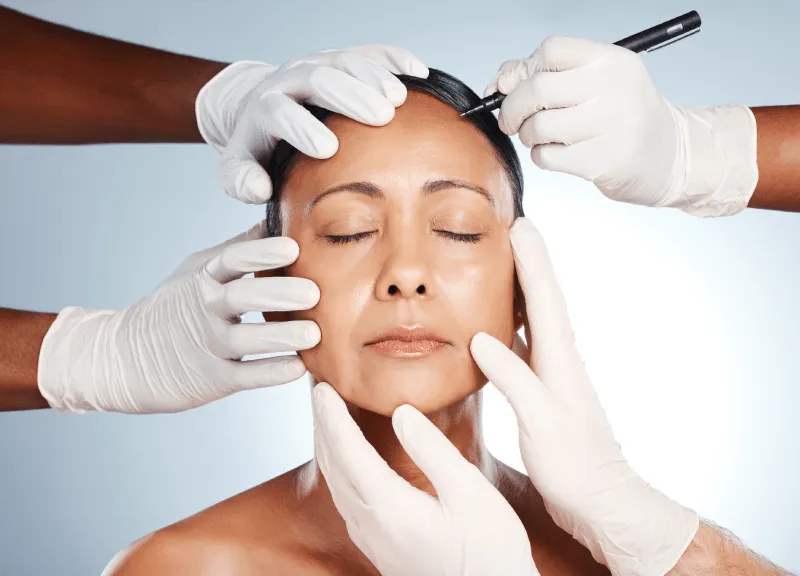
There are many different technologies and injection methods under the umbrella of non-surgical face lifting. Among these, the most popular are; Thread Lift applications that mechanically pull up sagging tissues, HIFU technology that heats deep tissue with sound waves, radiofrequency (Scarlet, Thermage) that improves skin quality, and filler applications that eliminate volume deficiencies. In addition, botulinum toxin injections (Botox) act as a cornerstone in eliminating dynamic wrinkles. Each of these methods is applied by personalizing according to the skin structure, degree of sagging, and expectations of the patient. Modern medicine allows obtaining results close to surgery by combining these techniques.
How Has Thread Lift Technology Evolved?
Thread lift methods have undergone revolutionary changes since they were first introduced to the market in the 90s. Initially used non-absorbable permanent threads have been replaced by polydioxanone (PDO), polylactic acid (PLLA), and polycaprolactone (PCL) materials that are completely soluble in the body and 100% compatible with the tissue. These new generation threads not only create a lifting effect but also initiate an intense collagen synthesis in the surrounding tissue while melting. As technology progressed, the hooks (cogs) and cones on the threads became more effective, reaching the capacity to hold the sagging tissue more tightly and carry it for a longer time.
How Exactly Does HIFU Technology Work?
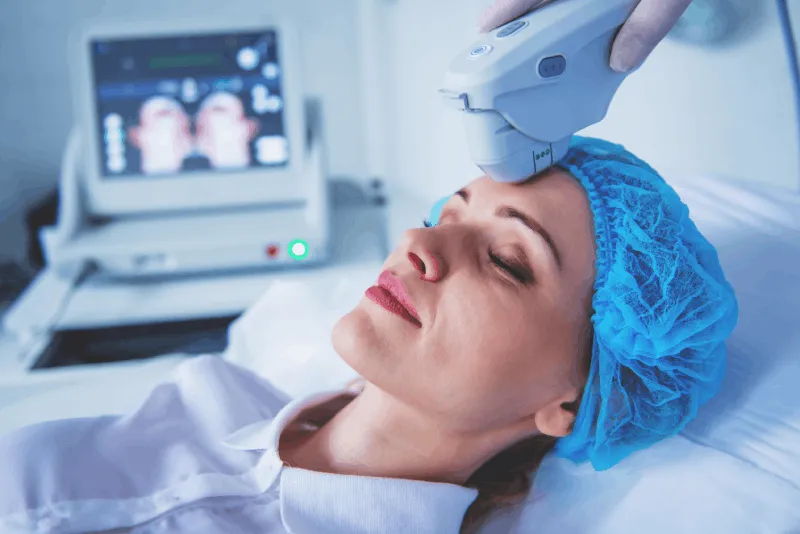
HIFU stands for “High-Intensity Focused Ultrasound” and is the most advanced form of medical ultrasound technology in the aesthetic field. This system delivers focused sound waves to the 1.5 mm, 3 mm, and especially 4.5 mm depth of the skin, the SMAS layer. SMAS (Superficial Muscular Aponeurotic System) is the layer of muscle and connective tissue that surgeons physically stretch in a face lift surgery. HIFU provides the contraction (coagulation) of the tissue by creating controlled heat damage in this layer. As a result, a tightening and lifting effect is initiated from the inside out without any damage to the skin surface.
What Is the Effect of Focused Ultrasound Under the Skin?
The focused sound waves sent by the HIFU device create a heat energy of 65-70 degrees at the target point. This heat awakens the body’s natural healing response and triggers “neocollagenesis,” meaning new collagen production. Existing collagen fibers heat up, shorten, and thicken, creating an instant feeling of tension. However, the real big change occurs with the synthesis of new collagen and elastin fibers within the following 2 to 6 months. This structural strengthening under the skin provides resistance against the effects of gravity and ensures the sharpening of facial contours.
Who Is Suitable for the Thread Lift Procedure?
The most ideal candidates for thread lift application are usually individuals between the ages of 30 and 60 with mild to moderate skin sagging. Especially people whose nasolabial lines have deepened, whose jawline has lost its clarity, and whose cheekbones have moved downwards benefit maximumly from this procedure. While surgery may still be the best option for people with intense sagging and excessive excess skin, thread lift can be offered as an alternative for those preparing for surgery or those who do not want surgery. Anyone in good general health and with realistic expectations can have a thread lift.
What Is Felt During a HIFU Session?
While what is felt during the HIFU procedure varies from person to person, it is generally described as small electrifications under the skin or heat sensations similar to “needle pricks.” This sensation may be more intense especially when coming to bony areas (such as the jawline). Since modern HIFU devices are designed to be comfort-oriented, the vast majority of patients can complete the procedure without the need for any local anesthesia. Immediately after the procedure, a slight feeling of warmth and fullness may remain on the skin, but this does not cause pain at a level that would restrict daily activities.
How Long Are Thread Lift Results Permanent?
The permanence of thread lift results depends on the material of the thread used and the patient’s lifestyle. PDO threads are usually absorbed by the body within 6-8 months, but the lifting effect can last up to 12-18 months thanks to the collagen effect they create. In PLLA or PCL-based threads, this period can extend up to 2 years. Factors such as smoking, excessive sun exposure, and insufficient water consumption can shorten the life of the results. Repeating the procedure at regular intervals or supporting it with other skin quality-enhancing applications ensures that the effect increases cumulatively.
Is the Combination of HIFU and Thread Lift Possible?
Yes, the combination of HIFU and thread lift is accepted as the gold standard of the “non-surgical face lift” world. Since these two methods work with different mechanisms, they complement each other perfectly. The generally recommended protocol is to first tighten the deep tissue (SMAS) with HIFU and then mechanically lift the tissue with a thread lift. HIFU prepares a tighter tissue ground for the threads to hold onto. This synergy not only creates a lifting effect but also takes skin quality to the highest level. However, leaving a waiting period of 2-4 weeks between the two procedures is important for tissue health.
How Does the Recovery Process Progress After a Thread Lift?
The recovery process after a thread lift is quite fast compared to surgery, but there are still some points to be considered. During the first 2-3 days, slight swelling, edema, or rarely small bruises may be seen. It is recommended that patients avoid excessive chewing movements, not lie face down, and not do heavy sports for the first week. It takes about 2-4 weeks for the threads to fully integrate into the tissue. During this time, harsh rubbing of the face or aggressive facial massages should be avoided. Most patients can return to work and social routines one day after the procedure.
Are There Any Side Effects of the HIFU Procedure?
HIFU is accepted as a very safe technology worldwide, but like every medical procedure, it may have some temporary side effects. It is normal to see a slight redness immediately after the procedure, and it passes spontaneously within a few hours. In some patients, a feeling of sensitivity or a slight pain when touched may occur in the treated area for a few days. In rare cases, if sound waves pass very close to a nerve, temporary numbness may occur, but this situation usually improves within a few weeks without leaving permanent damage. It does not pose a serious risk when done with correct depth settings by a specialist physician.
Which Age Group Benefits Most from These Procedures?
In facial rejuvenation procedures, biological skin age is more important than chronological age. However, generally, the 35-50 age group benefits most in terms of “preventive and restorative” effects. Individuals in their early 30s use HIFU as an investment to protect their collagen stores, while individuals in their 40s and 50s actively prefer both methods to eliminate sagging. In individuals over 60, if skin elasticity is not completely lost, very successful results can still be obtained. The important thing is to intervene before the signs of aging settle too much.
Are Thread Lift Materials Safe?
The PDO, PLLA, and PCL materials used in thread lift applications are bio-compatible and bio-degradable materials used in surgical sutures for decades in medicine. These substances do not create a foreign body reaction for the body; on the contrary, they trigger tissue healing by initiating a controlled inflammation. After a certain period, they are completely eliminated from the body by turning into water and carbon dioxide. The safety of these threads has been approved by international health organizations such as the FDA and CE. The important thing is that the application is performed under sterile conditions and by professionals using original, approved products.
Is Brow Lifting Possible with HIFU?
Yes, HIFU technology is quite effective in brow lifting and eye contour rejuvenation. The focused ultrasound waves applied on the forehead and eyebrows ensure the tightening of the muscles in this area, helping the eyebrows to lift up a few millimeters. this situation reduces the accumulation on the upper eyelid, allowing the person to have a more dynamic and open gaze. Although it does not give as aggressive a result as a surgical brow lift, it is an excellent non-surgical alternative for patients who complain of low brow structure and want a natural change.
Which Method Is More Effective in Sharpening the Jawline?
For sharpening the jawline, a combination of HIFU and Thread Lift is usually recommended. HIFU has the effect of melting some fat tissue under the chin (jowls) and tightening the SMAS layer. The thread lift, on the other hand, is placed along the jawline to pull the tissue towards the back of the ear and clarifies the bone line. If the sagging is mostly caused by tissue looseness, thread lift provides a faster lifting. If the main problem is fat accumulation and tissue softness in the jowl area, HIFU may be more suitable for the start. The combination of both methods is the most effective way to obtain the “Hollywood jaw” appearance.
Is Thread Lift a Solution for Those with a Fear of Surgery?
Definitely yes. Many people postpone their sagging complaints because they are afraid of general anesthesia, operating room environment, and long recovery periods. Thread lift is a procedure that is completed in about 30-45 minutes under only local anesthesia, where the patient can look in the mirror immediately and see half of the result instantly. Not using a scalpel, not stitching, and not leaving a permanent scar provides great psychological comfort for those with a fear of surgery. Additionally, the fact that the result is more “reversible” and “revisable” attracts patients who are afraid of the irreversible nature of surgery.
Are HIFU Results Seen Immediately?
Immediately after the HIFU procedure, a tightening and lifting of about 10-20% can be noticed due to the contraction of collagen fibers with the effect of heat. However, HIFU is a treatment that requires patience. Real results become clear from the 2nd month when new collagen synthesis is completed and continue to develop until the 6th month. In this process, the skin begins to look more vibrant, tighter, and more tense day by day. This slow and natural change causes the patient to be perceived by their environment not as “having had aesthetics” but as “returned from vacation or slept very well.”
How Long Does the Thread Lift Procedure Take?
The thread lift procedure usually varies between 30 and 60 minutes depending on the number of threads to be applied and the width of the area. This period also includes the waiting time for the local anesthesia cream. The procedure is an extremely practical application performed in a clinic environment. The patient’s skin is cleaned, entry points are determined, and threads are placed with the help of cannulas. It does not require any wrapping or bandages at the end of the procedure; only small protective tapes can be attached to the entry points. Thanks to this brevity and practicality, it is also called “lunchtime lift.”
What Should Be Considered After the HIFU Procedure?
What should be considered after HIFU is quite limited. It is recommended not to touch the skin with very hot water on the day of the procedure, and to avoid Turkish baths, saunas, and intense steam. It is critical to drink plenty of water and use sunscreen to support the skin’s collagen production process. In addition, attention should be paid to the intake of sufficient amounts of protein and vitamins (especially vitamin C) for the body to synthesize collagen. Hard pressure should not be applied to the area for a few days after the procedure. Other than that, the patient can apply makeup immediately and return to their normal skin care routine (except aggressive acids).
How Is Collagen Production Triggered by Thread Lift?
When threads are placed in the lower layers of the skin, the body perceives these threads as a “foreign body” and starts to create a protective shield around them. In this process, fibroblast cells migrate around the thread and produce collagen and elastin protein intensely. Even if the thread melts and disappears within months, the new robust collagen tunnels produced fill the gap it left. In other words, threads actually act as a “scaffolding,” allowing the skin to keep itself up with its own biological tissue. This situation explains why the procedure continues to show its effect even after the thread has melted.
Should HIFU or Thread Lift Be Preferred for Jowl Sagging?
The jowl area is an area suitable for both fat accumulation and skin looseness. If there is a clear fat accumulation in the jowl, the fat melting and deep tightening effect of HIFU should be preferred primarily. HIFU “collects” the tissue in this area and makes it more compact. However, if there is little fat but high skin sagging, a much clearer result is obtained with threads pulling the jowl towards the back of the ear with the “hammock technique.” Most experts aim to capture the most aesthetic neck-jaw angle by suggesting reducing the tissue volume with HIFU first and then lifting with threads.
What Are the Factors Determining the Cost of a Thread Lift Procedure?
Thread lift prices vary according to the brand, material (PDO, PLLA, PCL) of the threads used, the type of threads (cog, smooth, cone), and how many threads will be used in total. Additionally, the experience of the physician performing the application and the technological equipment of the clinic are also effective on the cost. Using cheap and poor quality materials can lead to both not getting the expected result and an increase in risks such as infection or asymmetry. For this reason, the originality of the product used and the expertise of the physician in this matter must be questioned when making a cost analysis.
Is HIFU a Repeatable Procedure?
Yes, HIFU is a procedure that can be repeated at regular intervals to slow down the aging process of the skin. It is generally recommended to be done once a year or every 1.5 years depending on the degree of sagging. In some cases, a small support session called “touch-up” may be required 6 months after the first session. Every time HIFU is done, new investments are made in the skin’s collagen bank. In this way, even if the person ages, their skin continues to stay much tighter and more vigorous compared to their peers. Repeating the procedure does not create any accumulation or harm in the tissue; on the contrary, it makes biological youth sustainable.
Do Non-Surgical Methods Offer a Permanent Solution?
Aging is a biologically unstoppable process; therefore, neither surgical nor non-surgical methods offer an “eternal” permanence. However, non-surgical methods significantly slow down time. At the end of the 1-2 year improvement period obtained with thread lift and HIFU, the skin is in a better spot than if the procedure had never been started. The advantage of these methods is that they can be updated parallel to the aging rate. A skin supported by regular care can push the age of needing surgery 10-15 years forward or provide an aesthetic aging process without ever needing surgery.
How to Choose the Application According to Skin Type?
In thin-skinned individuals, great care should be taken so that the threads are not visible from the surface when performing thread lift application, and generally softer, collagen-enhancing threads should be selected. In thick and oily skins, it is more difficult to create a lifting effect; therefore, stronger cog threads and tissue tightening HIFU sessions are more effective. In dry skins, increasing the water holding capacity of the skin with moisture vaccines before the procedure increases the efficiency to be obtained from the thermal effect of HIFU. A specialist physician decides on the most correct technology combination by analyzing the elasticity, thickness, and oil rate of the skin.
Is Natural Appearance Preserved After a Thread Lift?
The biggest promise of thread lift application is “naturalness.” The risk of “stretched, surprised, or mask-like” expressions sometimes seen in surgical face lifting is almost non-existent in thread lift. Because the threads only move the tissue back to its old position where it fell due to gravity. Since mimic muscles are not intervened, the person’s smile, gaze, and characteristic facial expression do not change. They only transform into a more vigorous version with sagging collected and contours clarified. This is one of the applications that stays most faithful to the principle of “The best aesthetic is the one that is not obvious.”
What Are the Fundamental Differences Between HIFU and Thread Lift?
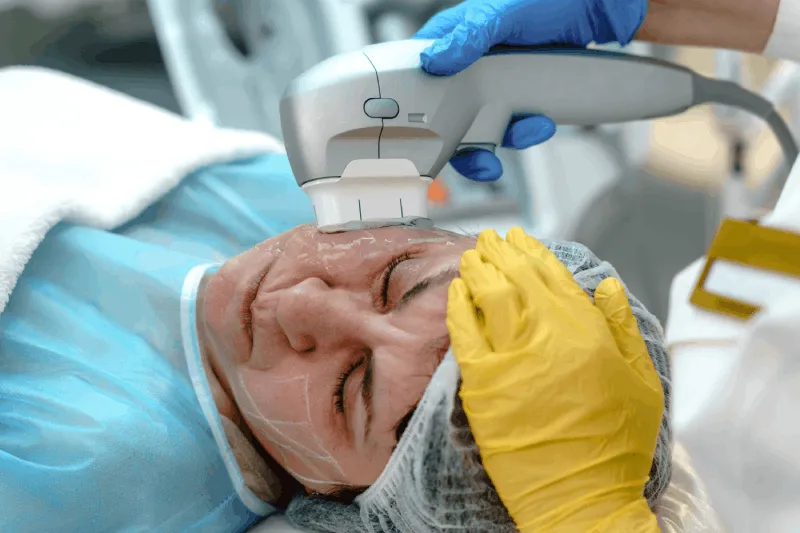
The fundamental difference is the application style and etiological mechanism. HIFU is a device application; there are no needles or incisions, sound waves are used, and its effect appears over time (2-6 months). Thread lift, on the other hand, is a minimal invasive procedure; physical threads are placed inside the skin and the lifting effect is seen instantly. HIFU provides more “tightening,” while Thread Lift provides “lifting.” If your skin is only loose, HIFU is ideal; but if the tissues have migrated down with gravity, a Thread Lift is necessary. In most cases, the combination of both gives the most comprehensive result.
How Should the Preparation Process Be Before the Procedure?
A heavy preparation is usually not required before HIFU and Thread Lift. However, 1 week before the procedure, blood thinners, omega-3 supplements, Vitamin E, and alcohol consumption should be stopped; this minimizes the risk of bruising. If you have a tendency to get cold sores, you can consult your doctor and start a preventive medication. It is important that the skin is clean and there is no makeup on it on the day of the procedure. Additionally, avoiding very irritating (peeling) peeling or laser applications for a few weeks before the procedure will be beneficial in terms of protecting tissue health.
Can Thread Lift Errors Be Reversed?
One of the advantages of thread lift methods is that they can be reversed or corrected to a certain extent. If an asymmetry or excessive tension is noticed after the procedure, the doctor can intervene with special massage techniques or by slightly changing the location of the thread. If dissolvable threads like PDO have been used, errors will not be permanent as the tissue will loosen over time. Additionally, some threads can be melted faster with special solutions. However, the safest way to avoid the need for such corrections is to work with an experienced physician who is dominant in anatomy from the very beginning.
How Does HIFU Improve Skin Quality?
HIFU not only tightens the sagging tissue but also improves the overall quality and texture of the skin. New collagen production makes the skin look brighter, smoother, and more vibrant. It contributes to the narrowing of enlarged pores, lightening of fine lines, and increasing the elasticity of the skin. Thanks to heat energy, blood circulation accelerates, which ensures better oxygenation of tissues. As a result, users not only have a “tighter” face but also a “healthier” and “younger” looking skin surface.
Why Are Modern Facial Rejuvenation Trends Shifting to Non-Surgical Procedures?
The world is now built on speed and naturalness. No one wants to hide at home with bandages for weeks or change enough to be unrecognizable. The philosophy of “big differences with small touches” offered by non-surgical methods is much more suitable for the modern person’s lifestyle. In addition, with the development of technology, the success of these methods has approached surgery. By choosing to manage aging signs with these minimal procedures while they are still at the beginning stage, individuals either completely prevent heavy surgeries they may need in the future or postpone them to very advanced ages.
How to Plan a Facial Rejuvenation Plan with Cure Holiday?
To achieve the rejuvenation change of your dreams, Cure Holiday professionally manages the process for you from start to finish. In the first step, a free preliminary evaluation is made with our expert consultants through your current photos and expectations. After the most suitable HIFU, Thread Lift, or combination treatments for your skin structure are determined, your appointments are organized with Turkey’s most distinguished and experienced plastic surgeons. Cure Holiday plans not only the treatment but also all the details from accommodation to transfer, ensuring that your aesthetic journey passes in the comfort of a holiday.
Why Should Cure Holiday Be Preferred in Health Tourism?
Cure Holiday stands out in health tourism with the principles of quality, trust, and patient-centeredness. We cooperate only with internationally accredited clinics and experts with proven success in sensitive subjects such as facial rejuvenation. We combine Turkey’s world leadership in the field of medical aesthetics with Cure Holiday’s personalized service approach. We ensure that the most advanced technology devices (HIFU, etc.) and the highest quality Thread Lift materials are used for our patients. You are left only to return home with a rejuvenated face and enjoy this process.
What Is the Non-Surgical Aesthetic Experience Like with Cure Holiday?
The experience you live with Cure Holiday starts with a warm welcome at the airport. After settling into your comfortable hotel with our VIP transfer vehicles, a detailed facial analysis is performed with our specialist doctors. Your thread lift or HIFU procedure is completed in a painless and comfortable way under the most sterile and modern clinic conditions. In the post-procedure process, Cure Holiday teams are with you 24/7 for any questions. In the time remaining from your treatment, you can discover the historical and cultural beauties of Istanbul or the city you are in, and turn your rejuvenation process into an unforgettable memory.
How Can I Contact Cure Holiday Specialists?
It is very easy to contact Cure Holiday to step into the world of non-surgical facial rejuvenation and create your special treatment plan. You can contact our expert consultants by filling out the contact form on our website or by sending a direct message via our WhatsApp line. You can get comprehensive information about the treatment packages, pricing, and process details prepared specifically for you. Remember, you cannot stop aging, but you can manage it in the most aesthetic and quality way with Cure Holiday. Contact us today and take the first step to meet your new self in the mirror.
Summary and Call to Action (CTA): Thread Lift and HIFU, which are non-surgical facial rejuvenation methods, are the safest and most effective solutions offered by modern aesthetics. Thanks to these technologies, you can erase the traces of years by preserving your natural expression without going under the knife. If you want to get rid of your sagging, clarify your contours, and regain your skin’s old energy, go on this journey with a reliable guide. Contact Cure Holiday now to meet our expert staff and VIP service quality, and let’s start your special rejuvenation plan immediately!
Free Consultation
Fill out the form below to get your free medical travel plan and price quote.