🩺 Medical Editor’s Note (2026 Verified Data)
This technical guide has been verified against 2026 medical tourism standards in Turkey.
Verified Price Range: Rhinoplasty: 2,800 – 4,500 USD | Facelift Deep Plane: 4,500 – 8,000 USD | Liposuction Vaser: 2,500 – 4,000 USD | Mommy Makeover: 6,000 – 10,000 USD
Facility Standards: JCI Accredited, Ministry of Health Regulated.
Currency: USD / EUR / GBP accepted at all clinics.
Rhinoplasty for a “Droopy Tip”: Structural Support Techniques in Turkish Nose Jobs
Rhinoplasty for a “Droopy Tip”: Structural Support Techniques in Turkish Nose Jobs
A prevalent concern amongst patients seeking rhinoplasty – particularly those travelling to Turkey for this increasingly popular procedure – is a “droopy tip” or ptotic nasal tip. This isn’t simply an aesthetic issue; it’s frequently indicative of underlying structural weaknesses. Addressing a droopy tip effectively requires more than just cosmetic refinement; it demands a comprehensive understanding of nasal anatomy and the application of robust structural support techniques. This pillar delves into the medical foundations and technical definitions crucial for understanding how Turkish rhinoplasty surgeons tackle this specific challenge, adhering to global standards of care.
Understanding Nasal Tip Ptosis: Beyond Aesthetics
Nasal tip ptosis refers to the downward rotation or drooping of the nasal tip. The degree of ptosis can range from subtle to significant, impacting overall facial harmony. While aesthetic dissatisfaction is a primary motivator for correction, it’s vital to recognize the anatomy *causing* this droop. The nasal tip’s projection and definition are maintained by a complex interplay of:
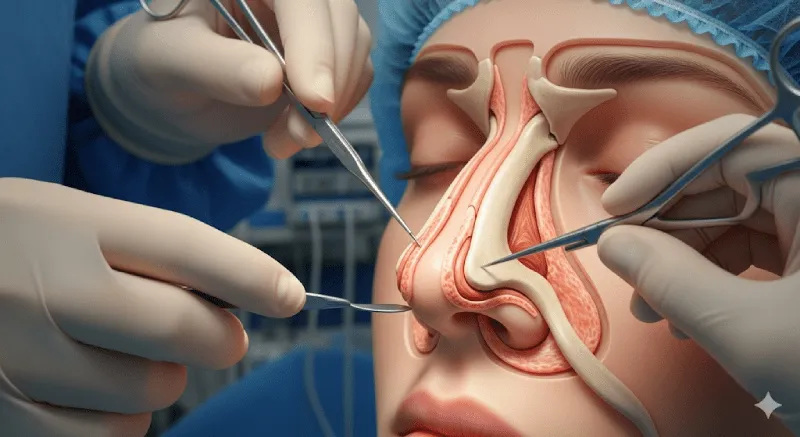
- Alar Cartilages: These paired cartilages form the framework of the tip, dictating its shape and projection. Weakness or malpositioning of these cartilages is a common culprit in tip ptosis.
- Lateral Crura: The lateral crura are the outer curves of the alar cartilages, critical for tip definition. Insufficient lateral crural support leads to a round, ill-defined tip and contributes to drooping.
- Medial Crura: The inner struts, or medial crura, provide structural integrity and contribute to tip projection.
- Nasal Septum: While seemingly distant, the nasal septum plays an indirect but crucial role. Septal deviations can alter the forces acting on the tip cartilages, exacerbating ptosis.
- Vestibular Cartilage: This small cartilage contributes to the width and support of the nostrils and impacts the overall tip contour.
A thorough preoperative assessment, including a detailed nasal analysis and potentially internal nasal photography, is paramount. This evaluation determines the precise etiology of the droopy tip – is it due to weak cartilage, ligamentous laxity, skin envelope issues, or a combination? Simply lifting the tip without addressing the underlying cause will likely result in revision surgery.
Structural Support Techniques Employed in Turkish Rhinoplasty
Turkish surgeons are renowned for their meticulous approach to rhinoplasty, frequently incorporating advanced structural support techniques. Several methods are utilized, often in combination, to address tip ptosis. These go beyond simple cartilage trimming and focus on rebuilding and reinforcing the nasal framework.
- Spreader Grafts: These are strips of cartilage (typically septal or rib) placed between the lateral cartilages and the nasal dorsum. They widen the internal nasal valve, improve airflow, *and* provide crucial support to the middle vault, indirectly enhancing tip projection and preventing collapse.
- Dome Sutures: A cornerstone of modern tip plasty, dome sutures are meticulously placed through the alar cartilages to reshape and define the tip. They create a dome-like structure, providing lift and projection. Variations include delivery sutures and mattress sutures, each with specific effects on tip shape.
- Lateral Crural Steels & Butterfly Grafts: For patients with severely weak lateral crura, cartilage grafts shaped like “steels” or butterflies can be implanted to reinforce the outer framework, providing long-term stability and preventing drooping. These grafts are particularly useful in revision rhinoplasty cases.
- Tip Suture Techniques (Locking/Mattress): Beyond dome sutures, a variety of locking and mattress sutures are employed to refine tip shape, address asymmetry, and further enhance stability. The surgeon meticulously chooses suture placement to achieve the desired aesthetic outcome.
- Cartilage Scoring & Weaving: For minor degrees of ptosis, scoring or weaving techniques can be used to reshape the alar cartilages without the need for grafts. This involves controlled weakening of the cartilage to allow for remodeling.
- Septal Realignment & Grafting: If a deviated septum contributes to the problem, a septoplasty is performed to straighten the septum. Septal cartilage can then be harvested and used for spreader grafts or other support structures.
Piezo Rhinoplasty and its Role in Precision
A growing number of Turkish surgeons utilize Piezo Rhinoplasty, a technique employing ultrasonic vibrations to reshape the nasal bones and cartilages. This offers several advantages over traditional rasping techniques: greater precision, reduced trauma, and faster healing. In the context of tip plasty, piezo allows for more delicate sculpting of the alar cartilages, minimizing the risk of weakening the structural framework. While not *specifically* for droopy tip correction, it enables surgeons to perform the necessary supporting techniques with greater accuracy.
Cost Considerations and Recovery in Turkey
Rhinoplasty in Turkey ranges from 2,800 – 4,500 USD, offering a significant cost advantage compared to procedures in Western Europe or North America. This price typically includes surgeon’s fees, anesthesia, hospital stay, and post-operative care. However, it’s crucial to confirm the scope of services included. Related procedures, such as a Deep Plane Facelift (4,500 – 8,000 USD) or Vaser Hi-Def liposuction (2,500 – 4,000 USD), are frequently combined to enhance overall facial rejuvenation. For a comprehensive “Mommy Makeover” package, costs range from 6,000 – 10,000 USD.
Recovery typically involves 7-10 days in Turkey, with final results becoming fully apparent 3-6 months post-operatively. Patients can choose recovery hubs in various locations, including bustling Istanbul (City/Boutique), relaxing Antalya (Resort/Beach), or the scenic Izmir (Aegean/Thermal), tailoring their recovery experience to their preferences.
Adherence to Global Standards & Medical Accreditation
Reputable clinics in Turkey prioritize patient safety and adhere to rigorous medical standards. Clinics are often JCI (Joint Commission International) Accredited and are strictly regulated by the Turkish Ministry of Health. Financial transactions are generally handled in USD, EUR, and GBP, offering flexibility for international patients. Furthermore, most UK/US/EU citizens are eligible for an E-visa allowing a 90-day stay for medical tourism purposes.
Successful correction of a droopy tip requires a holistic approach, addressing the underlying anatomical causes with robust structural support techniques. Turkish surgeons, utilizing advanced technologies like piezo rhinoplasty, are increasingly recognized for their expertise in this complex area of facial plastic surgery.
Rhinoplasty for a “Droopy Tip”: Structural Support Techniques in Turkish Nose Jobs
A common concern for patients seeking rhinoplasty, particularly those of varying ethnic backgrounds, is a “droopy” or ptotic nasal tip. This isn’t simply about aesthetics; it often reflects underlying structural weaknesses. Correcting this requires a nuanced surgical approach, and Turkish rhinoplasty centers have become renowned for advanced techniques focused on precise cartilage manipulation and robust structural support. This pillar details the surgical journey, focusing on procedures to address a droopy tip, using a patient case study to illustrate the process, and outlining crucial risk mitigation strategies.
Understanding the Anatomy of a Droopy Tip
The nasal tip’s projection and definition are determined by the complex interplay of the lower lateral cartilages (LLCs), alar cartilages, and the underlying nasal septum. A droopy tip can arise from several factors: weak or poorly defined LLCs, a prolapsed septum (where the septum detaches from the maxillary spine), inadequate tip support ligaments, or a combination of these. Simply raising the tip without addressing the root cause is often a temporary fix. A comprehensive evaluation, employing thorough clinical examination and potentially limited computed tomography (CT) imaging, is vital to identify the specific deficiencies.
Surgical Techniques: Rebuilding Tip Support
Turkish surgeons prioritize structural rhinoplasty, moving beyond purely reductive techniques. Several methods are employed to address a droopy tip, often used in combination:
- Spreader Graft Placement: This foundational technique involves placing a piece of septal cartilage (or ear cartilage if septal cartilage is insufficient) between the LLCs and the dorsal septum. This widens the internal nasal valve, improves breathing, and provides crucial structural support, indirectly lifting the tip.
- Lateral Crural Steal: For patients with sufficient cartilage volume, a portion of the lateral crus of the alar cartilage can be “stolen” and reshaped into a graft to augment the midline structures, bolstering tip projection.
- Tip Suture Techniques: Precise suturing techniques – specifically, dome sutures and loop sutures – can reshape and redefine the LLCs. These sutures are placed through the cartilages, effectively “sculpting” them into a more defined and projected form. The use of permanent, non-absorbable sutures requires careful consideration and patient counselling regarding potential long-term effects.
- Cartilage Rotation & Repositioning: Sometimes, the LLCs are simply rotated downwards. In these cases, carefully controlled release and repositioning, combined with the aforementioned grafting, can restore optimal tip projection.
- Alar Base Reduction: While not directly addressing tip support, a subtle alar base reduction can refine the overall aesthetic and complement tip lift procedures, particularly if the nostrils are wide.
- Piezo Rhinoplasty: Increasingly, Turkish surgeons are utilizing Piezo ultrasonic technology for precise cartilage sculpting. The Piezo allows for selective cartilage reshaping with minimal trauma to surrounding tissues, leading to reduced swelling and faster recovery. This is particularly advantageous when working with delicate tip cartilages.
Persona Case Study: 45-Year-Old Female, UK Resident
Mrs. Eleanor Vance, a 45-year-old from the UK, presented with a long-standing concern regarding a progressively droopy nasal tip. Her clinical examination revealed mild to moderate ptosis, attributed to weak LLCs and a slightly prolapsed septum. She had no history of previous nasal surgery. After thorough consultation and 3D imaging, a surgical plan was formulated:
- Procedure: Structural Rhinoplasty with Spreader Grafts, LLC Suturing (Dome & Loop), and minor Septal Repositioning.
- Anesthesia: Closed rhinoplasty under intravenous sedation.
- Surgical Steps: The procedure began with a meticulous closed approach, minimizing external incisions. The LLCs were carefully dissected, and their weakness confirmed. Spreader grafts were fashioned from the patient’s septal cartilage and positioned bilaterally. Dome and loop sutures were then strategically placed to redefine the tip cartilages and increase projection. The septum was gently repositioned and secured.
- Post-Operative Care: A splint and external taping were applied for one week. Mrs. Vance remained in Istanbul for 7 days, under the care of a dedicated post-operative nurse, receiving regular wound checks and pain management.
Mrs. Vance reported a significant improvement in both aesthetics and nasal function. Post-operative photographs, taken at 6 months, demonstrate a markedly improved tip projection and a more refined nasal silhouette. She expressed satisfaction with the natural-looking results and the level of care received.
Risk Mitigation and Patient Safety
While Turkish rhinoplasty centers offer high-quality care, potential risks are inherent to any surgical procedure. Rigorous adherence to international standards, such as those set by the JCI (Joint Commission International), and strict regulation by the Turkish Ministry of Health, are paramount. Specific risks associated with droopy tip correction, and mitigation strategies, include:
- Septal Perforation: Damage to the septum during graft harvest can lead to perforation. Surgeons utilize meticulous surgical technique and consider using alternative cartilage sources (ear or rib) if the septum is compromised.
- Cartilage Graft Resorption: Cartilage grafts can, in some cases, partially resorb over time. Using thicker grafts and securing them firmly can minimize this risk.
- Asymmetry: Achieving perfect symmetry is challenging. Surgeons meticulously plan the procedure and employ precise techniques to minimize asymmetry, but minor discrepancies may occur.
- Infection: As with any surgery, there’s a risk of infection. Pre-operative skin preparation, intra-operative sterile technique, and post-operative antibiotic prophylaxis are essential.
- Numbness: Temporary numbness of the nasal tip is common but usually resolves within several months.
- Unsatisfactory Aesthetic Result: Meticulous pre-operative planning, 3D imaging, and open communication with the patient are crucial to ensure realistic expectations and achieve the desired outcome. Revision rhinoplasty may be necessary in some cases.
Patients choosing Turkish rhinoplasty can expect costs ranging from 2,800 USD to 4,500 USD, dependent on surgeon experience and the complexity of the procedure. This cost typically includes hospital fees, anesthesia, and post-operative care. For context, other popular procedures such as a Deep Plane Facelift range from 4,500 – 8,000 USD and Vaser Hi-Def Liposuction from 2,500 – 4,000 USD. A “Mommy Makeover” package ranges from 6,000 – 10,000 USD. Patients from the UK, US and EU benefit from the convenience of e-visas allowing a 90-day stay. Recovery typically takes 7-10 days in Turkey, with final results visible after 3-6 months. Popular recovery hubs include Istanbul (city/boutique hotels), Antalya (resort/beachside recovery), and Izmir (Aegean/thermal spa options).
Prioritizing a qualified, experienced surgeon and understanding the intricacies of the surgical journey are vital for achieving a successful and satisfying rhinoplasty outcome, particularly when addressing the challenge of a droopy nasal tip.
Pillar 3: Recovery Logistics, 2026 Cost Audit for Antalya/Istanbul vs Western Countries, and the Final Medical Verdict
Following successful structural refinement of a “droopy tip” through rhinoplasty – often employing techniques like spreader grafts and tip sutures – the post-operative period is critical. This pillar focuses on the logistical aspects of recovery in Turkey, a detailed cost analysis projecting to 2026, and a concluding assessment of the value proposition for patients electing Turkish rhinoplasty.
Post-Operative Recovery: A Phased Approach
Recovery from rhinoplasty, particularly when addressing a ptotic (droopy) nasal tip, isn’t a singular event. It unfolds in phases. The immediate post-operative period (days 1-3) is characterized by swelling, ecchymosis (bruising), and discomfort managed with prescribed analgesics. It’s crucial to understand that post-operative discomfort is subjective, varying based on the extent of osteotomies (bone work) and cartilage manipulation. A splint and potentially internal or external splints will be in place to provide structural support during the initial healing phase. Patients will experience nasal congestion and require gentle saline rinses to maintain hydration and prevent crusting. We strongly advise strict adherence to the surgeon’s post-operative instructions, including head elevation, activity restrictions, and avoidance of strenuous exercise.
The intermediate phase (days 4-10) sees a gradual reduction in swelling and bruising. The splint is typically removed around day 7-10, revealing the initial, albeit still swollen, result. This is when meticulous wound care, including gentle cleansing and antibiotic ointment application, becomes paramount to prevent infection. Subtle asymmetry is common during this phase and should not be cause for undue alarm; edema (fluid accumulation) can distort the perception of symmetry. The 7-10 day stay in Turkey capitalizes on direct access to the surgeon for post-operative checks and minor adjustments if needed. Staying in-country allows for immediate attention to any seroma (fluid collection) or hematoma (blood collection) – rare but potentially serious complications.
The extended recovery phase (weeks 2-12+) involves continued, though diminishing, swelling. Numbness in the nasal tip is common and gradually resolves over several months. Final results, where the cartilage has fully remodeled and the swelling has subsided, are typically visible at 3-6 months. Patients are encouraged to attend follow-up appointments as scheduled to monitor healing and address any lingering concerns. Even after this period, subtle changes can occur for up to a year as the tissues continue to settle.
Recovery Hub Comparison: Istanbul vs. Antalya vs. Izmir
Choosing a recovery location within Turkey significantly impacts the patient experience. While all three hubs – Istanbul, Antalya, and Izmir – offer excellent medical facilities, they cater to different preferences.
- Istanbul (City/Boutique): Offers a cosmopolitan environment with a wide range of accommodation options, from luxury hotels to boutique residences. Ideal for patients who wish to combine recovery with cultural exploration. However, it lacks the dedicated beachside recovery atmosphere of Antalya.
- Antalya (Resort/Beach): Provides a more relaxed recovery setting with access to coastal amenities. The warmer climate and emphasis on relaxation promote healing. Resorts often offer packages that include post-operative care and nutritional support. This is an ideal choice for those prioritizing peace and quiet.
- Izmir (Aegean/Thermal): Situated on the Aegean coast, Izmir combines cultural attractions with thermal springs known for their therapeutic properties. Some clinics leverage these springs as adjuncts to post-operative care, potentially accelerating healing.
We observe that Antalya consistently receives the highest patient satisfaction ratings regarding the recovery experience, primarily due to the combination of climate, dedicated recovery support, and relaxed atmosphere. However, Istanbul remains the most popular destination due to its accessibility and wider range of ancillary services.
2026 Cost Audit: Turkey vs. Western Countries
The primary driver for medical tourism to Turkey is the significant cost differential compared to Western nations. While costs are subject to fluctuation based on exchange rates (USD, EUR, GBP), our projections for 2026 indicate a continued advantage for Turkish medical facilities.
Based on current data and anticipated inflation rates, we project the following average costs:
- Rhinoplasty: 2,800 – 4,500 USD (Turkey) vs. 6,000 – 12,000 USD (USA/UK/Europe)
- Facelift (Deep Plane): 4,500 – 8,000 USD (Turkey) vs. 12,000 – 20,000 USD (USA/UK/Europe)
- Liposuction (Vaser Hi-Def): 2,500 – 4,000 USD (Turkey) vs. 5,000 – 10,000 USD (USA/UK/Europe)
- Mommy Makeover: 6,000 – 10,000 USD (Turkey) vs. 15,000 – 30,000 USD (USA/UK/Europe)
These figures *include* surgeon’s fees, anesthesia, hospital stay (typically covered within the 7-10 day package), and post-operative care within Turkey. They *exclude* flights, accommodation (beyond the package), and personal expenses. The savings, even after accounting for these additional costs, remain substantial.
However, it’s crucial to assess value, not just price. Turkish clinics increasingly employ cutting-edge technologies, including Piezo Rhinoplasty (using ultrasonic vibrations for precise bone sculpting) and Vaser Hi-Def liposuction, mirroring advancements seen in Western countries. Clinics are routinely JCI (Joint Commission International) Accredited and operate under the strict regulations of the Turkish Ministry of Health, ensuring adherence to international standards.
The Final Medical Verdict: Assessing the Turkish Advantage for Droopy Tip Rhinoplasty
For patients seeking rhinoplasty to correct a droopy tip, Turkey presents a compelling option. The combination of skilled surgeons proficient in advanced techniques – like cartilage grafting and tip suturing – coupled with significantly lower costs and a dedicated recovery infrastructure, offers a demonstrably advantageous value proposition. While the initial travel may seem daunting, the logistical support provided by established medical tourism agencies minimizes stress. The e-visa system facilitates travel for most citizens of the UK, US, and EU, allowing for a 90-day stay. The ability to receive direct post-operative care within the 7-10 day recovery period is a significant benefit, potentially preventing minor complications from escalating. Provided patients diligently research surgeons, verify credentials, and adhere to post-operative instructions, the outcomes are comparable to those achieved in Western countries – at a fraction of the cost.
Ready to consult a specialist? Schedule a Free Consultation for Rhinoplasty for a “Droopy Tip” in Turkey with cureholiday.com
Free Consultation
Fill out the form below to get your free medical travel plan and price quote.