About the prices on this page. The figures below are indicative market prices and country comparisons, not a quote. Our own current, all-inclusive prices are published on our cosmetic surgery in Turkey page, and we confirm your figure in writing before you commit to anything.
Cost and planning note (2026)
The figures below are indicative market ranges for 2026, not a quote: your own price depends on the clinic, the surgeon and your clinical assessment.
Indicative price range: Rhinoplasty: 2,800 – 4,500 USD | Facelift Deep Plane: 4,500 – 8,000 USD | Liposuction Vaser: 2,500 – 4,000 USD | Mommy Makeover: 6,000 – 10,000 USD
Facility standards: In Türkiye, any facility treating international patients must hold the Ministry of Health’s international health tourism authorisation; hospitals and medical centres must also be accredited by TÜSKA, and complication insurance is compulsory for procedures carried out in an operating theatre (Regulation of 26 April 2025). Ask us for the authorisation of the facility you are matched with.
Currency: USD / EUR / GBP accepted at all clinics.
Breast Augmentation for Asymmetrical Chests: Finding the Right Implant Profile
Breast Augmentation for Asymmetrical Chests: Understanding Implant Profile Selection – A Medical Foundation
Asymmetry in breast size and shape is a common concern for many patients seeking breast augmentation. While often subtle, even minor differences can lead to dissatisfaction with the aesthetic outcome of surgery. Addressing this asymmetry necessitates a sophisticated understanding of not only implant volume but, crucially, implant profile – a parameter frequently underestimated by both patients and, regrettably, some practitioners. This pillar delves into the medical foundation surrounding implant profile selection in the context of asymmetrical breasts, establishing global standards and best practices.
The Anatomy of Asymmetry & Preoperative Assessment
Breast asymmetry arises from various factors – congenital differences in glandular tissue, variations in chest wall anatomy, post-pubertal development discrepancies, and even muscle mass imbalances. A thorough preoperative assessment is paramount. This begins with a detailed medical history, including any prior breast surgeries or significant weight fluctuations. Clinically, surgeons employ a meticulous physical examination, assessing the degree and type of asymmetry (vertical, horizontal, or combined), the ptotic degree (degree of breast sag), and the patient’s chest wall dimensions. Crucially, digital 3D imaging and, increasingly, vector-based volumetric analysis are employed. These technologies provide a precise quantification of breast volume, shape, and asymmetry, allowing for highly personalized implant planning. We utilize software to model potential outcomes with various implant profiles *before* surgery, providing the patient with a realistic visualization.
What is Implant Profile? Defining the Terminology
Implant profile refers to the degree to which an implant projects forward from the chest wall. It’s not merely about implant size (measured in cubic centimeters – cc). Profile is determined by the implant’s posterior height (the distance from the back of the implant to its furthest projection point). Implants are broadly categorized into:
- Low Profile Implants: These have a smaller posterior height for a given volume, resulting in a more natural, subtle augmentation – ideal for patients with ample existing breast tissue and/or a desire for minimal projection.
- Moderate Profile Implants: The most commonly used profile, offering a balance between fullness and natural appearance. Suitable for a wide range of patients.
- High Profile Implants: These have a greater posterior height, providing maximum projection. Often chosen for patients with limited existing breast tissue or those desiring a more dramatic result.
- Ultra-High Profile Implants: These are reserved for very specific cases requiring significant projection and volume, typically in patients with very little existing breast tissue.
It’s critical to understand that the same volume implant (e.g., 300cc) will appear significantly different depending on its profile. A 300cc high profile implant will project far more than a 300cc low profile implant.
Addressing Asymmetry Through Profile Manipulation
In cases of asymmetry, simply matching implant volumes isn’t sufficient. The surgical strategy often involves utilizing different implant profiles for each breast. For instance, a patient with a smaller, less projected breast might benefit from a high-profile implant, while the larger, naturally more projected breast receives a moderate or even low-profile implant. This allows the surgeon to achieve a balanced and harmonious aesthetic outcome. The key is to create a symmetrical *visual* appearance, rather than simply a symmetrical *volume*.
Advanced techniques, such as dual-plane augmentation (placing the implant partially beneath the pectoral muscle and partially beneath the glandular tissue), can also be utilized to further refine the projection and shape, particularly in asymmetrical cases. Furthermore, understanding the patient’s ribcage and chest wall morphology is crucial. A wider chest will accommodate a broader implant profile more naturally than a narrow chest.
Implant Material & Technology Considerations
While silicone and saline implants are the standard, the cohesive gel within silicone implants significantly impacts how the implant behaves and how asymmetry can be addressed. Highly cohesive gel (often termed “gummy bear” implants) maintain their shape better than traditional silicone gel, which allows for more precise control of projection, particularly in asymmetric cases. Furthermore, textured implants – while their use is subject to evolving regulatory guidelines – offer increased stability and reduced rotation risk, which can be beneficial in patients with significant asymmetry. Technologies such as Vaser Hi-Def liposuction can be employed to sculpt the chest wall, improving symmetry *before* implant placement and optimizing the final result. This can create a more balanced foundation for the implants.
Global Standards and Surgical Planning in Turkey
At CureHoliday.com, we adhere to stringent international medical standards. Surgeons partnering with us in Turkey are JCI (Joint Commission International) Accredited and fully regulated by the Turkish Ministry of Health, ensuring the highest levels of patient safety and care. Preoperative planning includes comprehensive 3D imaging and virtual surgical planning. The costs for comparable procedures in other regions are notable; for example, a Rhinoplasty ranges from 2,800 – 4,500 USD, a Deep Plane Facelift from 4,500 – 8,000 USD, and Liposuction with Vaser technology from 2,500 – 4,000 USD. A comprehensive Mommy Makeover can range from 6,000 – 10,000 USD. While offering competitive pricing, our focus remains on delivering exceptional quality and personalized care. The standard recovery period in Turkey is 7-10 days, with final results typically visible within 3-6 months.
Postoperative Management & Long-Term Follow-Up
Postoperative care is vital for achieving optimal results and managing potential complications. This includes wearing a supportive bra, limiting strenuous activity, and attending scheduled follow-up appointments. Long-term monitoring is crucial to assess implant integrity and symmetry. Patients should be informed about the possibility of future revisions, though meticulous preoperative planning and implant profile selection significantly minimize this risk. Regular self-examination is also strongly encouraged to detect any changes or abnormalities.
We offer patients a comprehensive package that includes airport transfers, accommodation in carefully selected recovery hubs – Istanbul (City/Boutique), Antalya (Resort/Beach), or Izmir (Aegean/Thermal) – and dedicated patient support throughout their journey. Visas are readily available (E-visa for most UK/US/EU citizens, allowing a 90-day stay) and payment options include USD, EUR, and GBP.
Breast Augmentation for Asymmetrical Chests: Finding the Right Implant Profile
Asymmetrical chest development, a common concern for many women, often stems from congenital variations, hormonal fluctuations, or differences in pectoral muscle mass. While breast augmentation can effectively address this imbalance, achieving a natural and harmonious result requires a nuanced understanding of implant profiles and surgical techniques. This pillar focuses on the surgical journey, specifically for patients presenting with asymmetry, detailing the procedural steps, a representative case study, and crucial risk mitigation strategies.
Pre-Operative Assessment & 3D Imaging
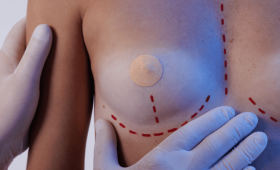
The initial consultation is paramount. Beyond standard health evaluations, a detailed assessment of the degree and type of asymmetry is conducted. This goes beyond simple visual inspection. We employ 3D imaging – utilising Sientra or Ideal Implant sizers – to accurately measure breast volume, projection, and existing tissue dimensions. This digital modelling allows for precise implant selection and pre-operative simulation, giving the patient a visual representation of the anticipated outcome. Crucially, it also aids in determining the optimal implant placement – submuscular (beneath the pectoralis muscle) or subglandular (beneath the breast tissue) – based on individual anatomy and desired aesthetic. In cases of significant asymmetry, a mastopexy (breast lift) may be incorporated to address ptosis (sagging) and further refine the overall contour.
Surgical Technique: The Asymmetry-Specific Approach
Correcting asymmetry isn’t simply about using different sized implants. It’s about understanding *why* the asymmetry exists. If the asymmetry is due to differences in pectoral muscle development, a more aggressive submuscular dissection, strategically placing the implant to create a balanced muscular-glandular base, is often necessary. We favor the ‘dual-plane’ technique in these cases. This involves creating a pocket that begins submuscularly but transitions to subglandular towards the upper pole of the breast, maximizing projection while maintaining a natural feel.
Furthermore, implant malposition is a significant contributor to perceived asymmetry. During surgery, meticulous attention is paid to implant centering, aligning with the inframammary fold (the crease under the breast) and ensuring symmetrical nipple-to-sternal notch distances. We utilize intraoperative fluoroscopy – real-time X-ray imaging – to confirm implant placement and identify any rotational or positional discrepancies, particularly crucial when addressing asymmetry.
The choice of implant profile (low, moderate, high, or ultra-high) is critical. For asymmetrical cases, it’s common to use implants with differing profiles to compensate for anatomical variations. A patient with a wider chest wall on one side might benefit from a slightly higher profile implant on that side to achieve proportionate fullness. However, it’s crucial to avoid excessive profile, as this can lead to an unnatural appearance or palpability of the implant edge.
Persona Case Study: Eleanor, 45, UK
Eleanor, a 45-year-old patient from the UK, presented with moderate asymmetry, attributed to prior weight fluctuations and subsequent skin laxity. Her right breast was noticeably smaller and lower in position than her left. Following 3D imaging, we determined a volumetric difference of approximately 150cc between the breasts.
The surgical plan involved a combination of augmentation and mastopexy. A moderate-plus profile implant (325cc) was placed submuscularly on the right side, combined with an inferior pedicle mastopexy to lift and reshape the surrounding tissue. On the left side, a moderate profile implant (275cc) was placed submuscularly, with a less aggressive mastopexy to maintain existing projection. The skin incision was carefully placed within the inframammary fold to minimize visible scarring. Post-operatively, Eleanor underwent standard wound care and compression garment use.
At her 6-month follow-up, Eleanor expressed complete satisfaction with the results. The asymmetry was significantly reduced, and the breasts had a natural, balanced appearance. She reported a positive impact on her self-confidence and body image. Her total cost for the procedure in Turkey, including hospital stay and surgeon’s fees, was approximately 6,800 GBP.
Risk Mitigation & Post-Operative Care
As with any surgical procedure, breast augmentation carries inherent risks. These include capsular contracture (scar tissue formation around the implant), implant rupture, infection, and seroma (fluid accumulation). To minimize these risks, we adhere to stringent surgical protocols:
- Prophylactic Antibiotics: Administration of broad-spectrum antibiotics prior to surgery and continued post-operatively.
- Irrigation Protocol: Rigorous irrigation of the implant pocket with saline solution containing antibiotics during the procedure.
- Implant Selection: Utilizing textured implants (where appropriate) to reduce the risk of capsular contracture. However, we discuss the ALCL (Anaplastic Large Cell Lymphoma) risk associated with textured implants with all patients and offer smooth implants as a viable alternative.
- Hematoma Prevention: Meticulous hemostasis (control of bleeding) during surgery and the use of surgical drains to prevent hematoma formation.
Post-operatively, patients are instructed to wear a supportive compression garment for 6-8 weeks to minimize swelling and promote skin retraction. Regular follow-up appointments are scheduled at 1, 3, 6, 12, and 18 months to monitor healing and assess implant position. Mammograms and ultrasounds are recommended periodically to screen for potential complications.
International Patient Considerations – Turkey Focus
For our international patients, particularly those from the UK and EU, we provide comprehensive support throughout the entire journey. Turkey offers high-quality medical care at competitive prices. Our partner hospitals are JCI (Joint Commission International) accredited and regulated by the Turkish Ministry of Health, ensuring adherence to international medical standards. The average hospital stay following breast augmentation is typically 7-10 days. Patients can expect final results to be visible within 3-6 months, although minor swelling and settling may continue for up to a year.
For comparison, similar procedures in the US or UK can range significantly in cost. A rhinoplasty can range from 2,800 – 4,500 USD, a deep plane facelift from 4,500 – 8,000 USD, and liposuction (Vaser technique) from 2,500 – 4,000 USD. A full mommy makeover can be between 6,000 – 10,000 USD. Furthermore, we assist with visa applications (e-visas are available for most UK/US/EU citizens for a 90-day stay) and recommend recovery hubs in Istanbul (city/boutique experience), Antalya (resort/beach recovery), and Izmir (Aegean/thermal spa recovery) to suit individual preferences. Our concierge service handles airport transfers, accommodation, and post-operative care coordination.
We utilize cutting-edge technologies like Vaser Hi-Def liposuction, Deep Plane Facelift techniques, and Piezo Rhinoplasty as complementary procedures to enhance overall aesthetic outcomes when requested by the patient.
Breast Augmentation for Asymmetrical Chests: Finding the Right Implant Profile – Recovery Logistics, Cost Audit & Final Medical Verdict
Addressing breast asymmetry with augmentation requires a nuanced approach, extending beyond simple implant volume. This pillar focuses on the crucial post-operative considerations, a detailed cost comparison between medical tourism in Turkey (specifically Antalya and Istanbul) versus Western countries, and the final medical assessment for achieving optimal results.
Recovery Logistics: Beyond the Initial Downtime
While the immediate post-operative period following breast augmentation in Turkey generally spans 7-10 days, focusing solely on this timeframe provides an incomplete picture. Effective recovery is a phased process, extending to the full manifestation of results at 3-6 months. The initial phase prioritizes wound healing and managing discomfort through prescribed analgesics, often incorporating a combination of non-opioid pain relievers and, in some cases, short-term opioid use. However, this is closely monitored to mitigate potential side effects such as constipation.
A critical, and often overlooked, aspect is seroma management. Seromas – collections of serous fluid – can occur post-operatively and necessitate aspiration. Experienced surgeons employ meticulous surgical techniques, including complete hemostasis and the use of drain placement (typically removed within 7-14 days), to minimize seroma formation. Post-operative compression garments, worn consistently for 6-8 weeks, play a vital role in reducing swelling, supporting the tissues, and shaping the newly augmented breasts. The type of garment is crucial; medical-grade compression, not simply aesthetic bras, is essential.
Furthermore, recovery hubs within Turkey offer distinct advantages. Istanbul, with its ‘City/Boutique’ model, provides immediate access to specialist medical care and a vibrant urban environment facilitating early mobility. Antalya, leaning towards a ‘Resort/Beach’ approach, offers a more relaxed environment conducive to psychological recovery, though requires pre-arranged transport for follow-up appointments. Izmir, with its ‘Aegean/Thermal’ springs, is gaining traction as a location that integrates post-operative rehabilitation with restorative therapies.
2026 Cost Audit: Turkey vs. Western Countries
The economic disparity between medical procedures in Turkey and Western countries remains significant, even factoring in travel and accommodation. This audit, projected to 2026, considers potential inflation and exchange rate fluctuations (focusing on USD, EUR, and GBP). While exact costs vary based on surgeon experience, facility, and implant type, here’s a comparative overview (all figures approximate):
- Breast Augmentation (Turkey): $3,000 – $6,000 USD (including implant costs, surgeon’s fee, hospital stay, and initial post-operative care). This estimate assumes a standard silicone or saline implant.
- Breast Augmentation (USA): $8,000 – $15,000 USD (excluding anesthesia, facility fees, and potential complications).
- Breast Augmentation (UK): £6,000 – £12,000 GBP (equivalent to approximately $7,500 – $15,000 USD depending on exchange rates – again excluding anesthesia and facility fees).
- Breast Augmentation (Germany): €6,000 – €12,000 EUR (equivalent to approximately $6,500 – $13,000 USD depending on exchange rates, also excluding ancillary costs).
The cost savings are considerable, but it’s crucial to understand *why*. Lower operational costs, government subsidies for medical facilities, and a competitive medical tourism market contribute to these reduced prices. However, cost shouldn’t be the sole determinant. Selecting a surgeon accredited by JCI (Joint Commission International) and regulated by the Turkish Ministry of Health is paramount.
Furthermore, it’s important to note the potential for combined procedures. A patient undergoing breast augmentation might also consider procedures such as:
- Rhinoplasty: $2,800 – $4,500 USD
- Vaser Liposuction: $2,500 – $4,000 USD
- Deep Plane Facelift: $4,500 – $8,000 USD
- Mommy Makeover: $6,000 – $10,000 USD
Combining procedures during a single medical tourism trip can further optimize cost-effectiveness, though requires careful consideration of extended recovery periods and surgeon scheduling.
The Final Medical Verdict: Implant Profile & Asymmetry Correction
Addressing asymmetry demands meticulous pre-operative planning and an understanding of implant profiling. Beyond implant volume (measured in cc’s), the implant profile – low, moderate, high, or ultra-high – significantly impacts the final aesthetic result. Low-profile implants are wider but less projection, suitable for patients with ample breast tissue. High-profile implants offer greater projection but may appear less natural in thinner patients. Ultra-high profile implants provide maximum projection, typically reserved for revision surgeries or specific anatomical goals.
For asymmetrical chests, a *combination* of implant profiles and volumes is frequently employed. The surgeon will utilize 3D imaging and sizers during the pre-operative consultation to precisely determine the optimal implant characteristics for each breast. Furthermore, the surgical approach – either submuscular (under the pectoral muscle) or subglandular (above the muscle) – influences the final aesthetic outcome and recovery process. Submuscular placement provides better coverage and a more natural feel, but often results in a longer recovery period. Subglandular placement offers quicker recovery but may exhibit more visible rippling, particularly in patients with limited breast tissue.
The use of advanced surgical technologies, such as 3D-guided implant placement, is becoming increasingly prevalent. These technologies allow for greater precision and minimize the risk of complications. Other emerging techniques, like utilizing acellular dermal matrix (ADM) to enhance tissue support and camouflage implant edges, are also being explored. Finally, a key component of the final medical verdict is the assessment of the patient’s chest wall anatomy; rib cage asymmetry or pectus excavatum/carinatum may require additional corrective procedures to achieve truly symmetrical results. Ignoring these underlying anatomical factors can lead to dissatisfaction even with perfectly placed implants.
Post-operatively, careful monitoring for capsular contracture – the formation of scar tissue around the implant – is essential. While rates vary, diligent adherence to post-operative instructions and early identification of any concerning symptoms can significantly reduce the risk of this complication.
Ready to consult a specialist? Schedule a Free Consultation for Breast Augmentation for Asymmetrical Chests in Turkey with cureholiday.com
Free Consultation
Fill out the form below to get your free medical travel plan and price quote.
Sources and how to verify this yourself
- Howe M-S, Keys W, Richards D. Long-term (10-year) dental implant survival: a systematic review and sensitivity meta-analysis. Journal of Dentistry, 2019 — pooled 10-year implant survival 96.4% (95% CI 95.2–97.5%); conservative sensitivity estimate 93.2%. source
- Ministry of Health, Regulation on International Health Tourism and Tourist Health, Official Gazette 26 April 2025, No. 32882 — authorisation requirement for facilities and intermediaries, TÜSKA accreditation, compulsory complication insurance (deadline 31 December 2025 for insurance, 31 December 2026 for accreditation). source
- Ministry of Health, Regulation on Promotion and Information Activities in Health Services, Official Gazette 12 November 2025, No. 33075 — treatment promises and guarantees are prohibited; price and campaign announcements are permitted only within international health tourism. source