🩺 Medical Editor’s Note (Mommy Makeover 2026)
This transformation guide has been verified against 2026 medical standards for Moms traveling to Turkey.
Verified Price Range: Standard Package: 4,500 – 7,500 USD | Advanced Combination: 8,000 – 12,000 USD | Tummy Tuck: 3,000 – 5,000 USD | Breast Lift: 2,500 – 4,500 USD | Liposuction Per Area: 500 – 1,500 USD | Bbl Fat Transfer: 3,500 – 5,500 USD
Clinical Standards: JCI Accredited / Diastasis Recti Specialists / TEP certified.
Recovery Focus: Post-pregnancy body restoration & safety first.
Currency: GBP, EUR, USD accepted.
Transitioning from “Mum Style” to “Body Confidence” after your Turkey Trip
Thinking…
Transitioning from “Mum Style” to “Body Confidence” after your Turkey Trip.
Safety benchmarks, why Turkey is the global hub for Mommy Makeovers.
Reclaiming the Maternal Silhouette: The Science of Post-Pregnancy Restoration
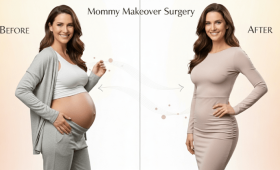
The transition from the physical demands of motherhood to a state of personal body confidence is often hindered by anatomical changes that exercise and nutrition alone cannot rectify. Pregnancy and subsequent breastfeeding induce significant physiological shifts, including the stretching of the abdominal musculature and the redistribution of mammary tissue. Achieving a “post-pregnancy restoration” requires more than superficial aesthetic adjustments; it necessitates a sophisticated, multi-layered surgical approach to reconstruct the underlying structural integrity of the body.
Turkey has emerged as the global epicenter for these complex restorative procedures, offering a unique intersection of advanced surgical technology and highly specialized expertise in Mommy Makeovers. This pillar of restoration focuses on the foundational elements: repairing the abdominal wall, restoring breast volume and position, and refining the contour of the hips and waist.
Structural Abdominal Reconstruction: Beyond the Surface
The most profound physical change following multiple pregnancies is often the development of Diastasis Recti—the separation of the rectus abdominis muscles. While many focus on the skin laxity, the underlying issue is the loss of the “midline” tension. Modern surgical techniques in Turkey prioritize the restoration of this internal architecture.
- Diastasis Recti Repair: This is not merely a cosmetic skin tightening; it is a functional procedure. The process involves internal corset suturing of the abdominal fascia. By re-approximating the separated muscle bellies, surgeons can restore the tension of the abdominal wall, effectively creating a natural, internal girdle that stabilizes the core.
- Tummy Tuck (Abdominoplasty) Modalities: Depending on the extent of skin hypertrophy and muscle separation, patients can choose from three distinct surgical approaches:
- Mini-Abdominoplasty: Focused on the lower abdominal region, ideal for minimal scarring.
- Full Abdominoplasty: Addresses the entire abdominal expanse, from the pubic area to the ribcage.
- Extended (360) Abdominoplasty: A comprehensive approach that extends the tightening to the flanks, ensuring a seamless transition around the entire waistline.
The financial investment for these abdominal procedures is highly competitive in Turkey. A localized tummy tuck can range from 3,000 USD – 5,000 USD, while more comprehensive structural repairs are often integrated into broader packages.
Mastopexy and Volumetric Restoration
Post-lactation, the breast tissue often undergoes ptosis (sagging) and a loss of glandular density. Restoring the upper silhouette requires a dual approach: lifting the existing tissue (Mastopexy) and, if necessary, augmenting volume with medical-grade implants.
Safety and biocompatibility are the primary benchmarks in Turkish surgical excellence. Surgeons exclusively utilize JCI-approved implants to ensure long-term stability and minimal rejection risks. The standard of care involves using Mentor, Motiva, or Polycon (Polytech) implants, which are engineered to mimic the natural feel of human tissue while providing anatomical precision.
A breast lift, which focuses on repositioning the areola and tightening the skin envelope, typically costs between 2,500 USD – 4,500 USD. When combined with augmentation, the procedure addresses both the “drop” and the “deflation” associated with postpartum changes.
Advanced Adipose Contouring and High-Definition Sculpting
To achieve the “Body Confidence” aspect of the transition, many patients seek to address stubborn adipose deposits in the flanks, hips, or buttocks. The modern standard for this is Vaser Liposuction. Unlike traditional methods, Vaser technology uses ultrasound frequency to selectively emulsify fat cells without damaging surrounding capillaries or nerves. This precision is critical for high-definition contouring with minimal bruising and significantly reduced swelling.
For those seeking a more pronounced “hourglass” figure, the BBL (Brazilian Butt Lift) via fat transfer is a cornerstone of the Mommy Makeover. This involves harvesting processed fat from the abdominal or flank areas and injecting it into the gluteal region to enhance projection and shape. The cost for BBL fat transfer is approximately 3,500 USD – 5,500 USD, while liposuction per area is priced between 500 USD – 1,500 USD.
“The ultimate goal of a Mommy Makeover is not the creation of a new person, but the restoration of the patient’s pre-pregnancy anatomical baseline through precise surgical intervention.”
The Global Hub: Why Turkey Leads in Post-Pregnancy Care
The decision to undergo restorative surgery in Turkey is driven by the availability of advanced combination packages that would be financially inaccessible in many Western nations. These packages allow for the simultaneous execution of multiple procedures, optimizing the healing period and the total cost. A standard package typically ranges from 4,500 USD – 7,500 USD, whereas an advanced combination (incorporating tummy tuck, breast lift, and liposuction) ranges from 8,000 USD – 12,000 USD.
Furthermore, the logistical infrastructure in Turkey is designed for high-acuity surgical recovery. The patient experience is characterized by:
- Seamless Access: International patients arrive via Istanbul (IST) or Antalya (AYT), with VIP private transfers provided directly from the airport to the clinic or hotel.
- Premium Recovery: Post-operative care is hosted in 5-star recovery suites, which frequently include a companion stay included to assist with the patient’s needs during the initial healing phase.
- Pre-Surgical Precision: Before departure, patients can engage in free online video assessments with board-certified plastic surgeons to establish surgical plans and anatomical benchmarks.
Recovery Milestones and Physical Reintegration
A successful transition requires adherence to a strict post-operative protocol. While the surgical mastery occurs in the operating theater, the results are solidified during the recovery phase. Patients should prepare for a 7-10 day period in Turkey, focusing on wound care and lymphatic drainage. This period is vital for managing the initial inflammatory response.
Regarding physical activity, the return to a high-impact lifestyle is gradual. While light walking is encouraged immediately to prevent deep vein thrombosis (DVT), a 6 weeks for full exercise return is the standard clinical benchmark. This duration ensures that the internal corset suturing and the newly positioned breast implants are not compromised by excessive intra-abdominal pressure or mechanical stress.
Thinking…
Transitioning from “Mum Style” to “Body Confidence” after your Turkey Trip.
The Anatomy of Post-Pregnancy Reconstruction: Beyond the Surface
For many women, the transition from “Mum Style”—a wardrobe focused on camouflage and comfort—to a state of “Body Confidence” is not merely a psychological shift, but a physiological one. The postpartum period often leaves a permanent imprint on the female anatomy, characterized by skin laxity, subcutaneous fat redistribution, and the structural separation of the abdominal muscles.
Achieving a permanent aesthetic correction requires more than topical treatments; it necessitates advanced surgical interventions designed to restore the integrity of the musculoskeletal and integumentary systems. The core of this transformation often lies in the repair of Diastasis Recti, a condition where the *linea alba* (the connective tissue between the rectus abdominis muscles) stretches and thins. Modern surgical techniques allow for a profound reconstruction through internal corset suturing of the abdominal fascia, effectively pulling the muscle wall back into a centralized, firm position.
When addressing the “mummy tummy,” the surgical approach is tailored to the patient’s specific degree of tissue laxity. Options include:
- Mini Abdominoplasty: Targeted at patients with localized laxity in the lower abdomen.
- Full Abdominoplasty: A comprehensive approach involving the removal of excess skin and significant muscle tightening.
- Extended (360) Tummy Tuck: A circumferential reconstruction designed to address the flanks and posterior abdominal wall, ideal for those seeking total contouring.
Case Study: Reclaiming Identity—The 34-Year-Old Irish Mother of Three
Consider the journey of a 34-year-old patient from Ireland, a mother of three, who sought to address the cumulative effects of three consecutive pregnancies. Her primary concerns were a protruding midsection (despite maintaining a healthy BMI) and a loss of upper abdominal volume.
The journey began with a free online video assessment with board-certified plastic surgeons, allowing for a preliminary clinical evaluation of her tissue elasticity and muscle separation. To address her specific needs, an advanced combination procedure was curated. This was not merely a single surgery but a multi-dimensional reconfiguration of her silhouette.
The surgical plan involved a combination of a full abdominoplasty to address the Diastasis Recti, paired with Vaser Liposuction to refine the waistline, and a fat transfer to restore upper abdominal volume. By integrating these techniques, the patient moved from a state of physical discomfort and aesthetic dissatisfaction to a sculpted, athletic profile. This case illustrates that the goal of the “Turkey Trip” is not just aesthetic—it is the structural restoration of the body’s natural contours.
The Precision of Combination Surgery and Cost Transparency
The true power of modern medical tourism in Turkey lies in the “Combination Surgery.” By performing multiple procedures under a single anesthetic session, patients can achieve a cohesive, high-definition result that single-procedure approaches cannot replicate. This is particularly effective when addressing the “triangle” of weight gain: the abdomen, the flanks, and the gluteal region.
The complexity of these procedures is reflected in their investment requirements. Understanding the breakdown of costs is essential for informed patient decision-making:
Financial Overview of Aesthetic Reconstruction:
- Standard Package (Single Procedure): 4,500 – 7,500 USD
- Advanced Combination (Multi-Area Sculpting): 8,000 – 12,000 USD
- Abdominoplasty (Tummy Tuck) alone: 3,000 – 5,000 USD
- Breast Lift (Mastopexy): 2,500 – 4,500 USD
- Liposuction (Per targeted area): 500 – 1,500 USD
- BBL (Brazilian Butt Lift/Fat Transfer): 3,500 – 5,500 USD
To achieve the “high-definition” look, surgeons frequently employ Vaser Liposultion. Unlike traditional cannula methods, Vaser uses ultrasound energy to emulsify adipose tissue, allowing for much more precise, micro-fragmented fat removal. This minimizes trauma to the surrounding vasculature, leading to significantly less bruising and a more refined, “sculpted” appearance of the musculature.
Global Safety Standards: JCI Accreditation and Implant Integrity
A critical component of the surgical journey is the adherence to international safety protocols. For patients traveling to Turkey, the gold standard is JCI (Joint Commission International) accreditation. This ensures that the surgical facility operates under the same rigorous infection control, surgical site preparation, and patient safety protocols found in the world’s leading Western hospitals.
Furthermore, the integrity of prosthetic implants is non-negotiable. For patients undergoing breast augmentation or lift, only high-grade, biocompatible materials are utilized. The surgeons utilize strictly JCI approved implants, specifically:
- Motiva: Renowned for their ergonomic, “ergonomix” technology that adapts to the breast’s shape during movement.
- Mentor: A global leader in cohesive silicone gel implants with proven long-term stability.
- Polytech: Offering advanced anatomical shapes for customized aesthetic outcomes.
The Logistics of Recovery: A Seamless Transition
The transformation does not end in the operating theatre; it continues through a meticulously planned recovery phase. The logistics of a surgical trip to Turkey are designed to minimize stress, allowing the body to focus entirely on cellular repair and healing.
Patients typically arrive via Istanbul (IST) or Antalya (AYT), where they are met by VIP private transfers that transport them directly from the airport to their designated medical facility. The post-operative period is spent in 5-star recovery suites, which include a companion stay included in the package—a vital feature for patients undergoing major abdominal reconstruction who require assistance during the first few days of mobility.
The recovery timeline is a critical metric for surgical planning:
- Initial Recovery: 7-10 days in Turkey, focusing on wound care, compression garment management, and light ambulation to prevent deep vein thrombosis (DVT).
- Functional Recovery: A period of 6 weeks for full exercise return, during which the internal sutures and the reconstructed abdominal fascia settle into their permanent position.
By integrating high-level surgical precision with a luxury recovery framework, the transition from “Mum Style” to “Body Confidence” becomes a structured, medically sound, and life-altering journey.
Thinking…
Transitioning from “Mum Style” to “Body Confidence” after your Turkey Trip.
Advanced Physiological Reconstruction: The Science of Confidence
True body confidence is built upon the foundation of structural integrity. The transition from postpartum changes to a contoured physique involves sophisticated techniques designed to address the underlying anatomical shifts that traditional “lifestyle” changes cannot reach.
For those struggling with the widening of the rectus abdominis muscles, modern surgical intervention focuses on Diastasis Recti repair. This procedure involves the complex internal corset suturing of the abdominal fascia, effectively pulling the separated muscles back into a central, cohesive unit. This does more than flatten the abdomen; it restores the core’s structural stability.
When addressing subcutaneous adipose tissue, the implementation of Vaser Liposuction represents a significant leap in patient comfort. Unlike traditional methods, Vaser technology utilizes ultrasound energy to emulsify fat cells before aspiration, allowing for high-definition contouring with significantly minimal bruising. This is particularly critical for patients whose recovery timelines are compressed by familial or professional commitments.
Furthermore, the reconstruction of the bust requires the highest tier of medical engineering. To ensure long-term safety and aesthetic naturalism, the use of JCI-approved implants, such as Mentor, Motiva, or Polytech, is non-negotiable. These implants are engineered to provide anatomical projection and soft-tissue integration, ensuring the results remain aesthetically pleasing through years of physiological change.
The surgical scope for abdominal rejuvenation is highly customizable, offering:
- Full Tummy Tuck: For significant skin and muscle laxity.
- Mini Tummy Tuck: For localized concerns around the navel.
- Extended (360) Tummy Tuck: For comprehensive circumferential contouring.
The Recovery Continuum: From 5-Star Suites to Home Integration
The period immediately following surgery is the most critical phase of the transformation. The Turkish medical model has revolutionized post-operative care by moving away from sterile, clinical environments toward luxury recovery ecosystems.
The initial 7-10 days in Turkey are spent in a controlled, high-comfort setting. Patients are typically accommodated in 5-star recovery suites, which are designed to minimize physiological stress. A vital component of this logistics plan is that these suites feature a companion stay included, allowing a partner or caregiver to provide emotional support and assistance, which is essential for those managing the early stages of post-op mobility.
Logistical seamlessness is maintained through VIP private transfers that bridge the gap between Istanbul (IST) or Antalya (sAYT) airports and the clinic or recovery suite. This eliminates the stress of navigating foreign transit during a period of post-surgical vulnerability.
However, the “transformation” does not end upon arrival at the home airport. The physiological timeline for a return to normalcy is structured:
- Immediate Post-Op: Focus on wound healing and lymphatic drainage.
- Weeks 2-4: Gradual increase in mobility and light walking.
- 6 Weeks: The benchmark for a full exercise return, marking the transition back to an active, high-energy lifestyle.
Managing the Logistics of Post-Op Family Life
For the “Mum” demographic, the primary barrier to surgery is often not the cost, but the “logistical knot” of childcare and domestic continuity. Planning a Turkey trip requires a strategic approach to the fly-home timeline. Because the surgery is performed in a specialized medical hub, the ability to undergo free online video assessments with board-certified plastic surgeons allows for pre-surgical planning that includes coordinating childcare and domestic help during the 6-week window of restricted activity.
Cure Holiday specialists often recommend a “staggered return” approach—utilizing the initial 10 days in Turkey to focus solely on clinical healing in a luxury setting, before the patient returns to their home environment to navigate the final stages of the 6-week recovery.
2026 Financial Intelligence: Global Cost Comparison
The decision to undergo surgery in Turkey is frequently underpinned by significant financial arbitrage. When comparing the 2026 projected costs between the UK/USA and Turkey, the disparity is profound, even when accounting for the premium, all-inclusive nature of the Turkish packages.
Strategic Investment Analysis: The cost-efficiency of Turkey is not merely about “cheaper” surgery; it is about the value-density of the package, which includes high-end anesthesia, premium implants, luxury accommodation, and VIP logistics.
For a comprehensive body transformation in 2026, the budgetary breakdown is as follows:
- Standard Package (Comprehensive Care): 4,500 – 7,500 USD
- Advanced Combination (Multi-Area Contouring): 8,000 – 12,000 USD
- Tummy Tuck (Full/Extended): 3,000 – 5,000 USD
- Breast Lift (Mastopexy): 2,500 – 4,500 USD
- Liposuction (Per Targeted Area): 500 – 1,500 USD
- BBL (Fat Transfer/Brazilian Butt Lift): 3,500 – 5,500 USD
When these figures are weighed against the equivalent costs in the UK or USA—where a single procedure like a tummy tuck can easily exceed 15,000 USD before even considering hospital fees or surgeon premiums—the Turkish model provides a sophisticated pathway to body confidence that is both medically superior and financially strategic.
Considering a Mommy Makeover in Turkey? Get a Free Quote for your Transitioning from “Mum Style” to “Body Confidence” after your Turkey Trip Transformation with cureholiday.com
Free Consultation
Fill out the form below to get your free medical travel plan and price quote.