Cost and planning note (Kuşadası 2026 Data)
The figures below are indicative market ranges, not a quote: your own price is confirmed after a clinical assessment.
Indicative price range: Hollywood Smile Full: 3,000 – 5,000 USD | Zirconia Crown Per: 180 – 300 USD | E Max Veneer Per: 250 – 400 USD | Dental Implant Per: 400 – 800 USD (Top Brands) | All On 4 System: 4,000 – 7,000 USD | All On 6 System: 5,500 – 9,000 USD | Laser Whitening: 200 – 350 USD
Facility standards: In Türkiye, any facility treating international patients must hold the Ministry of Health’s international health tourism authorisation; hospitals and medical centres must also be accredited by TÜSKA, and complication insurance is compulsory for procedures carried out in an operating theatre (Regulation of 26 April 2025).
Location: Proximity to Ege Port Cruise Terminal & Ephesus.
Currency: GBP, EUR, USD accepted.
Choosing Between Titanium and Ceramic Implants in a Turkish Dental Clinic
Titanium vs. Ceramic Dental Implants: A Technical Deep Dive for Kuşadası Patients
For international patients seeking dental implant solutions – particularly the transformative ‘Hollywood Smile’ – Kuşadası, Turkey, has emerged as a leading destination. This is driven by a confluence of factors: advanced technical capabilities, internationally recognized standards, and a compelling cost-benefit ratio. Central to achieving a successful and aesthetically pleasing outcome is the choice between titanium and ceramic (typically zirconia) dental implants. This pillar will provide a detailed technical comparison, crucial for informed decision-making before undertaking treatment at a Kuşadası dental facility.
Understanding Osseointegration and Biocompatibility
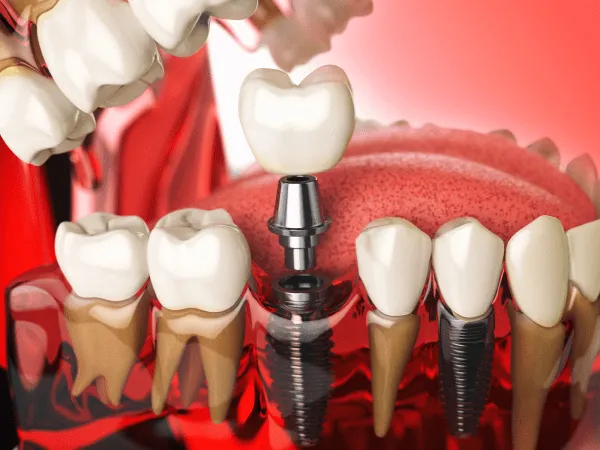
The cornerstone of successful dental implantation is osseointegration – the direct structural and functional connection between living bone and the surface of the implant. Both titanium and zirconia are considered biocompatible materials, meaning they are well-tolerated by the body and minimize the risk of rejection. However, the mechanisms by which they achieve this biocompatibility differ significantly.
Titanium’s biocompatibility stems from the spontaneous formation of a titanium dioxide layer upon exposure to the atmosphere. This oxide layer is passive and acts as a barrier against corrosion, while also interacting with bone proteins to promote adhesion. Zirconia, on the other hand, boasts a similar, albeit chemically distinct, oxide layer, providing inherent resistance to corrosion and fostering osseointegration. While both materials reliably achieve osseointegration in the vast majority of cases, subtle differences in surface chemistry and resultant bone response are increasingly scrutinized.
Material Properties and Mechanical Considerations
Titanium alloys (Grade 4 and Grade 5 are most common in implantology) possess superior tensile strength and fatigue resistance compared to zirconia. This means titanium implants are less prone to fracture under heavy occlusal (biting) forces. Its Young’s modulus (a measure of stiffness) is also closer to that of natural bone, which minimizes stress shielding – a phenomenon where the implant takes on too much load, leading to bone resorption around the implant.
Zirconia, while strong, is more brittle than titanium. Recent advancements in zirconia formulations – incorporating yttria stabilization – have significantly improved its fracture toughness, bringing it closer to that of titanium. However, careful case selection is crucial, particularly in patients with parafunctional habits like bruxism (teeth grinding) or those requiring implants in the posterior regions with higher functional demands. The modulus of elasticity of zirconia is significantly higher than that of bone, increasing the potential for stress shielding. Innovative implant designs incorporating features like lattice structures are being developed to mitigate this issue, reducing stiffness and improving load distribution.
Surgical and Prosthetic Considerations
Surgically, both titanium and zirconia implants follow similar protocols. Precise 3D CBCT imaging is essential for accurate assessment of bone volume, nerve proximity, and implant placement planning. CAD/CAM technology and intraoral scanners are routinely utilized in Kuşadası dental clinics to create custom implant guides, ensuring predictable and minimally invasive surgery.
However, zirconia implants often require a different prosthetic workflow. Traditional porcelain-fused-to-metal crowns are not compatible with zirconia due to differing thermal expansion coefficients, potentially leading to bond failure. Full-zirconia or e-max restorations are typically employed, offering excellent aesthetics and biocompatibility. Connecting zirconia implants to the prosthetic component (abutment and crown) can present a challenge. While adhesive cementation is common, meticulous surface preparation and appropriate bonding protocols are paramount to prevent microleakage and peri-implantitis (inflammation around the implant). Some clinics now offer screw-retained zirconia restorations, eliminating the need for cement and simplifying future maintenance.
Aesthetic Considerations: The Role of Emergence Profiles and Soft Tissue
In the ‘Hollywood Smile’ aesthetic zone, achieving natural-looking results is paramount. While both materials can deliver excellent aesthetics, subtle differences exist. Titanium implants, when used with ceramic or porcelain restorations, can sometimes exhibit a greyish hue through the thin gingival tissues, particularly in patients with thin biotypes. This is rarely a clinical issue with proper restorative planning, but remains a consideration.
Zirconia implants, being tooth-colored, eliminate this potential for greyish discoloration. Moreover, zirconia’s smooth surface texture encourages soft tissue attachment, potentially leading to a more harmonious emergence profile – the way the restoration emerges from the gum line. The choice of implant material can also influence soft tissue architecture. The use of soft tissue lasers during the surgical phase, common in Kuşadası clinics, helps sculpt the gums for optimal aesthetics, regardless of the implant material.
Cost Comparison and Treatment Packages
The cost of dental implants in Kuşadası is significantly lower than in many Western countries. A single dental implant, utilizing top brands, typically ranges from 400 – 800 USD. A full ‘Hollywood Smile’ utilizing implant-supported restorations can cost between 3,000 – 5,000 USD. The All-on-4 system, providing a full arch restoration, is priced from 4,000 – 7,000 USD, while the more robust All-on-6 system starts at 5,500 – 9,000 USD. Zirconia crowns, often used as part of a ‘Hollywood Smile’ makeover, are available for 180 – 300 USD per unit, while E-max veneers are priced at 250 – 400 USD each. Additional treatments such as laser whitening can be added for 200 – 350 USD.
Zirconia implants themselves are generally more expensive than titanium implants, reflecting the higher manufacturing costs and specialized prosthetic requirements. However, the total treatment cost may be comparable depending on the restorative materials chosen.
Kuşadası: A Convenient Hub for Dental Tourism
Kuşadası offers a uniquely convenient location for dental tourists. The proximity to Izmir Adnan Menderes (ADB) Airport, with a transfer time of just 45-60 minutes, simplifies travel logistics. The Ege Port Kuşadası cruise port allows for quick consultations and even same-day treatments for cruise passengers. Beyond dental care, Kuşadası provides a wealth of attractions, including the ancient city of Ephesus (20 minutes away), Pigeon Island, Ladies Beach, and the Dilek Peninsula National Park. Patients can choose from a range of accommodation options, from luxury boutique hotels to beachfront resorts and relaxing thermal spas, ensuring a comfortable recovery period.
All accredited dental facilities in Kuşadası adhere to stringent quality standards, including JCI (Joint Commission International), TÜRSAB Medical Tourism Certified, and Ministry of Health Regulation. Clinics boast qualified staff, including Patient Coordinators specializing in English, German, and Irish language support, to facilitate seamless communication and a positive patient experience.
The Structural Journey: Titanium vs. Ceramic Implants in Kuşadası
For patients considering dental implants in Kuşadası, Turkey, the selection between titanium and ceramic (specifically, zirconia) implants represents a crucial decision point within their structural journey to a restored smile. While both materials achieve excellent osseointegration – the vital fusion of the implant with the jawbone – their differing biocompatibility profiles, mechanical properties, and aesthetic considerations demand careful evaluation. This pillar details the procedural pathway, highlights a representative case study, and outlines the stringent safety protocols adhered to within leading dental facilities in the region.
Step-by-Step Procedural Pathway
The implant placement process, regardless of material, begins with comprehensive pre-operative assessment. This employs advanced diagnostic tools such as 3D Cone Beam Computed Tomography (CBCT) imaging. CBCT provides a volumetric view of the patient’s jawbone, enabling precise assessment of bone density, nerve location (specifically the inferior alveolar nerve), and anatomical variations. This minimizes the risk of post-operative complications like paresthesia. This data informs the creation of a detailed treatment plan utilizing CAD/CAM technology for digital smile design.
The procedure itself can be broadly categorized into the following stages:
- Surgical Phase: Under local anesthesia (or, for anxious patients, conscious sedation), a flapless surgical technique is often favoured where possible – minimizing soft tissue trauma and promoting faster healing. A pilot drill is used to create an osteotomy (a precisely sized hole) in the jawbone. This is sequentially widened using drills guided by surgical templates, ensuring accurate implant positioning according to the pre-operative plan.
- Implant Placement: The chosen implant – titanium or zirconia – is carefully inserted into the prepared osteotomy. Primary stability, crucial for successful osseointegration, is assessed using insertion torque measurements. If insufficient, techniques such as bone grafting or immediate loading protocols (where appropriate) may be considered.
- Osseointegration Phase: This typically lasts 3-6 months, allowing the jawbone to biologically fuse with the implant surface. During this period, patients are advised to follow a soft diet and maintain meticulous oral hygiene. Non-invasive monitoring using radiographic techniques can assess the progress of osseointegration.
- Restorative Phase: Once osseointegration is confirmed, an abutment – a connecting component – is attached to the implant. An intraoral scan is taken, allowing for the precise digital design and fabrication of the final restoration (crown, bridge, or denture) using CAD/CAM milling. The restoration is then carefully fitted and adjusted to ensure optimal function and aesthetics.
Material Considerations: Titanium vs. Zirconia
Titanium implants have a long and well-established clinical track record, demonstrating exceptional mechanical strength and excellent biocompatibility. However, a small percentage of patients may exhibit sensitivity or allergic reactions to titanium, and some concerns exist regarding potential corrosion and metallic taste. Furthermore, titanium’s grey hue can occasionally affect the aesthetics of thin gingival tissues, particularly in patients with a high smile line.
Zirconia implants, a ceramic material, offer enhanced biocompatibility and avoid the potential for metallic sensitivities. They are also naturally white, providing superior aesthetic results, especially in the anterior region. Zirconia, however, historically exhibited lower fracture toughness compared to titanium. Modern zirconia formulations, particularly yttria-stabilized zirconia, have significantly improved their mechanical properties, making them a viable option for a wider range of clinical scenarios. The choice depends heavily on factors like bone density, occlusal forces, and patient aesthetic demands.
Case Study: 55-Year-Old UK Patient
A 55-year-old male patient from the UK presented with a severely compromised lower jaw due to periodontal disease, necessitating extraction of several teeth and subsequent implant-supported restoration. After thorough evaluation, including CBCT imaging and a detailed medical history, a treatment plan involving four zirconia implants supporting a full-arch fixed bridge (similar to an All-on-4 system) was proposed. The patient opted for zirconia due to aesthetic concerns and a reported sensitivity to other metals. The surgical phase was performed using a flapless technique, followed by a 6-month osseointegration period. The final restoration, fabricated from zirconia-reinforced lithium silicate, was delivered after careful occlusal adjustments and aesthetic refinements. Post-operative radiographs confirmed complete osseointegration and excellent bone-to-implant contact. The patient reported high levels of satisfaction with the functional and aesthetic outcome.
Safety Protocols and Technical Standards
Dental facilities in Kuşadası committed to medical tourism adhere to rigorous safety protocols and international standards. This includes:
- Accreditation: Clinics typically hold certifications from bodies like JCI (Joint Commission International) and are officially recognized as TÜRKSAB Medical Tourism Certified, demonstrating compliance with international quality standards. All facilities operate under the strict regulatory oversight of the Turkish Ministry of Health.
- Sterilization Procedures: Stringent sterilization protocols are maintained throughout the entire process, utilizing autoclaves, chemical sterilization, and disposable materials to prevent cross-contamination.
- Anaesthesia Safety: Qualified anaesthesiologists are available for administering sedation or general anesthesia, with continuous monitoring of vital signs throughout the procedure.
- Post-operative Care: Detailed post-operative instructions are provided, along with 24/7 access to patient coordinators for addressing any concerns or complications.
- Advanced Technology: Clinics invest in cutting-edge technology, including 3D CBCT imaging, CAD/CAM digital smile design, intraoral scanners for precise impression-taking, and soft tissue lasers for minimally invasive surgical procedures.
Logistical Considerations
Kuşadası offers a convenient and attractive location for dental tourism. Izmir Adnan Menderes (ADB) airport is approximately 45-60 minutes away, and the Ege Port Kuşadası cruise terminal provides options for ‘dental vacations’ combined with cruise itineraries. Patients benefit from the readily available 90-day E-visa access for citizens of the UK, Ireland, US and EU. Furthermore, the region offers a wealth of attractions, including the ancient city of Ephesus (20 minutes away), Pigeon Island, Ladies Beach, and the pristine Dilek Peninsula National Park, allowing patients to combine their dental treatment with a memorable holiday experience. Recovery options range from luxury boutique hotels and beachfront resorts to restorative thermal spas.
Costs for procedures are highly competitive. A full ‘Hollywood Smile’ transformation can range from 3,000 – 5,000 USD, while individual zirconia crowns are priced between 180 – 300 USD. Dental implants start at 400 – 800 USD (for top brands), and full-arch solutions like the All-on-4 system range from 4,000 – 7,000 USD and All-on-6 from 5,500 – 9,000 USD. Laser whitening is available for 200 – 350 USD.
Navigating Your Dental Journey: Kuşadası as a Recovery & Logistics Hub
For dental tourists considering implant procedures – whether opting for biocompatible titanium or aesthetically driven ceramic (zirconia) implants – the post-operative experience is as crucial as the surgical precision. Kuşadası, Turkey, presents a uniquely advantageous locale, extending beyond affordable, high-quality treatment to encompass a comprehensive recovery and travel ecosystem. This pillar details the logistical advantages and recovery resources available to patients undergoing dental implant treatment in the region.
Seamless Arrival & Departure: Izmir Airport & Cruise Access
Arriving at Izmir Adnan Menderes (ADB) airport, international patients will find a streamlined experience. Transfer times to Kuşadası range between 45-60 minutes, ensuring minimal travel disruption following potentially lengthy flights. These transfers are meticulously coordinated to accommodate varying arrival schedules and ensure patient comfort. The coordination extends beyond simple transport; we provide detailed pre-travel information regarding baggage allowances, customs regulations, and potential layover considerations.
Kuşadası’s strategic positioning also provides unique access for those combining dental treatment with a Mediterranean cruise. Ege Port Kuşadası, a world-class cruise terminal, offers an exceptionally convenient option for pre- or post-operative consultations. While complex implant surgery requires adequate recovery time, a simple check-up, impression taking for a final restoration, or even a laser gum rejuvenation procedure can be efficiently integrated into a cruise itinerary. This minimizes additional travel time and maximizes vacation enjoyment. Post-surgical monitoring utilizing teledentistry is also becoming increasingly prevalent, allowing preliminary assessments remotely and informing the need for an in-person visit at the port if required.
Beyond the Chair: Recovery Options Tailored to Your Needs
Post-implant recovery necessitates a tranquil environment conducive to healing. Kuşadası offers a diverse range of accommodation options designed to cater to different preferences and budgets. Beyond standard hotel accommodations, we specialize in arranging stays at:
- Luxury Boutique Hotels: Offering personalized service, intimate settings, and often, dedicated wellness facilities. These hotels prioritize guest comfort and are ideal for patients requiring a higher degree of privacy and attention.
- Beachfront Resorts: The restorative power of the sea is well documented. Staying at a resort allows patients to enjoy gentle sea breezes, vitamin D exposure (important for overall health and immune function, aiding recovery), and low-impact activities like walking along the beach. It’s important to note that vigorous exercise should be avoided immediately post-surgery.
- Thermal Spas: Leveraging the region’s natural geothermal resources, these spas provide specialized treatments designed to reduce inflammation and promote tissue regeneration. While direct application to the implant site is contraindicated, thermal therapies can be highly beneficial for managing overall post-operative discomfort and accelerating healing. We ensure any spa treatments selected are fully compatible with the dental implant protocol.
Understanding the physiological demands of dental implant osseointegration is paramount. This process, where the implant fuses with the jawbone, requires adequate protein intake and micronutrient support. Our patient coordinators can arrange for in-room meal services focusing on nutrient-rich diets tailored to promote healing and minimize inflammation. Consideration is also given to patients with dietary restrictions or allergies.
Exploring the Region: Enhancing Your Recovery Experience
While recovery is the priority, Kuşadası and its surroundings offer compelling diversions that can enhance the overall experience. Patients, once cleared by their dental surgeon, can explore:
- Ephesus Ancient City (20 minutes): A UNESCO World Heritage Site, Ephesus provides a fascinating glimpse into Roman history. Gentle exploration, avoiding strenuous climbing, can offer a welcome distraction during the latter stages of recovery.
- Pigeon Island (Güvercinada): A picturesque island offering stunning views of the coastline. A leisurely stroll along the causeway provides fresh air and moderate exercise.
- Ladies Beach: A sheltered bay ideal for gentle swimming and sunbathing (with appropriate sun protection, crucial for post-operative skin sensitivity).
- Dilek Peninsula National Park: Offering breathtaking scenery and hiking trails (for patients well into their recovery period and with surgeon approval).
However, it’s crucial to emphasize the importance of adhering to post-operative instructions. Activities that increase blood pressure, risk trauma to the surgical site, or involve exposure to excessive heat or sun should be avoided during the initial healing phase. Cure Holiday specialists provide detailed guidelines on permissible activities based on individual patient progress.
Technical Infrastructure & Standards of Care
The success of a dental implant relies not only on the expertise of the surgeon but also on the diagnostic and treatment technology employed. Clinics in the Kuşadası region routinely utilize advanced technologies, including:
- 3D CBCT Imaging: Cone Beam Computed Tomography provides a detailed three-dimensional view of the jawbone, allowing for precise implant planning and minimizing the risk of nerve damage.
- CAD/CAM Digital Smile Design: Computer-Aided Design and Computer-Aided Manufacturing enables the creation of customized implant restorations with exceptional precision and aesthetics.
- Intraoral Scanners: Eliminating the need for traditional impressions, intraoral scanners provide accurate digital models of the mouth, enhancing treatment efficiency and patient comfort.
- Soft Tissue Lasers: Used for precise and minimally invasive soft tissue management, promoting faster healing and reducing post-operative discomfort.
Clinics adhere to stringent international standards, as evidenced by accreditations such as JCI (Joint Commission International), TÜRSAB Medical Tourism Certified, and regulation by the Ministry of Health. This commitment to quality ensures patients receive care equivalent to, or exceeding, that available in their home countries. Furthermore, the availability of patient coordinators fluent in English, German, and Irish ensures clear communication and a supportive experience.
Financial Transparency & Future Cost Analysis
Understanding the financial aspects of dental implant treatment is vital. Current costs for various procedures in the Kuşadası region are as follows:
- Hollywood Smile (Full Arch): 3,000 – 5,000 USD
- Zirconia Crown (Per Unit): 180 – 300 USD
- E-max Veneer (Per Unit): 250 – 400 USD
- Dental Implant (Per Unit – Top Brands): 400 – 800 USD
- All-on-4 System: 4,000 – 7,000 USD
- All-on-6 System: 5,500 – 9,000 USD
- Laser Whitening: 200 – 350 USD
We are committed to ongoing value assessment. A comprehensive cost audit is planned for 2026 to ensure competitive pricing and maintain the region’s position as a leading destination for affordable, high-quality dental implant treatment. This audit will consider fluctuations in material costs, exchange rates, and advancements in technology, providing patients with accurate and up-to-date cost projections.
Furthermore, patients should be aware of the potential for long-term cost savings associated with dental implants. While the initial investment may be higher than traditional dentures or bridges, implants offer superior longevity and functionality, reducing the need for frequent replacements and associated expenses.
Planning a dental visit to Kuşadası? Get a Free Quote for Choosing Between Titanium and Ceramic Implants in a Turkish Dental Clinic in Kuşadası with cureholiday.com
Free Consultation
Fill out the form below to get your free medical travel plan and price quote.
Sources and how to verify this yourself
- Howe M-S, Keys W, Richards D. Long-term (10-year) dental implant survival: a systematic review and sensitivity meta-analysis. Journal of Dentistry, 2019 — pooled 10-year implant survival 96.4% (95% CI 95.2–97.5%); conservative sensitivity estimate 93.2%. source
- Ministry of Health, Regulation on International Health Tourism and Tourist Health, Official Gazette 26 April 2025, No. 32882 — authorisation requirement for facilities and intermediaries, TÜSKA accreditation, compulsory complication insurance (deadline 31 December 2025 for insurance, 31 December 2026 for accreditation). source
- Ministry of Health, Regulation on Promotion and Information Activities in Health Services, Official Gazette 12 November 2025, No. 33075 — treatment promises and guarantees are prohibited; price and campaign announcements are permitted only within international health tourism. source