
Part of: Dental treatment in Turkey — prices, what is included and country comparison.
What is a Dental Crown?
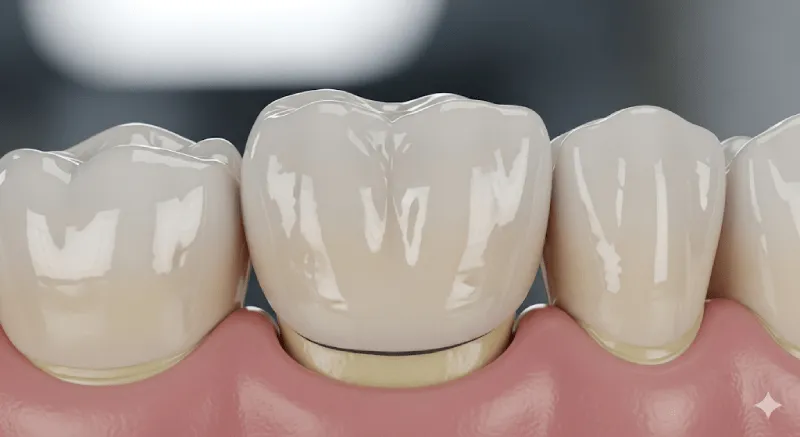
A dental crown, commonly known as a “cap” (kaplama), is a type of restoration placed over a damaged tooth, mimicking the natural tooth form and restoring the tooth by fully encircling it. The crown covers the entire visible part of the tooth, protecting the underlying weakened tooth and giving it strength, shape, and an aesthetic appearance. Just like a ring on a finger, the crown encases all surfaces of the tooth and strengthens it against external forces.
Dental crowns are a critical treatment tool aimed at restoring the functional integrity and resistance to chewing forces of the tooth, rather than just a simple aesthetic improvement. In dentistry, a crown application usually becomes necessary in cases such as substantial loss of tooth structure, fracture, severe wear, or weakening following root canal treatment. If a tooth is too severely damaged to be restored with a large filling, the crown application is the most reliable and long-lasting solution to prevent the tooth from fracturing further.
The primary functions of dental crowns are:
- Protection: To protect weak teeth that are at high risk of fracture, cracked, or root canal treated, against external forces.
- Restoration: To restore the original shape and size of teeth with excessive wear or large loss of substance.
- Aesthetics: To correct the aesthetic appearance of teeth with severely compromised color, irregular shape, or incorrect position.
- Function: Used to support bridges, implant-supported prostheses, or to restore chewing function.
In modern dentistry, thanks to advancements in material science, crowns are no longer just functional; they can offer aesthetic results so natural they are virtually indistinguishable from natural teeth. Various types of crowns, ranging from metal to zirconium, all-ceramic, and porcelain, can be selected according to the patient’s needs and budget.
Why Does Dental Crown Application Become Necessary?
The decision to crown a tooth is a strategic one aimed at protecting the tooth, made by the dentist after a comprehensive examination and radiographic analysis. The main conditions that make dental crown application necessary or highly recommended are:
1. Large Loss of Substance and Fractures: A crown is necessary when a tooth has lost a significant part of its structure due to a large cavity or trauma, and the remaining tooth tissue (enamel and dentin) is too weak to support a filling. Traditional large fillings can put stress on the remaining tooth tissue, leading to cracks and the complete fracture of the tooth. A crown eliminates this risk by holding the tooth together as a whole.
2. Protection After Root Canal Treatment: Teeth that have undergone root canal treatment dry out over time and become brittle because their nerve and vascular supply is severed. Furthermore, the tooth’s strength is reduced due to the large void created in the upper part of the tooth (pulp chamber) during root canal treatment. Especially for posterior teeth subjected to chewing forces, crowning the tooth after root canal treatment is nearly mandatory to prevent its fracture.
3. Excessive Wear and Bruxism Damage: Habits like severe teeth clenching or grinding (bruxism) cause the abrasion of the tooth’s enamel and dentin layers, leading to the shortening of the teeth and damage to the chewing surfaces. Crowns restore these worn teeth to their original anatomical form and protect them from further force. This can also help prevent the progression of temporomandibular joint (TMJ) problems.
4. Aesthetic Corrections: Severe discolorations in teeth (such as tetracycline stains that are resistant to whitening), major shape irregularities, widespread gaps (diastema), or small tooth anomalies are permanently corrected with a crown when laminate veneers are insufficient. The crown offers the opportunity to completely redesign all aesthetic aspects of the tooth.
5. Bridge and Implant Support: In dental bridges made to restore missing teeth, the adjacent teeth (abutment teeth) are prepared by being crowned to support the bridge. Similarly, artificial teeth placed over dental implants are also in the form of a crown.
These indications show that dental crowns are not just a cosmetic option, but often a necessity that ensures the tooth remains in the mouth and maintains its function.
Dental Crown Materials: What are the Types and Characteristics?
Modern dentistry offers a wide range of crown materials suitable for patients’ functional, aesthetic, and budgetary expectations. Crowns are primarily classified according to their substructure.
1. Metal-Fused to Porcelain (MFP – Metal-Fused to Porcelain): This is the traditional type of crown. The inner part is made of a metal alloy (usually nickel, chromium, or precious metal alloys), and the outer surface is covered with aesthetic porcelain.
- Advantages: High mechanical durability and relatively low cost.
- Disadvantages: Aesthetically insufficient. The metal substructure blocks light, making it look dull and lifeless. The biggest problem is the grey/black reflection of the metal at the gum line (grey margin) when gum recession occurs over time, and the risk of metal allergy.
2. All-Ceramic Crowns: These are restorations made entirely of ceramic, containing no metal substructure. This category includes Lithium Disilicate (E-Max) and Feldspathic porcelains.
- Advantages: Offers excellent aesthetics and light transmission (translucency) closest to natural tooth enamel. Their biocompatibility is high because they contain no metal.
- Disadvantages: All-ceramics are not as highly durable as zirconium and metal, so they are generally preferred for anterior tooth restorations where intense chewing forces are not present.
3. Zirconium Crowns (Zirconia Crowns): These are crowns with a white ceramic substructure based on zirconium dioxide (ZrO2).
- Advantages:
- Superior Durability: As strong as metal, highly resistant to fracture (Phase Transformation Toughening).
- Maximum Aesthetics: Eliminates the grey reflection of metal due to its white substructure, and has high light transmission.
- Biocompatibility: Gum-friendly and no risk of allergy since it is metal-free.
- Types:
- Zirconia-Supported Porcelain: Zirconium framework inside, porcelain layer outside.
- Full-Contour Zirconia (Monolithic): The entire crown is made from a single zirconium block, the most durable form, ideal for posterior teeth.
4. Full Gold Crowns: Although rarely used today due to aesthetic concerns, gold has high biocompatibility and durability. Gold crowns may still be preferred in some specific cases (e.g., posterior teeth) because they can be prepared thinly and show a wear rate similar to enamel tissue.
In selecting a crown, the physician must make an individualized decision by evaluating all factors such as the tooth’s position in the mouth (anterior/posterior), the patient’s aesthetic expectations, habits like bruxism, and the material’s cost.
Crown Application Process: Step-by-Step Treatment Protocol
The process of placing a dental crown is a precise and planned protocol, usually requiring two or three dental visits. Modern digital methods (CAD/CAM) have made this process faster and more accurate.
1. First Visit: Preparation and Impression Taking
- Examination and Anesthesia: The dentist examines the tooth, checks the radiographs, and numbs the area with local anesthesia.
- Tooth Preparation (Abrasion): To ensure the crown can fully and flawlessly encircle the tooth, a sufficient amount of tooth tissue is abraded from all surfaces of the tooth, corresponding to the thickness of the crown material. This abrasion ensures the crown fits precisely at the gum line and does not interfere with the bite (occlusion).
- Impression Taking: The definitive impression of the prepared tooth is taken with traditional silicone impression materials or modern 3D intraoral scanners. The impression is sent to the dental laboratory for crown fabrication.
- Temporary Crown: While the permanent crowns are being prepared in the laboratory (this process can take several days or weeks), a temporary crown made of acrylic or composite material is cemented onto the tooth to protect the prepared tooth, maintain aesthetics, and prevent sensitivity.
2. Laboratory Process: Crown Fabrication
- The laboratory fabricates the crown according to the impressions and plans sent by the physician (color, shape, size). Zirconium crowns are milled from blocks using high-precision CAD (Computer-Aided Design) and CAM (Computer-Aided Manufacturing) technologies.
3. Second Visit: Try-in and Bonding (Cementation)
- Try-in: The temporary crown is removed, and the permanent crown from the laboratory is tried in the patient’s mouth. The dentist meticulously checks the crown’s fit with the bite, adjacent teeth, and gums, as well as its aesthetics and color. Patient approval is obtained.
- Permanent Bonding: Once the crown is confirmed to be aesthetically and functionally flawless, the tooth surface and the inside of the crown are cleaned. The crown is permanently bonded (cemented) to the tooth using special and strong dental cements. Excess cement is removed to ensure no material is left at the gum margins.
This meticulous process ensures that the crown serves flawlessly as a part of the tooth for many years.
What is the Aesthetic Difference Between Zirconium and All-Ceramic Crowns?
The aesthetic difference between Zirconium and All-Ceramic (e.g., E-Max) crowns is the most confusing aspect among aesthetic crowns. Although both are metal-free, their areas of use and aesthetic profiles differ.
Light Transmission (Translucency): All-ceramics (especially E-Max) are still at the peak in mimicking the transparency of natural tooth enamel. They transmit and scatter light perfectly, giving them a glow and depth sensation that comes from within.
High-translucency zirconium crowns come very close to all-ceramics in this regard. The opacity of zirconium is very low compared to traditional metal-supported crowns, and they look natural as a result. However, for patients seeking the purest and most transparent aesthetic in a single tooth, especially in the light-rich anterior region, all-ceramic may still hold a slight advantage.
Durability and Strength: Zirconium is clearly superior in this area. Since all-ceramics can be fractured, their use is limited in posterior teeth, long bridges, or in patients with bruxism where chewing forces are high.
Zirconium, on the other hand, is as strong as metal (900 MPa – 1400 MPa) and fracture-resistant, allowing it to be used safely in both the anterior aesthetic region and the posterior chewing region, and even for implant-supported prostheses.
Summary of Use:
- All-Ceramic (E-Max): Single anterior tooth restorations where the highest aesthetic expectations are present.
- Zirconium: All types of restorations combining aesthetics and function; long bridges, posterior teeth, anterior teeth requiring masking of severe discoloration.
The physician must establish this balance when selecting the material; they should choose the most durable material that meets the patient’s aesthetic expectations.
Longevity and Maintenance of Dental Crowns: How Should Care Be Done?
Dental crowns can be very long-lasting with the right material choice and proper application. The most critical factors determining the crown’s lifespan are the material quality, the technical success of the physician, and the patient’s daily maintenance habits.
Expected Lifespan of Crowns: The average lifespan of well-maintained and regularly checked crowns varies by material:
- Zirconium/All-Ceramic: 10 to 20 years and beyond.
- Metal-Supported Porcelain: 8 to 15 years.
These durations can be significantly extended with proper oral hygiene and preventive dentistry approaches.
Fundamental Principles of Crown Care:
- Margin Cleaning (The Gum Line of the Crown): The crown itself does not decay, but the area at the gum edge where the crown meets the natural tooth (margin) is the most vulnerable to plaque buildup and consequently, decay/gum disease. Cleaning this area is vital.
- Dental Floss and Interdental Brushes: In addition to normal toothbrushing, dental floss and appropriately sized interdental brushes recommended by the dentist should be used daily to remove plaque around the crowned teeth and between them. In bridge applications, special floss (Superfloss) or water flossers are recommended for cleaning the area under the bridge.
- Dental Check-ups: Regular check-ups with the dentist and hygienist every 6 months are mandatory to monitor the crown’s fit with the gum, the balance of the bite, and any signs of cracks/fractures.
Avoiding Habits That Damage Crowns:
- Bruxism Protection: Patients with teeth grinding habits must use a protective night guard (splint) while sleeping to protect the crowns and the underlying natural teeth.
- Biting Hard Objects: Biting hard objects like ice, pens, nails, or nutshells should be avoided; this can cause cracks in the porcelain of the crown.
What Are the Possible Risks and Challenges of Dental Crown Application?
Although dental crowns are generally successful and safe restorations, some risks and challenges exist, as with any medical procedure. Most of these risks can be managed with correct technique and patient compliance.
1. Tooth Sensitivity: Temporary hot/cold sensitivity may occur after the crown preparation due to the abrasion of tooth tissue, bringing the preparation closer to the tooth nerve or exposing the dentin tubules. This sensitivity is usually controlled within a few weeks with temporary crowns and specialized toothpastes. Rarely, root canal treatment may be required if the sensitivity becomes permanent.
2. Gum Problems: The crown’s failure to fit perfectly at the gum line (marginal discrepancy), the presence of rough edges, or excess cement residue can lead to gum inflammation (gingivitis) or gum recession in the long term. The use of biocompatible materials like zirconium and the meticulous work of the physician minimize this risk.
3. Crown Fracture or Cracking: Especially in porcelain-layered crowns, excessive forces such as bruxism or biting a hard object can cause the porcelain to crack or fracture. While this risk is very low in full zirconium crowns, it is not completely eliminated.
4. Crown Coming Off (De-cementation): Rarely, the crown may come off if the prepared surface of the underlying tooth has insufficient retention or if the cement loses its strength. In this case, the crown needs to be cleaned and re-cemented.
5. Unnatural Appearance: Particularly with metal-supported crowns or if the dentist makes an error in color and form selection, the crowns may have an aesthetic that looks “artificial” or “un-tooth-like.” In the aesthetic region (anterior teeth), the physician’s aesthetic vision and the use of Digital Smile Design (DSD) eliminate this risk.
To manage these risks, it is critical that the patient follows the physician’s instructions during and after the crown procedure (especially using a night guard) and that the dentist is experienced.
Why Is a Crown Vital for Root Canal Treated Teeth?
Root canal treatment (endodontics) is the procedure of removing the nerve and vascular structure of a tooth due to infection or damage and filling the pulp cavity with special filling materials. This treatment is vital for keeping the tooth in the mouth, but it weakens the tooth’s structure and makes it vulnerable to fracture.
Tooth Weakening Mechanism:
- Mechanical Loss: A cavity is opened in the upper part of the tooth to gain access for root canal treatment. This cavity removes the substance (especially the enamel and dentin layers) that provides the tooth’s natural strength.
- Dehydration: Since the vital tissue (pulp) inside the tooth is removed after root canal treatment, the tooth loses moisture over time. Dehydrated teeth become more brittle and lose their flexibility.
- Chewing Stress: A root canal treated tooth is subjected to the same chewing forces as vital teeth. Because its strength is reduced, especially if restored with large fillings, it may fail to withstand these forces and crack vertically or split in two. This situation usually means the extraction of the tooth.
The Protective Role of the Crown: A crown (cap) encircles the root canal treated tooth, covering all surfaces of the tooth, and strengthens it against external forces. The crown distributes chewing forces equally over the entire tooth surface, which virtually eliminates the risk of vertical fracture. Therefore, crowning the vast majority of root canal treated posterior teeth is a necessity for the tooth’s long-term survival.
Zirconium Crowns and Implant-Supported Prostheses Relationship
Implants, the gold standard of modern dentistry in treating tooth loss, offer a long-lasting and functional solution in the mouth. The artificial tooth placed over the implant is also a crown, and it is usually made of zirconium for the combination of aesthetics and durability.
Why is Zirconium Preferred?
- Biocompatibility: Zirconium does not show an adverse reaction to the process of the implant fusing with the bone (osseointegration) or to the gum tissue (mucosa) surrounding the implant. The gums remain healthy around zirconium.
- Aesthetic Harmony: Especially in the anterior region, the metal underneath the implant reflecting through the gum can cause aesthetic problems. The white or pink-colored (gum shade) substructure of zirconium prevents metal reflection and ensures that implant-supported crowns merge seamlessly with the natural gum line.
- Durability: Implant-supported prostheses may be subjected to higher chewing forces than normal teeth. The superior mechanical durability of zirconium minimizes the risk of fracture in implant crowns and guarantees long-term functional success.
Zirconium crowns are the best solution to complete the aesthetic and functional outcome of implant treatment, enhancing the implant’s success and maximizing the natural tooth appearance.
How Long Does Dental Crown Treatment Take and How Successful Is It?
The duration of dental crown treatment and its success rate have high statistical success based on the patient’s overall oral health and the chosen material.
Duration of Treatment: A simple crown application, including the laboratory phase, generally takes 1 to 2 weeks. The key steps in this process are:
- 1st Visit: Tooth preparation, impression taking, and temporary crown placement (1-2 hours).
- 2nd Visit: Crown try-in (30 minutes).
- 3rd Visit: Permanent cementation of the crown (30 minutes).
Some clinics using digital dentistry (CAD/CAM) technologies can complete the process from impression taking to bonding of the crown in a single day (single appointment).
Success Rate: Dental crowns have a high success rate when applied with appropriate indications, meticulously and carefully.
- 10-Year Success Rate: Most literature indicates a 10-year success rate of over 90% for well-made crowns.
- Healing: The success of preserving the vitality of the underlying tooth is also high. Failure cases are generally related to poor hygiene, decay forming under the crown, or fracture of the crown or cracking of the underlying tooth due to uncontrolled bruxism.
This high success rate makes dental crowns a reliable and long-lasting solution for preserving tooth integrity and improving smile aesthetics.
This page covers one procedure in detail. For prices, what is included and how the whole trip works, see our overview of dental treatment in Turkey.
Sources and how to verify this yourself
- Howe M-S, Keys W, Richards D. Long-term (10-year) dental implant survival: a systematic review and sensitivity meta-analysis. Journal of Dentistry, 2019 — pooled 10-year implant survival 96.4% (95% CI 95.2–97.5%); conservative sensitivity estimate 93.2%. source
- Ministry of Health, Regulation on International Health Tourism and Tourist Health, Official Gazette 26 April 2025, No. 32882 — authorisation requirement for facilities and intermediaries, TÜSKA accreditation, compulsory complication insurance (deadline 31 December 2025 for insurance, 31 December 2026 for accreditation). source
- Ministry of Health, Regulation on Promotion and Information Activities in Health Services, Official Gazette 12 November 2025, No. 33075 — treatment promises and guarantees are prohibited; price and campaign announcements are permitted only within international health tourism. source