What exactly is revision rhinoplasty?
Revision rhinoplasty is a professional surgical procedure performed for patients who have undergone one or more previous nasal surgeries but are not satisfied with the aesthetic or functional results obtained. This operation aims to correct not only visual defects but also breathing difficulties, nasal cartilage collapses, and structural disorders that developed after the first surgery.
This procedure, also called secondary rhinoplasty, requires much more complex and sensitive planning than the first surgery because it involves technical difficulties such as tissue damage, scar tissue formation, and cartilage deficiencies. The surgeon’s goal in this process is both to open the patient’s airway and to build a natural-looking nose that is in perfect harmony with the facial features.
Who is a suitable candidate for revision nose surgery?
Every healthy individual who has had sufficient recovery time since their first surgery, is uncomfortable with the shape deformities in their nose, or is experiencing serious respiratory problems is a potential candidate for revision. Especially patients with aesthetic complaints such as a drooping nasal tip, asymmetrical appearance, collapse of the nasal bridge (saddle nose), or excessive shortening of the nose frequently apply for this method.
However, the most critical point in the candidacy process is the psychological preparation as well as the physical suitability of the patient; the patient must have realistic expectations and the existing tissues in the nose must be resilient enough to withstand another surgical intervention. An experienced surgeon will determine whether the patient is suitable for this challenging process by performing a detailed physical examination.

How long after the first surgery can revision be performed?
It is of vital importance that patients who want to have revision rhinoplasty are patient and wait at least 1 year, and ideally 18 months, after the first surgery. The main reason for this is that it takes a long biological time for the edema in the nasal area to completely dissipate, for the skin tissue to soften, and for the nasal roof to take its final form.
Early interventions performed before the tissues have fully healed prevent the surgeon from seeing the existing structure clearly and may lead to permanent tissue damage or undesirable results. This waiting period allows the surgeon to fully analyze the current problems, evaluate the cartilage reserve, and make a much safer and more predictable surgery plan.
Why is revision surgery more difficult than the first surgery?
The technical difficulty of revision operations stems from the fact that the anatomical structure of the nose was changed during the first surgery and the hard scar tissues formed during the healing process. Since some of the cartilages were removed in the first surgery, the lack of material (cartilage) that the surgeon will use while restructuring the nose is the biggest obstacle.
In addition, the possibility of impaired blood flow due to previous incisions and the fact that the skin has lost its elasticity require the surgeon to reduce the margin of error to almost zero. For these reasons, revision surgery is a special field of expertise that requires not only an aesthetic perspective but also a high level of technical skill, anatomical knowledge, and years of experience.
How should the pre-operative preparation process be?
Before the operation, the patient must transparently share their current health history, chronic diseases, and all medications they use with their surgeon. Medications with blood-thinning effects, herbal teas, and some vitamin supplements should be discontinued at least two weeks before the surgery under the supervision of a doctor, as they can increase the risk of bleeding.
Since smoking disrupts tissue oxygenation and seriously delays healing, it should be completely abandoned weeks before the operation. In addition, a detailed physical examination, 3D simulations, and sometimes tomography imaging before the surgery are the fundamental keys to a successful result in terms of determining the amount of cartilage in the nose and structural problems millimetrically.
How long does revision surgery usually take?
The duration of the revision rhinoplasty operation varies between 3 to 5 hours depending on the size of the problems to be corrected and the needs of the patient. If it is necessary to take a cartilage graft from the patient’s own body, for example from the ribs or ears, this additional procedure naturally extends the duration of the surgery.
While a simple rasping or a small asymmetry correction takes less time, structural revisions where the nasal roof has completely collapsed and is rebuilt require great care and time. The fact that the surgeon works meticulously without rushing during this period, placing each piece of cartilage in the most correct place and establishing aesthetic balances, is the most important factor determining the success of the operation.
Which anesthesia method is preferred in surgery?
Revision rhinoplasty surgeries are performed under general anesthesia almost without exception due to the complexity of the operation and the requirement for surgical precision. General anesthesia ensures that the patient sleeps completely throughout the operation, maximizing physical comfort and allowing the surgeon to work in a fixed and safe area, independent of patient movements. In very rare cases, a combination of local anesthesia and sedation may be considered for minor touches to be made only to the nasal tip, but in comprehensive revisions, general anesthesia is accepted as the gold standard for the safety of the patient’s airway and surgical comfort.
Should open or closed technique be preferred?
Which technique will be applied is determined according to the depth of the problems in the patient’s nasal structure, the procedures performed in previous surgeries, and the expertise of the surgeon. The open technique allows for the lifting of the nasal skin with a small incision at the tip of the nose (columella), providing the surgeon with the advantage of directly seeing the entire anatomical structure and suturing the cartilage grafts much more precisely. In the closed technique, all incisions are made inside the nose, which ensures that no scars are left on the outside, but the surgeon’s field of vision is limited. In the vast majority of revision surgeries, the open technique is generally preferred in order to fully control complex deformities and minimize the margin of error.
Is it mandatory to take cartilage from the ribs for revision?
If the cartilage curtain inside the nose (septum) was largely used in the first surgery and there is not enough material left to support the new nose, it becomes mandatory to take cartilage from another part of the body. In this case, the most reliable, abundant, and strongest source is usually the rib cartilage. Rib cartilage is an excellent material for correcting collapses on the nasal bridge and giving strong resistance to the nasal tip thanks to its robust structure. However, rib cartilage is not required in every revision; if the patient’s ear cartilage is sufficient or if there are still usable healthy parts in the septum, these areas are evaluated first and less invasive ways are tried to be preferred.
How does ear cartilage harvesting affect the shape of the nose?
The ear cartilage harvesting process is performed with a small incision made from the back fold of the ear that is not noticed from the outside; this procedure leads to neither a distortion in the external appearance of the ear nor a loss of hearing function. Since ear cartilage has a softer and naturally curved structure compared to ribs, it is generally preferred for nasal tip aesthetics, supporting the nasal wings, or camouflaging small gaps. However, because it is not hard and straight enough to act as a carrier column, it is generally evaluated as a supportive alternative to rib cartilage when it is necessary to build the main carrier mechanisms of the nose.
Is there a lot of pain after revision surgery?
Thanks to the developing modern anesthesia techniques and surgical approaches, the majority of patients do not experience severe pain after revision rhinoplasty. It is normal to have a feeling of fullness, a slight pressure, and throbbing pains in the nasal area within the first 24-48 hours following the surgery; however, this situation can be easily controlled with standard painkillers prescribed by the doctor. The main complaint of patients is usually not pain, but the congestion caused by the silicone splints placed inside the nose and the throat dryness brought by breathing through the mouth; this discomfort disappears quickly with the removal of the splints.
How long does the recovery process take and what are its stages?
Recovery after revision rhinoplasty is a step-by-step process that requires the patient to be patient. The first week passes with the removal of the cast on the nose and the splints inside, and during this period, the patient begins to return to social life with slow steps. At the end of the first month after the surgery, about half of the edema dissipates and the new line of the nose begins to become evident. However, it should not be forgotten that the healing rate in revision surgeries is slightly slower than in the first surgery because the tissues have been processed before; the complete passing of the stiffness at the tip of the nose and the nose taking its final form with all its details is a process that can take one to two years.
When do bruising and swelling pass after surgery?
As a natural result of the surgery, bruises around the eyes and swelling on the face reach their highest level on the second and third days following the operation. Generally, these color changes start to turn yellow from the 7th day and disappear completely around the 10th day. Most of the swelling (edema) subsides within the first two weeks and the patient regains their normal appearance. To spend this process more comfortably and minimize bruising, applying regular ice for the first 48 hours after surgery and using double pillows to keep the head higher than the body while sleeping are the most recommended methods by surgeons.
What are the risks of revision rhinoplasty surgery?
As in all kinds of surgical interventions, there are standard risks related to infection, bleeding, and anesthesia in revision rhinoplasty. However, specifically for this operation, technical risks such as tissue healing disorders, circulation problems in the nasal skin, delayed healing of sutures, or the cartilage grafts placed moving out of place over time are also present. In addition, depending on the capacity of the tissues, the possibility that the desired aesthetic result cannot be 100% obtained is always on the table. The most effective way to minimize these risks is to choose a surgeon specialized in revision surgery and strictly follow the post-operative care instructions.
Do breathing problems improve after surgery?
One of the most fundamental success criteria of revision surgeries is to provide a healthy respiratory function as well as aesthetic beauty. If the patient’s breathing difficulty is caused by the septum deviation inside the nose, excessive growth of the turbinates (concha), or the nasal wings collapsing inward while breathing (valve insufficiency), revision surgery can permanently eliminate these problems. The surgeon uses structural cartilage supports (such as spreader grafts) to expand the air passages and optimize the internal volume of the nose. Patients who undergo a successful revision operation both have a nose in harmony with their face and reach a comfortable breathing capacity that increases their quality of life.
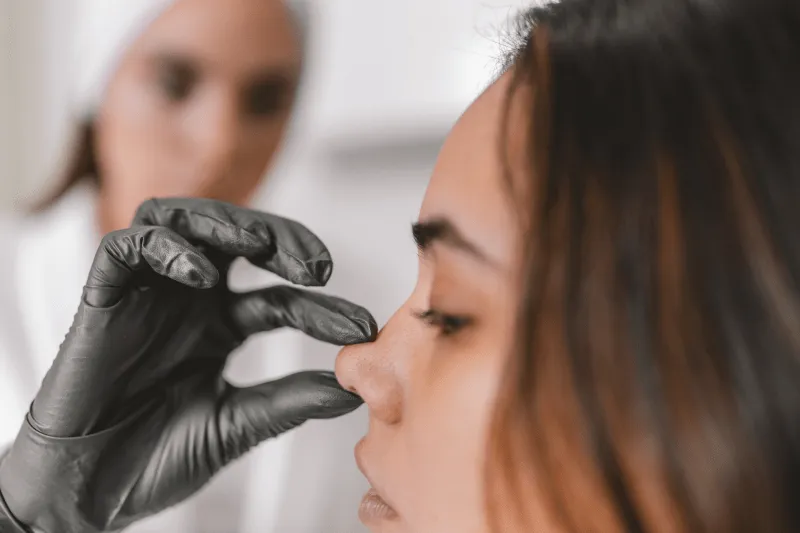
Can tip ptosis (drooping nose tip) be corrected with revision?
A drooping nose tip usually occurs because the cartilage support carrying the tip of the nose was left insufficient in the first surgery or the tissues gave in to gravity over time. In revision surgery, this problem can be permanently solved thanks to strong cartilage supports called “strut grafts” placed in the columella of the nose. The surgeon places the nasal tip on a solid foundation with these cartilage pieces obtained from the septum or rib and re-establishes the ideal angle it should be. In this way, the nasal tip becomes resistant to drooping and a much more dynamic and youthful appearance is obtained in the profile view.
How are collapses on the nasal bridge treated?
Pits or collapses formed on the nasal bridge (saddle nose deformity) usually occur with excessive removal of cartilage tissue or loss of support after trauma. To eliminate such aesthetic defects, surgeons repair the collapsed area by “grafting” as if they are putting a building block in place, not like a filler. By using the patient’s own rib cartilage, membrane tissues (fascia), or sometimes crushed cartilage pieces, the nasal bridge is brought to a straight and smooth line. This procedure not only corrects the aesthetics but also restores the structural integrity and resistance of the nose, providing a long-lasting result.
Are asymmetry problems completely eliminated with revision?
Asymmetries in the nose are caused by the bones or cartilages taking different positions relative to the center, and with revision surgery, these structures can be released and fixed in the midline again. However, there is an important fact that patients should know: The human face is naturally never perfectly symmetrical, and factors such as skin thickness and bone structure can sometimes make it impossible to reach perfect symmetry. The surgeon’s main goal is to reduce asymmetry to a level so low that the human eye cannot notice it and to create a balanced image that is in harmony with the rest of the face. The significant improvement obtained in most patients is more than enough for visual satisfaction.
How many times can revision surgery be repeated?
Technically, a nose surgery can be repeated several times from a surgical point of view, but each new intervention increases the risks exponentially due to the decrease in blood circulation in the tissues and the increase in scar tissue. Third, fourth, or more revisions are the most challenging cases for surgeons because of the thinning of the nasal skin and the depletion of the cartilage reserve. For this reason, it is very critical for patients in need of revision to find the right specialist and focus on solving the problem once and for all. Unnecessarily repeated operations can lead to the nose completely losing its structural support and damages that are very difficult to reverse, which we call “secondary deformity.”
When can glasses be used after surgery?
It takes about a 2 to 3-month process for the nasal bones and cartilages reshaped by surgery to fully heal and regain their former strength. Any type of glasses (prescription or sunglasses) that will apply pressure to the nasal bridge during this sensitive period can cause permanent depressions or shape deformities in the newly created nasal structure. If the patient has a vision problem and must wear glasses, the glasses should be hung on the forehead with the help of a tape or very light frames should be preferred. Surgeons strongly recommend their patients to use contact lenses during this process or to stay away from glasses completely until healing is complete.
When can I start doing sports?
Activities that increase body temperature and blood pressure in the post-operative period can cause an increase in edema in the nose and trigger the risk of bleeding. For the first two weeks following the surgery, only very light-paced walks are allowed. From the first month, non-strenuous sports such as fitness, yoga, or pilates can be started, but movements where the head is tilted down and exercises requiring straining should be avoided. For activities such as basketball, volleyball, football, or combat sports where the risk of getting a blow to the nose is high, waiting at least 6 months is the safest approach to protect the obtained aesthetic result.
When can I enter the sea or pool?
After about a month has passed since the surgery, it is generally safe to enter the sea when the stitches inside the nose are closed and the risk of infection is eliminated. In fact, the natural content of seawater can help the healing of the mucosa inside the nose and the cleaning of the crusts. However, pool water should be treated with caution for a while longer because of the high amount of chlorine and chemicals it contains, which can irritate the sensitive tissues inside the nose. In addition, movements that create pressure, such as deep diving under water or jumping into water from a height, are strictly not recommended for the first 3-4 months as they can damage the healing cartilage structure.
When are nasal bandages removed after revision surgery?
The thermoplastic splint and bandages applied at the end of the operation to protect the shape of the nose and control edema are generally removed by the surgeon during the check-up performed on the 7th or 10th day after surgery. When the splint is removed, the nose will still be quite swollen, so the first image should not mislead you. Many surgeons apply thin tapes (paper tape) on the nose that will stay for another week after the splint is removed, in order for the edema to subside in a more controlled manner and for the skin to sit more tightly on the cartilage structure. After this bandaging process is over, the nose washing and care process accelerates and the patient starts to get used to their image in the mirror.
How to clean the inside of the nose after surgery?
In order for the healing process to pass comfortably and to prevent the risk of infection, nasal cleaning should not be neglected. In the post-operative period, ocean water sprays (isotonic solutions) or nasal washing kits recommended by your surgeon should be used regularly to clean the clots and crusts formed inside the nose. These solutions wash the inside of the nose gently and keep the airway open. During cleaning, hard objects should not be inserted into the nose, and the blowing movement should be avoided for at least 4 weeks. Antibiotic creams recommended by the doctor should be applied gently to the nasal tip stitches with the help of a cotton swab without damaging the tissues, thus preventing crusting.

Is revision surgery a permanent solution?
A revision surgery performed by a surgeon specialized in the field, using correct structural supports and cartilage grafts, offers lifelong permanent results. The nasal roof strengthened with cartilages can be even more resistant than a natural nose against the effects of aging over time. However, in order to ensure this permanence, the patient must protect their nose from all kinds of trauma during the recovery period and follow the surgeon’s lifestyle recommendations. The recovery process waited with patience is a permanent investment that allows the patient to live a more self-confident and healthy life for a lifetime with the aesthetic and functional gains obtained.
How to psychologically prepare for the revision process?
Having had an unsuccessful operation before can create a serious anxiety, disappointment, and distrust towards a new surgery in the patient. The most important step in the psychological preparation process is to accept the goal of a nose “compatible with the face and healthy” instead of a “perfect” nose. The patient clarifying their complaints, sharing all their fears with their surgeon, and learning the limits of the surgery realistically will greatly reduce anxieties. It should not be forgotten that the revision process is not only a physical change but also a psychological repair journey that erases the traces of the negative experience in the past, and exhibiting a positive attitude in this journey will accelerate healing.
What should be considered when choosing a surgeon?
Revision rhinoplasty is accepted as the “masterpiece” of surgery; therefore, the doctor to be selected should not only be an aesthetic surgeon but also a “revision surgeon” specialized in revision cases. Seeing the “before and after” photos of similar difficult cases the surgeon has performed before, examining patient references, and their approach to you during the meeting should be decisive. A confident surgeon does not only talk to you about their successes, but also honestly explains the limitations of your nose and potential risks. This operation is built on a relationship of trust, so you should entrust yourself to the hands where you feel you are understood best.
Why do revision surgery prices vary?
Revision rhinoplasty prices vary in a wide range according to the difficulty level of the operation and the additional procedures it requires. The duration of the surgery, which is longer compared to the first surgery, the necessity of taking cartilage from the ribs or ears, the special surgical equipment used (such as Piezo), and the deep experience of the surgeon in this regard are the basic elements affecting the price. In addition, the quality of the hospital where the surgery will be performed, accommodation, and care services are also among the cost items. Since each revision case requires a unique solution, a cost estimation determined after a personalized examination instead of a standard price is a much more accurate and transparent approach.
How does smoking and alcohol use affect the result after surgery?
Smoking seriously reduces the blood flow and oxygen going to the surgery area by narrowing the capillaries in the body; this situation can lead to disaster in a process like revision surgery where blood supply is already sensitive. In patients who smoke, wound healing may stop, stitches may open, and at worst, tissue deaths (necrosis) may occur in the nasal skin. Alcohol, on the other hand, slows down healing by increasing edema and triggers the risk of bleeding by thinning the blood. For these reasons, taking a break from these habits at least one month before and after surgery is a vital necessity so that your effort and health do not go to waste.
Is nasal massage necessary after revision?
Nasal massage is not a practice recommended as standard to every patient, and surgeons have different approaches on this issue. Some surgeons may recommend special massage techniques so that the edema can be removed faster through the lymphatic system and the skin can sit more properly on the cartilage structure. However, since it is very important that the cartilage grafts placed in revisions do not move out of place, massages done unconsciously can do more harm than good. If your surgeon has not given you a special massage program, you should never apply pressure to your nose. If recommended, you should strictly apply your surgeon’s instructions on when, in which direction, and with what intensity the massage will be done.
When can air travel be done after revision surgery?
For air travel after surgery, usually the removal of the splint on the nose and the splints inside should be waited for, which usually coincides with the 7th to 10th day after surgery. Cabin pressure changes during flight can cause throbbing, slight bleeding, or an increase in edema in healing nasal tissues. If you are coming from abroad, it is best to go through your surgeon’s check-up and get their approval for a safe return. In long flights, keeping the moisturizing sprays recommended by your doctor with you to prevent dryness inside the nose and being careful not to tilt your head down too much during the journey will increase your comfort.
How is the revision process for thin-skinned patients?
Thin skin structure reflects every detail of the skeleton under the nose almost like a sheet, thus it requires the surgeon to work flawlessly. In these patients, in order for the cartilage tips or stitches not to be noticed from the outside, surgeons use “camouflage techniques” and cover the cartilage structures with temporal fascia (temple membrane) or soft tissue grafts. Thin-skinned patients shed edema much faster and see the results early, but it is essential to show extra meticulousness at the time of surgery to hide small bumps that may occur in the long run. For this patient group, the surgeon’s aesthetic eye and cartilage processing ability play a key role in the final success of the operation.
What is the success of revision in thick-skinned patients?
Thick skin structure tends to hide the cartilage details under the nose, so providing “definition” is the main goal in these patients. For a revision in a thick-skinned nose to be successful, the surgeon needs to build a very strong and supported cartilage roof; otherwise, the weight of the skin can crush the cartilages, causing the nose to spread over time. In these patients, it takes much longer than normal for the edema to subside (sometimes it can take 2 years), and special tapings helping to thin the skin or cortisone injections performed under doctor’s supervision may be required during the healing process. Thick-skinned patients who are patient and come for regular follow-ups can obtain quite aesthetic and permanent results in the long run.
Is there a loss of smell after surgery?
It is quite a normal expectation to experience a decrease in the sense of smell or a situation of not being able to smell for a temporary period after revision surgery. This situation is caused by the edema and swollen mucosa inside the nose preventing the smell molecules from reaching the nerve endings, rather than a neurological damage. As the post-operative swelling subsides and the internal nasal passages are cleaned, the sense of smell usually returns to normal on its own within 2 to 4 weeks. In the hands of experienced surgeons, the risk of permanent loss of smell is almost non-existent. If the smell problem continues despite months passing since the operation, a specialist doctor should be consulted to investigate other underlying causes.
When are stitches removed and will there be scars?
In revisions performed with the open technique, the stitches at the tip of the nose (columella) are usually removed by your doctor on the 5th or 7th day. The stitches inside the nose are usually of the self-dissolving type and do not need to be removed. Thanks to modern surgical threads and incision techniques, that thin line-shaped scar at the tip of the nose turns into skin color within about 6 months to 1 year and becomes indistinct enough not to be noticed when looked at. Using the scar-removing creams recommended by your doctor regularly to increase the healing quality of the scar and protecting this area from the harmful rays of the sun, especially in the first year, is an important part of aesthetic success.

What is the return to work time after revision surgery?
The return to work time after surgery varies according to the scope of the procedure and the patient’s work environment. Patients working in a desk job and not exerting physical effort can comfortably return to their jobs after the splint on the nose is removed, that is, around the 10th day of the surgery. Although there are slight swellings at this stage, they are not at a level to affect social life. However, it is recommended that people working in very dusty environments, lifting heavy weights, or in business sectors requiring intense physical activity should rest for at least 3 weeks for the nose to be fully fixed and for the risk of infection to decrease. The fact that the patient feels energetic and is socially ready is also an important factor in this decision.
How long do you have to wait to see the full results?
Revision rhinoplasty is a type of surgery where the results “mature” over time. Although the nose gives a rough idea immediately after surgery, the actual finesses and transition lines only emerge as the edemas subside. In the 3rd month, the nose is largely shaped, and in the 6th month, most patients start to see the result clearly. However, in revisions, it may take a full year or even 2 years for the tissues to settle, for the cartilages to integrate with the skin, and for the nasal tip to reach its natural softness. During this long process, you will notice that your nose gets a bit more beautiful every month and its lines become even clearer; therefore, it is very important to be patient and trust the process.
Is there a risk of re-revision after revision?
According to scientific literature, the need for minör correction, which we call “touch-up,” due to very small asymmetries or tissue irregularities is between 5-10% even in revision surgeries performed by the most expert hands. This situation is usually related to the patient’s body pulling the cartilages during healing or forming scar tissue, rather than the surgeon’s failure. These types of situations can usually be easily solved with 15-20 minute procedures performed under local anesthesia. The risk of a serious second major revision is quite low with the right surgeon selection and meticulous planning. The important thing is to manage the healing process in close dialogue with your surgeon.
Does the age limit apply to revision surgery?
The lower age limit for revision surgery is accepted as 18 years, when nasal cartilage and bone development is completed. The upper age limit depends on whether the person has a chronic disease and whether their general health condition is suitable for receiving anesthesia. In elderly patients, since skin elasticity decreases, the healing process may take a bit longer than in young people, but this situation is not an obstacle to getting a successful aesthetic result. By exhibiting anatomical approaches specific to each age group, the natural and functional nasal structure most suitable for the person’s age and facial character can be successfully built.
What is the effect of seasons on revision surgery?
Revision rhinoplasty is a surgery that can be successfully applied in every period of the year, and seasons do not have a direct effect on the surgical results. However, there are seasonal details that patients should pay attention to for their personal comfort. In surgeries performed in summer, it is important to avoid direct sunlight and use sunscreen in order not to increase edema. In winter, it can be useful to use room humidifiers to prevent dryness inside the nose. Rather than the season, the fact that the patient chooses a time frame where they can spend the recovery process in peace, stay away from work and stress, will always increase the psychological and physical healing quality.
Why should Turkey be preferred for revision?
Turkey is accepted as the “rhinoplasty capital” worldwide and offers an unrivaled experience especially in complex revision cases. Turkish surgeons have mastered every kind of nasal structure because they serve a very wide patient population of both European, Middle Eastern, and Asian origin. Fully equipped hospitals located in metropolises like Istanbul, the latest technologies (Piezo, 3D planning, etc.), and luxury accommodation facilities are offered much below the costs in Europe and America. In addition, thanks to Turkey’s culture of hospitality, patients experience not only a surgery but also a safe and comfortable health tourism experience.
Cure Holiday is With You for the Perfect Result!
Revision rhinoplasty is not just a surgical procedure, but also a process of leaving past disappointments behind and reconciling with mirrors again. If you are not satisfied with the shape of your nose or if your breathing problems reduce your quality of life, you should not leave this process to chance.
Cure Holiday, Turkey’s internationally recognized health tourism brand, offers you special solutions with its staff of surgeons who specialized in revision rhinoplasty and achieved worldwide success. From the beginning to the end of your treatment process; we make you feel at home with our VIP transfers, 5-star accommodation, 7/24 assistance, and professional medical follow-up services.
Don’t wait any longer to correct past mistakes and reach the face of your dreams. Contact us immediately for your free analysis and personalized treatment plan. Are you ready for a new beginning with Cure Holiday?
Free Consultation
Fill out the form below to get your free medical travel plan and price quote.
Sources and how to verify this yourself
- Ministry of Health, Regulation on International Health Tourism and Tourist Health, Official Gazette 26 April 2025, No. 32882 — authorisation requirement for facilities and intermediaries, TÜSKA accreditation, compulsory complication insurance (deadline 31 December 2025 for insurance, 31 December 2026 for accreditation). source
- Ministry of Health, Regulation on Promotion and Information Activities in Health Services, Official Gazette 12 November 2025, No. 33075 — treatment promises and guarantees are prohibited; price and campaign announcements are permitted only within international health tourism. source