What Are the Modern Approaches to Hair Loss Problems?
Hair loss can result from many different causes, ranging from genetic factors to hormonal changes, and from stress to nutritional deficiencies. The world of modern medicine and aesthetics offers two primary solutions to this problem: hair transplantation, which is a permanent surgical intervention, and hair simulation, which provides a visual illusion. Both approaches have begun to provide extremely natural and satisfying results with the development of technology. While hair transplantation aims to transplant live hair follicles to the thinning areas, hair simulation creates the appearance of hair follicles to make the hair look denser and more voluminous. The choice of these methods varies according to the individual’s type of shedding, expectations, and budget.
What Are the Fundamental Differences Between Hair Simulation and Hair Transplantation?
The most fundamental difference between hair simulation and hair transplantation is that one is a surgical procedure and the other is a medical pigmentation process. Hair transplantation involves taking live hair follicles from another part of the body and transplanting them to the balding area; this way, your hair actually grows. Hair simulation, on the other hand, can be described as a type of “hair tattoo,” but the dyes and techniques used are very different from a traditional tattoo. Simulation works by processing pigments into the scalp in the form of thousands of small dots, making the hair look shaved or thickened. In other words, one offers physical hair production, while the other offers aesthetic coverage.
What Exactly Is the Hair Simulation Technique?
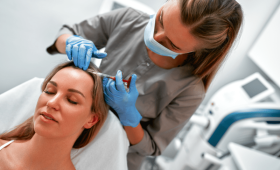
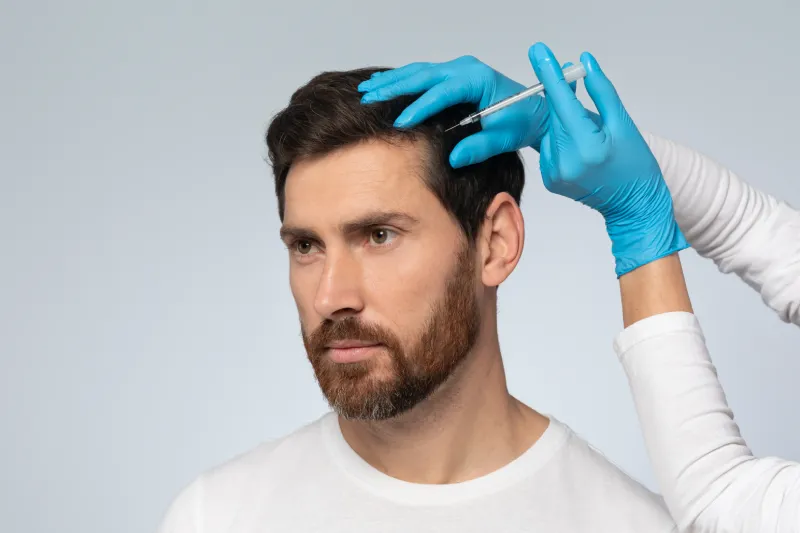
Hair simulation, also known as Scalp Micropigmentation (SMP), is a technique of processing natural pigments specifically developed for the epidermal layer of the scalp using micro-needles. This process allows the closure of bald areas by creating dots that mimic the natural structure of hair follicles. It is especially preferred for filling the gaps in people with very thin hair or for achieving a “charismatic short shave” look in completely bald individuals. It does not involve a surgical incision or stitches. The pigments used are plant-based and have the characteristic of being absorbed by the body over time. In this respect, it provides a temporary but long-lasting aesthetic touch.
On Which Principles Does a Hair Transplant Operation Rest?
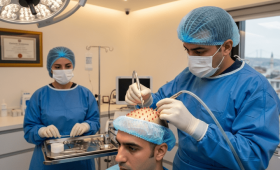
The hair transplant operation is based on the principle of “donor dominance.” Live hair follicles (grafts) found in the nape and behind-the-ear areas, which are generally coded not to fall out, are taken and transplanted to the areas experiencing baldness. Advanced techniques such as FUE or DHI are used during this process. The main goal is to use the individual’s own living tissue to ensure hair regrowth in the thinning areas. Once the transplanted hair takes hold in the transplanted area, it continues to lengthen and grow naturally for a lifetime. This operation is considered the gold standard for those looking for a permanent solution and must be performed by a professional surgical team.
Is Hair Simulation a Surgical Procedure?
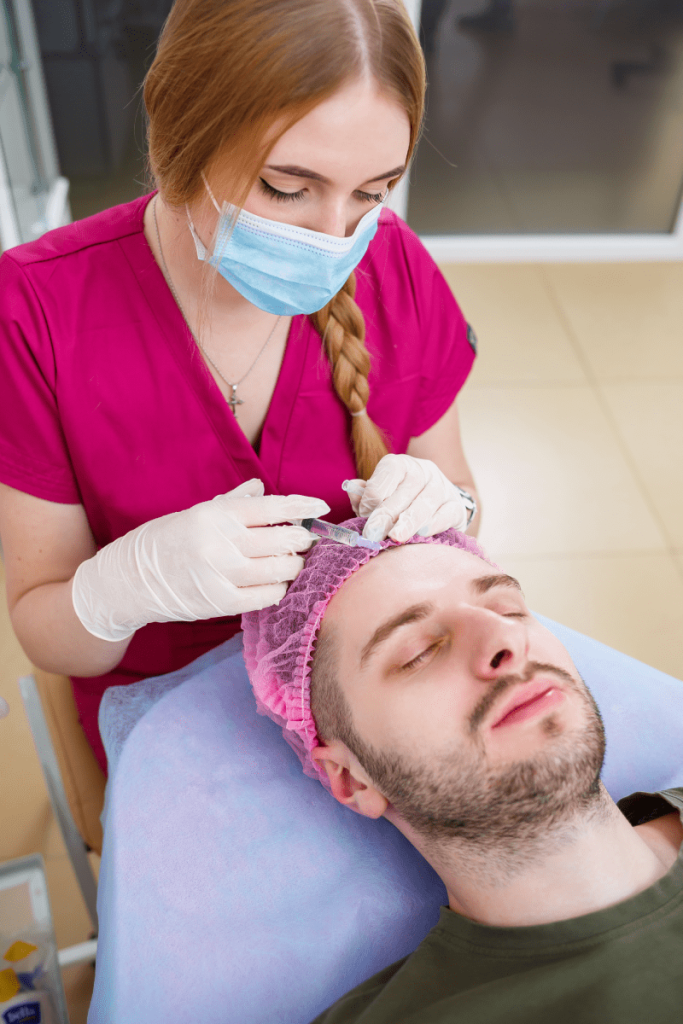
No, hair simulation is not a surgical procedure. It is a non-invasive, non-surgical aesthetic application. No incisions are made, no stitches are placed, and general anesthesia is not applied during the procedure. Only local anesthetic creams are applied to the area to be treated to increase the comfort of the individual. It is based on the principle of micro-needles leaving pigment only in the upper layer of the skin (epidermis). The healing process is very fast; the person can return to their daily life immediately after the procedure is finished. This situation makes hair simulation an attractive option for individuals who have a fear of surgery or do not want to deal with long recovery periods.
Who Are the Suitable Candidates for Hair Transplantation?
The most suitable candidates for hair transplantation are usually individuals experiencing male pattern hair loss (androgenetic alopecia). However, for the success of the operation, the donor area in the nape region must have hair follicles of sufficient density and quality. It is also important that the person’s general health status does not pose an obstacle to a surgical intervention. Results are more predictable in people whose hair loss has become stable or has reached a certain level of openness. Transplantation can be performed as long as conditions such as diabetes, high blood pressure, or heart disease are under control. Each patient’s situation is unique and requires a comprehensive trichological examination.
How Long Does Hair Simulation Last?
Hair simulation is not a lifelong procedure; however, it is quite long-lasting. Depending on the quality of the pigments used, the person’s skin type (oily or dry), the rate of exposure to sunlight, and the metabolic rate, its permanence generally varies between 3 and 5 years. Over time, the pigments may fade slightly and lose their clarity. In this case, the appearance can be restored to its first-day freshness with a small “touch-up” session. The fact that hair simulation is not like a permanent tattoo is actually an advantage; because it allows the simulation to be updated according to changing facial features and hair color as you age.
Are Hair Transplantation Results Permanent?
Yes, the results of a successful hair transplant operation are permanent for a lifetime. Since the hair follicles taken from the nape area are genetically programmed not to fall out, they preserve this feature in the new area where they are transplanted. Once the transplanted hair has taken hold and completed the healing process, it does not fall out. However, it should not be forgotten that your original hair that was not transplanted may continue to fall out. For this reason, experts may also recommend supportive treatments to protect existing hair. Hair transplantation is the most radical and permanent solution offered against hair loss; once it is done, it stays with you for life with proper care.
Does the Hair Simulation Process Cause Pain?
The pain felt during the hair simulation process is generally at a minimal level and is described by most people as a “slight tingling” or “stinging” sensation. Professional anesthetic creams applied to the scalp before the procedure largely eliminate the feeling of pain by numbing the nerve endings. Even people with a very low pain threshold can easily tolerate the procedure. It is a much less painful process than getting a tattoo because the needles do not go into the deep layers of the skin. During the session, patients can usually listen to music or deal with their phones. After the procedure, there is no need to use any painkillers.
How Long Is the Recovery Period After Hair Transplantation?
Since hair transplantation is a surgical procedure, the recovery process consists of several stages. It is normal to have slight swelling and redness in the operation area during the first 2-3 days. The first washing is usually done by experts in the clinic after 48 hours. Within the first 10 days, the crusting in the transplantation area begins to fall off. Around the 15th day, the person returns to an almost completely normal appearance. However, the growth process of the hair is longer. The phase called “shock loss” occurs within the first 1-3 months. Real results begin to be seen from the 6th month onwards, and the final form is completed between 12 and 18 months. It is a process that requires patience.
Does Hair Simulation Provide Hair Thickening?
Hair simulation does not biologically thicken hair strands or produce new hair. However, it is an excellent optical illusion that makes the hair look much thicker and denser visually. Especially in people with thin hair, when the whiteness of the scalp shines through the hair, the hair looks less than it is. Hair simulation closes this whiteness with pigments suitable for the hair color, reducing the contrast. Thus, the hair immediately achieves a fuller appearance. This method is also a great complementary treatment method that supports existing transplantation for people who have had a hair transplant but could not reach the desired density.
Is a Natural Appearance Achieved After Hair Transplantation?
Modern hair transplant techniques (FUE and DHI), when applied by the right hands, provide a 100% natural appearance. The key to naturalness is the correct planning of the front hairline and placing the grafts in accordance with their natural exit directions (angles). An expert team makes the distribution of hair on the scalp with millimetric calculations. Since the transplanted hair is your own hair, it provides full compatibility with the surrounding hair in terms of color, texture, and growth characteristics. After the healing process is completed, it is almost impossible for even a professional hairdresser to notice that the hair has been transplanted. This is the most important factor that restores the person’s self-confidence.
Are the Pigments Used in Hair Simulation Safe?
The safety of hair simulation directly depends on the quality of the pigments used. The pigments used in professional clinics are plant-based and suitable for human health (hypoallergenic) materials that do not contain heavy metals. These pigments are specially produced for the scalp, unlike traditional tattoo dyes. They do not turn blue or green over time, they just lighten slightly in their own tones. When applied under sterile conditions and with single-use micro-needles, they do not carry any risk of infection. Nevertheless, doing an allergy test in a small area before the procedure is always a recommended procedure for individuals with sensitive skin.
How Is the Donor Area Selected in Hair Transplant Operations?
Donor area selection in hair transplantation is the cornerstone of success. The most common donor area is the nape area between the two ears. The hair follicles here are resistant to the DHT (dihydrotestosterone) hormone and do not fall out. If the hair density in the nape area is insufficient, grafts can also be taken from areas such as the chest or beard with the surgeon’s approval. However, since the hair structure in these areas is not exactly the same as hair, the priority is always the nape area. Great care is taken not to disturb the aesthetic integrity of the area while taking grafts, and not to create an appearance of a gap or thinning there. This process requires meticulous mathematical planning.
Can Hair Simulation Replace Hair Transplantation?
Hair simulation and hair transplantation are not exact substitutes for each other; they are rather methods that complement each other or respond to different expectations. If your dream is to comb your hair, grow it out, and see it waving in the wind, hair simulation cannot replace hair transplantation. Because simulation is only a two-dimensional coloring process. However, for people whose donor area is very weak and who cannot have a hair transplant, simulation is the only and most effective way to get rid of the “baldness” look. It is also used to camouflage sparse images formed after hair transplantation. Consequently, a decision should be made according to what the person needs.
What Is Shock Loss After Hair Transplantation?
Shock loss (Telogen Effluvium) is a completely normal and temporary process that occurs between the 2nd and 8th weeks after the hair transplant operation. Due to the trauma created by the operation, the transplanted hair follicles take themselves into protection and shed the hair strand on them. Although this situation sometimes causes panic in patients, it is actually a part of healing. The roots remain alive under the skin and start to produce new hair strands much more strongly after about 3-4 months. The period that starts after the shock loss phase is over is the period when the hair reaches its true permanent form. It is necessary to wait for this phase with patience.
Can Those Who Have Had Hair Simulation Go Into the Sea?
It is necessary to wait for a certain period of time to enter the sea or pool after having hair simulation. The first 7-10 days after the procedure is a critical period for the pigments to settle fully into the skin and for the micro-wounds to heal. During this time, chlorinated water (pool) and salt water (sea) can cause the pigments to fade or lead to infection. After the healing process is completed (about 2 weeks), there is no harm in entering the sea or pool. However, since the UV rays of the sun and sea salt can shorten the life of pigments in the long run, it is recommended to use hats that protect the head area or apply sunscreens with a high protection factor.
What Should Be Considered in the First Month After Hair Transplantation?
The first month after hair transplantation is the most important period that determines the success of the operation. For the first 10 days, heavy physical activities, sports, and sexual intercourse should be avoided so that the grafts do not move. The head area should be protected against impacts, and the sleeping position should be in accordance with the expert’s advice. High-temperature environments such as Turkish baths, saunas, and solariums should be avoided for at least 1 month. Alcohol and cigarette use should be minimized as they will slow down the healing speed and disrupt the nutrition of the grafts. Shampoos and lotions given by the doctor should be used regularly, and scabs should definitely not be picked with nails; their natural shedding should be expected.
What Is the Difference Between Hair Simulation and a Tattoo?
Many people think that hair simulation is a tattoo done on the scalp, but this is a big misconception. The first difference is depth; while a tattoo is processed into the lower layers of the skin (dermis), simulation is done on the upper layer (epidermis). The second difference is the pigment structure; tattoo dyes contain metal and change color and spread over time, while simulation pigments are plant-based and do not spread. The third difference is technique and equipment; the needles used for simulation are much thinner and more sensitive. Finally, while a tattoo is permanent for a lifetime, simulation is naturally expelled from the body after 3-5 years. These differences make hair simulation look much more natural.
How Many Sessions Does a Hair Transplant Operation Take?
A hair transplant operation is usually completed in a single long session (6-8 hours). During this time, between approximately 3000 and 5000 grafts can be transplanted. However, if the person’s balding area is very wide and the donor area cannot meet all this need at once, a second session can be planned 6 months or 1 year later. In some special techniques or in cases where beard/body hair support is received, the operation can be spread over two consecutive days. What matters is not to take too many grafts at once and destroy the donor area, and to ensure the healthy nutrition of the transplanted grafts. Your specialist doctor will determine how many sessions are needed according to your hair openness at the first examination.
Does Hair Simulation Undergo Color Discoloration?
Professional pigments used in hair simulation do not turn blue or green when applied at the correct depth. However, like every pigment, they also experience a slight color lightening called “fading” over time and with the effect of sunlight. This is not a complete change of color, but only a lightening of its tone. When poor quality dyes or tattoo ink are used, undesirable color changes can be seen. Therefore, the references of the center where the application will be made and the certificates of the dyes used must be examined. If a slight color lightening is noticed, the color tone can be restored with a short renewal session.
Which Season Is More Suitable for Hair Transplantation?
A hair transplant can actually be done in any season; there is no obstacle from a medical point of view. However, each season has points to be considered. When done in the winter months, it is recommended to wear a suitable beanie that does not make the head sweat and does not put pressure on the grafts. In the summer months, it is important to be protected from the scorching effect of the sun and sweating; it is necessary not to stay directly under the sun for the first 1 month after the operation. Many patients prefer their annual leave periods or the spring months to be able to spend the healing process at home. Consequently, rather than the season, when you feel ready and how much you can comply with the healing rules is more critical.
Can Hair Simulation Be Applied to Women?
Yes, hair simulation is an application that is also quite popular among women. Hair loss in women is generally not seen in the form of full baldness as in men, but in the form of general thinning and widening of the hair parting line. This situation causes the scalp to appear and the hair to look volume-less. Hair simulation makes the hair look much fuller and thicker by filling these white gaps between the hair. It is also an excellent camouflage method for women who have opening in the temple areas when they tie their hair. Since it is not a surgical procedure, it meets the aesthetic expectations of women quickly and comfortably.
Does Scarring Occur After Hair Transplantation?
In old techniques (such as FUT), a scar in the form of a strip could remain in the nape area. However, in FUE and DHI techniques, which have become the standard today, no visible scar remains as the hair follicles are taken one by one. The micro-holes formed in the places where the extraction is performed close within a few days and these areas look completely normal when the hair grows. For no scar to remain, the thinness of the micro-motor tips and the manual dexterity of the surgeon are very important. If a very short (under grade 3) shave is preferred, white spots can be noticed in extractions performed by non-experts. Therefore, no aesthetic scar problem is experienced in transplants performed by a professional team.
Is Hair Simulation Maintenance Labor-Intensive?
Maintenance of hair simulation is extremely easy and effortless. After the procedure, it is sufficient to protect the area from water for the first few days and apply the recommended moisturizing creams. After healing is completed, you do not need to use a special shampoo or maintenance product. You can continue your daily life from where you left off. The only thing you need to pay attention to is to protect the head area from excessive sunlight to extend the life of the pigments. Using sunscreen when going out helps the pigments maintain their vitality for a longer period. Other than that, you can wash, comb, and shave your hair as you wish; simulation is not affected by these.
What Factors Affect Hair Transplantation Prices?
Hair transplant prices vary according to several fundamental elements. The most important factor is the number of grafts to be transplanted; the more the openness, the more the procedure time and cost increase. Secondly, the technique used (FUE, DHI, Sapphire FUE, etc.) affects the price. Thirdly, the experience of the surgeon and the team who will perform the operation, the equipment of the clinic, and the quality of the service offered (additional services such as accommodation, transfer, PRP treatment) determine the cost. Avoiding cheap low-cost under-the-counter places is critical for both health and aesthetic results. It should not be forgotten that hair transplantation is an investment you will carry for a lifetime and quality should always be your priority.
What Should the Preparation Process Be Like Before Hair Simulation?
Preparation to be made before hair simulation is quite simple. The use of alcohol and blood-thinning drugs (such as aspirin) should be stopped 24 hours before the procedure, as these substances can increase bleeding during the procedure and make it difficult for the pigment to hold. Hair should be clean on the day of application and there should be no active wounds or infections on the scalp. If you will use your hair constantly short, having a haircut in the length you want before the procedure helps the expert to see the hair follicle directions better. In addition, having a good breakfast and being rested before the procedure will make the process more comfortable for you.
How Is the Hairline Determined After Hair Transplantation?
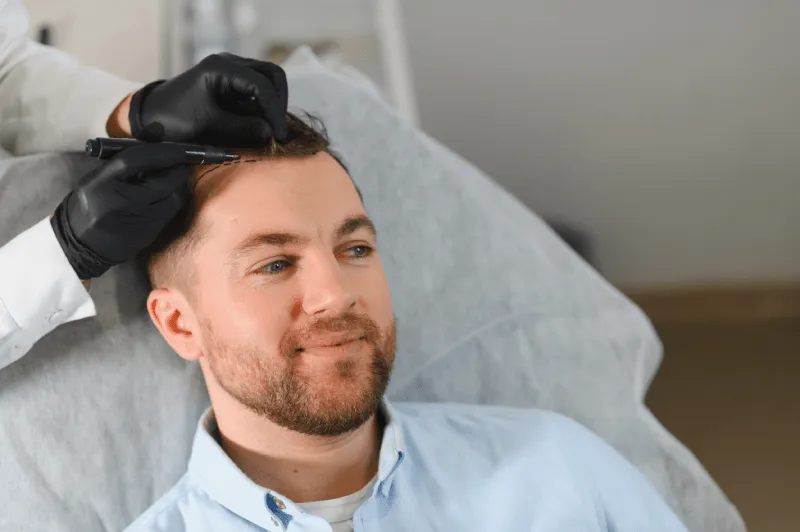
The hairline design is the most artistic part of hair transplantation. A good hairline should be determined according to the person’s age, face shape, and the structure of the forehead muscles. While a line that is too low and straight looks artificial, a line that is too high may not fully cover the baldness appearance. The specialist doctor takes the hairline in the person’s youth and the natural shedding borders as a basis by making golden ratio calculations. Forehead muscle movements are taken into consideration while determining the line; hair should not be transplanted onto muscle tissue. Transplantation begins after mutual agreement is reached on the line that the patient approves in the mirror and the doctor finds aesthetically appropriate.
Does Hair Simulation Damage Hair Follicles?
No, hair simulation does not harm existing hair follicles in any way. Micro-needles used during the procedure do not go down to the depth where the hair follicles are located (dermis layer). Work is done only on the epidermis, which is the topmost surface of the skin. On the contrary, the micro-needling effect made during simulation can contribute indirectly to the nutrition of existing hair by slightly stimulating the blood circulation in that area. For this reason, having hair simulation does not pose an obstacle for a hair transplant operation to be performed in the future. People who want to protect their existing hair but desire a denser look can safely choose this method.
Which Supplements Should Be Used After Hair Transplantation?
Doctors may recommend various supplements for the roots to hold faster and for existing hair to strengthen after hair transplantation. Multivitamins containing Biotin (Vitamin B7), zinc, iron, and folic acid are the most common. In addition, drugs such as Finasteride or Minoxidil (under doctor control) can be used to nourish the hair follicles. PRP (Platelet Rich Plasma) or Mesotherapy sessions applied in the clinic after the operation also accelerate healing and increase the success rate. Balanced nutrition, plenty of water consumption, and staying away from cigarettes are also as effective supplements as drugs. Remember, the better the transplanted roots are nourished, the bushier and healthier the result will be.
Can Hair Simulation and Hair Transplantation Be Done Simultaneously?
These two methods cannot be done on the same day, but they can complement each other within a strategic plan. Generally, the recommended order is to perform the hair transplant first and wait 1 year for the transplanted hair to come out completely. If at the end of 1 year there are still slight thinnings in the transplanted area or if the crown area is not fully closed because the donor area was insufficient, hair simulation comes into play and covers those gaps perfectly. This is called “Combined Hair Treatment.” In this way, you both have real hair and reach that ultra-dense look of your dreams thanks to simulation. Combining the advantages of both methods provides the highest level of aesthetic result.
Why Is It Advantageous to Plan Hair Treatment with Cure Holiday?
The most important step in the treatment of hair loss is to choose a reliable and expert partner. Cure Holiday is a leading organization providing services at world standards in hair transplantation and aesthetic treatments, known for its patient-oriented approach. The biggest advantage of planning treatment with us is that you buy not just an operation, but an excellent experience from end to end. In hospital environments where the most modern techniques are used, we create personalized treatment maps with our expert doctors. You will feel yourself in safe hands from the moment you contact Cure Holiday. Your health and aesthetic appearance are more important to us than anything else.
What Do Cure Holiday Health Packages Include?
For our patients coming from abroad or out of town, we have thought of everything as Cure Holiday. Our health packages include VIP transfer services, accommodation in luxury hotels, all hospital expenses, drugs that need to be used after the operation, and special shampoo sets. In addition, we manage your healing process together with our experts by offering online follow-up support for 1 year after the operation. All you need to do is buy your flight ticket; we organize all the remaining details professionally. With Cure Holiday, you can both have the hair of your dreams and have a treatment process in the mood of a comfortable holiday.
What Does the Cure Holiday Expert Team Offer You?
The surgeons and aesthetic experts working under the umbrella of Cure Holiday are professionals with international experience who have signed thousands of successful operations. We offer you not just a “hair transplant,” but a “natural design” that best suits your facial features and character. Every patient’s hair structure is unique; therefore, we make personalized analyses instead of standard packages. By using the latest technology Sapphire FUE and DHI pens, we work to ensure minimum tissue damage and maximum graft holding rate. The results you get with Cure Holiday expertise will not only be permanent but also natural and aesthetic enough for those around you to admire.
Why Should You Experience Hair Transplantation with Cure Holiday?
While making this important decision that will change your life, you want a solution partner by your side, not just a clinic. Cure Holiday is your best companion on this road with its transparent price policy, high success rates, and thousands of happy patients. For us, every patient is a new success story. We combine technology with art and permanently bury the baldness problem in history. Hair simulation or hair transplantation; whichever method you need, you can be sure that you will reach the best with Cure Holiday quality. Take a step now, contact us, and start your new life where you will be at peace with mirrors with the privilege of Cure Holiday.
Free Consultation
Fill out the form below to get your free medical travel plan and price quote.
Sources and how to verify this yourself
- Comparative study of graft survival by donor site (scalp, beard, chest) at 12 months — roughly 89% for scalp, 95% for beard and 76% for chest hair; survival also falls the longer grafts stay outside the body. source
- Ministry of Health, Regulation on International Health Tourism and Tourist Health, Official Gazette 26 April 2025, No. 32882 — authorisation requirement for facilities and intermediaries, TÜSKA accreditation, compulsory complication insurance (deadline 31 December 2025 for insurance, 31 December 2026 for accreditation). source
- Ministry of Health, Regulation on Promotion and Information Activities in Health Services, Official Gazette 12 November 2025, No. 33075 — treatment promises and guarantees are prohibited; price and campaign announcements are permitted only within international health tourism. source