Cost and planning note (Mommy Makeover 2026)
The figures below are indicative market ranges, not a quote: your own price is confirmed after a clinical assessment.
Indicative price range: Standard Package: 4,500 – 7,500 USD | Advanced Combination: 8,000 – 12,000 USD | Tummy Tuck: 3,000 – 5,000 USD | Breast Lift: 2,500 – 4,500 USD | Liposuction Per Area: 500 – 1,500 USD | Bbl Fat Transfer: 3,500 – 5,500 USD
Facility standards: In Türkiye, any facility treating international patients must hold the Ministry of Health’s international health tourism authorisation; hospitals and medical centres must also be accredited by TÜSKA, and complication insurance is compulsory for procedures carried out in an operating theatre (Regulation of 26 April 2025).
Recovery Focus: Post-pregnancy body restoration & safety first.
Currency: GBP, EUR, USD accepted.
Spotting “Medical Concierge” Scams: Truth about Booking Direct vs. Agents
The Anatomical Reality of Post-Pregnancy Transformation
Pregnancy and subsequent postpartum recovery induce profound physiological changes that extend far beyond the superficial dermis. The structural integrity of the maternal body undergoes significant remodeling, characterized by the expansion of the abdominal cavity, the stretching of the rectus abdominis muscles, and the redistribution of mammary glandular tissue. While many view “Mommy Makeovers” through a purely aesthetic lens, the clinical objective is often the restoration of the anatomical foundations that were compromised during gestation.
Achieving a successful post-pregnancy restoration requires a sophisticated approach to tissue handling, addressing not only skin laxity but also the underlying fascial tension and muscular separation. For patients seeking to reclaim their pre-pregnancy silhouette, understanding the technical nuances of abdominal reconstruction and breast augmentation is paramount to ensuring both functional stability and aesthetic harmony.
Abdominal Reconstruction: Addressing Diastasis Recti and Skin Laxity
One of the most persistent challenges following multiple pregnancies is Diastasis Recti—the separation of the rectus abdominis muscles. This condition is more than a cosmetic concern; it represents a loss of core stability. Advanced surgical intervention focuses on Diastasis Recti repair, which involves internal corset suturing of the abdominal fascia. By physically reconnecting the muscle bellies, surgeons can restore the tension of the abdominal wall, providing a flatter, more stable midsection.
Depending on the degree of skin redundancy and the extent of the muscle separation, surgeons offer several specialized techniques:
- Mini Abdominoplasty: Targeted at patients with localized laxity in the lower abdomen, requiring minimal incision.
- Full Abdominoplasty: A comprehensive approach involving the removal of excess skin and significant muscle tightening.
- Extended (360) Tummy Tuck: A circumferential approach that addresses the flanks and the entire abdominal perimeter, ideal for patients also undergoing liposuction.
wide-ranging coverage for significant skin excess.
The financial investment for these procedures varies based on complexity. A localized tummy tuck typically ranges from 3,000 – 5,000 USD, whereas a comprehensive standard package for abdominal restoration generally falls between 4,500 – 7,500 USD.
Mammary Architecture: Mastopexy and Augmentation
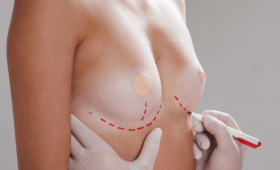
Postpartum changes often manifest as breast ptosis (sagging) and a reduction in volume due to the involution of mammary glands after breastfeeding. The surgical objective is to restore the projection and volume of the breast tissue through a combination of mastopexy (breast lift) and augmentation.
A successful breast lift involves the repositioning of the nipple-areola complex (NAC) and the removal of excess skin to create a more youthful, perky contour. To address volume loss, surgeons utilize high-grade, JCI-approved implants, specifically selecting from brands such as Mentor, Motiva, or Polytech. These implants are engineered to provide a natural feel while maintaining long-term structural integrity.
The cost for a breast lift alone is estimated at 2,500 – 4,500 USD. When combined with augmentation or more complex reconstruction, patients often opt for an advanced combination package, which can range from 8,000 – 12,000 USD.
Precision Contouring via Vaser Liposuction
To complement abdominal and breast reconstruction, adipose tissue redistribution is often necessary to refine the waistline. Modern aesthetic medicine has moved toward high-definition contouring, utilizing Vaser Liposuction. Unlike traditional methods, Vaser technology uses ultrasound energy to selectively emulsify the subcutaneous adipose tissue, targeting fat cells while preserving surrounding structures like nerves and blood vessels. This precision results in high-definition contouring with minimal bruising and a more sculpted appearance.
For patients looking to enhance the gluteal region, BBL (Brazilian Butt Lift) fat transfer is a common additive, with costs ranging from 3,500 – 5,500 USD. Targeted liposuction per area is also an option for finer adjustments, costing between 500 – 1,500 USD.
The Global Hub: Why Turkey Leads in Aesthetic Excellence
Turkey has established itself as the premier global destination for complex restorative surgeries. This prominence is not merely due to competitive pricing, but rather the convergence of advanced surgical technology, high-level accreditation, and a specialized medical infrastructure. The presence of board-certified surgeons who specialize exclusively in maternal reconstruction ensures that patients receive care rooted in the latest clinical protocols.
“The success of a Mommy Makeover lies in the synergy of surgical precision and postoperative management. Turkey’s medical ecosystem is uniquely designed to provide this integrated care.”
The logistical framework in Turkey is designed to mitigate the stresses of medical travel, allowing the focus to remain entirely on healing. This includes free online video assessments with board-certified plastic surgeons, ensuring that the surgical plan is finalized before the patient even departs. Upon arrival, patients are met with VIP private transfers from the airport (typically Istanbul – IST or Antalya – AYT) to the clinic and are housed in 5-star recovery suites with companion stay included, providing a sterile yet luxurious environment for convalescence.
The recovery timeline is a critical component of surgical success. Patients should plan for 7-10 days in Turkey to facilitate the initial healing phase under medical supervision. While minor daily activities can resume shortly after, a 6-week period is required for a full return to intense exercise and physical strain. This period of rest is essential to allow the internal suturing—particularly in Diastasis Recti repairs—to stabilize and the subcutaneous edema to subside.
The Illusion of the “All-Inclusive” Concierge: Evaluating the Middleman Premium
In the burgeoning landscape of medical tourism, a new breed of “medical concierge” has emerged. These agencies market themselves as indispensable intermediaries, promising a seamless, “stress-free” experience for patients traveling to Turkey. However, beneath the polished social media veneers lies a significant discrepancy between the services provided by these agents and the direct clinical care offered by JCI-accredited institutions. For the discerning patient, understanding the distinction between an agent’s markup and a clinic’s direct surgical protocol is the difference between receiving bespoke medical care and being treated as a pre-packaged commodity.
The primary risk with high-fee medical concierges is the lack of clinical accountability. These agencies often function as marketing arms rather than medical facilitators. When a complication arises, the agent’s priority is often brand preservation rather than patient advocacy. Conversely, booking directly with a clinic allows for a transparent, physician-led journey, starting with free online video assessments with board-certified plastic surgeons. This direct line of communication ensures that the surgical plan is dictated by anatomical necessity—such as the presence of abdominal muscle separation—rather than a standardized “package” designed by a salesperson.
Case Study: The Reconstruction of a Post-Partum Silhouette
To understand the clinical depth required in modern body contouring, one must look beyond the marketing and into the technical execution. Consider the case of a 34-year-old Irish mother of three, presenting with significant abdominal laxity and localized subcutaneous fat deposits. Her objective was not merely aesthetic, but structural reconstruction.
Her journey began with a comprehensive digital consultation to assess the extent of her Diastasis Recti. In many “concierge” packages, this condition is often glossed over in favor of a simple cosmetic incision. However, a direct clinical approach identified the need for a Diastasis Recti repair involving internal corset suturing of the abdominal fascia. This technical procedure is critical; without repairing the underlying musculature, even the most aesthetically pleasing skin excision will fail to provide a permanent, stable abdominal wall.
The surgical strategy evolved into an advanced combination procedure. The plan integrated an Extended (360) Tummy Tuck with Vaser Liposuction and a BBL (Brazilian Butt Lift) fat transfer. The use of Vaser technology was pivotal, as it utilizes ultrasonic vibrations to emulsify fat cells with extreme precision, allowing for high-definition contouring of the flanks while ensuring minimal bruising and preserving the integrity of surrounding vascular structures.
“True surgical transformation is not found in a ‘package’ price, but in the surgeon’s ability to integrate complex anatomical repairs—like fascia suturing—with advanced fat-transfer techniques to create a functional, lasting result.”
Deciphering the Cost Architecture: Direct vs. Agent Pricing
The transparency of pricing is often where the “concierge” model fails the patient. Agents frequently bundle services into opaque “packages” that hide the true cost of individual surgical components. When booking directly, the breakdown of surgical costs is explicit, allowing patients to understand exactly what they are paying for in terms of technology, implant quality, and surgical expertise.
For a patient undergoing a comprehensive body transformation, the financial landscape typically breaks down as follows:
- Standard Surgical Package: 4,500 – 7,500 USD (Ideal for localized contouring)
- Advanced Combination Surgery: 8,000 – 12,000 USD (Involving multi-area reconstruction)
- Abdominoplasty (Tummy Tuck) Options: 3,000 – 5,000 USD (Including Full, Mini, or Extended 360)
- Mastopexy (Breast Lift): 2,500 – 4,500 USD
- Liposuction (Per Targeted Area): 500 – 1,500 USD
- BBL (Fat Transfer to Gluteal Region): 3,500 – 5,500 USD
By analyzing these figures, it becomes evident that “premium” agent fees often represent a significant markup on the standard package. When booking direct, these funds are instead reallocated toward higher-tier medical consumables, such as JCI-approved implants from industry leaders like Motiva, Mentor, or Polytech, and more intensive post-operative nursing care.
The Logistics of Safety: The Post-Operative Continuum
The surgical event is only one component of the patient journey. The true measure of a medical institution’s quality lies in its logistical integration and recovery protocols. A legitimate clinical journey is characterized by a seamless transition from the operating theatre to a controlled recovery environment.
For the international patient, the logistics must be clinical, not merely transactional. A professional medical itinerary includes:
- Arrival Logistics: VIP private transfers from Istanbul (IST) or Antalya (AYT) directly to the care facility, ensuring the patient avoids the physical stress of navigating public transit post-surgery.
- Recovery Environment: Accommodation in 5-star recovery suites with companion stay included, which is vital for patients requiring assistance with mobility during the first 72 hours.
- Clinical Oversight: Access to 24/7 nursing staff trained in managing drains, wound care, and the prevention of post-operative edema.
The recovery timeline is often misrepresented by agents to encourage faster travel. A scientifically grounded recovery plan acknowledges that while the patient may remain in Turkey for 7-10 days for initial wound monitoring and suture checks, full return to strenuous exercise typically requires 6 weeks of strict adherence to physiological healing constraints. Attempting to truncate this period, as some “express” concierge itineraries suggest, can lead to catastrophic failures in the internal corset suturing or fat graft necrosis in BBL procedures.
Ultimately, the goal of the patient should not be to find the “cheapest agent,” but to secure a direct relationship with a surgical team that prioritizes JCI safety standards, utilizes advanced technologies like Vaser, and provides a transparent, medically-driven roadmap from the initial video assessment to the final follow-up.
The Illusion of the “Medical Concierge”: Distinguishing Value from Markup
The rise of the “medical concierge” industry in Turkey has created a complex landscape for international patients. While a legitimate coordinator provides essential logistical scaffolding—managing everything from VIP transfers to recovery suite bookings—a predatory “agent” functions primarily as a high-commission middleman. The distinction is critical: a true concierge adds value through clinical oversight and logistical precision; an agent merely adds a significant markup to the surgeon’s professional fee.
When evaluating a service, the first red flag is a lack of transparency regarding the surgical technicalities. Scams often focus on “all-inclusive” marketing language that obscures the specific surgical modalities being used. For instance, a legitimate service will be able to confirm if your liposuction utilizes Vaser Liposuction technology for high-definition contouring with minimal bruising, or if you are being quoted for traditional, more invasive methods. If a provider cannot discuss the specific physiological approach—such as the internal corset suturing of the abdominal fascia required in Diastasis Recti repair—they are likely an agent focused on sales rather than a medical coordinator focused on outcomes.
“The danger in the ‘medical concierge’ era is not the presence of an agent, but the absence of clinical transparency. If the logistics are the only thing being sold, and the surgical specifics are vague, you are paying for a marketing budget, not medical expertise.”
The Logistics of Recovery: Managing the Post-Operative Window
Successful medical tourism is defined by the 7-10 days spent in Turkey following the procedure. This period is not a holiday; it is a clinical transition. High-end recovery logistics must prioritize a controlled environment. This typically involves 5-star recovery suites with companion stay included, ensuring that the patient is not left isolated during the critical first 48 hours of lymphatic drainage or wound monitoring.
Logistical excellence extends to the movement between Istanbul (IST) or Antalya (AYT) airports and your accommodation. The use of VIP private transfers from airport to clinic is not a luxury; it is a medical necessity to minimize physical strain and prevent the disruption of post-operative stability. For patients traveling with family, the logistics of childcare and companion support must be integrated into the initial booking to prevent post-operative stress.
The timeline for reintegration into daily life is often misunderstood. While the physical stay in Turkey is brief, the physiological recovery is much longer. Patients must plan for a 6 weeks for full exercise return. Any “concierge” service that suggests you can return to high-intensity training or heavy lifting within the first fortnight is demonstrating a fundamental lack of clinical understanding.
2026 Cost Transparency: The Financial Reality of Global Surgery
To avoid the inflated pricing characteristic of “agent-led” scams, patients must understand the baseline market rates for 2026. Transparency in pricing allows you to audit the quotes you receive. Below is the breakdown of standard surgical costs when booking through professional, direct-to-clinic or specialist-led channels:
- Standard Package (Comprehensive recovery and basic surgery): 4,500 – 7,500 USD
- Advanced Combination (Multi-area contouring/Complex procedures): 8,000 – 12,000 USD
- Tummy Tuck (Options include Full, Mini, or Extended (360)): 3,000 – 5,000 USD
- Breast Lift (Mastopexy): 2,500 – 4,500 USD
- Liposuction (Per specific area): 500 – 1,500 USD
- BBL (Brazilian Butt Lift/Fat Transfer): 3,500 – 5,500 USD
When comparing these figures to the UK or USA, the savings are profound. However, a significant discrepancy—where a quote is nearly double these figures without a documented increase in technical complexity (such as the use of advanced Vaser technology or premium JCI-approved implants)—is a definitive indicator of agent-driven markups.
Technical Standards: The Non-Negotiables of Surgical Quality
A primary way to spot a scam is to audit the technical specifications of the proposed surgery. A legitimate medical service will provide detailed information regarding the hardware and surgical techniques utilized. If you are discussing breast augmentation, the provider must be able to confirm the use of breast implants used: Mentor, Motiva, or Polytech (JCI approved). Any ambiguity regarding the manufacturer or the regulatory approval of the implants is a critical failure in care.
Furthermore, the complexity of the abdominal procedure must be clearly defined. The distinction between a Full, Mini, or Extended (360) tummy tuck is not merely a matter of incision length, but of the amount of muscle repair required. For patients suffering from significant abdominal separation, the procedure must include Diastasis Recti repair involving internal corset suturing of the abdominal fascia. If a provider quotes a “mini” price for a “360” requirement, they are setting you up for a much more expensive (and potentially dangerous) intra-operative complication.
Before any travel arrangements are finalized, patients should insist on free online video assessments with board-certified plastic surgeons. This step bypasses the “agent” and allows for a direct clinical dialogue. This assessment should cover:
- Verification of the surgeon’s board certification and specific expertise in your chosen modality (e.g., Vaser Liposuction).
- Detailed breakdown of the surgical technique (e.g., internal corset suturing).
- Confirmation of the implant brands and regulatory compliance.
- A clear, written recovery timeline, including the 7-10 day Turkey window and the 6-week physical restriction period.
By focusing on the technical and logistical realities of the procedure rather than the glossy marketing of a “medical concierge,” patients can navigate the Turkish surgical landscape with the precision of a clinical professional, ensuring that their investment goes toward surgical excellence rather than middleman commissions.
Considering a Mommy Makeover in Turkey? Get a Free Quote for your Spotting “Medical Concierge” Scams Transformation with cureholiday.com
Free Consultation
Fill out the form below to get your free medical travel plan and price quote.
Sources and how to verify this yourself
- Ministry of Health, Regulation on International Health Tourism and Tourist Health, Official Gazette 26 April 2025, No. 32882 — authorisation requirement for facilities and intermediaries, TÜSKA accreditation, compulsory complication insurance (deadline 31 December 2025 for insurance, 31 December 2026 for accreditation). source
- Ministry of Health, Regulation on Promotion and Information Activities in Health Services, Official Gazette 12 November 2025, No. 33075 — treatment promises and guarantees are prohibited; price and campaign announcements are permitted only within international health tourism. source