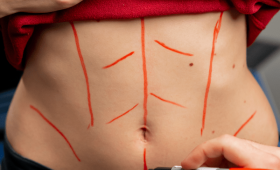
Cost and planning note (Mommy Makeover 2026)
The figures below are indicative market ranges, not a quote: your own price is confirmed after a clinical assessment.
Indicative price range: Standard Package: 4,500 – 7,500 USD | Advanced Combination: 8,000 – 12,000 USD | Tummy Tuck: 3,000 – 5,000 USD | Breast Lift: 2,500 – 4,500 USD | Liposuction Per Area: 500 – 1,500 USD | Bbl Fat Transfer: 3,500 – 5,500 USD
Facility standards: In Türkiye, any facility treating international patients must hold the Ministry of Health’s international health tourism authorisation; hospitals and medical centres must also be accredited by TÜSKA, and complication insurance is compulsory for procedures carried out in an operating theatre (Regulation of 26 April 2025).
Recovery Focus: Post-pregnancy body restoration & safety first.
Currency: GBP, EUR, USD accepted.
The Importance of Travel Insurance for Reconstructive Surgery Abroad
The Physiological Complexity of Post-Pregnancy Reconstruction
The biological aftermath of pregnancy involves profound alterations to the musculoskeletal and integumentary systems. For many women, the physical changes—ranging from skin laxity to the separation of the rectus abdominis muscles—extend beyond simple aesthetic concerns, impacting core stability and physical confidence. Reconstructive surgery, often colloquently referred to as a “Mommy Makeover,” is not merely a cosmetic endeavor but a foundational restorative process designed to address these structural deficits through advanced surgical techniques.
At the core of abdominal restoration is the management of Diastasis Recti. This condition involves the longitudinal separation of the rectus abdominis muscles, often resulting in a permanent protrusion of the abdominal wall. Precision reconstruction requires Diastasis Recti repair, which involves internal corset suturing of the abdominal fascia. By tightening this fascial layer, surgeons can effectively re-establish the tension necessary for abdominal wall integrity, providing a flatter, more stable midsection. The surgical approach to the abdomen is tailored to the degree of skin redundancy, with options ranging from Full, Mini, or Extended (360) tummy tucks. While a mini-tummy tuck focuses on the infraumbilical region, the extended 360 approach addresses the flanks and posterior abdominal wall, ensuring a seamless contour.
Advanced Mammaplasty and Volume Restoration
Post-lactation, the mammary glands often undergo significant volume loss and ptosis (sagging). Restoring the youthful projection of the breasts requires a sophisticated understanding of tissue dynamics. A breast lift (mastopexy) is frequently the cornerstone of this process, repositioning the nipple-areola complex and removing excess glandular or dermal tissue to achieve a more elevated aesthetic.
To complement the lift, many patients opt for augmentation to restore lost volume. The safety and longevity of these results are predicated on the use of high-quality, JCI-approved implants, such as Mentor, Motiva, or Polytech. These implants are engineered with advanced shell textures and cohesive gels to minimize the risk of capsular contracture and ensure a natural feel under the reconstructed tissue. The synergy between mastopexy and augmentation is what allows for the profound transformation characteristic of high-level reconstructive care.
High-Definition Contouring and Adipose Transfer
To achieve a truly cohesive silhouette, surgeons often integrate advanced liposuction technologies to refine the flanks, hips, and thighs. The utilization of Vaser Liposuction is pivotal for high-definition contouring with minimal bruising. Unlike traditional methods, Vaser technology uses ultrasound energy to emulsify fat cells selectively, preserving the surrounding vascular and nerve structures. This precision is essential for patients seeking “sculpted” results without the inflammatory downtime associated with more invasive techniques.
Furthermore, the harvested adipose tissue can be repurposed through BBL (Brazilian Butt Lift) fat transfer. This autologous procedure involves processing purified fat and injecting it into the gluteal region to enhance projection and curvature. This creates a balanced aesthetic loop: removing excess fat from the abdomen or flanks and redistributing it to create a more feminine, hourglass proportion.
The Economic Landscape of International Reconstruction
Investing in reconstructive surgery requires significant financial planning. While the cost of such procedures in Western healthcare systems can be prohibitive, the efficiency of the Turkish medical model allows for premium care at a more accessible price point. The following figures represent the standard investment for these specialized procedures:
- Standard Package: 4,500 – 7,500 USD (Typically covering foundational abdominal and breast work)
- Advanced Combination: 8,000 – 12,000 USD (Comprehensive multi-area reconstruction)
- Tummy Tuck: 3,000 – 5,000 USD
- Breast Lift: 2,500 – 4,500 USD
- Liposuction (per area): 500 – 1,500 USD
- BBL (Fat Transfer): 3,500 – 5,500 USD
“The value of medical tourism lies not in the reduction of cost, but in the optimization of resources—allowing patients to access JCI-standard surgical excellence and premium postoperative care that would otherwise be financially inaccessible.”
The Global Hub: Why Turkey Leads in Post-Pregnancy Care
Turkey has emerged as the undisputed global epicenter for reconstructive excellence, driven by a combination of rigorous surgical training and a highly developed medical infrastructure. The country’s strength lies in its ability to offer “hospitality-integrated surgery,” where the clinical outcome is supported by an elite logistical framework.
The logistical seamlessness of a surgical journey in Turkey significantly reduces patient stress, which is a critical factor in postoperative healing. Key components of this ecosystem include:
- Strategic Access: Major international gateways such as Istanbul (IST) or Antalya (AYT) allow for efficient global transit.
- Premium Recovery: Post-operative care is often hosted in 5-star recovery suites with companion stay included, ensuring the patient has a sterile yet comfortable environment for the initial healing phase.
- Seamless Transit: Patients are met with VIP private transfers from airport to clinic, eliminating the complexities of navigating foreign transit during the sensitive post-anesthetic period.
- Pre-Operative Precision: The journey begins with free online video assessments with board-certified plastic surgeons, allowing for a highly accurate diagnostic phase before the patient even leaves their home country.
Safety Benchmarks and the Role of Travel Insurance
When undertaking reconstructive surgery abroad, the margin for error is non-existent. The biological “foundations” being rebuilt—the abdominal fascia, the mammary tissue, and the subcutaneous fat layers—require absolute stability. This is why adherence to safety benchmarks is the most critical factor in the decision-making process. The presence of JCI-approved materials and the use of specialized technologies like Vaser Lipo are non-negotiable standards in the Turkish hub.
However, even with the highest level of surgical precision, the nature of international travel necessitates a robust risk-management strategy. Travel insurance specifically tailored for medical procedures is an essential component of the surgical itinerary. While the clinical risks are minimized through advanced techniques, the logistical risks—such as flight delays affecting the post-operative window or unexpected travel disruptions—must be mitigated. A comprehensive insurance policy protects the significant financial investment made in these reconstructive procedures, ensuring that the focus remains entirely on the 7-10 days in Turkey required for initial healing and the subsequent 6 weeks for full exercise return.
Navigating the Complexity of Multidimensional Reconstructive Surgery
Reconstructive surgery, particularly when involving combination procedures, represents one of the most sophisticated disciplines in modern plastic surgery. Unlike single-site interventions, a combination approach—such as an integrated abdominoplasty and liposuction—requires a meticulous surgical plan to address both skin laxity and subcutaneous adipose tissue distribution. The primary objective is to achieve a seamless, high-definition contour that restores the anatomical integrity of the abdominal wall while simultaneously refining the silhouette.
At the core of these advanced transformations is the management of Diastasis Recti. This condition, characterized by the separation of the rectus abdominus muscles, often occurs following pregnancy. The surgical solution involves a complex internal corset suturing of the abdominal fascia. By reapproximating the separated muscle layers, surgeons create a functional and aesthetic “corset” that provides much-needed structural support to the midsection. When paired with Vaser Liposuction, the results are significantly enhanced. This ultrasonic technology utilizes low-frequency vibrations to emulsify fat cells with extreme precision, allowing for high-definition contouring with minimal bruising and reduced trauma to the surrounding vascularized tissue.
Patients often choose between various anatomical approaches depending on the extent of skin excess. The tummy tuck options available include Full, Mini, or Extended (360) techniques. The Full Abdominoplasty is designed for significant skin excision, whereas the 360 Extended approach is essential for patients requiring circumferential contouring, encompassing both the anterior and lateral aspects of the abdomen. This level of surgical intricacy necessitates a profound level of preoperative planning, often initiated through free online video assessments with board-certified plastic surgeons, ensuring that the surgical roadmap is precisely tailored to the patient’s unique anatomy.
The Patient Journey: A Case Study of Post-Partum Reconstruction
To understand the logistical and emotional magnitude of this transformation, one must look at the journey of a patient like Siobhan, a 34-year-old Irish mother of three. For Siobhan, the physical remnants of three pregnancies—specifically skin laxity and abdominal muscle separation—had become a source of significant physical discomfort and decreased self-confidence.
Siobanean’s journey began not in a clinical setting, but via a digital consultation. Through a free online video assessment, she was able to present her concerns to a board-certified specialist, receiving a preliminary surgical plan and a transparent breakdown of the advanced combination package, estimated between 8,000 – 12,000 USD. This remote diagnostic phase is crucial for establishing the clinical feasibility of the procedure before any travel is undertaken.
Upon her arrival at either Istanbul (IST) or Antalya (AYT), Siobhan’s transition from international traveler to surgical patient was seamless. The logistical framework provided by Cure Holiday specialists ensured that VIP private transfers were waiting at the airport, transporting her directly to her 5-star recovery suite. This high-standard accommodation, which includes a companion stay included, is vital for the post-operative period, providing a sterile, tranquil, and luxury environment that facilitates healing.
The surgical phase focused on an integrated approach, combining a tummy tuck (valued between 3,000 – 5,000 USD) with targeted liposuction per area (ranging from 500 – 1,500 USD). For Siobhan, the focus was on the Diastasis Recti repair to restore her core strength. Following the procedure, her recovery period in Turkey lasted 7-10 days, during which time she was monitored in her recovery suite. The protocol for such transformative surgeries dictates a 6 weeks for full exercise return, a period during which the surgical site undergoes critical remodeling of the tissue.
Safety Standards, JCI Accreditation, and Risk Mitigation
When undertaking reconstructive surgery abroad, the standard of care must be beyond reproach. The primary benchmark for surgical excellence is JCI (Joint Commission International) accreditation. This gold standard ensures that the surgical facility adheres to rigorous international protocols regarding patient safety, infection control, and surgical precision. This is particularly critical when utilizing high-end medical components, such as the breast implants used: Mentor, Motiva, or Polytech, all of which are JCI approved and designed for long-term biocompatibility and structural integrity.
However, the complexity of these procedures—ranging from a standard package at 4,500 – 7,500 USD to more intricate BBL fat transfer procedures at 3,500 – 5,500 USD—carries inherent physiological risks. This is where the intersection of surgical excellence and specialized travel insurance becomes vital. While the medical teams operate under the strictest safety mandates, the logistical reality of “medical tourism” requires a secondary layer of protection.
“The integration of JCI-accredited surgical precision with comprehensive travel insurance creates a safety net that addresses both clinical and logistical contingencies, ensuring the patient’s journey is protected from the moment of the initial online consultation to the final post-operative follow-up.”
Specialized travel insurance is not merely an add-on; it is a fundamental component of the surgical itinerary. It serves to cover potential medical complications that may require unplanned extensions of stay or, in extreme cases, medical repatriation. When a patient invests in an advanced combination surgery, the insurance must be specifically vetted to cover “medical tourism” related complications, ensuring that the financial burden of unforeseen physiological responses does not overshadow the aesthetic and functional benefits of the surgery.
Financial Overview of Reconstructive Options
Transparency in pricing is a cornerstone of the patient experience. Understanding the modular nature of these procedures allows patients to plan their surgical journey with precision. Below is a breakdown of the standard investment tiers for common reconstructive elements:
- Standard Surgical Package: 4,500 – 7,500 USD (Ideal for single-area interventions)
- Advanced Combination Surgery: 8,000 – 12,000 USD (Comprehensive body contouring)
- Abdominoplasty (Tummy Tuck): 3,000 – 5,000 USD
- Mastopexy (Breast Lift): 2,500 – 4,500 USD
- Liposuction (Per targeted area): 500 – 1,500 USD
- BBL (Brazilian Butt Lift) Fat Transfer: 3,500 – 5,500 USD
By understanding these costs, patients can work alongside Cure Holiday specialists to curate a surgical package that aligns with their anatomical needs and budgetary requirements, all while maintaining the highest standards of JCI-certified safety and luxury care.
The Critical Intersection of Medical Logistics and Risk Management
When planning reconstructive surgery abroad, the focus often settles on the surgical excellence and the aesthetic outcome. However, for the discerning patient, the true complexity lies in the post-operative continuum—the period between the final suture and the return to full physiological function. This phase, encompassing everything from the initial 7-10 days in Turkey to the 6-week window of restricted activity, requires a sophisticated logistical framework. Because the recovery period involves significant biological healing, such as the integration of internal corset suturing of the abdominal fascia in Diastasis Recti repairs, the margin for error in travel planning is non-existent. This is where specialized travel insurance, tailored for medical tourism, becomes the cornerstone of a safe surgical journey.
The logistical architecture of a successful recovery begins the moment you land at Istanbul (IST) or Antalya (AYT). The seamless transition via VIP private transfers to 5-star recovery suites with companion stay included is designed to minimize physiological stress and prevent the elevation of cortisol levels, which can impede wound healing. However, should an unforeseen complication arise—such as a minor seroma or the need for extended clinical monitoring—standard travel insurance policies often fail to cover pre-planned surgical procedures. Without bespoke coverage, the cost of extending a stay in a premium recovery suite or managing unforeseen medical complications can rapidly erode the financial advantages of seeking treatment in Turkey.
Technical Recovery Nuances and the Necessity of Coverage
Reconstructive procedures are technically demanding, and the recovery protocols are strictly dictated by the surgical technique employed. For instance, patients undergoing Vaser Liposuction benefit from high-definition contouring with minimal bruising, yet the lymphatic system still requires a period of controlled mobilization. Similarly, the choice of implant—whether Mentor, Motia, or Polytech (JCI approved)—requires a specific post-operative care regimen to ensure capsule formation is optimal.
The complexity of the procedure dictates the intensity of the required aftercare:
- Tummy Tuck Options: Whether undergoing a Full, Mini, or Extended (360) abdominoplasty, the structural integrity of the abdominal wall is the priority. The Diastasis Recti repair involves internal corset suturing of the abdominal fascia, meaning physical strain during travel must be strictly avoided.
- Liposuction and Fat Transfer: Procedures such as BBL fat transfer require meticulous positioning during sleep and the avoidance of compression on the transferred grafts.
- The 6-Week Milestone: While the initial 7-10 days in Turkey are focused on acute healing, the 6 weeks for full exercise return represents a period of vulnerability. Travel insurance must account for the possibility of flight delays or the inability to fly if post-operative swelling (edema) has not subsided sufficiently.
“The primary objective of post-operative logistics is to bridge the gap between surgical precision and long-term physiological stability. Any disruption in the planned recovery timeline—be it due to logistical delays or medical necessity—can compromise the structural results of the surgery.”
The 2026 Financial Landscape: Turkey vs. UK/USA
The decision to undergo reconstructive surgery in Turkey is driven by a significant disparity in cost-to-quality ratios. When evaluating the 2026 budget, patients must weigh the initial savings against the necessity of comprehensive medical-grade insurance. The cost difference is stark, often allowing patients to opt for more advanced, multi-area procedures that would be financially prohibitive in the UK or USA.
Below is a comparative breakdown of projected 2026 costs for surgical packages in Turkey:
- Standard Package: 4,500 – 7,500 USD
- Advanced Combination: 8,000 – 12,000 USD
- Tummy Tuck (Full/Extended): 3,000 – 5,000 USD
- Breast Lift: 2,500 – 4,500 USD
- Liposuction (Per Area): 500 – 1,500 USD
- BBL Fat Transfer: 3,500 – 5,500 USD
While these figures represent a substantial saving, the “hidden” cost of a poorly planned recovery can be immense. If a patient lacks insurance that specifically covers “planned medical procedures,” a single flight cancellation or a requirement for an additional week of 5-star recovery suite access can negate the savings achieved through the standard package or advanced combination. For those managing complex procedures like a 360 Extended Tummy Tuck, the financial buffer provided by specialized insurance is as critical as the surgical skill itself.
Managing Post-Operative Logistics: Childcare and Transitions
A frequently overlooked aspect of the recovery timeline is the “re-entry” phase. For many patients, the period of 7-10 days in Turkey is a period of relative isolation in a controlled environment. However, the transition back to home life—specifically managing childcare logistics and the return to professional responsibilities—requires precise timing. The 6 weeks for full exercise return means that the patient is effectively “out of commission” for high-intensity physical activity for over a month.
Effective planning involves:
1. Pre-Departure Assessments: Utilizing free online video assessments with board-certified plastic surgeons to determine the exact physical limitations of the upcoming procedure.
2. The Companion Strategy: Ensuring that the companion stay included in the hotel package is utilized to assist with the management of post-operative fatigue and the monitoring of surgical sites.
3. The Flight Window: Coordinating the return flight to ensure that the patient is not subjected to excessive cabin pressure or physical manipulation before the subcutaneous edema has stabilized.
In navigating these complexities, consulting with Cure Holiday specialists can provide the necessary clarity. They assist in aligning the technical requirements of the surgery—such as the nuances of Vaser Liposuction or Diastasis Recti repair—with the logistical realities of international travel, ensuring that the patient’s investment in their physical transformation is protected by a robust, medically-aware insurance strategy.
Considering a Mommy Makeover in Turkey? Get a Free Quote for your The Importance of Travel Insurance for Reconstructive Surgery Abroad Transformation with cureholiday.com
Free Consultation
Fill out the form below to get your free medical travel plan and price quote.
Sources and how to verify this yourself
- Ministry of Health, Regulation on International Health Tourism and Tourist Health, Official Gazette 26 April 2025, No. 32882 — authorisation requirement for facilities and intermediaries, TÜSKA accreditation, compulsory complication insurance (deadline 31 December 2025 for insurance, 31 December 2026 for accreditation). source
- Ministry of Health, Regulation on Promotion and Information Activities in Health Services, Official Gazette 12 November 2025, No. 33075 — treatment promises and guarantees are prohibited; price and campaign announcements are permitted only within international health tourism. source