Cost and planning note (Mommy Makeover 2026)
The figures below are indicative market ranges, not a quote: your own price is confirmed after a clinical assessment.
Indicative price range: Standard Package: 4,500 – 7,500 USD | Advanced Combination: 8,000 – 12,000 USD | Tummy Tuck: 3,000 – 5,000 USD | Breast Lift: 2,500 – 4,500 USD | Liposuction Per Area: 500 – 1,500 USD | Bbl Fat Transfer: 3,500 – 5,500 USD
Facility standards: In Türkiye, any facility treating international patients must hold the Ministry of Health’s international health tourism authorisation; hospitals and medical centres must also be accredited by TÜSKA, and complication insurance is compulsory for procedures carried out in an operating theatre (Regulation of 26 April 2025).
Recovery Focus: Post-pregnancy body restoration & safety first.
Currency: GBP, EUR, USD accepted.
The Role of the “Patient Host” in Navigating Turkish Culture and Clinics
The Seamless Integration of Medical Excellence and Concierge Care
In the realm of high-end medical tourism, the concept of the “Patient Host” has emerged as the definitive standard for navigating the complexities of international surgery. For women seeking post-pregnancy restoration—often referred to as a “Mommy Makeover”—the journey involves much more than a clinical procedure; it requires a sophisticated logistical framework that bridges the gap between advanced surgical intervention and luxury convalescence. In Turkey, this role is pivotal, acting as the connective tissue between the patient’s clinical requirements and the seamless execution of their recovery itinerary.
The “Patient Host” model ensures that the physiological demands of undergoing procedures such as abdominoplasty or mastopexy are met with an environment of absolute tranquility. By managing everything from VIP private transfers from Istanbul (IST) or Antalya (AYT) to the coordination of 5-star recovery suites with companion stay included, the host allows the patient to bypass the cognitive load of travel, focusing entirely on the biological processes of wound healing and tissue remodeling.
Foundational Restorative Procedures: The Science of Post-Pregnancy Reconstruction
The core of the Turkish “Mommy Makeover” lies in its ability to address the structural changes caused by pregnancy, specifically the separation of the rectus abdominis muscles and the loss of skin elasticity. This is not merely cosmetic; it is a fundamental reconstruction of the abdominal wall.
A critical component of this restoration is the Diastasis Recti repair. This procedure goes beyond surface-level skin removal; it involves the meticulous internal corset suturing of the abdominal fascia. By re-approximating the separated muscle layers, surgeons restore the structural integrity of the core, effectively recreating the “corset” effect that pregnancy often diminishes. Depending on the patient’s specific anatomical needs, surgeons offer various tummy tuck options: Full, Mini, or Extended (360), allowing for a customized approach to skin excision and muscle tightening.
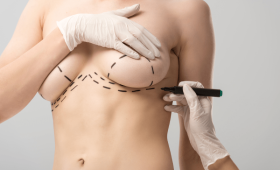
Complementing the abdominal reconstruction is the advanced approach to breast aesthetics. The primary objective in a breast lift (mastopexy) is to reposition the nipple-areola complex and restore volume to the upper pole of the breast. To ensure long-term safety and aesthetic naturalism, Turkish clinics utilize only the highest grade of medical-grade materials. Breast implants used include Mentor, Motiva, or Polytech, all of which are JCI approved, ensuring that the biocompatibility and structural stability of the implant meet international benchmarks for safety.
Advanced Contouring and High-Definition Precision
Modern post-pregnancy restoration has moved beyond simple excision toward high-definition contouring. This is achieved through the integration of Vaser Liposuction, a technology that utilizes low-frequency ultrasound to emulsify fat cells with extreme precision. The advantage of Vaser technology in a Mommy Makeover context is its ability to target stubborn adipose tissue while preserving surrounding connective tissue, resulting in high-definition contouring with minimal bruising.
For patients seeking a more dramatic volumetric change, the BBL (Brazilian Butt Lift) fat transfer is often integrated into the surgical plan. This involves harvesting processed fat from the abdominal or flank regions and injecting it into the gluteal area to restore lost projection. When paired with specialized liposuction, the results are a balanced, sculpted silhouette that reflects a highly personalized surgical outcome.
“The goal of modern abdominoplasty is not simply the removal of excess skin, but the restoration of the abdominal architecture through precise fascial tensioning and volumetric optimization.”
The Economic Value Proposition and Global Leadership
Turkey has solidified its position as the global hub for Mommy Makeovers not by compromising on quality, but by optimizing the value-to-cost ratio. The ability to access board-certified plastic surgeons performing complex, multi-stage reconstructions at a fraction of Western European or North American prices is the primary driver of this industry. The cost transparency allows patients to plan for advanced combination surgeries that might otherwise be financially prohibitive.
The following breakdown illustrates the significant cost advantages available within the Turkish medical landscape:
- Standard Package (Comprehensive restoration): 4,500 – 7,500 USD
- Advanced Combination (Multi-area reconstruction): 8,000 – 12,000 USD
- Tummy Tuck (Abdominoplasty): 3,000 – 5,000 USD
- Breast Lift (Mastopexy): 2,500 – 4,500 USD
- Liposuction (Per targeted area): 500 – 1,500 USD
- BBL (Fat Transfer): 3,500 – 5,500 USD
Safety Benchmarks and the Recovery Timeline
While the cost benefits are compelling, the true benchmark of Turkey’s surgical excellence is its adherence to strict safety protocols and post-operative care. The “Patient Host” ensures that the clinical pathway is strictly monitored. The recovery phase is divided into two distinct stages: the immediate localized healing phase and the long-term physiological stabilization phase.
Patients typically remain in Turkey for an initial 7-10 days. This period is critical for the first post-operative follow-up, wound inspection, and the management of any edema or lymphatic drainage. During this time, the luxury recovery suites provide the sterile and comfortable environment necessary to prevent complications. However, the surgical timeline extends far beyond the departure from Turkey; patients are advised that a 6-week period is required for a full return to strenuous exercise, ensuring that the newly sutured fascia and breast implants have reached sufficient structural stability.
To initiate this process with total transparency, Cure Holiday specialists facilitate free online video assessments with board-certified plastic surgeons. This allows for a pre-operative clinical evaluation of the patient’s anatomy, ensuring that the surgical plan—from the degree of abdominoplasty to the necessity of fat transfer—is medically sound and meticulously prepared before the patient ever reaches the airport.
The Patient Host: A Clinical and Cultural Liaison
Navigating a medical journey in a foreign country requires more than just surgical expertise; it requires a sophisticated layer of-support that bridges the gap between international patient expectations and Turkish clinical excellence. This is where the “Patient Host” becomes the most critical component of the surgical ecosystem. Far beyond a mere concierge, the Patient Host acts as a clinical liaison, a cultural translator, and a logistical architect, ensuring that the transition from the operating theatre to the recovery suite is seamless, safe, and culturally integrated.
For the international patient, the primary anxiety often stems from the “unknown”—unknown protocols, unknown language barriers, and unknown post-operative care environments. The Patient Host mitigates this by managing every touchpoint of the journey, from the initial free online video assessments with board-certified plastic surgeons to the final departure from Istanbul (IST) or Antalya (AYT). By synchronizing clinical milestones with personalized hospitality, the host ensures that the patient’s focus remains entirely on physiological healing rather than logistical complexity.
The Technical Blueprint: Precision in Combination Surgery
Modern surgical trends in Turkey have shifted toward “single-session transformation,” where multiple anatomical areas are addressed simultaneously to maximize efficiency and reduce the total number of anesthetic exposures. The Patient Host plays a vital role in preparing the patient for the technical rigors of these complex procedures. Unlike single-area surgeries, combination procedures require a deep understanding of tissue handling and hemodynamic stability.
A hallmark of this advanced approach is the integration of high-definition contouring with structural abdominal repair. For instance, a patient undergoing an abdominal reconfiguration may require more than a simple skin excision. The technical standard now involves Diastasis Recti repair, which involves internal corset suturing of the abdominal fascia. This procedure reinforces the core musculature, providing a structural foundation that a standard tummy tuck might lack. When combined with Vaser Liposuction, which is used for high-definition contouring with minimal bruising, the result is a stabilized, sculpted midsection that addresses both aesthetic and functional concerns.
The complexity extends to breast reconstruction and augmentation. Precision in these procedures is non-negotiable, which is why the selection of medical-grade materials is strictly regulated under JCI (Joint Commission International) safety standards. Surgeons utilize highly biocompatible implants, specifically Mentor, Motiva, or Polytech (JCI approved), to ensure long-term structural integrity and minimal capsular contracture risks. The Patient Host assists the patient in understanding these technical specifications, ensuring they are fully informed of the anatomical implications of Full, Mini, or Extended (360) tummy tuck options.
Case Study: The Path to Reconstruction (A 34-Year-Old Irish Mother’s Journey)
To understand the profound impact of the Patient Host and the surgical team, one must look at the clinical trajectory of a real-world application. Consider the case of a 34-year-old mother of three from Ireland. Following three pregnancies, she presented with significant abdominal laxity, persistent muscle separation (diastasis recti), and loss of volume in the gluteal region.
Her journey began months before her flight, through a free online video assessment where her surgeon analyzed her skin elasticity and anatomical landmarks. Upon arrival in Turkey, her Patient Host managed the VIP private transfers from the airport to her 5-star recovery suite, where a companion stay was included to ensure she was never isolated during the critical first 48 hours of healing.
The surgical intervention was an advanced combination procedure. The surgeon performed an Extended (360) Tummy Tuck, integrating Diastasis Recti repair to close the abdominal gap, alongside BBL fat transfer to restore hip and gluteal projection. The precision of Vaser Liposuction allowed for the harvesting of precise amounts of adipose tissue from the flanks to be used in the transfer. The Patient Host’s role during her 7-10 days in Turkey was to coordinate her follow-up scans, manage her nutritional requirements, and facilitate communication between her Irish medical team and her Turkish surgeons. By the time she returned to Ireland, she was well into her 6 weeks for full exercise return, having bypassed the logistical stress that often plagues medical tourism.
The Logistics of Safety: JCI Standards and Post-Operative Care
The “Patient Host” is the primary auditor of the patient’s safety environment. In the context of Turkish clinics, this means ensuring all protocols align with international JCI standards. This includes monitoring the sterility of the surgical environment and the rigorous maintenance of the 5-star recovery suites. The host ensures that the transition from the hospital to the hotel is not merely a transfer of location, but a transfer of care.
Post-operative management is where the technicality of the surgery meets the hospitality of the host. For procedures involving fat transfer or significant liposuction, the host oversees the compression garment schedule and monitors for signs of seroma or hematoma. The logistical framework is designed to minimize the “patient fatigue” associated with long-distance travel, ensuring that the VIP private transfers and hotel accommodations act as a recovery tool rather than a distraction.
Financial Transparency: The Investment in Transformation
A key responsibility of the Patient Host is providing absolute clarity regarding the financial architecture of the surgery. There are no hidden variables; the costs are structured to reflect the complexity of the technical specifications used.
- Standard Package (Comprehensive care): 4,500 – 7,500 USD
- Advanced Combination Surgery: 8,000 – 12,000 USD
- Tummy Tuck (Full, Mini, or Extended): 3,000 – 5,000 USD
- Breast Lift (Mastopexy): 2,500 – 4,500 USD
- Liposuction (Per targeted area): 500 – 1,500 USD
- BBL Fat Transfer (Gluteal augmentation): 3,500 – 5,500 USD
By presenting these figures with total transparency, the Patient Host allows the patient to engage in informed decision-making, ensuring that the financial investment matches the clinical expectations of their surgical transformation.
The Patient Host: Bridging Clinical Excellence and Logistical Seamlessness
In the complex landscape of medical tourism, the “Patient Host” serves as much more than a mere translator or guide; they act as a specialized logistical liaison, bridging the gap between high-precision surgical intervention and the nuances of Turkish hospitality. For patients traveling from the UK or USA, the primary anxiety often stems not from the surgery itself, but from the management of the convalescent period. The role of the host is to manage the intricate continuum of care, ensuring that the transition from the operating theatre to a recovery suite is clinically stable and culturally seamless.
Navigating a foreign healthcare system requires an understanding of the “Recovery Ecosystem.” This ecosystem encompasses everything from the management of postoperative edema to the coordination of VIP private transfers from Istanbul (IST) or Antalya (AYT). By delegating the complexities of local navigation to a dedicated host, patients can focus entirely on the physiological demands of healing, particularly during the critical first 7-10 days following major procedures.
Advanced Clinical Recovery: Integrating Technology with Comfort
The efficacy of a surgical outcome is heavily dependent on the post-operative environment. In Turkey, the paradigm has shifted toward “Villa Recovery,” where patients move from the clinic to 5-star recovery suites with companion stay included. This is particularly vital for procedures involving significant tissue manipulation. For instance, when undergoing Diastasis Recti repair, which involves the intricate internal corset suturing of the abdominal fascia, the ability to remain in a controlled, low-stress environment is paramount to prevent tension on the newly sutured musculature.
Furthermore, the application of advanced technologies such as Vaser Liposuction allows for high-definition contouring with minimal bruising. This technological advantage directly impacts the logistics of the recovery period. Because Vaser Lipo targets subcutaneous adipose tissue with ultrasonic precision, the inflammatory response is reduced, potentially shortening the period of immobilization. Similarly, when patients opt for breast augmentations using JCI-approved implants—specifically Mentor, Motiva, or Polytech—the host’s role is to ensure that the recovery suite is equipped to manage the specific postural requirements of the patient, such as the need for specialized sleeping arrangements to protect the implant pocket.
“The success of a surgical journey is measured not just by the precision of the scalpel, but by the stability of the recovery environment. A managed logistics plan reduces the physiological cortisol levels that can otherwise impede wound healing.”
Managing the Logistical Continuum: From Pre-Op to Fly-Home
The logistical journey begins long before the patient arrives in Turkey. Through free online video assessments with board-sensitive plastic surgeons, the Patient Host facilitates the initial clinical dialogue, allowing for a customized surgical plan that accounts for the patient’s specific travel constraints. This pre-operative phase is crucial for establishing the “Fly-Home” timeline.
Post-operative planning must account for the biological healing trajectory. While the initial recovery takes 7-10 days in Turkey, patients must be aware that 6 weeks are required for a full return to strenuous exercise. The Patient Host manages this timeline by coordinating:
- Post-Op Mobility: Organizing VIP private transfers that accommodate patients with limited range of motion or those recovering from Full, Mini, or Extended (360) Tummy Tucks.
- Childcare and Family Logistics: For patients traveling with family, the host coordinates local support structures, allowing the patient to remain in a sterile, quiet environment while family members navigate the local culture.
- The Transition Period: Ensuring that all medical documentation and follow-up instructions are prepared for the international flight back to the UK or USA, minimizing the risk of post-surgical complications such as DVT (Deep Vein Thrombosis) during long-haul travel.
2026 Cost Breakdown: Turkey vs. UK and USA
As we look toward 2026, the financial disparity between Turkey and traditional Western healthcare hubs remains a significant driver for medical travel. However, the “true cost” must include the logistical excellence provided by the Patient Host. When comparing the cost of procedures, the savings in Turkey allow for a much higher tier of post-operative care, including luxury villa stays and private nursing, which would be cost-prohibitive in the UK or USA.
Below is a projected breakdown of surgical costs for 2026:
- Standard Package (Comprehensive Care): 4,500 USD – 7,500 USD
- Advanced Combination (Multi-area contouring): 8,000 USD – 12,000 USD
- Tummy Tuck (Full, Mini, or Extended): 3,000 USD – 5,000 USD
- Breast Lift: 2,500 USD – 4,500 USD
- Liposuction (Per individual area): 500 USD – 1,500 USD
- BBL (Fat Transfer/Brazilian Butt Lift): 3,500 USD – 5,500 USD
When these figures are viewed alongside the high cost of anesthesia, theatre fees, and hospital stays in the UK/USA, the value proposition of the Turkish model becomes clear. The patient is not merely paying for the surgery, but for an all-encompassing, managed medical experience that integrates 5-star hospitality with advanced surgical technology.
The Necessity of Professional Oversight
For the discerning patient, the “Patient Host” acts as the final layer of safety. In an era of decentralized medical tourism, having a structured protocol—managed by Cure Holiday specialists—ensures that the patient is never navigating the complexities of post-operative care alone. From the moment the free online video assessment concludes to the moment the patient clears customs in their home country, the logistical framework remains rigid, professional, and entirely focused on the clinical success of the procedure.
Considering a Mommy Makeover in Turkey? Get a Free Quote for your The Role of the “Patient Host” in Navigating Turkish Culture and Clinics Transformation with cureholiday.com
Free Consultation
Fill out the form below to get your free medical travel plan and price quote.
Sources and how to verify this yourself
- Ministry of Health, Regulation on International Health Tourism and Tourist Health, Official Gazette 26 April 2025, No. 32882 — authorisation requirement for facilities and intermediaries, TÜSKA accreditation, compulsory complication insurance (deadline 31 December 2025 for insurance, 31 December 2026 for accreditation). source
- Ministry of Health, Regulation on Promotion and Information Activities in Health Services, Official Gazette 12 November 2025, No. 33075 — treatment promises and guarantees are prohibited; price and campaign announcements are permitted only within international health tourism. source