What Is Presbyopia And Why Does It Occur?
Presbyopia is a condition where the natural lens inside our eye loses its flexibility due to aging, leading to a loss of ability to focus on objects at a close distance. This process, which usually begins around the ages of 40-45, is not actually a disease but a natural part of the body’s aging physiology. When the ciliary muscles inside the eye contract, the lens changes shape to focus on the near; however, as we age, the lens hardens and this change can no longer occur. Consequently, activities such as reading, using a phone, or sewing become difficult for the individual.
What Are The Symptoms Of Near Vision Problems?
Symptoms usually start subtly. The most prominent symptom is the need to move the reading material or object away from the eyes to see it clearly. A feeling of fatigue in the eyes after prolonged near-distance work, headaches concentrated in the forehead and temple areas, and a significant drop in vision quality in low light are harbingers of presbyopia. Many patients state that letters get mixed up, especially while reading books or using a computer, and they have to squint to focus. These symptoms lead to a loss of comfort that directly affects the quality of life.
How Does The Eye Structure Change With Age?
Many changes occur in the anatomical structure of the eye over time, but the fundamental change that triggers presbyopia happens in the crystalline lens. In younger years, this lens is transparent and highly flexible, but over the years, it both loses its transparency and hardens due to changes in protein structure. At the same time, the tension of the fibers holding the lens decreases. This situation causes the eye’s ability to “accommodate” to gradually zero out. By the age of 60, the lens has hardened almost completely, and near vision cannot be achieved without external support.
What Are The Current Approaches In Presbyopia Treatment?
Today, presbyopia treatment is not limited to the use of glasses or contact lenses. The world of medicine offers personalized solutions suitable for the patient’s lifestyle and eye structure. Laser surgery (PresbyLASIK), refractive lens exchange (RLE), corneal implants, and even eye drops that recently received FDA approval are at the forefront of these approaches. Modern medicine aims to completely free the patient from dependence on glasses for both distance and near vision. These methods are applied with minimal invasive techniques, allowing patients to return to their social lives quickly.
Can Laser Treatment Correct Near Vision?
Although laser technology has been used for many years only for the correction of myopia, hyperopia, and astigmatism, it has become a solution for presbyopia as well, thanks to new-generation software. By changing the shape of the cornea with a laser, the eye can be made to have different focal points, much like a progressive lens. This process is generally called laser presbyopia correction. Especially for patients who are in their early 40s and do not show symptoms of cataracts, laser treatment is one of the most preferred options due to its low operational risks and fast recovery process.
How Is The PresbyLASIK Method Applied?
PresbyLASIK is an advanced laser technique aimed at creating a multifocal corneal surface. During the operation, the center of the cornea is reshaped for near vision and the peripheral parts for distance vision using an excimer laser. In this way, the patient begins to see both distance and near clearly with the adaptation ability of their brain. The procedure is usually applied to both eyes at the same time and takes about 10-15 minutes. Since it is performed with drop anesthesia, it is painless. Most patients can return to their normal lives the next day and enjoy being free from reading glasses.
What Are The Advantages Of Supracor Laser Technology?
Supracor is a LASIK software specifically focused on presbyopia, developed on the Technolas laser platform. The biggest advantage of this method is that it creates a very precise varifocal surface on the cornea without disturbing the natural vision quality (aberrations) of the eye. Supracor gives excellent results especially for presbyopic patients who are hyperopic. It offers uninterrupted vision at distance, near, and intermediate distances. Furthermore, it is optimized to minimize side effects such as “halos” or “glare” that may occur in night vision after the operation, making it suitable for professional drivers or those working at night.
What Is Smart Lens Treatment?
Multifocal or trifocal intraocular lenses, popularly known as “smart lenses,” are the most permanent and definitive solution for presbyopia. In this method, the patient’s natural lens that has lost its properties is removed and replaced with an artificial lens that has three different focal points (distance, intermediate, and near) and will stay for a lifetime. These lenses refract light, allowing images coming from different distances to fall clearly on the retina simultaneously. Smart lenses correct not only presbyopia but also any existing distance vision defects and completely eliminate the patient’s risk of developing cataracts in the future.
Who Are Trifocal Lenses Suitable For?
Trifocal lenses are designed especially for individuals over the age of 45 who lead an active life. These lenses are ideal for those seeking glass-free clarity at all distances such as reading books (near), using a computer (intermediate), and driving (distance). However, for these lenses to be applied, the patient’s retina layer must be healthy and there should be no advanced irregularity in the cornea. Trifocal lenses are generally not recommended for patients with diabetic retinopathy or advanced-stage glaucoma. A detailed examination by a specialist physician is the most critical step in determining the patient’s suitability for this technology.
What Problems Does EDOF Lens Technology Solve?
EDOF (Extended Depth of Focus) technology is a subtype of multifocal lenses but has a different working principle. While there are sharp transitions between focal points in traditional trifocal lenses, EDOF lenses create an uninterrupted depth of focus by stretching the light along a channel. This situation is a great solution especially for patients who complain about light glare while driving at night. While EDOF lenses offer excellent performance at distance and intermediate distances (computer and counter distance), slight support may sometimes be needed to read very fine print.
Is Intraocular Lens Exchange Surgery Safe?
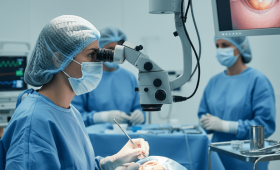
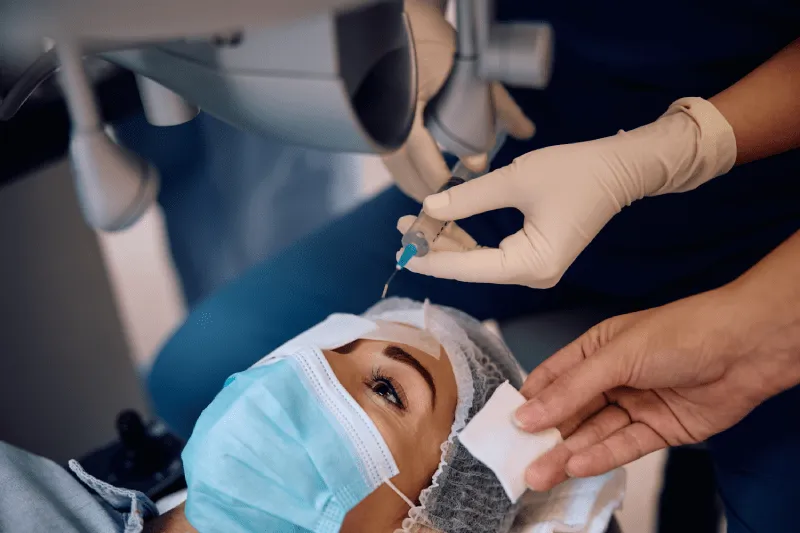
Intraocular lens exchange (Refractive Lens Exchange – RLE) uses the same technical infrastructure as cataract surgery, which is actually the most frequently performed surgical intervention in the world. Thanks to modern phacoemulsification (PHACO) technology, these operations are completed in approximately 10-15 minutes. Being stitchless and performed with drop anesthesia increases the safety and comfort of the surgery. Complication rates are extremely low. However, as in every surgical procedure, sterilization and physician experience are of vital importance. Operations performed in the right centers provide revolutionary results in terms of vision health.
Are Multifocal Contact Lenses Effective?
For patients who do not want to have surgery but do not like wearing glasses either, multifocal contact lenses are an important alternative. These lenses have different focal rings, just like intraocular lenses. As the pupil shrinks or grows according to light or as the gaze angle changes, the appropriate focal area comes into play. However, problems such as dry eyes, the lens not being centered on the cornea, or slight blurring in the image may be experienced with contact lens use. Nevertheless, thanks to technological developments, new-generation silicone hydrogel multifocal lenses have reached quite successful levels in terms of comfort and vision quality.
How Do Corneal Implants (Inlays) Work?
Corneal implants or “Inlays” are micro-structured disks placed inside the cornea, applied only to the non-dominant eye. The most popular example is the Kamra Inlay. This tiny ring works with the “pinhole” principle, allowing light entering the eye to pass only through the center, which increases the depth of field and clarifies near vision. It is a surgically reversible procedure; meaning if the patient is not satisfied, the implant can be removed. In cases where the corneal structure is suitable, it is a preferred option for younger presbyopes who are not ready for lens exchange.
Can Eye Drops Be Used For Presbyopia?
The most exciting development of recent years is the use of pharmacological drops in the treatment of presbyopia. FDA-approved “Pilocarpine” based drops increase the depth of focus by slightly constricting the pupil (miosis). This situation allows the patient to see the near distance clearly for several hours. Although the drops do not offer a permanent treatment, they eliminate the obligation to use glasses on special occasions, in meetings, or for short-term reading needs. However, they should be used under doctor supervision as they may have side effects such as a slight decrease in night vision and short-term pain around the eyes.
Do Pharmacological Treatments Promise A Future?
Eye drop technology is not limited to constricting the pupil. Scientists are working on solutions that can reverse the hardening of proteins inside the eye lens and regain the flexibility of the lens. If these studies result in success, presbyopia could become a condition that can be treated with just a few drops of medicine in the future. While current drops provide symptomatic relief, future molecules aim to provide cellular-level healing. This area is seen as one of the most dynamic and innovative research branches of ophthalmology.
What Is Monovision Treatment?
Monovision is an old but effective method based on an optical illusion principle. In this method, one eye (usually the dominant one) is adjusted for distance vision, and the other eye is left slightly myopic for near vision. The brain adapts to the transition between these two images over time, and the person begins to see both distance and near clearly. It can be applied with laser or contact lenses. Not every patient can easily adapt to monovision, so a trial period with contact lenses is usually applied before a permanent procedure. For patients who achieve adaptation, it is an extremely economical and practical solution.
What Is The Recovery Process Like After Presbyopia Surgery?
The recovery process varies according to the method applied. In laser treatments, vision usually clears within 24 hours and the patient can return to work. In smart lens (RLE) operations, it may take between a few days and a few weeks for the vision to fully settle and for the brain to get used to the new lenses. Mild watering, stinging, or light sensitivity in the eyes for the first few days after the operation is considered normal. Regular use of antibiotic and cortisone drops prescribed by the doctor minimizes the risk of infection and accelerates tissue healing. Most patients experience the joy of discovering a “new world” the morning after the surgery.
Who Is An Ideal Candidate For Presbyopia Treatment?
Ideal candidates are generally individuals over the age of 45 who are tired of having to use glasses for distance or near vision and whose eye health is generally good. People who do not have diabetes, do not experience serious dry eyes, and have sufficient corneal thickness are suitable for laser; while those with onset of cataracts or high-degree vision defects are better candidates for lens exchange. The choice of treatment is determined not only by medical data but also by the patient’s profession (pilot, surgeon, driver, etc.) and hobbies. A detailed check-up is the only way to choose the most correct method.
What Is The Success Rate In Presbyopia Treatment?
Patient satisfaction in presbyopia operations performed with current technologies is over 95%. Especially trifocal smart lens applications completely free 98% of patients from glasses. The most important factors affecting success are correct patient selection, the experience of the surgeon, and the technological level of the devices used. Thanks to modern measurement devices (biometry), the power of the lens to be placed inside the eye is calculated with millimeter precision. This minimizes risks such as “residual numbers” after the surgery. Patients having realistic expectations and establishing open communication with the physician reinforces the success of the process.
Will It Be Necessary To Wear Glasses Again After Treatment?
For patients who have undergone lens exchange (smart lens) surgery, the result is permanent. These lenses stay in the eye for a lifetime and their degree does not change, so the need for glasses does not arise again. In laser operations, since the natural aging process continues, a slight support may be needed years later in very rare cases. However, for most patients, these interventions are sufficient to spend the rest of their lives glass-free. It should be honestly informed to the patients that a light reading glass might be needed in dim light to read very small printed texts like medicine prospectuses, albeit rarely.
Should Laser Or Lens Treatment Be Preferred?
The most decisive factor in this decision is the patient’s age and the condition of the lens inside the eye. If the patient is between 40-50 years old and their lens is still transparent, laser treatment may be more suitable. However, for individuals over 50, since hardening and loss of transparency (phacosclerosis) usually begin in the lens, it is more logical to perform lens exchange directly instead of laser. Because if cataracts develop a few years after laser is performed, the patient will have to undergo a second surgery. Smart lens treatment both solves presbyopia and ends the future cataract problem before it even occurs.
How Does Dry Eye Affect The Treatment Process?
Dry eye is a condition that must be meticulously evaluated, especially before laser operations. In patients with severe dry eyes, the stinging sensation may increase and vision quality may fluctuate after the laser operation. For this reason, tear tests (such as the Schirmer test) are performed before the operation. If there is dryness, this problem is first resolved with methods such as artificial tear drops or punctum plugs, and then surgery is planned. In smart lens surgeries, although dryness is not as big an obstacle as in laser, keeping the eye surface moist is of critical importance to increase the patient’s comfort during the healing period.
What Are The Possible Risks In Presbyopia Treatment?
As in every medical intervention, there are some risks in presbyopia treatments. In surgical procedures, rare conditions such as infection, intraocular pressure increase, or slight displacement of the lens can be seen. In laser procedures, light scattering (halo/glare) may be experienced for a temporary period at night. However, most of these side effects can be managed with modern techniques and advanced drugs. The best way to minimize risks is for the operation to be performed in a fully equipped hospital, under sterile conditions, and by an expert team with experience in thousands of cases in this field.
Does Cataract Surgery Eliminate Presbyopia?
Yes, cataract surgery is actually an opportunity for presbyopia treatment. In classic cataract surgeries, single-focus (monofocal) lenses are generally used, which allows the patient to see distance clearly but causes them to continue wearing glasses for near. If a “smart lens” (trifocal or multifocal) is fitted during cataract surgery, the patient’s cataract is cleaned and their near vision defect (presbyopia) is corrected in the same session. Therefore, it is recommended that patients who will undergo cataract surgery must ask their physicians about smart lens options and benefit from this permanent comfort.
Which Technological Innovations Are Guiding The Sector?
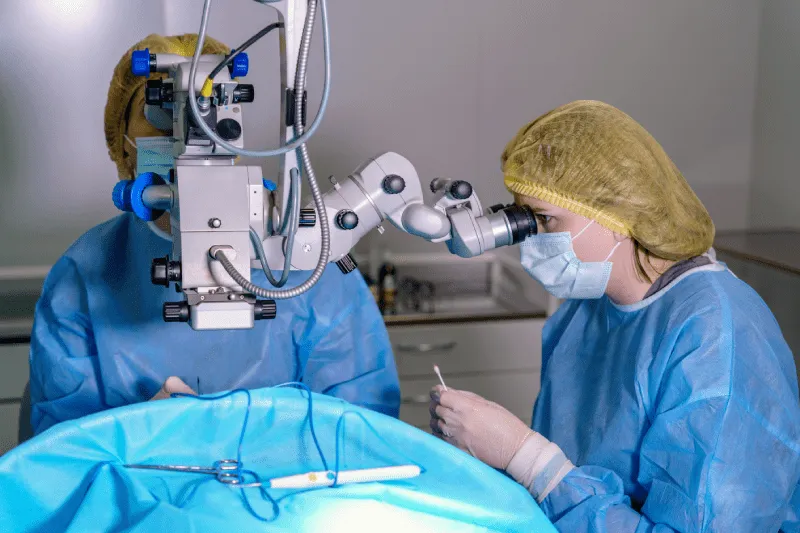
The world of ophthalmology is currently experiencing a revolution with artificial intelligence, digital microscopes, and femtosecond laser technologies. The use of femtosecond lasers allows the surgeon to make incisions, which were previously done by hand, with zero error under computer control. Thanks to this technology, lens exchange surgeries have become much safer. Furthermore, innovations in intraocular lens designs such as “light-adjustable lenses” (LAL) allow the lens’s power to be changed with light while it is inside the eye after surgery. Such innovations make it possible to offer “tailor-made” vision quality specific to the patient.
Are Artificial Intelligence Supported Eye Measurements Reliable?
Artificial intelligence is our greatest assistant today in calculations (IOL Power Calculation) performed before eye surgery. AI algorithms that analyze the data of thousands of cases can predict the most suitable lens power according to the patient’s eye structure much more accurately than traditional formulas. This situation is of vital importance especially for patients who have previously undergone laser surgery and whose eye structure has changed. Digital tracking systems guide the surgeon during surgery, showing in real-time exactly at what angle the lens should be placed inside the eye. This technological support almost eliminates the margin of error.
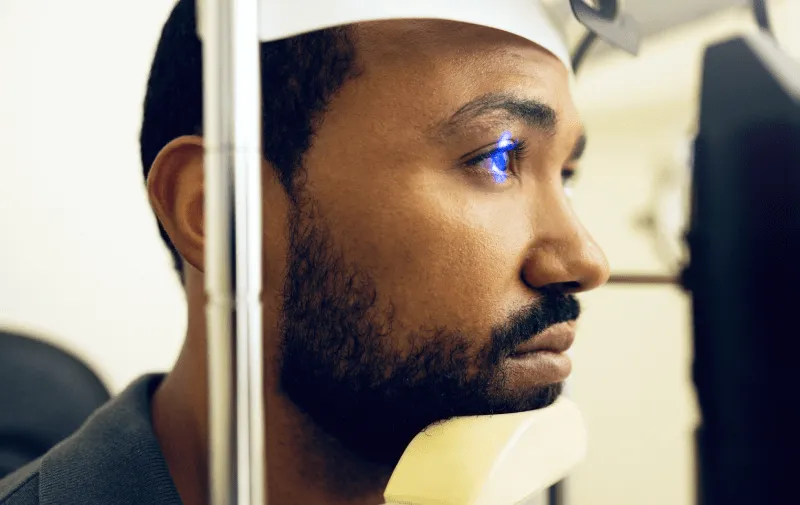
What Should Be The Pre-Treatment Preparation Process For Patients?
The first step of a successful operation is a comprehensive pre-examination. Patients should inform their physician of all their routine medications before surgery. Those who use contact lenses should stop using them at least one week (longer for hard lenses) before the operation for the cornea shape to return to normal. Makeup should not be applied to the eye on the day of surgery, perfumed products should not be used, and comfortable clothes should be preferred. The patient’s general health status (blood pressure, sugar) should be under control. Also, coming with a companion for after the operation will reduce the patient’s stress and increase the comfort of returning home.
Why Are The First 24 Hours Post-Operation Critically Important?
The first 24 hours after surgery is the period when tissue healing begins and the risk of infection is most sensitive. During this time, water should definitely not touch the eye, eyes should not be rubbed, and hard impacts should be avoided. The protective glasses or bandage given by the physician should be used even during sleep. It is normal to have a slight blur in vision on the first day, but in cases of severe pain or sudden loss of vision, a hospital should be consulted immediately. Careful care in the first 24 hours directly affects the quality of the long-term visual result. Patients generally feel much better with the second-day check-up.
Does Presbyopia Treatment Offer A Permanent Solution?
Presbyopia treatment is a permanent solution for life, especially when it comes to smart lens exchange. The artificial lenses placed do not age, deteriorate, or change power. In laser treatments, although the results are very long-term, very slight changes in tissues can be observed as the eye’s aging process continues; however, these changes are generally not at a level to make the patient dependent on glasses again. For the vast majority of patients, the procedure performed is a definitive solution that allows them to live the second spring of their lives without the “handcuffs of glasses.” Regular annual checks are sufficient to maintain this success.
In Which Age Range Does Intervention Give The Best Result?
The best results are generally obtained in patients between the ages of 45 and 65. Interventions performed around the age of 45, as presbyopia fully settles, provide the longest-lasting comfort for the patient. In the 60s, since cataract development also comes into play, smart lens exchange operations mean “killing two birds with one stone.” However, there is always a chance for intervention from the age of 40 if medical suitability exists. What matters is the biological condition of the eye and how much the patient is disturbed by this situation, rather than the chronological age. Age is just a number; what matters is the quality of vision.
How Does Near Vision Problem Reduce Quality Of Life?
Individuals experiencing near vision problems feel a constant state of “dependency” in their daily lives. Not being able to read a menu in a restaurant, not being able to see product labels in the market, or being able to read messages on a mobile phone only by extending the arm can lead to a loss of self-confidence in social environments. Also, the constant effort to focus causes severe headaches and mental fatigue at the end of the day. Moving away from hobbies such as reading books or handicrafts also limits the intellectual and social development of the person. Therefore, presbyopia treatment is not just an optical correction, but also a restoration of quality of life.
What Are The Advantages Of Receiving Treatment With Cure Holiday?
As a world brand in health tourism, Cure Holiday offers you a unique experience in presbyopia treatment. The biggest advantage of receiving treatment through Cure Holiday is easy access to the world’s most distinguished eye surgeons and clinics equipped with the latest technological devices. Special health consultants are assigned to you throughout your treatment process, and all your medical processes are meticulously followed. Not only medical service but also a comfortable recovery process is planned, making you feel as if you are on a vacation. With Cure Holiday, you both regain your health and feel the confidence of a professional organization.
Why Should You Choose Cure Holiday Health Services?
Cure Holiday acts with the principle of “patient satisfaction first” and gives you a transparent, reliable, and high-quality service guarantee. There is no room for error in a sensitive issue like eye health; therefore, Cure Holiday only works with centers that have international accreditation. You can receive support in your own language without experiencing a language barrier and find immediate answers to all your questions before and after the operation. In terms of cost, you receive a “premium” segment service at much more economical prices compared to their counterparts abroad. Cure Holiday is the most correct address for you to secure your health in professional hands.
Which Services Do Cure Holiday Packages Contain?
The treatment packages offered by Cure Holiday are designed to include every detail from A to Z for the patient’s comfort. Within the scope of these packages; airport transfers, VIP accommodation facilities, detailed eye examinations before surgery, and top-quality FDA-approved smart lenses or laser applications are included. Furthermore, all necessary medications and follow-up appointments after the operation are also included in the package. While you only focus on your health, all logistical details such as transportation and accommodation are managed by the Cure Holiday expert team. You receive the best treatment while protecting your budget with a clear price policy that does not contain hidden costs.
How Can You Get Rid Of Your Vision Defects By Contacting Cure Holiday Immediately?
It is the right time to take a step towards saying goodbye to your glasses and looking at the world clearly again. You can get a free preliminary consultancy service by contacting us through the Cure Holiday official website or communication lines. Our expert consultants will examine your eye reports, offer you the most suitable treatment options, and create a special treatment calendar for you. Waiting is only a loss of time and comfort; by joining the privileged world of Cure Holiday, you too can achieve clear vision like thousands of our happy patients. Are you ready to see all the details of life again? We are ready!
Free Consultation
Fill out the form below to get your free medical travel plan and price quote.
Sources and how to verify this yourself
- Ministry of Health, Regulation on International Health Tourism and Tourist Health, Official Gazette 26 April 2025, No. 32882 — authorisation requirement for facilities and intermediaries, TÜSKA accreditation, compulsory complication insurance (deadline 31 December 2025 for insurance, 31 December 2026 for accreditation). source
- Ministry of Health, Regulation on Promotion and Information Activities in Health Services, Official Gazette 12 November 2025, No. 33075 — treatment promises and guarantees are prohibited; price and campaign announcements are permitted only within international health tourism. source