Cost and planning note (Mommy Makeover 2026)
The figures below are indicative market ranges, not a quote: your own price is confirmed after a clinical assessment.
Indicative price range: Standard Package: 4,500 – 7,500 USD | Advanced Combination: 8,000 – 12,000 USD | Tummy Tuck: 3,000 – 5,000 USD | Breast Lift: 2,500 – 4,500 USD | Liposuction Per Area: 500 – 1,500 USD | Bbl Fat Transfer: 3,500 – 5,500 USD
Facility standards: In Türkiye, any facility treating international patients must hold the Ministry of Health’s international health tourism authorisation; hospitals and medical centres must also be accredited by TÜSKA, and complication insurance is compulsory for procedures carried out in an operating theatre (Regulation of 26 April 2025).
Recovery Focus: Post-pregnancy body restoration & safety first.
Currency: GBP, EUR, USD accepted.
Why many Mums use “Noise-Cancelling Headphones” for the Flight Home
The flight home following a restorative surgical journey is often a period of profound introspection. For many mothers, the use of noise-cancelling headphones is more than a travel preference; it is a psychological necessity. It creates a controlled, silent sanctuary, allowing the patient to disconnect from the external chaos of transit and focus entirely on the internal process of physiological healing. This period of “sensory deprivation” mirrors the surgical intent of a Mommy Makeover: to quiet the physical reminders of pregnancy—such as skin laxity, muscle separation, and volume loss—and restore the body to its foundational aesthetic strength.
The Anatomical Foundation: Addressing Diastasis Recti and Abdominal Laxity
Post-pregnancy restoration begins much deeper than the epidermal layer. One of the most significant physiological changes following childbirth is Diastasis Recti, a condition characterized by the thinning and separation of the rectus abdominis muscles. While often viewed through an aesthetic lens, the medical implications involve a loss of core stability and intra-abdominal pressure regulation.
Modern reconstructive techniques focus on more than just skin excision; they prioritize structural integrity. Diastasis Recti repair involves internal corset suturing of the abdominal fascia. By reapproximating the separated muscle bellies and securing the fascia, surgeons create a biological “corset” that reinforces the abdominal wall. This fundamental step is what differentiates a superficial procedure from a true restorative foundation.
Depending on the degree of tissue redundancy and muscle separation, patients may opt for different surgical modalities:
- Mini Abdominoplasty: Targeted at patients with localized laxity in the lower abdomen.
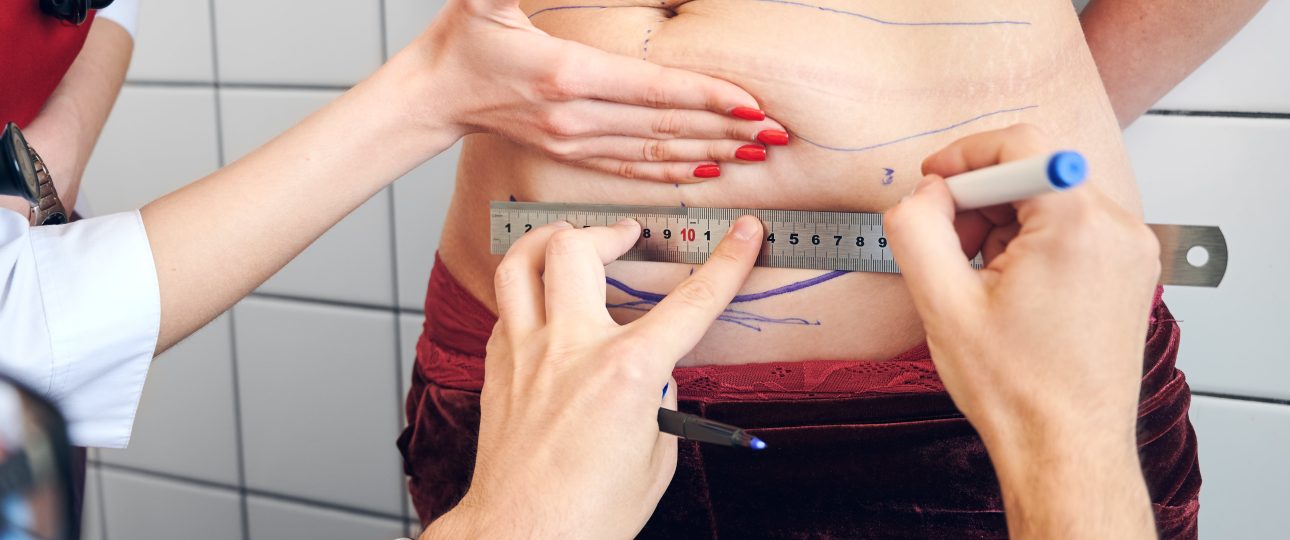
- Full Abdominoplasty: Addressing both the upper and lower abdominal quadrants, including significant umbilical repositioning.
- Extended (360) Tummy Tuck: A comprehensive approach that includes the flanks, ensuring a seamless transition of the abdominal contour around the entire waistline.
Precision Contouring: Vaser Technology and Fat Transfer
Achieving the “sculpted” look requires advanced subcutaneous manipulation. The evolution of liposuction has moved away from blunt force extraction toward high-definition precision. The integration of Vaser Liposuction has revolutionized the field, as this ultrasound-assisted technology allows for the selective emulsification of fat cells. This precision is critical for high-definition contouring with minimal bruising, preserving the microvasculates necessary for rapid healing.
When combined with BBL (Brazilian Butt Lift) fat transfer, the results move from mere reduction to true reconstruction. The harvested adipose tissue, processed via centrifugation to ensure high cell viability, is meticulously injected into the gluteal region to restore lost volume. This synergy between removal and augmentation is what defines the modern “advanced combination” approach.
The Standard of Care: Implants and Safety Benchmarks
In the realm of aesthetic reconstruction, particularly regarding the mammary glands, safety benchmarks are non-negotiable. A primary concern for patients undergoing a breast lift (mastopexy) or augmentation is the long-term biocompatibility and structural integrity of the implants. High-tier surgical hubs prioritize JCI (Joint Commission International) approved materials to mitigate the risks of capsular contracture or rupture.
“Safety in post-pregnancy restoration is predicated on the quality of the implant shell and the surgical precision of the pocket placement. We exclusively utilize industry-leading brands including Mentor, Motiva, or Polytech to ensure patient longevity and aesthetic naturalism.”
The technical complexity of a breast lift involves the repositioning of the nipple-areola complex (NAC) and the reduction of glandular tissue to counteract the effects of pregnancy-induced ptosis (sagging). When paired with augmentation, the goal is to restore the upper pole fullness that is often lost during breastfeeding.
Turkey: The Global Nexus for Surgical Excellence
The emergence of Turkey as the global hub for Mommy Makeovers is not a coincidence of cost, but a convergence of logistics, technology, and specialized expertise. The infrastructure is designed to support the delicate post-operative window, ensuring that the “flight home” is the final step of a meticulously managed medical itinerary.
The logistical framework is built around patient ease and clinical safety:
- Seamless Transit: All medical journeys are anchored by arrivals at major international hubs, specifically Istanbul (IST) or Antalya (AYT), with VIP private transfers from airport to clinic to minimize physical strain on the patient.
- Convalescence Environments: Post-operative care is centered in 5-star recovery suites with companion stay included, allowing for a supervised, low-stress environment essential for the initial inflammatory phase of healing.
- Pre-Surgical Accuracy: To ensure global accessibility, free online video assessments with board-certified plastic surgeons allow for precise preoperative planning and candidacy verification before the patient even departs.
Investment and Financial Transparency
A transparent understanding of the financial investment required for post-pregnancy restoration is vital for long-term planning. The following figures represent the standard market rates for high-end, integrated care in Turkey’s premier medical centers:
Core Procedure Costs:
- Tummy Tuck (Abdominoplasty): 3,000 – 5,000 USD
- Breast Lift (Mastopexy): 2,500 – 4,500 USD
- Liposuction (Per targeted area): 500 – 1,500 USD
- BBL (Fat Transfer): 3,500 – 5,500 USD
Comprehensive Packages:
- Standard Restoration Package: 4,500 – 7,500 USD
- Advanced Combination (Multi-area contouring): 8,000 – 12,000 USD
The Recovery Trajectory
Understanding the timeline of healing is essential for managing expectations. The physiological timeline for a Mommy Makeover is divided into two distinct phases: the acute clinical phase and the functional reintegration phase.
The initial recovery period requires 7-10 days in Turkey, during which the patient remains in a controlled, sedentary environment to allow the surgical incisions to stabilize and the edema (swelling) to begin its initial reduction. However, the biological remodeling of the fascia and the settling of the implants is a much longer process. Patients should anticipate a period of 6 weeks for full exercise return, ensuring that the internal sutures—particularly the abdominal fascia reinforcements—are not compromised by excessive intra-abdominal pressure.
The Quiet Transition: More Than Just a Flight
There is a specific, profound silence that accompanies the flight home following a transformative surgical journey. For many mothers, the “noise-cancelling headphones” mentioned in the title are more than a travel accessory; they are a psychological shield. They allow a period of introspective cocooning, providing the mental space needed to process the physical metamorphosis that has just occurred. This period of transit marks the bridge between the intensive clinical care received in Turkey and the reintegration into daily life at home.
This “quiet” period is essential. The flight back from Istanbul (IST) or Antalya (AYT) is often the first time a patient can reflect on the clinical precision of their procedure, away from the clinical environment, and begin the mental transition from “patient” to “newly empowered version of oneself.”
A Case Study in Restoration: The Journey of a Mother of Three
To understand the depth of this transformation, one must look beyond the surface aesthetics to the physiological reconstruction. Consider the case of a 34-year-old Irish mother of three, who sought a complete abdominal and breast reconstruction to address the structural changes caused by multiple pregnancies.
Her primary concern was not merely aesthetic; it was functional. She presented with significant Diastasis Recti—the separation of the rectus abdomin piece—which had compromised her core stability and postpartum physique. Her journey began not in an operating theatre, but through free online video assessments with board-certified plastic surgeons, allowing her to discuss the complexities of her anatomy from the comfort of her home in Ireland.
For this patient, a singular procedure would have been insufficient. The clinical objective was an advanced combination surgery. This multi-dimensional approach addressed skin laxity, fat redistribution, and muscle repair, providing a holistic structural reset that a simple liposuction could never achieve.
The Anatomy of a Combination Procedure: Technical Precision
The success of a high-level aesthetic transformation relies on the synergy of various surgical techniques. When executing an advanced combination, the surgeon must balance tissue tension, volume transfer, and skin integrity.
- Abdominal Reconstruction: Beyond simple skin excision, the focus was on Diastasis Recti repair. This involves a sophisticated internal corset suturing of the abdominal fascia. By tightening the underlying musculature, the surgeon restores the structural “wall” of the abdomen, providing much-needed core support. Depending on the patient’s needs, options include Full, Mini, or Extended (360) Tummy Tucks.
- High-Definition Contouring: To refine the flanks and waistline, Vaser Liposuction was utilized. Unlike traditional methods, Vaser uses ultrasound energy to emulsify fat cells before aspiration, allowing for high-definition contouring with minimal bruising and much more precise anatomical sculpting.
- Volume Transfer: To complement the abdominal tightening, a BBL (Brazilian Butt Lift) fat transfer was integrated, utilizing the harvested adipose tissue to create a seamless transition from the waist to the hips.
- Mammary Augmentation/Lift: To address breast ptosis (sagging), a breast lift was performed in conjunction with the use of JCI-approved implants. The choice of implant—whether Mentor, Motiva, or Polytech—is critical to ensuring long-term biocompatibility and aesthetic naturalism.
“The true artistry of combination surgery lies in the interplay of tension and volume; it is not about changing who the patient is, but restoring the structural integrity that was lost to time and childbirth.”
Navigating the Post-Operative Landscape: Logistics and Recovery
The patient journey is meticulously orchestrated to minimize physiological stress. The transition from the surgical suite to the recovery phase is handled via VIP private transfers from the airport directly to the care of the medical team. This seamless movement is vital for patients recovering from significant procedures like a 360 tummy tuck.
Post-operative care is centered around 5-star recovery suites, where companion stays are included to ensure the patient is never without support. This period of intensive aftercare typically lasts 7-10 days in Turkey, focusing on wound monitoring, lymphatic drainage, and pain management.
While the physical healing of the incisions may appear complete within weeks, the internal biological remodeling takes longer. Patients are advised that while they may return to light activities shortly, a 6-week period is required for a full return to strenuous exercise. This timeline is non-negotiable to ensure the integrity of the internal corset suturing and the stability of the fat grafts.
The Financial Architecture of Aesthetic Reconstruction
Understanding the investment required is a key component of the patient’s planning phase. While the cost varies based on the complexity of the surgical combination, the transparency of pricing allows for informed decision-making. Below is a breakdown of the typical investment for these transformative procedures:
- Standard Surgical Package: 4,500 – 7,500 USD
- Advanced Combination Surgery: 8,000 – 12,000 USD
- Tummy Tuck (Abdominoplasty): 3,000 – 5,000 USD
- Breast Lift (Mastopexy): 2,500 – 4,500 USD
- Liposuction (Per Area): 500 – 1,500 USD
- BBL (Fat Transfer): 3,500 – 5,500 USD
Uncompromising Safety: The JCI Standard
The foundation of the entire journey is the adherence to JCI (Joint Commission International) safety standards. For a patient undergoing a multi-stage combination surgery, the risk profile necessitates a clinical environment that meets the highest global benchmarks for surgical sterility, anesthesia monitoring, and patient identification. Every aspect of the procedure—from the JCI-approved implants to the sterilized Vaser technology—is audited to ensure that the “transformation” is matched by “safety.”
As the patient sits on that flight home, the noise-cancelling headphones serve a final purpose: they signal the end of the clinical chapter and the beginning of a new, reconstructed reality. The surgery is done; the healing has begun.
The Sensory Management of Post-Operative Travel
For many women returning home after a transformative procedure in Turkey, the journey from the clinic to the aircraft represents a critical phase of the recovery continuum. The use of noise-disrupting technology, specifically noise-cancelling headphones, has become a staple for the post-operative passenger. This is not merely a luxury; it is a strategic tool for managing the sympathetic nervous system during a period of heightened physiological sensitivity. Following complex procedures such as a tummy tuck (abdominoplasty) or BBL (Brazilian Butt Lift), the body is navigating significant inflammatory responses and cellular repair.
The sensory environment of a long-haul flight—characterized by cabin pressure fluctuations, ambient engine drone, and the movement of fellow passengers—can exacerbate post-surgical fatigue and even impact the perception of pain. By utilizing noise-cancelling technology, patients can maintain a controlled, low-stimulus environment, which is essential for reducing cortisol levels and promoting the parasympathetic state necessary for tissue healing. This “sensory cocooning” is particularly vital for those undergoing extensive body contouring, where the focus must remain on managing edema and maintaining comfort.
Navigating the Logistics of the Fly-Home Window
The transition from a recovery setting to international travel requires meticulous planning, often managed through the expert coordination of Cure Holiday specialists. The logistics of the “fly-home” window are designed to minimize physical strain. Most patients follow a structured timeline: a 7-cap-10 day period of intensive post-operative care within Turkey, followed by a period of observation before the return flight. This ensures that the initial inflammatory phase has stabilized and that the risk of immediate post-operative complications is minimized.
The logistical framework of a premium medical journey in Turkey is built upon seamless movement. This begins with VIP private transfers that bridge the gap between 5-star recovery suites and major international hubs such as Istanbul (IST) or Antalya (AYT). These transfers are not merely about transport; they are designed to ensure the patient remains in a reclined, stable position, preventing unnecessary abdominal pressure or strain on incision sites. For many, the inclusion of a companion stay in the recovery suite is a cornerstone of this logistical success, providing the necessary emotional and physical support during the first week of healing.
Technical Considerations: Pressure, Edema, and Tissue Integrity
From a clinical perspective, the flight home involves managing the physics of altitude. Changes in cabin pressure can influence interstitial fluid distribution, potentially leading to increased swelling (edema) in areas targeted by Vaser Liposuction. Because Vaser technology utilizes ultrasonic vibrations to emulsify fat for high-definition contouring with minimal bruising, the integrity of the subcutaneous tissue is high, yet the lymphatic system remains in a state of heightened activity. Managing this fluid shift is critical to preventing discomfort during the descent.
Furthermore, patients who have undergone Diastasis Recti repair—a procedure involving the internal corset suturing of the abdominal fascia—must be particularly mindful of intra-abdominal pressure. The compression of seatbelts and the physiological shifts associated with long-duration sitting can place undue stress on the newly repaired fascia. Therefore, the “post-op” travel kit often extends beyond headphones to include compression garments and specialized pillows to maintain the structural integrity of the surgical site.
For those receiving breast augmentation, the choice of implant is a key component of long-term stability. The use of JCI-approved implants, such as Mentor, Motiva, or Polytech, ensures that the weight and profile of the implant are compatible with the patient’s tissue elasticity. During flight, the primary concern is maintaining the stability of the implant pocket and preventing excessive tension on the incisions during the postural shifts common in economy or business class seating.
The 2026 Financial Landscape: Cost Breakdown and Value Projections
As we look toward the 2026 travel and medical landscape, the economic disparity between surgical costs in the UK/USA and Turkey continues to widen. The value proposition is not merely in the initial price point but in the comprehensive nature of the Turkish medical package, which often integrates high-end aftercare and luxury logistics into the primary cost.
To assist in long-term surgical planning, the following projections represent the expected market rates for 202able-period procedures:
- Standard Package (Comprehensive Care): 4,500 – 7,500 USD
- Advanced Combination (Multi-area contouring): 8,000 – 12,000 USD
- Tummy Tuck (Full, Mini, or Extended 360): 3,000 – 5,000 USD
- Breast Lift (Mastopexy): 2,500 – 4,500 USD
- Liposuction (Per targeted area): 500 – 1,500 USD
- BBL (Fat Transfer): 3,500 – 5,500 USD
When comparing these figures to the private healthcare costs in the UK or USA, the “all-inclusive” nature of the Turkish model—covering 5-star recovery suites, VIP transfers, and free online video assessments with board-certified plastic surgeons—provides a level of financial predictability that is often absent in domestic surgical journeys.
Post-Surgical Timeline and Physical Reintegration
The period following the flight home is just as critical as the surgery itself. While the physical departure from Turkey occurs within the first 10 days, the biological recovery continues for months. Patients must adhere to a strict movement protocol to ensure the success of the surgical outcome. While light walking is encouraged immediately to prevent Deep Vein Thrombosis (DVT), a 6 weeks period is required before a full return to exercise can be safely implemented.
This window is when the internal architecture of the body—specifically the internal corset suturing in abdominal repairs or the fat cell integration in BBL fat transfer—is most vulnerable to external mechanical stress. The ability to manage the “flight home” with tools like noise-cancelling headphones, specialized compression, and a seamless logistical transition, ensures that the patient enters this critical 6-week healing phase in the best possible physiological state.
“The success of a surgical outcome is measured not just in the operating theatre, but in the patient’s ability to navigate the transition from hospital to home with minimal physiological disruption.”
Considering a Mommy Makeover in Turkey? Get a Free Quote for your Why many Mums use “Noise-Cancelling Headphones” for the Flight Home Transformation with cureholiday.com
Free Consultation
Fill out the form below to get your free medical travel plan and price quote.
Sources and how to verify this yourself
- Ministry of Health, Regulation on International Health Tourism and Tourist Health, Official Gazette 26 April 2025, No. 32882 — authorisation requirement for facilities and intermediaries, TÜSKA accreditation, compulsory complication insurance (deadline 31 December 2025 for insurance, 31 December 2026 for accreditation). source
- Ministry of Health, Regulation on Promotion and Information Activities in Health Services, Official Gazette 12 November 2025, No. 33075 — treatment promises and guarantees are prohibited; price and campaign announcements are permitted only within international health tourism. source