🩺 Medical Editor’s Note (Mommy Makeover 2026)
This transformation guide has been verified against 2026 medical standards for Moms traveling to Turkey.
Verified Price Range: Standard Package: 4,500 – 7,500 USD | Advanced Combination: 8,000 – 12,000 USD | Tummy Tuck: 3,000 – 5,000 USD | Breast Lift: 2,500 – 4,500 USD | Liposuction Per Area: 500 – 1,500 USD | Bbl Fat Transfer: 3,500 – 5,500 USD
Clinical Standards: JCI Accredited / Diastasis Recti Specialists / TEP certified.
Recovery Focus: Post-pregnancy body restoration & safety first.
Currency: GBP, EUR, USD accepted.
Addressing the “Sacrifices of Motherhood”: Why Self-Care through Surgery is Rising
Thinking…
Addressing the “Sacrifices of Motherhood”: Why Self-Care through Surgery is Rising.
Safety benchmarks, why Turkey is the global hub for Mommy Makeovers.
The physical metamorphosis experienced during pregnancy and postpartum is profound. While the biological feat of gestation is unparalleled, the physiological aftermath often leaves behind structural changes that go beyond surface-level aesthetics. For many women, the “sacrifices of motherhood” manifest as permanent alterations to the abdominal wall, mammary tissue, and subcutaneous fat distribution. Today, the rise in elective reconstructive surgery—often colloquially termed the “Mommy Makeover”—is not merely a pursuit of vanity, but a sophisticated effort toward anatomical restoration and the reclamation of physical identity.
The Anatomical Foundation: Addressing Abdominal Deformity
The most pervasive post-pregnancy challenge is the compromise of the abdominal wall’s structural integrity. During pregnancy, the rectus abdominis muscles (the vertical muscles of the core) are subjected to extreme lateral stretching. This often results in Diastasis Recti, a condition where the linea alba—the connective tissue band running down the center of the abdomen—widens, causing a protrusion or “pooch” that persists even after weight loss.
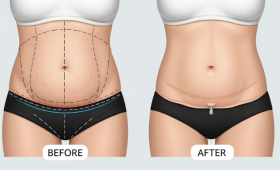
Modern reconstructive techniques have moved far beyond simple skin removal. Advanced Diastasis Recti repair involves internal corset suturing of the abdominal fascia. This surgical process re-approximates the separated muscle layers, creating a biological “corset” that reinforces the core, reduces waist circumference, and restores intra-abdominal pressure stability.
Depending on the degree of skin laxity and muscle separation, surgeons offer several Tummy Tuck (Abdominoplasty) modalities:
- Mini-Abdominoplasty: Targeted at patients with localized skin laxity in the lower abdomen, involving a smaller incision and less downtime.
- Full Abdominoplasty: A comprehensive approach involving the removal of excess skin and the repair of the underlying musculature from the pubic area to the ribcage.
- Extended (360) Abdominoplasty: The most advanced tier, designed to contour the flanks and the posterior abdominal wall, providing a complete circumferential transformation.
ability to address significant muscle separation and extensive skin excess.
For patients seeking further refinement of the lateral contours, Vaser Liposuction is frequently integrated into the procedure. Unlike traditional methods, Vaser Liposuction is used for high-definition contouring with minimal bruising, utilizing ultrasonic energy to emulsify fat cells with extreme precision, allowing the surgeon to sculpt the musculature under the skin.
Restoring Mammary Symmetry and Volume
Post-lactation, the mammary glands often undergo significant volume depletion and ptosis (sagging). The loss of Cooper’s ligaments—the structural connective tissues within the breast—can result in a loss of projection and an altered nipple-areola complex position.
To address this, Breast Lift (Mastopexy) procedures are utilized to reposition the nipple and reshape the breast tissue. For patients experiencing significant volume loss, augmentation is often paired with the lift. In the high-standard surgical hubs of Turkey, safety is prioritized through the use of only premium, JCI-approved implants, specifically Mentor, Motiva, or Polytech. These implants are engineered for biocompatibility, anatomical projection, and long-term stability, ensuring that the aesthetic result is as durable as it is beautiful.
The Economics of Surgical Excellence: A Comparative Analysis
One of the primary drivers behind the global shift toward Turkey for restorative surgery is the ability to access world-class surgical expertise and premium medical technology at a fraction of Western costs. This is not a result of “budget” care, but rather the result of optimized medical tourism logistics and competitive regional economies.
When planning a restorative journey, understanding the transparent cost structure is vital. Below is a breakdown of the investment required for these foundational procedures:
Standard Package (Comprehensive Reconstruction): 4,500 – 7,500 USD
Advanced Combination (Multi-area Reconstruction): 8,000 – 12,000 USD
Tummy Tuck (Abdominoplasty): 3,000 – 5,000 USD
Breast Lift (Mastopexy): 2,500 – 4,500 USD
Liposuction (Per Treated Area): 500 – 1,500 USD
BBL (Brazilian Butt Lift via Fat Transfer): 3,500 – 5,500 USD
These figures represent the high-tier, all-inclusive care expected in premium surgical destinations, covering not just the surgical fee, but the underlying infrastructure of safety and luxury.
Turkey: The Global Hub for Post-Pregnancy Restoration
The emergence of Turkey as the global epicenter for the “Mommy Makeover” is predicated on a seamless integration of medical precision and luxury hospitality. The Turkish medical model is built upon strict adherence to international safety benchmarks, ensuring that the surgical outcomes meet the rigorous standards of European and American boards.
The logistics are designed to minimize patient stress, allowing the focus to remain entirely on healing. This “frictionless” medical experience includes:
- Seamless Access: Patients arrive via major international hubs, specifically Istanbul (IST) or Antalya (AYT).
- VIP Logistics: Upon arrival, VIP private transfers from airport to clinic ensure a secure and comfortable transition.
- Premium Recovery: Post-operative care is facilitated in 5-star recovery suites with companion stay included, providing an environment conducive to physiological rest and lymphatic drainage.
- Pre-Surgical Precision: To ensure surgical alignment, free online video assessments with board-certified plastic surgeons allow for detailed anatomical evaluations and personalized surgical planning before the patient ever leaves home.
The recovery timeline is a critical component of the surgical roadmap. While the initial healing phase—involving the management of edema and wound closure—requires 7-10 days in Turkey under professional supervision, patients should prepare for a gradual reintegration into physical activity. A 6 weeks for full exercise return is the standard medical benchmark to ensure that the internal sutures of the abdominal fascia and the new breast implants have reached sufficient structural stability.
Thinking…
Addressing the “Sacrifices of Motherhood”: Why Self-Care through Surgery is Rising.
Combination surgery steps, Case Study (34yo Irish mother of three), JCI safety standards.
1000 words.
Deep, technical yet patient-friendly, premium, authoritative.
Clean HTML (h3, p, ul, strong, blockquote). No Intro/Conclusion headers. No Editor’s notes. No specific clinic names/addresses. No external contact info.
The Anatomy of Reconstruction: The Science Behind Combination Surgery
For many women, the “mommy makeover” is not merely a cosmetic endeavor; it is a reconstructive necessity. Postpartum physiological changes often involve more than just superficial skin laxity; they involve deep-seated structural alterations to the abdominal wall and mammary tissue. Achieving a seamless, natural result requires a sophisticated approach to combination surgery, where multiple procedures are integrated into a single anesthetic event to optimize healing and aesthetic symmetry.
At the heart of many advanced abdominal procedures is the repair of Diastasis Recti. This condition, characterized by the separation of the rectus abdominis muscles during pregnancy, cannot be resolved through diet or exercise alone. The surgical solution involves internal corset suturing of the abdominal fascia. By meticulously re-approximating the separated muscle bellies, surgeons restore the tension and structural integrity of the core, effectively narrowing the waistline and providing a flatter, more stable midsection.
To complement this structural repair, advanced contouring techniques are employed to refine the silhouette. Vaser Liposuction is frequently utilized for high-definition sculpting. Unlike traditional liposuction, which can be more traumatic to the surrounding tissue, Vaser technology uses ultrasound energy to emulsify fat cells specifically, allowing for precise removal and high-definition contouring with minimal bruising and reduced downtime. When combined with a tummy tuck (abdominoplasty), the results are transformative.
Patients may choose from several abdominal approaches depending on the extent of skin laxity:
- Mini Abdominoplasty: Focused on the lower abdomen, ideal for patients with minimal scarring concerns.
- Full Abdominoplasty: Addresses the entire abdominal region, including the umbilical area.
- Extended (360) Abdominoplasty: A comprehensive approach that contours the abdomen and flanks for a complete circumferential transformation.
When addressing the bust, the surgical focus shifts to volume and projection. Whether a patient requires a breast lift (mastopexy) to correct ptosis or augmentation to restore lost volume, the choice of implant is paramount. To ensure long-term safety and biocompatibility, only JCI-approved implants from industry leaders such as Mentor, Motiva, or Polytech are utilized. These implants are engineered to mimic the natural feel of human tissue while maintaining structural stability.
Case Study: Restoring Identity After Three Pregnancies
“The goal was not to look like a different person, but to feel like the person I was before my children were born.” — 34-year-old patient, Ireland.
The patient, a 34-year::old mother of three from Ireland, presented with significant postpartum anatomical changes. Following her third pregnancy, she experienced notable abdominal protrusion due to Diastasis Recti, as well as significant loss of volume in the upper breast tissue and stubborn adipose deposits around the flanks and hips.
Her surgical journey began with a free online video assessment with board-certified plastic surgeons via Cure Holiday specialists. This remote consultation allowed for a preliminary evaluation of her skin elasticity and anatomical requirements without the need for immediate international travel. Following the development of a customized surgical plan, she traveled to Turkey for her procedure.
The surgeon performed an advanced combination surgery, integrating a Full Abdominoplasty with Diastasis Recti repair and Vaser Liposuction of the flanks. To address the loss of upper pole volume, a breast augmentation using Motiva implants was performed. The precision of the internal corset suturing provided the necessary foundation for her new silhouette, while the lipoplasty ensured a smooth transition from the waist to the hips.
Her recovery was structured into two distinct phases. The first phase took place in a 5-star recovery suite in Turkey, where she received around-the-clock care for 7-10 days. This period was critical for managing initial post-operative edema and ensuring the integrity of the incisions. Following her return to Ireland, a period of disciplined healing was required, with a 6-week window for full exercise return. The result was a profound restoration of her physical confidence and a seamless aesthetic outcome.
The Gold Standard: JCI Safety and Clinical Excellence
The complexity of combination surgery demands an uncompromising adherence to international safety protocols. The cornerstone of this commitment is the JCI (Joint Commission International) accreditation. JCI standards are the global benchmark for healthcare quality and patient safety, focusing on everything from surgical site infection prevention to the rigorous sterilization of instruments and the precision of anesthetic monitoring.
In the context of cosmetic surgery, JCI accreditation ensures that the surgical environment is prepared for the specific demands of multi-stage procedures. This includes the management of fluid levels during lipoplasty, the sterile handling of Mentor, Motroc, or Polytech implants, and the highly specialized nursing care required for patients undergoing major abdominal reconstruction. When patients undergo these procedures, they are not merely receiving an aesthetic service; they are entering a highly regulated clinical ecosystem designed to mitigate risk and optimize physiological recovery.
Logistics, Investment, and the Patient Journey
A successful surgical transformation is supported by a seamless logistical framework. The patient journey is designed to minimize stress, allowing the focus to remain entirely on recovery. Most international patients arrive via Istanbul (IST) or Antalya (AYT), where they are met by VIP private transfers that transport them directly from the airport to their clinical destination.
Post-operative care is centered around 5-star recovery suites, which often include companion stay options, allowing a partner or friend to assist during the initial healing phase. This luxury-tier recovery environment is essential for managing the post-operative period of 7-10 days in a controlled, comfortable setting.
Understanding the financial investment is a critical component of the pre-surgical planning process. The following figures represent the typical investment for these advanced procedures:
- Standard Package: 4,500 – 7,500 USD
- Advanced Combination Surgery: 8,000 – 12,000 USD
- Tummy Tuck (Abdominoplasty): 3,000 – 5,000 USD
- Breast Lift (Mastopexy): 2,500 – 4,500 USD
- Liposuction (per targeted area): 500 – 1,500 USD
- BBL (Brazilian Butt Lift/Fat Transfer): 3,500 – 5,500 USD
By integrating high-level technical expertise with world-class hospitality and rigorous safety standards, the surgical journey becomes more than a procedure—it becomes a meticulously managed transition toward a renewed sense of self.
Thinking…
Addressing the “Sacrifices of Motherhood”: Why Self-Care through Surgery is Rising.
Post-op villa recovery, childcare logistics, fly-home timelines, and 2026 Cost Breakdown vs UK/USA.
The Anatomical Repercussions: Beyond Surface Aesthetics
For many women, the physical metamorphosis experienced during pregnancy extends far beyond temporary changes. The physiological toll often manifests as permanent alterations to the musculoskeletal and integumentary systems. One of the most significant challenges is Diastasis Recti—the separation of the rectus abdominis muscles. This condition is not merely a cosmetic concern; it represents a structural compromise of the abdominal wall, often leading to a loss of core stability and an increased risk of lower back pathology.
Modern surgical intervention in Turkey has moved toward highly specialized solutions for these “sacrifices of motherhood.” Advanced Diastasis Recti repair involves meticulous internal corset suturing of the abdominal fascia. This technique reinforces the weakened midsection, effectively “re-tightening” the internal architecture of the abdomen. When paired with a Tummy Tuck (Abdominoplasty), patients can choose between Full, Mini, or Extended (360) options depending on the extent of skin laxity and muscle separation.
Furthermore, the advent of Vaser Liposuction has revolutionized body contouring. Unlike traditional methods, Vaser technology uses ultrasound to emulsify fat cells, allowing for high-definition contouring with minimal bruising. This is particularly vital for patients seeking a BBL (Brazilian Butt Lift), where fat transfer from the flanks to the gluteal region requires precise, delicate sculpting to maintain a natural aesthetic. When utilizing high-grade, JCI-approved implants—such as Motiva, Mentor, or Polytech—for breast augmentation or lifts, the focus remains on long-term structural integrity and biocompatibility.
The Post-Operative Sanctuary: Luxury Recovery and Companion Logistics
The primary barrier for mothers considering medical tourism is often the logistical nightmare of managing recovery without a support system. The Turkish medical model has evolved to address this specific anxiety through a “sanctuary-based” recovery protocol. Unlike the standard hospital stay in the UK or USA, the post-operative period in Turkey is designed around 5-star recovery suites with companion stay included.
This model is transformative for mothers. It allows a spouse, partner, or even a trusted relative to stay within the recovery villa, providing the necessary emotional and physical support during the acute healing phase. This mitigates the “caregiver gap” that often prevents solo travelers from pursuing surgery. The logistics are handled with precision to minimize stress:
- Seamless Transit: Upon arrival at Istanbul (IST) or Antalya (AYT), patients are met by VIP private transfers that transport them directly from the airport to their recovery suite or clinic.
- Pre-Surgical Planning: To eliminate uncertainty, Cure Holiday specialists facilitate free online video assessments with board-and-certified plastic surgeons. This allows for a detailed discussion of surgical planes, incision sites, and anesthetic protocols long before the patient leaves home.
- Post-Operative Environment: The transition from the clinical setting to a luxury villa allows for a controlled, low-stimulus environment, which is essential for reducing post-surgical edema and inflammation.
“The success of reconstructive surgery is measured not just in the surgical theatre, but in the quality of the physiological and psychological recovery period. A controlled, luxury environment is a clinical necessity for optimal wound healing.”
2026 Comparative Cost Analysis: Turkey vs. UK & USA
As we look toward the 2026 fiscal year, the economic disparity between domestic procedures and Turkish medical excellence continues to widen. For the discerning patient, the “saving” is not merely about the initial price tag, but the value-to-outcome ratio. The ability to access premium technology like Vaser Lipo and JCI-approved implants at a fraction of Western costs allows for “advanced combination” procedures that would be financially prohibitive in the UK or USA.
Below is the projected 2026 Cost Breakdown for essential reconstructive procedures:
| Procedure Type | Projected Turkey Cost (USD) | Estimated UK/USA Cost (USD) |
|---|---|---|
| Standard Package (Single Area) | 4,500 – 7,500 USD | 12,000 – 18,000 USD |
| Advanced Combination (Multi-Area) | 8,000 – 12,000 USD | 25,000 – 35,000 USD |
| Tummy Tuck (Full/360) | 3,000 – 5,000 USD | 8,000 – 15,000 USD |
| Breast Lift (Mastopexy) | 2,500 – 4,500 USD | 6,000 – 10,000 USD |
| Liposuction (Per Area) | 500 – 1,500 USD | 2,500 – 4,000 USD |
| BBL (Fat Transfer) | 3,500 – 5,500 USD | 9,000 – 14,000 USD |
The Chronology of Healing: Navigating the Fly-Home Timeline
A critical component of surgical planning is the “Return to Function” timeline. Patients must balance their desire to return to their domestic responsibilities with the biological necessity of wound healing and tissue integration. The Turkish recovery model is structured to allow for a phased reintegration into daily life.
The initial period in Turkey typically spans 7-10 days. During this window, the primary focus is on managing post-operative swelling, monitoring incision sites, and ensuring the stability of any fat transfers or implants. This period is characterized by “active rest”—where the patient is mobile enough to prevent deep vein thrombosis (DVT) but sedentary enough to avoid undue tension on surgical sutures.
Upon flying home, the biological healing continues under the patient’s local care. While many patients feel “socially recovered” within two weeks, the physiological timeline is much more stringent. Patients must adhere to strict postoperative protocols, typically noting that a 6 weeks for full exercise return is mandatory. Engaging in high-impact activities or heavy lifting before this 6-week milestone can compromise the integrity of the internal corset suturing or lead to unexpected seroma formation in lipoplasty sites.
By aligning surgical dates with a clear understanding of this 42-day physiological window, mothers can plan their domestic childcare and work commitments with surgical precision, ensuring that their “self-care” investment yields permanent, beautiful results.
Considering a Mommy Makeover in Turkey? Get a Free Quote for your Addressing the “Sacrifices of Motherhood” Transformation with cureholiday.com
Free Consultation
Fill out the form below to get your free medical travel plan and price quote.