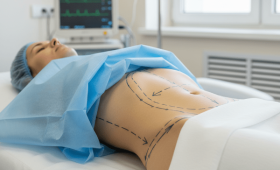
Cost and planning note (Mommy Makeover 2026)
The figures below are indicative market ranges, not a quote: your own price is confirmed after a clinical assessment.
Indicative price range: Standard Package: 4,500 – 7,500 USD | Advanced Combination: 8,000 – 12,000 USD | Tummy Tuck: 3,000 – 5,000 USD | Breast Lift: 2,500 – 4,500 USD | Liposuction Per Area: 500 – 1,500 USD | Bbl Fat Transfer: 3,500 – 5,500 USD
Facility standards: In Türkiye, any facility treating international patients must hold the Ministry of Health’s international health tourism authorisation; hospitals and medical centres must also be accredited by TÜSKA, and complication insurance is compulsory for procedures carried out in an operating theatre (Regulation of 26 April 2025).
Recovery Focus: Post-pregnancy body restoration & safety first.
Currency: GBP, EUR, USD accepted.
Managing Blood Clot Risk during Long-Haul Flights after a Mommy Makeover
Managing Blood Clot Risk During Long-Haul Flights After a Mommy Makeover
Following a comprehensive Mommy Makeover – encompassing procedures like tummy tuck (abdominoplasty), breast lift (mastopexy), and Diastasis Recti repair – patients often experience a period of physiological vulnerability. A significant concern during the recovery process, particularly for those traveling internationally, is the risk of venous thromboembolism (VTE), encompassing deep vein thrombosis (DVT) and pulmonary embolism (PE). This pillar focuses specifically on mitigating these risks when undertaking long-haul flights as part of post-operative recovery, acknowledging the growing popularity of medical tourism for Mommy Makeover procedures.
The Physiological Landscape Post-Mommy Makeover & VTE Risk
A Mommy Makeover, while profoundly restorative, represents a considerable surgical event. Procedures like abdominoplasty involve significant tissue dissection and manipulation, activating the coagulation cascade. Diastasis Recti repair, with its internal corset suturing of the abdominal fascia (as per our technical specifications), further contributes to this pro-thrombotic state. Breast lifts, especially those incorporating implant placement (using Mentor, Motiva, or Polytech implants – JCI approved), introduce a degree of surgical trauma that elevates baseline VTE risk. The combined effect of these procedures, often performed concurrently within a standard package costing between 4,500 – 7,500 USD or an advanced combination for 8,000 – 12,000 USD, necessitates meticulous preventative measures.
Prolonged immobility, characteristic of long-haul flights, exacerbates this risk. Venous stasis – the slowing or cessation of blood flow – occurs when leg muscles aren’t actively contracting to assist venous return. This stasis allows clotting factors to accumulate, increasing the likelihood of thrombus formation. Coupled with endothelial injury (caused by surgery) and hypercoagulability (a natural post-operative response), the potential for DVT significantly rises.
Pre-Flight Medical Evaluation & Risk Stratification
Prior to booking travel, a thorough medical evaluation is paramount. This isn’t simply a routine check-up; it’s a comprehensive assessment to identify individual risk factors. These include pre-existing conditions (such as a personal or family history of VTE, obesity, or inherited thrombophilias), medication usage (hormonal contraception, for example), and the specific surgical procedures undertaken. Surgeons should utilize validated risk stratification scores, such as the Caprini score, to objectively assess a patient’s VTE probability.
For those undergoing procedures involving significant abdominal work (tummy tuck, Diastasis Recti repair), extended recovery periods and careful consideration of travel timing are crucial. The standard recovery timeline is 7-10 days in Turkey, with a full return to exercise taking approximately 6 weeks. Flights should ideally be postponed until at least 10-14 days post-operatively to allow initial wound healing and reduce immediate surgical risk.
In-Flight Strategies for VTE Prevention
Once cleared for travel, a multi-faceted approach to VTE prevention during the flight is essential:
- Pharmacoprophylaxis: Low-molecular-weight heparin (LMWH) is the gold standard for VTE prophylaxis in high-risk surgical patients. However, its use requires careful consideration due to potential bleeding risks post-surgery. The surgeon will determine if LMWH is appropriate and prescribe the correct dosage and duration.
- Mechanical Prophylaxis: Graduated compression stockings (GCS) – specifically, waist-high, 20-30 mmHg compression – are non-pharmacological alternatives or adjuncts to LMWH. They enhance venous return by applying external pressure, reducing venous pooling. These should be worn consistently throughout the flight.
- Frequent Movement & Hydration: Patients must actively mobilize within the aircraft cabin at least once every 1-2 hours. This includes walking the aisle or performing seated calf muscle exercises (dorsiflexion and plantarflexion). Dehydration thickens the blood, increasing VTE risk. Consuming ample fluids – avoiding caffeinated beverages and alcohol – is critical.
- Proper Seating: Whenever possible, select an aisle seat to facilitate easier movement. Avoid crossing legs for extended periods, as this can impede venous flow.
Post-Flight Monitoring & Red Flag Symptoms
VTE symptoms can be subtle and easily overlooked. Patients should be educated about the warning signs of both DVT and PE. DVT symptoms include unilateral leg pain, swelling, warmth, and redness. PE symptoms include sudden onset of shortness of breath, chest pain, coughing up blood, and rapid heartbeat.
Following a long-haul flight, patients should actively monitor for these symptoms for at least 7-10 days. Any suspicion of VTE requires immediate medical attention. Cure Holiday specialists can provide guidance on accessing appropriate medical care in the patient’s home country. It’s important to note that Vaser Liposuction, utilized for high-definition contouring with minimal bruising, doesn’t negate the overall post-surgical VTE risk profile, and preventative measures remain vital.
The Turkey Advantage & Logistical Considerations
Turkey has emerged as a leading global destination for Mommy Makeovers, driven by a combination of highly skilled surgeons, competitive pricing (a tummy tuck can range from 3,000 – 5,000 USD, a breast lift from 2,500 – 4,500 USD), and comprehensive care packages. Our logistical framework – including arrival at either Istanbul (IST) or Antalya (AYT) airport, accommodation in 5-star recovery suites with companion stay, and VIP private transfers from airport to clinic – is designed to streamline the patient experience.
However, the extended travel involved necessitates heightened awareness of VTE risks. The offered free online video assessments with board-certified plastic surgeons include a detailed discussion of potential complications, including VTE, and personalized recommendations for preventative strategies. Furthermore, the 7-10 days recovery period within the controlled environment of a Turkish recovery suite allows for initial post-operative monitoring and intervention before undertaking a long journey home. Procedures like BBL fat transfer (3,500 – 5,500 USD) are often included in comprehensive packages, further emphasizing the importance of proactive VTE management.
By adhering to these guidelines, patients can significantly minimize their risk of VTE and ensure a safe and comfortable recovery following their Mommy Makeover procedure.
The Surgical Transformation & Patient Journey: A Deep Dive into the Mommy Makeover
The “Mommy Makeover” is a popular term encompassing a tailored combination of surgical procedures designed to restore a woman’s pre-pregnancy body contours. At Cure Holiday, we approach this not as a single operation, but as a meticulously planned surgical journey, prioritizing patient safety and aesthetic excellence. This pillar focuses on the technical aspects of the procedure and the post-operative protocols, with a particular emphasis on mitigating risks associated with travel, specifically long-haul flights.
Understanding the Combination Surgery
The ideal Mommy Makeover is highly individualized, built around addressing the specific changes experienced after childbirth. Common components include abdominoplasty (tummy tuck), mastopexy (breast lift), and liposuction – frequently coupled with autologous fat transfer to the buttocks (Brazilian Butt Lift or BBL). The complexity of the surgery dictates the cost, ranging from a standard package of 4,500 – 7,500 USD to more advanced combinations costing 8,000 – 12,000 USD. A simple tummy tuck procedure can range from 3,000 – 5,000 USD, a breast lift from 2,500 – 4,500 USD, and liposuction, priced per treated area, is typically 500 – 1,500 USD. Adding a BBL fat transfer elevates the cost to 3,500 – 5,500 USD.
The surgical sequence is crucial. Typically, the procedure begins with liposuction utilizing Vaser Liposuction technology. This ultrasonic technique selectively targets and emulsifies fat cells, allowing for precise contouring and minimizing trauma to surrounding tissues, leading to reduced bruising and faster recovery. The harvested fat may then be processed and prepared for transfer during the BBL portion of the surgery, if applicable. Following liposuction and/or fat transfer, attention turns to the abdominal wall.
Diastasis Recti, the separation of the rectus abdominis muscles, is commonly addressed through an internal corset suturing technique, effectively tightening and restoring the abdominal fascia. This provides a stable foundation for the subsequent skin tightening performed during the abdominoplasty. The choice of abdominoplasty – full, mini, or extended (360) – depends on the extent of skin laxity and muscle separation. Finally, breast augmentation and/or mastopexy are performed, utilizing JCI-approved breast implants from reputable manufacturers such as Mentor, Motiva, or Polytech. Implant selection is a collaborative process between the patient and the surgeon, considering factors such as desired size, projection, and implant profile.
Case Study: A 34-Year-Old Irish Mother of Three
Consider the case of a 34-year-old Irish mother of three. Following three pregnancies, she presented with significant diastasis recti, excess abdominal skin, and ptotic (drooping) breasts. Her goals were to restore her pre-pregnancy physique and improve her self-confidence. After comprehensive evaluation and online video consultation, a customized plan was devised: extended abdominoplasty with rectus abdominis repair, mastopexy with moderate-volume implants, and liposuction of the flanks.
Intraoperatively, meticulous attention was paid to vascular preservation and hemostasis. The extended abdominoplasty allowed for addressing skin redundancy across the entire abdominal wall and sculpting the waistline. The mastopexy was performed utilizing a short-scar technique to minimize visible scarring. Postoperatively, she was closely monitored for signs of complications, including seroma formation, wound dehiscence, and hematoma. Compressive garments were applied immediately to minimize swelling and optimize skin retraction.
Mitigating Venous Thromboembolism (VTE) Risk & Travel Considerations
A critical aspect of the post-operative journey, particularly for patients undergoing a Mommy Makeover, is the management of venous thromboembolism (VTE) risk. Prolonged immobility, such as experienced during long-haul flights, significantly increases the risk of deep vein thrombosis (DVT) and pulmonary embolism (PE). We employ a multi-faceted approach to minimize this risk.
- Pharmacoprophylaxis: Low-molecular-weight heparin (LMWH) is typically administered preoperatively and continued for a specified period postoperatively, based on individual risk factors.
- Mechanical Prophylaxis: Graduated compression stockings are mandatory during and immediately after surgery, promoting venous return and reducing stasis.
- Hydration: Maintaining adequate hydration is paramount. Patients are encouraged to drink plenty of fluids pre-, intra-, and postoperatively.
- In-Flight Protocols: Patients are advised to avoid crossing their legs, perform regular ankle pumps and calf stretches during the flight, and ambulate within the cabin every 2-3 hours.
- Delayed Travel: We strongly recommend a minimum of 7-10 days of recovery in Turkey, allowing for initial wound healing and stabilization of the patient before undertaking long-haul travel. Complete return to full exercise is generally advised after 6 weeks.
The timing of international travel is carefully considered. Traveling too soon after surgery increases the risk of complications. Our post-operative care protocol includes detailed instructions regarding wound care, medication management, and activity restrictions. We emphasize the importance of adhering to these guidelines to ensure optimal healing and minimize the risk of VTE. We also recommend that patients discuss their travel plans with their surgeon to address any specific concerns.
Adherence to JCI Safety Standards
Patient safety is non-negotiable. All surgical procedures are performed in accredited facilities adhering to stringent Joint Commission International (JCI) standards. This includes rigorous protocols for infection control, anesthesia monitoring, surgical technique, and post-operative care. The JCI accreditation signifies a commitment to delivering high-quality, patient-centered care.
Furthermore, our surgeons are board-certified plastic surgeons with extensive experience in performing Mommy Makeovers. They prioritize patient education and informed consent, ensuring that patients have a thorough understanding of the procedure, potential risks, and expected outcomes. Free online video assessments are offered to facilitate initial consultations and address preliminary questions.
The entire patient journey is carefully orchestrated, from VIP private transfers from the airport (Istanbul (IST) or Antalya (AYT)) to comfortable accommodation in 5-star recovery suites with companion stay included. We strive to create a supportive and stress-free environment, allowing patients to focus on their recovery and achieve the best possible results.
Managing Blood Clot Risk During Long-Haul Flights After a Mommy Makeover
Following a comprehensive “Mommy Makeover” – a combination of procedures designed to restore pre-pregnancy body contours – careful post-operative management is paramount. A significant concern for patients electing to undergo these procedures in Turkey, and subsequently undertaking long-haul flights home, is the risk of venous thromboembolism (VTE), encompassing deep vein thrombosis (DVT) and pulmonary embolism (PE). This pillar details the specific strategies to mitigate these risks, focusing on the physiological impacts of surgery, flight conditions, and recommended preventative measures, all within the context of our post-operative recovery programs in Turkey.
Physiological Considerations Post-Mommy Makeover
A Mommy Makeover, often involving procedures such as abdominoplasty (tummy tuck), mastopexy (breast lift), liposuction, and/or gluteal fat transfer (Brazilian Butt Lift – BBL), creates a pro-thrombotic state. This means the body’s natural mechanisms for preventing blood clot formation are temporarily suppressed. Several factors contribute to this. Surgical trauma induces inflammation, activating the coagulation cascade – the series of enzymatic reactions leading to clot formation. Prolonged immobility during and after surgery further exacerbates this, reducing venous return and causing blood stasis, a key component of Virchow’s Triad (stasis, hypercoagulability, and endothelial injury) which predisposes to VTE.
Specifically, diastasis recti repair, a common component of abdominoplasty, involves internal corset suturing of the abdominal fascia. While structurally sound, this initial restriction of abdominal muscle movement can subtly reduce lymphatic drainage and contribute to post-operative swelling, potentially impacting lower limb circulation. Similarly, Vaser Liposuction, while minimizing bruising, involves disruption of subcutaneous tissue and vasculature, triggering an inflammatory response and transiently increasing clotting factors. The use of breast implants – Mentor, Motiva, or Polytech (JCI approved) – doesn’t directly increase VTE risk, but the positioning and post-operative discomfort can contribute to immobility.
The Impact of Long-Haul Flight
Air travel compounds the risk factors inherent in post-operative recovery. Cabin air is dry, leading to dehydration and increased blood viscosity. The reduced cabin pressure also impacts venous oxygen saturation, potentially encouraging clot formation. Most critically, prolonged sitting in a confined space significantly impairs venous return in the lower extremities. This stasis is the most significant risk factor during long flights.
Patients returning from procedures performed in Turkey typically face flights lasting 8-14+ hours, depending on their origin (UK/USA). This duration necessitates a proactive and multi-faceted approach to VTE prevention. Simply “getting up and walking around” is insufficient, particularly in the immediate post-operative period.
Preventative Strategies Incorporated into Our Recovery Programs
Our post-operative recovery protocol in Turkey, integral to packages ranging from standard (4,500 – 7,500 USD) to advanced combinations (8,000 – 12,000 USD), incorporates several key preventative measures:
- Pharmacoprophylaxis: Patients will be assessed for individual risk factors, and prophylactic low molecular weight heparin (LMWH) may be prescribed. LMWH enhances antithrombin III activity, inhibiting several coagulation factors. The duration of LMWH administration is determined by the surgical procedures performed (e.g., a BBL with full tummy tuck necessitates a longer course than a breast lift alone) and the length of the flight. This will be detailed in a personalized post-op instruction document.
- Graduated Compression Stockings (GCS): We provide medical-grade GCS, to be worn throughout the recovery period in Turkey and *mandatory* during the flight home. These stockings exert a graduated pressure on the lower limbs, improving venous return and reducing stasis. Proper fitting is crucial; our nursing staff will ensure correct application.
- Hydration: Adequate fluid intake is essential. We emphasize the importance of drinking water throughout the recovery period and encourage patients to continue this on the flight. Dehydration thickens the blood, increasing the risk of clot formation.
- In-Flight Exercises: Patients are instructed on performing simple calf muscle exercises and ankle pumps during the flight. These movements activate the “muscle pump,” assisting venous return. We provide illustrated guides detailing these exercises.
- Early Mobilization (Within Turkey Stay): The 7-10 day recovery period in our 5-star recovery suites is designed to facilitate gradual mobilization. Patients are encouraged to undertake short walks within the suite and, when medically cleared, to explore the hotel grounds. This pre-flight mobilization is vital.
- Dietary Considerations: A diet rich in bromelain (found in pineapple) is encouraged, as bromelain possesses mild anti-inflammatory properties.
Procedure-Specific Considerations & Cost Variations
The risk profile varies depending on the specific procedures undertaken. A full tummy tuck (3,000 – 5,000 USD) carries a higher VTE risk compared to a mini abdominoplasty due to the greater extent of surgical dissection. Similarly, a BBL fat transfer (3,500 – 5,500 USD) is associated with a slightly increased risk due to the potential for fat emboli and the prolonged immobility required for proper graft uptake. A breast lift (2,500 – 4,500 USD) poses a lower risk, though preventative measures remain crucial.
Liposuction, priced per area (500 – 1,500 USD), necessitates particular attention to hydration and GCS usage, as it disrupts lymphatic drainage and can contribute to swelling. Post-operative swelling, while a normal part of recovery, can exacerbate the risk of DVT if left unaddressed.
Post-Flight Monitoring & Warning Signs
Upon arrival home, patients are advised to continue wearing GCS for a specified period, as outlined in their post-operative instructions. They are also instructed to monitor for warning signs of VTE, including:
- Unilateral leg swelling, pain, or tenderness
- Warmth or redness in the affected leg
- Shortness of breath
- Chest pain
- Coughing up blood
Any of these symptoms require immediate medical attention. We provide detailed instructions on accessing local healthcare resources in the patient’s home country. A full return to exercise is not permitted for 6 weeks following surgery, and any premature activity increases risk and should be avoided.
The combination of meticulous surgical technique, comprehensive post-operative care within our Turkish recovery program, and proactive VTE prevention strategies significantly minimizes the risk of complications associated with long-haul flights.
Considering a Mommy Makeover in Turkey? Get a Free Quote for your Managing Blood Clot Risk during Long-Haul Flights after a Mommy Makeover Transformation with cureholiday.com
Free Consultation
Fill out the form below to get your free medical travel plan and price quote.
Sources and how to verify this yourself
- Ministry of Health, Regulation on International Health Tourism and Tourist Health, Official Gazette 26 April 2025, No. 32882 — authorisation requirement for facilities and intermediaries, TÜSKA accreditation, compulsory complication insurance (deadline 31 December 2025 for insurance, 31 December 2026 for accreditation). source
- Ministry of Health, Regulation on Promotion and Information Activities in Health Services, Official Gazette 12 November 2025, No. 33075 — treatment promises and guarantees are prohibited; price and campaign announcements are permitted only within international health tourism. source