Cost and planning note (Mommy Makeover 2026)
The figures below are indicative market ranges, not a quote: your own price is confirmed after a clinical assessment.
Indicative price range: Standard Package: 4,500 – 7,500 USD | Advanced Combination: 8,000 – 12,000 USD | Tummy Tuck: 3,000 – 5,000 USD | Breast Lift: 2,500 – 4,500 USD | Liposuction Per Area: 500 – 1,500 USD | Bbl Fat Transfer: 3,500 – 5,500 USD
Facility standards: In Türkiye, any facility treating international patients must hold the Ministry of Health’s international health tourism authorisation; hospitals and medical centres must also be accredited by TÜSKA, and complication insurance is compulsory for procedures carried out in an operating theatre (Regulation of 26 April 2025).
Recovery Focus: Post-pregnancy body restoration & safety first.
Currency: GBP, EUR, USD accepted.
The Importance of “Gentle Stretching” once Discharged by your Surgeon
The Physiological Foundation of Post-Pregnancy Reconstruction
The transition from the surgical theater to the rehabilitation phase is a delicate period of biological restructuring. For patients undergoing a “Mommy Makeover,” the surgical objectives are not merely aesthetic; they are foundational. The structural integrity of the abdominal wall and the anatomical symmetry of the breasts are reconstructed through precise, high-level surgical interventions designed to reverse the physiological changes of pregnancy.
A primary component of this restoration is the repair of Diastasis Recti. This condition, characterized by the separation of the rectus abdominis muscles, requires more than superficial skin tightening. The surgical standard involves internal corset suturing of the abdominal fascia. By re-approximating the separated muscle bellies, the surgeon restores the tension of the midline, providing a stable, flat abdominal profile and strengthening the core’s functional capacity. Depending on the extent of skin laxity and muscle separation, patients may undergo a Full, Mini, or Extended (360) Tummy Tuck.
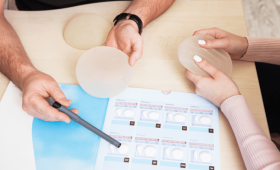
Complementing this abdominal reconstruction is the breast lift (mastopexy), which addresses ptosis (sagging) often incurred during breastfeeding and weight fluctuations. To achieve long-lasting projection and volume, the use of high-tier, JCI-approved implants is paramount. Surgeons typically utilize Mentor, Motiva, or Polytech implants to ensure biocompatibility and anatomical stability. When these procedures are combined with liposuction, the result is a comprehensive physical realignment.
Precision Contouring: The Role of Vaser Technology and Implant Integrity
Modern aesthetic medicine relies heavily on advanced energy-based technologies to minimize trauma to the subcutaneous adipose tissue. One of the most significant advancements in the “Mommy Makeover” repertoire is Vaser Liposuction. Unlike traditional methods, Vaser uses ultrasound energy to selectively emulsify fat cells while preserving vital structures such as blood vessels and nerves. This precision allows for high-definition contouring with minimal bruising, which is critical for a smoother postoperative recovery and more defined muscular definition.
The cost-effectiveness of these advanced technologies is a significant factor in why Turkey has emerged as the global epicenter for these procedures. Patients can access premium technology—such as fat transfer for a BBL (Brazilian Butt Lift), which ranges from 3,500 – 5,500 USD—at a fraction of the cost found in Western Europe or North America. The pricing architecture in Turkey allows for highly customized surgical plans:
- Tummy Tuck (Individual): 3,000 – 5,000 USD
- Breast Lift (Individual): 2,500 – 4,500 USD
- Liposuction (Per Area): 500 – 1,500 USD
- Standard Package (Comprehensive): 4,500 – 7,500 USD
- Advanced Combination (Total Reconstruction): 8,000 – 12,000 USD
This pricing transparency ensures that patients can plan for a standard package or an advanced combination that meets their specific physiological requirements without compromising on the quality of the medical grade materials or the expertise of the surgical team.
The Rehabilitation Window: From Post-Operative Edema to Gentle Stretching
While the surgery creates the new anatomical blueprint, the patient’s adherence to postoperative protocols determines the final aesthetic outcome. The title of this discussion—the importance of “Gentle Stretching”—is central to the recovery of the fascia and skin envelope. Following the discharge from the clinic, the body enters a phase of intense cellular repair.
During the initial 7-10 days in Turkey, the focus is strictly on wound healing and managing post-surgical edema (swelling). However, as the patient returns to their home country, the window for controlled mobility opens. Once the surgeon provides clearance, incorporating gentle, physician-approved stretching is vital to prevent the formation of excessive scar tissue or fibrosis. These movements assist in lymphatic drainage, helping the body process the metabolic byproducts of the healing process and reducing the risk of localized hardness around the surgical sites.
“The success of a reconstructive procedure is measured not just by the surgeon’s precision in the operating room, but by the patient’s disciplined approach to tissue mobilization during the 6-week recovery window.”
It is imperative to note that while gentle stretching is beneficial, the 6 weeks for full exercise return is a non-negotiable safety benchmark. During this period, the internal sutures—particularly the internal corset suturing used in Diastasis Recti repair—are at their most vulnerable. Prematurely aggressive movements or heavy lifting could compromise the tension of the abdominal fascia, leading to dehiscence or an asymmetrical result. The goal is to promote flexibility and blood flow without placing undue mechanical stress on the newly reconstructed tissue.
Turkey: A Global Benchmark for Surgical Excellence and Integrated Care
The global dominance of Turkey in the field of plastic and reconstructive surgery is not accidental. It is the result of a highly integrated medical ecosystem that combines technical mastery with unparalleled patient logistics. The Turkish medical model is designed to treat the patient’s entire journey, not just the surgical event.
The logistical framework is built around ease of access and premium comfort. Upon arrival at Istanbul (IST) or Antalya (AYT), patients are met with VIP private transfers that move them directly from the airport to their recovery environment. The accommodation standard is a cornerstone of the Turkish approach, offering 5-star recovery suites with companion stay included. This allows the patient’s partner or a caregiver to be present, which is essential for monitoring post-surgical stability and assisting with the early stages of mobility.
Furthermore, the pre-operative phase is revolutionized by digital accessibility. Before ever boarding a flight, patients can engage in free online video assessments with board-certified plastic surgeons. These consultations allow for a detailed analysis of the patient’s anatomy, the discussion of Tummy Tuck options (Full, Mini, or Extended 360), and the creation of a personalized surgical and recovery roadmap. This level of transparency and preparation minimizes preoperative anxiety and ensures that the patient arrives in Turkey with a clear understanding of the technical and physiological expectations of their transformation.
The Physiological Transition: From Surgical Intervention to Tissue Remodeling
The period following surgical discharge is not merely a period of rest, but a critical phase of biological reconstruction. Whether a patient has undergone a primary abdominoplasty or a complex, multi-area transformation, the “gentle stretching” mentioned in the title refers to the controlled mobilization of newly healed tissues. Once the surgeon has confirmed that the wound edges have achieved primary intention healing, the focus shifts from wound protection to the prevention of hypertrophic scarring and myofascial adhesions.
During the initial weeks of the post-operative phase, the body is focused on collagen synthesis. In procedures involving Diastasis Recti repair, the surgeon performs an internal corset suturing of the abdominal fascia. This structural reinforcement is vital for restoring the core’s integrity, yet it also creates a period of heightened tension across the midline. Controlled, gentle stretching, as directed by clinical protocols, ensures that this new, reinforced fascia does not become tethered to the subcutaneous layers, which could otherwise lead to restricted mobility or an aesthetically unpleasing “tugging” sensation.
Deconstructing the Combination Procedure: Precision and Technique
For many patients, a single procedure is insufficient to achieve their desired aesthetic outcome. The “Advanced Combination” approach is designed for those seeking a total body reconfiguration. The technical complexity of these surgeries requires a mastery of various modalities, ranging from high-definition contouring to structural reconstruction.
- Vaser Liposuction: Unlike traditional methods, this utilizes ultrasonic technology to emulsify fat cells with extreme precision. This technique is essential for high-definition contouring with minimal bruising, allowing for the sculpting of the flanks and abdomen without disrupting the overlying dermal layers.
- Abdominoplasty Variations: Depending on the degree of skin laxity and muscle separation, surgeons may offer Full, Mini, or Extended (360) Tummy Tucks. The choice is determined by the patient’s specific anatomical needs and the extent of the Diastasis Recti repair.
- Aesthetic Augmentation: To complement abdominal contouring, patients often opt for breast augmentation or lifting. To ensure long-term safety and biocompatibility, only JCI-approved implants—specifically Mentor, Motiva, or Polytech—are utilized.
The financial investment for these transformations reflects the high level of technical skill and the premium materials used. While a standard package typically ranges from 4,500 – 7,500 USD, an advanced combination procedure, which may integrate liposuction, a tummy tuck, and breast work, typically ranges between 8,000 – 12,000 USD. Breaking down the components, a tummy tuck can cost between 3,000 – 5,000 USD, a breast lift ranges from 2,500 – 4,500 USD, and liposuction per area is priced between 500 – 1,500 USD. For those seeking gluteal enhancement, BBL fat transfer falls within the 3,500 – 5,500 USD range.
A Patient’s Narrative: Reclaiming Confidence Post-Motherhood
“The transformation was more than skin deep; it was about reclaiming my identity after three children.”
Consider the case of a 34-year-old mother of three from Ireland. Her clinical presentation included significant abdominal distension due to muscle separation and localized adipose deposits on the flanks. Her journey began not in a clinic, but via free online video assessments with board-certified plastic surgeons, allowing her to discuss her surgical roadmap from the comfort of her home in Ireland.
Her surgical plan involved an advanced combination of an extended tummy tuck, Vaser Liposuction, and a breast lift. The process was seamless: upon landing at Istanbul (IST), she was met with VIP private transfers that took her directly to her 5-star recovery suite. These premium accommodations, which include a companion stay included, provided the sterile yet luxurious environment necessary for her initial 7-10 days in Turkey. As her healing progressed, the focus shifted to the disciplined recovery regimen required to ensure her results remained permanent, eventually leading to a full exercise return at the 6-week mark.
Clinical Excellence and the JCI Gold Standard
Safety is the non-negotiable foundation of the surgical journey. For international patients, the integration of JCI (Joint Commission International) safety standards is paramount. This ensures that every step of the transformation—from the sterilization of the Vaser equipment to the handling of Motiva or Polytech implants—is subject to rigorous, globalized auditing processes.
The surgical environment must mirror the precision of the technique. This involves advanced monitoring of anesthesia, strict adherence to antibiotic prophylaxis protocols, and the utilization of high-grade surgical sutures for the internal corset. The goal is to minimize the inflammatory response, thereby reducing the need for the aggressive “gentle stretching” that might be required if significant internal scarring were to occur.
The Roadmap to Recovery: Logistics and Long-term Mobility
The journey does not end when the sutures are removed. The logistical excellence provided by Cure Holiday specialists ensures that the post-operative period is as stress-free as the surgery itself. Whether your flight arrives at Istanbul (IST) or Antalya (AYT), the seamless transition from airport to 5-star recovery suite allows the patient to focus entirely on the physiological demands of healing.
As the patient enters the later stages of recovery, the “gentle stretching” becomes a tool for functional restoration. The objective is to expand the range of motion in the torso, ensuring that the abdominal wall, now reinforced by the internal corset suturing, remains flexible and resilient. By adhering to a structured recovery timeline—moving from complete rest to light walking, and finally to full exercise after 6 weeks—patients can ensure that their surgical transformation is not only visually stunning but functionally superior.
The Biomechanics of Post-Surgical Mobility: Why Gentle Stretching is Non-Negotiable
Once a patient is medically cleared by their surgeon, the focus of recovery shifts from acute wound healing to the long-term remodeling of soft tissue. While the initial period following surgery is defined by rest and protection, the subsequent phase—characterized by “gentle stretching”—is critical for ensuring the aesthetic and functional success of the procedure. This phase is not about strenuous activity, but rather about controlled, micro-movements designed to prevent the formation of restrictive adhesions and to promote healthy collagen synthesis.
For patients undergoing complex procedures such as a Diastasis Recti repair, the importance of controlled mobility cannot be overstated. This specific procedure involves the internal corset suturing of the abdominal fascia. If the abdominal wall is kept entirely immobile for too long, or if sudden, jarring movements are introduced too early, the tension on these internal sutures can compromise the structural integrity of the repair. Gentle, physician-regulated stretching helps the fascia settle into its new, tightened position without the risk of dehiscence or undue scar tension.
Similarly, in cases of high-definition contouring using Vaser Liposuction, the primary goal is to minimize the inflammatory response and prevent subcutaneous fibrosis. Because Vaser Liposuction is used for high-definition contouring with minimal bruising, the focus is on maintaining the smoothness of the skin surface. Gentle, rhythmic movements assist in lymphatic drainage, helping the body to reabsorb the processed lipids and fluids, thereby reducing the risk of seroma formation and ensuring the “definition” achieved in the operating theatre remains crisp and visible.
“The transition from the clinical recovery phase to active mobility is the most delicate period in the patient’s journey. Stretching is not merely a way to regain flexibility; it is a biological tool to direct the remodeling of scar tissue and ensure the longevity of the surgical result.”
Managing the Transition: The 7-10 Day Turkish Recovery Window
The logistics of post-operative care in Turkey are designed to bridge the gap between the surgical intervention and the patient’s return to their home country. The standard recovery timeline includes a 7-CO days in Turkey, a period that serves as a “buffer” to ensure the patient is stable for long-haul flight. This period is typically spent in 5-star recovery suites with companion stay included, providing a sterile, luxurious, and low-stress environment that is essential for the early stages of wound healing.
During these first 10 days, the focus is on hemodynamic stability and wound monitoring. The logistics are handled with extreme precision: VIP private transfers from the airport—whether arriving at Istanbul (IST) or Antalya (AYT)—ensure that the patient avoids the physical strain of navigating crowded terminals. This seamless movement from airport to clinic and then to the recovery suite minimizes the physical “shocks” to the body, allowing the inflammatory response to remain controlled.
For patients managing complex anatomical changes, such as Tummy tuck options including Full, Mini, or Extended (360), the first week in the recovery suite is dedicated to managing edema (swelling) and ensuring that the compression garments are correctly fitted. The availability of free online video assessments with board-certified plastic surgeons allows for continuous oversight, even as the patient begins to move more freely within their recovery villa.
Post-Operative Logistics: Navating the Return Home and Long-Term Milestones
The true challenge of recovery often begins when the patient departs Turkey and returns to their domestic routine. The “fly-home” timeline must be meticulously planned. While the 7-10 day window in Turkey is sufficient for the initial healing, the period of reintegration involves managing “the recovery bubble.” This includes navigating childcare logistics, work commitments, and the gradual reintroduction of physical strain.
ually, the patient must adhere to a strict protocol regarding physical exertion. While gentle stretching can begin shortly after discharge, a 6 weeks for full exercise return is the industry standard for ensuring that the internal architecture—whether it be breast implants (using Mentor, Motiva, or Polytech JCI approved brands) or abdominal fascia—has achieved sufficient tensile strength.
Managing the logistics of home life requires foresight. For those traveling with family, the 5-star suites in Turkey allow for a “companion stay,” ensuring that the patient is never without support during the most vulnerable days. However, once home, the patient must be prepared to manage the “logistics of rest,” ensuring that the 6-week window is respected to prevent any displacement of implants or tension on abdominal incisions.
2026 Cost Projections: Comparing Turkey to UK/USA Healthcare
When planning the logistics of a surgical journey, the financial breakdown is a primary consideration. The disparity in costs between Turkey and the UK or USA remains significant, even when factoring in the premium 5-star recovery services and VIP transfers. As we look toward the 2026 landscape, the following estimates reflect the high-standard, all-inclusive nature of the Turkish medical model.
- Standard Surgical Package: 4,500 – 7,500 USD (Covers essential procedures and initial recovery logistics).
- Advanced Combination Package: 8,000 – 12,000 USD (Ideal for patients undergoing multiple procedures, such as Lipo and BBL).
- Tummy Tuck (Full, Mini, or 360): 3,000 – 5,000 USD.
- Breast Lift (Mastopexy): 2,500 – 4,500 USD.
- Liposuction (Per Targeted Area): 500 – 1,500 USD.
- BBL (Brazilian Butt Lift) Fat Transfer: 3,500 – 5,500 USD.
These figures represent a comprehensive approach to care. Unlike the fragmented billing often encountered in the UK or USA, these packages are designed to include the VIP transfers, the 5-star accommodation, and the highly specialized post-operative care required for successful tissue remodeling. For patients seeking to optimize both their surgical outcome and their recovery logistics, the Turkish model offers a level of integrated, premium care that is increasingly difficult to replicate in Western healthcare systems.
Considering a Mommy Makeover in Turkey? Get a Free Quote for your The Importance of “Gentle Stretching” once Discharged by your Surgeon Transformation with cureholiday.com
Free Consultation
Fill out the form below to get your free medical travel plan and price quote.
Sources and how to verify this yourself
- Ministry of Health, Regulation on International Health Tourism and Tourist Health, Official Gazette 26 April 2025, No. 32882 — authorisation requirement for facilities and intermediaries, TÜSKA accreditation, compulsory complication insurance (deadline 31 December 2025 for insurance, 31 December 2026 for accreditation). source
- Ministry of Health, Regulation on Promotion and Information Activities in Health Services, Official Gazette 12 November 2025, No. 33075 — treatment promises and guarantees are prohibited; price and campaign announcements are permitted only within international health tourism. source