Cost and planning note (Mommy Makeover 2026)
The figures below are indicative market ranges, not a quote: your own price is confirmed after a clinical assessment.
Indicative price range: Standard Package: 4,500 – 7,500 USD | Advanced Combination: 8,000 – 12,000 USD | Tummy Tuck: 3,000 – 5,000 USD | Breast Lift: 2,500 – 4,500 USD | Liposuction Per Area: 500 – 1,500 USD | Bbl Fat Transfer: 3,500 – 5,500 USD
Facility standards: In Türkiye, any facility treating international patients must hold the Ministry of Health’s international health tourism authorisation; hospitals and medical centres must also be accredited by TÜSKA, and complication insurance is compulsory for procedures carried out in an operating theatre (Regulation of 26 April 2025).
Recovery Focus: Post-pregnancy body restoration & safety first.
Currency: GBP, EUR, USD accepted.
The Role of Ultrasound-Guided Liposuction in Enhancing Safety
Advancing Safety via Ultrasound-Guided Liposuction Technology
In the realm of post-pregnancy aesthetic restoration, the primary challenge is not merely the removal of adipose tissue, but the management of skin elasticity and structural integrity. Traditional liposuction techniques often rely on mechanical fragmentation, which can lead to uneven contouring and significant localized trauma. However, the integration of ultrasound-guided technology, specifically Vaser Liposuction, has redefined the safety benchmarks for maternal body contouring.
Vaser (Ultrasound-Assisted) Liposuction utilizes low-frequency ultrasonic energy to target and emulsify fat cells selectively, leaving surrounding structures—such as nerves, blood vessels, and connective tissue—intact. For the post-pregnancy patient, this precision is critical. By minimizing the disruption to the subcutaneous vasculature, the procedure facilitates high-definition contouring with minimal bruising, significantly reducing the inflammatory response and post-operative hematoma risks. This technological leap ensures that the surgeon can sculpt the abdomen and flanks with anatomical accuracy, promoting superior skin retraction and a more natural aesthetic outcome.
Foundational Restorations: Diastasis Recti and Abdominal Reconstruction
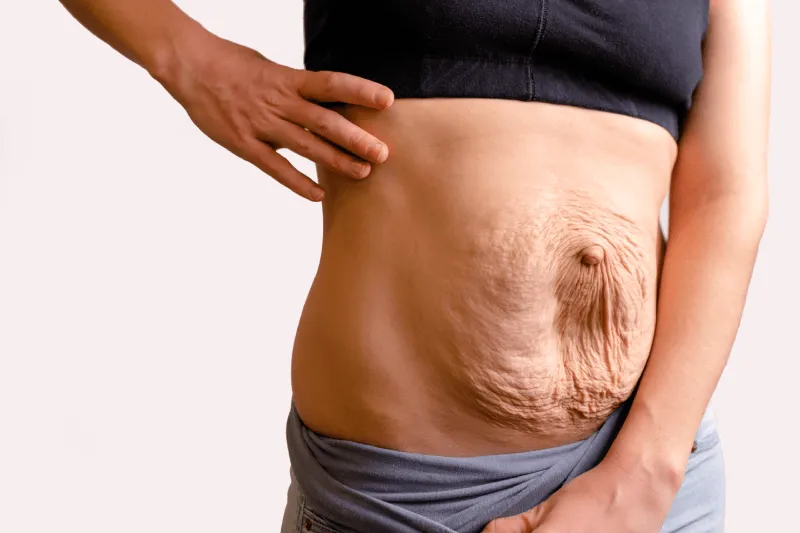
A successful “Mommy Makeover” requires more than surface-level fat removal; it necessitates the structural repair of the abdominal wall. One of the most common physiological consequences of pregnancy is Diastasis Recti, a condition where the rectus abdominis muscles separate along the linea alba. While aesthetically distressing, the clinical priority is restoring the abdominal tension necessary for core stability.
- Mini Abdominoplasty: Targeted at patients with localized skin laxity in the lower abdomen.
- Full Abdominoplasty: Designed for more extensive skin and muscle laxity, addressing the area from the pubic hairline to the upper abdomen.
- Extended (360) Tummy Tuck: A comprehensive approach that addresses the abdomen, flanks, and lower back, often integrated with ultrasound-assisted liposuction to provide a seamless, circumferential contour.
“The hallmark of a premium restoration is the synergy between structural muscle repair and advanced fat emulsification. Safety is achieved when the surgeon can manipulate the adipose layer without compromising the underlying fascial integrity.”
The Global Hub: Why Turkey Leads in Aesthetic Safety Standards
Turkey has emerged as the global epicenter for complex maternal restorations, not merely due to cost-efficiency, but because of its concentrated investment in surgical technology and specialized recovery infrastructure. The Turkish medical landscape is characterized by a high density of surgeons who specialize specifically in the “Mommy Makeover” continuum, utilizing Ministry of Health–authorised facilities and cutting-edge instrumentation.
Safety in the Turkish surgical hub is maintained through rigorous adherence to international standards. For instance, in breast augmentation and lift procedures—key components of post-pregnancy restoration—the use of highly regulated, JCI-approved implants such as Mentor, Motiva, or Polytech is standard. These implants are selected for their biocompatibility and long-term structural stability, ensuring that the aesthetic results are both safe and durable.
Furthermore, the logistical framework in Turkey is designed to support the delicate post-operative period. The transition from the surgical suite to recovery is managed through VIP private transfers from the airport to the clinic, ensuring that patients avoid the physical strain of navigating crowded transport. This seamless movement is a cornerstone of the Turkish medical model, prioritizing the reduction of post-operative physiological stress.
Investment in Transformation: Comprehensive Cost Analysis
Transparency in medical budgeting is essential for patients planning long-distance surgical travel. The following figures represent the standardized investment required for high-tier post-pregnancy restorations in Turkey. These costs reflect the use of advanced technologies like Vaser Lipo and premium implant brands.
- Standard Package (Foundational Contour): 4,500 – 7,500 USD
- Advanced Combination (Full Mommy Makeover): 8,000 – 12,000 USD
- Tummy Tuck (Individual Procedure): 3,000 – 5,000 USD
- Breast Lift (Mastopexy): 2,500 – 4,500 USD
- Liposuction (Per Targeted Area): 500 – 1,500 USD
- BBL (Fat Transfer to Gluteal Region): 3,500 – 5,500 USD
These packages are designed to be all-encompassing, often including the surgical fees, anesthesia, and the specialized post-operative care required for optimal healing.
The Recovery Continuum and Logistical Excellence
The success of a surgical intervention is heavily dependent on the post-operative period. For patients traveling to Istanbul (IST) or Antalya (AYT), the recovery protocol is structured to minimize downtime while maximizing comfort. The Turkish model utilizes 5-star recovery suites with companion stay included, allowing patients to recuperate in a controlled, luxury environment that facilitates both physical and mental healing.
While the initial intensive care period typically lasts 7-10 days in Turkey, patients should prepare for a gradual reintegration into their daily routines. A 6 weeks for full exercise return is the standard clinical recommendation to ensure that the internal sutures of the abdominal fascia and the newly contoured adipose layers have achieved sufficient structural stability.
To ensure patient safety even before departure, Cure Holiday specialists facilitate free online video assessments with board-certified plastic surgeons. This allows for a preliminary clinical evaluation, where surgeons can assess skin elasticity, muscle separation, and anatomical suitability, ensuring that the patient’s expectations are perfectly aligned with the surgical possibilities.
Precision Engineering: The Science of Ultrasound-Guided Emulsification
The evolution of body contouring has transitioned from simple fat removal to high-definition aesthetic sculpting. At the forefront of this technological shift is ultrasound-guided liposuction, specifically the use of Vaser Liposuction technology. Unlike traditional mechanical liposuction, which relies on blunt cannulas to physically disrupt fat cells, ultrasound-guided methods utilize ultrasonic-induced emulsification. This process employs low-frequency ultrasonic waves to target and liquefy adipocytes (fat cells) while leaving surrounding structures, such as nerves, blood vessels, and connective tissue, largely intact.
The clinical advantage of this approach is two-fold: precision and trauma reduction. By utilizing ultrasound to selectively disrupt the fat layer, surgeons can achieve high-definition contouring with minimal bruising and reduced postoperative edema. This precision is vital when performing complex anatomical sculpting, as it allows for the preservation of the subcutaneous architecture, leading to a more natural, “tighter” skin result. For patients undergoing simultaneous procedures, this reduction in surgical trauma is a critical component in accelerating the healing timeline and enhancing the overall safety profile of the operation.
The Multi-Dimensional Surgical Workflow: From Contouring to Reconstruction
A “combination surgery” is not merely a sequence of two separate procedures; it is a highly integrated surgical event designed to address both volume and structural integrity. The workflow typically follows a specialized hierarchical approach:
- Phase 1: Adipose Emulsification and Extraction: The procedure commences with ultrasound-guided liposuction to address localized fat deposits. Depending on the patient’s goals, this may involve liposuction per area, ranging from 500 USD to 1,500 USD.
- Phase 2: Subcutaneous Resurfacing: Once the volume is reduced, the surgeon addresses skin laxity. Depending on the degree of abdominal ptosis, options include Full, Mini, or Extended (360) Tummy Tucks.
- Phase 3: Muscular Reconstruction (Diastasis Recti Repair): For patients who have experienced significant abdominal expansion (often post-pregnancy), the surgery moves beneath the skin surface. Diastasis Recti repair involves internal corset suturing of the abdominal fascia, pulling the separated muscles back into a central, cohesive position to create a stabilized, flat core.
- Phase 4: Aesthetic Augmentation: If the patient’s transformation plan includes upper-body enhancement, breast lifts (priced between 2,500 USD and 4,500 USD) or even BBL fat transfer (ranging from 3,500 USD to 5,500 USD) are integrated into the single anesthetic session.
“The synergy of Vaser technology and advanced fascial suturing allows us to treat the body not as a collection of parts, but as a single structural unit, ensuring that the silhouette is both aesthetically pleasing and structurally sound.”
Case Study: A Restoration of Confidence
To understand the patient journey, we examine the case of a 34-year-old Irish mother of three. Following three pregnancies, she presented with significant abdominal distension, skin laxity, and a persistent separation of the rectus abdominis muscles. Her primary goal was a comprehensive “mommy makeover” that addressed both fat redistribution and structural tightening.
Her journey began with free online video assessments with board-certified plastic surgeons, allowing for a remote clinical evaluation of her physical anatomy and surgical goals. Once her advanced combination surgical plan was finalized, her logistics were managed with seamless precision. Upon arrival at Istanbul (IST), she was met with VIP private transfers from the airport to the clinic and subsequently settled into 5-star recovery suites with a companion stay included.
The surgical execution involved a combination of Vaser liposuction for the flanks and a 360-degree tummy tuck to address the abdominal wall. The recovery period was structured to ensure safety: she remained in Turkey for 7-10 days for intensive postoperative monitoring, with a specialized protocol for her return to activity, noting that a 6 weeks period is required for full exercise return.
Clinical Rigor and JCI Safety Standards
Safety in transformative surgery is predicated on the quality of materials and the rigor of the surgical environment. For patients traveling for care, adherence to Joint Commission International (JCI) standards is non-negotiable. This extends to the surgical hardware and implants used during the procedure. In our focus on high-tier surgical outcomes, all utilized breast implants—including Mentor, Motiva, or Polytech—are strictly JCI approved, ensuring biocompatibility and long-term structural integrity.
The safety of a combination surgery relies on the surgeon’s ability to manage hemodynamic stability throughout a longer operative time. By utilizing ultrasound-guided techniques, the risk of significant blood loss is minimized, which is a cornerstone of the JCI safety mandate. This meticulous attention to detail—from the sterilization of the ultrasonic probes to the selection of premium, medical-grade implants—forms the foundation of a safe surgical transformation.
Comprehensive Financial Planning for Your Transformation
Achieving a total body transformation requires transparent and detailed financial forecasting. While a standard package typically ranges from 4,500 – 7,500 USD, complex reconstructions involving muscle repair and advanced contouring fall into the advanced combination tier, ranging from 8,000 – 12,000 USD.
For patients looking to customize their journey, the following modular pricing structures apply:
- Tummy Tuck (Full/Mini/Extended): 3,000 USD – 5,000 USD
- Breast Lift: 2,500 USD – 4,500 USD
- BBL Fat Transfer: 3,500 USD – 5,500 USD
- Liposuction (Per targeted area): 500 USD – 1,500 USD
By understanding these variables, patients can work with Cure Holiday specialists to design a surgical itinerary that aligns with both their physiological needs and their budgetary requirements, ensuring a seamless transition from clinical consultation to physical metamorphosis.
Optimized Post-Operative Environments: The Luxury Villa Recovery Model
The cornerstone of a successful surgical outcome is the period of immediate convalescence. Unlike the standard clinical discharge seen in many Western healthcare systems, the premium recovery model in Turkey focuses on a “post-op villa” concept. This approach prioritizes a controlled, low-stress environment that is critical for wound healing and lymphatic drainage.
Patients are typically transitioned into 5-star recovery suites, which are specifically curated to bridge the gap between clinical care and domestic comfort. These suites are not merely hotels; they are medically-conducive environments designed to facilitate rest and minimize the risk of infection or physical strain. A vital component of this logistics framework is the inclusion of a companion stay. For many international patients, the presence of a trusted family member or friend is essential for managing medication schedules and providing emotional support during the first critical days of healing.
Furthermore, the logistics of “return to normalcy” are managed through a highly structured support system. For patients navigating complex domestic responsibilities, such as childcare or managing a household, the Turkey-based recovery model offers a period of complete detachment from daily stressors. By coordinating your recovery in a luxury setting, the mental load of managing post-surgical care is significantly reduced, allowing the body to direct its metabolic resources toward tissue regeneration.
Navigating the Recovery Timeline: From Turkey to Global Return
A critical consideration for any surgical itinerary is the “fly-home” timeline. Understanding the physiological milestones is essential for planning your departure and reintegrating into your professional and personal life.
The immediate postoperative phase typically requires a stay of 7-10 days in Turkey. During this window, the primary focus is on monitoring surgical sites, managing any initial swelling, and ensuring that the patient is stable for long-haul flight transit. This period is strategically timed to coincide with the most intense phase of the inflammatory response, allowing you to be under the close observation of your care team during the most sensitive window.
While the initial period in Turkey is brief, the long-term recovery trajectory is well-defined:
- Immediate Post-Op (Days 1-10): Focus on wound care, compression garment adherence, and lymphatic massage within the comfort of your recovery suite.
- Full Physical Reintegration (6 weeks): A complete return to intensive exercise and heavy lifting is generally permitted after 6 weeks, provided the surgical site has achieved sufficient tensile strength.
สำคัญな- Intermediate Phase (Weeks 2-4): Gradual increase in mobility; most patients can resume light daily activities and sedentary work.
Clinical Precision and Technical Recovery Considerations
The complexity of your recovery is intrinsically linked to the technical specifics of the procedure performed. Advanced surgical techniques used by board-certified surgeons in Turkey are designed to minimize the “recovery tax” on the patient’s body.
For those undergoing abdominal contouring, the technical approach to Diastasis Recti repair is a significant factor in the recovery journey. This procedure involves the internal corset suturing of the abdominal fascia, a technique that reinforces the core musculature. While this provides a much more stable and aesthetically pleasing abdominal wall, it necessitates strict adherence to activity restrictions during the first several weeks to ensure the integrity of the suture line.
Similarly, the choice of implants and techniques plays a role in post-surgical comfort. For breast augmentation, the use of JCI-approved implants, such as Mentor, Motiva, or Polytech, ensures that the biocompatibility of the device reduces the risk of capsular contracture. When selecting tummy tuck options—whether Full, Mini, or Extended (360)—the logistical planning must account for the different levels of physical restriction required during the healing process.
The use of Vaser Liposuction remains a gold standard for those seeking high-definition contouring. Because the ultrasound-guided approach targets fat cells with minimal impact on the surrounding dermis, the recovery is characterized by significantly less bruising and a much smoother transition back to daily life compared to traditional mechanical liposuction.
Logistical Ease: Transfers, Consultations, and Global Access
The complexity of international medical travel is mitigated through a seamless, end-to-end logistics chain. This begins long before you depart your home country.
“The success of international surgery relies as much on the precision of the logistics as it does on the precision of the scalpel.”
The process begins with free online video assessments with board-certified plastic surgeons. These digital consultations allow for a preliminary evaluation of surgical candidacy, anatomical assessment, and the creation of a customized surgical plan without the need for initial travel.
Once the surgical date is confirmed, the transition through Turkey is handled via VIP private transfers. Upon arrival at major international hubs—specifically Istanbul (IST) or Antalya (AYT)—patients are met by professional coordinators and transported directly to their recovery suites. This eliminates the stress of navigating unfamiliar transit systems during a period of physical vulnerability.
2026 Cost Breakdown: Comparative Value Analysis
When evaluating the financial logistics of surgery, it is essential to compare the comprehensive packages offered in Turkey against the standard pricing in the UK and USA. The following breakdown reflects the projected costs for 2026, demonstrating the significant cost-efficiency of the Turkish model, even when factoring in luxury accommodation and VIP transfers.
- Standard Surgical Package: 4,500 – 7,500 USD (Inclusive of basic surgical fees and essential aftercare).
- Advanced Combination Package: 8,000 – 12,000 USD (Designed for multi-area contouring, such as Lipo and BBL).
- Tummy Tuck (Full, Mini, or 360): 3,000 – 5,000 USD.
- Breast Lift (Mastopexy): 2,500 – 4,500 USD.
- Liposuction (Per individual area): 500 – 1,500 USD.
- BBL (Brazilian Butt Lift/Fat Transfer): 3,500 – 5,500 USD.
By choosing a coordinated recovery plan, patients are able to access high-tier, ultrasound-guided surgical technology and 5-star post-operative care at a fraction of the cost of domestic procedures in the West, without compromising on clinical excellence or safety protocols.
Considering a Mommy Makeover in Turkey? Get a Free Quote for your The Role of Ultrasound-Guided Liposuction in Enhancing Safety Transformation with cureholiday.com
Free Consultation
Fill out the form below to get your free medical travel plan and price quote.
Sources and how to verify this yourself
- Joint Commission International, Find accredited international organizations — JCI accredits organisations (not individual surgeons); Türkiye has more than 35 accredited hospitals and the current status of a named hospital can be checked in this directory. source
- Ministry of Health, Regulation on International Health Tourism and Tourist Health, Official Gazette 26 April 2025, No. 32882 — authorisation requirement for facilities and intermediaries, TÜSKA accreditation, compulsory complication insurance (deadline 31 December 2025 for insurance, 31 December 2026 for accreditation). source
- Ministry of Health, Regulation on Promotion and Information Activities in Health Services, Official Gazette 12 November 2025, No. 33075 — treatment promises and guarantees are prohibited; price and campaign announcements are permitted only within international health tourism. source