Cost and planning note (Mommy Makeover 2026)
The figures below are indicative market ranges, not a quote: your own price is confirmed after a clinical assessment.
Indicative price range: Standard Package: 4,500 – 7,500 USD | Advanced Combination: 8,000 – 12,000 USD | Tummy Tuck: 3,000 – 5,000 USD | Breast Lift: 2,500 – 4,500 USD | Liposuction Per Area: 500 – 1,500 USD | Bbl Fat Transfer: 3,500 – 5,500 USD
Facility standards: In Türkiye, any facility treating international patients must hold the Ministry of Health’s international health tourism authorisation; hospitals and medical centres must also be accredited by TÜSKA, and complication insurance is compulsory for procedures carried out in an operating theatre (Regulation of 26 April 2025).
Recovery Focus: Post-pregnancy body restoration & safety first.
Currency: GBP, EUR, USD accepted.
The Importance of a “Stable Weight” before Booking your Mommy Makeover
The Physiological Mandate for Weight Stability
When planning a Mommy Makeover, the most critical variable in determining surgical efficacy is not merely the technique used, but the physiological state of the patient at the time of incision. Achieving a “stable weight”—defined as a period of at most 3-5% fluctuation over several months—is the fundamental cornerstone of post-pregnancy restoration. For patients seeking to address the anatomical changes brought about by gestation, such as abdominal laxity and mammary ptosis, weight volatility can compromise the structural integrity of the surgical results.
From a clinical perspective, significant weight fluctuations alter the subcutaneous adipose tissue distribution and the tension exerted on the dermal layers. If a patient undergoes an abdominoplasty while in a state of active weight loss, the subsequent redistribution of fat can lead to “skin laxity recurrence,” where the newly tightened skin becomes redundant once the volume of the underlying tissue changes. Conversely, weight gain post-surgery places undue mechanical stress on the surgical sutures, potentially leading to wound dehiscence or hypertrophic scarring.
Restoring the Core: Diastasis Recti and the Internal Corset
A primary component of the post-pregnancy restoration foundation is the repair of Diastasis Recti. This condition involves the separation of the rectus abdominis muscles, often resulting in a permanent “pooch” or protrusion in the midline of the abdomen. The surgical resolution of this separation is much more than a superficial skin tightening; Diastasis Recti repair involves internal corset suturing of the abdominal fascia.
The surgeon utilizes heavy-duty, absorbable or non-absorbable sutures to re-approximate the separated muscle bellies, essentially creating an internal biological corset. This process restores the intra-abdominal pressure dynamics and provides a flatter, more stable abdominal wall. However, the success of this fascial reconstruction is entirely dependent on the stability of the abdominal wall’s mass. Rapid weight gain following this procedure can create “tensional ischemia” at the suture sites, where the pressure of the expanding adipose tissue restricts blood flow to the healing fascia, risking a failure of the repair.
Advanced Abdominoplasty: Tailoring the Silhouette
Depending on the degree of skin laxity and muscle separation, surgeons offer various anatomical approaches to abdominal reconstruction. Understanding these options is vital for managing expectations regarding the necessity of a stable weight:
- Mini Abdominoplasty: Targetted at patients with localized laxity in the lower abdomen, involving a smaller incision and less extensive muscle repair.
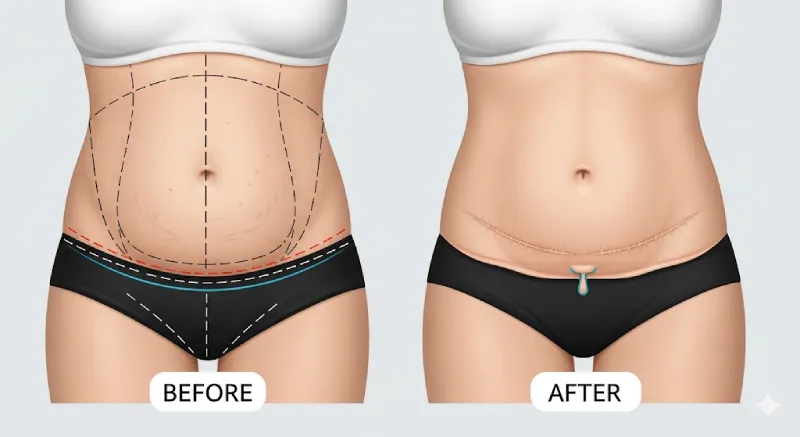
- Full Abdominoplasty: An extensive procedure addressing the entire abdominal region, from the flanks to the epigastric area.
- Extended (360) Tummy Tuck: A comprehensive approach that includes the flanks and the lower back, often integrated with liposuction to create a seamless, circumferential contour.
To complement these structural repairs, Vaser Liposuction is used for high-definition contouring with minimal bruising. This ultrasonic technology uses low-frequency vibrations to emulsify fat cells without damaging surrounding neurovascular structures. Because Vaser Lipo relies on precise “sculpting” of existing fat deposits, a stable weight ensures that the surgeon is working with a predictable anatomical landscape, allowing for the high-definition results that define a premium makeover.
Mastopexy and Volumetric Consistency
The restoration of the breast complex—often involving a Breast Lift (Mastopexy) and, if necessary, augmentation—requires extreme stability in the chest wall’s fat-to-tissue ratio. The objective of a mastopexy is to reposition the nipple-areola complex (NAC) and remove excess glandular or skin tissue to correct ptosis (sagging).
When implants are introduced to restore volume, the choice of medical-grade hardware is paramount. To ensure long-term safety and biocompatibility, breast implants used include Mentor, Motiva, or Polytech (JCI approved). These implants are engineered to maintain their structural integrity and shape within the mammary pocket. However, if the patient’s breast volume fluctuates due to significant weight changes, the “envelope” of the implant may appear overly tight or, conversely, too loose, leading to visible rippling or loss of projection.
“The success of a Mommy Makeover is measured by the longevity of the contour. Achieving surgical homeostasis through weight stability is the single most important pre-operative step a patient can take.”
The Global Hub: Why Turkey Leads in Aesthetic Excellence
Turkey has emerged as the global epicenter for advanced Mommy Makeovers, driven by a convergence of technical mastery and logistical sophistication. The region’s surgeons are at the forefront of integrating Vaser Liposuction and complex Diastasis Recti repairs into cohesive, aesthetic transformations. This expertise is supported by an infrastructure designed to handle the complexities of international surgical travel.
For patients navigating the complexities of post-pregnancy reconstruction, the logistical ease of the Turkish medical model allows for a focus entirely on recovery. The process begins with free online video assessments with board-certified plastic surgeons, ensuring that clinical suitability is established long before the patient departs.
The post-operative experience is managed within a luxury framework, featuring:
- Logistics: Seamless VIP private transfers from airport to clinic, utilizing Istanbul (IST) or Antalya (AYT) as primary entry points.
- Recovery: Accommodation in 5-star recovery suites with companion stay included, allowing for a sterile, comfortable, and medically supportive environment.
- Timeline: A structured recovery of 7-10 days in Turkey, followed by a mandatory 6 weeks for full exercise return to ensure the internal sutures and fat transfers have stabilized.
Financial Investment in Reconstruction
Understanding the financial architecture of these procedures is essential for long-term planning. The costs in Turkey reflect a highly competitive landscape that offers premium, JCI-standard medical care at a significantly lower entry point than Western Europe or North America.
Typical cost structures for these transformative procedures include:
- Standard Package (Comprehensive Restoration): 4,500 – 7,500 USD
- Advanced Combination (Multi-area contouring): 8,000 – 12,000 USD
- Tummy Tuck (Abdominoplasty): 3,000 – 5,000 USD
- Breast Lift (Mastopexy): 2,500 – 4,500 USD
- Liposuction (Per targeted area): 500 – 1,500 USD
- BBL (Fat Transfer/Augmentation): 3,500 – 5,500 USD
While these figures represent the investment in surgical excellence, the true value lies in the permanence of the results, provided the patient adheres to the biological necessity of weight stability.
The Physiology of Post-Pregnancy Body Changes and the Necessity of Equilibrium
A Mommy Makeover is not a weight-loss procedure; it is a sophisticated contouring intervention designed to restore the anatomical architecture that pregnancy and postpartum hormonal shifts have altered. The fundamental prerequisite for a successful surgical outcome is the attainment of a biological equilibrium, commonly referred to as a “stable weight.” When a patient undergoes a combination of procedures—such as abdominoplasty, breast augmentation, and liposuction—the surgeon is working with a fixed volume of subcutaneous adipose tissue and a specific degree of integumentary elasticity.
Significant fluctuations in body mass index (BMI) can compromise the precision of the surgical plan. If a patient loses substantial weight post-operatively, the redistribution of fat and the reduction in skin tension can lead to unexpected skin laxity or “deflated” results. Conversely, weight gain can expand the newly contoured adipose layers, potentially stretching the surgical incisions and undermining the aesthetic refinement achieved through advanced techniques like Vaser Liposulation.
Surgical Precision: How Weight Stability Impacts Technical Outcomes
The technical complexity of a Mommy Makeover relies on the surgeon’s ability to precisely manipulate tissue layers. For instance, the repair of Diastasis Recti—a condition where the rectus abdominis muscles separate during pregnancy—involves internal corset suturing of the abdominal fascia. This procedure creates a structural tension that stabilizes the midsection. If the patient’s weight is unstable, the intra-abdominal pressure changes, which can put undue stress on these internal sutures, potentially compromising the structural integrity of the repair.
Furthermore, the use of advanced technologies requires a predictable anatomical landscape. Vaser Liposuction is utilized for high-definition contouring with minimal bruising by using ultrasound energy to emulsify fat cells. To achieve the “sculpted” look, the surgeon must target specific fat pockets with millimetric accuracy. Any significant change in the volume of the adipose tissue layer makes this high-definition precision nearly impossible to maintain post-operatively.
Even the placement of prosthetics is sensitive to weight fluctuations. Whether utilizing Mentor, Motiva, or Polytech (JCI approved) implants, the goal is to achieve a natural projection that complements the patient’s new breast volume. Stable weight ensures that the pocket created for the implant remains anatomically consistent, preventing issues such as implant displacement or visible rippling caused by sudden changes in the overlying tissue thickness.
Case Study: The Journey of a 34-Year-Old Mother of Three
“After three pregnancies, my body felt unrecognizable. I had achieved my goal weight, but I had maintained it for six months before deciding to pursue a transformation. This stability was the foundation of my confidence during the recovery process.”
Consider the case of a 34-year-old Irish mother of three who presented to Cure Holiday specialists. Her primary concerns were skin laxity in the abdominal region, loss of breast volume, and asymmetrical hip contours. Having maintained a stable weight for over half a year, her surgeon was able to execute a highly customized, advanced combination surgery.
The surgical plan included a Full Tummy Tuck to address the separation of the abdominal muscles, a Breast Lift to restore upper pole fullness, and Liposuction to refine the flanks. Because her weight was stable, the surgeon could precisely calculate the amount of fat to harvest for a BBL (Brazilian Butt Lift) fat transfer, ensuring the new contours would persist throughout her recovery. The predictability of her body composition allowed for a seamless transition from the operating theatre to her 5-star recovery suite.
The Technical Roadmap: Understanding Your Surgical Options
The Mommy Makeover is a modular surgery, allowing for a tailored approach based on individual anatomical needs. Understanding the specific technical components is vital for managing expectations regarding your transformation:
- Abdominoplasty Variations: Depending on the degree of skin laxity, patients may undergo a Full, Mini, or Extended (360) tummy tuck. The Extended version is particularly effective for patients requiring circumferential abdominal contouring.
- Breast Reconstruction: Options range from simple augmentation to complex lifts (mastopexy) to address ptosis (sagging).
- Liposculpting: Using Vaser Liposuction, surgeons can target specific areas such as the flanks, thighs, or arms to create a more streamlined silhouette.
- Fat Transfer: Utilizing the patient’s own processed adipose tissue, a BBL fat transfer can enhance the gluteal region with natural-looking volume.
Financial Planning and Investment Transparency
Achieving a permanent transformation requires transparent financial planning. While costs can vary based on the complexity of the combination, the following ranges provide a baseline for budgetary considerations. Please note that these figures represent the surgical and hospital components of the package:
- Standard Package: 4,500 – 7,500 USD
- Advanced Combination Surgery: 8,000 – 12,000 USD
- Tummy Tuck (Individual): 3,000 – 5,000 USD
- Breast Lift (Individual): 2,500 – 4,500 USD
- Liposuction (Per targeted area): 500 – 1,500 USD
- BBL (Fat Transfer): 3,500 – 5,500 USD
Logistics, Safety, and the Patient Journey
The patient journey begins long before you arrive at the airport. Cure Holiday specialists facilitate free online video assessments with board-certified plastic surgeons, allowing for a preliminary clinical evaluation and the creation of a customized surgical roadmap. This remote consultation is crucial for discussing weight stability and surgical objectives.
Once the surgical date is finalized, your logistics are handled with premium care. Patients typically arrive via Istanbul (IST) or Antalya (AYT), where VIP private transfers await to transport you directly to your clinic and accommodation. The recovery experience is centered around comfort and safety, utilizing 5-star recovery suites with companion stay included, ensuring you have the support necessary during the initial healing phase.
Safety remains the paramount priority. All surgical processes are conducted following rigorous JCI safety standards, ensuring that everything from sterile processing to anesthesia protocols meets international benchmarks. While the surgical phase is intensive, the postoperative timeline is structured: expect 7-10 days in Turkey for initial healing and monitoring, followed by a period of gradual reintegration, with a 6 weeks for full exercise return. By prioritizing weight stability before booking, you ensure that this meticulous medical journey yields the most enduring and aesthetic results possible.
The Physiological Imperative: Why Weight Stability Dictates Surgical Precision
In the realm of high-definition body contouring, the concept of a “stable weight” is far more than a lifestyle recommendation; it is a clinical prerequisite for surgical success. When planning a Mommy Makeover—a complex procedure typically involving a combination of abdominoplasty, breast augmentation, and liposuction—the physiological state of your adipose tissue and skin elasticity is the primary determinant of your long-term aesthetic outcome. Significant fluctuations in Body Mass Index (BMI) post-operatively can compromise the structural integrity of the surgical repairs, particularly regarding the abdominal wall.
For patients undergoing Diastasis Recti repair, the surgical objective involves the internal corset suturing of the abdominal fascia to close the separation of the rectus abdominus muscles. If a patient undergoes significant weight gain following this procedure, the increased intra-abdominal pressure can exert undue tension on these internal sutures, potentially leading to a recurrence of the diastasis or unexpected contour irregularities. Conversely, rapid weight loss can lead to “skin laxity,” where the integumentary system lacks the structural support to remain taut, effectively undoing the work of a Full, Mini, or Extended (360) tummy tuck.
“The goal of a Mommy Makeover is not weight loss, but weight redistribution. Surgery is a tool for sculpting an existing silhouette, not for managing metabolic fluctuations.”
Optimising Body Contouring: Vaser Liposuction and Fat Transfer Dynamics
The precision of modern contouring techniques, such as Vaser Liposuction, relies heavily on the stability of the subcutaneous fat layer. Vaser technology uses ultrasound energy to emulsify fat cells, allowing for high-definition sculpting with minimal bruising and much greater anatomical precision than traditional methods. However, the efficacy of this sculpting is predicated on the permanence of the new contours.
This is particularly critical when considering a BBL (Brazilian Butt Lift) fat transfer, which typically ranges from 3,500 USD to 5,500 USD. In a BBL, autologous fat is harvested from donor sites and injected into the gluteal region. While the survival rate of the transferred fat cells is high, the final volume is highly sensitive to systemic weight changes. A significant caloric surplus post-surgery can lead to hypertrophy in the donor sites, while a caloric deficit can lead to the resorption of the transferred graft, diminishing the projection and “lift” achieved during the procedure.
Furthermore, the integration of breast augmentation—utilizing JCI-approved implants such as Mentor, Motiva, or Polytech—requires a stable chest wall environment. Drastic changes in weight can alter the tension of the breast tissue envelope, potentially leading to visible rippling or a loss of the desired “perkiness” achieved through a breast lift (ranging from 2,500 USD to 4,500 USD).
2026 Financial Projections: The Economic Advantage of Turkey
For patients comparing the cost of high-end surgical interventions between the UK, USA, and Turkey, the 2026 projections indicate a significant disparity in value. While the clinical standard remains world-class in Turkey, the absence of inflated healthcare overheads allows for more comprehensive surgical packages.
- Standard Mommy Makeover Package: 4,500 USD – 7,500 USD (Typically includes abdominoplasty and breast augmentation).
- Advanced Combination Package: 8,000 USD – 12,000 USD (Comprehensive contouring including Lipo and BBL).
- Individual Abdominoplasty (Tummy Tuck): 3,000 USD – 5,000 USD.
- Mastopexy (Breast Lift): 2,500 USD – 4,500 USD.
- High-Definition Liposuction (Per area): 500 USD – 1,500 USD.
- BBL Fat Transfer: 3,500 USD – 5,500 USD.
When these figures are viewed alongside the cost of surgeon fees and hospital stays in the UK or USA, the savings in Turkey are substantial, often allowing patients to opt for the “Advanced Combination” rather than a single procedure, thereby achieving their total aesthetic goals in a single surgical window.
Logistical Orchestration: Post-Operative Recovery and Travel Timelines
Planning a Mommy Makeover involves much more than surgical timing; it requires meticulous logistical management. The recovery phase is a critical period that necessitates a structured environment, free from the stresses of daily domestic responsibilities. This is especially relevant for mothers who must navigate the complexities of childcare and household management during the early stages of healing.
The standard recovery timeline involves a period of 7-10 days in Turkey, during which time patients are transitioned from clinical care to 5-star recovery suites. These suites are designed to facilitate a low-stress environment, often with a companion stay included to assist with the patient’s needs. This period is essential for monitoring surgical sites, managing lymphatic drainage, and ensuring the stability of the surgical results before the physical rigors of travel.
For the logistical planning of your journey, please note the following:
- Arrival Logistics: All patients are met via VIP private transfers from either Istanbul (IST) or Antalya (AYT) directly to their recovery suite or clinic.
- Post-Op Activity: While light walking is encouraged to prevent Deep Vein Thrombosis (DVT), a full return to strenuous exercise is typically restricted for 6 weeks.
- Pre-Surgical Planning: Free online video assessments are available with board-certified plastic surgeons to discuss weight stability, surgical candidacy, and customized recovery itineraries.
- Childcare Considerations: Due to the physical restrictions of the 6-week recovery window, it is highly recommended that patients arrange for secondary care or childcare support in their home country prior to their flight home.
By ensuring your weight is stable and your logistical framework is robust, you provide the optimal foundation for the surgical team to execute a transformative and lasting body contouring result.
Considering a Mommy Makeover in Turkey? Get a Free Quote for your The Importance of a “Stable Weight” before Booking your Mommy Makeover Transformation with cureholiday.com
Free Consultation
Fill out the form below to get your free medical travel plan and price quote.
Sources and how to verify this yourself
- Ministry of Health, Regulation on International Health Tourism and Tourist Health, Official Gazette 26 April 2025, No. 32882 — authorisation requirement for facilities and intermediaries, TÜSKA accreditation, compulsory complication insurance (deadline 31 December 2025 for insurance, 31 December 2026 for accreditation). source
- Ministry of Health, Regulation on Promotion and Information Activities in Health Services, Official Gazette 12 November 2025, No. 33075 — treatment promises and guarantees are prohibited; price and campaign announcements are permitted only within international health tourism. source