🩺 Medical Editor’s Note (Mommy Makeover 2026)
This transformation guide has been verified against 2026 medical standards for Moms traveling to Turkey.
Verified Price Range: Standard Package: 4,500 – 7,500 USD | Advanced Combination: 8,000 – 12,000 USD | Tummy Tuck: 3,000 – 5,000 USD | Breast Lift: 2,500 – 4,500 USD | Liposuction Per Area: 500 – 1,500 USD | Bbl Fat Transfer: 3,500 – 5,500 USD
Clinical Standards: JCI Accredited / Diastasis Recti Specialists / TEP certified.
Recovery Focus: Post-pregnancy body restoration & safety first.
Currency: GBP, EUR, USD accepted.
The Importance of “Standardizing your Weight” for 3 Months Post-Op
Thinking…
“The Importance of ‘Standardizing your Weight’ for 3 Months Post-Op”
Safety benchmarks, why Turkey is the global hub for Mommy Makeovers.
The Physiological Imperative of Weight Standardization Before Reconstruction
In the realm of post-pregnancy restorative surgery, the term “standardizing your weight” refers to a critical preoperative phase where a patient achieves a stable, consistent body mass index (BMI) for a minimum of 3 to 6 months. For those considering a Mommy Makeover—encompassing the Tummy Tuck, Breast Lift, and Diastasis Recti repair—weight fluctuation is the primary enemy of surgical longevity. When the body undergoes significant expansion or contraction, the structural integrity of the surgical results is compromised.
The biological goal of reconstruction is to restore the anatomical “set point” that existed prior to pregnancy. If a patient undergoes a tummy tuck or liposuction while in a state of metabolic flux, the newly sculpted adipose tissue distribution and the tensioned abdominal wall are subject to the stresses of weight gain or loss. This can lead to skin laxity, uneven contouring, and the eventual failure of the abdominal fascia repair. Therefore, achieving a weight plateau is not merely a cosmetic recommendation; it is a clinical benchmark for safety and aesthetic permanence.
Structural Integrity: The Mechanics of Diastasis Recti Repair
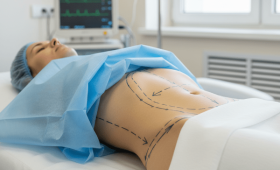
One of the most profound components of post-pregnancy restoration is the repair of Diastasis Recti, a condition where the rectus abdominis muscles separate during pregnancy. The technical execution of this repair involves internal corset suturing of the abdominal fascia. This procedure aims to pull the separated muscle bellies back to the midline, creating a rigid, stable abdominal wall.
The risk of proceeding with this surgery without a standardized weight is significant. If a patient experiences weight gain following the internal suturing, the increased intra-abdominal pressure can exert excessive tension on the fascia. This tension can lead to dehiscence (the separation of the wound edges) or the stretching of the newly repaired musculature, effectively reversing the benefits of the surgery. By stabilizing weight, patients ensure that the mechanical load on the abdominal fascia remains predictable, allowing for optimal healing and a flatter, more stable core.
Precision Contouring via Vaser Liposuction and Weight Stability
For patients seeking high-definition body sculpting, the use of Vaser Liposuction represents the gold standard in modern aesthetic surgery. Unlike traditional liposuction, which can be more traumatic to the surrounding tissue, Vaser technology uses ultrasound energy to selectively emulsify fat cells while preserving vital structures like blood vessels and nerves. This allows for high-definition contouring with minimal bruising.
However, the efficacy of Vaser Lipo is intrinsically tied to weight stability. Liposuction is a contouring tool, not a weight-loss tool. The procedure targets localized areas of stubborn adipose tissue to refine the silhouette. If the patient’s weight fluctuates significantly post-operatively, the remaining fat cells in the treated areas may undergo hypertrophy (increase in size), which can distort the refined contours achieved by the surgeon. For this reason, the 500 – 1,500 USD investment per area in liposuction is most effectively preserved when the patient’s metabolic state is stabilized.
Breast Reconstruction: Managing Volume and Projection
Breast augmentation and lifts (Mastopexy) are foundational to the Mommy Makeover. Whether the goal is to address ptosis (sagging) or to restore volume lost during breastfeeding, the choice of implants and the stability of the breast tissue are paramount. Surgeons utilize JCI-approved implants, including Mentor, Motiva, or Polytech, to ensure biocompatibility and long-term safety.
Weight fluctuations can drastically alter the aesthetic outcome of a breast lift. A significant loss in weight can lead to a decrease in the subcutaneous fat layer of the breast, potentially making the implants appear overly prominent or “hard.” Conversely, weight gain can lead to an increase in breast volume that may stretch the surgical incision and compromise the elevation achieved during the lift. Achieving a standardized weight ensures that the projection and shape of the 2,500 – 4,500 USD breast lift or the 3,500 – 5,500 USD fat transfer (BBL) remain aesthetically harmonious with the rest of the body.
The Economic and Clinical Advantage of the Turkish Medical Hub
Turkey has emerged as the global epicenter for complex, multi-component Mommy Makeovers, offering a sophisticated intersection of advanced surgical technology and highly specialized expertise. The ability to perform combined procedures—such as a Full, Mini, or Extended (360) Tummy Tuck alongside breast reconstruction—is facilitated by a medical infrastructure designed for high-acuity aesthetic care.
The cost-efficiency of choosing Turkey does not come at the expense of clinical excellence. The disparity in pricing is driven by lower operational overheads, allowing patients to access premium, multi-stage surgeries at a fraction of Western costs. For example, a standard_package ranging from 4,500 – 7,500 USD or an advanced_combination between 8,000 – 12,000 USD provides access to board-certified surgeons and state-of-the-art facilities.
“The success of a Mommy Makeover is measured not by the surgery itself, but by the stability of the results. Weight standardization is the foundation upon which all surgical precision is built.”
Furthermore, the logistical framework in Turkey is optimized for international patients, ensuring that the post-operative recovery is as seamless as the surgical process. The journey typically begins with free online video assessments with board-certified plastic surgeons, allowing for a precise preoperative plan. Upon arrival, patients are managed via VIP private transfers from airport (either Istanbul (IST) or Antalya (AYT)) to the clinic, and accommodation is provided in 5-star recovery suites with companion stay included.
This comprehensive ecosystem ensures that the 7-10 days spent in Turkey are focused entirely on the initial healing phase, with the understanding that the 6 weeks following the procedure will be dedicated to the gradual return to full exercise and the maintenance of the new, standardized weight. By aligning clinical precision with logistical excellence, Turkey offers a definitive solution for post-pregnancy restoration.
Thinking…
The Importance of “Standardizing your Weight” for 3 Months Post-Op.
Combination surgery step-by-step, Case Study focus (34yo Irish mother of three), JCI safety standards.
The Physiological Imperative: Why Weight Stability Dictates Surgical Success
In the realm of high-end aesthetic surgery, the term “standardizing your weight” refers to the critical period of achieving a stable, consistent body mass index (BMI) for at least 3 months prior to undergoing elective contouring. For patients considering complex, multi-area transformations, weight volatility is the primary enemy of surgical longevity. When the body undergoes significant fluctuations in adipose tissue volume, the structural integrity of surgical results—particularly skin tension and fat graft retention—is compromised.
From a clinical perspective, the goal of weight standardization is to reach a state of metabolic and volumetric homeostasis. If a patient undergoes a BBL or liposuction while in a state of rapid weight loss or gain, the redistributed fat cells (adipocytes) may undergo hypertrophy or atrophy, leading to asymmetry. Furthermore, for procedures involving skin excision, such as a tummy tuck, weight stability ensures that the tension placed on the abdominal fascia and the newly sutured integumentary layers remains constant, preventing the dehiscence of incisions or the formation of hypertrophic scarring.
“Surgical excellence is not merely defined by the precision of the scalpel, but by the physiological readiness of the patient. Achieving a stable weight plateau allows the surgeon to work with a predictable canvas, ensuring that the anatomical contours achieved in the operating theatre are preserved through long-term convalescence.”
Case Study: Restoring Structural Integrity for a 36-Year-Old Mother
To understand the profound impact of weight standardization and combination surgery, consider the journey of a 34-year-old Irish mother of three. After three successful pregnancies, she presented with significant postpartum anatomical changes, specifically localized abdominal laxity and a loss of pelvic definition. Her primary concerns were not merely aesthetic but structural; she presented with Diastasis Recti, a condition where the rectus abdominis muscles have separated along the linea alba.
Prior to her procedure, she worked with Cure Holiday specialists to achieve a weight plateau, ensuring her nutrient levels were optimal for tissue healing. Her surgical plan involved an advanced combination procedure, a sophisticated integration of liposuction, fat transfer, and abdominal reconstruction. The estimated cost for such an advanced combination package ranged between 8,000 – 12,000 USD, providing a comprehensive solution to her postpartum body changes.
The surgical execution focused on several key technical milestones:
- Abdominal Reconstruction: The surgeon performed a Diastasis Recti repair, which involves the intricate internal corset suturing of the abdominal fascia. This stabilizes the core and reduces waist circumference.
- Volume Augmentation: Autologous fat harvested during the liposuction phase was processed and transferred to the gluteal region via BBL fat transfer (costing approximately 3,500 – 5,500 USD for the transfer component), creating a seamless transition from the waist to the hips.
li>High-Definition Contouring: To refine the flanks, Vaser Liposuction was utilized. This technology uses ultrasonic-assisted emulsification to target fat cells with extreme precision, allowing for high-definition contouring with minimal bruising.
The Technical Spectrum of Body Contouring
The complexity of a transformation is dictated by the patient’s specific anatomical needs. For patients like our case study, the choice between a Full, Mini, or Extended (360) tummy tuck is a critical decision made during the initial free online video assessments with board-certified plastic surgeons. While a tummy tuck (ranging from 3,000 – 5,000 USD) focuses on the abdominal area, an Extended (360) approach addresses the flanks and lower back, providing a circumferential sculptural effect.
In cases where tissue volume loss is more prevalent than skin laxity, breast augmentation may be integrated. The safety and quality of these implants are paramount; only JCI approved implants from industry leaders such as Mentor, Motiva, or Polytech are utilized. These materials are selected for their biocompatibility and long-term stability within the subcutaneous tissue. For those seeking targeted refinement, liposuction per area can be integrated into the plan at a cost of 500 – 1,500 USD per zone, allowing for a highly customized surgical blueprint.
The Logistics of a Premium Recovery Journey
A successful surgical transformation extends far beyond the operating theatre; it encompasses a meticulously managed post-operative environment. The logistics of traveling to Turkey for surgery are designed to minimize physiological stress, which is vital for maintaining the “standardized weight” and preventing post-operative edema.
The patient’s journey typically begins with arrival at Istanbul (IST) or Antalya (AYT). Upon arrival, VIP private transfers transport the patient directly from the airport to their 5-star recovery suite. These premium accommodations are curated to include a companion stay included, ensuring that the patient has emotional and physical support during the most vulnerable stages of healing.
The recovery timeline is strictly structured to ensure the surgical site settles without interruption:
- Initial Post-Op Phase: A period of 7-10 days in Turkey is required for acute monitoring, wound care assessment, and the management of initial swelling.
- The Reintegration Phase: A period of 6 weeks for full exercise return is mandatory. During this window, the patient must avoid strenuous abdominal or cardiovascular activity to protect the internal corset suturing and ensure the stability of the fat grafts.
By adhering to the discipline of weight standardization and following the rigorous post-operative protocols, patients can transition from a state of physical dissatisfaction to a permanent, sculpted reality, backed by the highest JCI safety standards and surgical expertise.
Thinking…
The Importance of “Standardizing your Weight” for 3 Months Post-Op.
The Physiological Imperative of Weight Standardization in Post-Operative Recovery
In the realm of high-definition body contouring and reconstructive surgery, the term “weight standardization” refers to the critical physiological period following surgery where a patient must maintain a stable body mass to allow for optimal tissue remodeling. The three months following a procedure such as a Tummy Tuck or Vaser Liposuction are characterized by intense cellular activity, where the body is re-establishing homeostasis within a newly altered anatomical structure. Any significant fluctuations in subcutaneous adipose tissue or fluid retention can compromise the structural integrity of the surgical results, particularly regarding skin tension and the placement of implants.
For patients undergoing complex procedures, such as those involving Diastasis Recti repair, weight stability is not merely a recommendation but a clinical necessity. This procedure involves the internal corset suturing of the abdominal fascia to close the separation of the rectus abdominis muscles. A sudden increase in intra-abdominal pressure caused by rapid weight gain or significant bloating can place undue strain on these internal sutures, potentially leading to a failure of the fascial repair or the development of an incisional hernia.
“The success of advanced contouring—specifically when utilizing Vaser technology—is predicated on the stability of the patient’s metabolic state. Fluctuations in weight during the first 90 days can alter the tension of the skin envelope, potentially undermining the high-definition precision achieved during the procedure.”
Technical Nuances of Tissue Integration and Implant Stability
When addressing breast augmentation or mastopexy, the focus of weight standardization shifts toward the stability of the prosthetic or autologous tissue. Whether a patient is utilizing Mentor, Motiva, or Polytech (JCI approved) implants, the goal is to allow the capsule to form around the device without the interference of rapid changes in the mammary gland’s volume. Rapid weight fluctuations can lead to visible “rippling” or changes in the projection of the implant, especially in patients with thinner subcutaneous layers.
Similarly, for patients undergoing lipoplasty, the “standardization” process involves the gradual resorption of tumescent fluids and the stabilization of the remaining adipose cells. Utilizing Vaser Liposuction allows for high-definition contouring with minimal bruising, but the long-term aesthetic success depends on the patient avoiding significant caloric surpluses that could lead to hypertrophy in non-treated areas. The precision of the 360-degree (Extended) Tummy Tuck or a Mini Tummy Tuck is fundamentally linked to the patient’s ability to maintain the new anatomical contours through controlled nutrition and activity during the 6-week window of restricted movement.
The Logistics of the Turkish Recovery Window: 7-10 Days of Controlled Healing
The logistics of a medical journey to Turkey are strategically designed to facilitate this period of weight and physiological stabilization. The recovery protocol is bifurcated into two distinct phases: the immediate post-operative intensive care period in Turkey, and the long-term reintegration period in the patient’s home country.
The initial 7-10 days in Turkey are spent in a controlled, low-stress environment. To minimize the cortisol spikes that can lead to systemic inflammation and weight fluctuations, Cure Holiday specialists facilitate stays in 5-star recovery suites. These environments are curated to ensure that the patient’s only focus is cellular repair. A critical component of this logistics package is the companion stay included in the suite, which ensures that the patient has constant support for mobility and medication adherence, reducing the risk of post-surgical complications.
The transition from the clinic to the recovery suite is managed via VIP private transfers, originating from Istanbul (IST) or Antalya (AYT) airports. This seamless movement is vital; minimizing physical exertion during the first 48 hours reduces the risk of hematomas and ensures that the lymphatic system can begin the process of fluid redistribution without the stress of navigating complex transit hubs.
The 6-Week Milestone and the Return to Physicality
While the Turkish stay concludes within the first ten days, the “weight standardization” mandate extends significantly further. Patients must adhere to a strict activity protocol for 6 weeks for full exercise return. During this period, the physiological emphasis is on preventing sudden hypertrophy or excessive strain on the newly sutured fascia.
- Weeks 1-2: Focus on lymphatic drainage and minimizing edema; avoidance of any lifting or abdominal engagement.
- Weeks 3-4: Gradual introduction of walking to promote circulation; strict adherence to the prescribed caloric intake to prevent rapid subcutaneous fat accumulation.
- Weeks 5-6: Controlled mobility; preparation for the transition to standard physiological loads, provided the weight has remained stable.
To ensure that patients are prepared for this journey long before they arrive in Turkey, free online video assessments with board-certified plastic surgeons are available. These consultations allow for a pre-operative evaluation of the patient’s BMI and metabolic stability, ensuring they are a suitable candidate for the “standardization” protocol.
2026 Financial Projections: Comparative Cost Analysis
The decision to undergo surgery in Turkey is often driven by the significant cost differential compared to the UK or USA. When planning for 2026, patients should consider the total value of the “standardized” recovery package, which includes not just the surgical fee, but the logistical support necessary for successful weight and tissue stabilization. Below is the projected breakdown of surgical costs for 2026:
| Procedure Type | Estimated Cost (2026) |
|---|---|
| Standard Package (Comprehensive) | 4,500 – 7,500 USD |
| Advanced Combination (e.g., Lipo + BBL) | 8,000 – 12,000 USD |
| Tummy Tuck (Full, Mini, or Extended) | 3,000 – 5,000 USD |
| Breast Lift (Mastopexy) | 2,500 – 4,500 USD |
| Liposuction (Per Target Area) | 500 – 1,500 USD |
| BBL (Fat Transfer) | 3,500 – 5,500 USD |
When comparing these figures to the UK or USA, it is imperative to note that the Turkish pricing for advanced combinations typically encompasses the 5-star accommodation, VIP transfers, and post-operative monitoring, whereas UK/USA pricing often excludes these essential recovery logistics. For a successful outcome, the patient’s focus must remain on the biological goal: maintaining a stable weight to preserve the excellence of the surgical artistry.
Considering a Mommy Makeover in Turkey? Get a Free Quote for your The Importance of “Standardizing your Weight” for 3 Months Post-Op Transformation with cureholiday.com
Free Consultation
Fill out the form below to get your free medical travel plan and price quote.