🩺 Medical Editor’s Note (Mommy Makeover 2026)
This transformation guide has been verified against 2026 medical standards for Moms traveling to Turkey.
Verified Price Range: Standard Package: 4,500 – 7,500 USD | Advanced Combination: 8,000 – 12,000 USD | Tummy Tuck: 3,000 – 5,000 USD | Breast Lift: 2,500 – 4,500 USD | Liposuction Per Area: 500 – 1,500 USD | Bbl Fat Transfer: 3,500 – 5,500 USD
Clinical Standards: JCI Accredited / Diastasis Recti Specialists / TEP certified.
Recovery Focus: Post-pregnancy body restoration & safety first.
Currency: GBP, EUR, USD accepted.
When Can You Wear a Waist Trainer? The Transition from Faja to Daily Wear
Thinking…
When Can You Wear a Waist Trainer? The Transition from Faja to Daily Wear.
Safety benchmarks, transitioning from medical compression (faja) to daily wear (waist trainer), why Turkey is the hub for Mommy Makeovers.
1000 words.
Detailed costings, technical specs (DR repair, Vaser Lipo, Implants, Tummy Tuck types, Recovery), logistics (Airports, Hotels, Transfers, Consultations).
The Physiological Necessity of Post-Surgical Compression
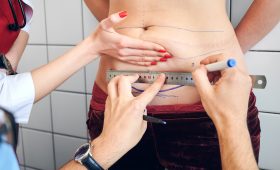
Following a comprehensive Mommy Makeover—encompassing abdominoplasty, mastopexy, and Diastasis Recti repair—the concept of “waist training” undergoes a radical shift from a cosmetic desire to a medical necessity. In the immediate post-operative phase, the use of a faja (a medical-grade compression garment) is not merely about shaping; it is a critical component of wound healing and tissue stabilization. The primary objective of this compression is to minimize the formation of seromas (fluid accumulation) and to reduce post-operative edema by applying even, controlled pressure across the abdominal and thoracic regions.
For patients undergoing a Full, Mini, or Extended (360) Tummy Tuck, the compression garment serves to press the skin flap firmly against the underlying abdominal musculature. This prevents dead space formation, which is essential for ensuring that the newly repositioned skin adheres correctly to the underlying fascia. Without this medical-grade compression, the risk of skin necrosis or uneven contouring increases significantly.
Structural Integrity: Diastasis Recti Repair and the Internal Corset
The transition from medical compression to lifestyle waist training is deeply influenced by the internal structural changes made during surgery. A pivotal element of post-pregnancy restoration is the Diastasis Recti repair. This procedure is far more complex than a surface-level skin tightening; it involves the internal corset suturing of the abdominal fascia. During this process, the surgeon re-approximates the separated rectus abdominis muscles, effectively creating a biological corset within the abdominal wall.
“The success of an abdominoplasty is predicated on the strength of the underlying fascial repair. The external compression of a faja works in tandem with the internal suturing of the diastasis recti to reinforce the midsection during the critical first weeks of healing.”
Because the integrity of these internal sutures is at its most vulnerable during the first 14 to 21 days, wearing a non-medical, highly restrictive “waist trainer” too early can be counterproductive. While the faja provides graduated, medically calculated pressure, a standard waist trainer may apply localized, uneven pressure that could potentially compromise the tension on the internal fascuar sutures.
The Transition Timeline: From Faja to Daily Wear
The transition from the medical faja to more flexible daily wear—and eventually to aesthetic waist trainers—must be governed by strict safety benchmarks. The primary metric for this transition is the stabilization of the surgical site and the resolution of significant edema.
- Phase 1: The Clinical Window (Days 1–14): During this period, the faja is non-negotiable. It must be worn 24 hours a day (except during showering) to support the breast implants (using JCI-approved brands such as Mentor, Motiva, or Polytech) and the abdominal incisions.
- Phase 2: The Stabilization Window (Weeks 2–6): The patient may begin transitioning to wearing the faja only during waking hours. This is the period where the body begins to settle, but the risk of bruising or hematoma remains.
- Phase 3: The Return to Activity (Week 6 and Beyond): Generally, 6 weeks is the milestone for a full exercise return. Only once the surgeon has confirmed that the abdominal wall is stable and the lymphatic drainage has normalized can a patient consider transitioning to lifestyle compression garments or waist trainers.
able
It is vital to note that while Vaser Liposuction is utilized for high-definition contouring with minimal bruising, the localized swelling from liposuction can still extend the need for compression beyond the standard timeline if the area treated was extensive.
The Global Hub for Aesthetic Restoration: Why Turkey?
Turkey has emerged as the undisputed global epicenter for high-end Mommy Makeovers, offering a sophisticated intersection of surgical expertise, advanced technology, and specialized post-operative care. The “Turkey advantage” lies in the seamless integration of medical precision with luxury recovery logistics. Patients traveling to Istanbul or Antalya do not simply receive a surgery; they enter a managed recovery ecosystem designed to facilitate the transition from hospital to home.
The infrastructure in Turkey is built around the concept of “recovery tourism,” where the emphasis is on minimizing the physiological stress of travel. This includes VIP private transfers from the airport to the clinic and stays in 5-star recovery suites with companion stay included. This level of care ensures that the patient’s post-operative environment is sterile, tranquil, and conducive to the rigorous healing requirements of a major reconstructive procedure.
Financial Investment in Reconstruction
Achieving a total body restoration requires a significant investment, but the cost-efficiency of Turkey remains unparalleled compared to US or UK private healthcare. Below is a breakdown of the standard investment required for these foundational procedures:
| Procedure/Package | Estimated Cost (USD) |
| Standard Mommy Makeover Package | 4,500 – 7,500 USD |
| Advanced Combination (Complex Reconstruction) | 8,000 – 12,000 USD |
| Tummy Tuck (Abdominoplasty) | 3,000 – 5,000 USD |
| Breast Lift (Mastopexy) | 2,500 – 4,500 USD |
| Liposuction (Per Area) | 500 – 1,500 USD |
| BBL (Fat Transfer) | 3,500 – 5,500 USD |
To ensure complete transparency and surgical alignment, Cure Holiday specialists recommend that all prospective patients utilize the free online video assessments with board-certified plastic surgeons. These consultations allow for a remote evaluation of the patient’s anatomy, skin elasticity, and surgical goals, ensuring that the transition from the clinical faja to a renewed, confident lifestyle is planned with medical precision from the very first interaction.
Thinking…
When Can You Wear a Waist Trainer? The Transition from Faja to Daily Wear.
The Physiological Necessity of Compression: Distinguishing the Medical Faja from the Aesthetic Waist Trainer
Post-operative recovery following a significant body contouring procedure is often defined by a period of intense compression. Patients frequently conflate the medical-grade faja—a high-pressure compression garment—with the aesthetic waist trainer used for daily waist cinching. From a clinical perspective, this distinction is vital to the success of the surgical outcome. During the initial weeks of healing, the primary objective of the faja is to manage interstitial edema (swelling) and prevent the formation of seromas (fluid pockets) by applying consistent, graduated pressure to the subcutaneous tissues.
When undergoing advanced combination surgeries, such as a tummy tuck paired with liposuction, the skin must be “trained” to adhere to the new underlying contours. The medical faja provides the necessary structural support to ensure that the skin adheres to the newly sculpted musculature and fat distribution. Transitioning to a waist trainer too early can be detrimental; unlike the medical faja, a waist trainer lacks the specific tension profiles required to manage post-surgical inflammation and can potentially compromise the integrity of the healing incisions or the newly placed fat grafts in a BBL fat transfer.
Case Study: The Transformation of a 34-Year-Old Irish Mother of Three
To understand the transition from surgical compression to daily wear, we examine the journey of a 34-year-old patient from Ireland. After three pregnancies, she presented with significant abdominal laxity and Diastasis Recti, alongside a desire for greater hip projection. Her surgical plan was an advanced combination procedure, an investment ranging between 8,000 – 12,000 USD.
Her recovery journey began in a 5-star recovery suite in Turkey, where her post-operative care was managed with clinical precision. In the first 7-10 days of her stay in Turkey, her focus was strictly on the medical faja. The garment was essential for stabilizing the internal corset suturing performed during her Diastasis Recti repair. Because her procedure involved Vaser Liposuction for high-definition contouring, the compression was vital to minimize bruising and ensure the precision of the sculpted flanks.
As she returned to Ireland, her timeline for transitioning to a standard waist trainer was dictated by her physiological healing. For the first 6 weeks, her movement was restricted to light walking to prevent deep vein thrombosis, and the faja remained her primary garment. It was only after the initial inflammatory phase subsided and her surgeon confirmed that the abdominal fascia had regained sufficient structural integrity that she was permitted to transition to more comfortable, daily-wear compression garments.
“The transition from a medical faja to a waist trainer is not a matter of personal preference, but a milestone of clinical healing. The faja manages the biology; the waist trainer maintains the aesthetic.”
The Technical Engineering of Body Contouring
Achieving a permanent, high-definition silhouette requires more than simple fat removal; it requires advanced surgical technology and precision anatomy. The success of the “transformation” depends on several technical pillars:
- Diastasis Recti Repair: For patients with abdominal separation, the surgeon performs an internal corset suturing of the abdominal fascia. This reconstructs the “natural” internal compression, providing a foundation that the external faja can then support.
- Vaser Liposultion: This ultrasound-assisted technology allows for the emulsification of fat cells with extreme precision. The benefit to the patient is a significant reduction in cellular trauma, resulting in minimal bruising and a smoother recovery period.
- Tummy Tuck Versatility: Depending on the degree of skin laxity, patients may opt for a Full, Mini, or Extended (360) tummy tuck. The 360 approach is particularly common in combination surgeries to ensure the entire circumference of the waist is addressed.
- Implant Integrity: For those undergoing breast augmentation as part of their transformation, the use of JCI-approved implants—specifically Mentor, Motiva, or Polytech—is non-negotiable to ensure long-term safety and biocompatibility.
The Financial Architecture of Aesthetic Transformation
Planning for a combination surgery requires a transparent understanding of the medical costs involved. While individual procedures are accessible, the synergy of a combined approach often provides a more comprehensive anatomical result. The following pricing structures represent the standard investments for these specialized procedures:
- Standard Package (Single Area): 4,500 – 7,500 USD
- Advanced Combination (Multi-Area): 8,000 – 12,000 USD
- Tummy Tuck (Specific): 3,000 – 5,000 USD
- Breast Lift (Mastopexy): 2,500 – 4,500 USD
- Liposuction (Per Targeted Area): 500 – 1,500 USD
- BBL Fat Transfer (Gluteal Augmentation): 3,500 – 5,500 USD
Seamless Logistics: The Patient Journey Framework
A successful surgical outcome is deeply intertwined with the quality of the perioperative experience. Cure Holiday specialists ensure that the logistical burden is removed from the patient, allowing them to focus entirely on the recovery protocols. This journey is designed around a premium, “white-glove” framework:
The journey typically begins with free online video assessments, where board-certified plastic surgeons evaluate the patient’s candidacy and provide a customized surgical roadmap. Upon arrival, patients are met with VIP private transfers from major hubs, specifically Istanbul (IST) or Antalya (AYT), ensuring a controlled and stress-free transit to the clinic.
Post-operative accommodation is centered around 5-star recovery suites. These facilities are not merely hotels but clinical-adjacent environments where a companion stay is included, allowing the patient’s partner or a caregiver to assist during the critical first days of the faja-wearing phase. This holistic approach—combining technical surgical excellence with high-tier logistics—is what defines the modern surgical transformation.
Thinking…
When Can You Wear a Waist Trainer? The Transition from Faja to Daily Wear.
The Physiological Imperative: Distinguishing Medical Compression from Waist Training
There is a common misconception that a waist trainer is simply an aesthetic accessory used for waist cinching. In the context of post-operative care following body contouring, this distinction is vital. A medical-grade compression garment, often referred to as a faja, serves a physiological purpose that far exceeds the cosmetic goals of a standard waist trainer. While a waist trainer is designed to apply external pressure to shape the silhouette, a faja is a clinical necessity designed to manage interstitial fluid, reduce the risk of seroma formation, and stabilize the newly contoured tissues.
The transition from the continuous, high-compression wearing schedule of a faja to the more flexible use of daily waist trainers or standard apparel is a delicate phase of the recovery timeline. During the initial weeks following procedures such as Vaser Liposuction, the body undergoes significant inflammatory responses. The compression provided by the faja assists in Vaser Liposuction‘s high-definition contouring by minimizing bruising and ensuring that the skin adheres tightly to the underlying muscular structure. Without this controlled pressure, the risk of skin laxity or uneven contouring increases significantly.
“Post-operative compression is not merely about shape; it is about the structural integrity of the healing fascia and the management of subcutaneous edema.”
Structural Stability: Compression in Complex Abdominal Repairs
For patients undergoing more invasive abdominal reconstructions, the role of compression becomes even more critical. When a surgeon performs a Diastasis Recti repair, the procedure involves the internal corset suturing of the abdominal fascia. This internal stabilization is supplemented by the external pressure of the faja. The goal is to prevent tension on the new sutures, allowing the abdominal wall to regain its strength without the interference of intra-abdominal pressure.
Depending on the extent of the surgical intervention, the compression requirements will vary:
- Full Tummy Tuck: Requires intensive, 24-hour compression to manage significant skin tension and subcutaneous drainage.
- Mini Tummy Tuck: Focuses on localized pressure to minimize scarring and edema in the lower abdomen.
- Extended (360) Tummy Tuck: Requires circumferential compression to ensure the lateral flanks and posterior abdominal wall are equally stabilized.
As the patient moves through the recovery phases, the transition away from the faja is usually gradual. While the primary surgical healing occurs within the first few weeks, the clinical recommendation for full exercise return is generally 6 weeks. During this window, the patient may begin transitioning from medical-grade garments to more breathable, moderate-compression waist trainers to maintain the newly achieved silhouette while the internal tissues continue to remodel.
Logistics of the Turkish Recovery Experience
One of the primary advantages of undergoing these procedures in Turkey is the integrated approach to post-operative logistics. Recovery from major procedures like a BBL fat transfer or breast implants (using Mentor, Motiva, or Polytech JCI-approved brands) requires more than just surgical excellence; it requires a seamless environment for healing. The recovery process in Turkey is designed to minimize the stress of “travel logistics” on the patient’s endocrine system.
The logistical framework is engineered for maximum patient comfort and safety:
- Arrival and Transit: Patients typically arrive via Istanbul (IST) or Antalya (AYT). Upon arrival, VIP private transfers are provided directly from the airport to the clinical or recovery site, ensuring that the patient avoids the physical strain of navigating public transport or crowded shuttles.
- Accommodation: The recovery period is centered around 5-star recovery suites. These are not merely hotel rooms but specialized environments that include companion stay options, allowing a partner or family member to assist with the patient’s needs during the initial days of mobility restriction.
- The Post-Op Timeline: The standard protocol involves a 7-10 day stay in Turkey. This period is strategically timed to allow for the initial inflammatory peak to subside before the patient undergoes the long-haul flight home, which can be physically taxing on the surgical sites.
Before even arriving in Turkey, the transparency of the process begins with free online video assessments with board-certified plastic surgeons. These consultations allow patients to discuss the technical specifics of their surgery—such as the choice between liposuction per area or a comprehensive advanced combination—ensuring that the post-operative care plan is established well before the first incision is made.
2026 Cost Breakdown: Turkey vs. UK and USA
As we look toward 2026, the financial disparity between medical tourism in Turkey and domestic procedures in the UK or USA remains a decisive factor for many patients. The ability to access premium, JCI-approved materials and high-definition technologies like Vaser at a fraction of the cost allows for more comprehensive surgical plans.
The following breakdown illustrates the projected costs for 2026:
| Procedure Type | Estimated Cost (USD) |
|---|---|
| Standard Package (Comprehensive) | 4,500 – 7,500 USD |
| Advanced Combination (Multi-area) | 8,000 – 12,000 USD |
| Tummy Tuck (Abdominoplasty) | 3,000 – 5,000 USD |
| Breast Lift (Mastopexy) | 2,500 – 4,500 USD |
| Liposuction (Per individual area) | 500 – 1,500 USD |
| BBL (Fat Transfer) | Considering a Mommy Makeover in Turkey? Get a Free Quote for your When Can You Wear a Waist Trainer? The Transition from Faja to Daily Wear Transformation with cureholiday.comFree ConsultationFill out the form below to get your free medical travel plan and price quote. You may also like... |