Cost and planning note (Mommy Makeover 2026)
The figures below are indicative market ranges, not a quote: your own price is confirmed after a clinical assessment.
Indicative price range: Standard Package: 4,500 – 7,500 USD | Advanced Combination: 8,000 – 12,000 USD | Tummy Tuck: 3,000 – 5,000 USD | Breast Lift: 2,500 – 4,500 USD | Liposuction Per Area: 500 – 1,500 USD | Bbl Fat Transfer: 3,500 – 5,500 USD
Facility standards: In Türkiye, any facility treating international patients must hold the Ministry of Health’s international health tourism authorisation; hospitals and medical centres must also be accredited by TÜSKA, and complication insurance is compulsory for procedures carried out in an operating theatre (Regulation of 26 April 2025).
Recovery Focus: Post-pregnancy body restoration & safety first.
Currency: GBP, EUR, USD accepted.
When Can You Use Scar-Reduction Gels? The “Dry Scab” Rule
The Physiology of Wound Healing and the “Dry Scab” Rule
In the context of significant post-pregnancy reconstructive surgery—such as a full abdominoplasty or a mastopexy—the management of the incision site is the most critical factor in determining the final aesthetic outcome. The “Dry Scab” rule is a fundamental principle in dermatological wound care that applies directly to surgical recovery. It posits that for optimal epithelialization and minimal hypertrophic scarring, the wound environment must remain stable; premature application of topical scar-reduction gels or aggressive massage can disrupt the delicate crusting (the scab) and potentially introduce pathogens into the healing dermis.
When undergoing a “Mommy Makeover,” the integrity of the surgical incision is paramount. Whether you are addressing skin laxity through a tummy tuck or repairing the underlying musculature, the healing process follows a strict biological timeline. During the initial inflammatory phase, the focus is on protecting the incision. Only once the wound has achieved “dryness”—meaning the scab is stable and the wound edges are no longer weeping serous fluid—can clinicians safely recommend silicone-based scar sheets or topical gels to modulate collagen production.
Reconstructing the Abdominal Core: Diastasis Recti and Fascial Integrity
Post-pregnancy restoration is often more than a cosmetic endeavor; it is a functional reconstruction. One of the most profound physiological changes following multiple pregnancies is Diastasis Recti, a condition characterized by the separation of the rectus abdominis muscles. While the surface skin may appear healed, the structural foundation of the abdomen remains compromised without surgical intervention.
Advanced Diastasis Recti repair involves much more than skin excision. The technical core of this procedure is the internal corset suturing of the abdominal fascia. By utilizing high-tensile, absorbable sutures to re-approximate the separated muscle bellies, surgeons create a biological “corset” that restores intra-abdominal pressure and stabilizes the core. This foundational repair is essential; without addressing the fascial separation, even the most aesthetically perfect tummy tuck will lack the structural tension required for a long-lasting, flat abdominal profile.
Advanced Abdominal Contouring: From Mini-Abdominoplasty to 360 Sculpting
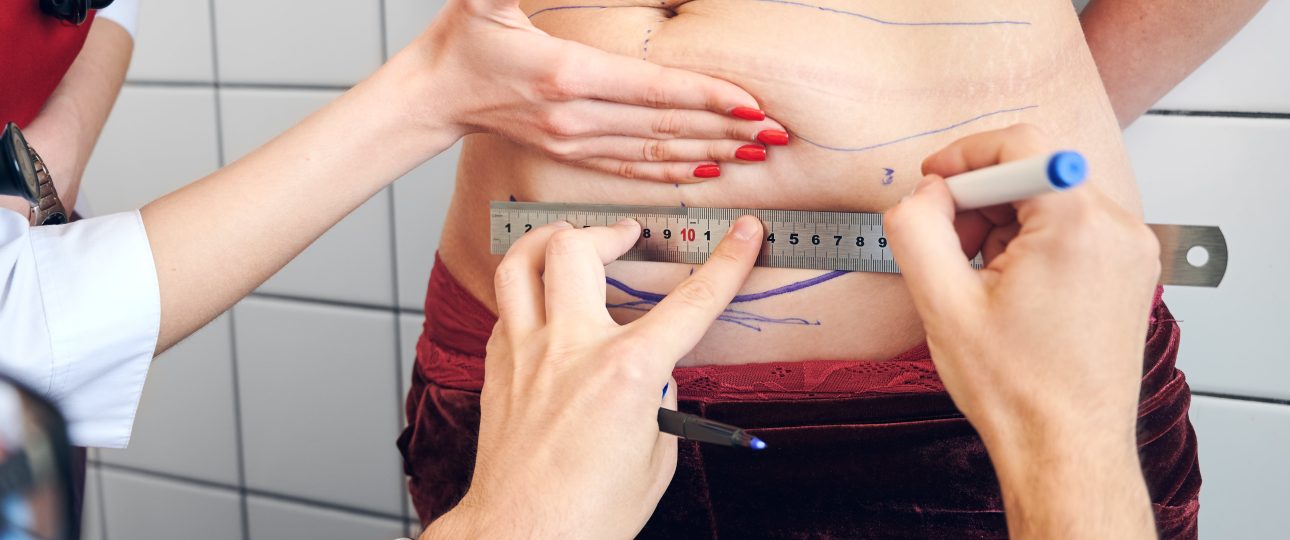
The approach to abdominal rejuvenation is never one-size-fits-all. Depending on the degree of skin redundancy and the location of existing striae (stretch marks), surgeons utilize different surgical planes:
- Mini-Abdominoplasty: Focused on the lower abdominal quadrant, ideal for patients with minimal skin laxity.
- Full Abdominoplasty: Addressing the entire abdominal wall, from the pubic area to the epigastric region.
- Extended (360) Tummy Tuck: A comprehensive approach that includes the flanks, often combined with lateral contouring.
To complement these techniques, modern restoration often incorporates Vaser Liposuction. Unlike traditional mechanical liposuction, Vaser technology uses ultrasound frequency to selectively emulsify fat cells while preserving vital structures like blood vessels and nerves. This precision is used for high-definition contouring with minimal bruising, allowing for a more sculpted transition between the abdomen and the hips. This is particularly effective when paired with BBL fat transfer, where processed adipose tissue is redistributed to enhance the gluteal projection.
Mastopexy and Augmentation: Engineering the Ideal Silhouette
Post-pregnancy breast changes often involve ptosis (sagging) and a loss of glandular volume. The foundation of breast restoration lies in the simultaneous approach of lifting the existing tissue (mastopexy) and, if necessary, augmenting volume. The safety and longevity of the result depend heavily on the biocompatibility of the implants used.
In premier surgical hubs, only JCI-approved implants are utilized to ensure global safety standards. This includes the use of industry-leading brands such as Motiva, Mentor, or Polytech. These implants are engineered with advanced cohesive silicone gels designed to mimic the natural feel of human tissue while resisting deflation or rupture. When combined with a meticulous breast lift, these implants provide the structural scaffolding necessary to counteract the effects of gravity and breastfeeding-related volume loss.
The Turkey Paradigm: Global Excellence in Post-Pregnancy Restoration
Turkey has emerged as the global epicenter for the “Mommy Makeover” due to a unique convergence of surgical expertise, advanced technological integration, and unparalleled logistical efficiency. The country’s medical infrastructure is built around the concept of “Medical Tourism Excellence,” where the focus is on seamless, high-end patient experiences that prioritize safety and recovery.
“The hallmark of the Turkish surgical model is the integration of high-specification surgical technology with a luxury recovery environment, ensuring that the postoperative period is as much about rejuvenation as it is about healing.”
The logistics of undergoing restorative surgery in Turkey are designed to minimize patient stress. Most international patients arrive via Istanbul (IST) or Antalya (AYT), where VIP private transfers are arranged directly from the airport to the clinic or recovery suite. The accommodation standard is typically a 5-star recovery suite with a companion stay included, allowing for a controlled, sterile, and comfortable environment during the most vulnerable days of healing.
Furthermore, the accessibility of expertise is unparalleled. Before even departing for surgery, patients can undergo free online video assessments with board-certified plastic surgeons. This allows for a preliminary analysis of skin elasticity, muscle separation, and anatomical suitability, ensuring that the surgical plan is medically sound and personalized to the individual’s post-pregnancy anatomy.
Investment and Financial Planning
Achieving a complete restoration requires a transparent understanding of the financial commitment. While the costs in Turkey are significantly more competitive than in Western Europe or North America, the emphasis remains on premium, high-specification care. Below are the estimated cost structures for common restorative procedures:
- Standard Package (Foundational Reconstruction): 4,500 – 7,500 USD
- Advanced Combination (Comprehensive Mommy Makeover): 8,000 – 12,000 USD
- Tummy Tuck (Abdominoplasty): 3,000 – 5,000 USD
- Breast Lift (Mastopexy): 2,500 – 4,500 USD
- Liposuction (Per target area): 500 – 1,500 USD
- BBL (Fat Transfer): 3,500 – 5,500 USD
The Recovery Timeline and Post-Operative Milestones
Success in post-pregnancy restoration is measured by the patience of the patient during the remodeling phase. The initial recovery period involves 7-10 days in Turkey, during which the patient remains in a controlled environment under the supervision of medical staff to monitor for any complications such as seromas or hematomas.
While the surgical incisions may appear healed within weeks, the internal remodeling of the fascia and the settling of the implants take much longer. Patients should expect a period of restricted movement, with a 6-week timeline for a full return to exercise. During this period, adherence to the surgeon’s protocols regarding compression garments and the “Dry Scab” rule for scar management is non-negotiable for achieving the intended aesthetic foundation.
The Science of Scars: Understanding the “Dry Scab” Rule
Post-operative scar management is often the most anxiety-inducing phase of the patient journey. Many patients, eager to mitigate the appearance of surgical incisions, attempt to apply silicone gels or medicated ointments prematurely. However, applying topical agents to an unhealed wound can disrupt the delicate process of epithelialization and increase the risk of infection or hypertrophic scarring.
The “Dry Scab” Rule is a fundamental principle in wound care: scar-reduction gels should only be introduced once the wound is completely closed, the scab has naturally detached, and the underlying skin is “dry” and no longer weeping serous fluid. Premature application can trap bacteria beneath a moisture barrier, potentially leading to dehiscendece (the reopening of the wound edges). Mastering this timeline is critical, especially following complex, multi-site procedures where the body is managing multiple healing trajectories simultaneously.
Case Study: A Journey Toward Reconstruction
To understand the complexity of this healing journey, consider the case of Aoife, a 34-year-old Irish mother of three. Following three pregnancies, Aoife presented with significant abdominal distension, skin laxity, and localized adipose deposits around the flanks. Her primary concern was not merely aesthetic but functional, as she experienced core instability due to Diastasis Recti.
Aoife’s transformation required an advanced combination approach, moving beyond simple liposuction to a comprehensive body contouring reconstruction. Her surgical plan involved a combination of a Full Tummy Tuck (360), Vaser Liposuction for flank contouring, and a BBL (Brazilian Butt Lift) fat transfer to restore lost volume to the gluteal region.
“The goal for patients like Aoife is not just the removal of excess tissue, but the structural restoration of the abdominal wall to provide long-term physical stability.”
The Technical Precision of Combination Surgery
The success of a multi-area transformation depends on the surgical integration of different techniques. In Aoife’s procedure, the surgeons focused on the internal architecture of the abdomen. A critical component was the Diastasis Recti repair, which involves the meticulous internal corset suturing of the abdominal fascia. This process pulls the separated rectus abdominis muscles back to the midline, tightening the “natural corset” of the body.
To complement the abdominal tightening, Vaser Liposultion was utilized. Unlike traditional liposuction, Vaser technology uses ultrasound frequency to emulsify the subcutaneous adipose tissue, allowing for high-definition contouring with minimal bruising and reduced trauma to the surrounding vascular structures. The harvested fat was then processed and redistributed via BBL fat transfer, ensuring the patient achieved a balanced, anatomical silhouette.
For patients seeking upper body enhancement alongside abdominal work, the integration of mastopexy (breast lift) is common. Depending on the patient’s anatomy, surgeons utilize Mentor, Motiva, or Polytech implants—all of which are JCI approved—to ensure biocompatibility and long-term safety. The choice between a Full, Mini, or Extended (360) tummy tuck is determined by the extent of the skin laxity and the necessity of umbilical repositioning.
The Patient Journey: Logistics and Recovery
The transition from surgical theater to recovery is managed through a highly structured logistics framework designed to minimize patient stress. For international patients traveling to Istanbul (IST) or Antalya (AYT), the process begins with free online video assessments with board-certified plastic surgeons, allowing for precise preoperative planning and cost transparency.
- Arrival: Upon arrival, patients are met with VIP private transfers from the airport to the clinic and onwards to their accommodation.
- Accommodation: Recovery takes place in 5-star recovery suites, where a companion stay is included to ensure the patient has constant support during the initial inflammatory phase of healing.
- Initial Recovery: The acute recovery phase requires 7-10 days in Turkey, focusing on wound monitoring and preventing deep vein thrombosis (DVT).
- Long-term Integration: While the incisions may appear healed, the remodeling phase of the scar continues for months. Patients must adhere to a strict protocol, noting that a 6 weeks period is required before a full return to strenuous exercise.
Investment in Transformation: Cost Transparency
Comprehensive body contouring is a significant investment in one’s long-term health and confidence. Understanding the breakdown of these costs is essential for clinical planning. Prices vary based on the complexity of the “advanced combination” and the number of surgical sites involved.
Standard surgical components include:
- Standard Package (Single Area): 4,500 – 7,500 USD
- Advanced Combination (Multi-area): 8,000 – 12,000 USD
- Tummy Tuck (Abdominoplasty): 3,000 – 5,000 USD
- Breast Lift (Mastopexy): 2,500 – 4,500 USD
- Liposuction (Per targeted area): 500 – 1,500 USD
- BBL Fat Transfer: 3,500 – 5,500 USD
By adhering to the “Dry Scab” Rule and following the professional guidance provided by Cure Holiday specialists, patients can navigate the complex physiological landscape of post-operative healing, ensuring that the surgical results are matched by aesthetic scar perfection.
The Physiological Threshold: Understanding the “Dry Scab” Rule in Scar Management
Post-surgical wound care is a delicate balance between protecting the newly formed epithelium and facilitating the remodeling phase of healing. For patients undergoing extensive procedures—such as a Full, Mini, or Extended (3/60) Tummy Tuck—the management of the incision line is paramount to preventing hypertrophic scarring or keloid formation. The “Dry Scab” rule is the clinical gold standard for determining when topical silicone-based gels can be safely applied to the surgical site.
During the initial inflammatory phase of wound healing, the incision is often covered by a serosanguinous exudate or a protective crust, known as a scab. Applying silicone gels, which are designed to create an occlusive, semi-permeable barrier, too early can be counterproductive. If the wound is not “dry”—meaning the scab is not fully intact and the underlying tissue is not stabilized—the occlusion can trap moisture and bacteria beneath the gel layer, potentially leading to maceration or localized infection.
The transition to silicone therapy should only occur once the wound has achieved epithelial closure. This is the point where the scab has naturally desiccated and the skin surface is no longer weeping. Applying silicone prematurely can disrupt the natural hemostasis and impede the delicate proliferative phase of the healing process.
For those undergoing Vaser Liposuction, the management strategy differs slightly. Because Vaser technology utilizes ultrasonic frequencies to emulsify subcutaneous adipose tissue with minimal bruising, the cannula entry points heal much faster than a long abdominal incision. However, the principle remains: the puncture sites must be fully epithelialized before the application of medicated scar treatments to ensure the integrity of the new tissue.
Advanced Wound Care and Surgical Specifics
Effective aftercare requires an understanding of the specific surgical techniques employed during your procedure. The complexity of your recovery timeline is often dictated by the depth of the surgical intervention. For instance, Diastasis Recti repair is not merely a cosmetic adjustment; it involves the internal corset suturing of the abdominal fascia to reinforce the core. This deeper structural repair necessitates a more conservative approach to physical movement and wound tension management during the first 14 days.
When considering breast augmentation, the type of implant utilized—whether Mentor, Motiva, or Polytech (JCI approved)—can influence the postoperative swelling profile. The tension placed on the submuscular or subglandular pocket dictates how much pressure the incision can withstand during the initial healing stages. Similarly, in BBL (Brazilian Butt Lift) fat transfer, the focus shifts from incision care to the preservation of the transferred fat cells through controlled compression and the avoidance of direct pressure on the gluteal region.
The Logistics of Recovery: A Premium Post-Operative Framework
Recovery from major reconstructive surgery is not merely a medical necessity but a logistical undertaking. At Cure Holiday, we emphasize a seamless transition from the operating theatre to a restorative environment. The recovery process in Turkey is designed to minimize the physiological stress of travel and post-operative pain.
- Arrival and Transport: Upon landing at Istanbul (IST) or Antalya (AYT), patients are met by VIP private transfers. This eliminates the stress of navigating unfamiliar transit systems while managing post-surgical edema or mobility restrictions.
- The Recovery Suite: To facilitate optimal healing, we utilize 5-star recovery suites. These are not merely hotel rooms but clinical-grade environments designed for convalescence. These suites are specifically designed to allow for companion stay included, ensuring that if you have traveled with a partner or a family member, they can assist with mobility and monitoring without the need for separate, disconnected accommodations.
- Pre-Surgical Precision: The logistics begin long before you board a plane. Through free online video assessments with board-certified plastic surgeons, a personalized recovery roadmap is established, ensuring all medical prerequisites are met.
Navigating Post-Op Mobility and Family Logistics
One of the most significant challenges for international patients is managing “life” during the recovery window. The 7-10 day stay in Turkey is a period of intensive monitoring, but the true recovery extends well beyond your departure. While you may be cleared to fly after approximately 10 days, the physiological reality is that full return to exercise takes approximately 6 weeks.
For patients managing childcare or professional responsibilities, this window requires meticulous planning. The “Fly-Home” timeline must account for the risk of venous thromboembolism (VTE) and the necessity of wearing compression garments during long-haul flights. We recommend coordinating your return to a period where your domestic support system is at its peak, as the first 14 days post-flight often involve managing fatigue and managing the “rebound” swelling that occurs with changes in cabin pressure.
2026 Financial Roadmap: Turkey vs. UK/USA
As we look toward 2026, the cost disparity between Turkey and traditional Western healthcare hubs (UK/USA) remains a significant driver for medical tourism. However, the value lies not just in the lower price point, but in the all-inclusive nature of the Turkish recovery model, which integrates premium accommodation and logistics into the surgical cost.
Below is a breakdown of the projected costs for 2026 surgical packages:
| Procedure Type | Estimated Cost (USD) |
|---|---|
| Standard Surgical Package | 4,500 – 7,500 USD |
| Advanced Combination (e.g., Lipo + BBL) | 8,000 – 12,000 USD |
| Abdominoplasty (Tummy Tuck) | 3,000 – 5,000 USD |
| Mastopexy (Breast Lift) | 2,500 – 4,500 USD |
| Liposuction (Per Treated Area) | 500 – 1,500 USD |
| BBL (Fat Transfer) | 3,500 – 5,500 USD |
When comparing these figures to the UK or USA, it is essential to factor in that the Turkish standard_package often encompasses much of the post-operative logistics—including high-end transfers and recovery-focused accommodation—that would otherwise be an out-of-pocket expense in Western private healthcare.
Considering a Mommy Makeover in Turkey? Get a Free Quote for your When Can You Use Scar-Reduction Gels? The “Dry Scab” Rule Transformation with cureholiday.com
Free Consultation
Fill out the form below to get your free medical travel plan and price quote.
Sources and how to verify this yourself
- Ministry of Health, Regulation on International Health Tourism and Tourist Health, Official Gazette 26 April 2025, No. 32882 — authorisation requirement for facilities and intermediaries, TÜSKA accreditation, compulsory complication insurance (deadline 31 December 2025 for insurance, 31 December 2026 for accreditation). source
- Ministry of Health, Regulation on Promotion and Information Activities in Health Services, Official Gazette 12 November 2025, No. 33075 — treatment promises and guarantees are prohibited; price and campaign announcements are permitted only within international health tourism. source