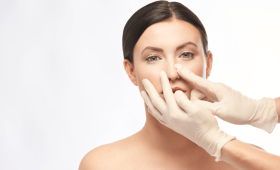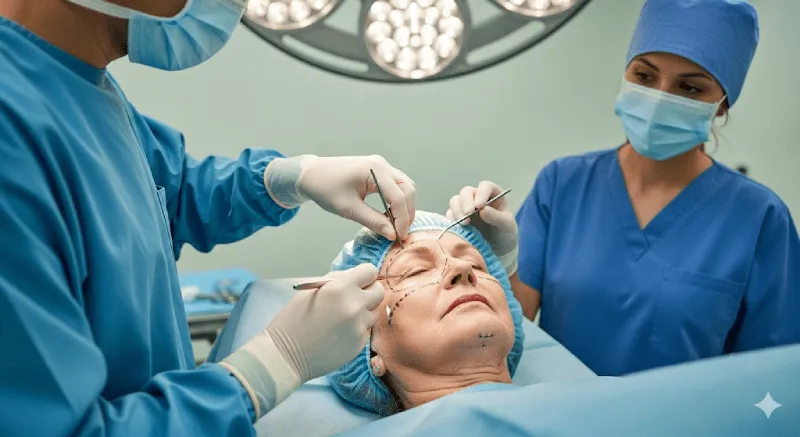
The world of medical aesthetics has evolved at an incredible pace in recent years, making it easier than ever to rejuvenate and define facial features without going under the knife. At this point, two fundamental applications that are most wondered about and often confused with each other come to the fore: Botox and fillers. Although both procedures are used to fight signs of aging, their working mechanisms, ingredients, and application purposes are completely different. Understanding the differences between these two methods in depth is of great importance for making the right choice, meeting your expectations, and achieving a natural look. In this giant guide, we will answer all the questions you might have about Botox and fillers from an expert perspective.
What is the fundamental difference between Botox and fillers?
The most basic difference between Botox and fillers lies in the logic of application; Botox prevents wrinkles by relaxing muscles, while fillers fill gaps by replacing lost volume. Botox temporarily blocks signals from nerve endings to muscles, thereby smoothing dynamic wrinkles caused by facial expressions. On the other hand, fillers are injected under the skin to lift collapsed areas, fill deep lines from the inside, and add volume to the face. In other words, Botox is a “motion control” mechanism, while filler is a “structuring and volumizing” tool.
What substance is Botox derived from?
Botox is actually a purified protein obtained in a laboratory environment from the bacterium “Clostridium botulinum.” Contrary to the popular misconception that it is “snake venom,” this substance is a medical drug and belongs to the class of neurotoxins. It is produced through highly sensitive processes in approved laboratories and safely controls muscle activity when used in very low doses. In medicine, it has been used safely for decades not only for aesthetic purposes but also in the treatment of many neurological and systemic diseases such as strabismus, muscle spasms, and excessive sweating.
What are dermal fillers made of?
The most commonly used fillers today consist of hyaluronic acid, a type of sugar found naturally in the human body. Because hyaluronic acid has the capacity to hold up to a thousand times its own weight in water, it makes the skin look moist, plump, and vibrant. In addition, there are also types of biostimulant fillers that trigger collagen production, such as calcium hydroxylapatite (similar in structure to bone minerals) or poly-L-lactic acid. The common feature of these substances is that they are compatible with the body and are naturally metabolized and excreted from the body over time.
How does Botox affect the muscles?
Botox prevents the release of a neurotransmitter called acetylcholine in the area where it is injected. Acetylcholine is a substance that allows nerves to give the “contract” command to muscles. When Botox cuts this communication, the muscle temporarily relaxes or its activity decreases. This prevents the skin over the muscle from folding, allowing existing wrinkles to soften over time and preventing new wrinkles from forming. The aim is not to completely paralyze the treated muscle, but to limit its movement at the right dose to achieve a natural and rested look.
How do fillers address volume loss?
With the aging process, fat pads in the skin melt, bone structure thins, and the amount of collagen decreases. This causes the face to sag downwards and gaps to form. Dermal fillers are used to directly replace this “lost volume.” When the gel-like substance is placed in the targeted area, it creates a support structure and smoothens the tissue by pushing it upwards. Especially in areas such as cheekbones, under-eye hollows, and nasolabial lines, fillers help the face regain its old youth triangle (voluminous at the top, thin at the bottom).
Which type of wrinkle should Botox be chosen for?
Botox is ideal for “dynamic wrinkles,” which are lines that appear during facial movements and expressions. For example, crow’s feet that form when you smile, frown lines that deepen between the eyebrows when you are angry, or horizontal forehead lines that appear when you are surprised are the primary areas of Botox’s operation. When these lines are intervened before they form a permanent “mark” or “crease” on the skin, Botox provides miraculous protection. If the line is only visible when making an expression, your solution is definitely a Botox application performed by expert hands.
Why are fillers more effective for static wrinkles?
Static wrinkles are marks that can be seen even when your face is completely motionless, carved into the skin like a line. These lines usually form as a result of sun damage, smoking, and age-related collagen loss. Since they are not directly related to muscle movement, simply relaxing the muscle (Botox) is not enough to eliminate these hollows. This is where fillers come in; with their gel structure, they fill the underside of these deep lines and bring them to the same level as the surface. “Marionette lines” at the corners of the mouth or deep grooves descending from the nose to the lips are static in nature and give excellent results with fillers.
When are the results of a Botox application seen?
Botox is not a procedure that gives immediate results the moment it is injected; a process is needed for the drug to bind to nerve endings and affect muscle activity. Generally, the first effects start 2 to 4 days after the injection with a feeling of “slight tension.” It takes 10 to 14 days for the full effect to settle and the muscle to relax to the desired level. That’s why many physicians call their patients for a control appointment in the second week of the application to make small touches and symmetry corrections. Being patient is critical to wait for the most natural result.
Is the change after a filler procedure noticed immediately?
One of the biggest advantages of fillers is that the results are visible as soon as the procedure is finished. When the injection is completed, the increase in volume and the erasing of lines in the treated area are immediately noticed. However, this image is not the final result. Slight edema (swelling) and sensitivity due to the needle entry after the procedure may cause the result to look a little more voluminous than it is in the first 24-48 hours. It takes about 2 weeks for the filler to fully integrate with the tissue and settle by holding water. At the end of this period, the filler reaches its most natural and smooth form.
How long does the effect of Botox last?
Unfortunately, the effect of Botox is not permanent, and the body metabolizes this protein over time. Generally, the effectiveness of Botox lasts between 3 and 6 months. This period may vary according to the person’s metabolic rate, muscle strength, smoking habits, and the intensity of exercise performed. In applications performed at regular intervals (for example, 2-3 times a year), it has been observed that the effect lasts longer and wrinkles form later because the target muscles weaken over time. Regularity is the key to success in Botox treatment.
How long do filler substances stay in the body?
The persistence of fillers varies according to the density of the product used and the mobility of the area where the application is made. While filler can melt within 6-9 months in very mobile areas such as lip fillers, it can provide persistence for up to 12-18 months in more stationary areas such as the cheekbone or jawline. Hyaluronic acid-based fillers are naturally absorbed by the body over time. If the filler used has a denser structure or carries collagen-triggering properties, this period can be extended up to 2 years. Persistence depends entirely on the selected product and individual biological factors.
Which method is preferred for lip plumping?
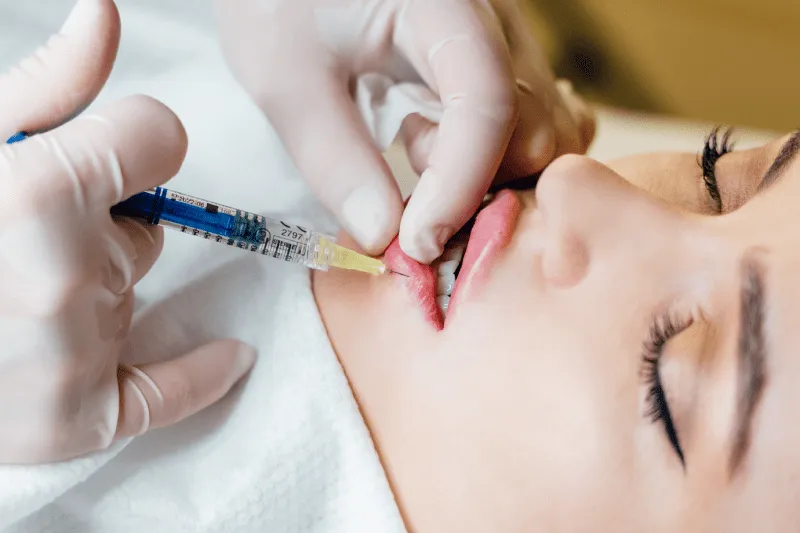
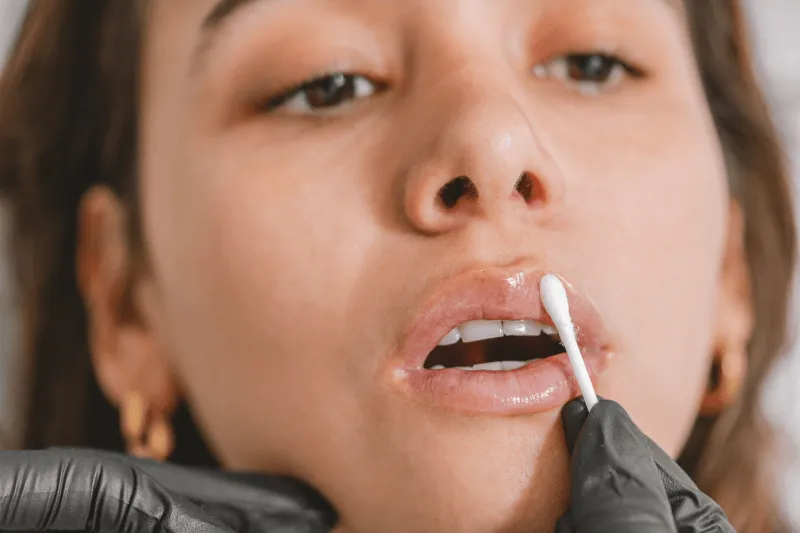
Fillers are almost always preferred to give volume to the lips, define their borders, and correct asymmetries. Since the lip structure is soft, hyaluronic acid fillers provide a natural flexibility and fullness in this area. However, sometimes with a technique called “Lip Flip,” a very small dose of Botox can be applied to the upper lip edge to allow the lip to curl slightly upwards and look wider. Still, if a real “plumpness” and “shaping” in the lips is desired, the gold standard is dermal fillers.
Should Botox or fillers be applied for forehead lines?
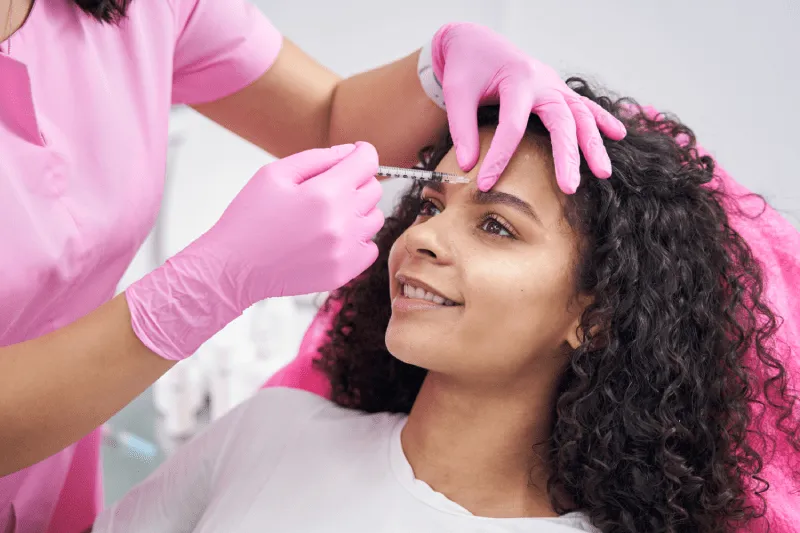
Forehead lines are usually dynamic lines formed by the eyebrow-lifting movement, so the solution is always Botox in the first place. Botox allows these lines to open by relaxing the broad muscle in the forehead. However, if there are forehead lines that have been neglected for years and have become very deep, that is, if deep creases remain there even when you do not lift your eyebrows, Botox alone may not be enough. In such cases, muscle movement is first stopped with Botox, and about 2 weeks later, a fine-structured filler is injected to smooth out the inside of the remaining marks. This dual combination provides a glass-like smoothness on the forehead.
What is the best solution for crow’s feet around the eyes?
The undisputed best solution for “crow’s feet” around the eyes is Botox application. These lines, formed by the contraction of the orbicularis oculi muscle surrounding the eye, soften in seconds thanks to the relaxation of the outer part of this muscle with Botox. Since the skin around the eyes is very thin, the use of fillers in this area is quite risky and can often lead to unnatural bagging. If there is a collapse under the eye, special fillers such as “Light Filling” can be used, but the only real solution for the crow’s feet on the side is regular Botox sessions.
Are fillers used to define the facial oval?
Yes, fillers are used to sharpen the facial oval, lift sagging tissues, and define the jawline. Especially to maintain the young face form called V-line, fillers applied on the cheekbone reduce accumulations in the lower face by pulling the middle face up. Fillers applied to the chin tip and chin corners strengthen the profile appearance and make the facial oval look more aesthetic. Botox, at this point, can only play an auxiliary role in narrowing the lower part of the face by thinning the jaw muscles with “Masseter Botox.”
How is Botox used in the treatment of sweating?
Botox has created a revolution not only for aesthetic purposes but also in the treatment of excessive sweating (hyperhidrosis), which is a medical necessity. When applied to areas such as armpits, palms, and soles of the feet, it temporarily stops the nerve signals that stimulate the sweat glands. In this way, sweating is reduced to almost zero, and this effect usually continues for 6 to 9 months. Especially for people who experience excessive sweating problems in social and professional life, Botox is one of the safest and most effective methods that increase life quality.
How do filler substances shape the jawline?
Jawline filler is done to give the lower part of the face a stronger, masculine, or characteristic look. Densely structured fillers injected onto the jawbone hide the sagging in the jowl area, bring the chin tip forward, and clarify the distinction between the face and neck. This procedure makes the face look thinner and fitter. Especially in people with a “weak chin” structure, jaw filler performed to establish profile balance can transform the person’s entire facial expression into a more confident and attractive one.
Is Botox application a painful procedure?
Botox application is one of the most comfortable aesthetic procedures in the world. Since it is performed using micro-needles similar to insulin needles with very fine tips, the pain felt is usually as small a sting as a “mosquito bite.” Most patients do not even feel the need to use any numbing cream. The procedure takes only 5-10 minutes and one can return to daily life immediately after. In people with sensitive skin, very rarely there may be small redness at the needle entry points, but these also disappear spontaneously within a few hours.
Is pain felt during filler injection?
Filler procedures are a slightly different feeling than Botox because a gel-like substance is placed into the tissue. However, most modern fillers contain a local anesthetic substance called “Lidocaine.” In this way, the area becomes numb immediately after the needle enters, and the procedure is completed quite comfortably. In addition, the sense of pain is minimized thanks to strong numbing creams applied to the area before the procedure or nerve blocks performed in some areas. It is normal to feel a slight pressure or fullness after the procedure.
Can Botox and fillers be done at the same time?
Absolutely yes! In fact, doing these two procedures together is called a “Liquid Facelift,” and this approach gives the most holistic rejuvenation result. While Botox eliminates wrinkles in the upper face, fillers treat volume losses and saggings in the middle and lower face. They complement each other; Botox can extend the life of the filler by calming the muscles, and the filler can erase deep static lines that Botox is not enough for. An expert physician will evaluate your face as a whole, determine which areas need Botox and which areas need fillers, and offer you the most natural change.
How long does the recovery process take after the procedure?
Both Botox and fillers are known as “lunchtime aesthetics,” meaning the recovery process is almost non-existent. After Botox, you are only asked not to lean forward for 4 hours, not to do heavy sports, and not to massage your face. After fillers, a slight edema or rarely bruising may occur in the application area for the first few days. These bruises can be easily covered with makeup and usually pass completely within a week. The vast majority of patients can continue their work or social programs without any restrictions immediately after leaving the clinic.
What are the possible side effects of Botox and fillers?
As with any medical intervention, these procedures also have some risks, but they are usually temporary and mild. The most common side effects are redness, swelling, sensitivity, and bruising at the injection site. In Botox, temporary eyebrow or eyelid drooping can rarely be seen; this situation usually improves spontaneously within 2-3 weeks. In fillers, the most important risk is intravascular injection or asymmetry. Therefore, it is of vital importance that these procedures are performed by highly experienced specialist physicians with high anatomical knowledge and in a sterile clinic environment.
Is it safe to have these procedures during pregnancy?
As a general rule in the medical world, Botox and filler applications are not recommended during pregnancy and breastfeeding periods unless there is a vital necessity. There are not enough scientific studies on the effects of these substances on the fetus or breast milk. Since such studies cannot be performed for ethical reasons, doctors recommend waiting for these processes with the “safety first” principle. Aesthetic procedures are postponable processes; therefore, in order not to risk the health of your baby and yourself, it would be best to plan these procedures after the breastfeeding process is completed.
Are Botox and filler applications suitable for men?
Yes, the demand for aesthetic procedures among men (such as Brotox) has been increasing rapidly in recent years. Since the muscle structure of men is stronger, the Botox doses used are usually higher than those for women. In men, the main goal is not to completely destroy the expression, but to soften the tired and harsh appearance. In filler applications, it is essential to protect “masculinity” in men; for example, strengthening the jawline instead of defining the cheekbones is an approach more suitable for male facial anatomy. With the right technique, a extremely natural and vigorous appearance is obtained in men as well.
What should be considered to achieve a natural look?
The key to a natural look is the “less is more” philosophy. Botox doses that do not freeze the expression of the face and do not completely destroy the mimics, and filler amounts that do not inflate the facial features and only support them, always give more successful results. Also, physician choice is very critical; you should work with an expert who knows the golden ratios of the face and does not make the “same face for everyone.” Remember, the best aesthetic procedure is the one that is not obvious, but makes those around you say, “you look very rested, there is a beauty in you.”
What determines the prices of Botox and fillers?
Pricing usually varies according to the quality (brand) of the product used, the amount, and the experience of the physician performing the procedure. Botox prices are usually calculated based on “region” or “unit,” while filler prices are determined over the “number of syringes used.” It is critical for health to avoid cheap and unidentified products; because the costs of FDA-approved, reliable brands are standard. When your health is in question, keeping the physician’s expertise and the originality of the material used at the forefront instead of the price will be the most profitable investment in the long run.
At what age should Botox or fillers be started?
There is no single answer to this because the rate of aging varies from person to person according to genetics, lifestyle, and sun exposure. However, the general trend is to start Botox as a “preventative” in the late 20s or early 30s. The aim is to control muscle movements before lines settle on the skin. For fillers, the mid-30s, when volume loss in the middle face is noticed, may be a suitable start. In short, when you notice a situation that disturbs you when looking in a mirror, you can get an expert opinion regardless of your age.
How can an incorrectly performed Botox application be corrected?
Botox does not have a direct “antidote,” meaning it is expected for the body to metabolize the drug after an incorrect or excessive application. However, in some cases, asymmetries (such as a raised eyebrow) can be balanced by making additions in small doses to opposing muscle groups. In cases such as eyelid drooping, it can be ensured that the muscle is temporarily pulled up with special eye drops. Since the effect of Botox decreases by 25% every month, knowing that unsatisfactory results improve largely within 2-3 months is comforting for patients.
Can a filler substance be reversed when not wanted?
The biggest advantage of fillers containing hyaluronic acid is that they can be dissolved within minutes with a special enzyme called “Hyaluronidase.” If the filler performed is asymmetrical, has clumped, or the patient could not get used to the result, the doctor can safely destroy the filler by injecting this enzyme into the area. This situation offers a great safety zone to the patient. However, dissolving calcium-based or permanent fillers is not that easy; therefore, choosing hyaluronic acid fillers at the beginning is always a smarter and safer approach.
Can products applied at home take the place of Botox and fillers?
Creams sold as “Botox effect” or “lip plumping” serums on the market unfortunately cannot take the place of professional injections. Creams can only affect the top layer of the skin, giving a superficial moisturization and a temporary feeling of tension, but it is biologically impossible for them to reach the muscles or deep tissue losses under the skin. These cosmetics are great supporters to protect the results of medical procedures and increase skin quality, but medical interventions performed in a clinic environment are essential for a real volume or muscle relaxing effect.
How to start the aesthetic journey with Cure Holiday?
If you need professional guidance to achieve the appearance of your dreams, Cure Holiday is the most reliable starting point for you. The process begins with the first meeting you will have with Cure Holiday’s expert consultants. Your aesthetic goals, facial structure, and needs are analyzed, and a personalized treatment plan is created for you. Cure Holiday sees its patients not just as a “case” but as guests, and offers a personalized experience from the first step to the last. Transparency and trust are essential at every stage of the process.
Why should Cure Holiday be the first choice in aesthetic treatments?
Cure Holiday is an organization that provides world-class service in the field of medical aesthetics, uses the latest technologies, and works with surgeons/doctors who are considered authorities in their fields. With an understanding that keeps your health and aesthetic expectations above everything, a boutique service is offered to every patient. The originality of the products used, the sterilization of the clinics, and ethical working principles distinguish Cure Holiday from other institutions in the sector. Here, you not only have a procedure done but also become part of a professional network where you will feel safe.
What are the advantages of being treated with Cure Holiday in Turkey?
While Turkey is accepted as the heart of medical tourism globally, Cure Holiday is one of the most qualified representatives of this heart. The biggest advantage of being treated in Turkey is to be able to reach experts with high experience with much more accessible budgets compared to Europe and America. Cure Holiday transforms this process into an “aesthetic holiday” concept for you. Every detail from your transportation to your accommodation, from your treatment in the best hospitals to your post-procedure follow-up is meticulously planned. It is a unique opportunity to both receive a professional treatment and discover the beauties of Turkey.
How to get a Botox and filler appointment with Cure Holiday?
Taking the first step for change is very easy. When you reach the expert team via Cure Holiday’s website or communication lines, a special consultation appointment is planned for you. In this appointment, you can find answers to all your questions and learn about the changes that Botox and filler combinations will create on your face. Cure Holiday manages the planning process completely digitally and quickly, ensuring that you use your time most efficiently. Now, you are invited to the world of Cure Holiday to say goodbye to the tired expression in the mirror and return to the most radiant state of your youth.
In summary, Botox and fillers are not rivals to each other, but two powerful aesthetic tools that complement each other perfectly. Depending on whether you want to stop your wrinkles or gain volume, or with a combination of both, it is now much easier to achieve the fresh appearance you dream of. Remember, the best result always comes with the right expert and the right planning. Do yourself a favor and move forward with a professional center that represents quality, trust, and expertise in your aesthetic journey.
Free Consultation
Fill out the form below to get your free medical travel plan and price quote.