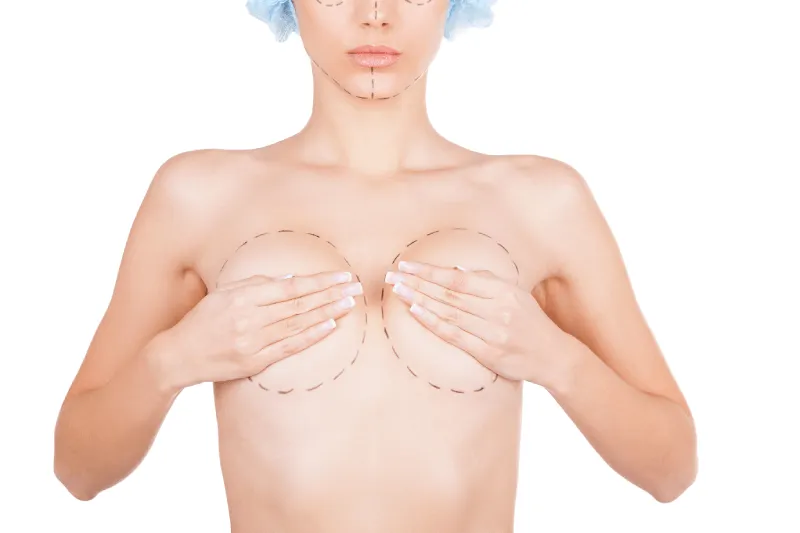
Cost and planning note (Mommy Makeover 2026)
The figures below are indicative market ranges, not a quote: your own price is confirmed after a clinical assessment.
Indicative price range: Standard Package: 4,500 – 7,500 USD | Advanced Combination: 8,000 – 12,000 USD | Tummy Tuck: 3,000 – 5,000 USD | Breast Lift: 2,500 – 4,500 USD | Liposuction Per Area: 500 – 1,500 USD | Bbl Fat Transfer: 3,500 – 5,500 USD
Facility standards: In Türkiye, any facility treating international patients must hold the Ministry of Health’s international health tourism authorisation; hospitals and medical centres must also be accredited by TÜSKA, and complication insurance is compulsory for procedures carried out in an operating theatre (Regulation of 26 April 2025).
Recovery Focus: Post-pregnancy body restoration & safety first.
Currency: GBP, EUR, USD accepted.
Addressing “Chest-Gap” Issues after Breastfeeding and Weight Fluctuations
The Biological Reality of Post-Lactational Ptosis and Abdominal Laxity
The physiological transformations experienced during pregnancy and breastfeeding are profound. While these processes are essential for neonatal nutrition, they often leave a lasting impact on the structural integrity of the maternal physique. Many women report a distinct “chest-gap”—a combination of decreased breast volume, loss of projection, and upper pectoral hollows—alongside a lack of abdominal definition. This is not merely a cosmetic concern but a structural one, involving the degradation of collagen fibers and the stretching of the dermal matrix.
Addressing these changes requires more than surface-level fat removal; it necessitates a foundational reconstruction of the underlying tissue. The “Mommy Makeover” approach focuses on two primary pillars: the restoration of the abdominal wall (addressing Diastasis Recti) and the repositioning of the mammary tissue (Mastopexy). By integrating advanced surgical techniques, it is possible to close the “gap” both aesthetically and structurally.
Rebuilding the Core: Diastasis Recti Repair and Abdominoplasty
One of the most persistent issues following multiple pregnancies is Diastasis Recti—the separation of the rectus abdominis muscles. This separation creates a protrusion in the midline of the abdomen, often referred to as a “pooch,” which cannot be resolved through diet or exercise alone.
Modern reconstructive protocols involve much more than skin excision. A critical technical component of a high-quality abdominoplasty is Diastasis Recti repair, which involves internal corset suturing of the abdominal fascia. By using heavy-duty, absorbable sutures to pull the separated muscle bellies back to the midline, surgeons create a biological “corset.” This stabilizes the intra-abdominal pressure and flattens the profile from the inside out.
Depending on the degree of skin laxity and muscle separation, patients may opt for different surgical modalities:
- Mini-Abdominoplasty: Targeted at patients with localized skin laxity in the lower abdomen.
- Full Abdominoplasty: For those requiring significant removal of excess skin and deeper muscle repair.
- Extended (360) Tummy Tuck: A comprehensive approach that addresses the flanks and lower back, ideal for those experiencing circumferential looseness.
The cost for a tummy_tuck typically ranges from 3,000 – 5,000 USD, providing a foundation for total body reconfiguration.
Addressing the “Chest-Gap”: Mastopexy and Volume Augmentation
The sensation of a “gap” in the upper chest area often stems from mammary ptosis (sagging) and the loss of the upper pole fullness. During breastfeeding, the expansion and subsequent contraction of the mammary glands can lead to an empty appearance in the superior portion of the breast.
To resolve this, surgeons utilize Mastopexy (breast lift) to reposition the nipple-areola complex to a higher, more aesthetic position. To restore the lost volume and “close” the gap, the integration of high-quality implants is often necessary. To ensure patient safety and long-term stability, only JCI-approved implants are utilized, specifically Mentor, Motiva, or Polytech. These implants are engineered to mimic the natural movement of human tissue, preventing the “unnatural” look often feared in breast augmentation.
A breast_lift is priced between 2,500 – 4,500 USD. When combined with augmentation, the procedure addresses both the structural drop and the volume deficit simultaneously.
Synergistic Contouring: Vaser Liposuction and Fat Transfer
A truly cohesive restoration requires the refinement of the surrounding contours. Often, even after the abdominal wall is repaired, stubborn adipose deposits remain around the waist or hips. This is where Vaser Liposuction becomes essential. Unlike traditional liposuction, Vaser technology uses ultrasound energy to selectively emulsify fat cells while preserving surrounding structures like nerves and blood vessels. This allows for high-definition contouring with minimal bruising.
Furthermore, the harvested fat can be repurposed through BBL (Brazilian Butt Lift) fat transfer. This creates a “closed-loop” surgical system where the patient’s own biological material is used to enhance the gluteal projection, effectively balancing the new, slimmer waistline with a more feminine posterior. The cost for bbl_fat_transfer is approximately 3,500 – 5,500 USD, while liposuction_per_area ranges from 500 – 1,500 USD.
“The hallmark of a successful Mommy Makeover is not just the removal of excess tissue, but the anatomical re-alignment of the patient’s natural proportions.”
The Turkey Advantage: Safety, Value, and Medical Logistics
Turkey has emerged as the global epicenter for advanced aesthetic reconstruction, primarily due to the convergence of surgical expertise and highly developed medical tourism infrastructure. The “standard” for care in Turkey is defined by high-level accreditation and an integrated approach to patient recovery.
For patients seeking a standard_package (ranging from 4,5ap00 – 7,500 USD) or an advanced_combination (ranging from 8,000 – 12,000 USD), the logistical experience is designed to minimize post-operative stress. The surgical journey often begins with free online video assessments with board-certified plastic surgeons, allowing for precise preoperative planning without travel.
Upon arrival, the following logistical standards are maintained:
- Arrival Hubs: Seamless transit through Istanbul (IST) or Antalya (AYT).
- VIP Logistics: VIP private transfers from airport to clinic ensure privacy and comfort during the sensitive post-operative period.
- Premium Recovery: Patients are accommodated in 5-star recovery suites with companion stay included, which is vital for the initial healing phase.
The recovery timeline is a critical safety benchmark. While the initial period in Turkey lasts approximately 7-10 days, patients must adhere to a structured healing protocol. It typically requires 6 weeks for full exercise return to ensure the internal suturing of the abdominal fascia and the integrity of the breast implants are not compromised by undue tension.
By choosing a destination that prioritizes both technical precision and luxury convalescence, patients can navigate the complexities of post-pregnancy restoration with confidence, achieving a physical silhouette that reflects their internal vitality.
Understanding the “Chest-Gap” Phenomenon: Post-Partum Anatomical Changes
The “chest-gap” is a term often used by patients to describe a perceived widening of the sternal area and a loss of fullness in the upper pole of the breasts. This aesthetic concern typically arises following significant physiological shifts, such as breastfeeding and large-scale weight fluctuations. From a clinical perspective, this is not merely a loss of volume, but a complex interplay of mastoptosis (breast ptosis), the stretching of the skin’s dermal matrix, and the potential widening of the thoracic appearance due to changes in subcutaneous fat distribution.
When the mammary glands undergo hypertrophy during lactation and subsequent involution, the skin often fails to regain its original elastin content. This results in a loss of “projection,” where the upper portion of the breast appears hollowed out, creating a visual gap or indentation near the center of the chest. Addressing this requires more than simple augmentation; it necessitates a sophisticated reconstruction of the breast’s structural foundation and, frequently, a simultaneous correction of the abdominal wall to restore the body’s overall silhouette.
The Surgical Protocol: Precision in Combination Procedures
To achieve a cohesive transformation, Cure Holiday specialists often recommend a combination surgery. This approach addresses the upper body (breasts) and the midsection (abdomen) in a single anesthetic event, ensuring that the skin tension and structural proportions are harmonized.
- Advanced Mastopexy (Breast Lift): The primary goal is the repositioning of the nipple-areola complex (NAC) and the removal of redundant skin. Depending on the patient’s anatomy, surgeons may utilize Mentor, Motiva, or Polytech implants—all of which are JCI-approved—to restore the upper pole fullness and close the “gap” visually.
- Abdominoplasty & Diastasis Recti Repair: A “chest-gap” is often accompanied by a loss of core stability. The surgical procedure involves a detailed Diastasis Recti repair, which utilizes internal corset suturing of the abdominal fascia. This technique pulls the separated rectus abdominus muscles back together, narrowing the waist and providing a stable base for the new silhouette.
- High-Definition Contouring: To refine the flanks and waistline, Vaser Liposultion is employed. This ultrasound-assisted technology allows for precise emulsification of fat cells, enabling high-definition sculpting of the subcutaneous layers with minimal bruising and enhanced skin retraction.
- Tummy Tuck Modalities: Depending on the extent of skin laxity, surgeons may perform a Full, Mini, or Extended (360) abdominoplasty to ensure complete coverage of the abdominal wall.
leli
“The success of a combination procedure lies in the tension management. By repairing the abdominal fascia through internal corset suturing, we create a structural ‘anchor’ that complements the upward lift achieved in the mastopexy.”
Case Study: Restoring Confidence for a 34-Year-Old Mother
To illustrate the impact of this surgical intervention, consider the journey of a 34-year-old Irish mother of three. After her third pregnancy and a subsequent period of weight fluctuations, she presented with significant concerns regarding “upper pole deficiency” and a loss of abdominal tone. Her physical symptoms included a visible “gap” in the upper chest area and a protruding lower abdomen caused by muscle separation.
The surgical plan involved an integrated approach: a breast lift with Motiva implants to address the chest gap, combined with an extended (3olas 360) abdominoplasty. The procedure focused on re-establishing the anatomical landmarks of her torso. Post-operatively, the patient experienced a profound shift in her physical profile. By addressing both the thoracic and abdominal regions simultaneously, the surgeon was able to create a seamless transition from the chest to the waist, effectively erasing the visual “gap” and restoring the structural integrity of her midsection.
The Patient Journey: From Consultation to Recovery
The transition from patient to a transformed individual is managed through a highly structured logistical framework, ensuring safety and comfort at every stage.
Pre-Operative Phase: The journey begins with free online video assessments. These consultations with board-certified plastic surgeons allow for an initial evaluation of skin elasticity and anatomical suitability, providing patients with a transparent roadmap before they even leave their home country.
Arrival and Logistics: Upon arrival in Turkey, patients are met with VIP private transfers from either Istanbul (IST) or Antalya (AYT). The recovery process is centered around 5-star recovery suites, where the stay includes a companion option to ensure personalized care during the acute post-operative period.
The Recovery Timeline:
- Initial Post-Op (Days 1-10): Patients remain in Turkey for 7-10 days, focusing on wound care, monitoring, and initial mobility.
- Functional Recovery (Weeks 2-6): While light walking is encouraged immediately, patients must adhere to a strict protocol regarding physical exertion.
- Full Return to Activity: A 6-week period is required before a full return to strenuous exercise or heavy lifting is permitted.
Financial Transparency and Investment
Understanding the investment required for these transformative procedures is essential for long-term planning. The following figures represent the estimated costs for the various components of a combination surgery:
- Standard Package (Single procedure focus): 4,500 – 7,500 USD
- Advanced Combination (Mastopexy + Abdominoplasty): 8,000 – 12,000 USD
- Tummy Tuck (Abdominoplasty): 3,000 – 5,000 USD
- Breast Lift (Mastopexy): 2,500 – 4,500 USD
- Liposuction (Per targeted area): 500 – 1,500 USD
- BBL (Fat Transfer): 3,500 – 5,500 USD
`, `
`, `
- `, ``, `
- Standard Package (Single Procedure): 4,500 USD – 7,500 USD
- Advanced Combination (Multi-area): 8,000 USD – 12,000 USD
- Tummy Tuck (Full, Mini, or Extended 360): 3,000 USD – 5,000 USD
- Liposuction (Per targeted area): 500 USD – 1,500 USD
- BBL (Fat Transfer): 3,500 USD – 5,500 USD
- Phase 1 (Days 1-10): Localised care in Turkey; focus on lymphatic drainage and wound inspection.
- Phase 2 (Weeks 2-4): Flight home and transition to domestic care; restriction of heavy lifting and strenuous movement.
- Phase 3 (Week 6 onwards): The milestone for a full exercise return, provided the surgeon has cleared the patient during follow-up assessments.
- Ministry of Health, Regulation on International Health Tourism and Tourist Health, Official Gazette 26 April 2025, No. 32882 — authorisation requirement for facilities and intermediaries, TÜSKA accreditation, compulsory complication insurance (deadline 31 December 2025 for insurance, 31 December 2026 for accreditation). source
- Ministry of Health, Regulation on Promotion and Information Activities in Health Services, Official Gazette 12 November 2025, No. 33075 — treatment promises and guarantees are prohibited; price and campaign announcements are permitted only within international health tourism. source
`).
Premium, authoritative, professional (Cure Holiday).The Clinical Reality of Post-Nursing Tissue Alteration
The “chest-gap” phenomenon, often clinically referred to as a loss of medial cleavage or reduced parenchymal density, is a common sequela of both pregnancy-induced lactation and significant weight fluctuations. During breastfeeding, the mammary glands undergo hypertrophy, followed by involution (the shrinking of milk-producing tissue) once weaning is complete. This process often leaves the skin parenchyma with diminished elasticity, leading to ptosis (sagging) and a widening of the distance between the breast mounds.
To restore the aesthetic continuity of the chest, surgical interventions must address both the skin envelope and the underlying volume. Depending on the degree of skin laxity, surgeons may utilise a breast lift (Mastopexy), priced between 2,500 USD – 4,500 USD, or augment the volume using high-specification implants. For those seeking the most natural-looking projection, the use of JCI-approved implants such as Motiva, Mentor, or Polytech is standard, ensuring biocompatibility and long-term structural integrity.
Advanced Combinations: Addressing the Full Body Silhouette
Many patients seeking to resolve chest-gap issues also present with abdominal laxity or “mummy tummy” symptoms, often caused by Diastasis Recti—the separation of the rectus abdominis muscles. Addressing these concerns simultaneously requires a more complex surgical approach, often transitioning from a standard package to an advanced combination.
Surgical Precision: Effective abdominal contouring involves more than skin excision. Diastasis Recti repair involves internal corset suturing of the abdominal fascia to re-establish the mid-line tension, providing a flatter, more stable core.
When combined with high-definition contouring, the surgical scope expands. For instance, integrating Vaser Liposuction allows for precise sculpting of the flanks and waistline with minimal bruising and enhanced definition. The financial breakdown for these integrated procedures for 2026 is structured as follows:
The 2026 Recovery Blueprint: Post-Op Logistics in Turkey
The transition from the operating theatre to your recovery environment is the most critical phase of your surgical journey. Our 2026 logistics framework is designed to minimise the physiological stress of travel. Following your procedure, the initial 7-10 days in Turkey are focused on acute wound care and swelling management. During this window, patients are accommodated in 5-star recovery suites, which are specifically designed to facilitate healing. A key feature of these premium arrangements is that a companion stay is included, allowing a partner or family member to assist with mobility and medication schedules.
Logistical seamlessness is maintained through VIP private transfers. Upon arrival at either Istanbul (IST) or Antalya (AYT), patients are met by professional medical transfer teams who navigate the transit from airport to clinic and subsequently to the recovery villa. This eliminates the cognitive load of navigating foreign transit during the post-anesthetic period.
Managing the Fly-Home Timeline and Domestic Reintegration
Planning your return to the UK or USA requires a precise understanding of the biological healing timeline. While the physical departure from Turkey occurs roughly 10 days post-op, the physiological “return to normalcy” is a longer trajectory. Patients must adhere to a strict recovery protocol to prevent complications such as seromas or hematomas during flight.
The timeline for reintegration is generally categorised into three phases:
For patients with childcare responsibilities, we recommend a “buffer period” of at least 14 days before attempting to manage the physical demands of young children. The fatigue associated with post-surgical inflammation can be significant during the first fortnight.
Strategic Planning: Remote Consultations and Cost Efficiency
The disparity in cost between Turkey and Western healthcare systems remains a primary driver for medical tourism. However, the value proposition of Cure Holiday lies not just in the 2,500 USD – 4,500 USD price point for a breast lift, but in the end-to-end logistical management. To ensure clinical suitability before booking, we facilitate free online video assessments. These sessions allow board-certified plastic surgeons to review clinical photographs, assess skin elasticity, and discuss the technical nuances of your specific “chest-gap” or abdominal concerns.
By utilising these remote consultations, patients can finalise their 2026 surgical budget—accounting for the 8,000 USD – 12,000 USD advanced combination costs—well in advance of their departure, ensuring that all post-op childcare and domestic logistics are seamlessly aligned with their medical itinerary.
Considering a Mommy Makeover in Turkey? Get a Free Quote for your Addressing “Chest-Gap” Issues after Breastfeeding and Weight Fluctuations Transformation with cureholiday.com
Free Consultation
Fill out the form below to get your free medical travel plan and price quote.
Sources and how to verify this yourself