Cost and planning note (Mommy Makeover 2026)
The figures below are indicative market ranges, not a quote: your own price is confirmed after a clinical assessment.
Indicative price range: Standard Package: 4,500 – 7,500 USD | Advanced Combination: 8,000 – 12,000 USD | Tummy Tuck: 3,000 – 5,000 USD | Breast Lift: 2,500 – 4,500 USD | Liposuction Per Area: 500 – 1,500 USD | Bbl Fat Transfer: 3,500 – 5,500 USD
Facility standards: In Türkiye, any facility treating international patients must hold the Ministry of Health’s international health tourism authorisation; hospitals and medical centres must also be accredited by TÜSKA, and complication insurance is compulsory for procedures carried out in an operating theatre (Regulation of 26 April 2025).
Recovery Focus: Post-pregnancy body restoration & safety first.
Currency: GBP, EUR, USD accepted.
How to Send your “Before” Photos for a Precise Remote Quote from Turkey
The Diagnostic Role of Visual Documentation in Remote Surgical Planning
For patients seeking post-pregnancy restoration, the transition from a digital inquiry to a surgical reality begins with the precision of visual data. When requesting a remote quote for a “Mommy Makeover,” your photographs serve as more than just a reference; they are a critical diagnostic tool. A board-certified plastic surgeon uses these images to assess skin laxity, subcutaneous adipose tissue distribution, and the structural integrity of the abdominal wall. This visual assessment is the first step in determining the surgical complexity required to restore your pre-pregnancy silhouette.
The ability to receive an accurate, personalized estimate relies on the surgeon’s capacity to evaluate the degree of tissue separation and the necessity for advanced techniques. For instance, the visual evidence of abdominal distension allows a surgeon to decide between a Full, Mini, or Extended (360) tummy tuck. While a mini-abdominoplasty may suffice for localized skin laxity, an extended approach is often required for patients experiencing significant lateral stretching.
Anatomy of Restoration: Evaluating the Core and Breast
Post-pregnancy restoration is a multidisciplinary approach to reconstructive surgery. When preparing your photos, it is essential to understand the technical benchmarks that surgeons are looking for within your anatomy.
Diastasis Recti Repair and Abdominal Reconstruction
One of the primary concerns for post-delivery patients is the separation of the rectus abdominis muscles. A high-quality profile photo allows the surgeon to gauge the extent of this separation. The surgical gold standard for this condition involves Diastasis Recti repair involving internal corset suturing of the abdominal fascia. This technique does not merely tighten the skin; it reinforces the underlying muscular architecture, creating a functional and aesthetic “corset” effect that stabilizes the core.
Mastopexy and Volumetric Enhancement
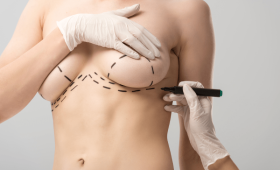
Breast changes following breastfeeding and pregnancy often require a combination of tissue repositioning and volume restoration. Through your photos, surgeons assess the ptosis (sagging) level to determine if a breast lift is sufficient or if augmentation is required. To ensure the highest safety benchmarks, all procedures utilize JCI-approved implants, specifically Mentor, Motiva, or Polytech. These materials are selected for their biocompatibility and long-term stability within the breast pocket.
Adipose Contouring via Vaser Technology
For patients seeking to address stubborn pockets of fat on the flanks or hips, the visual assessment helps plan for Vaser Liposuction. This advanced ultrasound-assisted technology is utilized for high-definition contouring with minimal bruising. By emulsifying the fat cells with ultrasonic energy before aspiration, Vaser allows for much more precise sculpting of the waistline compared to traditional mechanical liposuction.
The Economic Landscape of Turkey’s Medical Tourism
Turkey has emerged as the global epicenter for complex aesthetic reconstructions, largely due to the convergence of world-class surgical expertise and highly optimized cost structures. By eliminating the overhead costs associated with Western European or North American healthcare systems, Turkey offers premium, multi-component packages that remain accessible.
- Standard Post-Pregnancy Package: 4,500 – 7,500 USD (Ideal for localized skin tightening and minor contouring).
- Advanced Combination Package: 8,000 – 12,000 USD (Comprehensive reconstruction including tummy tuck, breast lift, and liposuction).
- Tummy Tuck (Abdominoplasty) only: 3,000 – 5,000 USD.
- Breast Lift (Mastopexy) only: 2,500 – 4,500 USD.
- Liposuction (per targeted area): 500 – 1,500 USD.
- BBL (Brazilian Butt Lift/Fat Transfer): 3,500 – 5,500 USD.
These figures represent a significant reduction in cost without compromising the caliber of surgical materials or the proficiency of the medical staff. It is important to note that these estimates are foundational and may be refined following a free online video assessment with board-certified plastic surgeons, where real-time tactile and structural discussions can occur.
Logistical Excellence and the Recovery Protocol
The success of a medical journey to Turkey is predicated on the seamless integration of surgical precision and luxury hospitality. The logistics are designed to minimize patient stress, allowing the focus to remain entirely on healing.
“The post-operative period is as critical as the surgery itself. A structured environment, characterized by VIP transfers and high-end recovery suites, significantly optimizes the physiological healing process.”
Upon arrival at Istanbul (IST) or Antalya (AYT), patients are met with VIP private transfers that transport them directly from the airport to their destination. The recovery phase is centered around 5-star recovery suites with companion stay included, ensuring that patients have the necessary support and comfort during the acute healing window. While the intensive recovery period in Turkey typically lasts 7-10 days, patients should plan for a 6-week window for full exercise return to ensure the integrity of the surgical repairs, such as the abdominal fascia suturing, is maintained.
Instructions for High-Precision Photo Submission
To ensure the Cure Holiday specialists and your surgeon can provide a quote that is medically accurate, please adhere to the following photographic standards:
- Lighting: Use natural, even lighting. Avoid harsh shadows or overly bright flashes that can obscure skin texture or hide the depth of abdominal folds.
- Angles: You must provide four distinct views: Full Frontal, Profile (90-degree side view), 45-degree angle, and Rear (Back) view.
- Attire: Wear minimal, form-fitting clothing (such as athletic wear or lingerie) that allows the surgeon to see the exact borders of the skin laxity and the contour of the waistline.
- Clarity: Ensure the camera is at chest height. Avoid “selfie” angles from above, as this distorts the anatomical proportions of the torso and breasts.
By providing high-fidelity visual data, you empower your surgical team to architect a personalized restoration plan that meets your aesthetic goals while adhering to the highest global safety standards.
The Digital Blueprint: Why Visual Precision Dictates Surgical Success
In the realm of high-end aesthetic surgery, the distance between a patient in Europe and a surgical suite in Turkey is bridged by the quality of clinical data. When requesting a remote quote, you are not merely sending “pictures”; you are providing the foundational dataset required for a complex preoperative assessment. For board-certified plastic surgeons, these images serve as a digital biopsy of your anatomical landscape, allowing them to evaluate skin elasticity, subcutaneous fat distribution, and muscular integrity without a physical palpation.
A precise remote consultation relies on the surgeon’s ability to analyze the tension of the abdominal fascia, the volume of the adipose tissue, and the symmetry of the mammary structure. Inaccurate lighting or obscured angles can lead to an underestimation of the surgical complexity, potentially resulting in a discrepancy between your initial quote and the final intraoperative findings. To ensure your surgical plan—whether it involves a simple contouring or an intensive combination procedure—is medically sound and financially accurate, adherence to a standardized photographic protocol is mandatory.
The Standardized Photo Protocol: Capturing Anatomical Truth
To facilitate a highly accurate assessment by Cure Holiday specialists and their surgical partners, your photos must adhere to strict clinical standards. The goal is to eliminate shadows, minimize distortion, and provide a 360-degree view of the target areas.
- Lighting and Environment: Use natural, diffused light. Avoid harsh overhead lights that create deep shadows in the abdominal or mammary folds, as this can mask the true extent of skin laxity. Stand in front of a plain, neutral-colored wall.
- The Four Essential Angles:
- The Anterior View (Frontal): Standing straight, arms slightly away from the sides to allow the surgeon to view the entire abdominal wall.
- The Lateral View (Profile): A 90-degree side profile to assess the projection of the breasts and the protrusion of the abdomen.
- The Posterior View (Back): Essential for evaluating the flanks and the transition of the waistline.
- The 45-Degree Oblique: This angle is critical for evaluating the “sweep” of the waist and the depth of the subcutaneous contour.
- Attire: Wear minimal, form-fitting clothing (such as athletic wear or swimwear) that allows for the visualization of the entire surgical field, including the hips and lower flanks.
- Technical Constraint: Do not use filters or “beauty modes.” These digital alterations artificially smooth the skin texture, making it impossible for the surgeon to accurately assess the necessity of Vaser Liposuction or skin excision.
- Scale and Context: If you have specific concerns regarding Diastasis Recti, a photo taken from a slightly higher angle looking down can help the surgeon visualize the separation of the rectus abdominis muscles.
Beyond the Surface: What Your Surgeon Evaluates in Your Photos
When your images arrive, the surgical team performs a deep-tissue analysis. They are looking for specific physiological markers to determine which surgical modalities are required for your transformation.
For patients seeking abdominal reconstruction, the surgeon assesses the degree of Diastasis Recti. This condition involves the separation of the abdominal muscles; if present, the surgical plan must include internal corset suturing of the abdominal fascia to restore core stability. Furthermore, the surgeon determines which Tummy Tuck approach is most appropriate: a Mini abdominoplasty for localized concerns, a Full abdominoplasty for significant laxity, or an Extended (360) procedure for circumferential contouring.
In cases involving body contouring, the images are analyzed to see if the patient is a candidate for Vaser Liposuction. This advanced technology uses ultrasonic energy to emulsify fat cells, allowing for high-definition sculpting with minimal bruising and enhanced skin retraction. For those seeking a BBL (Brazilian Butt Lift), the surgeon evaluates the donor sites (usually the flanks) to ensure there is sufficient adipose tissue to facilitate a successful fat transfer.
Regarding breast augmentation, the surgeon analyzes the existing breast base and the projection of the chest wall. The choice of JCI-approved implants—such as Mentor, Motiva, or Polytech—is often influenced by the amount of natural tissue coverage visible in your profile photos.
Case Study: The Journey of a 34-Year-Old Mother
To understand how these photos translate into a surgical reality, consider the case of a 34-year-old Irish mother of three. Her primary concerns were significant skin laxity following multiple pregnancies and a loss of waist definition.
Upon submitting her standardized photos, the surgical team identified both Diastasis Recti and a lack of lateral contour. This necessitated a combination procedure rather than a single-area surgery. The surgical plan evolved into an Advanced Combination procedure, integrating a Full Tummy Tuck with Vaser Liposuction of the flanks and a BBL to redistribute the harvested fat. Because her photos clearly showed the structural separation of her abdominal muscles, the surgeon could include the internal corset suturing in the initial quote, preventing any unexpected cost escalations during her stay in Turkey.
Financial Transparency and Package Architecture
Precision in photography allows for precise pricing. By understanding the scope of the work—from simple contouring to complex reconstruction—Cure Holiday specialists can provide a transparent breakdown of costs. Estimates are provided based on the complexity of the anatomical changes required:
- Standard Package: 4,500 – 7,500 USD (Ideal for single-area contouring)
- Advanced Combination Surgery: 8,000 – 12,000 USD (Comprehensive body reconstruction)
- Tummy Tuck (Full/Mini/Extended): 3,000 – 5,000 USD
- Breast Lift (Mastopexy): 2,500 – 4,500 USD
- Liposuction (Per targeted area): 500 – 1,500 USD
- BBL (Fat Transfer): 3,500 – 5,500 USD
The Seamless Transition: From Remote Assessment to 5-Star Recovery
Once your photographic assessment is complete and your remote consultation—often conducted via free online video assessments with board-certified surgeons—is finalized, the logistics of your journey are managed with clinical precision. Your arrival is coordinated through major international hubs, specifically Istanbul (IST) or Antalya (AYT).
Upon landing, you will be met by VIP private transfers that transport you directly from the airport to your 5-star recovery suite. These premium accommodations are designed for post-operative healing, often featuring companion stay inclusions to ensure you have support during the initial stages of your recovery. While the physical transformation takes place in the operating theater, the recovery journey is structured for safety and comfort, with a standard 7-10 day recovery period in Turkey and a 6-week window for a full return to strenuous exercise.
The Anatomical Precision of Remote Consultations: The Role of Visual Data
When initiating a surgical journey to Turkey, the initial bridge between patient aspiration and surgical reality is the photographic assessment. For board-certified plastic surgeons, “before” photos are not merely visual references; they are critical diagnostic tools used to evaluate skin elasticity, subcutaneous adipose tissue distribution, and musculoskeletal integrity. To receive a precise, binding quote that accurately reflects the complexity of your required procedure, your photographic submission must adhere to specific clinical standards.
A superficial image cannot capture the nuances required for advanced techniques such as Vaser Liposuction, which utilizes ultrasonic technology to emulsify fat cells for high-definition contouring with minimal bruising. To allow a surgeon to assess your candidacy for high-definition sculpting, images must be captured in high resolution, utilizing natural, diffused lighting to eliminate shadows that might obscure anatomical landmarks like the abdominal midline or the iliac crest.
For a comprehensive assessment, please provide the following four perspectives:
- Anterior (Frontal) View: Captured at eye level, showing the full torso from the clavicle to the pubic symphysis.
- Lateral (Side) Profile: Essential for evaluating the projection of the breast tissue and the curvature of the abdomen.
- Posterior (Back) View: Crucial for assessing the lumbar region and the gluteal contour.
- Oblique (45-degree) Angle: This perspective is vital for surgeons to determine the depth of fat deposits and the necessity of BBL (Brazilian Butt Lift) fat transfer.
Clinical Variables in Surgical Complexity and Costing
The precision of your quote depends heavily on the surgeon’s ability to identify specific physiological requirements. For instance, an assessment of the abdominal wall may reveal Diastasis Recti—a separation of the rectus abdominis muscles. If present, the surgical plan must incorporate internal corset suturing of the abdominal fascia to restore core stability. This technical complexity significantly differentiates a “Mini” abdominoplasty from a “Full” or “Extended (360)” tummy tuck.
Furthermore, the choice of prosthetic material impacts both the surgical technique and the final expenditure. All procedures performed through Cure Holiday specialists utilize JCI-approved implants, including Motiva, Mentor, or Polytech. The volume and placement of these implants, determined via your photos, are foundational to your personalized quote.
To assist in your budgetary planning, the following 2026 price projections are based on standardized surgical complexities:
Core Procedural Estimates (2026):
- Standard Package (Comprehensive body contouring): 4,500 – 7,500 USD
- Advanced Combination (Multi-area sculpting): 8,000 – 12,000 USD
- Abdominoplasty (Tummy Tuck options: Full, Mini, or 360): 3,000 – 5,000 USD
- Mastopexy (Breast Lift): 2,500 – 4,500 USD
- Liposuction (Per targeted anatomical area): 500 – 1,500 USD
- BBL (Autologous Fat Transfer): 3.5,000 – 5,500 USD
Logistical Orchestration: The Post-Operative Transition
Securing a precise quote is only the first step in the logistics of medical tourism. The period following surgery requires a seamless transition from the operating theatre to a controlled recovery environment. Our logistics framework is designed to mitigate the stress of post-operative physiological changes, focusing on “Aftercare Excellence.”
Upon arrival via Istanbul (IST) or Antalya (AYT), patients are met by VIP private transfers that transport them directly from the airport to their designated recovery suites. These are not standard hotel rooms but 5-star recovery suites specifically curated for post-surgical needs. Recognizing that many patients travel with family, these suites are designed with companion stay inclusions, allowing for a seamless integration of care and support.
For patients navigating complex recovery logistics, such as managing childcare or professional obligations in the UK or USA, the “Fly-Home” timeline is a critical component of the quote. The recovery window in Turkey typically spans 7-10 days, during which time the focus is on wound management, edema reduction, and initial mobility. However, patients must plan for a 6-week period before a full return to strenuous physical exercise is medically permissible.
The 2026 Cost Disparity: Turkey vs. UK/USA
When evaluating the financial feasibility of your procedure, it is imperative to look beyond the initial surgical fee. The cost-saving advantage of Turkey is not merely in the lower price of the procedure itself, but in the all-inclusive nature of the medical logistics. While a patient in the UK or USA may face much higher surgeon fees, anesthesia costs, and hospital facility fees, the Turkish model integrates premium recovery and VIP logistics into the primary quote.
The discrepancy in 2026 pricing is substantial. A complex body contouring procedure that may exceed 25,000 USD in a US metropolitan area can often be executed within the 8,000 – 12,000 USD range in Turkey, including the 5-star accommodation and transfers. This allows patients to allocate more resources toward post-operative nutritional support and long-term aftercare, ensuring the longevity of the surgical results.
To begin your assessment, ensure your photos are clear, well-lit, and encompass all anatomical regions of interest. Once submitted, Cure Holiday specialists will coordinate with the surgical team to provide a comprehensive, technical breakdown of your personalized surgical roadmap.
Considering a Mommy Makeover in Turkey? Get a Free Quote for your How to Send your “Before” Photos for a Precise Remote Quote from Turkey Transformation with cureholiday.com
Free Consultation
Fill out the form below to get your free medical travel plan and price quote.
Sources and how to verify this yourself
- Ministry of Health, Regulation on International Health Tourism and Tourist Health, Official Gazette 26 April 2025, No. 32882 — authorisation requirement for facilities and intermediaries, TÜSKA accreditation, compulsory complication insurance (deadline 31 December 2025 for insurance, 31 December 2026 for accreditation). source
- Ministry of Health, Regulation on Promotion and Information Activities in Health Services, Official Gazette 12 November 2025, No. 33075 — treatment promises and guarantees are prohibited; price and campaign announcements are permitted only within international health tourism. source