About the prices on this page. The figures below are indicative market prices and country comparisons, not a quote. Our own current, all-inclusive prices are published on our dental treatment in Turkey page, and we confirm your figure in writing before you commit to anything.
Cost and planning note (2026)
The figures below are indicative market ranges for 2026, not a quote: your own price depends on the clinic, the surgeon and your clinical assessment.
Indicative price range: Implant High End: 500 – 1,200 USD | All On 4: 4,000 – 7,000 USD per arch | Zirconia Crown: 200 – 400 USD | Veneers Emax: 250 – 450 USD
Facility standards: In Türkiye, any facility treating international patients must hold the Ministry of Health’s international health tourism authorisation; hospitals and medical centres must also be accredited by TÜSKA, and complication insurance is compulsory for procedures carried out in an operating theatre (Regulation of 26 April 2025). Ask us for the authorisation of the facility you are matched with.
Currency: USD / EUR / GBP accepted at all clinics.
Dental Implants for Patients on Blood Thinners: Managing Surgery Safely in Turkey
Dental Implants & Anticoagulation: A Technical and Safety Overview for Turkish Treatment
For patients requiring dental implant therapy who are concurrently managed on anticoagulant or antiplatelet medications (commonly referred to as ‘blood thinners’), careful pre-operative planning and intraoperative management are paramount. This is particularly relevant for those considering dental tourism in Turkey, where specialized protocols must interface with international medical standards and logistical considerations. This section delves into the ‘what’ and ‘why’ of managing these patients, focusing on the medical foundations, technical approaches, and adherence to global standards within the Turkish dental landscape.
Understanding the Risks: A Hemostatic Challenge
The primary concern with proceeding with implant surgery on patients taking anticoagulants stems from the increased risk of peri-operative bleeding. While dental implant procedures are generally considered minimally invasive, they *do* involve localized disruption of vascular supply. Anticoagulants – including Vitamin K antagonists (like Warfarin), Direct Oral Anticoagulants (DOACs) such as Rivaroxaban, Apixaban, and Dabigatran, and even antiplatelet agents like Aspirin and Clopidogrel – inhibit the body’s natural hemostatic mechanisms, prolonging bleeding times and potentially leading to prolonged oozing from the surgical site. This isn’t merely a cosmetic concern; unchecked hemorrhage can compromise osseointegration (the crucial biological bonding of the implant to the jawbone), increase the risk of post-operative infection, and necessitate further surgical intervention.
Patient Stratification & Risk Assessment
Before any surgical plan is finalized, a detailed risk stratification is essential. This goes beyond simply identifying the medication a patient is taking. Key factors influencing risk include:
- Type of Anticoagulant/Antiplatelet: Different drugs have varying half-lives and mechanisms of action, impacting the duration of their effect. DOACs, for instance, generally have shorter half-lives than Warfarin, making temporary cessation potentially more manageable.
- Indication for Anticoagulation: The underlying reason for anticoagulation is crucial. Patients with mechanical heart valves or a history of thromboembolic events (stroke, pulmonary embolism) represent a higher risk category and require more conservative management.
- INR (International Normalized Ratio) for Warfarin Patients: For patients on Warfarin, maintaining an INR within a therapeutic range (typically 2.0-3.0) is vital. Surgical intervention typically requires temporary interruption of Warfarin to achieve an INR below 1.5.
- Bleeding Time/Platelet Function Tests: While less frequently used with DOACs, assessing platelet function and bleeding time can provide supplemental information, particularly for patients on antiplatelet medication.
- Comorbidities: Underlying medical conditions like renal or hepatic impairment can affect drug metabolism and increase bleeding risk.
Surgical Planning & Technical Considerations in Turkey
Turkish dental clinics specializing in implantology utilize a range of advanced technologies to minimize surgical trauma and optimize hemostasis. CBCT 3D Imaging is standard for meticulous pre-operative planning, allowing surgeons to assess bone density, nerve proximity, and anatomical variations. Digital Smile Design and, increasingly, CEREC Same-Day crown fabrication minimize the number of appointments and potential for post-operative manipulation, reducing the window for potential bleeding complications.
Surgical techniques employed to mitigate bleeding include:
- Atraumatic Extraction (if necessary): Careful tooth removal (if any is required prior to implant placement) utilizing piezoelectric surgery can minimize bone trauma.
- Controlled Bone Preparation: Precise drilling protocols and the use of cooled drills minimize thermal necrosis and bleeding.
- Local Hemostatic Agents: Application of absorbable hemostatic sponges (e.g., Surgicel, Gelfoam) and/or thrombin-based products directly to the surgical site can help control bleeding.
- Suturing Techniques: Utilizing resorbable sutures and meticulous suturing techniques to achieve primary closure and facilitate clot formation.
- Platelet-Rich Plasma (PRP): In select cases, PRP can be applied to the surgical site to accelerate healing and promote hemostasis. This involves drawing a small blood sample from the patient, processing it to concentrate platelets, and then applying the platelet-rich plasma to the surgical area.
Bridging Therapy & Anticoagulation Management
For patients on Warfarin requiring temporary cessation, ‘bridging therapy’ with low-molecular-weight heparin (LMWH) may be considered, particularly for those with a high thromboembolic risk. This involves temporarily switching from Warfarin to LMWH (administered subcutaneously) to provide continued anticoagulation while the Warfarin is held. LMWH has a shorter half-life and can be safely stopped 24-48 hours before surgery. The management of DOACs is typically more straightforward, with cessation typically recommended 24-48 hours prior to surgery, depending on the specific drug and the patient’s renal function.
Post-Operative Care & Monitoring
Strict post-operative monitoring is crucial. Patients are instructed to report any excessive bleeding or unusual bruising immediately. The use of cold compresses can help constrict blood vessels and reduce swelling. Local measures, such as gentle pressure with gauze, are often sufficient to control minor oozing. The timing of resuming anticoagulation or antiplatelet medication is individualized based on the surgical procedure, the patient’s risk factors, and the achievement of adequate hemostasis. Clinics in locations like Istanbul (City/Boutique), Antalya (Resort/Beach) and Izmir (Aegean/Thermal) offer dedicated post-operative care and monitoring services to ensure a smooth recovery.
Adherence to Global Standards & Financial Considerations
Clinics in Turkey offering dental implant treatment prioritize adherence to international medical standards. Many facilities are JCI (Joint Commission International) Accredited and operate under the strict regulations of the Ministry of Health. This ensures a high level of care and patient safety. Costs for procedures are competitive: a single dental implant can range from 500 – 1,200 USD, while an All-on-4 solution per arch typically falls between 4,000 – 7,000 USD. Aesthetic procedures like zirconia crowns range from 200 – 400 USD, and Emax veneers are available for 250 – 450 USD. Payment is typically accepted in USD, EUR, and GBP.
It is vital that patients disclose *all* medications, including over-the-counter drugs and supplements, to their dental surgeon and provide documentation from their primary care physician or cardiologist confirming their anticoagulation/antiplatelet regimen and overall medical status. Open communication and collaborative management are essential to ensure a safe and successful outcome.
The Surgical/Clinical Journey: Dental Implants for Patients on Anticoagulation
Successfully placing dental implants in patients requiring anticoagulation – commonly referred to as “blood thinners” – presents a unique challenge, demanding meticulous pre-operative assessment, a tailored surgical approach, and vigilant post-operative management. At CureHoliday, we prioritize patient safety above all else, particularly within the burgeoning field of dental tourism in Turkey. This pillar outlines the comprehensive surgical and clinical journey for patients on anticoagulants considering dental implant treatment in Turkey, detailing the technical aspects, a representative case study, and robust risk mitigation strategies.
Pre-Operative Evaluation and Medical Coordination
The initial consultation is paramount. Beyond the standard radiographic evaluation (including CBCT 3D Imaging for precise bone density assessment and nerve localization) and clinical examination, a detailed medical history focusing specifically on the patient’s anticoagulation regimen is crucial. We require official documentation from the patient’s primary care physician or hematologist outlining:
- The specific anticoagulant medication (e.g., Warfarin, Direct Oral Anticoagulants – DOACs like Apixaban, Rivaroxaban, Dabigatran).
- The indication for anticoagulation (e.g., atrial fibrillation, deep vein thrombosis, mechanical heart valve).
- The patient’s International Normalized Ratio (INR) for Warfarin patients, or relevant coagulation parameters for DOAC users.
- Acceptable peri-operative management protocol as recommended by their specialist.
Communication with the patient’s medical team is not merely recommended; it’s mandatory. We utilize secure telehealth consultations to establish a collaborative care plan. The decision to temporarily discontinue or modify anticoagulation requires careful consideration of thromboembolic risk versus surgical bleeding risk. For Warfarin patients, bridging therapy with low-molecular-weight heparin (LMWH) may be considered under strict haematological guidance. DOACs generally have shorter half-lives, allowing for cessation 5-7 days prior to surgery, but individual protocols vary.
Surgical Protocol: Minimally Invasive Techniques
Our surgical philosophy emphasizes minimally invasive techniques to reduce bleeding and promote faster healing. This includes:
- Guided Surgery: Utilizing surgical guides fabricated from pre-operative CBCT data ensures accurate implant placement, minimizing trauma to surrounding structures and reducing the risk of inadvertent vascular compromise.
- Piezoelectric Surgery: Where applicable, piezoelectric surgery offers a gentler bone cutting approach compared to traditional rotary burs, reducing heat generation and preserving soft tissue vitality.
- Immediate Loading Protocols (Select Cases): For suitable candidates with sufficient bone density and primary stability, immediate loading with provisional restorations can be considered, minimizing the need for a second-stage surgery. This is assessed on a case-by-case basis.
- Platelet Rich Fibrin (PRF): Application of PRF membranes to the surgical site promotes angiogenesis, accelerates tissue healing, and may contribute to reduced post-operative bleeding.
During surgery, meticulous haemostasis is paramount. Techniques employed include:
- Local infiltration with vasoconstrictor (e.g., epinephrine) at a minimized dosage.
- Surgical suction and irrigation.
- Application of bone wax to bleeding bony surfaces.
- Use of resorbable haemostatic agents (e.g., gelatin sponge) when necessary.
Persona Case Study: Mr. David Miller, 45, UK
Mr. Miller, a 45-year-old gentleman from the UK, presented with a failing maxillary denture and a history of atrial fibrillation requiring lifelong Warfarin therapy. His INR was consistently maintained between 2.0 – 3.0. Following communication with his cardiologist, a carefully planned cessation of Warfarin 5 days prior to surgery, with bridging therapy using LMWH, was agreed upon. Digital Smile Design was employed to visualize the final aesthetic outcome and plan implant placement.
He underwent placement of three implants in the anterior maxilla and two in the posterior regions. Guided surgery was utilized, and PRF membranes were applied. Post-operative bleeding was minimal, controlled with local pressure and resorbable haemostatic agents. The LMWH bridging therapy was discontinued 24 hours post-surgery and Warfarin was re-initiated at a reduced dosage, monitored closely by his cardiologist. Provisional screw-retained crowns were fitted immediately. Final zirconia crowns (200 – 400 USD per unit) were delivered 6 months later after osseointegration was verified radiographically.
Risk Mitigation and Post-Operative Care
Despite meticulous planning, risks remain. Key mitigation strategies include:
- Peri-operative INR/Coagulation Monitoring: Frequent monitoring of INR (Warfarin) or relevant coagulation parameters (DOACs) is essential, both before and immediately after surgery, to ensure optimal haemostasis.
- Proactive Communication: Constant communication between the surgical team, the patient, and their physician is vital for addressing any concerns or complications promptly.
- Post-operative Bleeding Protocol: Patients are provided with detailed post-operative instructions, including a clear protocol for managing minor bleeding (e.g., local pressure, cold compresses). They are instructed to immediately report any excessive bleeding or signs of hematoma formation.
- Antibiotic Prophylaxis: Standard antibiotic prophylaxis is administered to prevent infection, particularly important in patients with compromised healing potential.
- Comprehensive Pain Management: A multi-modal pain management protocol is implemented, minimizing reliance on NSAIDs which can potentiate bleeding.
Cost and Logistics in Turkey
Turkey offers a cost-effective alternative for dental implant treatment without compromising quality. Single dental implants range from 500 – 1,200 USD, while All-on-4 solutions are available at 4,000 – 7,000 USD per arch. Patients benefit from state-of-the-art facilities, adhering to JCI (Joint Commission International) accreditation and stringent regulations from the Turkish Ministry of Health. Visa requirements are straightforward, with e-visas available for most UK/US/EU citizens allowing a 90-day stay. CureHoliday offers comprehensive packages encompassing treatment, accommodation in premier recovery hubs in Istanbul, Antalya, or Izmir, and personalized concierge services to ensure a seamless experience.
We understand that undergoing dental implant surgery while on anticoagulation can be a source of anxiety. At CureHoliday, our dedicated team of specialists is committed to providing individualized care, ensuring patient safety, and delivering exceptional results.
Dental Implants & Anticoagulation: Navigating Recovery Logistics in Turkey
For patients requiring dental implants while concurrently managed on anticoagulant (blood-thinning) medications, a meticulous approach to surgical planning and post-operative recovery is paramount. While Turkey has emerged as a leading destination for dental implantology, offering cost-effective and technologically advanced solutions, patients on anticoagulants require specialized protocols. This pillar focuses specifically on those recovery logistics, comparing costs in Antalya & Istanbul against Western nations, and culminating in a clear assessment of the medical verdict – that safe, effective treatment *is* possible, but demands a highly coordinated care pathway.
Peri-Operative Anticoagulation Management: A Multidisciplinary Approach
The primary concern with dental implant surgery in patients on anticoagulants revolves around the risk of excessive bleeding. Medications like warfarin, direct oral anticoagulants (DOACs) such as rivaroxaban, apixaban, and dabigatran, and even antiplatelet agents like clopidogrel, inhibit the body’s natural clotting mechanisms. Discontinuation of these medications, while seemingly logical, carries its own risks, including thromboembolic events (stroke or pulmonary embolism) – a risk assessment performed in close collaboration with the patient’s cardiologist or hematologist is *non-negotiable*.
In Turkey, clinics adhering to JCI accreditation and Ministry of Health regulations understand this complexity. The process begins well before the surgical date, with a detailed medical history review, including the indication for anticoagulation (e.g., atrial fibrillation, deep vein thrombosis), the specific medication and dosage, and a thorough evaluation of the patient’s overall cardiovascular risk profile. Utilizing advanced diagnostic tools like CBCT 3D Imaging ensures precise implant placement, minimizing surgical trauma and subsequent bleeding.
The decision to temporarily hold or modify anticoagulation is not taken lightly. Guidelines from organizations like the American College of Cardiology and the American Heart Association are meticulously followed. For warfarin, a temporary interruption, coupled with bridging therapy with low molecular weight heparin (LMWH), may be considered for high-risk patients. DOACs often have shorter half-lives, allowing for cessation 48-72 hours pre-operatively, with careful monitoring of coagulation parameters. Topical hemostatic agents (e.g., oxidized regenerated cellulose, gelatin sponges) and meticulous surgical technique employing electrocautery can further mitigate bleeding.
Recovery Hubs: Antalya vs. Istanbul – A Comparative Analysis
Post-operative recovery location significantly impacts patient management, particularly for those on anticoagulants. Turkey offers distinct options:
- Istanbul (City/Boutique): Provides immediate access to a wide range of specialist medical facilities, including tertiary care hospitals equipped to manage any post-operative complications. However, the fast-paced city environment may not be conducive to restful recovery.
- Antalya (Resort/Beach): Offers a more relaxed recovery environment, promoting better patient wellbeing. While access to immediate emergency care is generally good within resort areas, transfer to a major hospital may require longer travel times.
- Izmir (Aegean/Thermal): This option combines coastal relaxation with potential thermal spa treatments to aid recovery. However, specialist hematological care may be less readily available than in Istanbul.
For patients on anticoagulants, Istanbul is often the preferred choice, despite the higher average accommodation costs. Proximity to advanced medical infrastructure is critical in case of unexpected bleeding or other complications. Clinics will often arrange a dedicated post-operative care package including daily nurse visits for monitoring, immediate access to laboratory testing (PT/INR for warfarin patients, or DOAC-specific assays), and a pre-arranged transport plan to a hospital should it become necessary. The cost for this level of care can add approximately $200 – $500 USD to the overall package, but provides substantial peace of mind.
Cost Audit: Turkey vs. Western Nations
The economic allure of dental implants in Turkey remains significant, even when factoring in the complexities of managing anticoagulation. A comparison reveals considerable savings:
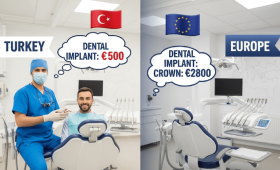
- Dental Implant (Single): 500 – 1,200 USD in Turkey versus $3,000 – $5,000 USD in the US/UK/Europe.
- All-on-4 (Per Arch): 4,000 – 7,000 USD in Turkey compared to $15,000 – $30,000 USD in Western countries.
- Zirconia Crown: 200 – 400 USD in Turkey, versus $800 – $1,500 USD in the West.
- Emax Veneers: 250 – 450 USD per veneer in Turkey, against $900 – $2,000 USD elsewhere.
These savings allow for allocation of funds towards enhanced post-operative care, including prolonged monitoring, dedicated nursing support, and robust emergency contingency planning – essential for patients on blood thinners. Clinics utilizing Digital Smile Design and CEREC Same-Day crown technology can further streamline the process, reducing the overall recovery period and minimizing disruption to medication schedules.
The Final Medical Verdict: Safety & Success with Careful Planning
Dental implant surgery for patients on anticoagulants in Turkey is demonstrably safe and achievable *when* performed by experienced implantologists in Ministry of Health–authorised facilities with a robust multidisciplinary approach. This requires:
- Comprehensive pre-operative medical assessment and risk stratification.
- Close collaboration with the patient’s prescribing physician (cardiologist/hematologist).
- Individualized anticoagulation management plan.
- Meticulous surgical technique minimizing trauma and bleeding.
- Dedicated post-operative monitoring and access to emergency care, particularly in hubs like Istanbul.
- Financial provision for extended care and contingency planning.
The use of advanced technologies such as CBCT 3D Imaging and Digital Smile Design improves precision and predictability, contributing to positive outcomes. While the initial cost savings are attractive, prioritizing comprehensive medical management is critical for a successful and complication-free recovery. Acceptable currencies for payment are generally USD, EUR, and GBP, offering flexibility for international patients. The standard visa requirement is an E-visa, allowing a 90-day stay for citizens of most Western nations.
Ultimately, the successful integration of dental implants in anticoagulated patients hinges on meticulous planning, unwavering communication, and a commitment to patient safety – principles that leading Turkish clinics embrace wholeheartedly.
Ready to consult a specialist? Schedule a Free Consultation for Dental Implants for Patients on Blood Thinners in Turkey with cureholiday.com
Free Consultation
Fill out the form below to get your free medical travel plan and price quote.
Sources and how to verify this yourself
- Howe M-S, Keys W, Richards D. Long-term (10-year) dental implant survival: a systematic review and sensitivity meta-analysis. Journal of Dentistry, 2019 — pooled 10-year implant survival 96.4% (95% CI 95.2–97.5%); conservative sensitivity estimate 93.2%. source
- Ministry of Health, Regulation on International Health Tourism and Tourist Health, Official Gazette 26 April 2025, No. 32882 — authorisation requirement for facilities and intermediaries, TÜSKA accreditation, compulsory complication insurance (deadline 31 December 2025 for insurance, 31 December 2026 for accreditation). source
- Ministry of Health, Regulation on Promotion and Information Activities in Health Services, Official Gazette 12 November 2025, No. 33075 — treatment promises and guarantees are prohibited; price and campaign announcements are permitted only within international health tourism. source