About the prices on this page. The figures below are indicative market prices and country comparisons, not a quote. Our own current, all-inclusive prices are published on our dental treatment in Turkey page, and we confirm your figure in writing before you commit to anything.
Cost and planning note (2026)
The figures below are indicative market ranges for 2026, not a quote: your own price depends on the clinic, the surgeon and your clinical assessment.
Indicative price range: Implant High End: 500 – 1,200 USD | All On 4: 4,000 – 7,000 USD per arch | Zirconia Crown: 200 – 400 USD | Veneers Emax: 250 – 450 USD
Facility standards: In Türkiye, any facility treating international patients must hold the Ministry of Health’s international health tourism authorisation; hospitals and medical centres must also be accredited by TÜSKA, and complication insurance is compulsory for procedures carried out in an operating theatre (Regulation of 26 April 2025). Ask us for the authorisation of the facility you are matched with.
Currency: USD / EUR / GBP accepted at all clinics.
Dental Veneers and Tooth Sensitivity: How Turkish Dentists Minimize Post-Op Discomfort
Dental Veneers and Tooth Sensitivity: A Deep Dive into Minimizing Post-Operative Discomfort
The pursuit of aesthetic dentistry has led to a surge in the popularity of dental veneers, thin shells of ceramic or composite resin bonded to the front surface of teeth to improve their appearance. While generally considered a safe and effective procedure, a common patient concern post-operatively is dentinal hypersensitivity – commonly known as tooth sensitivity. This pillar will detail the medical foundation of this sensitivity as it relates to veneer placement, specifically examining how Turkish dental practices are leveraging advanced techniques and adherence to global standards to minimize patient discomfort.
The Etiology of Post-Veneer Sensitivity: A Biological Perspective
Tooth sensitivity following veneer application stems from the exposure of dentinal tubules. Dentin, the layer beneath the enamel, contains microscopic tubules that run from the pulp (containing the nerves and blood vessels) to the enamel surface. These tubules aren’t problematic when covered by healthy enamel. However, veneer preparation invariably involves a degree of enamel reduction – a crucial step for achieving proper aesthetics and biomechanical retention. This reduction, even when meticulously performed, can momentarily expose these tubules. Furthermore, the bonding process itself can induce transient hydrodynamic shifts within these tubules.
The hydrodynamic theory, the predominant explanation for dentinal sensitivity, posits that stimuli (thermal, osmotic, mechanical, or chemical) cause fluid movement within the dentinal tubules. This fluid movement stimulates nerve endings within the pulp, resulting in the perception of pain. The extent of sensitivity is influenced by multiple factors: the amount of enamel removed, the bonding agent used, the health of the pulp, and the patient’s pre-existing dentinal sensitivity. Pre-existing microcracks in the enamel, often invisible to the naked eye, can also exacerbate this issue. A meticulous pre-operative evaluation, including transillumination and potentially CBCT 3D Imaging (see ‘Tech’ section below), is vital for identifying these structural weaknesses.
Minimizing Enamel Reduction: Digital Workflow & Precision Preparation
Turkish dental clinics are at the forefront of utilizing advanced digital workflows to minimize enamel reduction during veneer preparation. Traditional impression methods can be prone to distortion, necessitating a more aggressive preparation to ensure proper veneer fit. However, techniques like Digital Smile Design (DSD) allows for a detailed, pre-operative planning of the final restoration, factoring in the patient’s facial aesthetics and occlusal function. This digital blueprint dictates the exact amount of enamel removal needed, optimizing both aesthetics and minimizing invasive procedures.
Coupled with DSD is the implementation of CEREC Same-Day technology. This CAD/CAM (Computer-Aided Design/Computer-Aided Manufacturing) system enables dentists to design and mill veneers chairside, eliminating the need for temporary restorations and reducing the overall treatment time. Crucially, the digital scanning process is highly accurate, allowing for the creation of veneers that precisely match the prepared tooth structure. This precision fit minimizes the need for adjustments post-cementation, further decreasing the risk of sensitivity.
Bonding Protocols: Material Selection and Desensitizing Agents
The choice of bonding agent and the application technique are pivotal in reducing post-operative sensitivity. Modern adhesive systems incorporate desensitizing agents such as glutaraldehyde or HEMA (hydroxyethyl methacrylate), which occlude dentinal tubules, reducing fluid flow. Turkish dentists frequently utilize universal bonding agents capable of bonding to both enamel and dentin, ensuring a strong and durable bond while simultaneously minimizing the risk of microleakage – a key contributor to post-operative sensitivity.
The type of veneer material also plays a role. While composite veneers are more affordable, E-max (lithium disilicate) veneers offer superior aesthetic properties and, crucially, require less enamel reduction due to their higher flexural strength. Currently, E-max veneers range in cost from 250 – 450 USD per unit. The higher initial investment often translates to reduced post-operative discomfort and a longer-lasting restoration. Moreover, the higher translucency of E-max mimics natural tooth structure more effectively, reducing the perceived need for extensive enamel modification during preparation.
Beyond Veneers: Utilizing CBCT for Comprehensive Evaluation
While often associated with implantology, CBCT 3D Imaging is increasingly being used in aesthetic dentistry in Turkish clinics. This technology provides a detailed three-dimensional view of the patient’s dentition, bone structure, and soft tissues. CBCT allows dentists to identify subtle anatomical variations, existing pathologies (like periapical lesions), and the thickness of enamel – all factors that influence treatment planning and the potential for post-operative sensitivity. For example, a patient with particularly thin enamel may require a more conservative veneer approach, potentially opting for a no-prep or minimal-prep technique.
Post-Operative Management and Preventative Measures
Even with meticulous preparation and bonding protocols, some degree of sensitivity may occur. Turkish dental practices prioritize patient education regarding potential sensitivity and provide specific post-operative instructions. These typically include:
- Dietary recommendations: Avoiding extremely hot or cold foods and beverages for the first few days.
- Oral hygiene instructions: Using a soft-bristled toothbrush and non-abrasive toothpaste.
- Fluoride application: Topical fluoride application can help remineralize exposed dentin and reduce sensitivity.
- Desensitizing toothpastes: Recommend use of potassium nitrate or stannous fluoride toothpastes.
Furthermore, a close follow-up schedule allows dentists to monitor the patient’s comfort level and address any concerns promptly. In rare cases, persistent sensitivity may necessitate a re-evaluation of the occlusion (bite) or, as a last resort, endodontic (root canal) treatment if pulpal inflammation is suspected.
Global Standards and Quality Assurance in Turkey
Patients considering dental veneers in Turkey benefit from a robust healthcare system adhering to international standards. Many clinics are JCI (Joint Commission International) Accredited, demonstrating a commitment to quality patient care and safety. The Ministry of Health rigorously regulates dental practices, ensuring qualified dentists and adherence to infection control protocols. Financial considerations are also transparent, with costs clearly outlined; for comparison, a Zirconia crown typically costs 200 – 400 USD, while dental implants range from 500 – 1,200 USD depending on the system. All-on-4 solutions are priced between 4,000 – 7,000 USD per arch. Currency options include USD, EUR, and GBP, offering convenience for international patients. Recovery options are diverse, with hubs in Istanbul, Antalya, and Izmir catering to different preferences.
The Surgical/Clinical Journey: Minimizing Post-Operative Sensitivity with Veneers in Turkey
Dental veneers, particularly those crafted from materials like e.max lithium disilicate, represent a highly effective aesthetic solution for compromised or aesthetically undesirable anterior teeth. However, a common patient concern post-operative is transient dentin hypersensitivity. Turkish dental clinics, leveraging advanced technology and meticulous clinical protocols, have demonstrably minimized this discomfort, contributing to a superior patient experience. This pillar will delve into the step-by-step procedure, illustrate with a patient case study, and detail the risk mitigation strategies employed.
Step-by-Step Procedural Technicals
The veneer process isn’t simply ‘attaching’ a shell to a tooth. It’s a carefully orchestrated sequence predicated on precision and biological understanding. Here’s a detailed breakdown as practiced in leading Turkish clinics:
- Initial Consultation & Digital Smile Design (DSD): This isn’t merely a visual assessment. We utilize Digital Smile Design software, capturing photographs and videos to create a detailed, 2D digital mockup of the desired smile. This allows for collaborative planning with the patient, accounting for lip dynamics, gingival architecture, and facial symmetry. Crucially, this phase dictates the degree of tooth reduction necessary, optimizing for both aesthetics and long-term structural integrity.
- Diagnostic Wax-Up & Preparation Guide: The DSD is translated into a physical diagnostic wax-up on a duplicated dental model. This serves as a guide for the tooth preparation phase. Turkish clinics prioritize minimal preparation; the goal is to remove only the necessary enamel to accommodate the veneer thickness (typically 0.5-0.8mm).
- Tooth Preparation & Impression/Scan: Local anesthesia (typically articaine hydrochloride due to its rapid onset and low incidence of post-operative trismus) is administered. Tooth preparation is performed using diamond burs under copious irrigation with water. Clinics are increasingly adopting CEREC Same-Day technology – intraoral scanning using advanced optical impression systems. This eliminates the need for traditional alginate or polyvinyl siloxane impressions, enhancing precision and patient comfort. The scans are digitally sent to the in-house CAD/CAM laboratory.
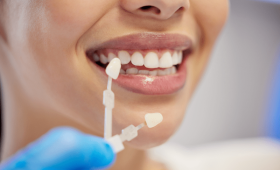
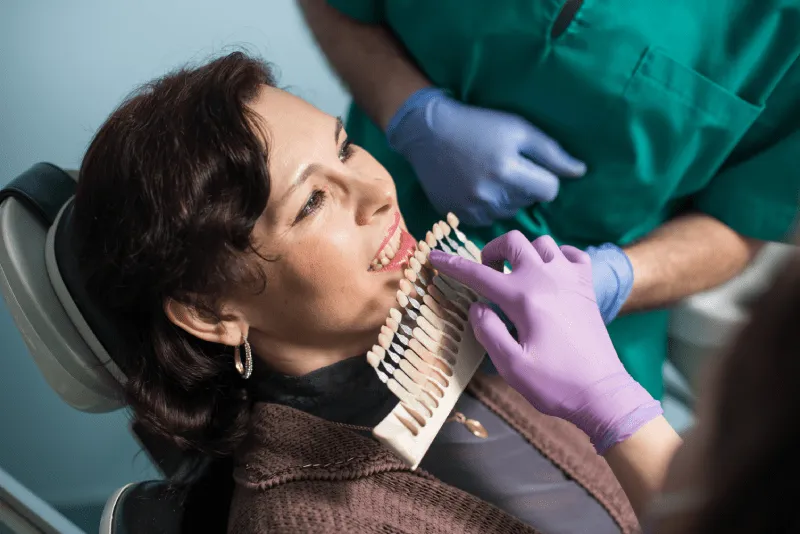
- Veneer Fabrication: e.max veneers are milled from a single block of lithium disilicate using CAD/CAM technology. This ensures exceptional fit, strength, and aesthetic properties. Shade matching is performed using a spectrophotometer, accurately replicating the patient’s natural tooth colour. The milled veneers undergo meticulous finishing and polishing by a dental technician.
- Try-In & Adjustments: The veneers are temporarily bonded using try-in paste, allowing for assessment of aesthetics, phonetics, and occlusal contacts. Adjustments are made intraorally to ensure proper harmony with the surrounding dentition and musculature.
- Definitive Bonding: The tooth surface is etched with phosphoric acid (typically 37% concentration) to create micro-retentive surfaces. A universal bonding agent is applied, followed by composite cement. Veneers are seated with gentle pressure, excess cement is removed, and the cement is light-cured using a high-intensity LED curing unit. Post-bonding, occlusal adjustments are meticulously performed to ensure even load distribution.
Persona Case Study: Mrs. Eleanor Davies, 45, from the UK
Mrs. Davies presented with mildly discoloured and slightly chipped central incisors, impacting her self-confidence. She opted for veneer treatment in Istanbul, attracted by the combination of quality and cost (veneers_emax: 250 – 450 USD per unit, significantly lower than comparable treatment in the UK). Prior to travel, a CBCT 3D Imaging scan was conducted in the UK (provided by her referring dentist) and reviewed by the Turkish specialist to assess bone support and rule out any underlying pathology.
Mrs. Davies underwent preparation of her central incisors under local anesthesia. The clinic utilized the CEREC system for digital impressions, minimizing her time in the dental chair. The e.max veneers were designed and milled within the same day. Post-cementation, Mrs. Davies reported minimal sensitivity, which subsided within 24 hours. The clinic proactively provided her with a desensitizing toothpaste (containing potassium nitrate) and advised on a soft diet for the first 48 hours.
“I was initially apprehensive about having dental work done abroad, but the clinic’s communication was excellent, and the entire process was incredibly smooth. The veneers look fantastic, and I experienced surprisingly little discomfort. The cost savings were a significant bonus, allowing me to combine the treatment with a short break in Istanbul.” – Mrs. Eleanor Davies.
Risk Mitigation: Minimizing Post-Operative Sensitivity
Post-operative sensitivity arises from several factors, including: enamel removal, dentinal tubules exposure, and cementation process. Turkish clinics employ a multi-faceted approach to mitigate these risks:
- Minimal Preparation Techniques: Prioritizing ultra-conservative tooth reduction significantly reduces the risk of dentin exposure.
- Selective Etching: Utilizing self-etching bonding systems, or carefully controlling the etching time and acid concentration, minimizes the demineralization of dentin.
- Dentin Desensitizers: Application of desensitizing agents (e.g., glutaraldehyde, HEMA) to the prepared tooth surface prior to bonding occludes dentinal tubules, reducing fluid movement and sensitivity.
- Bonding Agent Selection: Employing bonding agents with high fluoride release can further reduce sensitivity and enhance long-term marginal seal.
- Cement Choice: Resin-modified glass ionomer cements, while possessing slightly lower aesthetic qualities than pure resin cements, offer superior biocompatibility and desensitizing properties. A hybrid approach, utilizing a thin layer of glass ionomer beneath the resin cement, is increasingly common.
- Proper Occlusal Adjustment: Ensuring even occlusal contacts prevents stress concentration on the veneers, reducing the likelihood of microleakage and sensitivity. This is verified using articulating paper and digital occlusion analysis.
- Post-Operative Care Instructions: Detailed instructions are provided regarding oral hygiene, dietary restrictions (avoiding hard/sticky foods), and the use of desensitizing toothpaste.
Furthermore, clinics in recovery hubs like Istanbul (City/Boutique), Antalya (Resort/Beach), and Izmir (Aegean/Thermal) offer readily available post-operative support and monitoring, addressing any concerns promptly. The total cost of the treatment, including accommodation and follow-up care, typically ranges from £1,500 – £3,000 GBP depending on the number of veneers and the chosen recovery hub. Currency acceptance includes USD, EUR, and GBP making it accessible for international patients. Visa requirements are streamlined, with an E-visa available for most UK/US/EU citizens granting a 90-day stay.
Dental Veneers and Tooth Sensitivity: Minimizing Post-Operative Discomfort in Turkey
The pursuit of a flawless smile has led to a surge in dental veneer procedures globally. While the aesthetic benefits are undeniable, a common post-operative concern for patients is temporary tooth sensitivity. This pillar delves specifically into how Turkish dental practitioners, leveraging advanced technologies and meticulous techniques, are effectively minimizing this discomfort, coupled with a cost and logistical analysis for prospective patients considering treatment in Antalya and Istanbul.
Understanding Post-Veneer Sensitivity: A Physiological Perspective
Tooth sensitivity following veneer placement isn’t a sign of treatment failure, but rather a typical physiological response. The procedure necessitates a degree of enamel reduction – often between 0.3mm and 0.7mm – to accommodate the veneer’s thickness. This reduction, while minimal, exposes the underlying dentin. Dentin contains microscopic tubules that directly communicate with the pulp, the nerve center of the tooth. When exposed, these tubules allow stimuli like temperature changes (hot/cold), pressure, or sweet/sour foods to reach the nerve, triggering a transient sharp pain. The degree of sensitivity varies depending on factors like pre-existing enamel thickness, the extent of preparation, the type of veneer material, and individual patient physiology.
Turkish Protocols for Minimizing Sensitivity – Beyond Standard Practices
Turkish dentists specializing in cosmetic dentistry are demonstrably proactive in mitigating post-operative sensitivity. Beyond standard desensitizing agents applied during preparation, several nuanced approaches are frequently employed. A key differentiator is a focus on biomimetic dentistry principles. This involves preserving as much healthy tooth structure as possible. Utilizing CEREC Same-Day technology, and in conjunction with Digital Smile Design (DSD) planning, Turkish clinicians can precisely visualize and plan veneer preparations minimizing unnecessary enamel removal. DSD allows for a pre-operative ‘mock-up’ of the final result, reducing the risk of over-preparation.
Furthermore, Turkish clinics often employ a multi-stage desensitization protocol. This doesn’t merely involve a single application of fluoride varnish, but a systematic approach. Firstly, a phosphoric acid etch is carefully applied – its concentration and dwell time are precisely controlled to avoid excessive dentin exposure. Following etching and rinsing, a desensitizing agent containing potassium nitrate or glutaraldehyde is applied *and light-cured* – this ensures deeper penetration and prolonged efficacy. Critically, clinicians often utilize a bonding agent containing a specific desensitizing monomer, further occluding dentinal tubules at the interface between the veneer and tooth. The use of self-adhesive cements, increasingly prevalent, is also favored for their reduced need for extensive etching and, consequently, decreased dentinal exposure.
Material Selection & Its Impact on Sensitivity
The type of veneer material significantly impacts the likelihood of sensitivity. While various materials are available, e.max veneers are particularly popular in Turkey due to their excellent aesthetic properties and, crucially, their ability to bond effectively with minimal preparation. e.max’s lithium disilicate composition allows for a strong, yet thin veneer, reducing the need for aggressive enamel reduction. The cost ranges from 250 – 450 USD per unit, offering a competitive price point when compared to Western countries.
While zirconia crowns ( 200 – 400 USD ) are robust, they often require slightly more reduction of underlying tooth structure, potentially increasing sensitivity risk. Clinicians will often discuss these nuances with patients during the consultation, helping them make an informed decision based on their individual needs and sensitivity levels.
Advanced Diagnostic Tools: The Role of CBCT Imaging
Beyond DSD and CEREC, CBCT (Cone-Beam Computed Tomography) 3D Imaging plays a critical role in treatment planning. While not directly related to desensitization *during* the procedure, CBCT allows for a precise assessment of the patient’s bone structure, nerve proximity, and existing tooth morphology. This detailed understanding enables clinicians to plan veneer preparations with unparalleled accuracy, minimizing the risk of inadvertently impacting the pulp or causing undue stress on the tooth. Clinics using CBCT demonstrate a commitment to a holistic and patient-centered approach.
Recovery Logistics and Cost Comparison: Antalya vs. Istanbul
Choosing between Istanbul and Antalya as a recovery hub offers distinct advantages. Istanbul, a bustling metropolis, provides a wider range of accommodation options, from budget-friendly boutique hotels to luxury city-center residences. This appeals to patients who prefer a vibrant cultural experience during their recovery. However, recovery can be less restful due to the constant activity.
Antalya, on the other hand, is a resort city renowned for its beaches and relaxing atmosphere. This makes it ideal for patients seeking a peaceful post-operative recovery. Accommodation options tend to be more focused on hotels and resorts, offering dedicated amenities and often including post-operative care packages. This can translate to a slightly higher overall cost, though the benefits of a stress-free recovery are often invaluable.
The cost of dental veneers in Turkey represents a significant saving compared to Western countries. For example, a full set of veneers (10-14 units) can range from 2,500 – 5,600 USD in Turkey, compared to 8,000 – 20,000 USD in the US or UK. Other procedures provide similar savings; an All-on-4 procedure per arch ranges from 4,000 – 7,000 USD in Turkey, while a high-end dental implant can cost between 500 – 1,200 USD. The currency accepted is primarily USD, EUR, and GBP, simplifying financial transactions for international patients.
Visa requirements are straightforward, with e-visas available for most UK, US, and EU citizens, allowing for a 90-day stay. This timeframe is sufficient for the veneer procedure and initial recovery period.
Ongoing Care and Long-Term Sensitivity Management
Even with meticulous preparation and advanced techniques, some patients may experience mild, transient sensitivity. Turkish dentists provide detailed post-operative instructions, including recommendations for soft food consumption, gentle oral hygiene practices, and the use of desensitizing toothpastes containing potassium nitrate. Regular check-ups and professional cleanings are also essential for maintaining the health and longevity of the veneers, as well as addressing any potential sensitivity issues that may arise.
Ready to consult a specialist? Schedule a Free Consultation for Dental Veneers and Tooth Sensitivity in Turkey with cureholiday.com
Free Consultation
Fill out the form below to get your free medical travel plan and price quote.
Sources and how to verify this yourself
- Howe M-S, Keys W, Richards D. Long-term (10-year) dental implant survival: a systematic review and sensitivity meta-analysis. Journal of Dentistry, 2019 — pooled 10-year implant survival 96.4% (95% CI 95.2–97.5%); conservative sensitivity estimate 93.2%. source
- Ministry of Health, Regulation on International Health Tourism and Tourist Health, Official Gazette 26 April 2025, No. 32882 — authorisation requirement for facilities and intermediaries, TÜSKA accreditation, compulsory complication insurance (deadline 31 December 2025 for insurance, 31 December 2026 for accreditation). source
- Ministry of Health, Regulation on Promotion and Information Activities in Health Services, Official Gazette 12 November 2025, No. 33075 — treatment promises and guarantees are prohibited; price and campaign announcements are permitted only within international health tourism. source