Cost and planning note (Mommy Makeover 2026)
The figures below are indicative market ranges, not a quote: your own price is confirmed after a clinical assessment.
Indicative price range: Standard Package: 4,500 – 7,500 USD | Advanced Combination: 8,000 – 12,000 USD | Tummy Tuck: 3,000 – 5,000 USD | Breast Lift: 2,500 – 4,500 USD | Liposuction Per Area: 500 – 1,500 USD | Bbl Fat Transfer: 3,500 – 5,500 USD
Facility standards: In Türkiye, any facility treating international patients must hold the Ministry of Health’s international health tourism authorisation; hospitals and medical centres must also be accredited by TÜSKA, and complication insurance is compulsory for procedures carried out in an operating theatre (Regulation of 26 April 2025).
Recovery Focus: Post-pregnancy body restoration & safety first.
Currency: GBP, EUR, USD accepted.
Mommy Makeover for PCOS Patients: Managing Hormonal Fat Distributions
The Metabolic Challenge: Managing Hormonal Fat Distribution in PCOS
Polycystic Ovary Syndrome (PCOS) presents a unique physiological challenge for patients seeking post-pregnancy restoration. Unlike standard postpartum weight retention, PCOS-related weight gain is often driven by hyperinsulinemia and androgen excess, which prediscuce the body to visceral adiposity—the accumulation of deep-seated fat around the abdominal organs. This metabolic profile often results in a “stubborn” midsection that is notoriously resistant to conventional diet and exercise interventions.
For these patients, a Mommy Makeover is not merely a cosmetic endeavor but a structural reconstruction. The goal is to address the anatomical disruptions caused by pregnancy while managing the specific subcutaneous fat distributions characteristic of PCOS. By combining advanced abdominoplasty with precision lipoplasty, surgeons can address both the skin laxity and the recalcitrant fat deposits that define the PCOS phenotype.
Foundational Restorative Procedures: Reconstructing the Abdominal Wall
The cornerstone of the postpartum Mommy Makeover is the correction of the abdominal architecture. In many post-pregnancy patients, particularly those with the metabolic strain of PCOS, the abdominal wall suffers from significant structural compromise.
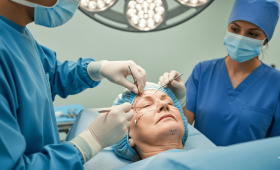
- Diastasis Recti Repair: This involves more than just skin removal; it is a functional reconstruction. The procedure focuses on Diastasis Recti repair, which involves internal corset suturing of the abdominal fascia. By reapproximating the separated rectus abdominis muscles, the surgeon creates a tightened internal “corset” that restores core stability and flattens the protrusion caused by muscle separation.
- Abdominoplasty (Tummy Tuck) Variations: Depending on the degree of skin redundancy and fat distribution, surgeons offer different surgical depths. Options include Full, Mini, or Extended (360) tummy tucks. An Extended (360) approach is particularly beneficial for PCOS patients, as it allows for the treatment of the flanks and the lateral abdominal walls, ensuring a seamless contour from the front to the sides.
“The success of a Mommy Makeover in the context of PCOS lies in the synergy between muscular reconstruction and dermatological tightening. We are not just removing excess tissue; we are re-establishing the anatomical integrity of the abdominal wall.”
Mastopexy and Volumetric Restoration
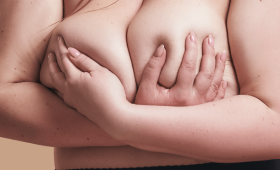
Post-pregnancy, the mammary glands undergo significant expansion and subsequent involution, leading to tissue ptosis (sagging). For the PCOS patient, hormonal fluctuations can also affect the density of breast tissue. A professional Mommy Makeover addresses this through Mastopexy (Breast Lift) and, if required, augmentation.
Modern surgical standards prioritize the use of high-grade, medical-grade materials to ensure long-term biocompatibility. Surgeons utilize breast implants from JCI-approved manufacturers, such as Mentor, Motiva, or Polytech. These implants are selected for their anatomical precision, ensuring that the projection and cleavage mimic natural tissue density.
The surgical focus during a breast lift is the repositioning of the nipple-areola complex (NAC) and the removal of excess glandular skin to provide a rejuvenated, youthful projection that complements the newly tightened abdominal profile.
Precision Contouring: Vaser Liposuction and Fat Transfer
To address the specific fat distribution patterns seen in PCOS—often concentrated in the flanks, hips, and lower abdomen—advanced lipolytic technologies are utilized. Unlike traditional suction-assisted liposuction, Vaser Liposultion is used for high-definition contouring with minimal bruising. This technology uses ultrasound to emulsify fat cells specifically, allowing for a more delicate extraction that preserves the surrounding vascular structure and skin attachment.
In many advanced Mommy Makeover configurations, the extracted fat is not discarded but repurposed. Through autologous fat transfer (often referred to as BBL or Brazilian Butt Lift), the surgeon can redistribute the patient’s own biological material to areas requiring increased volume, such as the gluteal region, creating a balanced hourglass silhouette that compensates for the loss of hip width during pregnancy.
The Turkish Global Hub: Clinical Excellence and Economic Efficiency
Turkey has emerged as the definitive global epicenter for high-end Mommy Makeovers, offering a unique convergence of board-certified surgical expertise and sophisticated medical logistics. The Turkish healthcare model specializes in “all-inclusive” surgical journeys that maintain premium standards of care at a significantly more accessible price point than Western Europe or North America.
The economic advantage is profound, particularly when considering complex, multi-procedure packages. Below is a breakdown of the current market costs for these transformative procedures in Turkey:
- Standard Package (Tummy Tuck + Breast Lift): 4,500 – 7,500 USD
- Advanced Combination (Tummy Tuck, Breast Lift, & Liposuction): 8,000 – 12,000 USD
- Individual Tummy Tuck: 3,000 – 5,000 USD
- Individual Breast Lift: 2,500 – 4,500 USD
- Liposuction (per targeted area): 500 – 1,500 USD
- BBL (Fat Transfer): 3,500 – 5,500 USD
This cost-efficiency does not come at the expense of safety or luxury. The Turkish medical ecosystem is built around a seamless patient experience, characterized by high-tier logistics and rigorous safety benchmarks.
Logistics and Post-Operative Recovery Protocol
The surgical journey in Turkey is designed to minimize patient stress through comprehensive VIP management. Patients typically arrive via Istanbul (IST) or Antalya (AYT), with VIP private transfers from the airport to the clinic and recovery suites arranged automatically. To ensure the highest level of post-operative care, patients are accommodated in 5-star recovery suites, with companion stay options included to assist with mobility during the early healing stages.
Safety and recovery timelines are strictly monitored to ensure long-term success. The standard protocol involves:
- Initial Assessment: Free online video assessments with board-certified plastic surgeons are available to evaluate surgical candidacy and discuss customized anatomical plans.
- Immediate Post-Op: A 7-10 day stay in Turkey is required to manage the initial inflammatory phase and ensure the surgical incisions are stable.
- Long-term Integration: Patients are advised that while much of the superficial healing occurs within two weeks, a 6 weeks for full exercise return is mandatory to protect the integrity of the abdominal fascia repairs and the new breast implant positioning.
Addressing the Metabolic Challenge: Recontouring PCOS-Driven Fat Distribution
Polycystic Ovary Syndrome (PCOS) presents a unique physiological challenge in aesthetic surgery. The endocrine-driven nature of the condition often results in a specific pattern of androgen-mediated fat distribution, characterized by increased visceral adiposity and stubborn subcutaneous deposits around the midsection and upper arms. Unlike standard weight loss, which may result in generalized volume reduction, PCOS-related fat distribution often leaves the patient with “stubinal” pockets of tissue that are resistant to traditional diet and exercise.
A “Mommy Makeover” for the PCOS patient is not merely a cosmetic refinement but a complex anatomical reconstruction. The surgical objective is to address the multi-planar changes caused by both hormonal fluctuations and the physical strain of pregnancy. This involves a sophisticated combination of liposculpture, abdominal wall reconstruction, and mammary augmentation or mastopexy.
The Surgical Mechanics: Precision and Reconstruction
The efficacy of a Mommy Makeover depends on the synergy of individual procedures. For patients struggling with the metabolic aftermath of PCOS, the following technical interventions are standard:
- Advanced Abdominoplasty: Beyond skin excision, the focus is on Diastasis Recti repair. This involves the internal corset suturing of the abdominal fascia, which pulls the separated rectus abdominis muscles back into a centralized position, restoring the core’s structural integrity and flattening the midsection. Depending on the patient’s anatomy, surgeons may utilize Full, Mini, or Extended (360) tummy tuck techniques.
- High-Definition Liposuction: To manage the localized fat deposits common in PCOS, Vaser Liposuction is utilized. This ultrasound-assisted technology allows for precise high-definition contouring with minimal bruising, enabling the surgeon to sculpt the flanks and abdomen without disrupting the underlying muscle definition.
- Breast Reconstruction: To address ptosis (sagging) or volume loss, a breast lift (ranging from 2,500 – 4,500 USD) or augmentation is performed. To ensure long-term safety and biocompatibility, only JCI-approved implants are used, specifically Mentor, Motiva, or Polytech.
- BBL (Brazilian Butt Lift): To redistribute the excess adipose tissue harvested during liposuction, the BBL fat transfer (priced between 3,500 – 5,500 USD) provides a natural, voluminous enhancement to the gluteal region, helping to create the classic hourglass silhouette that PCOS-related weight distribution often obscures.
lack of tissue elasticity often seen in post-pregnancy patients is addressed via liposuction per area, ranging from 500 – 1,500 USD, or through fat transfer.
Case Study: The Transformation of a 34-Year-Old Irish Mother of Three
“After three pregnancies, my body felt like it no longer belonged to me. The PCOS made the weight around my waist nearly impossible to shift, leaving me with a sense of permanent inflammation and heavy midsection.”
This patient, a 34-year Irish mother of three, presented with significant abdominal laxity, Diastasis Recti, and asymmetrical breast atrophy. Her clinical profile was complicated by the metabolic challenges of PCOS, necessitating a highly customized surgical plan.
The journey began with free online video assessments with board-certified plastic surgeons through Cure Holiday specialists, allowing for a remote clinical evaluation of her skin elasticity and fat distribution. Her surgical plan involved an Advanced Combination package (estimated at 8,000 – 12,000 USD), comprising an Extended (360) Tummy Tuck, Vaser Liposuction of the flanks, and Motiva breast implants.
During the procedure, the surgeon performed the internal corset suturing to repair her abdominal wall, followed by the precise sculpting of the flanks. The harvested fat was processed and transferred to the gluteal region to restore the posterior contour. Post-operatively, the patient remained in 5-star recovery suites with a companion stay included, ensuring a controlled environment for early-stage healing.
Her recovery timeline followed a strict protocol: 7-10 days in Turkey for intensive post-operative monitoring, followed by a gradual reintegration into daily life, with a 6 weeks for full exercise return. Today, her abdominal profile is stable, and the metabolic-driven fat deposits have been successfully redistributed.
Financial Transparency and Patient Logistics
Planning a medical journey to Turkey requires clear financial and logistical expectations. The cost of a Mommy Makeover varies based on the complexity of the hormonal fat distribution and the number of simultaneous procedures. Patients can opt for a standard_package (4,500 – 7,500 USD) for simpler contouring, or the more comprehensive advanced_combination (8,000 – 12,000 USD) for total body reconstruction.
The logistical framework is designed to minimize patient stress, focusing on a seamless “door-to-clinic” experience:
- Arrival: Patients are met with VIP private transfers from the airport, servicing both Istanbul (IST) and Antalya (AYT).
- Accommodation: Recovery is centered around 5-star recovery suites, designed to provide luxury alongside clinical proximity.
- Safety Standards: All surgical interventions are performed in facilities adhering to JCI (Joint Commission International) safety standards, ensuring that the high-tech equipment and sterilization protocols meet global benchmarks for patient care.
By addressing the underlying anatomical distortions caused by PCOS—specifically the abdominal fascia separation and the stubborn adipose deposits—the Mommy Makeover serves as a definitive surgical solution for restoring the physical confidence lost to hormonal and maternal changes.
Navigating Post-Operative Equilibrium: The PCOS Recovery Landscape
For patients managing Polycystic Ovary Syndrome (PCOS), the physiological aftermath of a Mommy Makeover extends beyond mere aesthetic reconfiguration. Because PCOS is characterized by insulin resistance and androgen excess, the body’s inflammatory response and wound-healing trajectory may require more meticulous post-operative management. The focus during the initial recovery phase in Turkey is not merely on the surgical site, but on maintaining metabolic homeostasis while the body adapts to the anatomical changes of a tummy tuck, breast augmentation, or liposuction.
The recovery period necessitates a structured environment to mitigate the risks of hyperinsulinemia-related swelling. To this end, the recovery protocol in Turkey is designed around a “villa recovery” model. Unlike the standard hospital-centric approach seen in many Western territories, our specialized recovery suites offer a tranquil, low-stress atmosphere. This is critical for PCOS patients, as high cortisol levels—often exacerbated by the stress of travel and surgery—can impede the healing of the abdominal fascia. During the 7-10 days spent in Turkey, the priority is managing lymphatic drainage and minimizing edema through controlled movement and professional nursing care.
“The success of a Mommy Makeover in the PCOS demographic is measured not just by the precision of the Vaser Liposuction or the tension of the Diastasis Recti repair, but by the patient’s ability to maintain a stable inflammatory state during the first 14 days post-op.”
Logistical Orchestration: Childcare and the Companion Stay
One of the most significant hurdles for mothers seeking a Mommy Makeover is the logistical challenge of childcare during the acute recovery phase. Managing a multi-step surgical procedure—which may involve Full, Mini, or Extended (3–60) tummy tuck options—requires a period of restricted mobility. For many, the concept of traveling to Turkey involves the complexity of bringing children along or arranging care in their home country.
Our luxury recovery infrastructure is designed to alleviate this burden. We provide 5-star recovery suites with companion stay included, allowing mothers to travel with a partner or a trusted caregiver. This arrangement ensures that the patient is never left without assistance during the critical window when the Diastasis Recti repair (which involves internal corset suturing of the abdominal fascia) requires strict adherence to movement restrictions. The presence of a companion also facilitates the management of the patient’s nutritional needs, which is vital for preventing glucose spikes that could compromise the integrity of the surgical incisions.
The logistical flow is streamlined to minimize fatigue:
- VIP private transfers: Seamless transit from Istanbul (IST) or Antalya (AYT) directly to the clinic and subsequently to the recovery villa.
- Post-Surgical Mobility: While full exercise return is typically 6 weeks post-op, the first 10 days in Turkey focus on gentle, supervised ambulation to prevent deep vein thrombosis (DVT).
- Post-Operative Support: Access to localized care for wound monitoring and managing the lymphatic flow following Vaser Liposuction.
2026 Cost Breakdown: Turkey vs. UK and USA
As we look toward 2026, the economic disparity between surgical care in Turkey and the UK or USA continues to widen, particularly when factoring in the “hidden costs” of domestic recovery, such as lost wages, childcare, and expensive local anesthesia/hospital fees. In Turkey, the comprehensive nature of the packages allows for significant financial planning. For the PCOS patient, where long-term healthcare monitoring is an ongoing expense, the ability to consolidate surgical costs into a single, transparent investment is a major advantage.
Below is the projected 2026 Cost Breakdown for integrated Mommy Makeover components:
- Standard Package (Basic Reconstruction): 4,500 – 7,500 USD
- Advanced Combination (Comprehensive Transformation): 8,000 – 12,000 USD
- Tummy Tuck (Full, Mini, or 360): 3,000 – 5,000 USD
- Breast Lift (Mastopexy): 2,500 – 4,500 USD
- Liposuction (Per targeted area): 500 – 1,500 USD
- BBL (Fat Transfer to Gluteal Region): 3,500 – 5,500 USD
When comparing these figures to the UK or USA, where a single tummy tuck can easily exceed 15,000 USD and a breast augmentation can reach 10,000 USD (excluding surgeon fees and anesthesia), the Turkish model offers a high-definition, premium alternative. These costs include the VIP private transfers, the 5-star recovery suites, and the use of premium, JCI-approved medical technologies and implants, such as Mentor, Motiva, or Polytech.
Pre-Surgical Optimization and Clinical Consultations
The journey toward a successful anatomical reconfiguration begins long before the patient arrives at Istanbul (IST) or Antalya (AYT). For those managing the hormonal complexities of PCOS, the pre-operative phase is centered on metabolic optimization. It is highly recommended that patients achieve a period of glycemic stability before scheduling surgical intervention.
To facilitate this, Cure Holiday specialists offer free online video assessments with board-certified plastic surgeons. These digital consultations allow for a deep dive into the patient’s medical history, specifically regarding insulin resistance and androgen levels. During these sessions, the surgeon can assess the suitability of Vaser Liposuction for high-definition contouring and discuss the technicalities of the abdominal reconstruction. This remote assessment ensures that by the time the patient reaches Turkey, the surgical plan is medically sound, and the logistical timeline for the 7-10 day stay is precisely calibrated to their specific recovery needs.
Considering a Mommy Makeover in Turkey? Get a Free Quote for your Mommy Makeover for PCOS Patients Transformation with cureholiday.com
Free Consultation
Fill out the form below to get your free medical travel plan and price quote.
Sources and how to verify this yourself
- HFEA (UK regulator), Fertility treatment 2024: trends and figures — average birth rate 30% per embryo transferred with the patient’s own eggs; 38% at ages 18–34 and 8% at 43–44. source
- Ministry of Health, Regulation on Assisted Reproductive Treatment Practices and Centres (ÜYTE), Official Gazette 30 September 2014 — treatment is limited to married couples using their own gametes; donor eggs, donor sperm, donor embryos and surrogacy are not permitted in Türkiye. source
- Ministry of Health, Regulation on International Health Tourism and Tourist Health, Official Gazette 26 April 2025, No. 32882 — authorisation requirement for facilities and intermediaries, TÜSKA accreditation, compulsory complication insurance (deadline 31 December 2025 for insurance, 31 December 2026 for accreditation). source
- Ministry of Health, Regulation on Promotion and Information Activities in Health Services, Official Gazette 12 November 2025, No. 33075 — treatment promises and guarantees are prohibited; price and campaign announcements are permitted only within international health tourism. source