What is breast augmentation surgery?
Breast augmentation is the process of increasing the volume of the breasts through implants placed under the breast tissue or under the chest muscle. This operation not only provides an increase in size but can also correct breast asymmetry and restore the form lost after pregnancy or weight loss. With the opportunities offered by modern medicine, it is aimed to obtain the most suitable and natural results for the person’s body type. When performed by an expert surgeon, it is a permanent aesthetic solution that significantly affects the patient’s quality of life and body perception in a positive way.
Am I a suitable candidate for surgery?
The most suitable candidates for breast augmentation surgery are adult women who are in good general health and have realistic expectations. People who think their breasts are too small, experience a decrease in breast volume after childbirth, or have a significant asymmetry between both breasts are ideal for this operation. It is essential that body development is completed before making the decision for surgery. In addition, individuals who do not smoke or who can quit during the surgical process and who can stay loyal to the recovery process increase the chance of success. Being psychologically ready and wanting this change for oneself, not for others, is the most important criterion.
What are the types of silicone implants?
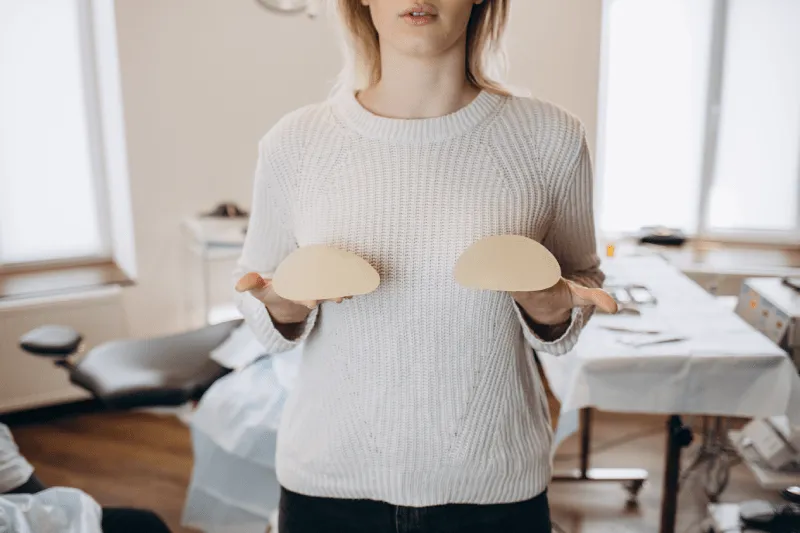
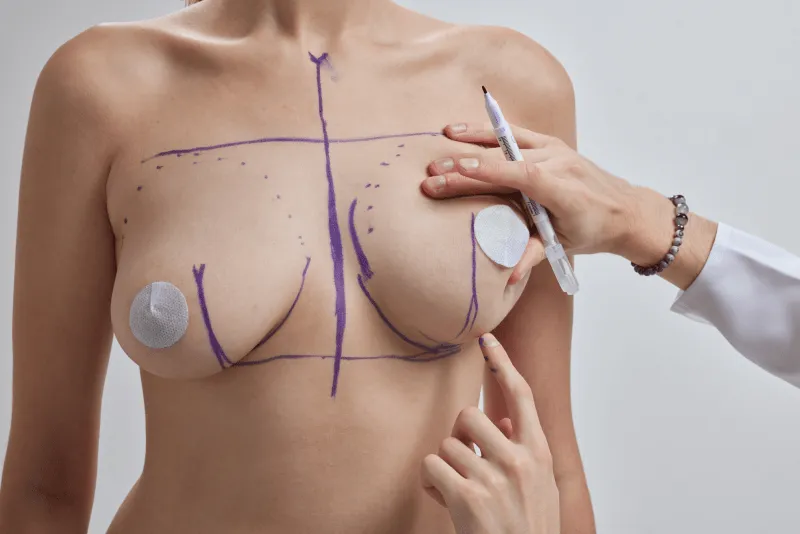
Breast implants used today are basically divided into two according to their filling materials: Silicone gel-filled and saline (saltwater) filled implants. Silicone gel implants are the most popular choice worldwide because they provide the closest consistency to natural breast tissue. Saline implants, on the other hand, can be placed through smaller incisions because they can be filled during the operation. In addition, there are smooth or textured models according to their surface structures; round or teardrop (anatomical) models according to their shapes. Your surgeon will determine the most suitable implant type according to your body structure, existing breast tissue, and the look you want.
What is the difference between saline and silicone implants?
Saline implants are structures whose outer shell is silicone but the inside is filled with sterile saltwater; in case of any leakage, the liquid is safely absorbed by the body. Silicone implants, on the other hand, offer a more realistic touch feeling and appearance thanks to their internal gel structure. The gel inside the silicone tends to stay in place even if the shell is damaged (cohesive gel). Saline implants are generally more cost-effective, but sometimes they can be more prone to the formation of what we call “rippling” on the breast. Which option is better for you depends on the thickness of your breast tissue and your aesthetic goals.
What is a gummy bear implant?
Gummy bear implants are implants with stability that maintain their form even when cut, where the silicone gel inside is very dense and retentive. These implants are generally anatomical, i.e., teardrop-shaped, and ensure that the lower part of the breast is fuller and the upper part has a more natural slope. Since their form-preserving properties are very high, their risk of experiencing shape distortion over time is quite low. Especially in patients with very thin breast tissue, it is a frequently preferred new generation technology because it prevents the borders of the implant from being obvious and provides a smoother transition.
Should I choose round or teardrop implants?
Round implants are ideal for patients who want more fullness and cleavage in the upper part of the breast. Teardrop-shaped implants, on the other hand, allow the lower part to be more voluminous and the upper part to make a lighter transition in accordance with the natural slope of the breast. If you have an athletic structure or if you want the breast not only to grow but also to maintain its natural form, the teardrop model is more suitable. However, round implants are considered safer by some surgeons because they do not cause shape distortion in case of displacement. The choice should be made entirely according to your aesthetic preference and existing anatomy.
Which incision methods are used in breast augmentation?
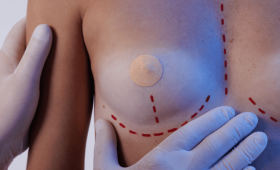
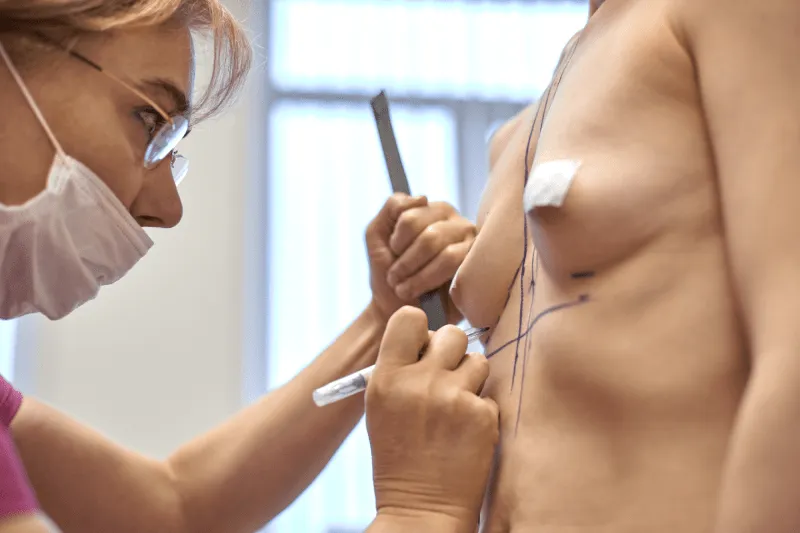
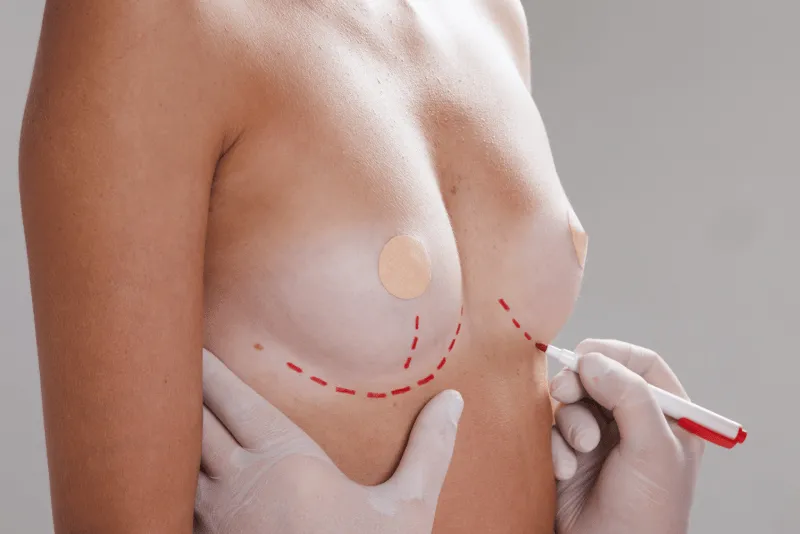
The most commonly used incision sites in breast augmentation surgery are the inframammary fold (under the breast), periareolar (around the nipple), and axillary (armpit). The inframammary incision is the most frequently preferred method because it offers the surgeon the widest field of view and the scars are hidden in the bra line. The periareolar incision is hidden very well thanks to the fact that the scar remains in the color change area, but it is evaluated more carefully by some surgeons due to its proximity to the milk ducts. The axillary incision is suitable for patients who do not want any scars on the breast. Which incision will be made is determined according to the surgeon’s experience and the patient’s skin quality.
Is submuscular or subglandular placement better?
The placement of the implant is done either just under the breast tissue (subglandular) or under the chest muscle (subpectoral). Submuscular placement prevents the borders of the implant from being obvious, especially in patients with little breast tissue, and provides a more natural appearance; it is also thought to reduce the risk of capsular contracture. Subglandular placement, on the other hand, offers a shorter recovery period and postoperative pain is generally less; however, the possibility of the implant sagging may be higher in the long run. The method called “dual plane” combines the advantages of both techniques, leaving the upper part under the muscle and the lower part over the muscle.
How is the right implant size decided?
When deciding on the implant size, not only the “cup size” but also your shoulder width, rib cage structure, and the elasticity of your existing breast tissue should be considered. While very large implants can cause back pain and tissue sagging in the long run, very small choices may not satisfy the patient. Surgeons usually use trial prostheses called “sizing” during the examination to allow the patient to test the appearance under clothing. In addition, you can see your possible postoperative appearance in a digital environment with 3D simulation devices. Remember that the goal is to create a balanced silhouette compatible with your body lines.
How long does the surgery take?
Breast augmentation surgery is generally completed in 1 to 2 hours unless an additional procedure (such as breast lift) is applied. Since the operation is performed under general anesthesia, the patient does not feel any pain or discomfort. The surgeon’s experience, the chosen incision method, and the placement plan of the implant are among the factors affecting the duration. After the surgery, the patient needs to be kept under observation in the recovery room for a while. If everything goes well, patients can usually be discharged on the same day in the evening or after staying in the hospital for one night. The shortening of the procedure time also positively affects the recovery speed after anesthesia.
How long does the recovery process take?
Although the recovery process varies from person to person, most patients can slowly return to their daily activities within the first week. It is normal to feel a slight tension and sensitivity for the first few days, and this situation is easily controlled with painkillers. Full recovery and the implants settling to take their natural shape usually take 3 to 6 months. In this process, the healing of the tissues and the complete dissipation of the edema are expected. Avoiding heavy physical activities in the first weeks is of vital importance for the tissues to remain stable. Being patient is the most basic rule necessary for the excellence of long-term results.
When can I return to work after surgery?
If you work in a desk job, you can usually return to your work 5 to 7 days after the surgery. However, if your job requires heavy lifting or intense arm movements, it is recommended that this period be extended up to 2-3 weeks. The recovery speed depends on the body’s reaction to surgery and how well the patient follows the surgeon’s instructions. It is normal to feel tired in the first days, so you should make sure you feel fully energetic before starting work. Not forcing yourself too much in the early period is very critical in terms of the safety of the stitch line and not increasing the edema.
Will there be a lot of pain after the operation?
Thanks to modern anesthesia techniques and long-acting local anesthetics applied during surgery, pain after breast augmentation is at a very manageable level. Especially in submuscular placements, it is normal to have a feeling of tension and pressure in the chest muscles; this situation is likened to “intense muscle pain after sports.” When prescribed painkillers are used regularly for the first few days, the comfort level increases. Generally, the pain decreases rapidly starting from the third day after the surgery. Most patients state that they suffer much less pain than they expected. The important thing is to comply with the movement restrictions recommended by the surgeon and rest the body.
Will there be scars after breast augmentation?
As in every surgical intervention, there will be some scarring in breast augmentation surgery. However, plastic surgeons are experts in hiding these scars in the natural curves of the body or color change points. Scars remaining in the inframammary fold are almost never seen while standing. Scars around the nipple area approach the skin color over time and become blurred. The quality of the scar depends on the patient’s skin structure, genetic characteristics, and postoperative wound care. Scars that are pink and prominent in the first months usually turn into a thin white line at the end of a year. Scar-removing creams and sun protection speed up this process.
Will my ability to breastfeed be affected?
The vast majority of women who have breast augmentation surgery can breastfeed without any problems in the future. Since the implants are generally placed under the milk ducts and breast glands, these tissues are not damaged. Especially when the inframammary or axillary incision is preferred, the intervention in the breast tissue is at a minimum level. In incisions made around the nipple, the risk of contact with the milk ducts is slightly higher, but this risk is also quite low in experienced hands. It is of great importance for patients who have breastfeeding plans to share this situation with their surgeons before the surgery in terms of making the safest technique and planning.
How does pregnancy affect surgery results?
Since pregnancy creates a natural growth and subsequent shrinkage in breast tissue, it can indirectly affect surgery results. Stretching of the skin and hormonal changes can cause some sagging (ptosis) in the breasts. However, the volume of the placed implant is not affected by pregnancy; only the natural breast tissue around it changes. Although many women are still satisfied with the results after pregnancy, some may need a small lift or revision procedure due to sagging. If a pregnancy is planned in the near future (within 1 year), it is recommended to postpone the surgery until after the birth and breastfeeding process for more stable results.
Do breast implants last a lifetime?
Breast implants are medical devices, and although they are technically said to be guaranteed for “life,” this does not mean they will stay in the body forever without any change. Due to the aging of the body, gravity, and the natural wear of the implant, a change or revision may be required after 10-15 years. However, if there is no leakage, shape distortion, or discomfort, there is no harm in the implants staying for many years with regular checks. New generation “cohesive gel” implants are much more durable and maintain their form much longer than older models. The important thing is not to neglect annual doctor check-ups and to follow the changes in the breasts.
What happens if an implant ruptures?
Modern silicone implants have a very durable outer shell, and the term “rupture” or “leakage” is generally used instead of the term “explosion.” If a silicone implant has a micro-level leakage, since the gel inside maintains its form, it usually does not spread out and a situation called “silent rupture” occurs. In saline implants, when the liquid leaks, the breast deflates rapidly and the body discards the liquid harmlessly. Silicone implant ruptures are usually noticed during a routine MRI or ultrasound check. In such a case, the implant needs to be replaced by a surgeon. With current technologies, the incidence of such complications has been minimized.
What is capsular contracture?
The body creates a protective tissue sheath (like a capsule) around every foreign substance (like an implant) placed in it. In some cases, this tissue hardens excessively, thickens, and begins to squeeze the implant; this condition is called “capsular contracture.” In mild cases, only some hardness is felt, while in advanced levels, pain and distortion in breast shape can be seen. With modern surgical techniques, the use of textured implants, and full compliance with sterilization rules, this risk has fallen below 5% today. If a serious contracture occurs, an operation may be planned where the capsule needs to be removed and the implant replaced.
When can I exercise after surgery?
Mobility is important after surgery, but one should be patient for heavy exercises. It is beneficial for circulation to take light-paced walks starting from the first week. However, at least 4-6 weeks should be waited for activities such as weight lifting, tennis, or swimming where the arms are used intensively. Exercises that directly force the chest muscles (such as push-ups) are not recommended before the 2nd month. A high-support sports bra must be used while exercising. Starting exercise early can cause the stitches to open, the implant to displace, or the edema to increase. You should listen to your body and not enter an intense tempo without getting approval from your doctor.
Does it interfere with mammography?
Breast implants do not interfere with mammography, but the radiology technician must be informed that you have an implant. Implants can shadow a part of the breast tissue, so imaging is performed using a special technique called the “Eklund maneuver.” With this method, the implant is pushed back and the breast tissue is brought to the fore, and clearer images are obtained. In addition, breast MRI or ultrasound are additional and very effective methods for tissue scanning for women with implants. Having an implant does not create a disadvantage in terms of cancer screening; it is enough for the team performing the screening to be experienced.
Does the risk of cancer increase?
Comprehensive scientific studies conducted have repeatedly proven that breast implants do not increase the risk of breast cancer. Implants do not contain carcinogenic substances and do not negatively affect the body’s immune system in this direction. Although a relationship has been found between a rare type of lymphoma called BIA-ALCL and some textured implants, this condition is extremely rare and can be completely treated with early diagnosis. Today, surgeons choose implants with the safest surface structures by considering these risks. For a woman who does her regular checks, implants do not constitute an additional cancer threat in terms of health.
Is it possible to achieve a natural look?
The biggest concern of many women is that their breasts look artificial like they have been “operated on.” However, with the right planning, it is possible to obtain results that are so natural that they cannot be understood when viewed from the outside. For a natural look, choosing sizes suitable for your body measurements, deciding on a teardrop or round implant according to your chest wall structure, and placing the implant under the muscle generally give the best results. In addition, the surgeon’s suturing skill and tissue management also affect the result. The aim is not just for the breasts to be large, but to be in aesthetic harmony with other parts of the body (shoulders, waist, hips).
Is massage necessary after surgery?
The issue of postoperative massage may differ among surgeons. Some doctors recommend light circular massages to prevent the cavity where the implant is placed from closing and for the tissues to soften, while others prefer it to remain stationary so that the implant is fixed in its place. Especially in textured implants, massage is generally not recommended because these implants are wanted to hold onto the tissue. In smooth surface implants, special movements may sometimes be recommended to reduce the risk of capsule. In this regard, it is best to strictly follow the instructions your surgeon will give according to your special situation and the type of implant used.
How long should a supportive bra be worn?
The special medical support bra fitted to you immediately after surgery is one of the most important parts of the recovery process. This bra ensures that the implants stay in the correct position, reduces edema, and minimizes pain by providing support to the tissues. It is generally requested to be worn continuously, including day and night, for the first 4-6 weeks. In this process, wired, supported, or push-up bras should be strictly avoided because such bras can put pressure on the stitch lines and distort the shape of the implant. At the end of about two months, with your surgeon’s approval, you can switch to using any style of bra you want.
How does smoking affect the healing process?
Smoking carries serious risks for breast augmentation and all surgical operations. Nicotine slows down the blood flow by narrowing the vessels, which prevents the tissues from receiving enough oxygen. As a result, wound healing is delayed, the risk of stitches opening increases, and the possibility of infection rises. In addition, smoking can increase the risk of complications by lowering lung capacity during anesthesia. Surgeons generally require smoking to be quit at least 2-3 weeks before the surgery and not to be smoked until recovery is complete. If you want a healthy and aesthetically flawless result, staying away from smoking is your biggest responsibility in this process.
Why is alcohol consumption restricted before and after surgery?
Alcohol has a blood-thinning effect, and this can increase the risk of excessive bleeding during or after surgery. In addition, alcohol can slow down the healing process by causing the body to hold water (edema) and can tire the liver by interacting with the drugs used (especially painkillers and antibiotics). It is recommended not to consume alcohol during the week before the surgery and for the first two weeks after. Alcohol also slows down the body’s recovery rate by temporarily weakening the immune system. Drinking plenty of water and paying attention to nutrition is much more beneficial than consuming alcohol for a healthy recovery process.
Can people with diabetes have this surgery?
Individuals with diabetes can have breast augmentation surgery as long as their disease is under control. However, it should not be forgotten that diabetes has the potential to delay wound healing and increase the risk of infection. Blood sugar levels (values such as HbA1c) must be stable and within normal limits before surgery. Your surgeon and endocrinologist should work coordinately in this process. Postoperative wound care and sugar monitoring should be done much more meticulously than a normal patient. If your diabetes is well-managed, it does not constitute a medical barrier for you to achieve your dream look.
Can breast augmentation and lift be done at the same time?
If there is not only a lack of volume in the breasts but also a significant sagging (the nipple looking downwards), the use of implants alone may not be sufficient. In such cases, a combined operation called “Augmentation-Mastopexy” is applied. In this procedure, both volume is given with an implant and the nipple is moved to a higher, ideal position by removing excess skin. Doing two procedures at the same time provides the advantage of a single anesthesia and a single recovery process. However, since this procedure is more complex, the surgeon’s experience in this field is very important. As a result, much more vigorous, upright, and full breasts are obtained.
Will there be loss of sensation after surgery?
Temporary numbness or hypersensitivity in the nipple or breast skin after breast augmentation surgery is a very common condition. This is caused by the nerves under the skin being stretched or compressed during surgery. Usually, this loss of sensation corrects itself within a few weeks or months; as the nerves heal, the normal feeling returns. The risk of permanent loss of sensation is at a very low rate of 1-2% and is generally seen in cases where very large implants are used or deep incisions are made around the nipple. For most patients, this situation is temporary and is considered part of the healing.
Do implants correct asymmetry?
Almost every woman’s breasts have at least some asymmetry between them. Breast augmentation surgery is an excellent opportunity to balance these differences. The surgeon can place implants of different sizes or different profiles on both sides to correct the asymmetry. For example, if one breast is smaller than the other, visual balance is achieved by placing a larger prosthesis on that side. However, the structure of the breast tissue, skin elasticity, and the shape of the rib cage are also factors affecting asymmetry. While it is not always possible to obtain a complete “mirror image,” providing significant symmetry and harmony after surgery is one of the main goals.
How does the aging process change the results?
Breast implants do not stop the aging process; as your body ages, your breast tissue and skin will naturally show change. Over time, the skin may lose its elasticity and the implants may displace downwards a bit under the influence of gravity. However, a breast with an implant tends to maintain its full form more generally compared to a breast without an implant. If sagging due to aging becomes very prominent, the results can be refreshed with a small lift surgery years later. Eating healthy, protecting from the sun, and doing regular sports are the most important supporters that extend the life of surgery results and delay the effects of aging.
Does menopause affect the implants?
Menopause is a stage where breast tissue density decreases and fat tissue increases due to hormonal changes in the body. These changes can cause the breasts to soften or lose volume. However, the placed silicone implants are not directly affected by these hormonal fluctuations; they maintain their shape and volume. The thinning of the breast tissue after menopause may lead to the borders of the implant becoming more obvious in some cases. During this process, regular breast checks and screenings should continue as usual. Implants do not affect menopause symptoms or interact with hormone treatments.
How long should I wait before traveling?
Short-distance car journeys can be made a few days after the surgery, but at least 1-2 weeks are generally recommended for long flights or long-term journeys. Pressure changes in air travel can increase edema in the healing tissues; also, staying inactive for a long time can trigger the risk of blood clots (embolism). If you need to travel, you should move your legs during the way and drink plenty of water. Especially for patients coming from abroad within the scope of health tourism, surgeons usually do a stitch check before giving a “fit to fly” report. For your safety, it is of vital importance to comply with these periods.
In which cases is revision surgery required?
Revision surgery is a second operation performed to correct or improve the results of a previously performed breast augmentation procedure. The development of capsular contracture, displacement of the implant (slipping), implant rupture, or the patient wanting a size change over time are the most common reasons for revision. Also, adding a lift due to sagging of the breast tissue is a reason for revision. Revision surgeries can generally be more complex than the first surgery because existing scar tissue is worked with. However, experienced surgeons can professionally solve existing problems by maximizing the patient’s satisfaction with revision.
What tests are performed before surgery?
A comprehensive preparation process is applied to ensure your surgical safety. General blood count, coagulation tests, kidney and liver function tests are performed routinely. In addition, the health of the breast tissue is confirmed by requesting breast ultrasound or mammography according to the patient’s age and risk status. The anesthesiologist confirms your suitability for the operation by examining your heart rhythm (ECG) and chest X-ray. You should inform your surgeon about any chronic diseases or medications you use regularly. These tests are standard safety measures taken to prevent complications that may occur during and after surgery.
How is the type of anesthesia determined?
Breast augmentation surgeries are performed almost always under general anesthesia for the sake of patient comfort and the surgeon’s ease of work. General anesthesia ensures that you sleep completely throughout the operation and feel nothing. In rare cases, a combination of local anesthesia and sedation can be used for very small interventions, but general anesthesia is the safest way for procedures requiring tissue dissection such as breast implant placement. Thanks to modern anesthesia drugs, the waking process after surgery is quite fast and side effects such as nausea have been minimized. The anesthesiologist monitors your vital functions instantly throughout the entire process.
When are the stitches removed after surgery?
Today, most plastic surgeons use absorbable “melting” stitches in breast augmentation surgery. These stitches do not need to be removed and disappear on their own over time; this eliminates the patient’s fear of having stitches removed. If non-absorbable stitches have been used, these are usually removed with a simple procedure between the 10th and 14th days after the surgery. The protective tapes (steri-strip) pasted on the stitch line support the stitches and are removed by your doctor as the healing speeds up. Keeping this area dry and clean during the healing process of the stitches is of critical importance to prevent the risk of infection.
Is sunbathing or solarium harmful?
It is very important to protect the stitch marks from direct sunlight or solarium for the first 6 months after the surgery. Ultraviolet rays can cause the color of the healing wound tissue to darken permanently (hyperpigmentation). If you need to sunbathe, you should definitely cover the stitches with a high-factor sunscreen or prefer swimwear that does not transmit sunlight. In addition, heat can lead to an increase in edema in the surgical area. The silicone gel inside the implants warms up and cools down later than body temperature; therefore, excessively hot environments can create a feeling of discomfort during the healing process. Staying cool and protected supports healing.
What is the best season for surgery?
Breast augmentation surgery can be performed in any season of the year, but many patients prefer the autumn and winter months to spend the recovery period more comfortably. Thick clothes worn in winter months make it easier to hide the support bra used after surgery and possible edemas. In addition, cold weather reduces sweating, ensuring that the stitches stay cleaner and naturally facilitating the patient’s obligation to protect from sunlight. If you have a summer vacation plan, it is logical to have the surgery at least 2-3 months before the vacation so that you do not get stuck with the restrictions on swimming and sunbathing. Still, thanks to climate-controlled environments, there is no medical harm in having surgery in the summer.
Why should I have breast augmentation in Turkey?
Turkey is the shining star of the world in the field of plastic surgery and is one of the most preferred destinations for breast augmentation operations. Turkish surgeons are experts who have received world-class training and gained extraordinary experience thanks to the high number of cases. Hospitals in the country are equipped with the most modern technology and have international accreditations such as JCI. In addition, the cost advantage is much more suitable compared to Europe and America; this does not mean that quality is compromised, on the contrary, it stems from the low operation costs and the exchange rate difference. Hospitality, accommodation facilities, and the chance to combine treatment with a vacation make Turkey unique.
How is the treatment process planned with Cure Holiday?
Choosing the right partner to achieve your dream look is as important as the surgery itself. Cure Holiday offers you a flawless end-to-end health tourism experience by collaborating with Turkey’s most distinguished hospitals and most experienced plastic surgeons. Starting from the first consultation, your flight ticket, VIP transfers, luxury hotel accommodation, and postoperative follow-up are meticulously organized by our professional team. You will feel at home with our assistants who are with you at every step without experiencing a language barrier. Cure Holiday is with you for a safe, comfortable, and world-class treatment. You just focus on enjoying your new self, let us handle the rest.
Free Consultation
Fill out the form below to get your free medical travel plan and price quote.
Sources and how to verify this yourself
- Ministry of Health, Regulation on International Health Tourism and Tourist Health, Official Gazette 26 April 2025, No. 32882 — authorisation requirement for facilities and intermediaries, TÜSKA accreditation, compulsory complication insurance (deadline 31 December 2025 for insurance, 31 December 2026 for accreditation). source
- Ministry of Health, Regulation on Promotion and Information Activities in Health Services, Official Gazette 12 November 2025, No. 33075 — treatment promises and guarantees are prohibited; price and campaign announcements are permitted only within international health tourism. source